Ancient Athenian Social Classes
A free social sciences worksheet ready for your classroom. Open in Kuraplan to grab the print-ready PDF, customize it for your students, or generate a fresh version in seconds.
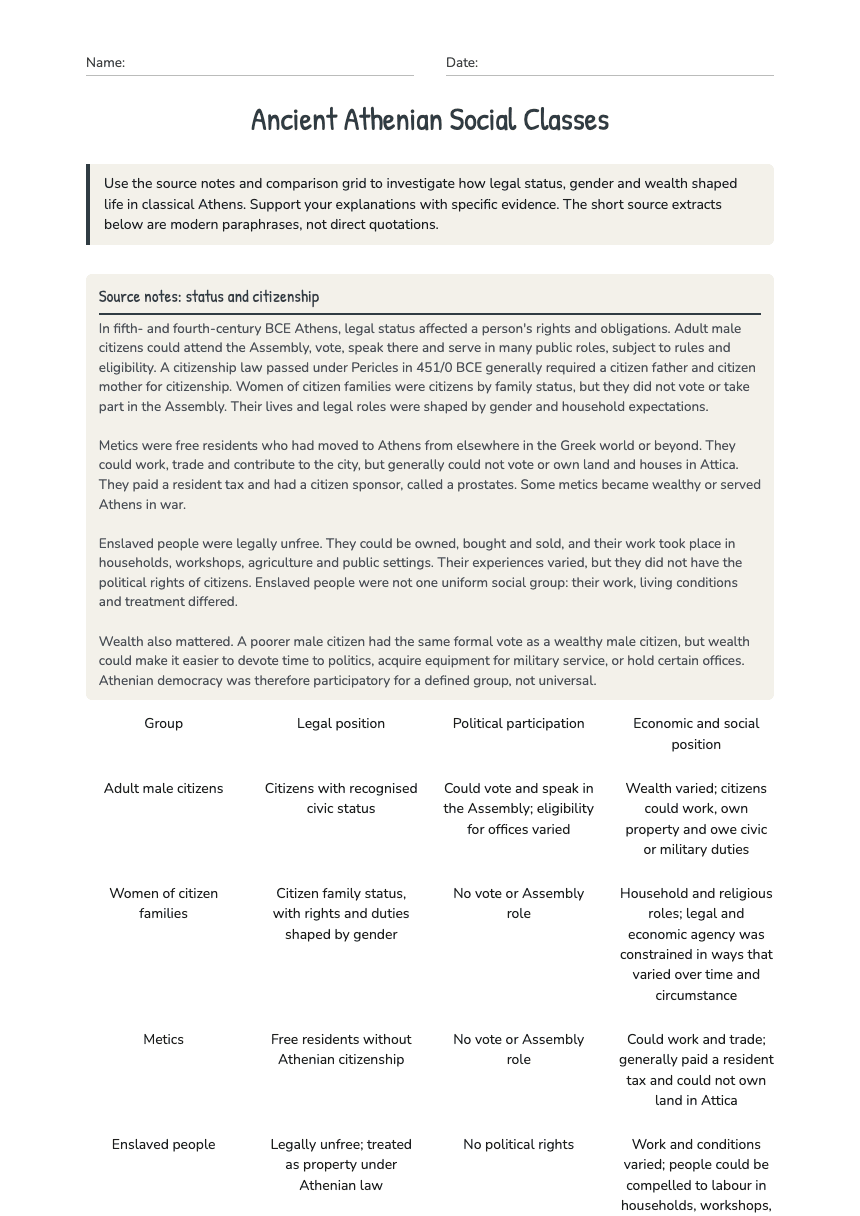
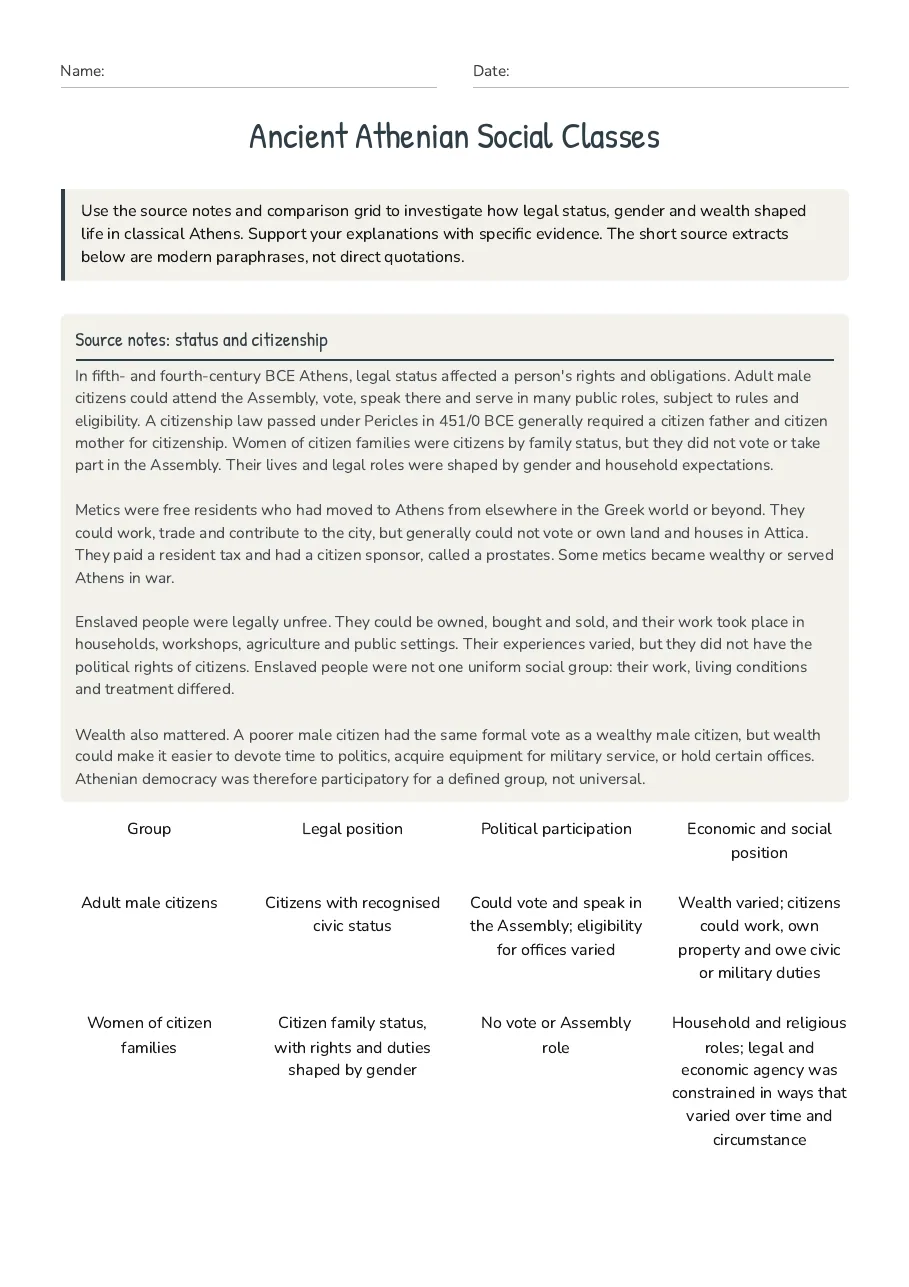
Ancient Athenian Social Classes
Source notes: status and citizenship
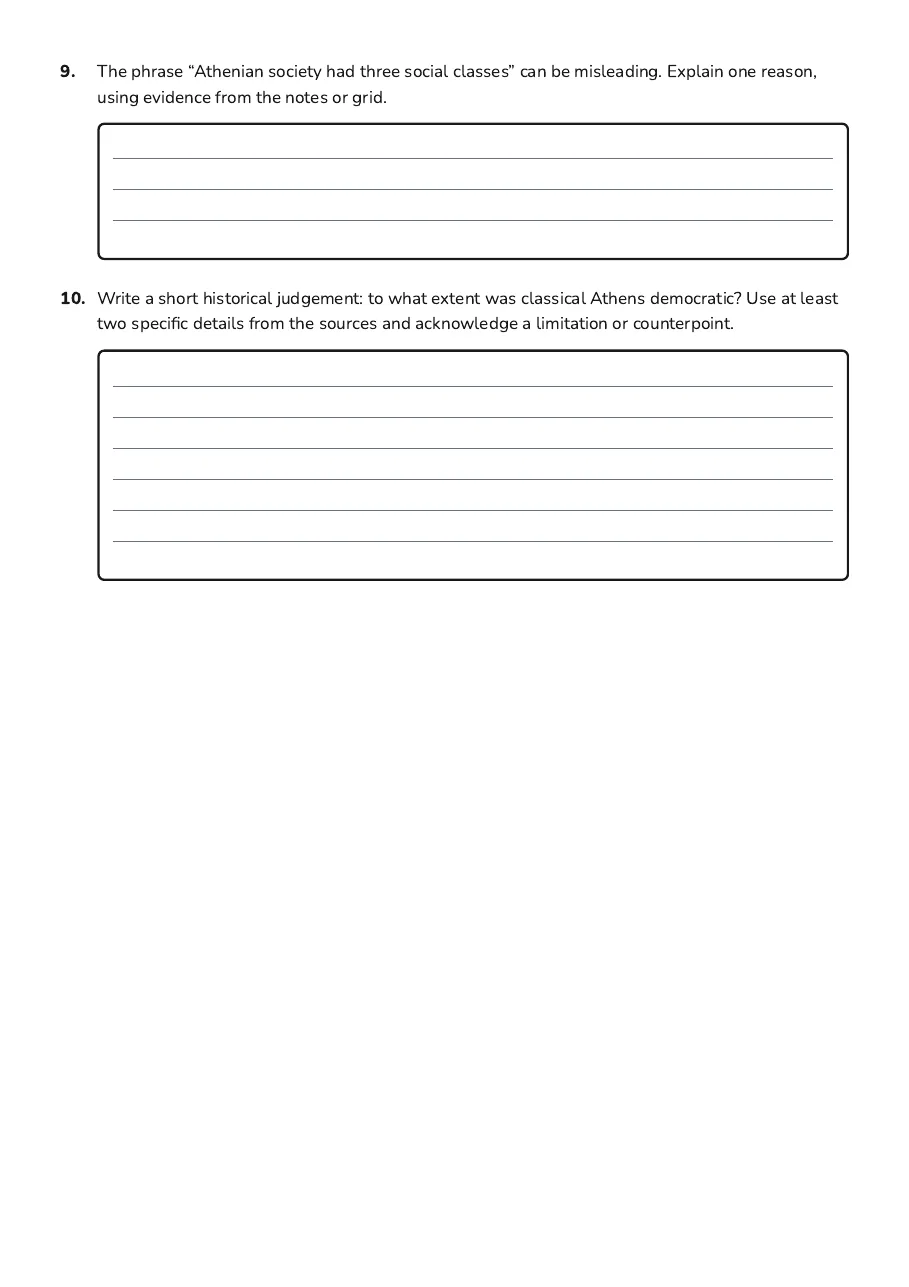
In fifth- and fourth-century BCE Athens, legal status affected a person's rights and obligations. Adult male citizens could attend the Assembly, vote, speak there and serve in many public roles, subject to rules and eligibility. A citizenship law passed under Pericles in 451/0 BCE generally required a citizen father and citizen mother for citizenship. Women of citizen families were citizens by family status, but they did not vote or take part in the Assembly. Their lives and legal roles were shaped by gender and household expectations. Metics were free residents who had moved to Athens from elsewhere in the Greek world or beyond. They could work, trade and contribute to the city, but generally could not vote or own land and houses in Attica. They paid a resident tax and had a citizen sponsor, called a prostates. Some metics became wealthy or served Athens in war. Enslaved people were legally unfree. They could be owned, bought and sold, and their work took place in households, workshops, agriculture and public settings. Their experiences varied, but they did not have the political rights of citizens. Enslaved people were not one uniform social group: their work, living conditions and treatment differed. Wealth also mattered. A poorer male citizen had the same formal vote as a wealthy male citizen, but wealth could make it easier to devote time to politics, acquire equipment for military service, or hold certain offices. Athenian democracy was therefore participatory for a defined group, not universal.
Group
Legal position
Political participation
Economic and social position
Adult male citizens
Citizens with recognised civic status
Could vote and speak in the Assembly; eligibility for offices varied
Wealth varied; citizens could work, own property and owe civic or military duties
Women of citizen families
Citizen family status, with rights and duties shaped by gender
No vote or Assembly role
Household and religious roles; legal and economic agency was constrained in ways that varied over time and circumstance
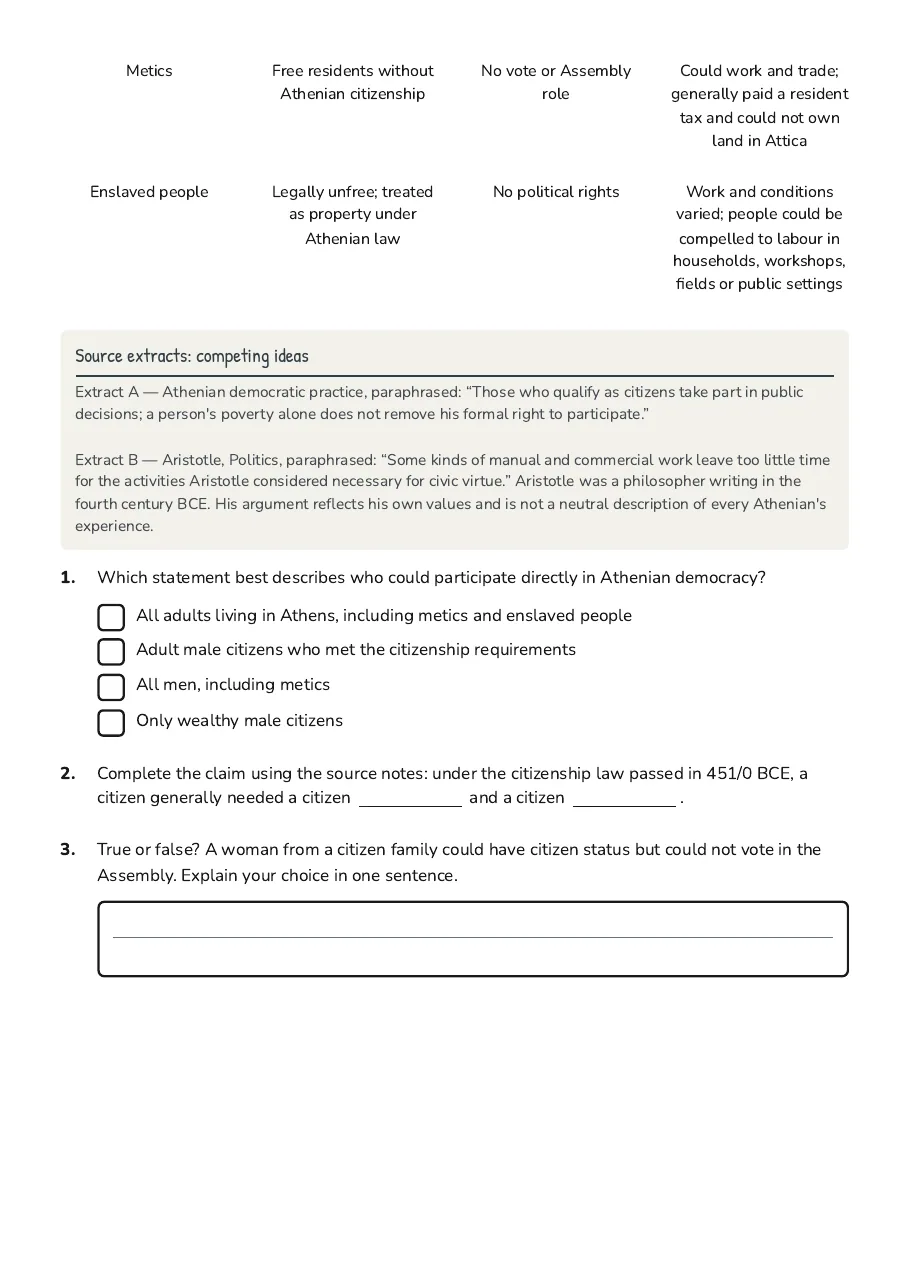
Metics
Free residents without Athenian citizenship
No vote or Assembly role
Could work and trade; generally paid a resident tax and could not own land in Attica
Enslaved people
Legally unfree; treated as property under Athenian law
No political rights
Work and conditions varied; people could be compelled to labour in households, workshops, fields or public settings
Source extracts: competing ideas
Extract A — Athenian democratic practice, paraphrased: “Those who qualify as citizens take part in public decisions; a person's poverty alone does not remove his formal right to participate.” Extract B — Aristotle, Politics, paraphrased: “Some kinds of manual and commercial work leave too little time for the activities Aristotle considered necessary for civic virtue.” Aristotle was a philosopher writing in the fourth century BCE. His argument reflects his own values and is not a neutral description of every Athenian's experience.
- All adults living in Athens, including metics and enslaved people
- Adult male citizens who met the citizenship requirements
- All men, including metics
- Only wealthy male citizens
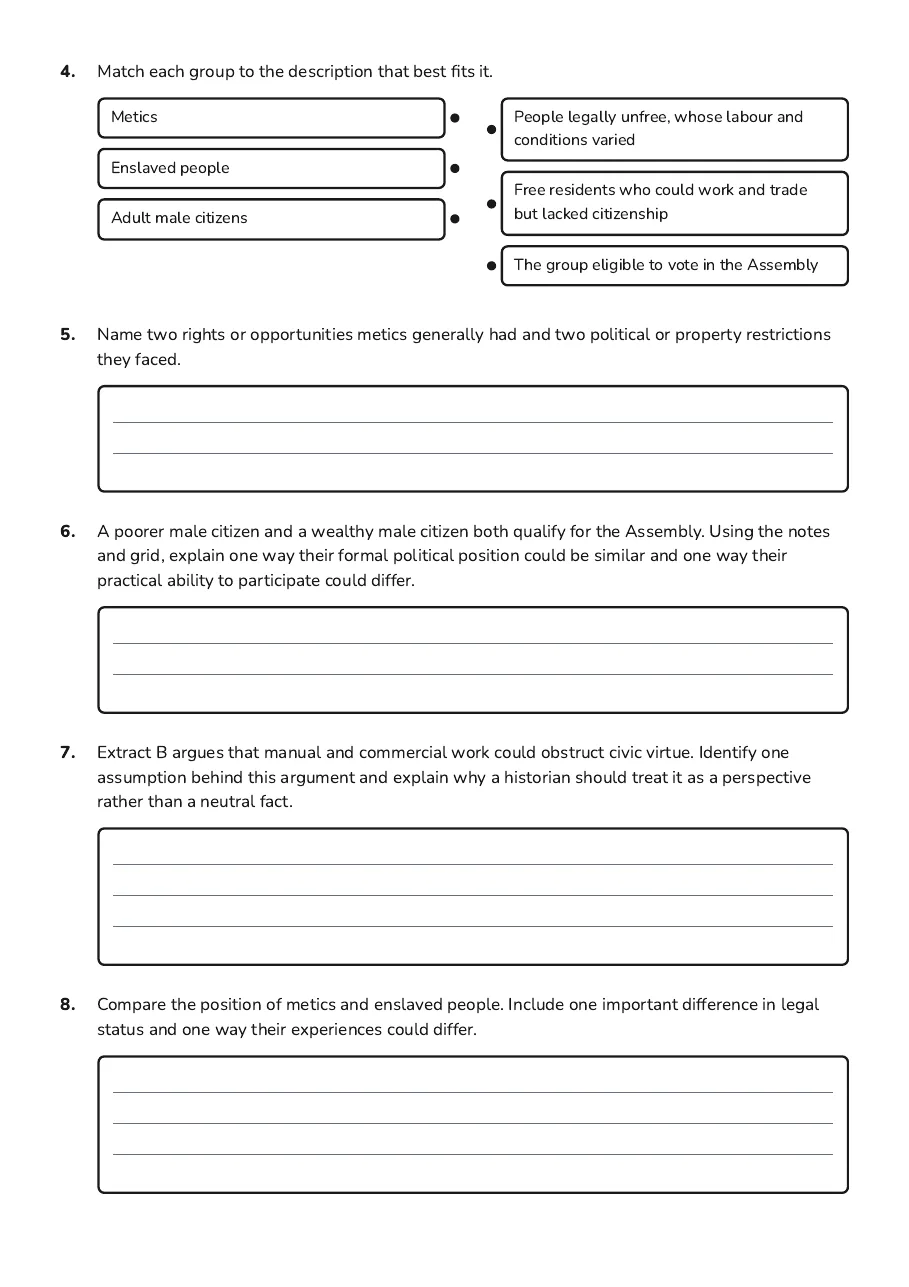
- Metics
- Enslaved people
- Adult male citizens
- People legally unfree, whose labour and conditions varied
- Free residents who could work and trade but lacked citizenship
- The group eligible to vote in the Assembly
4 printable pages
Page 1
Page 2
Page 3
Page 4
About This Worksheet
Free in Kuraplan
Sign up free, grab the PDF, and customize it for your class.
Print-Ready
Formatted for standard paper. Clean layout, easy to read.
AI-Generated
Created with Kuraplan's AI, designed for real classroom use.
For Teachers & Parents
Use in classrooms, for homework, tutoring, or homeschool.
Need a custom version of this worksheet?
Kuraplan's AI generates custom worksheets in seconds — differentiated for every learner, aligned to your curriculum.
Generate Custom Worksheets — FreeMore Social Sciences Worksheets
Parihaka: Historical Perspectives Worksheet
Free
Ancient Egyptian Burial Practices
Free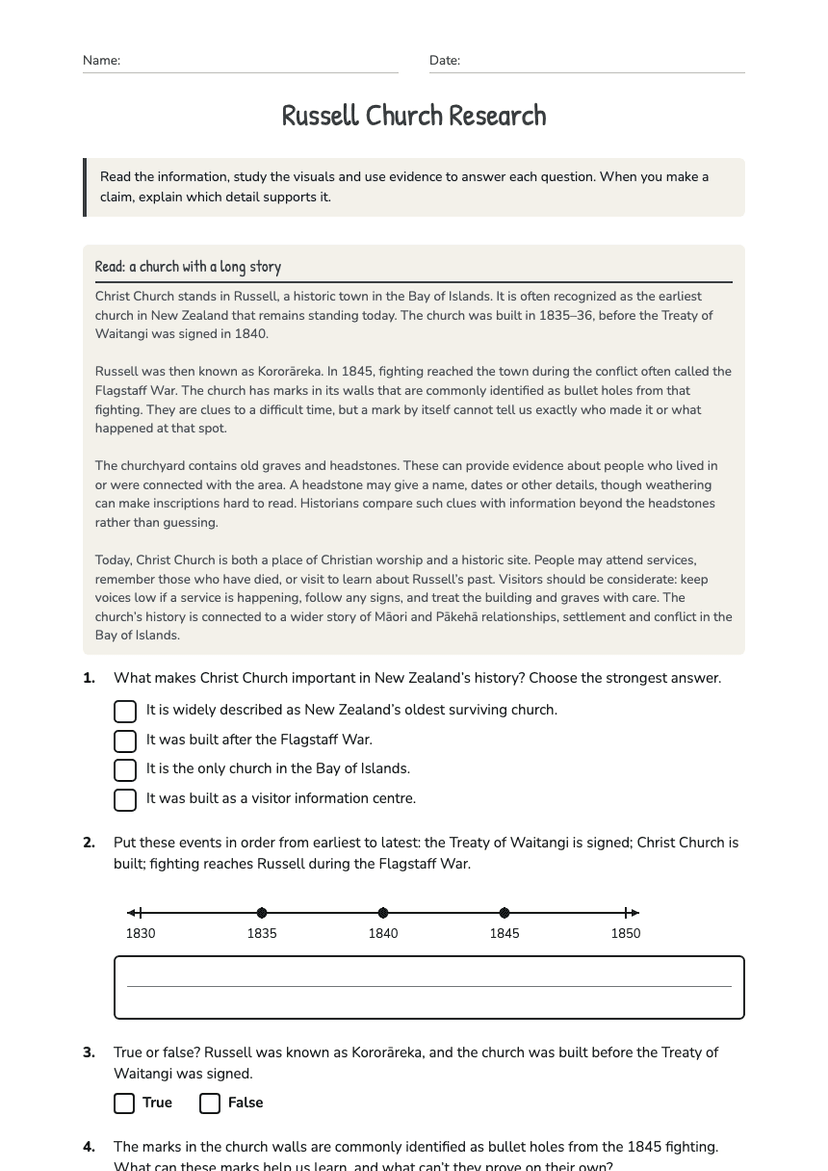
Russell Church Research
Free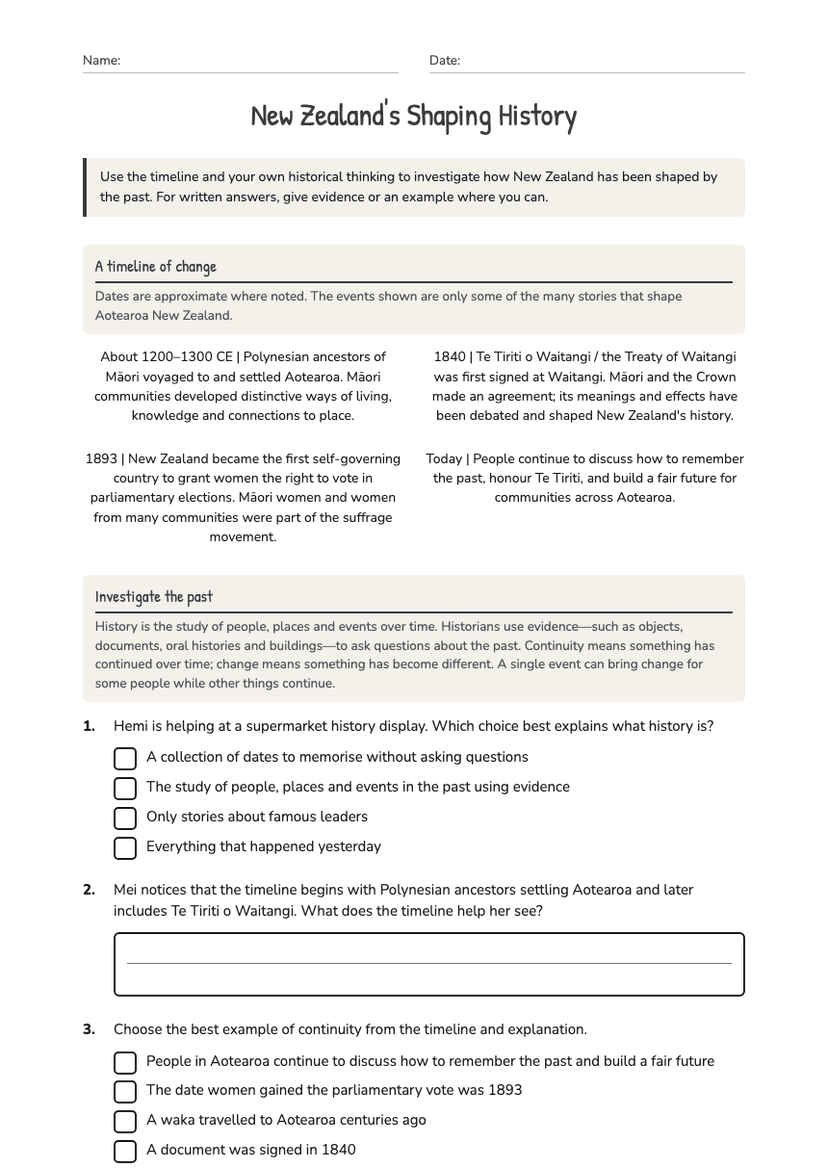
New Zealand's Shaping History
Free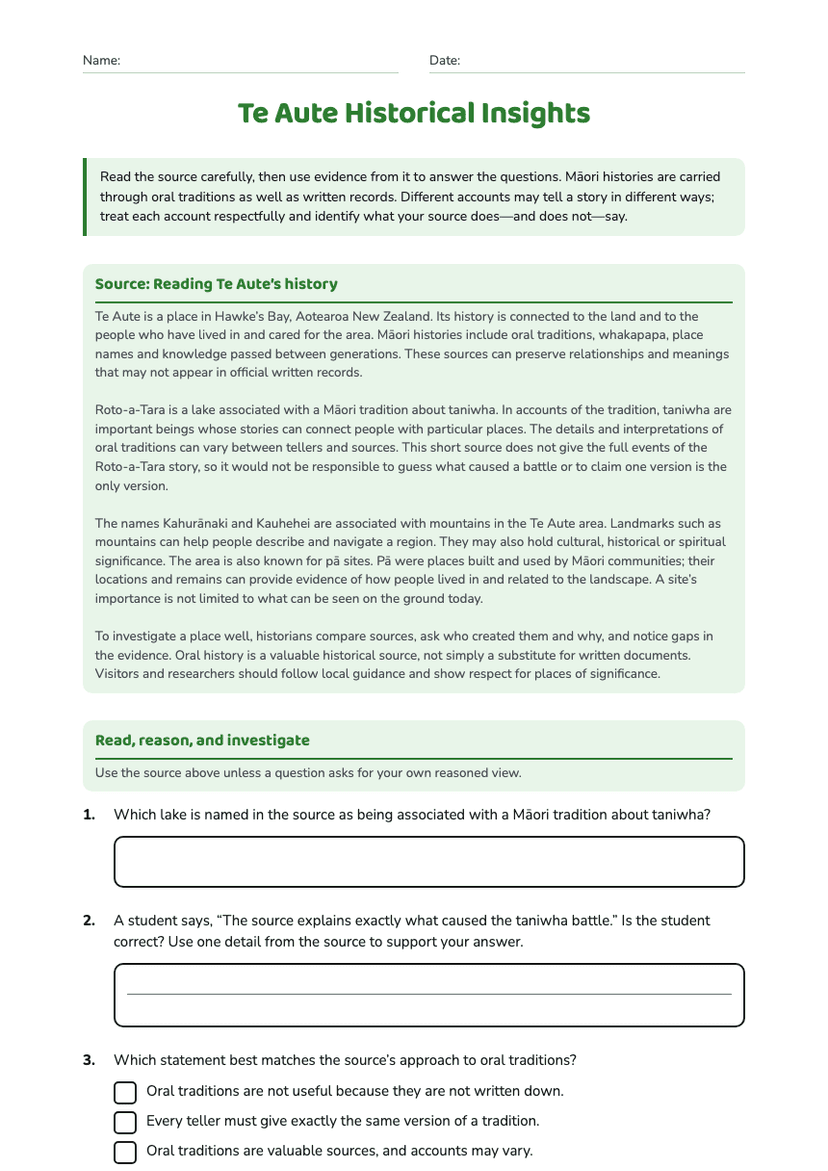
Te Aute Historical Insights
Free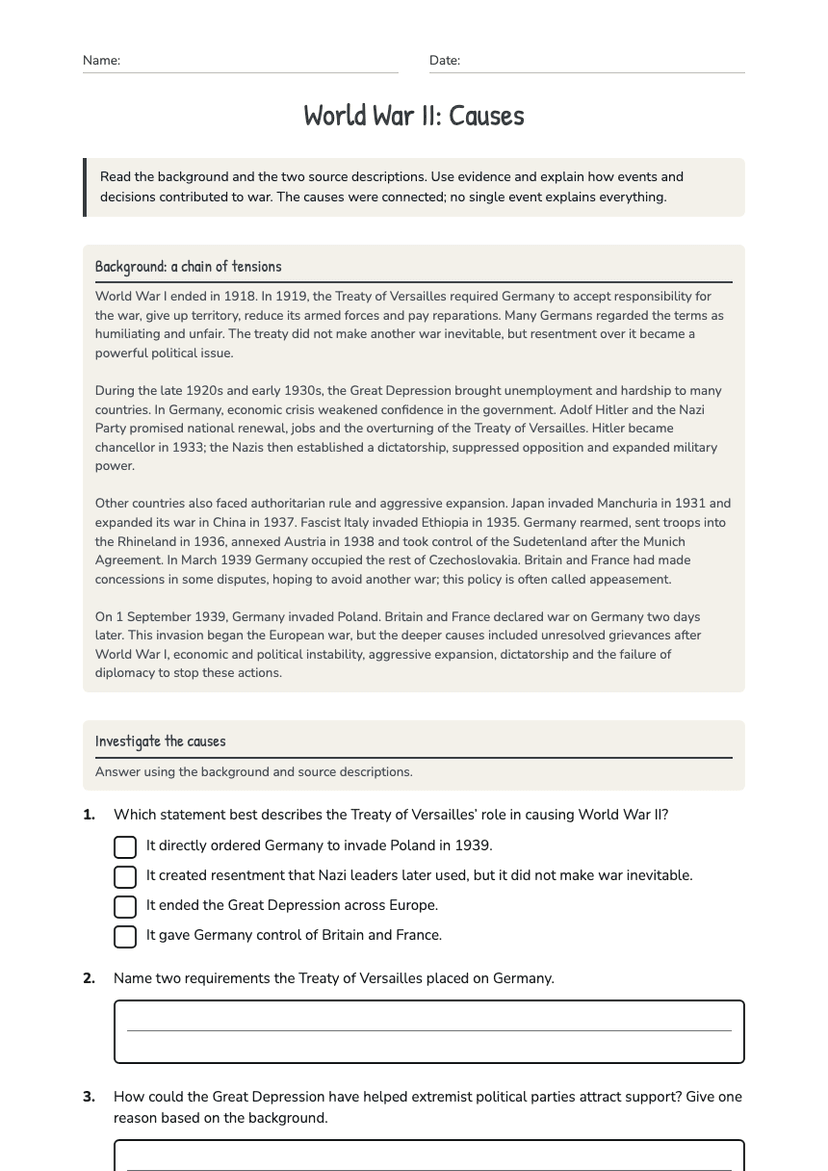
World War II: Causes
Free
Traditional and Modern Voyaging
Free