Atomic Structure Basics
A free science worksheet ready for your classroom. Open in Kuraplan to grab the print-ready PDF, customize it for your students, or generate a fresh version in seconds.

Atomic Structure Basics
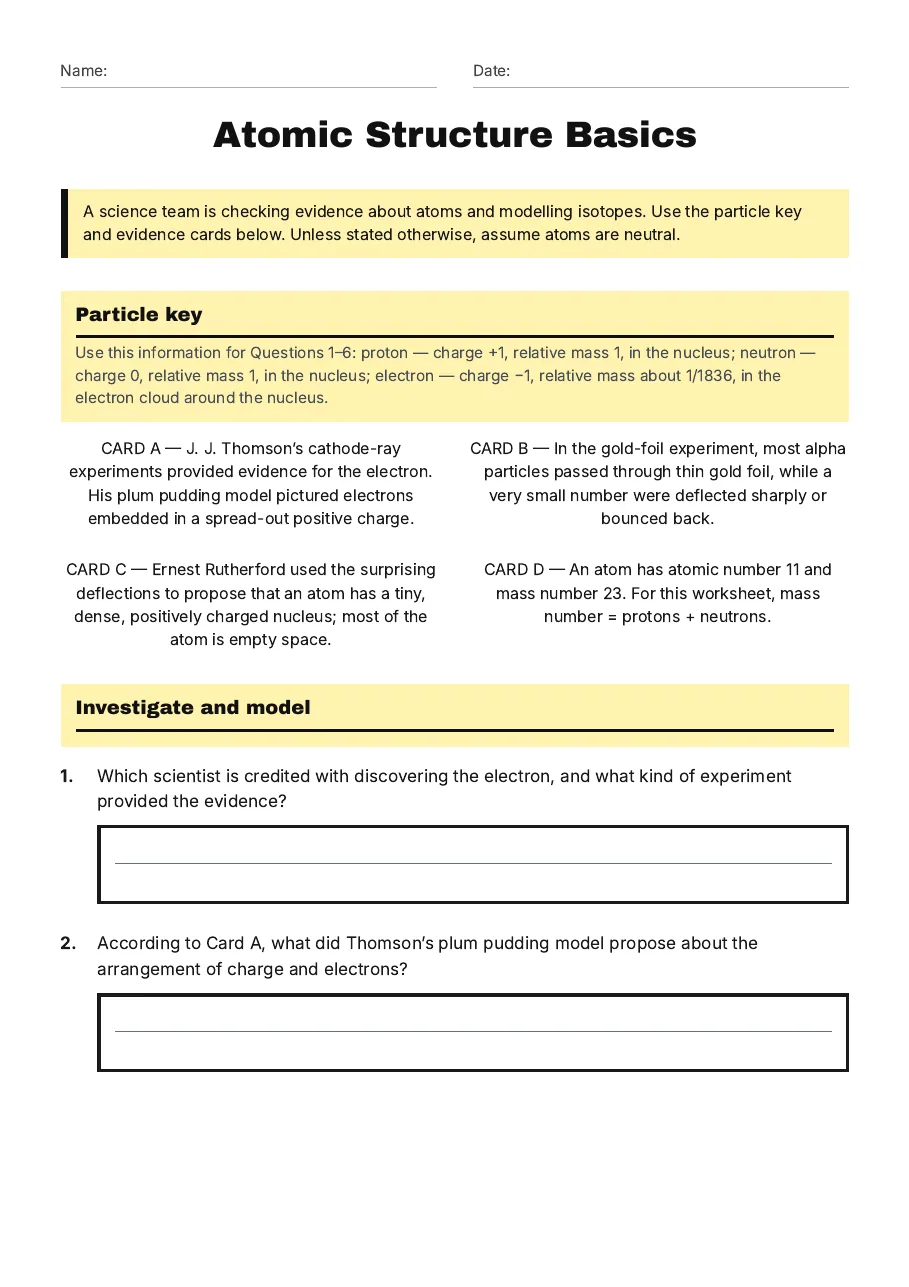
Particle key
Use this information for Questions 1–6: proton — charge +1, relative mass 1, in the nucleus; neutron — charge 0, relative mass 1, in the nucleus; electron — charge −1, relative mass about 1/1836, in the electron cloud around the nucleus.
CARD A — J. J. Thomson’s cathode-ray experiments provided evidence for the electron. His plum pudding model pictured electrons embedded in a spread-out positive charge.
CARD B — In the gold-foil experiment, most alpha particles passed through thin gold foil, while a very small number were deflected sharply or bounced back.
CARD C — Ernest Rutherford used the surprising deflections to propose that an atom has a tiny, dense, positively charged nucleus; most of the atom is empty space.
CARD D — An atom has atomic number 11 and mass number 23. For this worksheet, mass number = protons + neutrons.
Investigate and model
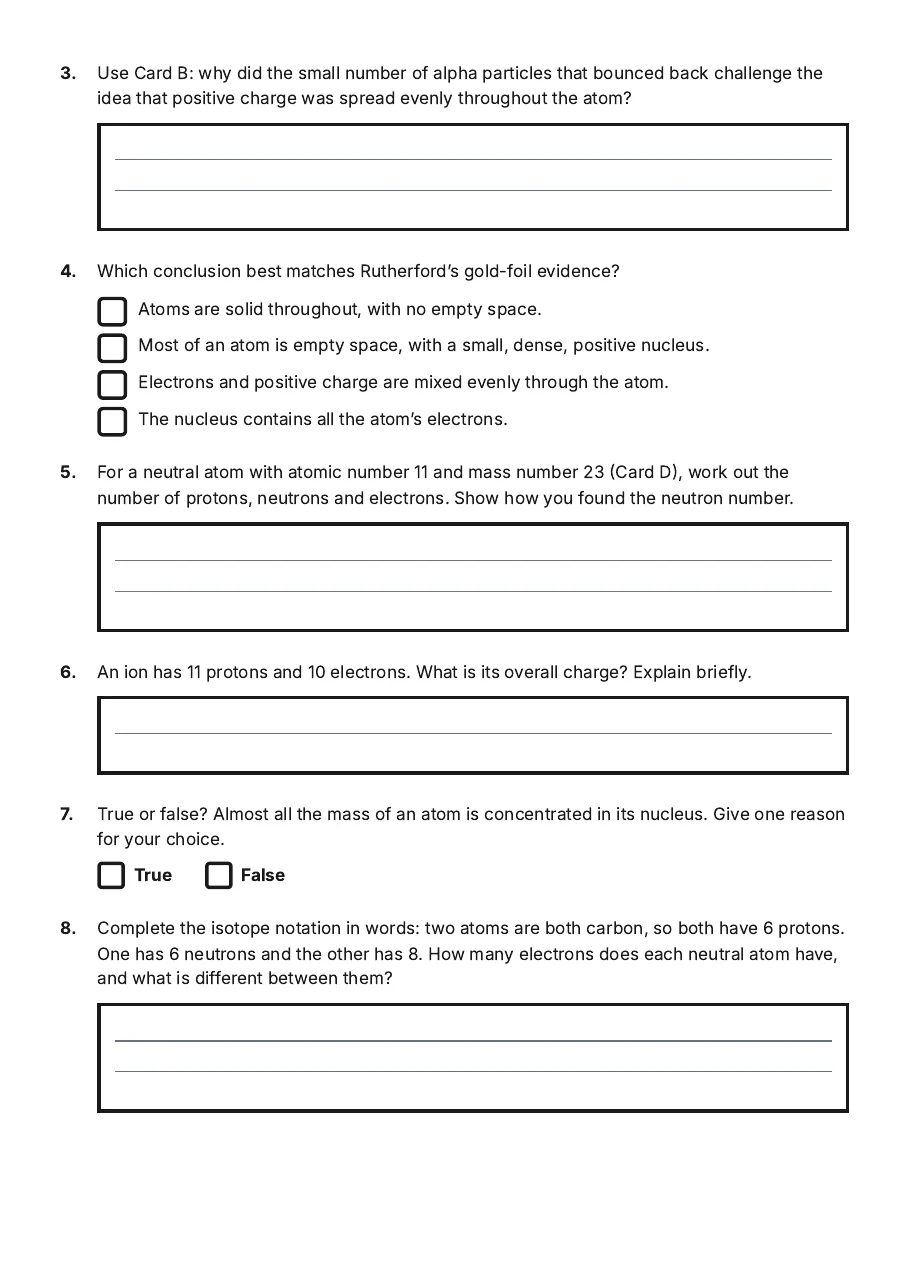
- Atoms are solid throughout, with no empty space.
- Most of an atom is empty space, with a small, dense, positive nucleus.
- Electrons and positive charge are mixed evenly through the atom.
- The nucleus contains all the atom’s electrons.
3 printable pages
Page 1
Page 2
Page 3
About This Worksheet
Free in Kuraplan
Sign up free, grab the PDF, and customize it for your class.
Print-Ready
Formatted for standard paper. Clean layout, easy to read.
AI-Generated
Created with Kuraplan's AI, designed for real classroom use.
For Teachers & Parents
Use in classrooms, for homework, tutoring, or homeschool.
Need a custom version of this worksheet?
Kuraplan's AI generates custom worksheets in seconds — differentiated for every learner, aligned to your curriculum.
Generate Custom Worksheets — FreeMore Science Worksheets
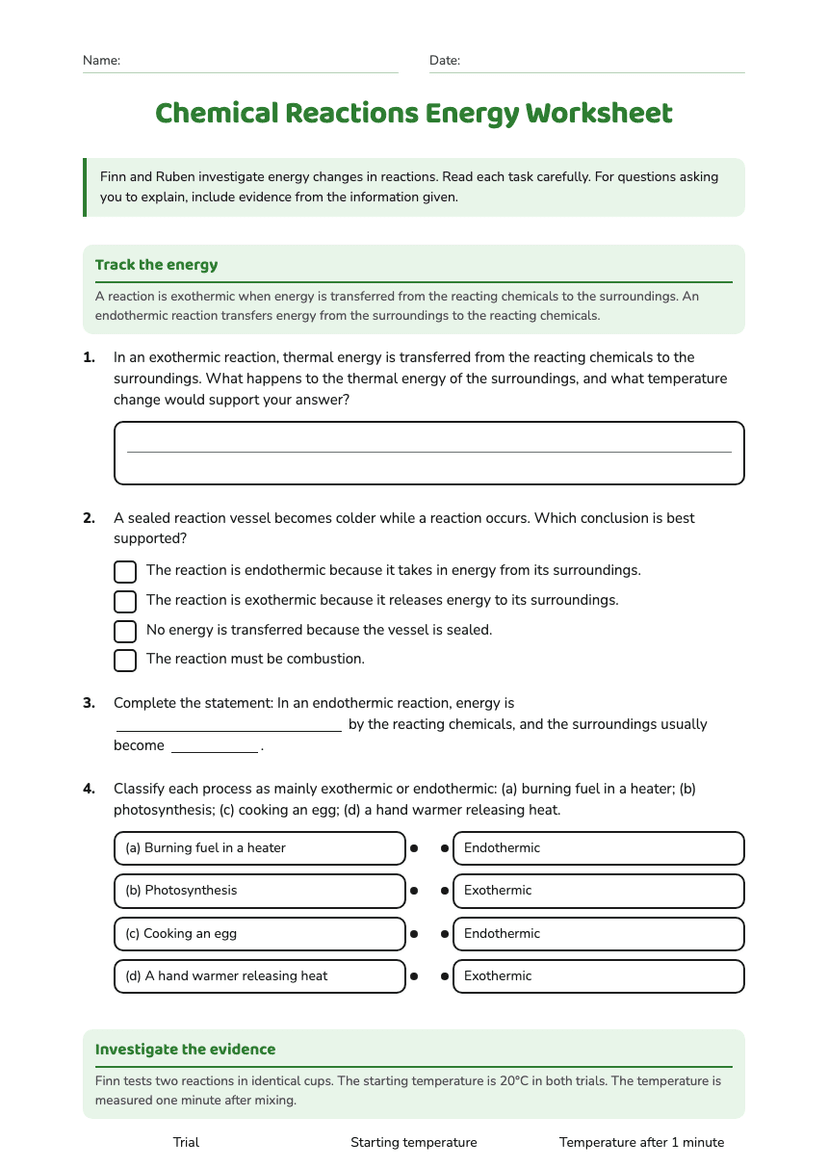
Chemical Reactions Energy Worksheet
Free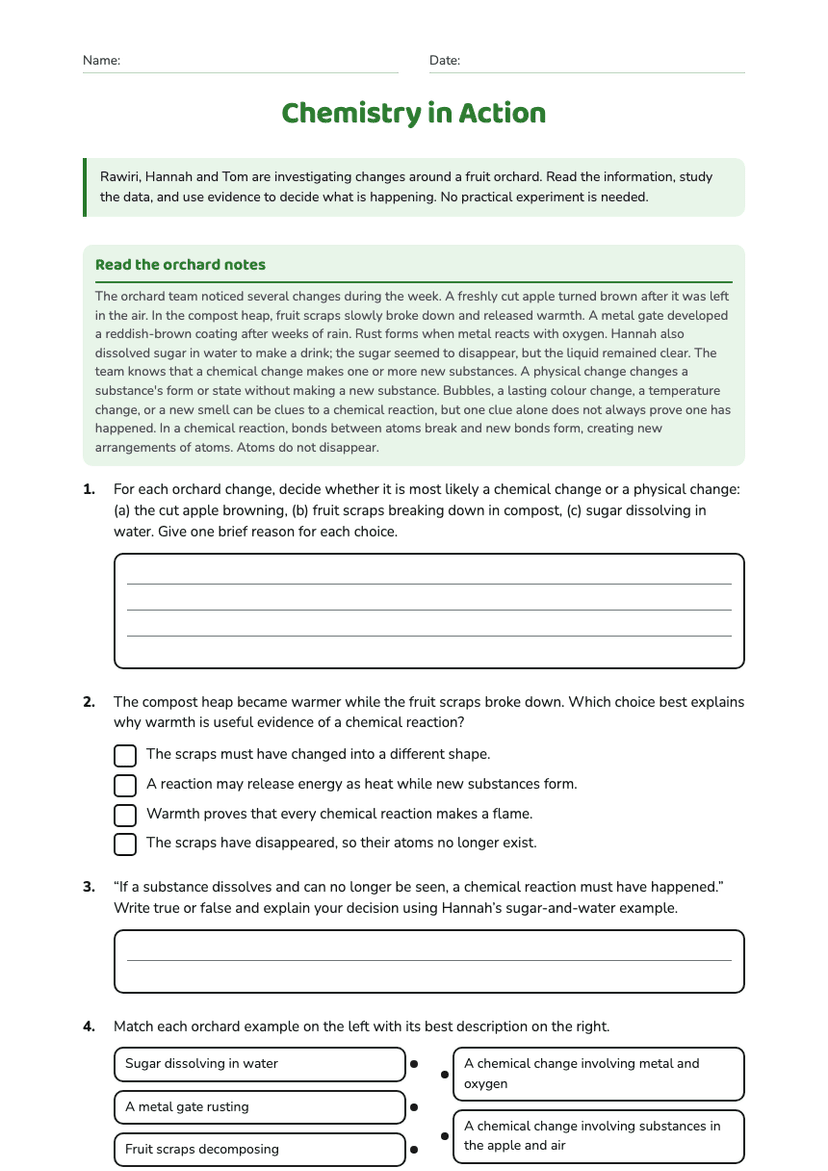
Chemistry in Action
Free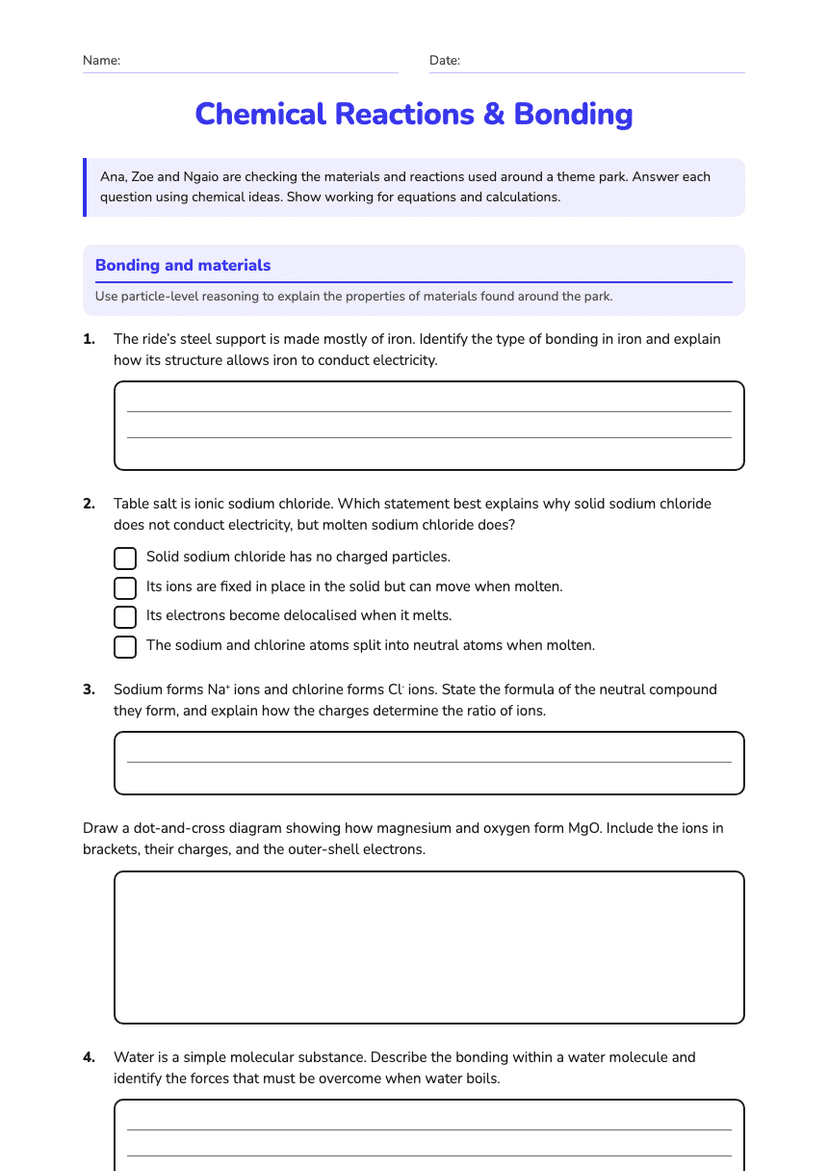
Chemical Reactions & Bonding
Free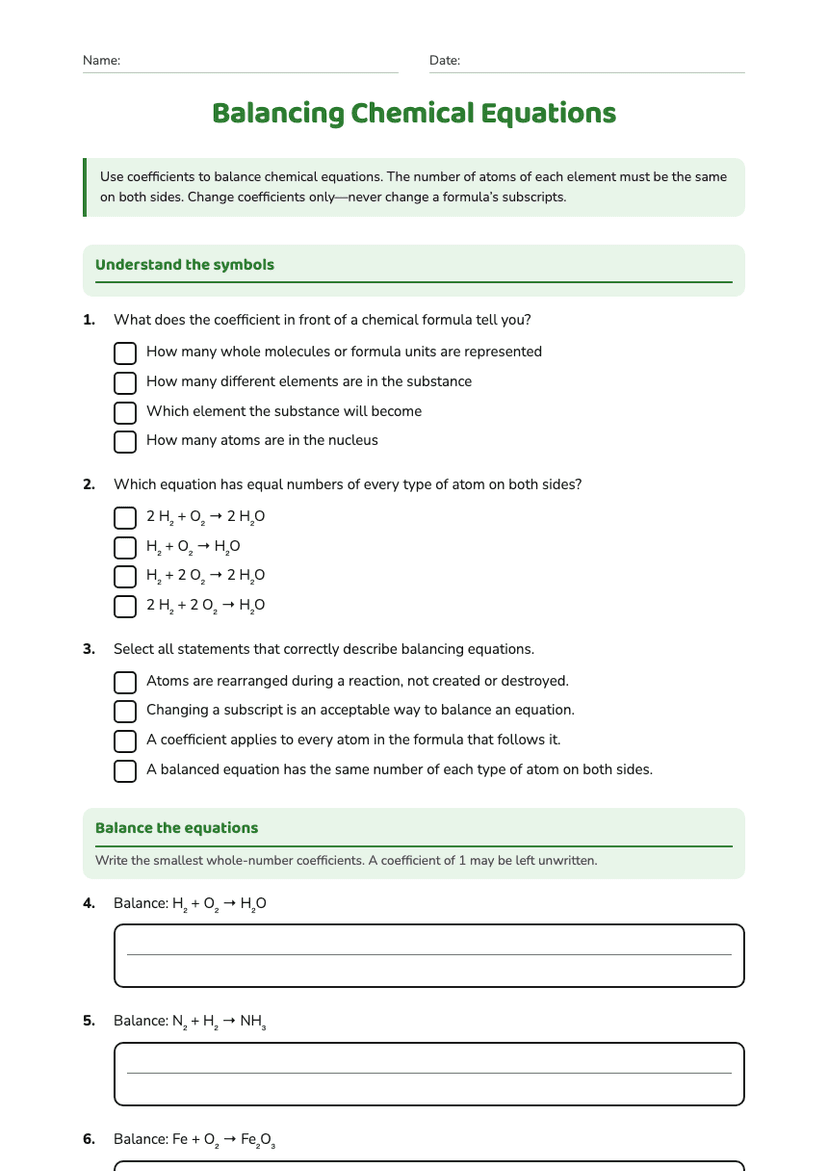
Balancing Chemical Equations
Free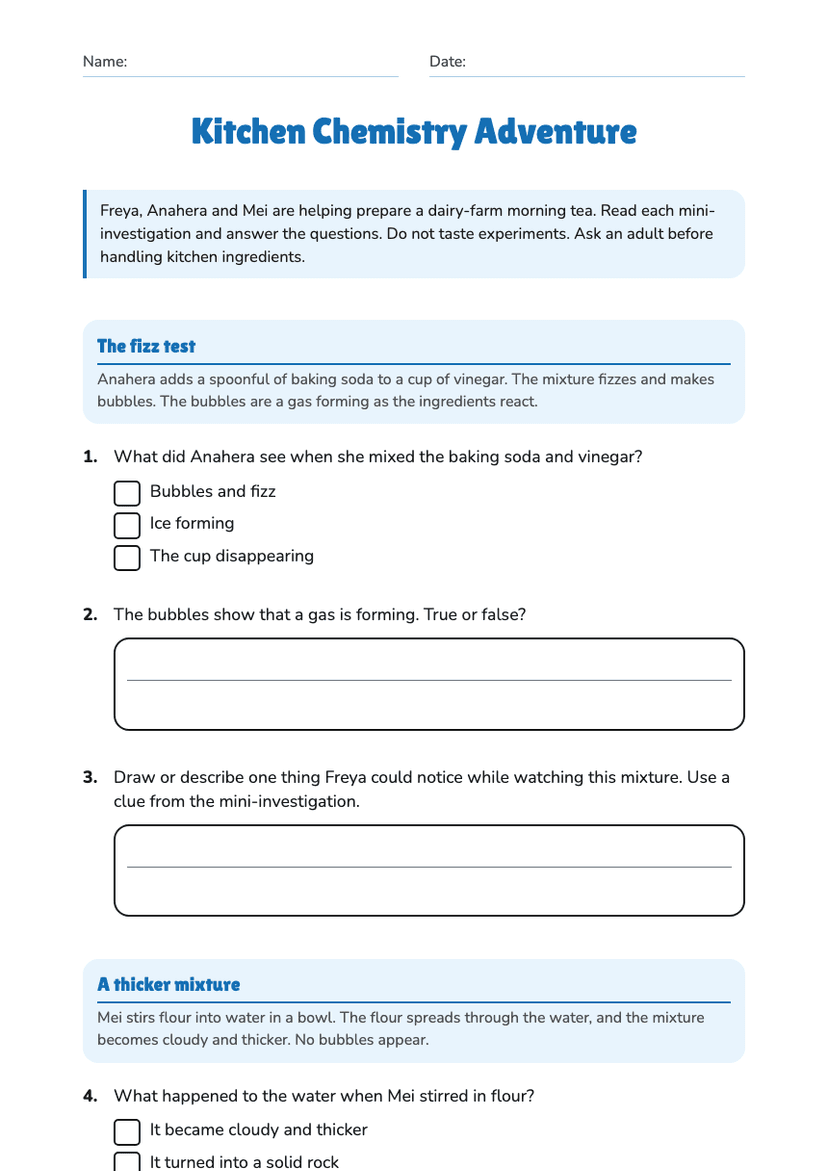
Kitchen Chemistry Adventure
Free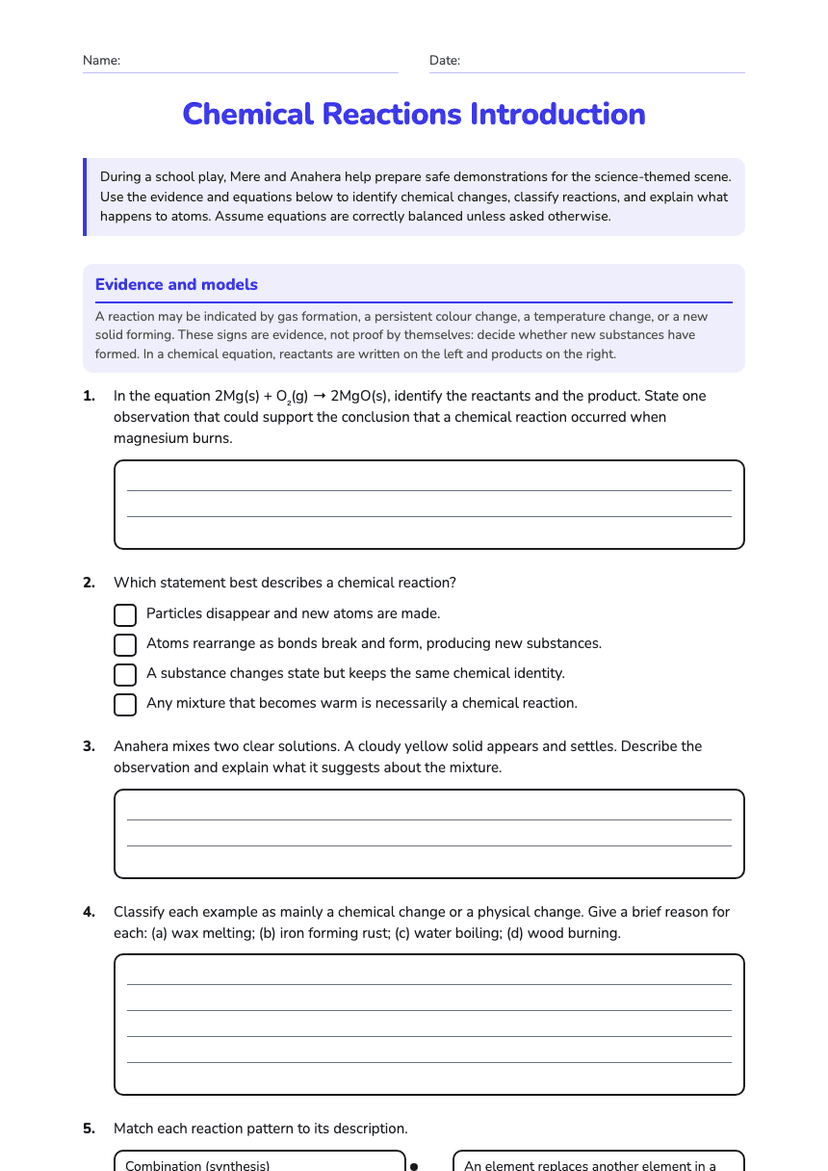
Chemical Reactions Introduction
Free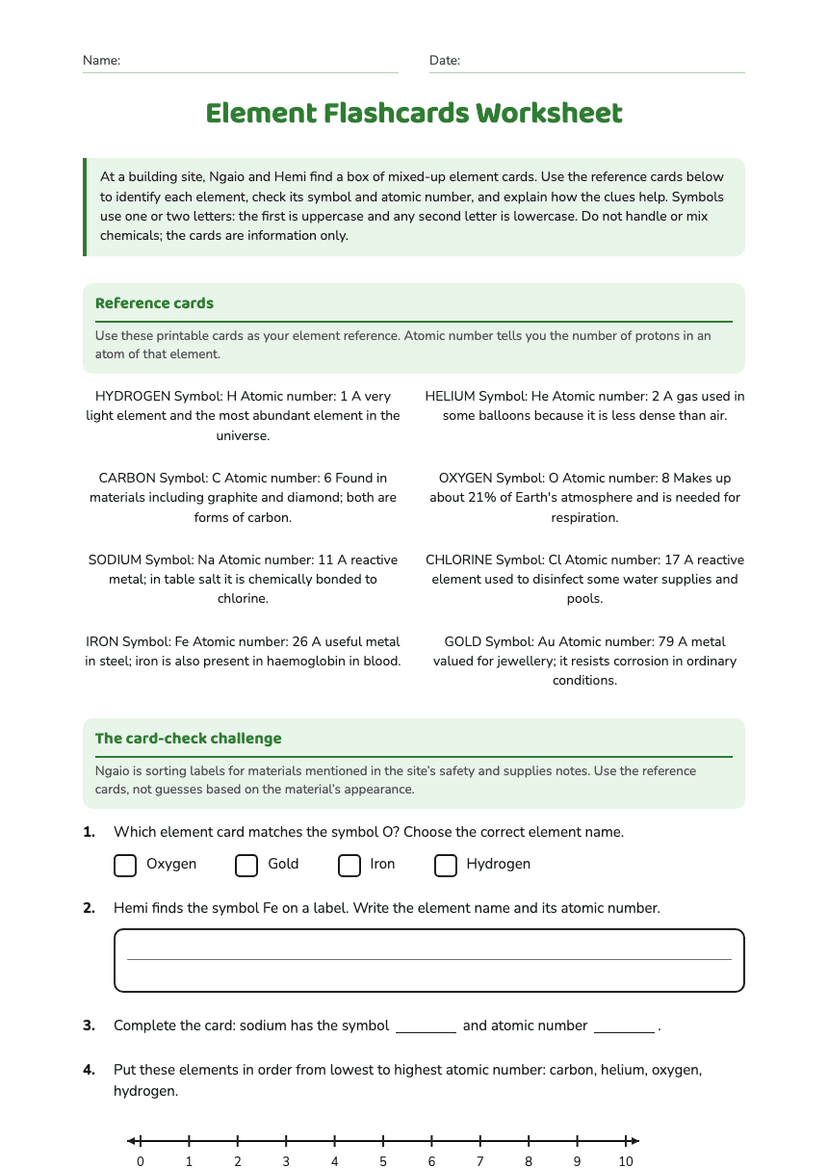
Element Flashcards Worksheet
Free