Chemistry in Action
A free science worksheet ready for your classroom. Open in Kuraplan to grab the print-ready PDF, customize it for your students, or generate a fresh version in seconds.
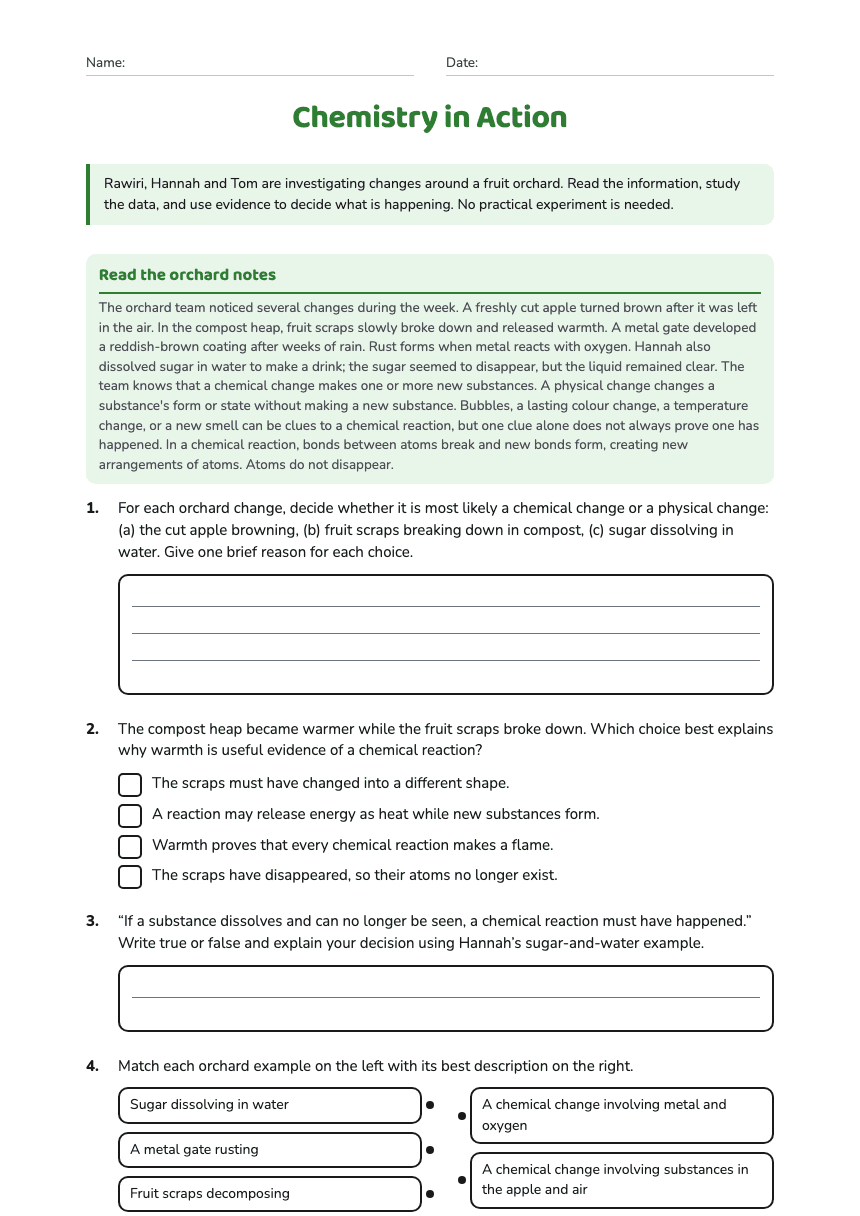
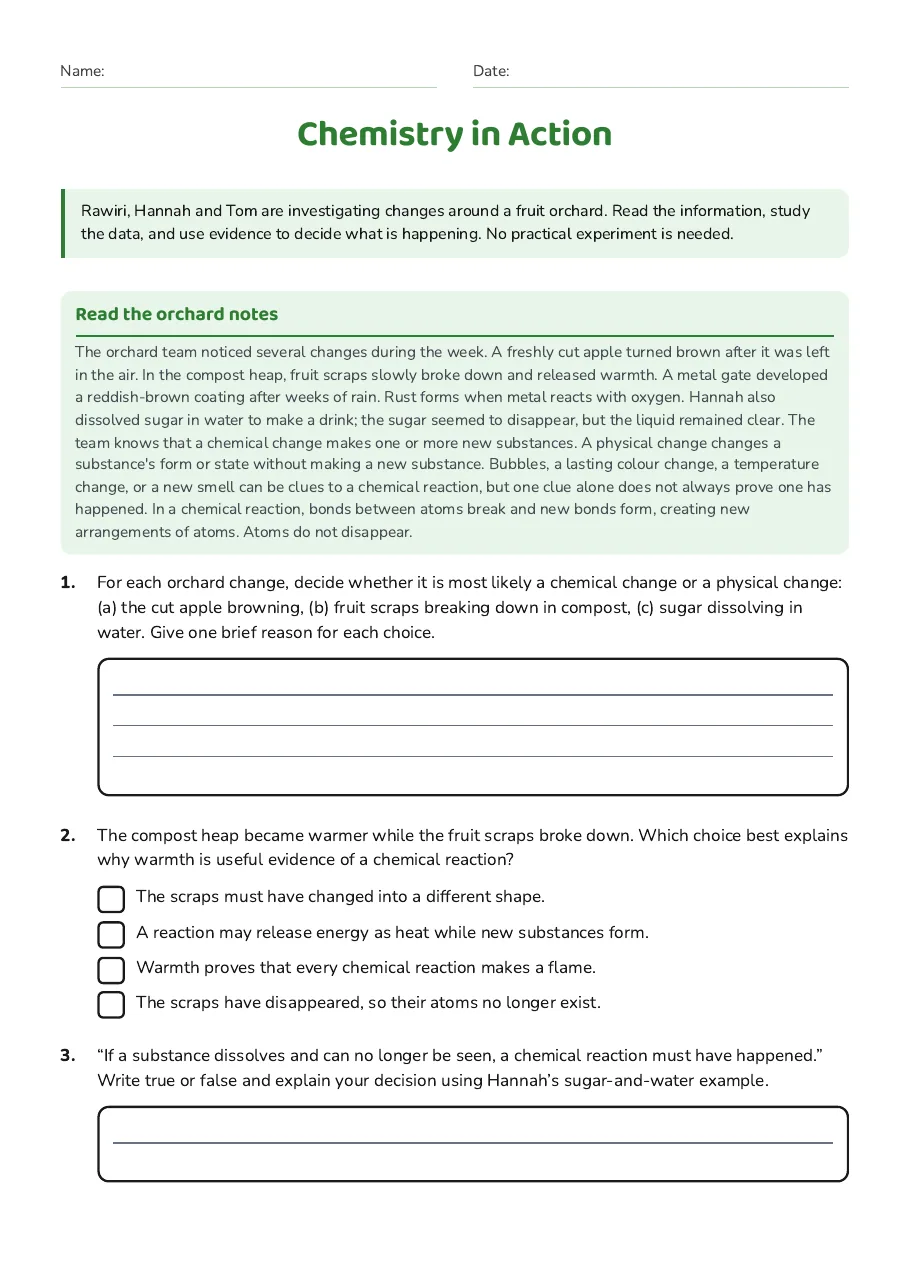
Chemistry in Action
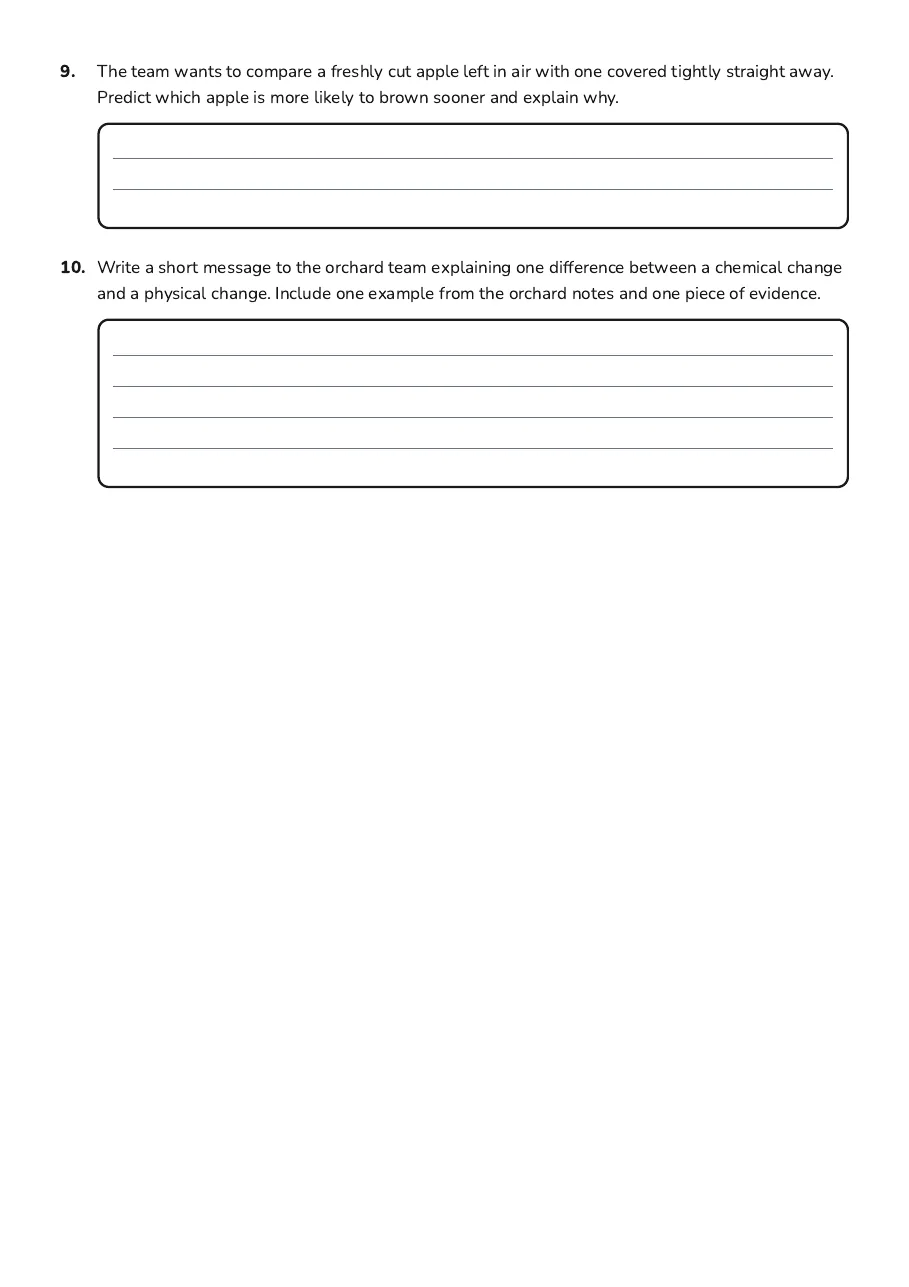
Read the orchard notes
The orchard team noticed several changes during the week. A freshly cut apple turned brown after it was left in the air. In the compost heap, fruit scraps slowly broke down and released warmth. A metal gate developed a reddish-brown coating after weeks of rain. Rust forms when metal reacts with oxygen. Hannah also dissolved sugar in water to make a drink; the sugar seemed to disappear, but the liquid remained clear. The team knows that a chemical change makes one or more new substances. A physical change changes a substance's form or state without making a new substance. Bubbles, a lasting colour change, a temperature change, or a new smell can be clues to a chemical reaction, but one clue alone does not always prove one has happened. In a chemical reaction, bonds between atoms break and new bonds form, creating new arrangements of atoms. Atoms do not disappear.
- The scraps must have changed into a different shape.
- A reaction may release energy as heat while new substances form.
- Warmth proves that every chemical reaction makes a flame.
- The scraps have disappeared, so their atoms no longer exist.
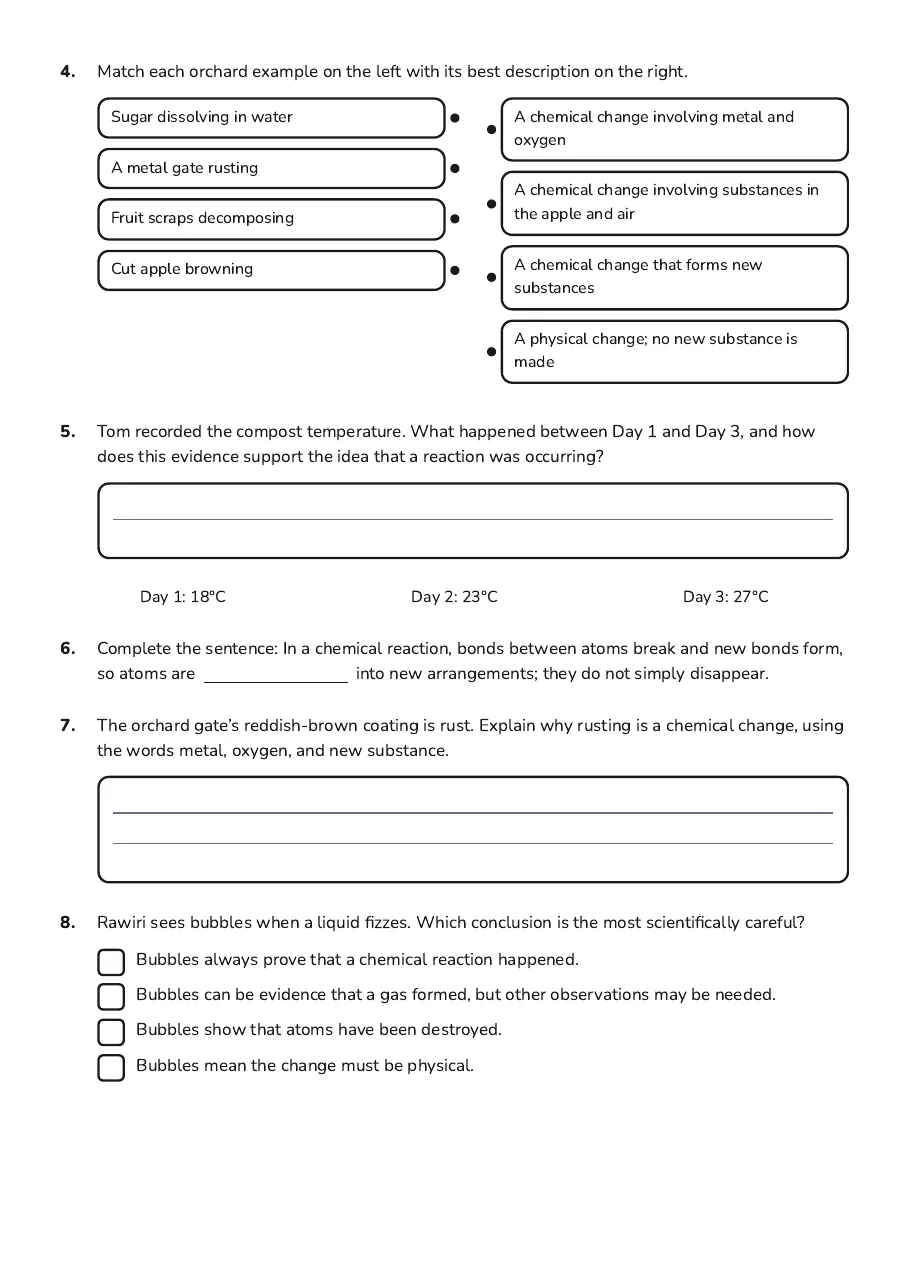
- Sugar dissolving in water
- A metal gate rusting
- Fruit scraps decomposing
- Cut apple browning
- A chemical change involving metal and oxygen
- A chemical change involving substances in the apple and air
- A chemical change that forms new substances
- A physical change; no new substance is made
Day 1: 18°C
Day 2: 23°C
Day 3: 27°C
- Bubbles always prove that a chemical reaction happened.
- Bubbles can be evidence that a gas formed, but other observations may be needed.
- Bubbles show that atoms have been destroyed.
- Bubbles mean the change must be physical.
3 printable pages
Page 1
Page 2
Page 3
About This Worksheet
Free in Kuraplan
Sign up free, grab the PDF, and customize it for your class.
Print-Ready
Formatted for standard paper. Clean layout, easy to read.
AI-Generated
Created with Kuraplan's AI, designed for real classroom use.
For Teachers & Parents
Use in classrooms, for homework, tutoring, or homeschool.
Need a custom version of this worksheet?
Kuraplan's AI generates custom worksheets in seconds — differentiated for every learner, aligned to your curriculum.
Generate Custom Worksheets — FreeMore Science Worksheets
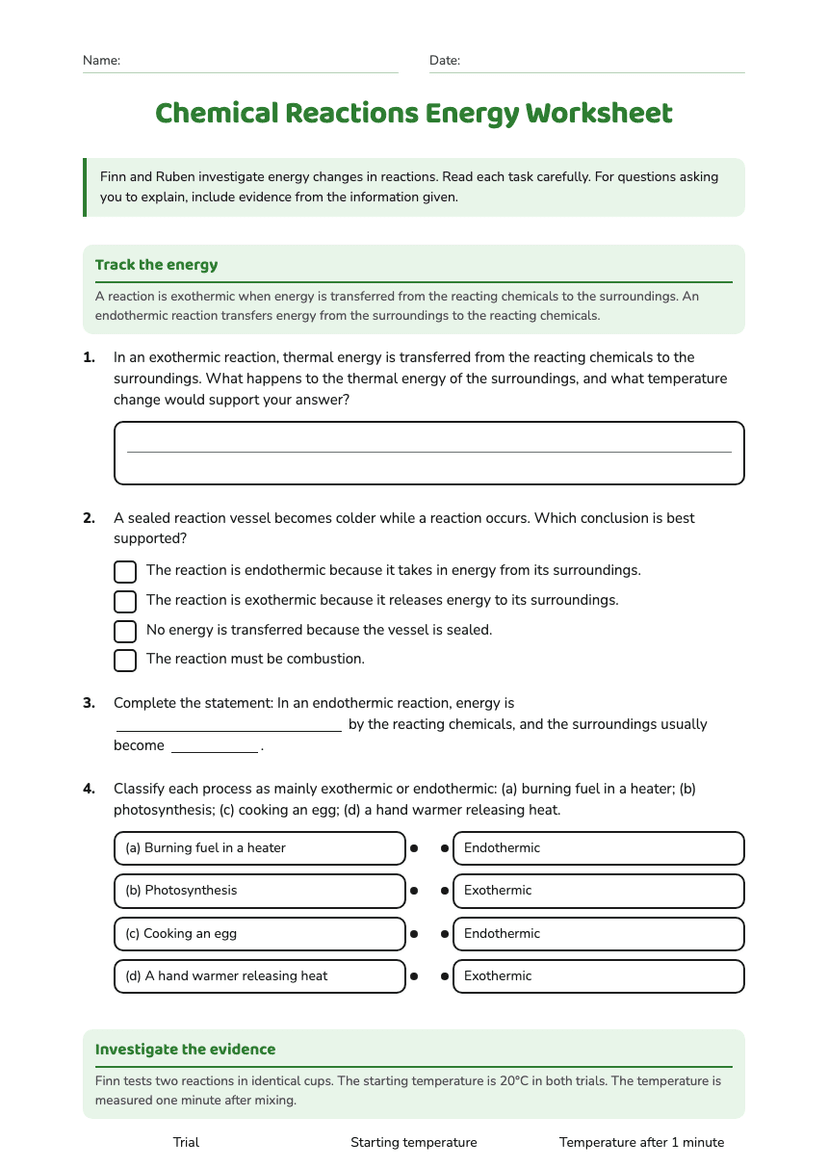
Chemical Reactions Energy Worksheet
Free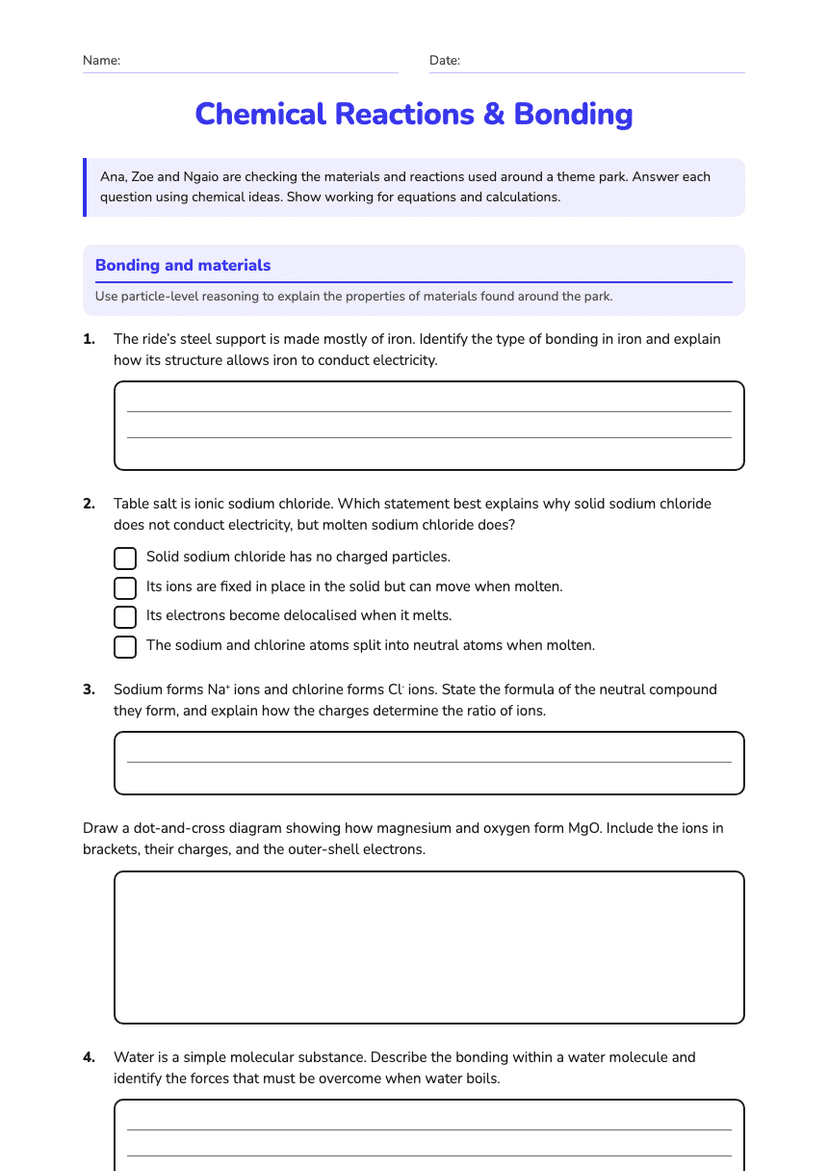
Chemical Reactions & Bonding
Free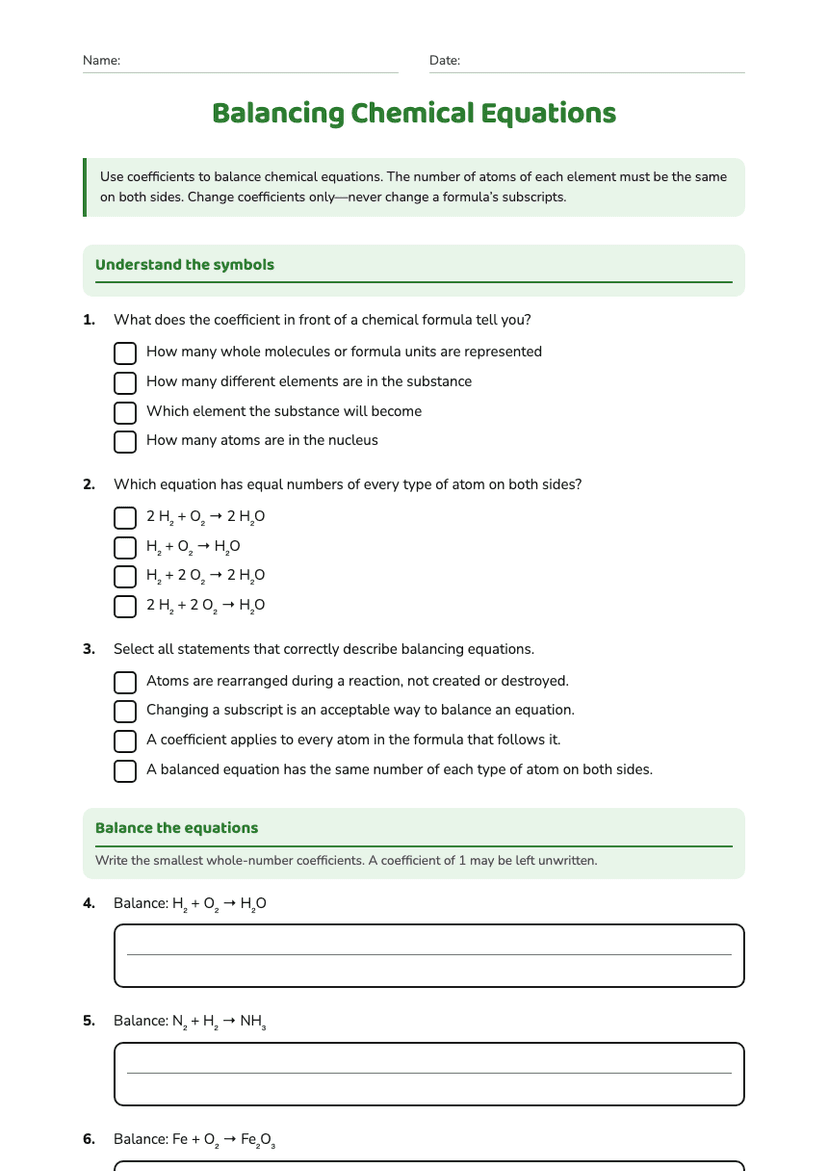
Balancing Chemical Equations
Free
Kitchen Chemistry Adventure
Free
Chemical Reactions Introduction
Free
Element Flashcards Worksheet
Free
Physical vs Chemical Changes
Free