Atoms Assessment Rubric Guide
A free science worksheet ready for your classroom. Open in Kuraplan to grab the print-ready PDF, customize it for your students, or generate a fresh version in seconds.
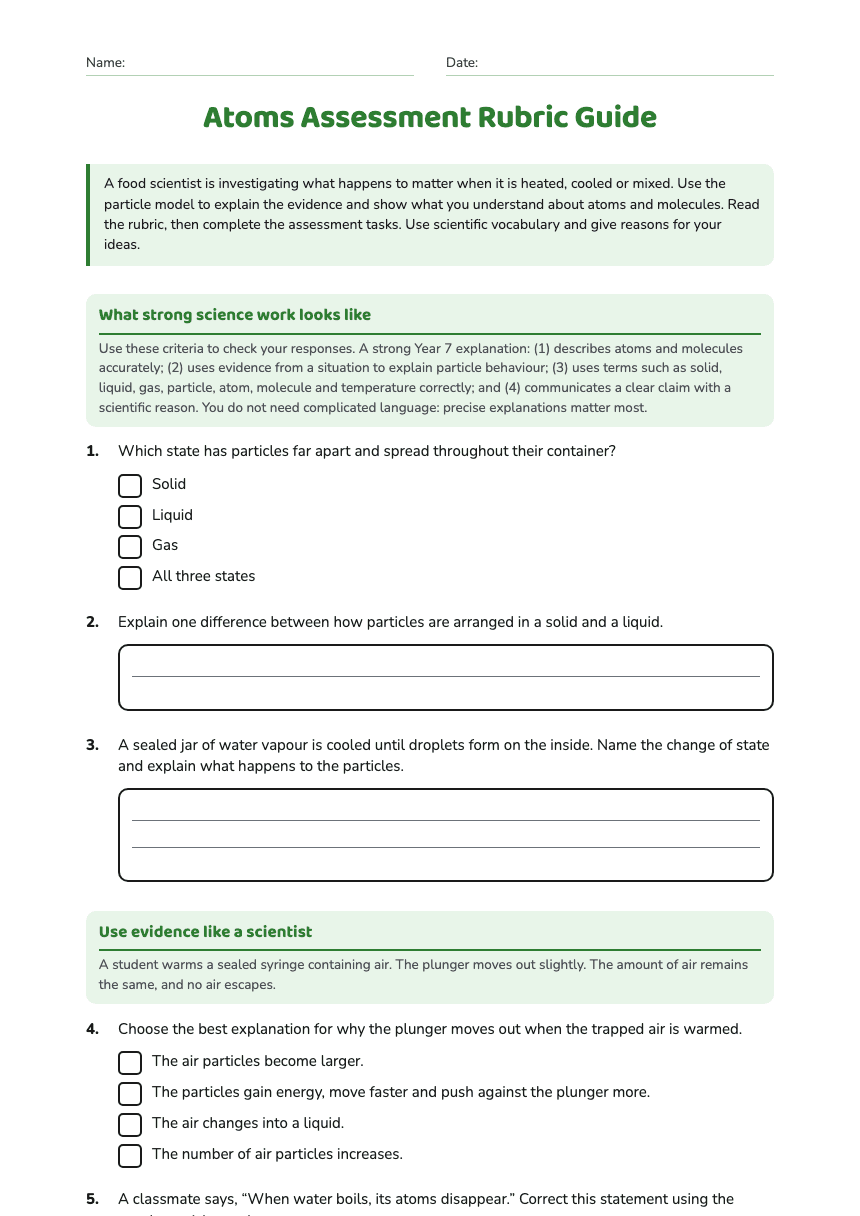
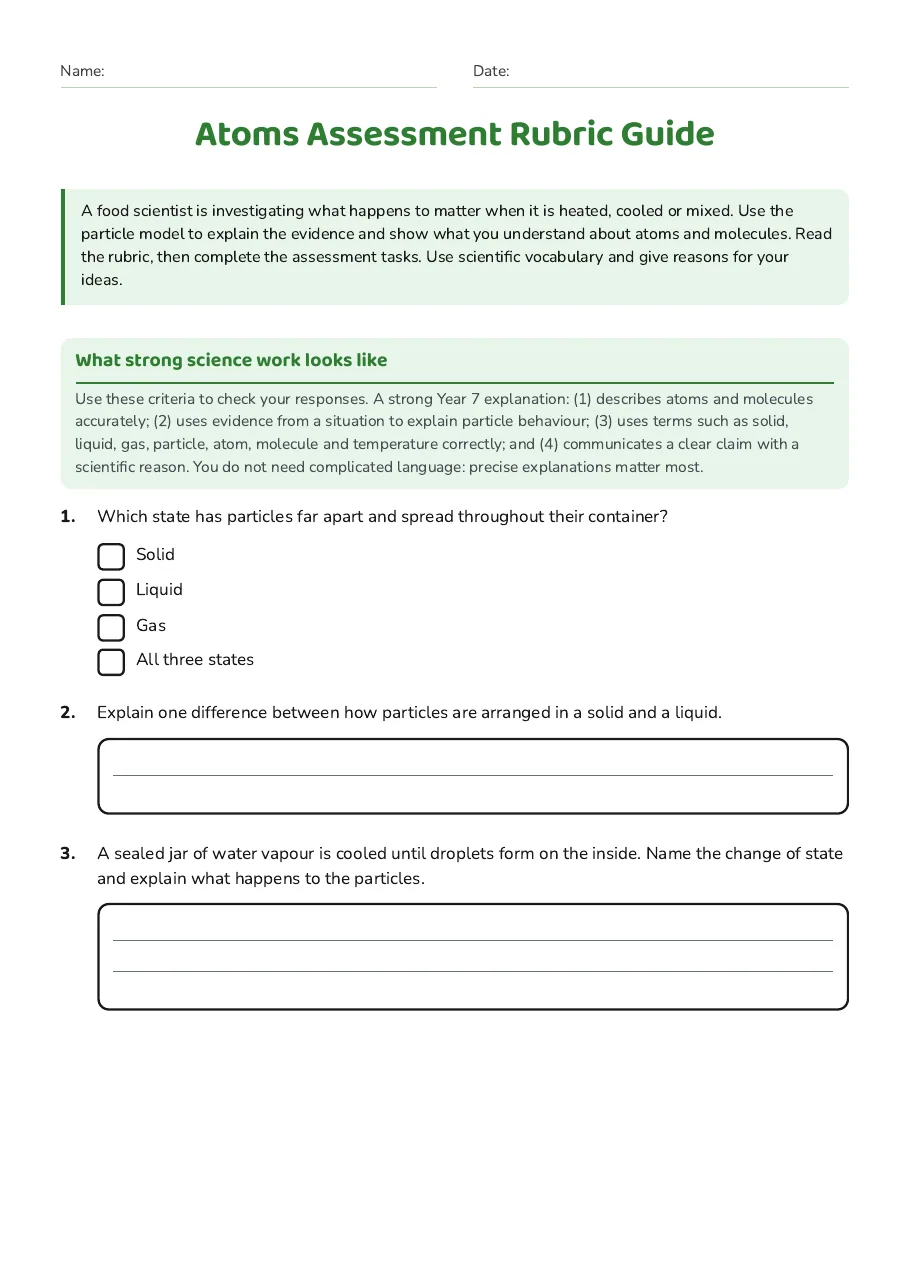
Atoms Assessment Rubric Guide
What strong science work looks like
Use these criteria to check your responses. A strong Year 7 explanation: (1) describes atoms and molecules accurately; (2) uses evidence from a situation to explain particle behaviour; (3) uses terms such as solid, liquid, gas, particle, atom, molecule and temperature correctly; and (4) communicates a clear claim with a scientific reason. You do not need complicated language: precise explanations matter most.
- Solid
- Liquid
- Gas
- All three states
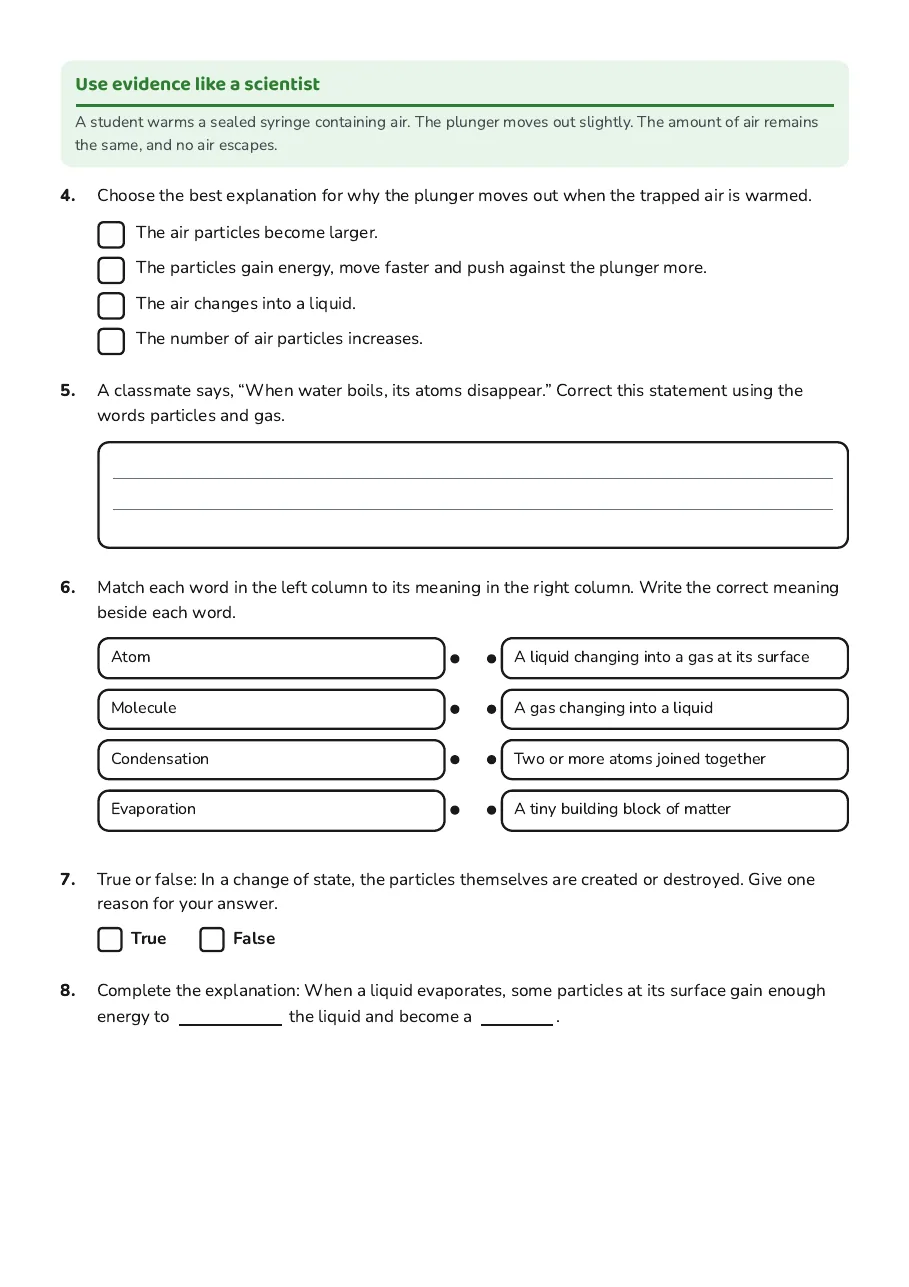
Use evidence like a scientist
A student warms a sealed syringe containing air. The plunger moves out slightly. The amount of air remains the same, and no air escapes.
- The air particles become larger.
- The particles gain energy, move faster and push against the plunger more.
- The air changes into a liquid.
- The number of air particles increases.
- Atom
- Molecule
- Condensation
- Evaporation
- A liquid changing into a gas at its surface
- A gas changing into a liquid
- Two or more atoms joined together
- A tiny building block of matter
3 printable pages
Page 1
Page 2
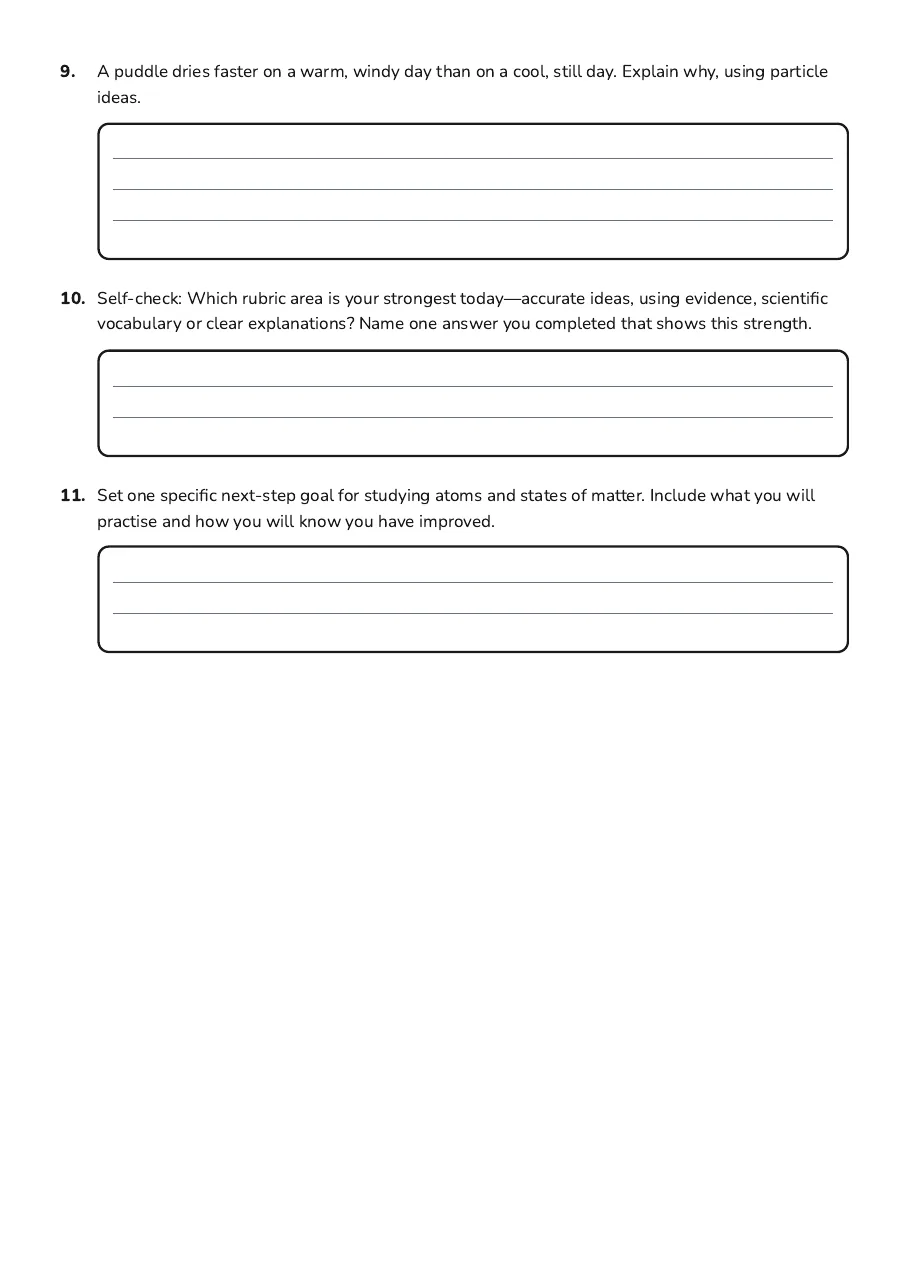
Page 3
About This Worksheet
Free in Kuraplan
Sign up free, grab the PDF, and customize it for your class.
Print-Ready
Formatted for standard paper. Clean layout, easy to read.
AI-Generated
Created with Kuraplan's AI, designed for real classroom use.
For Teachers & Parents
Use in classrooms, for homework, tutoring, or homeschool.
Need a custom version of this worksheet?
Kuraplan's AI generates custom worksheets in seconds — differentiated for every learner, aligned to your curriculum.
Generate Custom Worksheets — FreeMore Science Worksheets
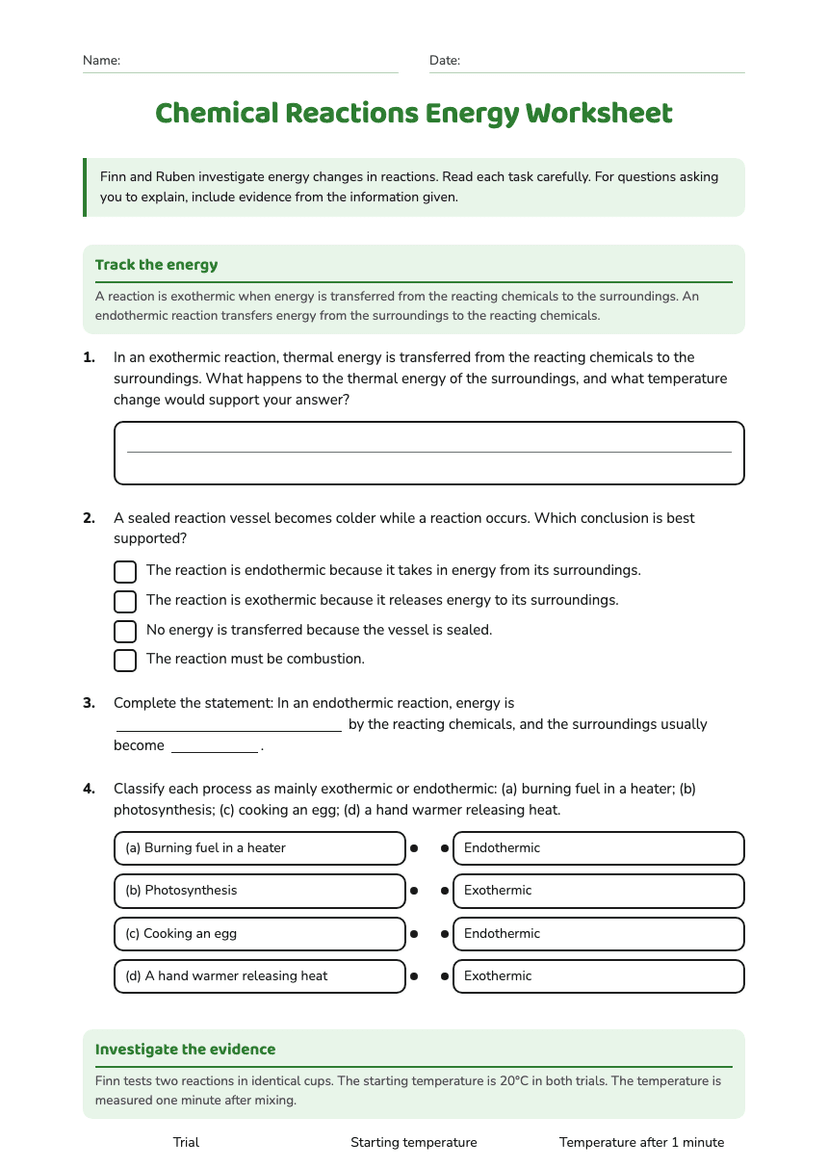
Chemical Reactions Energy Worksheet
Free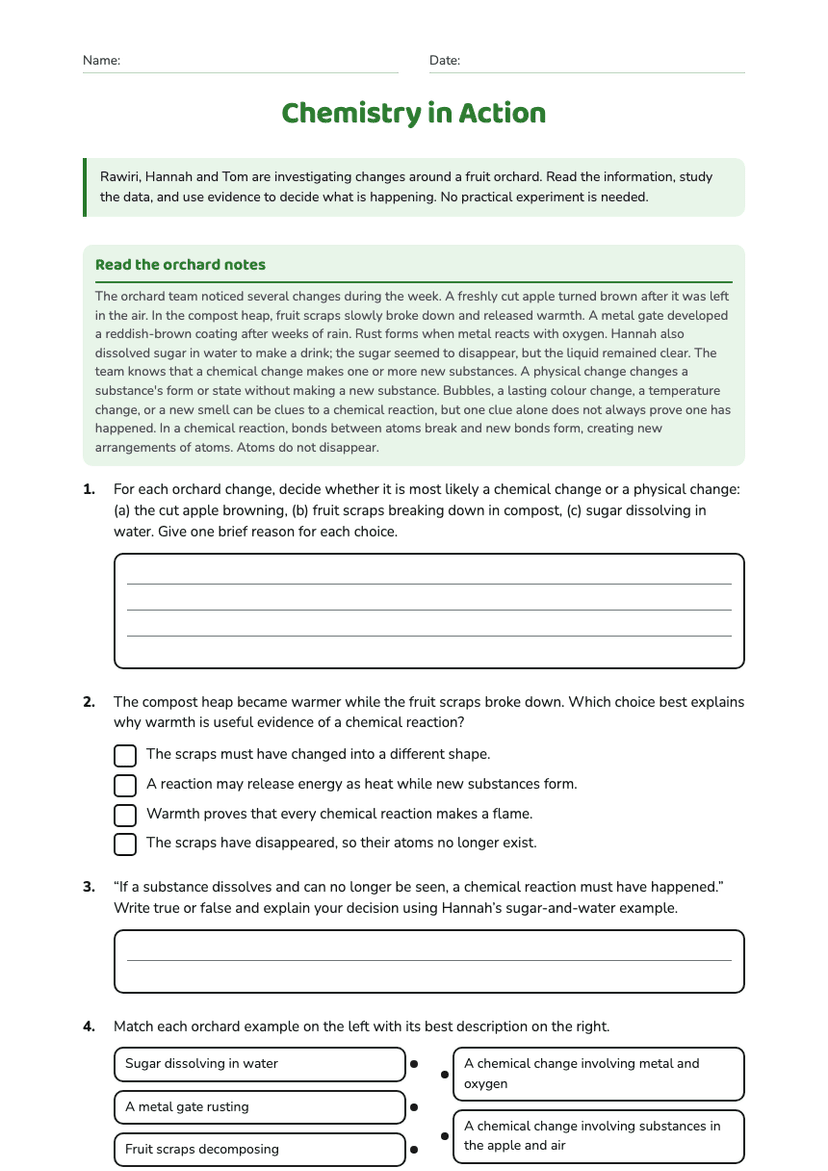
Chemistry in Action
Free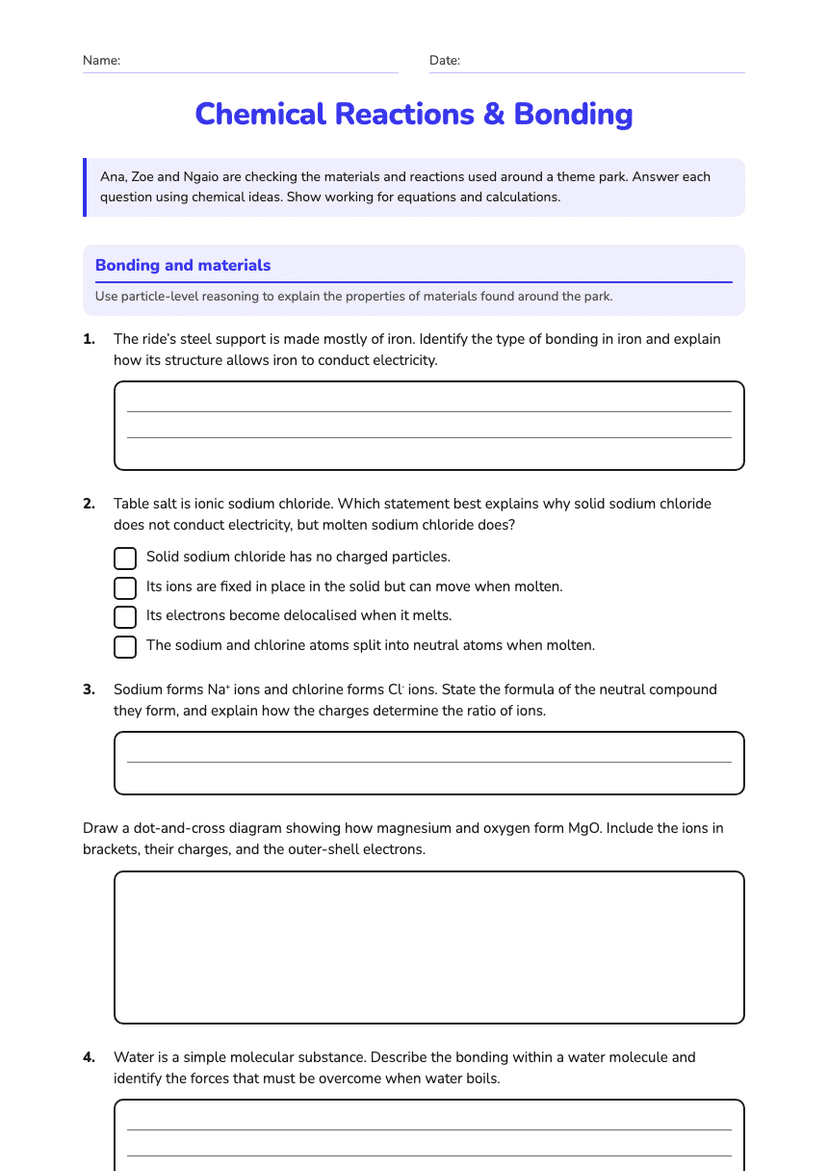
Chemical Reactions & Bonding
Free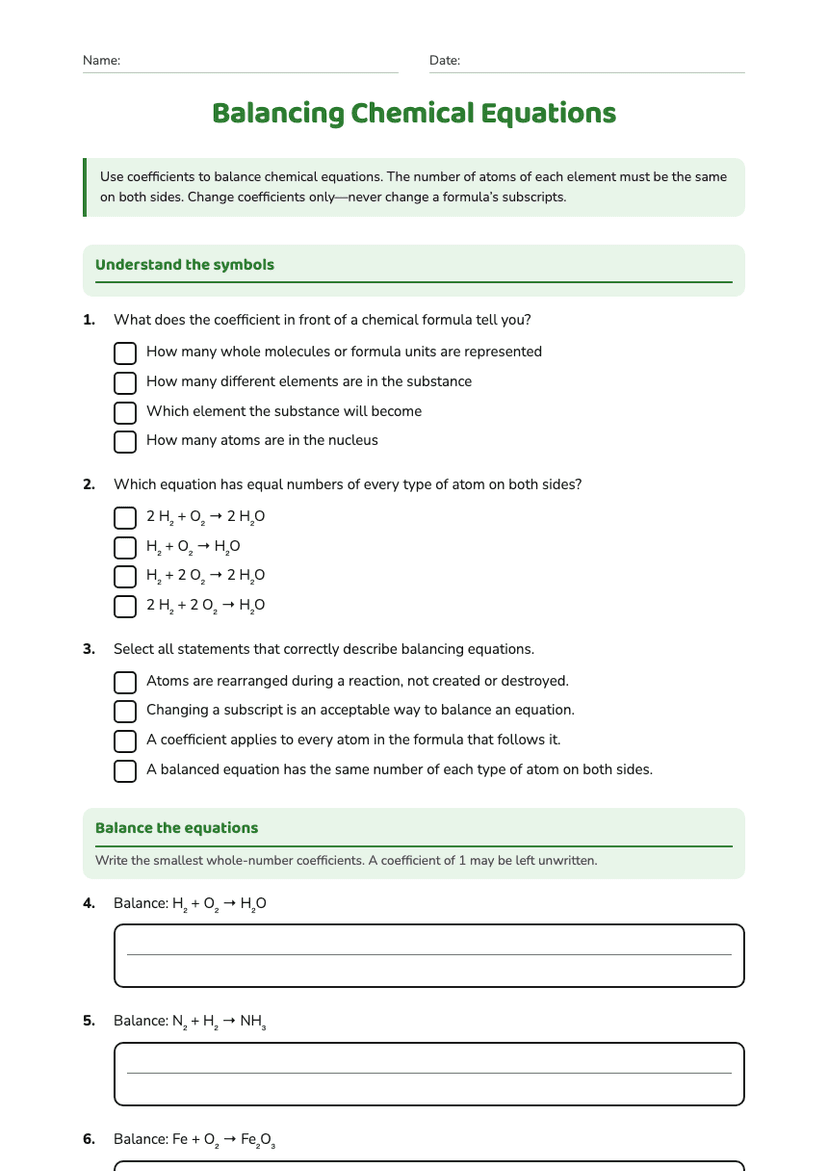
Balancing Chemical Equations
Free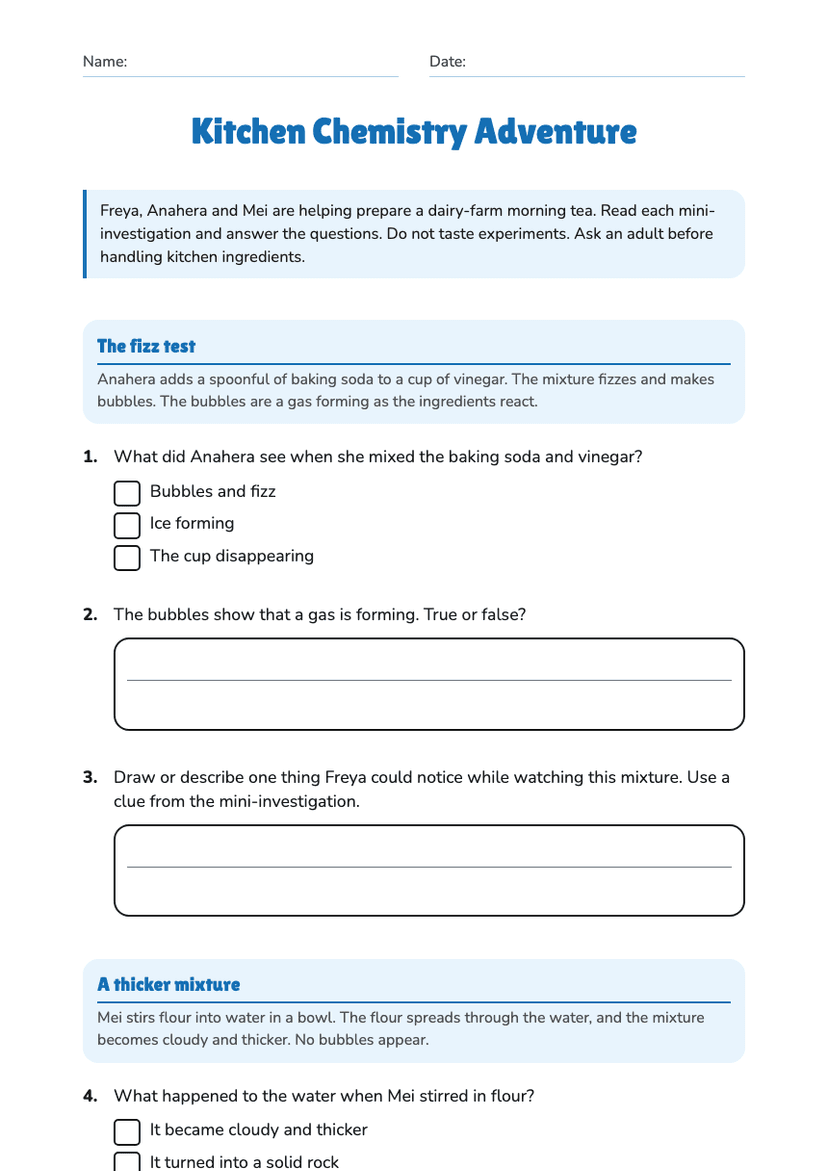
Kitchen Chemistry Adventure
Free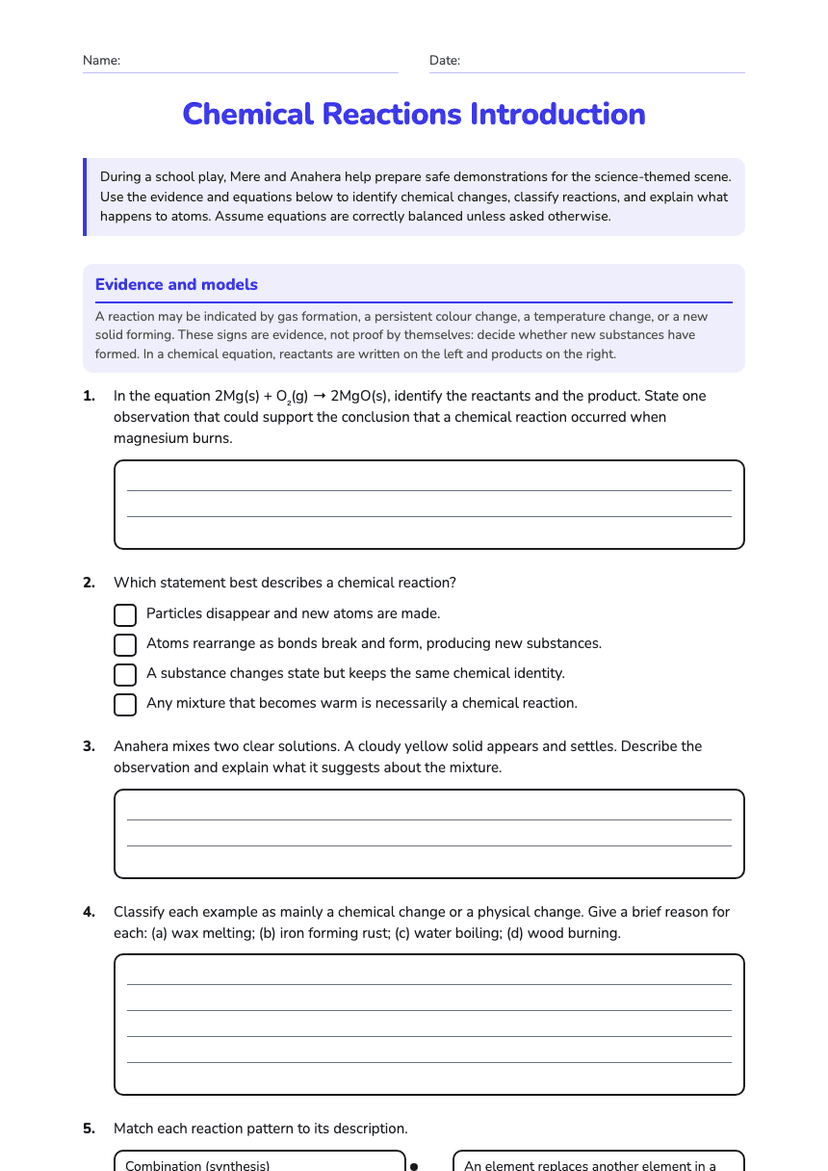
Chemical Reactions Introduction
Free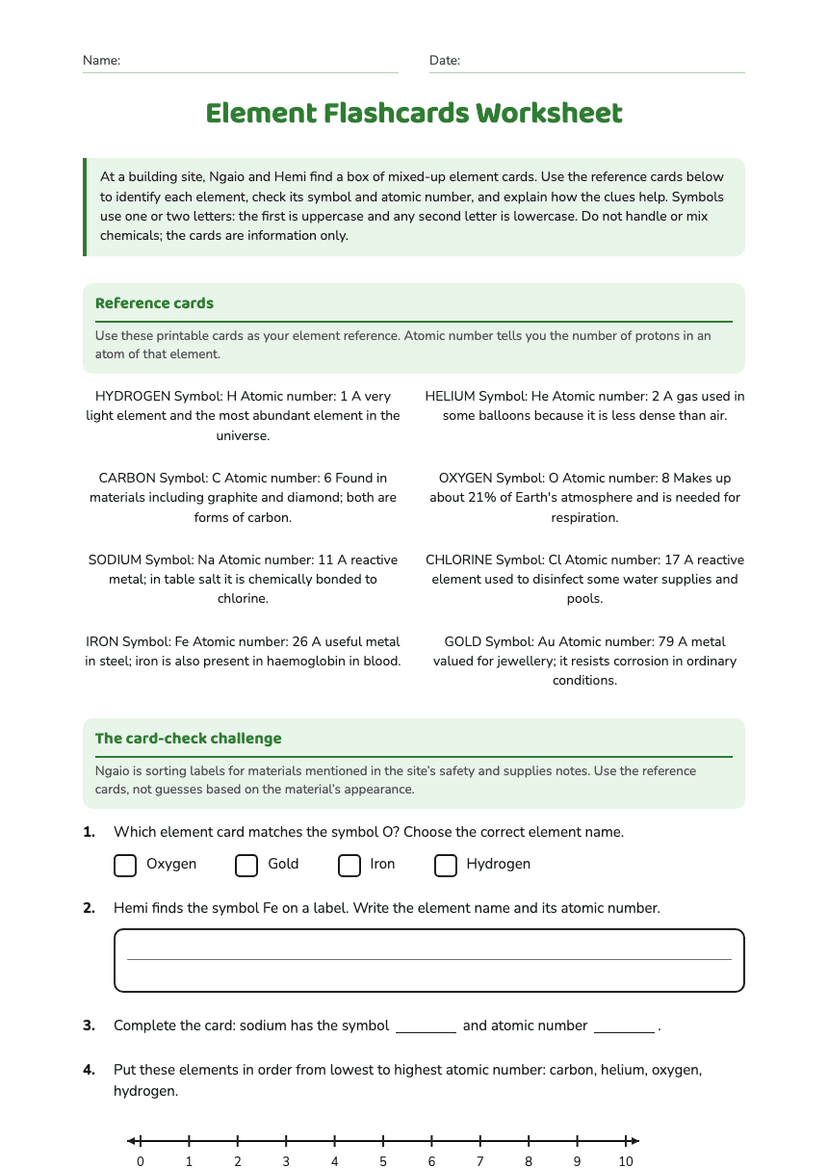
Element Flashcards Worksheet
Free