ScienceFreePrintable
Chemical Reactions Worksheet
A free science worksheet ready for your classroom. Open in Kuraplan to grab the print-ready PDF, customize it for your students, or generate a fresh version in seconds.
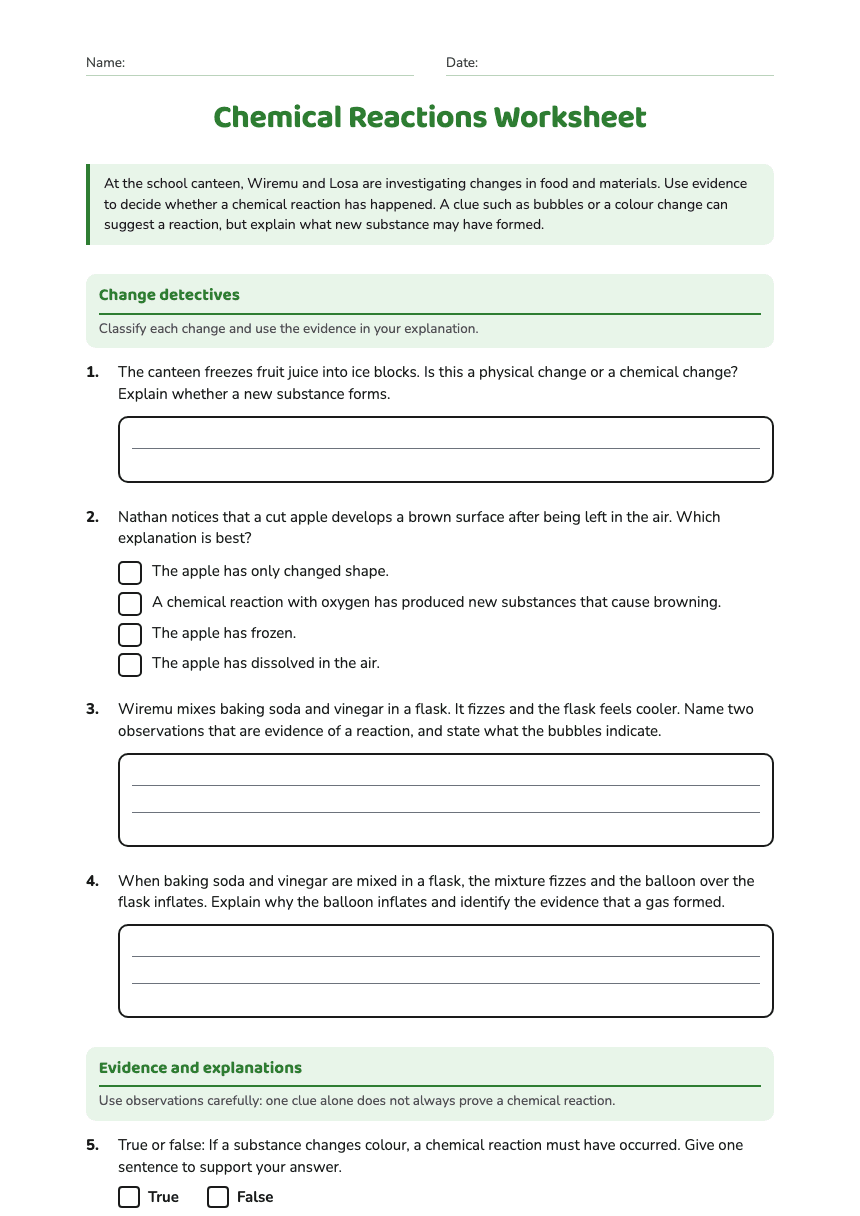
Name:Date:
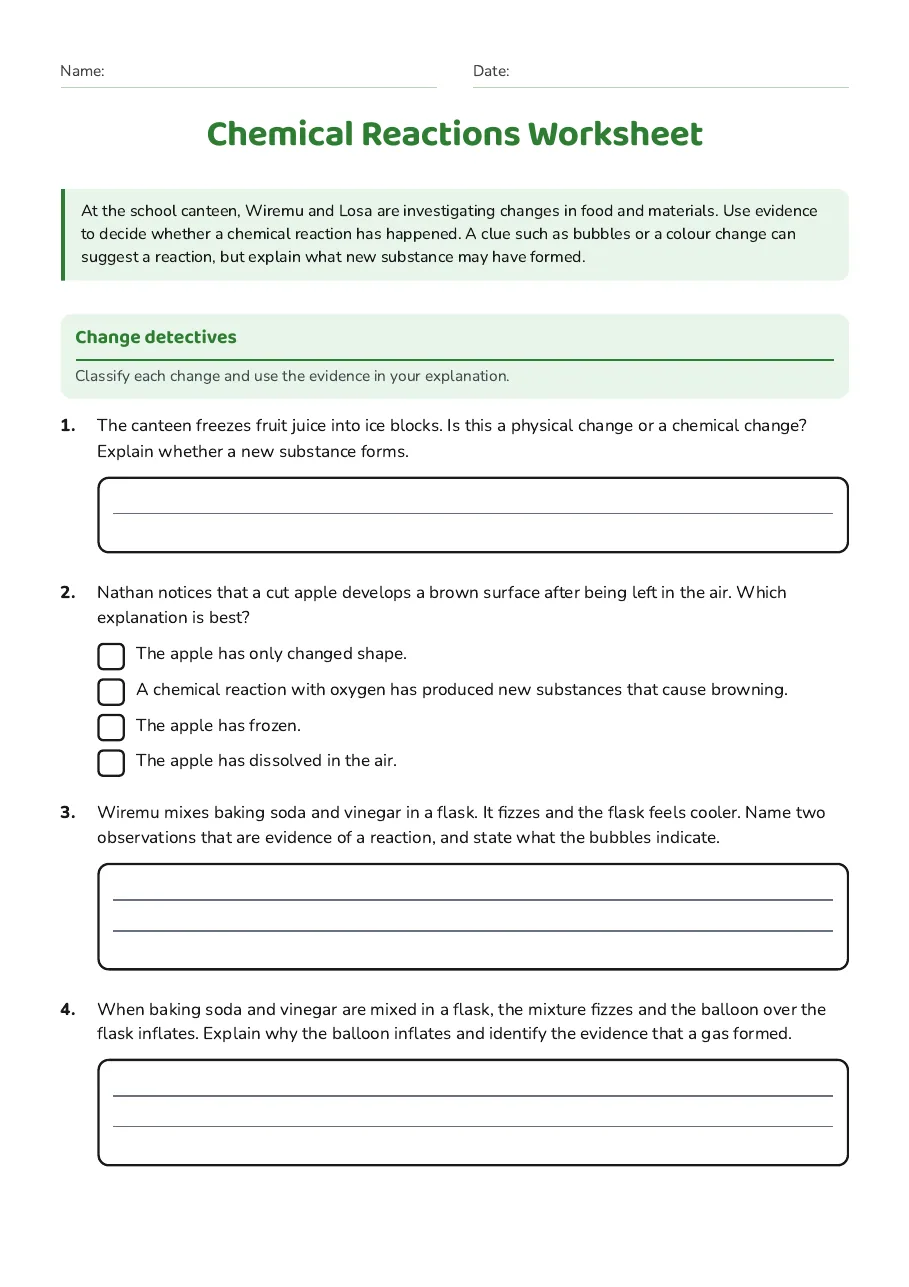
Chemical Reactions Worksheet
At the school canteen, Wiremu and Losa are investigating changes in food and materials. Use evidence to decide whether a chemical reaction has happened. A clue such as bubbles or a colour change can suggest a reaction, but explain what new substance may have formed.
Change detectives
Classify each change and use the evidence in your explanation.
1.The canteen freezes fruit juice into ice blocks. Is this a physical change or a chemical change? Explain whether a new substance forms.
2.Nathan notices that a cut apple develops a brown surface after being left in the air. Which explanation is best?
- The apple has only changed shape.
- A chemical reaction with oxygen has produced new substances that cause browning.
- The apple has frozen.
- The apple has dissolved in the air.
3.Wiremu mixes baking soda and vinegar in a flask. It fizzes and the flask feels cooler. Name two observations that are evidence of a reaction, and state what the bubbles indicate.
4.When baking soda and vinegar are mixed in a flask, the mixture fizzes and the balloon over the flask inflates. Explain why the balloon inflates and identify the evidence that a gas formed.
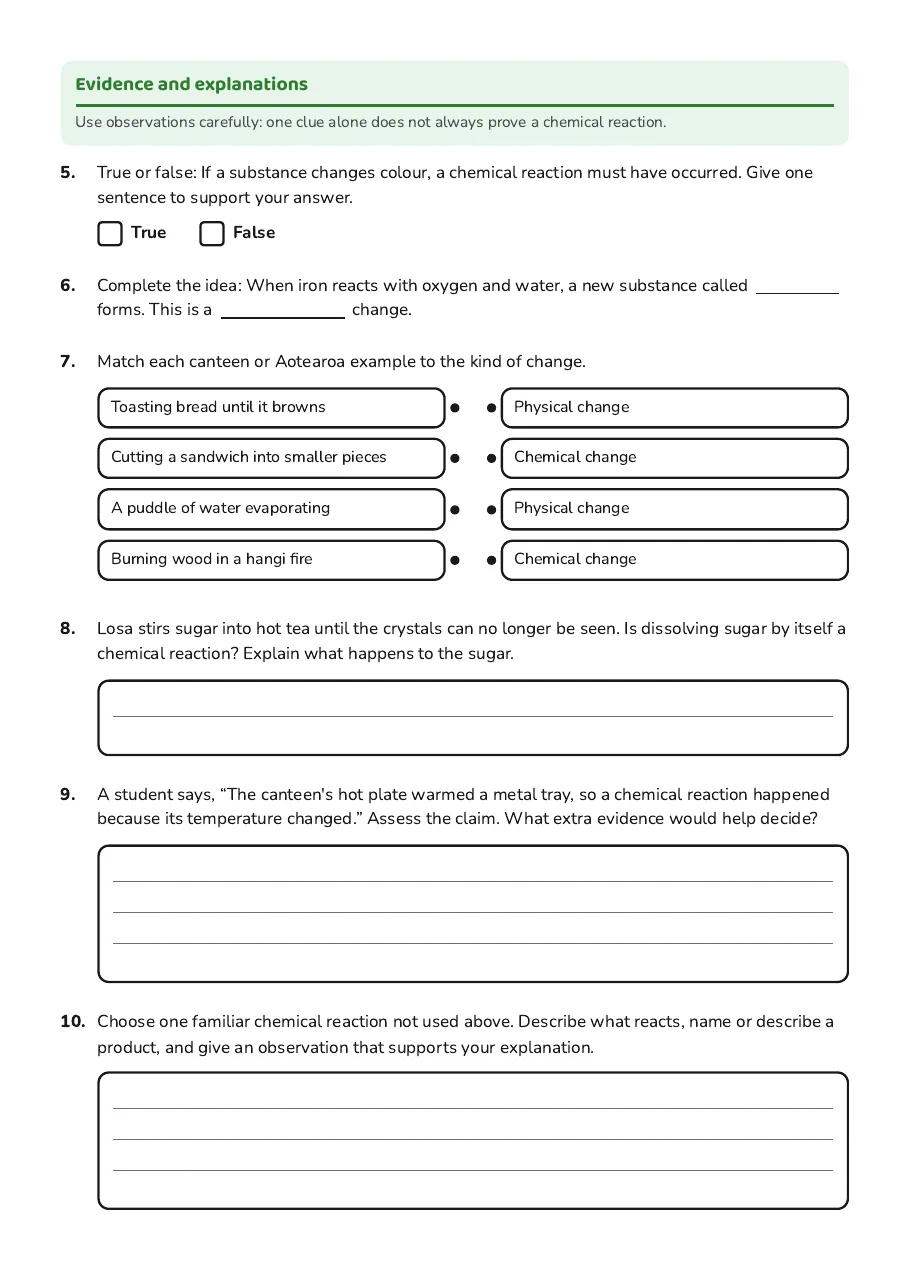
Evidence and explanations
Use observations carefully: one clue alone does not always prove a chemical reaction.
5.True or false: If a substance changes colour, a chemical reaction must have occurred. Give one sentence to support your answer.
TrueFalse
6.Complete the idea: When iron reacts with oxygen and water, a new substance called forms. This is a change.
7.Match each canteen or Aotearoa example to the kind of change.
- Toasting bread until it browns
- Cutting a sandwich into smaller pieces
- A puddle of water evaporating
- Burning wood in a hangi fire
- Physical change
- Chemical change
- Physical change
- Chemical change
8.Losa stirs sugar into hot tea until the crystals can no longer be seen. Is dissolving sugar by itself a chemical reaction? Explain what happens to the sugar.
9.A student says, “The canteen's hot plate warmed a metal tray, so a chemical reaction happened because its temperature changed.” Assess the claim. What extra evidence would help decide?
10.Choose one familiar chemical reaction not used above. Describe what reacts, name or describe a product, and give an observation that supports your explanation.
2 printable pages
Page 1
Page 2
About This Worksheet
Free in Kuraplan
Sign up free, grab the PDF, and customize it for your class.
Print-Ready
Formatted for standard paper. Clean layout, easy to read.
AI-Generated
Created with Kuraplan's AI, designed for real classroom use.
For Teachers & Parents
Use in classrooms, for homework, tutoring, or homeschool.
Need a custom version of this worksheet?
Kuraplan's AI generates custom worksheets in seconds — differentiated for every learner, aligned to your curriculum.
Generate Custom Worksheets — Free No credit card Curriculum-aligned Under 60 seconds
More Science Worksheets
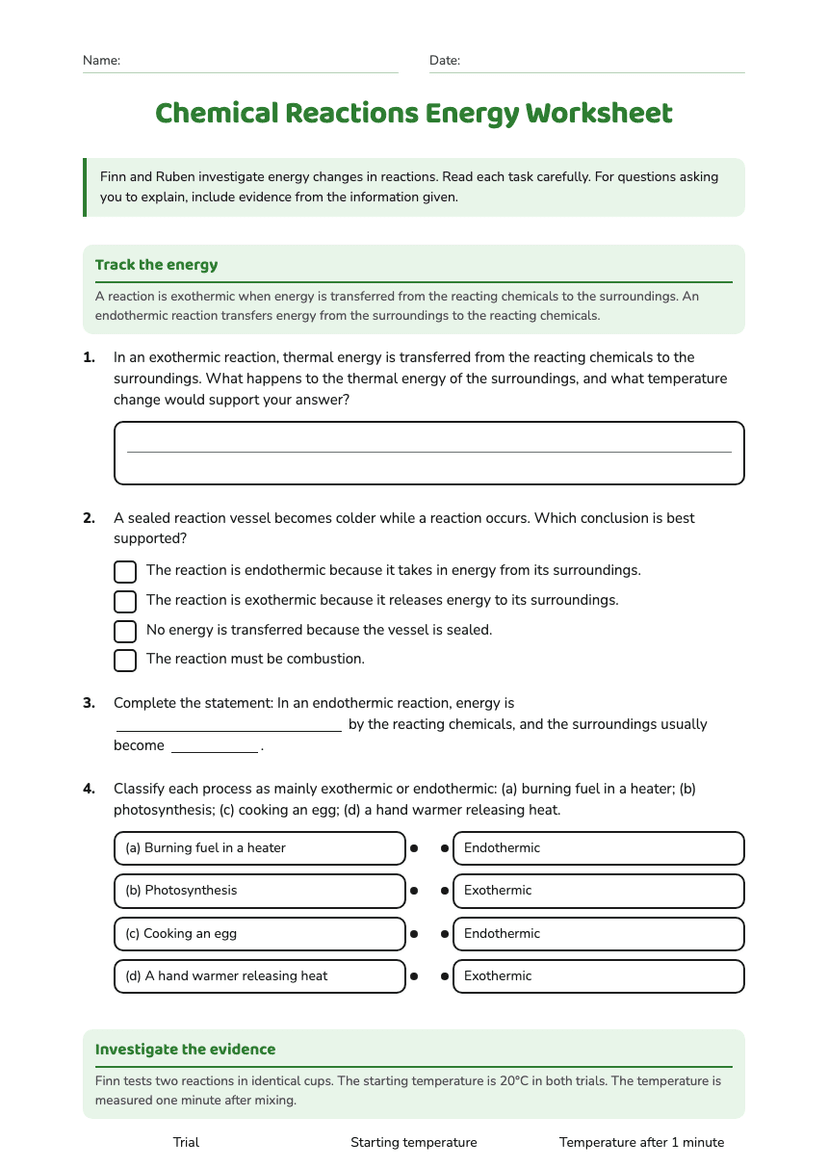
Chemical Reactions Energy Worksheet
Free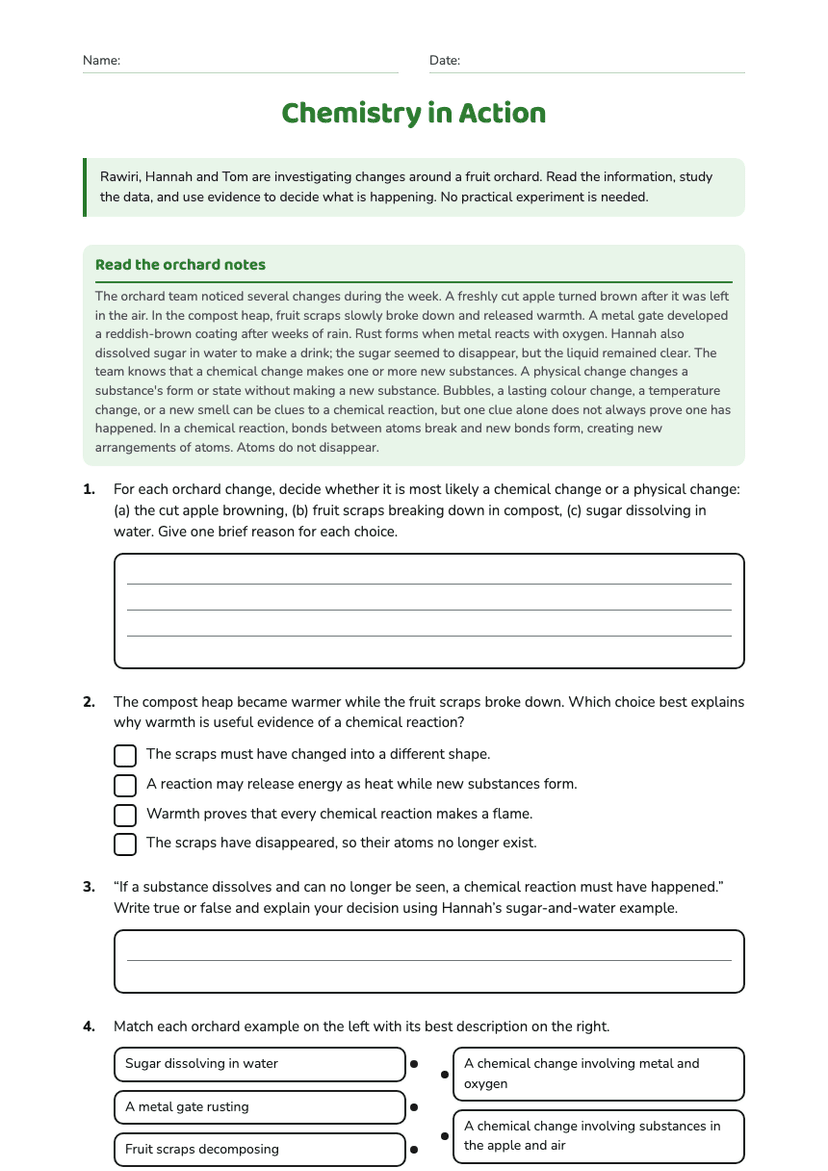
Year 7
Chemistry in Action
Free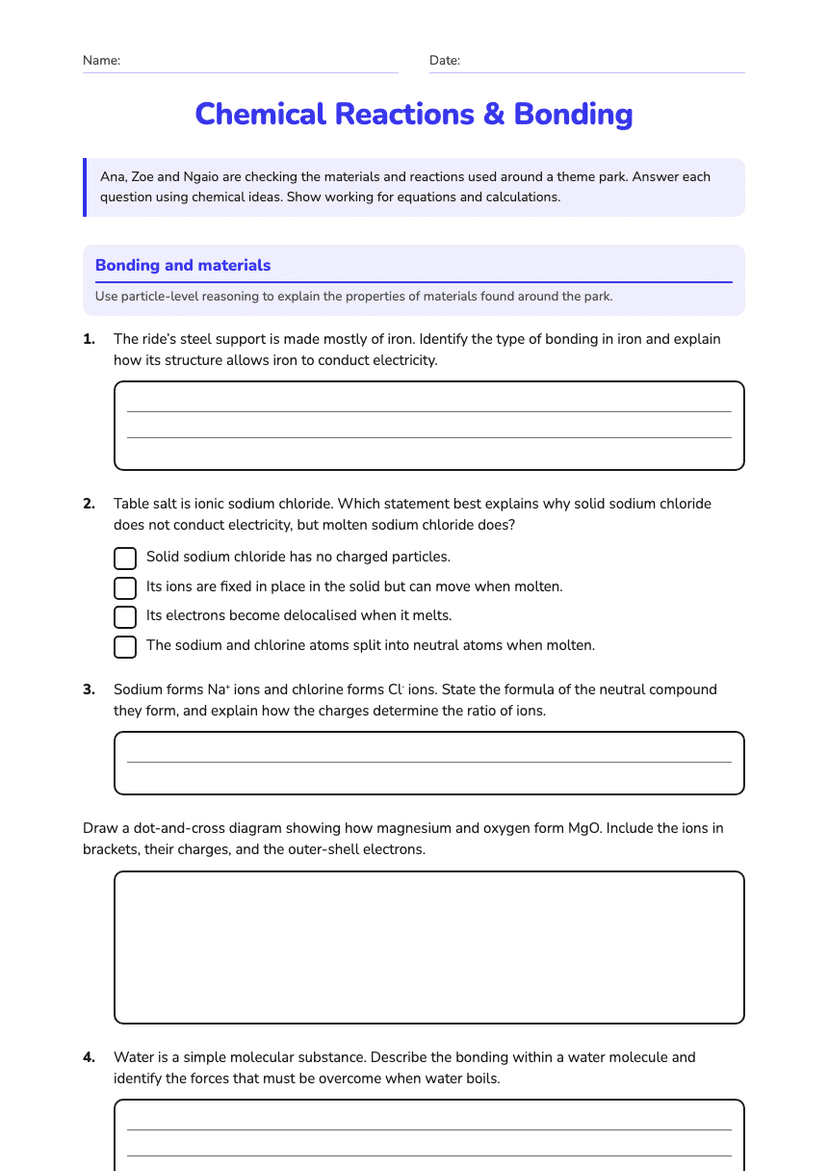
Year 11
Chemical Reactions & Bonding
Free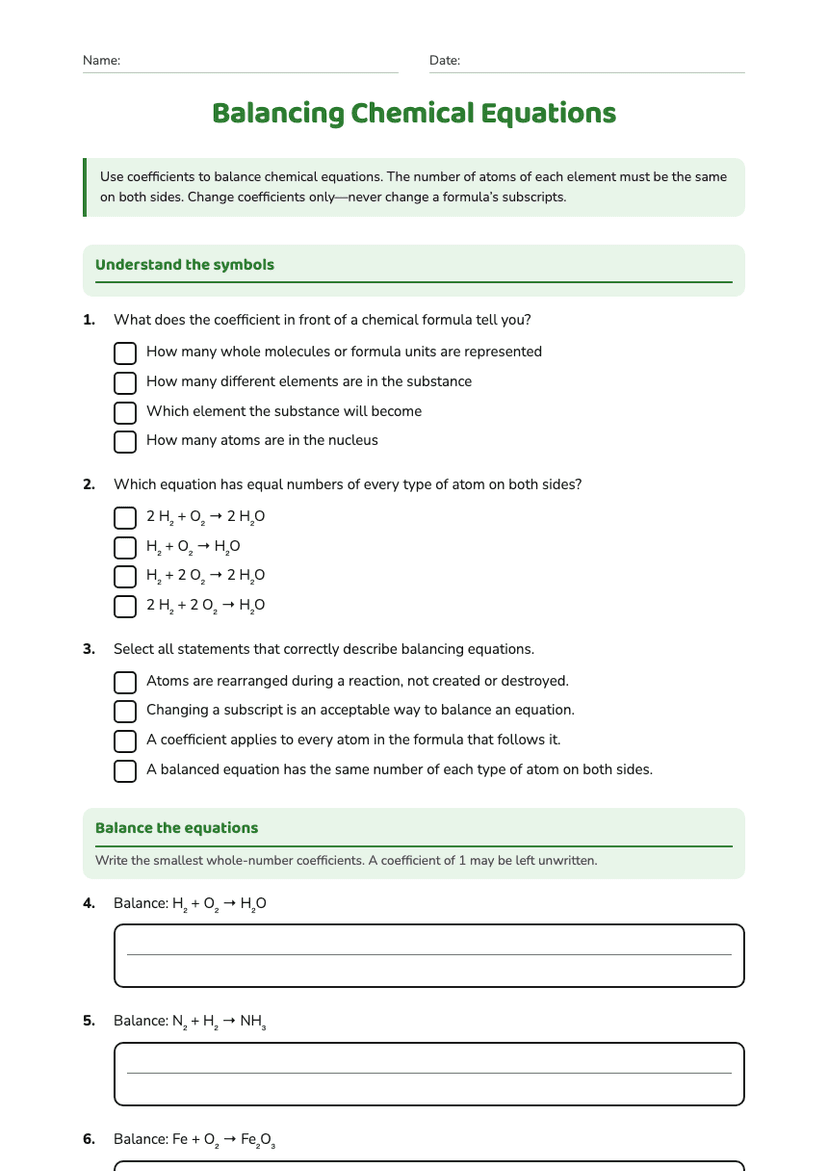
Year 7–8
Balancing Chemical Equations
Free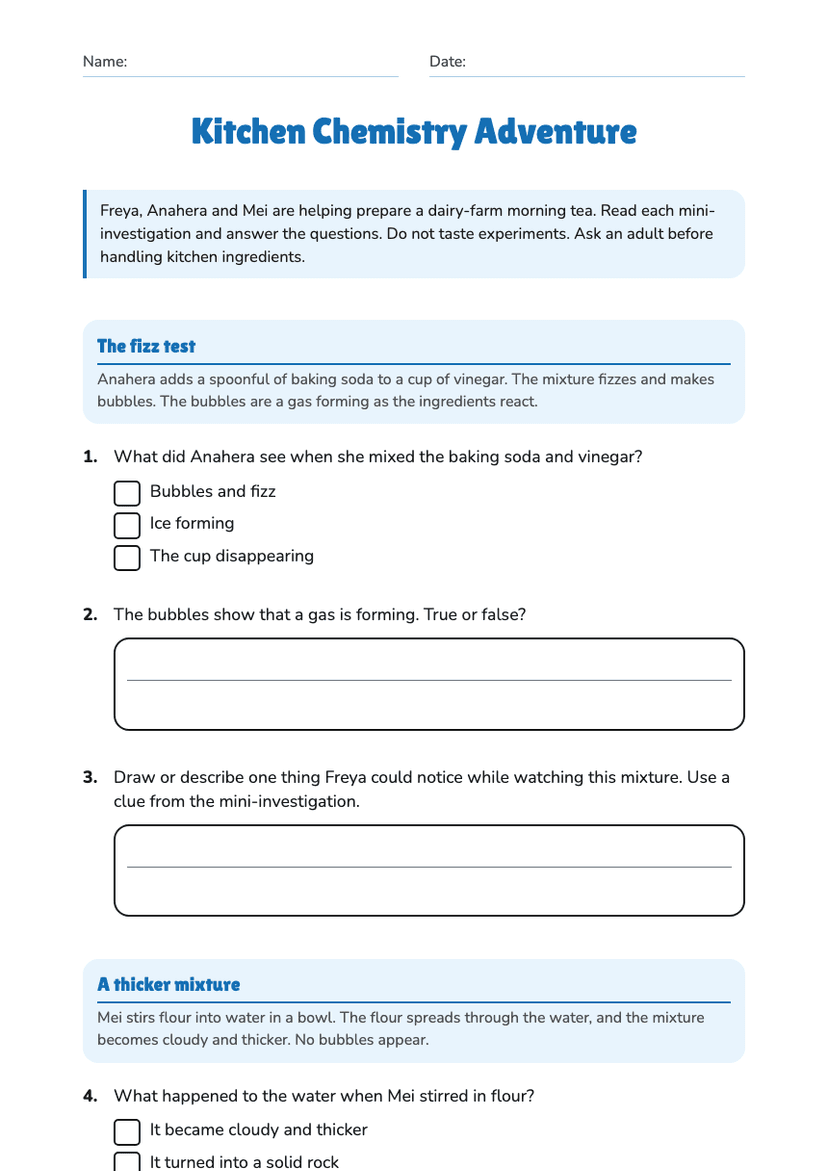
Year 2
Kitchen Chemistry Adventure
Free
Year 11
Chemical Reactions Introduction
Free
Year 9
Element Flashcards Worksheet
Free
Year 7–8