ScienceFreePrintable

Chemical vs Physical Changes

A free science worksheet ready for your classroom. Open in Kuraplan to grab the print-ready PDF, customize it for your students, or generate a fresh version in seconds.

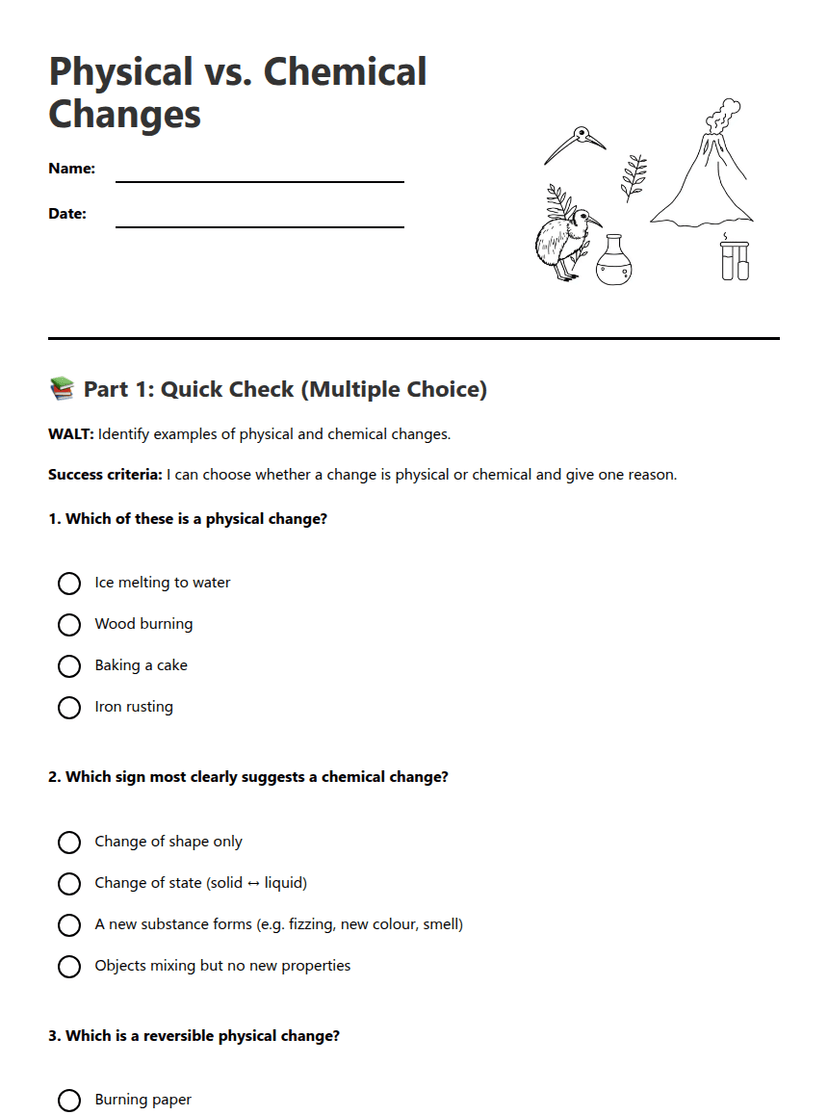
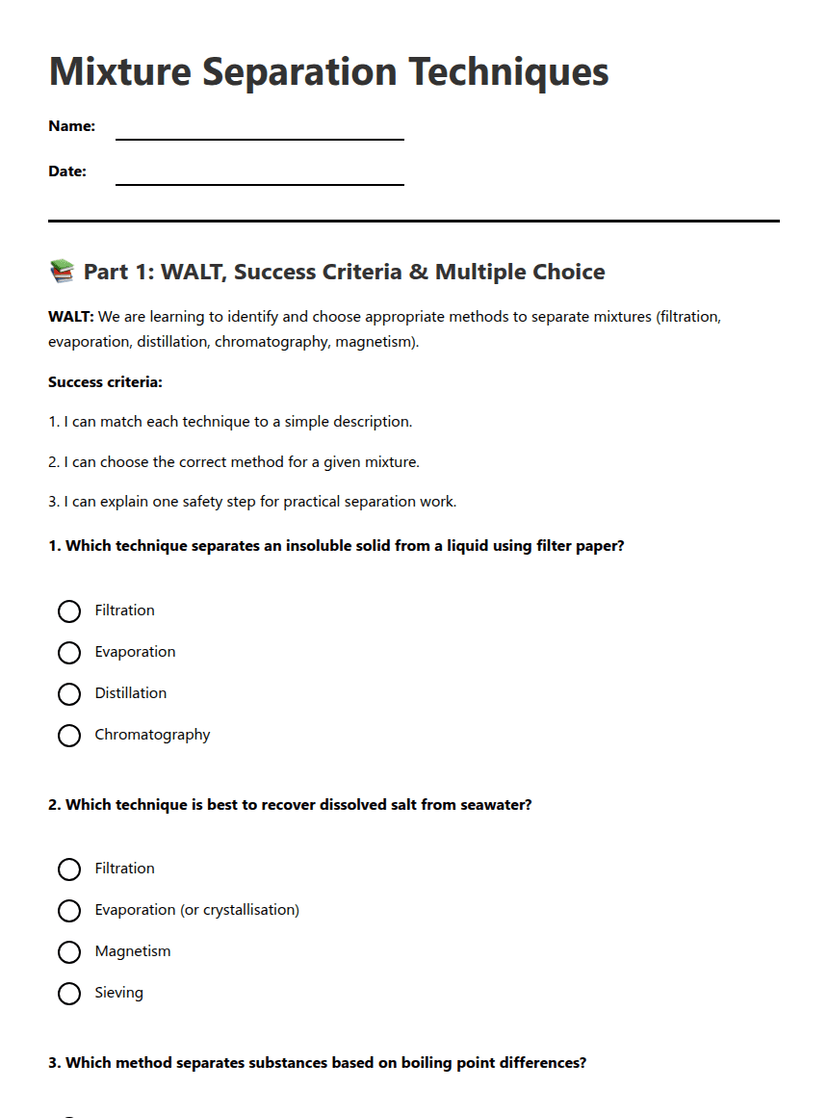
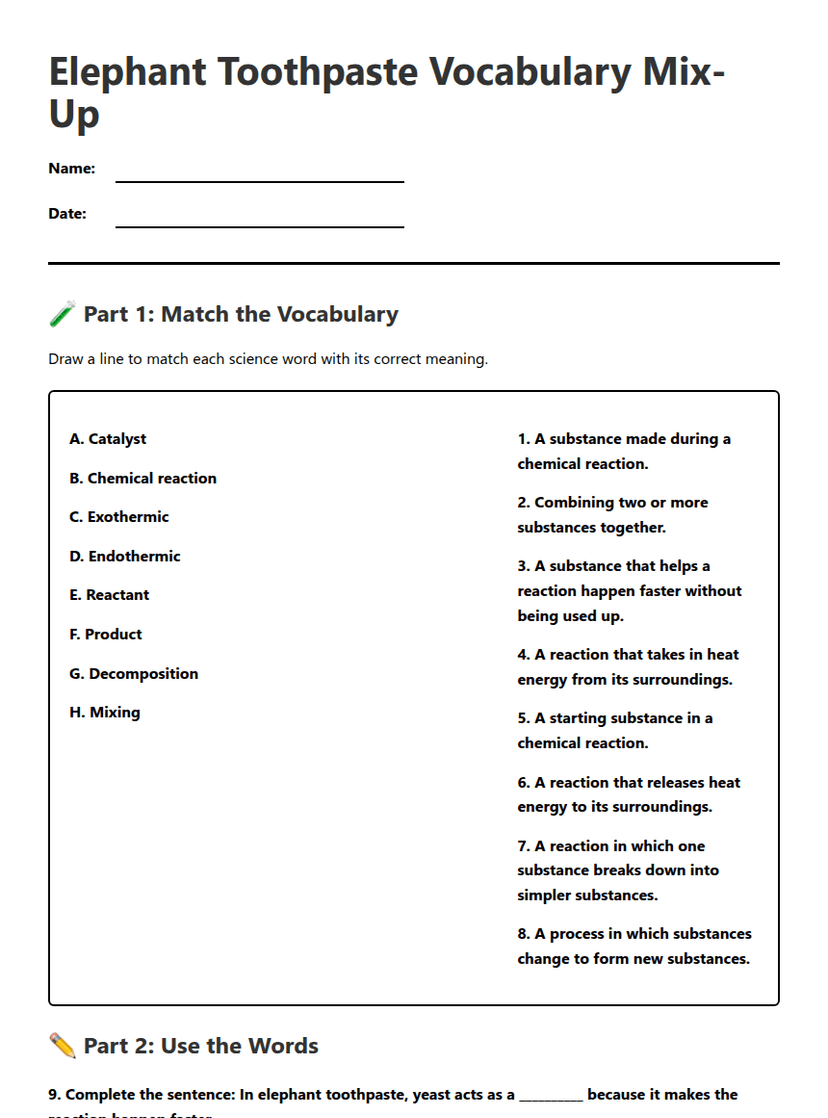
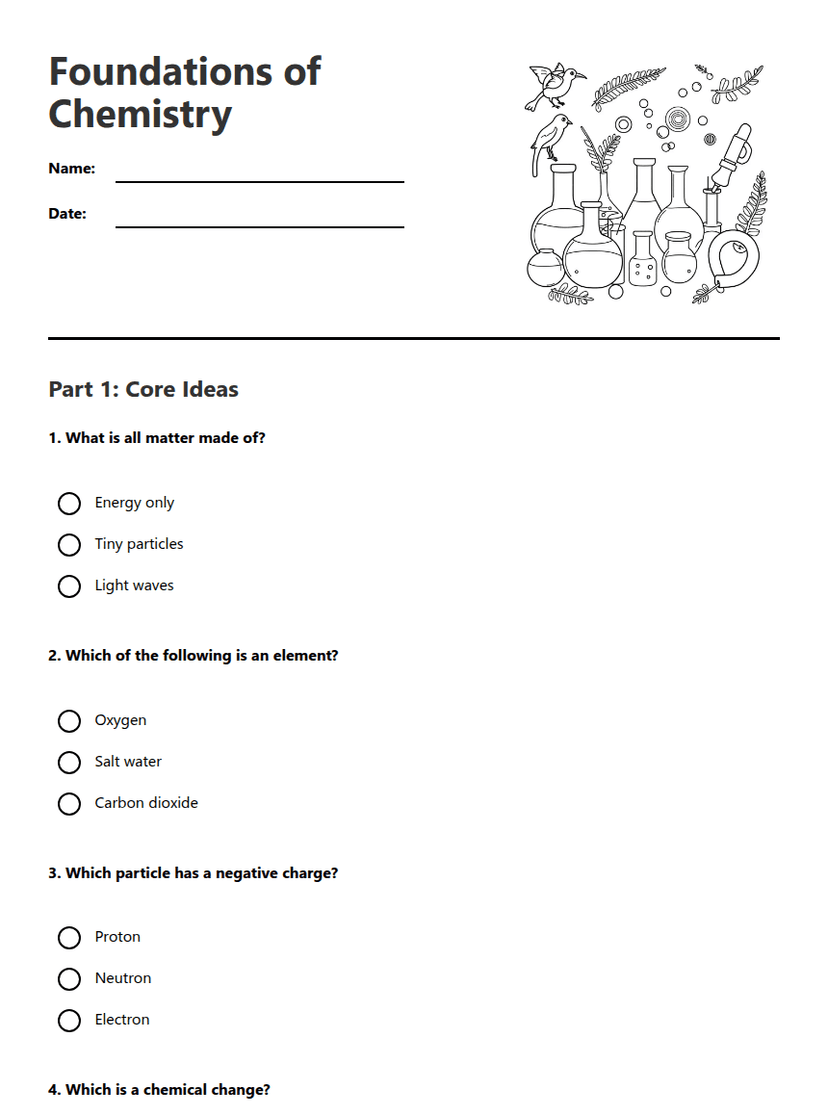
Chemical vs Physical Changes worksheet preview
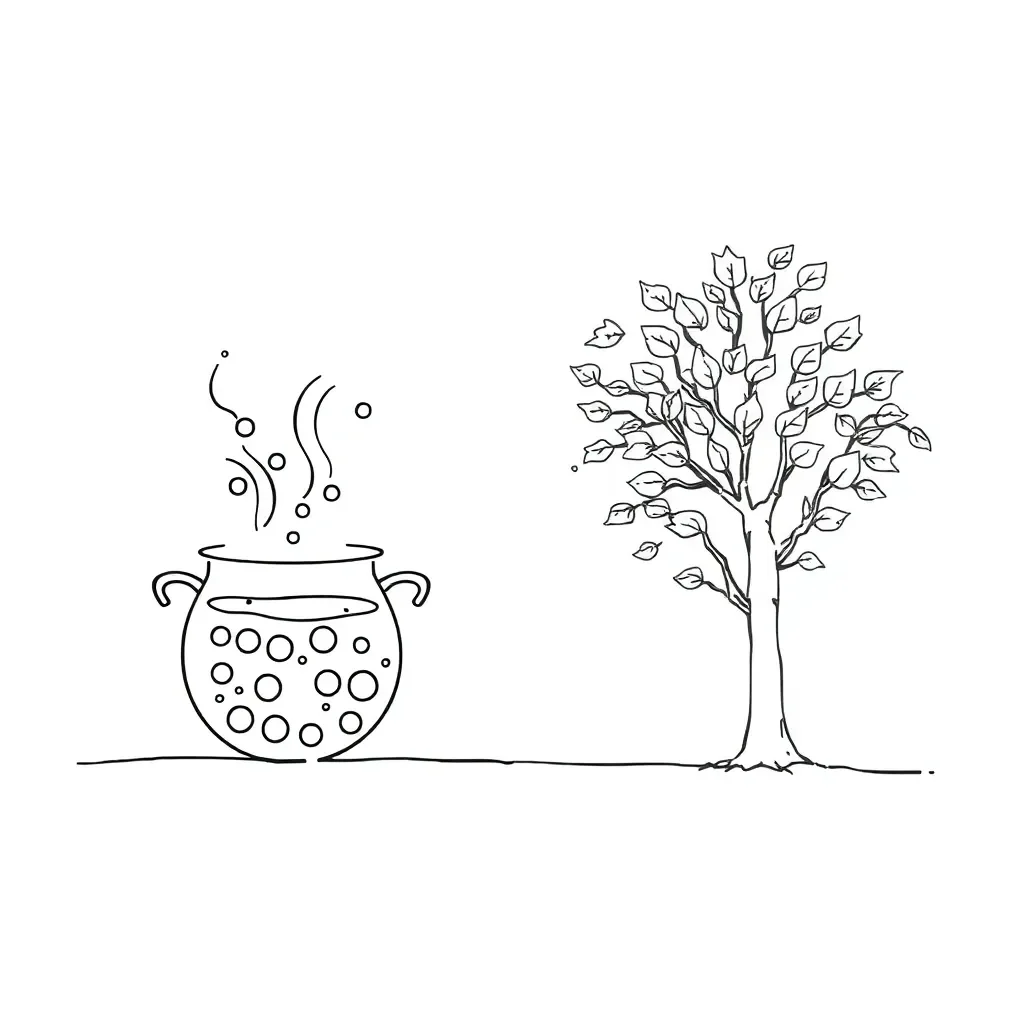
Chemical vs Physical Changes

Science laboratory equipment

📚 WALT: Distinguish between chemical and physical changes

Success Criteria:

  • I can identify examples of physical changes
  • I can identify examples of chemical changes
  • I can explain the difference between chemical and physical changes

Instructions: Choose the best answer for each question. Circle the letter of your choice.

🔬 Part 1: Identifying Changes (Questions 1-6)

1. Which of the following is a physical change?

a) Burning wood

b) Melting ice

c) Rusting iron

d) Cooking an egg

2. When you tear a piece of paper, this is an example of a:

a) Chemical change

b) Physical change

c) Both chemical and physical

d) Neither chemical nor physical

3. Which process represents a chemical change?

a) Water freezing into ice

b) Sugar dissolving in water

c) Milk turning sour

d) Cutting an apple

4. When salt dissolves in water, it is a:

a) Chemical change because the salt disappears

b) Physical change because no new substance is formed

c) Chemical change because it cannot be reversed

d) Physical change because heat is released

5. Which of these is NOT a sign of a chemical change?

a) Change in colour

b) Production of gas

c) Change in shape

d) Formation of a precipitate

6. Boiling water is considered a physical change because:

a) The water molecules break apart

b) Steam is produced

c) The water can be condensed back to liquid

d) Heat energy is required

🧪 Part 2: Understanding Properties (Questions 7-10)

7. In a chemical change, the original substance:

a) Changes shape only

b) Forms a new substance with different properties

c) Can always be easily reversed

d) Only changes temperature

8. Which statement about physical changes is correct?

a) They always involve breaking chemical bonds

b) They cannot be reversed

c) The substance keeps its chemical identity

d) New substances are always formed

9. When iron rusts, it is a chemical change because:

a) The iron changes colour

b) Iron combines with oxygen to form a new compound

c) The process takes a long time

d) The iron becomes smaller

10. Which example shows a reversible physical change?

a) Burning petrol

b) Melting chocolate

c) Baking bread

d) Digesting food

📝 Extension Activity

Extension: Explain in your own words the main difference between chemical and physical changes. Give one example of each.

🔑 Answer Key

1. b) Melting ice | 2. b) Physical change | 3. c) Milk turning sour | 4. b) Physical change because no new substance is formed | 5. c) Change in shape

6. c) The water can be condensed back to liquid | 7. b) Forms a new substance with different properties | 8. c) The substance keeps its chemical identity | 9. b) Iron combines with oxygen to form a new compound | 10. b) Melting chocolate

About This Worksheet

Free in Kuraplan

Sign up free, grab the PDF, and customize it for your class.

Print-Ready

Formatted for standard paper. Clean layout, easy to read.

AI-Generated

Created with Kuraplan's AI, designed for real classroom use.

For Teachers & Parents

Use in classrooms, for homework, tutoring, or homeschool.

Need a custom version of this worksheet?

Kuraplan's AI generates custom worksheets in seconds — differentiated for every learner, aligned to your curriculum.

Generate Custom Worksheets — Free
No credit card Curriculum-aligned Under 60 seconds