Chemistry Basics Activity Worksheet
A free science worksheet ready for your classroom. Open in Kuraplan to grab the print-ready PDF, customize it for your students, or generate a fresh version in seconds.
Chemistry Basics Activity Worksheet
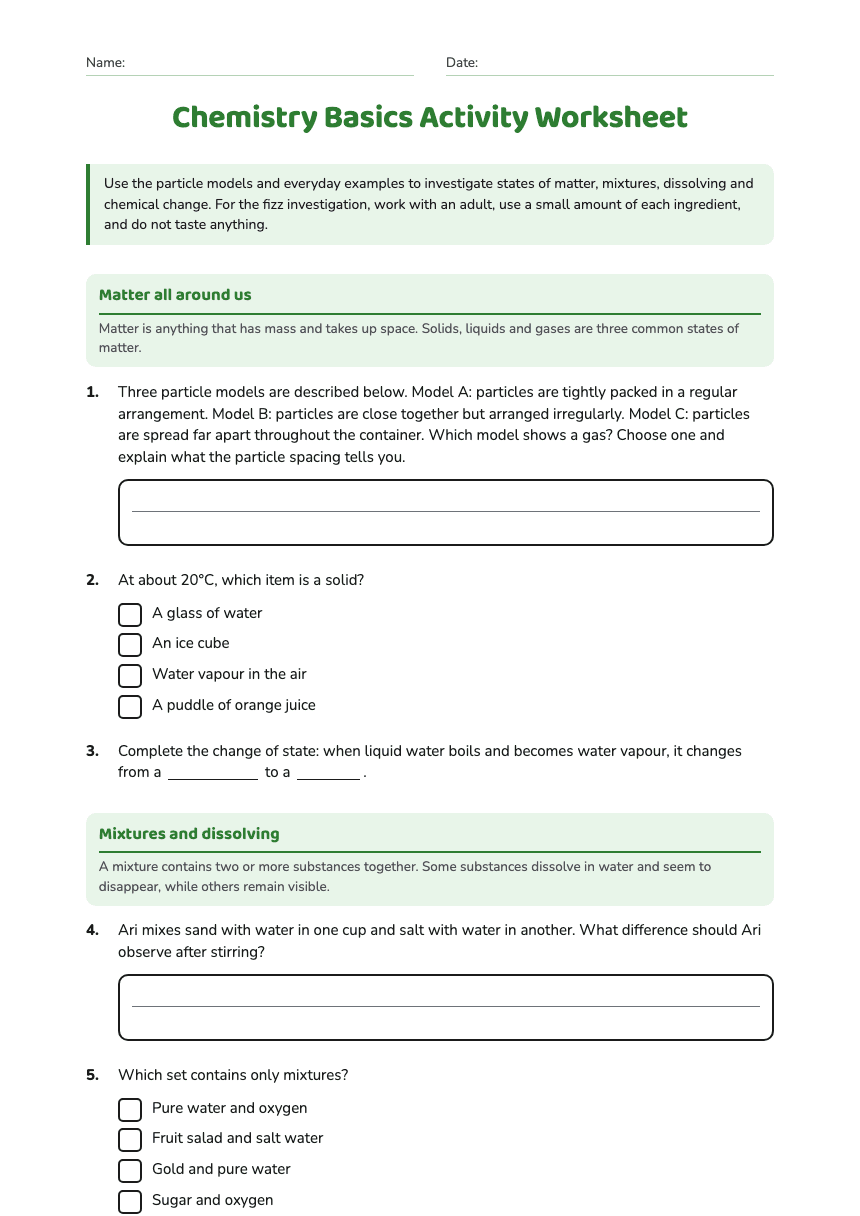
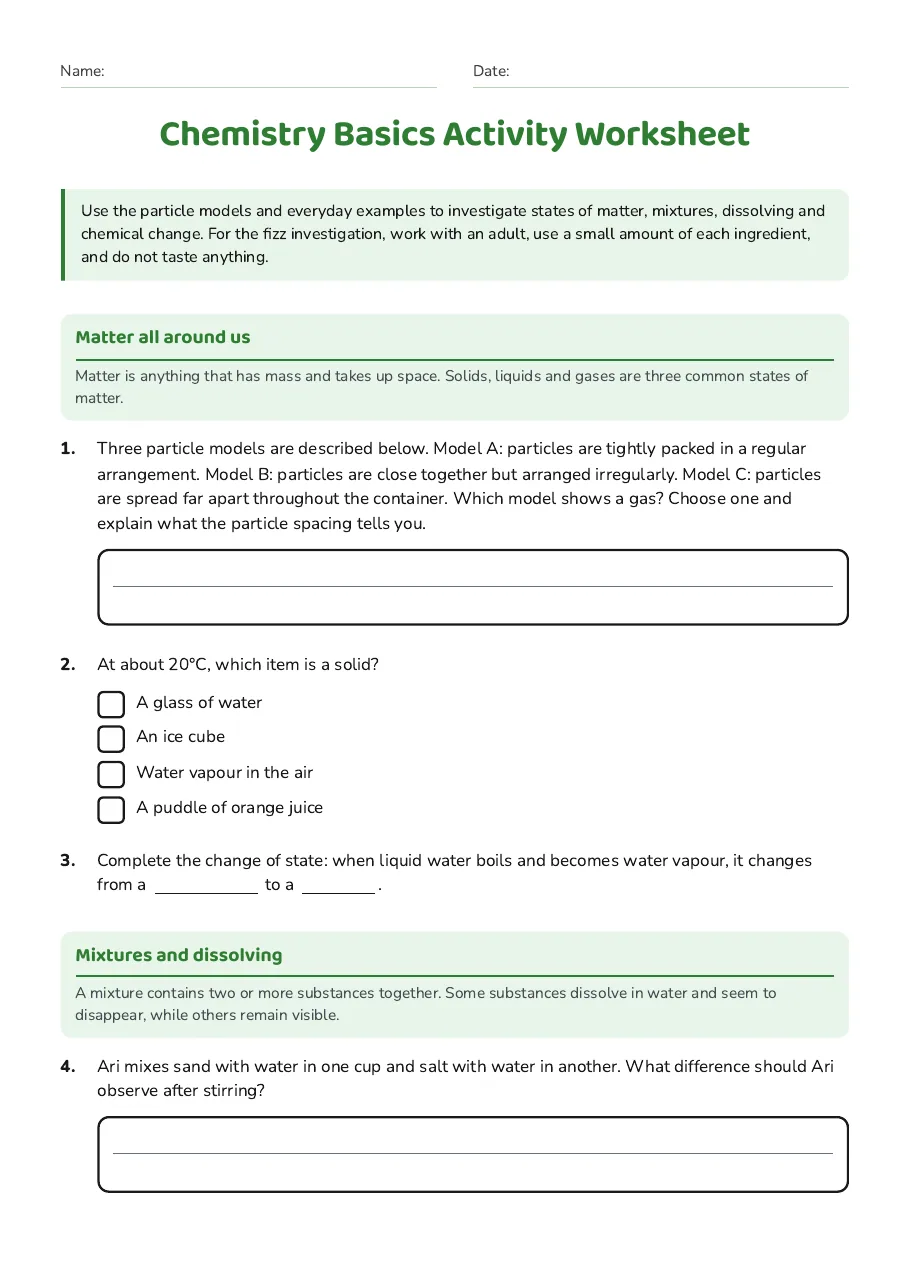
Matter all around us
Matter is anything that has mass and takes up space. Solids, liquids and gases are three common states of matter.
- A glass of water
- An ice cube
- Water vapour in the air
- A puddle of orange juice
Mixtures and dissolving
A mixture contains two or more substances together. Some substances dissolve in water and seem to disappear, while others remain visible.
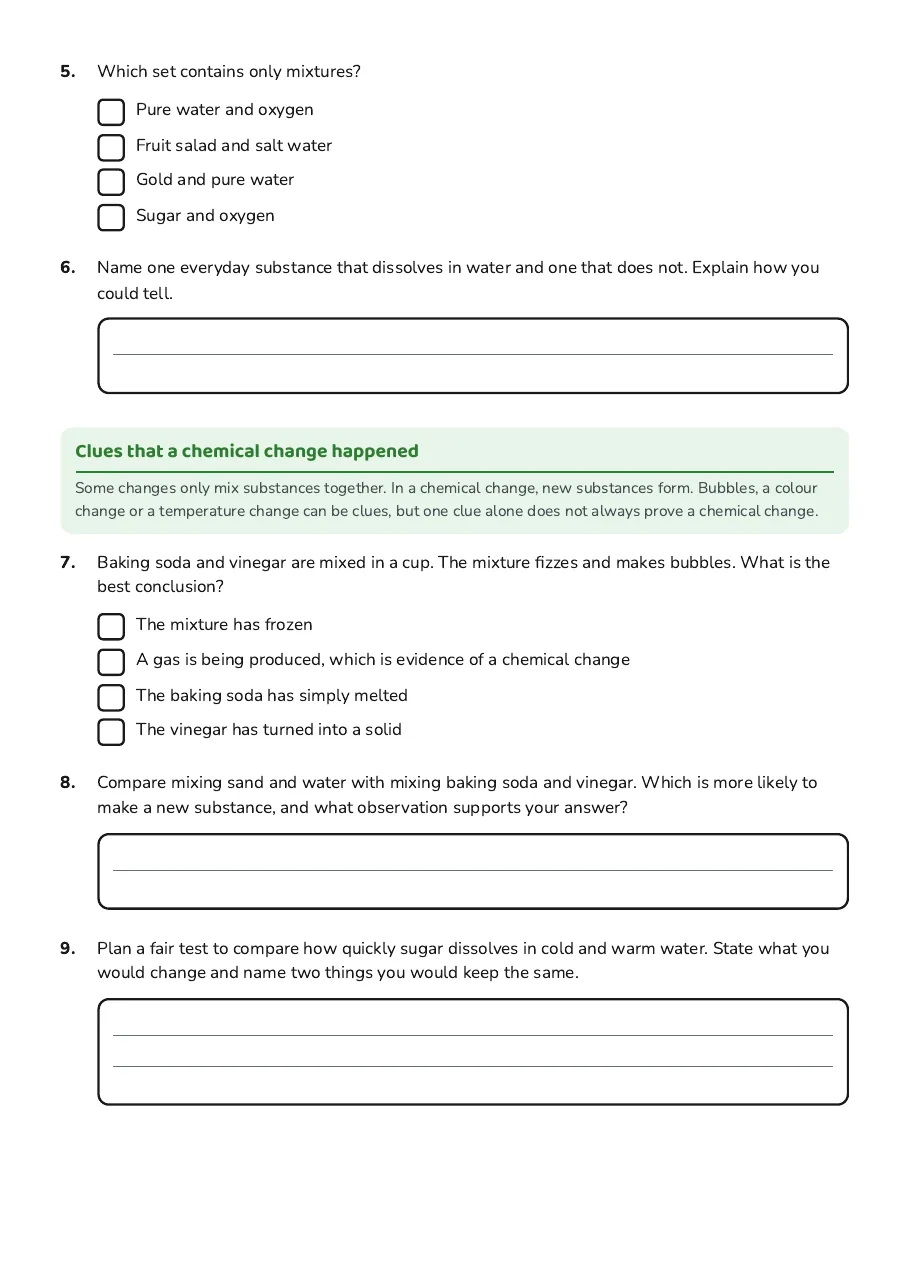
- Pure water and oxygen
- Fruit salad and salt water
- Gold and pure water
- Sugar and oxygen
Clues that a chemical change happened
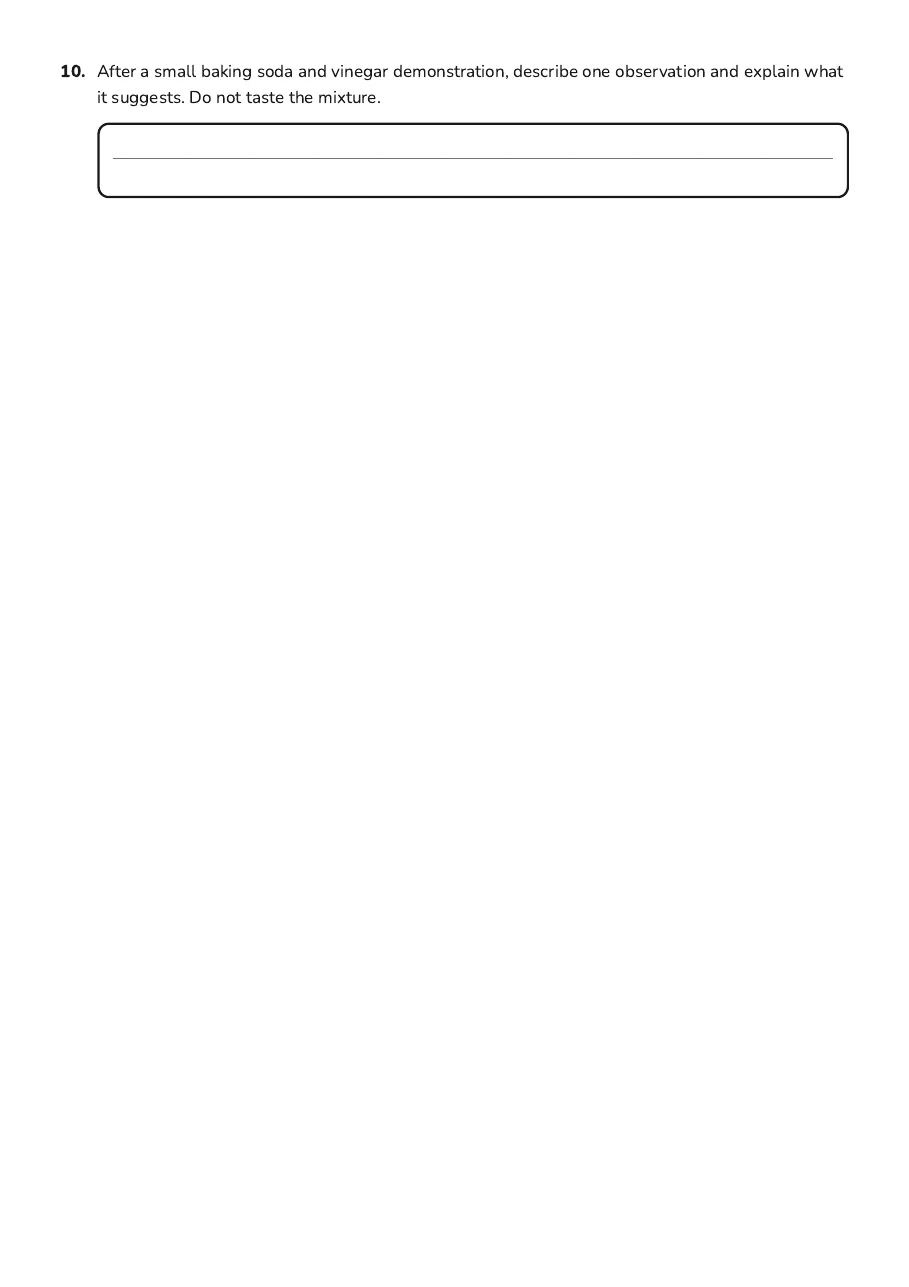
Some changes only mix substances together. In a chemical change, new substances form. Bubbles, a colour change or a temperature change can be clues, but one clue alone does not always prove a chemical change.
- The mixture has frozen
- A gas is being produced, which is evidence of a chemical change
- The baking soda has simply melted
- The vinegar has turned into a solid
3 printable pages
Page 1
Page 2
Page 3
About This Worksheet
Free in Kuraplan
Sign up free, grab the PDF, and customize it for your class.
Print-Ready
Formatted for standard paper. Clean layout, easy to read.
AI-Generated
Created with Kuraplan's AI, designed for real classroom use.
For Teachers & Parents
Use in classrooms, for homework, tutoring, or homeschool.
Need a custom version of this worksheet?
Kuraplan's AI generates custom worksheets in seconds — differentiated for every learner, aligned to your curriculum.
Generate Custom Worksheets — FreeMore Science Worksheets
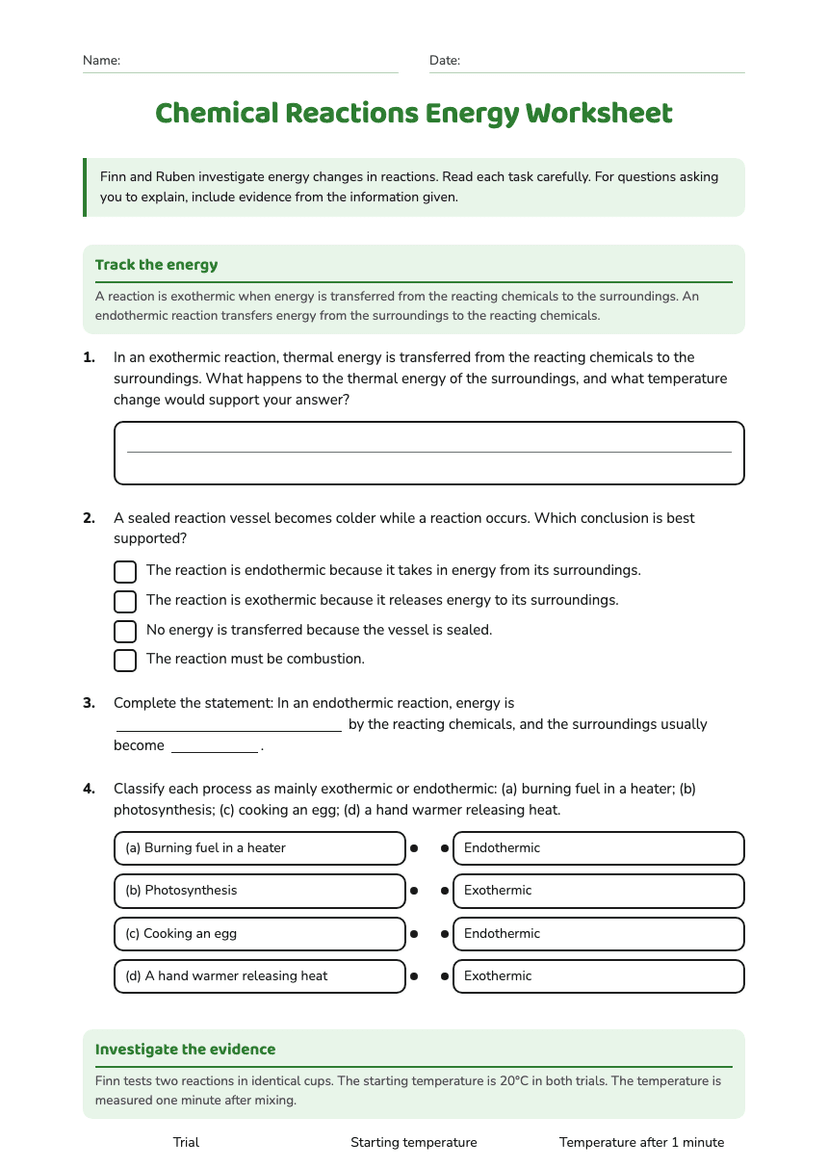
Chemical Reactions Energy Worksheet
Free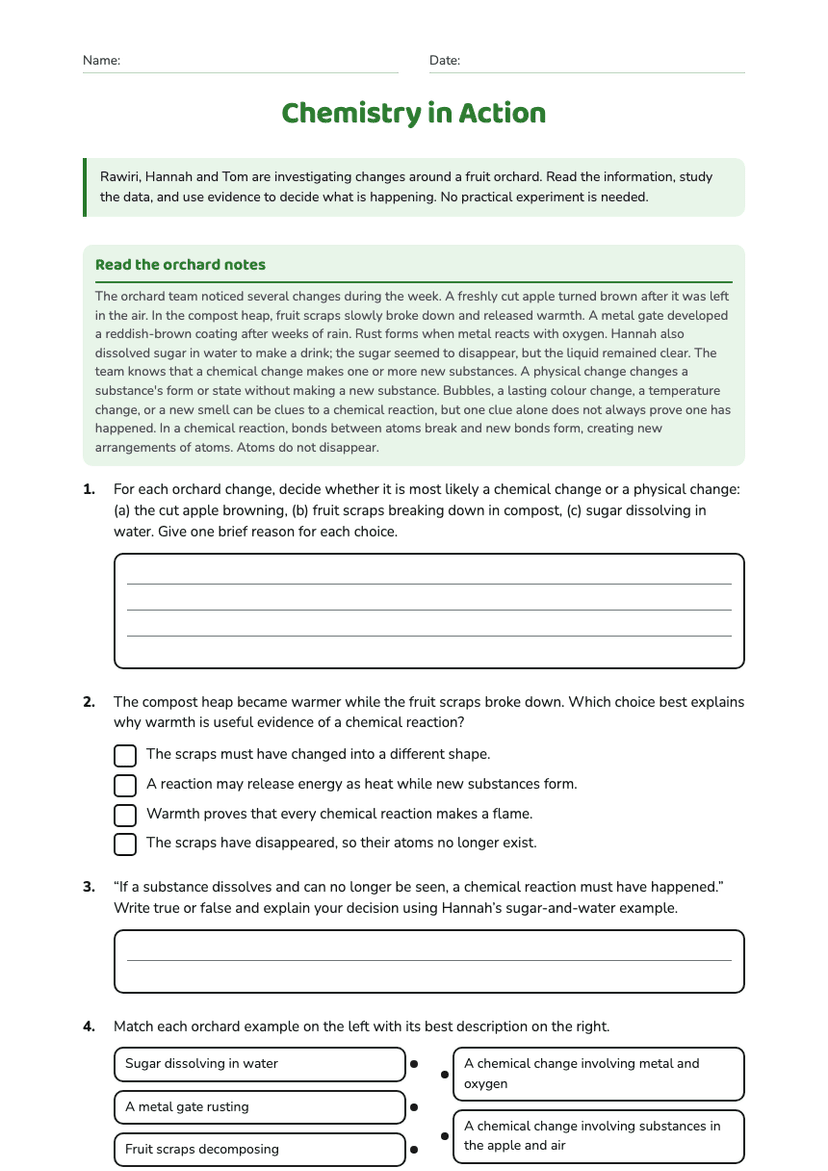
Chemistry in Action
Free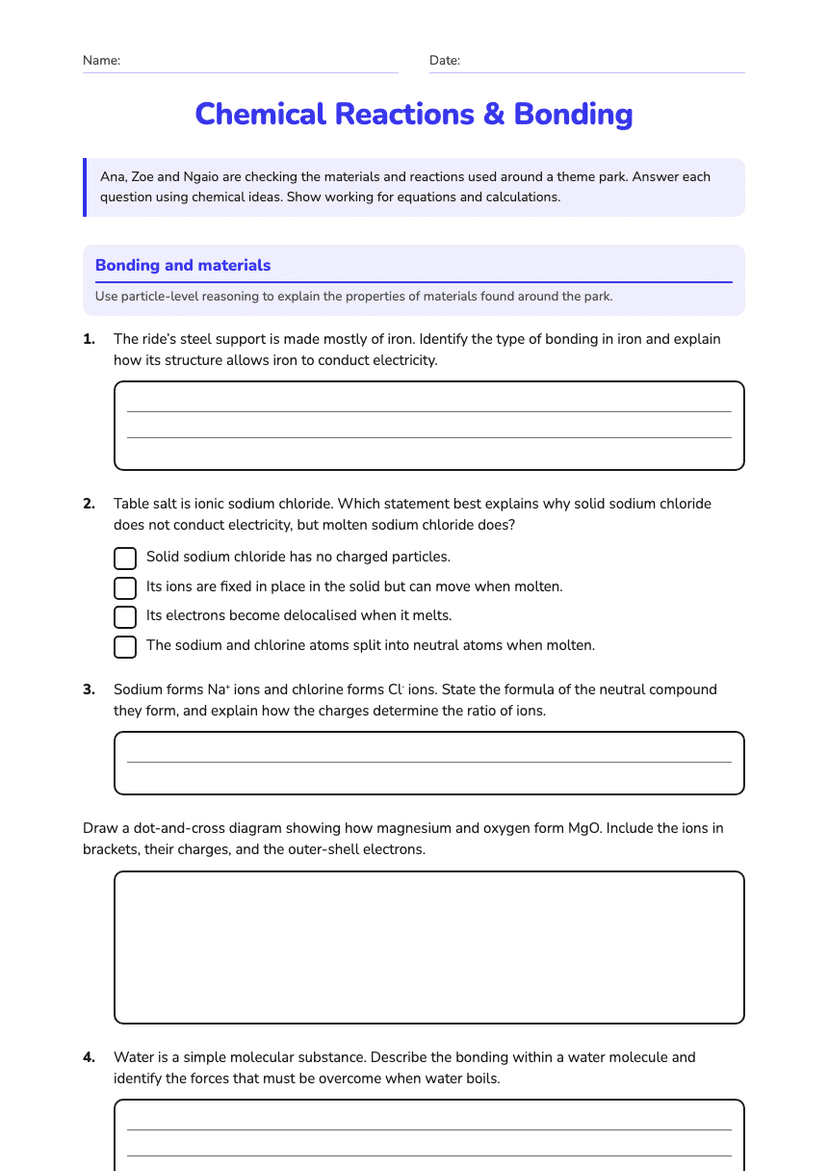
Chemical Reactions & Bonding
Free
Balancing Chemical Equations
Free
Kitchen Chemistry Adventure
Free
Chemical Reactions Introduction
Free
Element Flashcards Worksheet
Free