Civil Rights Active Citizenship
A free social sciences worksheet ready for your classroom. Open in Kuraplan to grab the print-ready PDF, customize it for your students, or generate a fresh version in seconds.
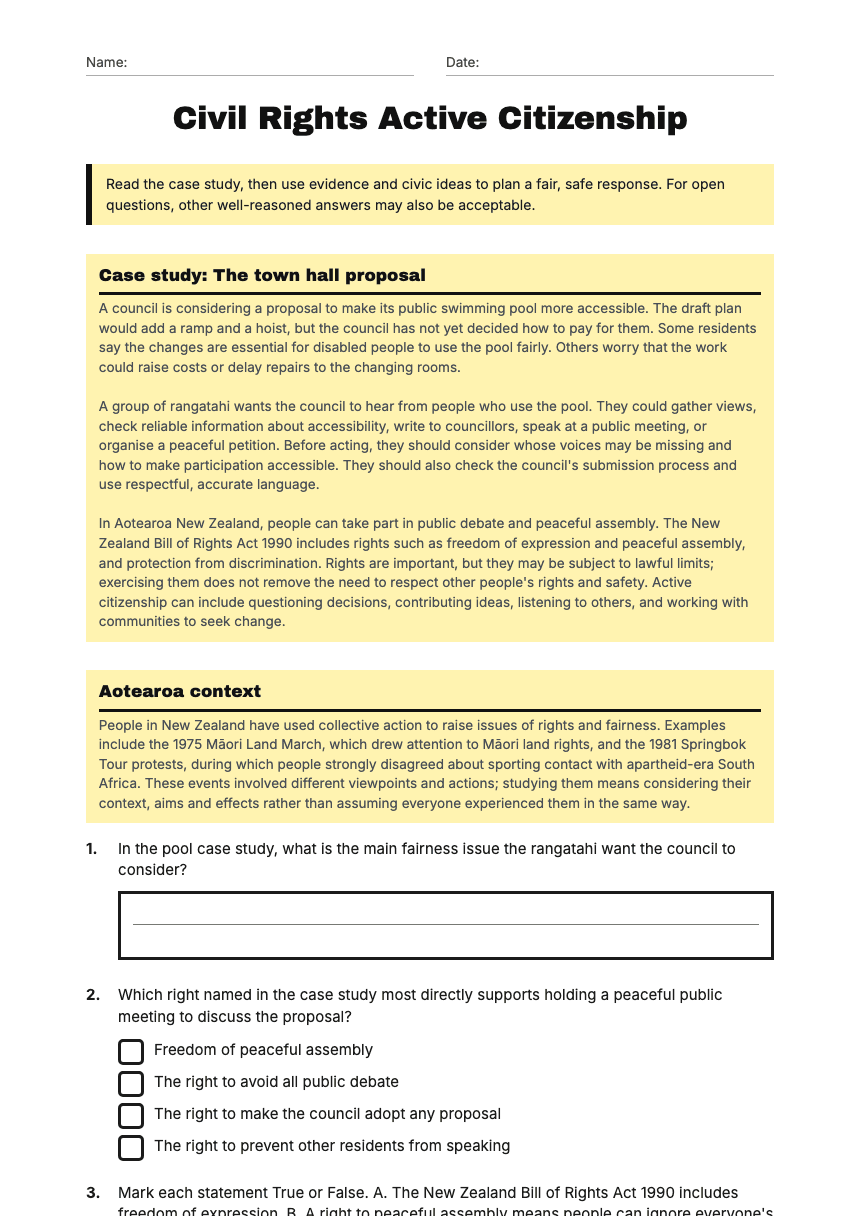
Civil Rights Active Citizenship
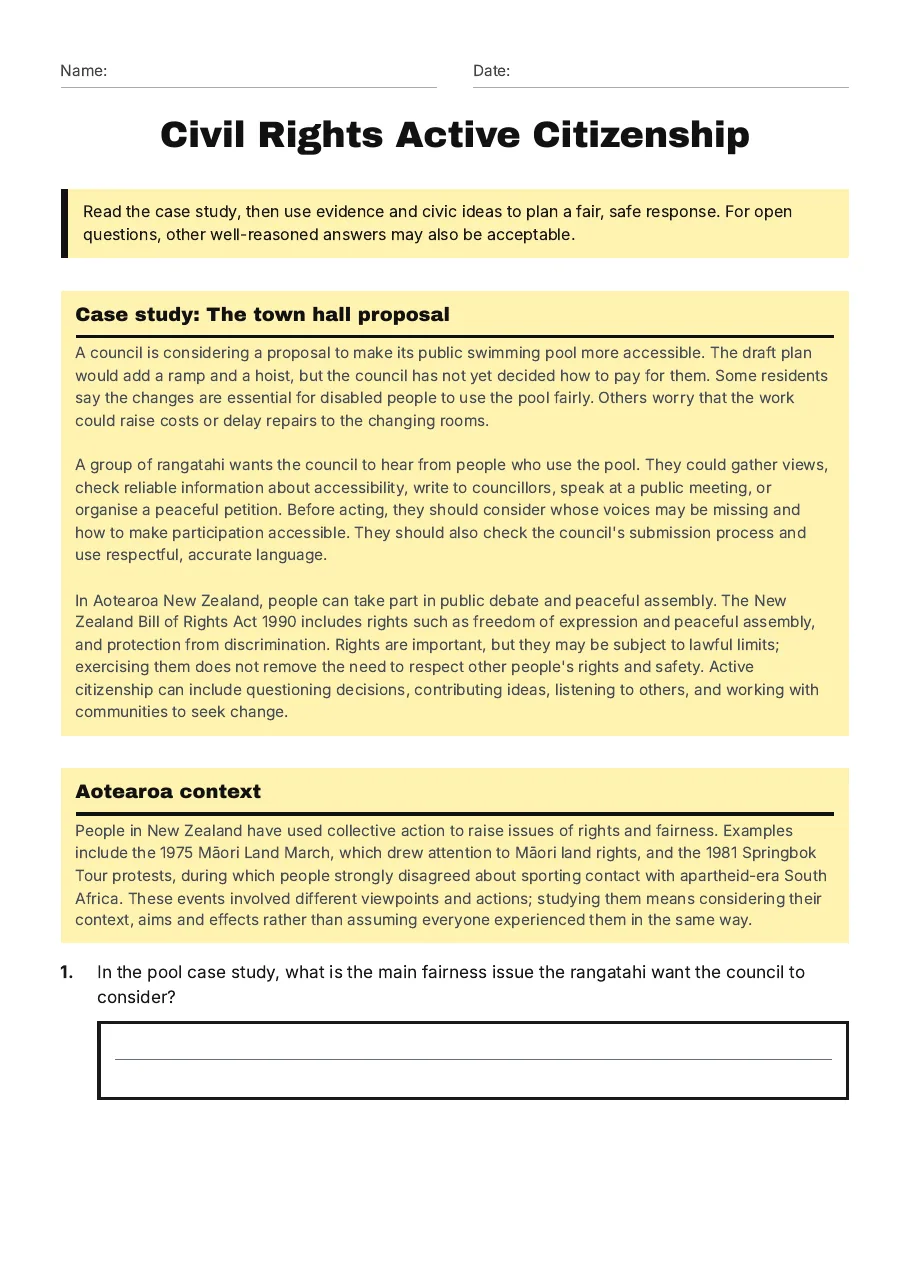
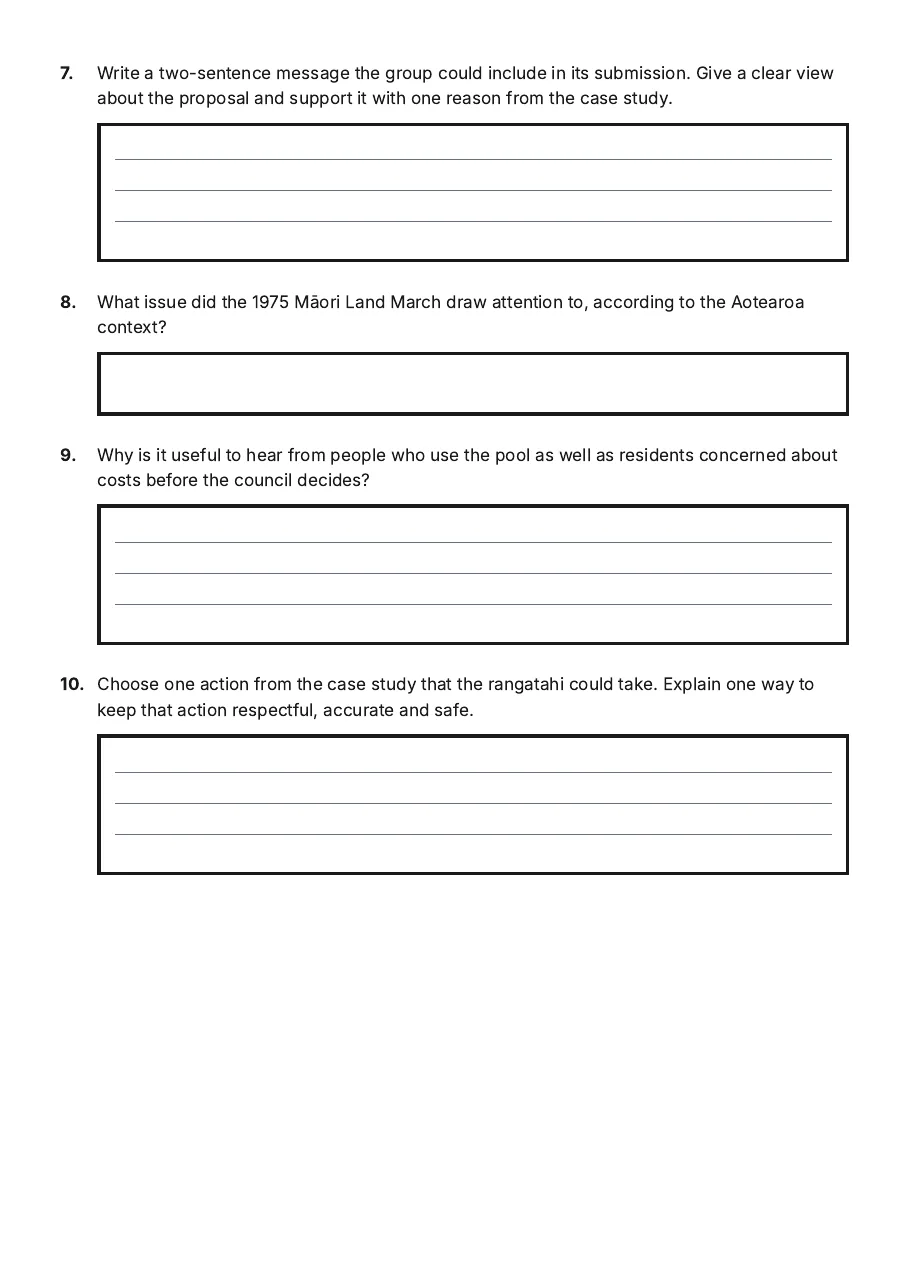
Case study: The town hall proposal
A council is considering a proposal to make its public swimming pool more accessible. The draft plan would add a ramp and a hoist, but the council has not yet decided how to pay for them. Some residents say the changes are essential for disabled people to use the pool fairly. Others worry that the work could raise costs or delay repairs to the changing rooms. A group of rangatahi wants the council to hear from people who use the pool. They could gather views, check reliable information about accessibility, write to councillors, speak at a public meeting, or organise a peaceful petition. Before acting, they should consider whose voices may be missing and how to make participation accessible. They should also check the council's submission process and use respectful, accurate language. In Aotearoa New Zealand, people can take part in public debate and peaceful assembly. The New Zealand Bill of Rights Act 1990 includes rights such as freedom of expression and peaceful assembly, and protection from discrimination. Rights are important, but they may be subject to lawful limits; exercising them does not remove the need to respect other people's rights and safety. Active citizenship can include questioning decisions, contributing ideas, listening to others, and working with communities to seek change.
Aotearoa context
People in New Zealand have used collective action to raise issues of rights and fairness. Examples include the 1975 Māori Land March, which drew attention to Māori land rights, and the 1981 Springbok Tour protests, during which people strongly disagreed about sporting contact with apartheid-era South Africa. These events involved different viewpoints and actions; studying them means considering their context, aims and effects rather than assuming everyone experienced them in the same way.
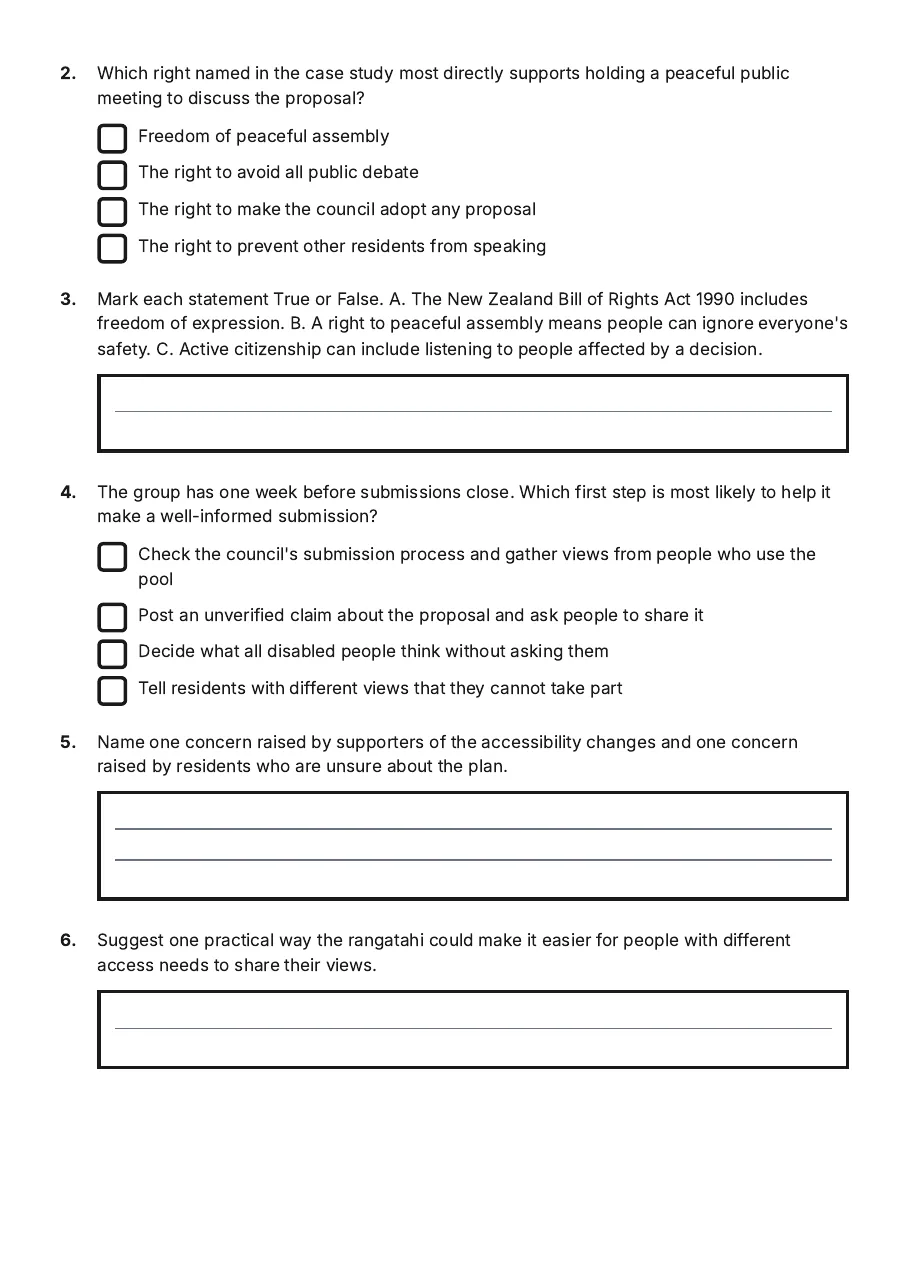
- Freedom of peaceful assembly
- The right to avoid all public debate
- The right to make the council adopt any proposal
- The right to prevent other residents from speaking
- Check the council's submission process and gather views from people who use the pool
- Post an unverified claim about the proposal and ask people to share it
- Decide what all disabled people think without asking them
- Tell residents with different views that they cannot take part
3 printable pages
Page 1
Page 2
Page 3
About This Worksheet
Free in Kuraplan
Sign up free, grab the PDF, and customize it for your class.
Print-Ready
Formatted for standard paper. Clean layout, easy to read.
AI-Generated
Created with Kuraplan's AI, designed for real classroom use.
For Teachers & Parents
Use in classrooms, for homework, tutoring, or homeschool.
Need a custom version of this worksheet?
Kuraplan's AI generates custom worksheets in seconds — differentiated for every learner, aligned to your curriculum.
Generate Custom Worksheets — FreeMore Social Sciences Worksheets
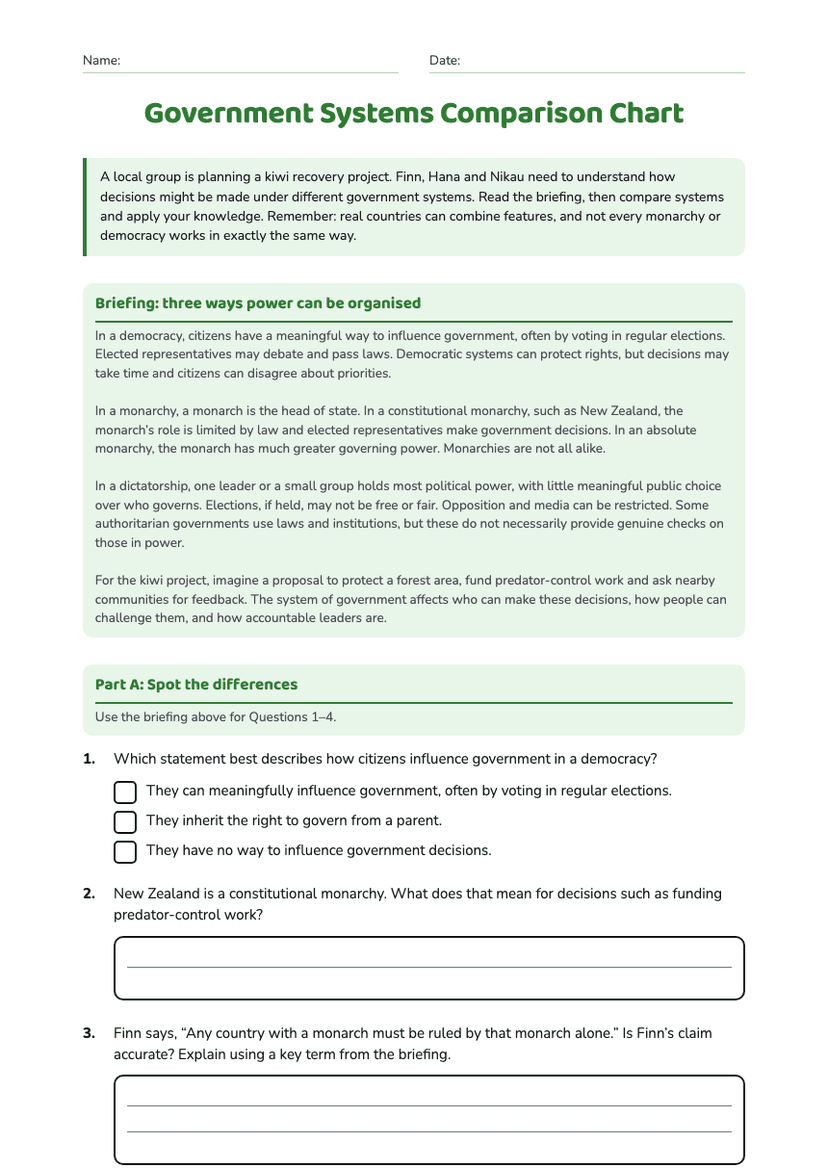
Government Systems Comparison Chart
Free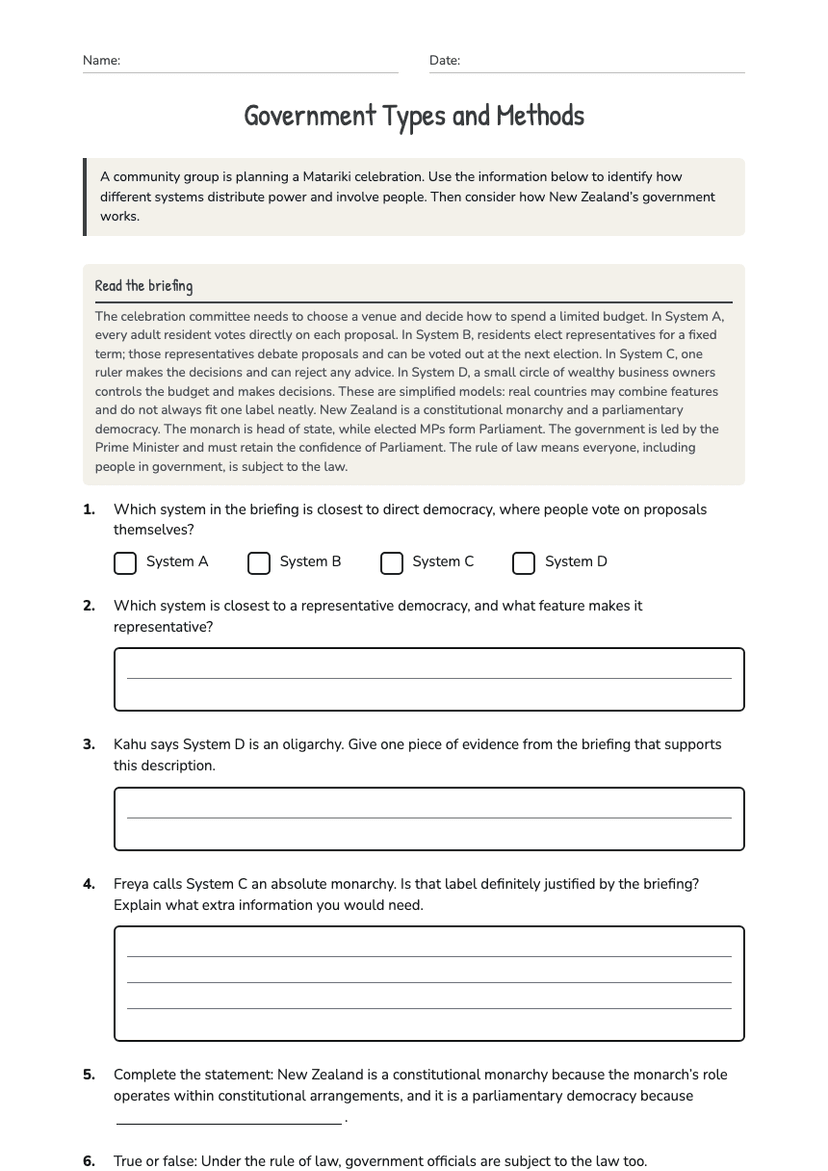
Government Types and Methods
Free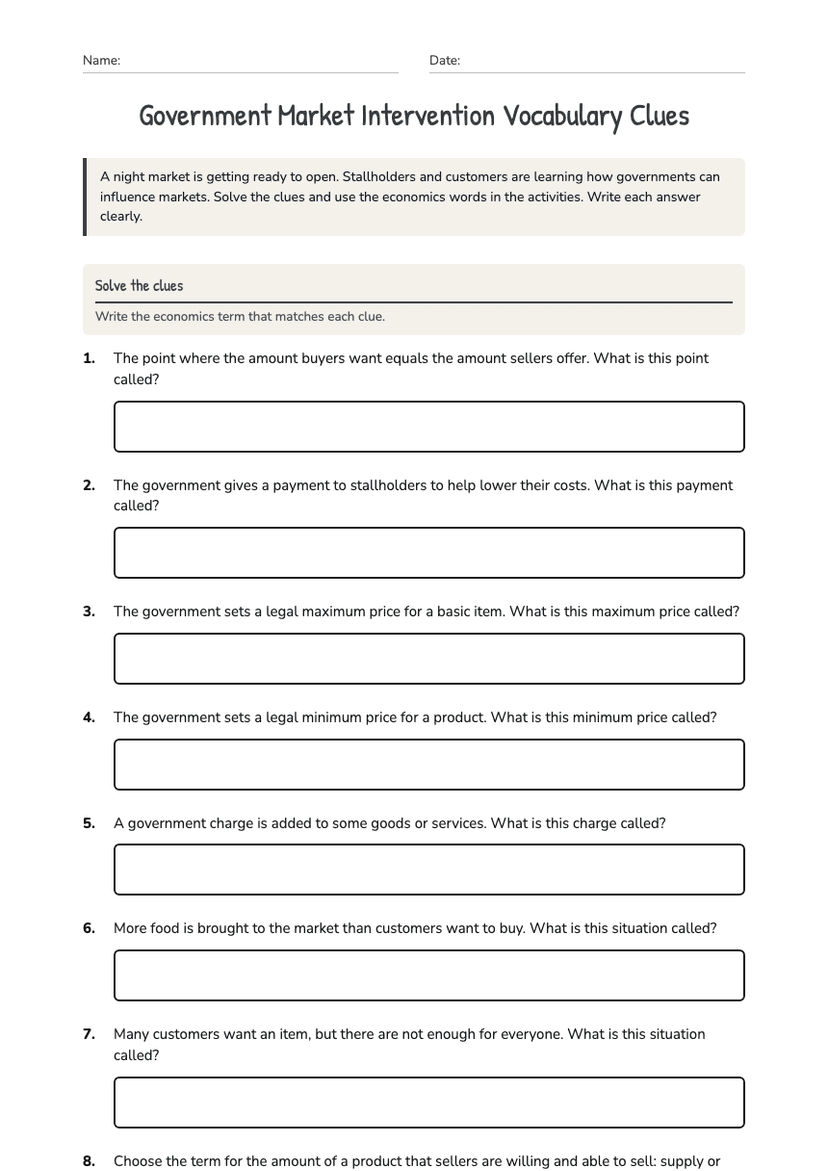
Government Market Intervention Vocabulary Clues
Free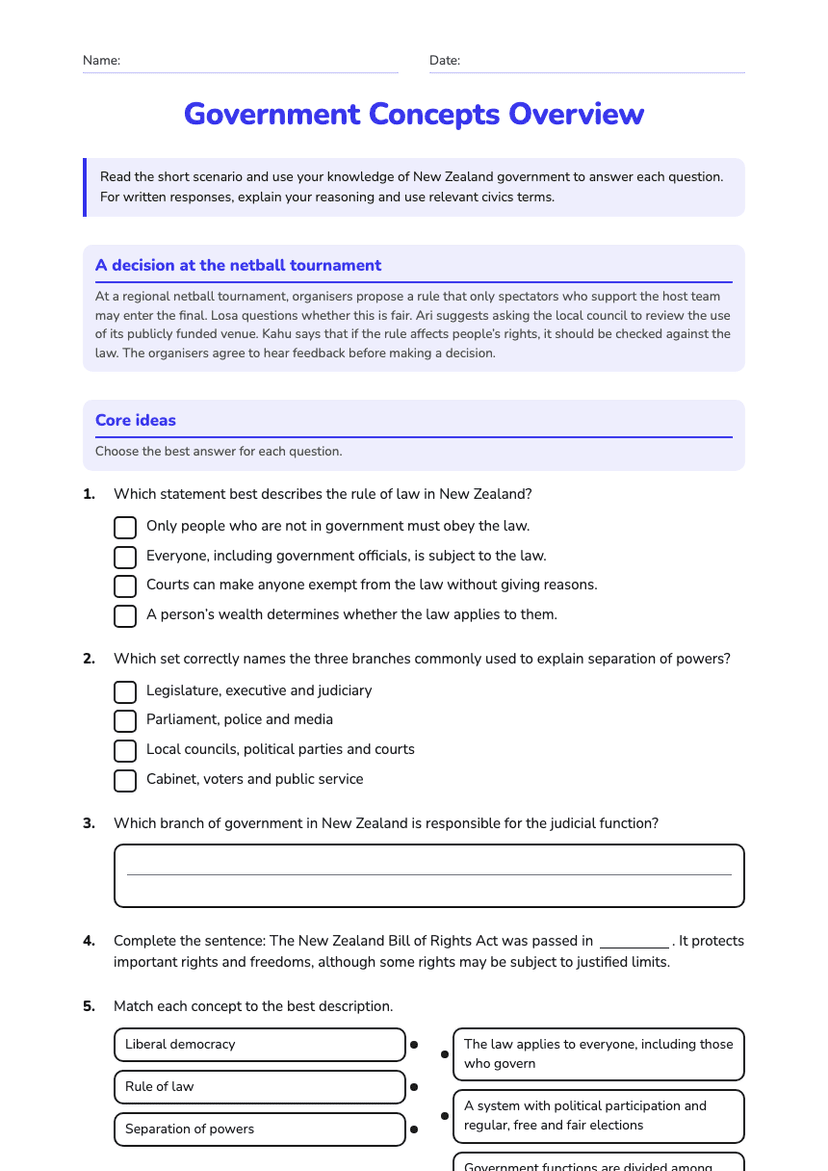
Government Concepts Overview
Free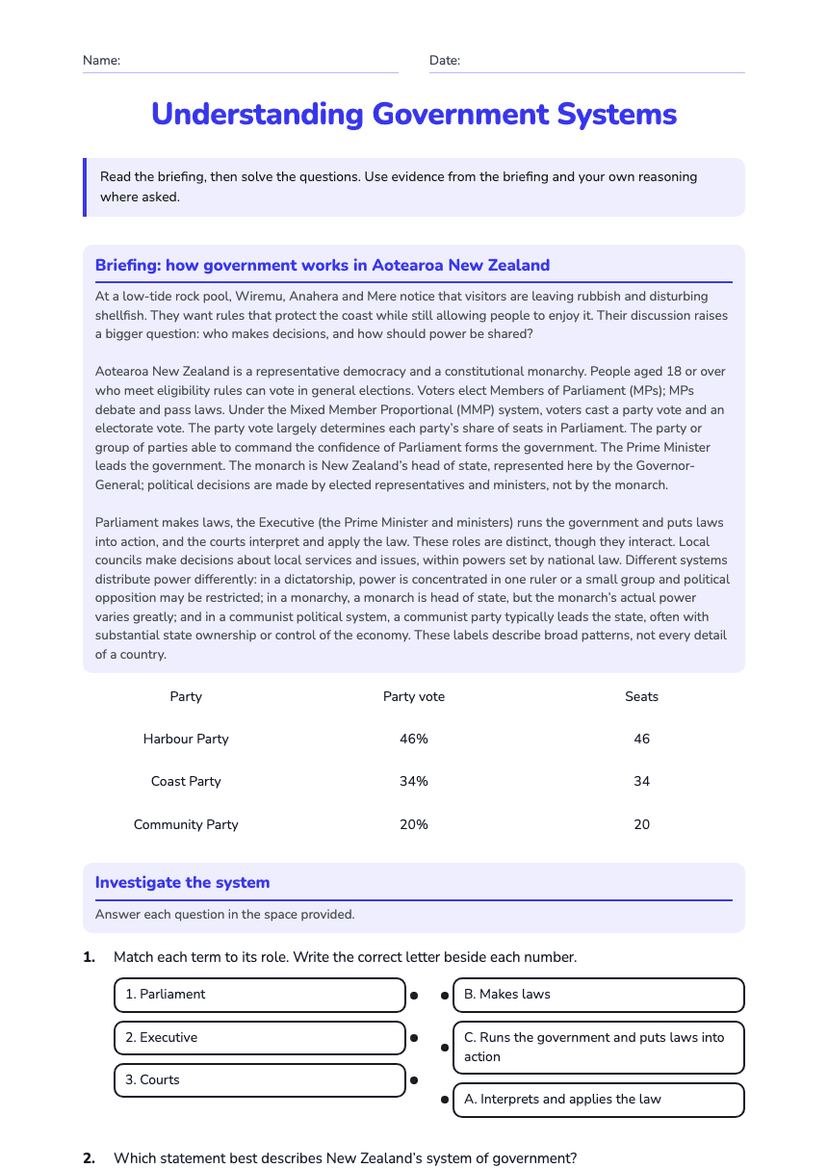
Understanding Government Systems
Free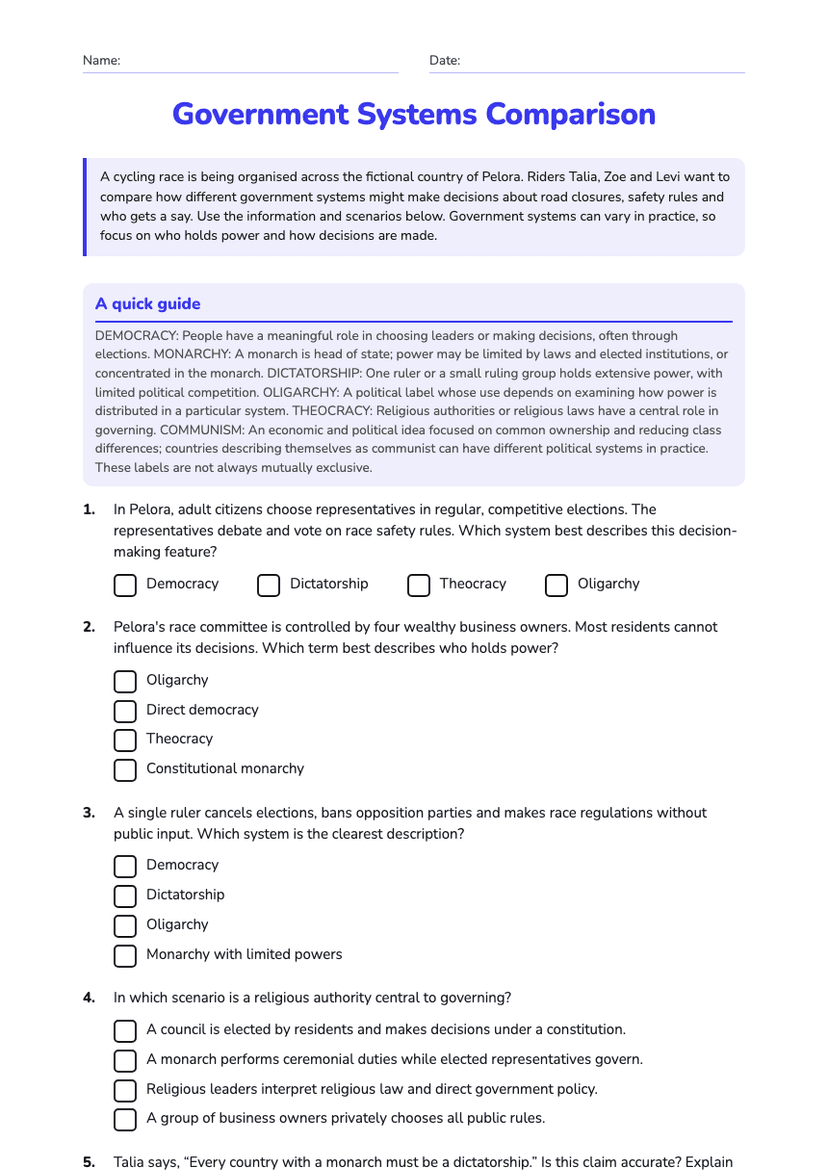
Government Systems Comparison
Free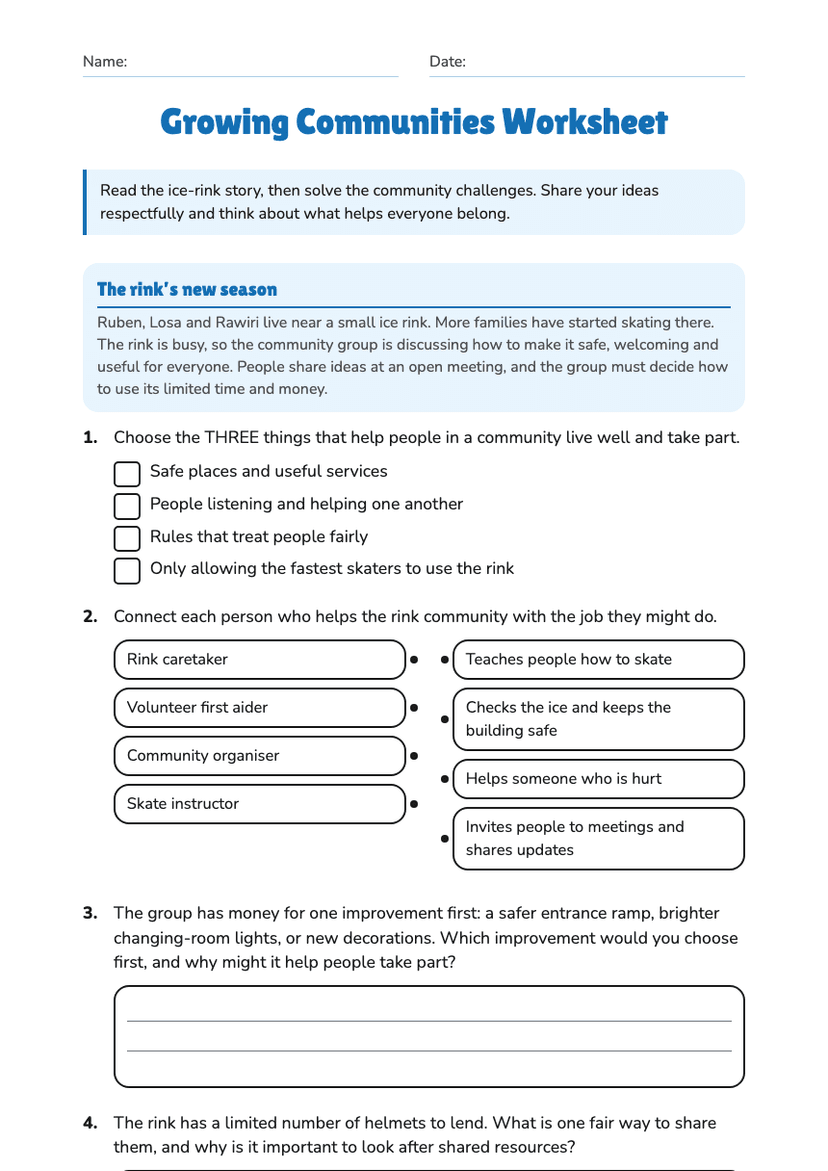
Growing Communities Worksheet
Free