Creative Art Exploration
A free art worksheet ready for your classroom. Open in Kuraplan to grab the print-ready PDF, customize it for your students, or generate a fresh version in seconds.
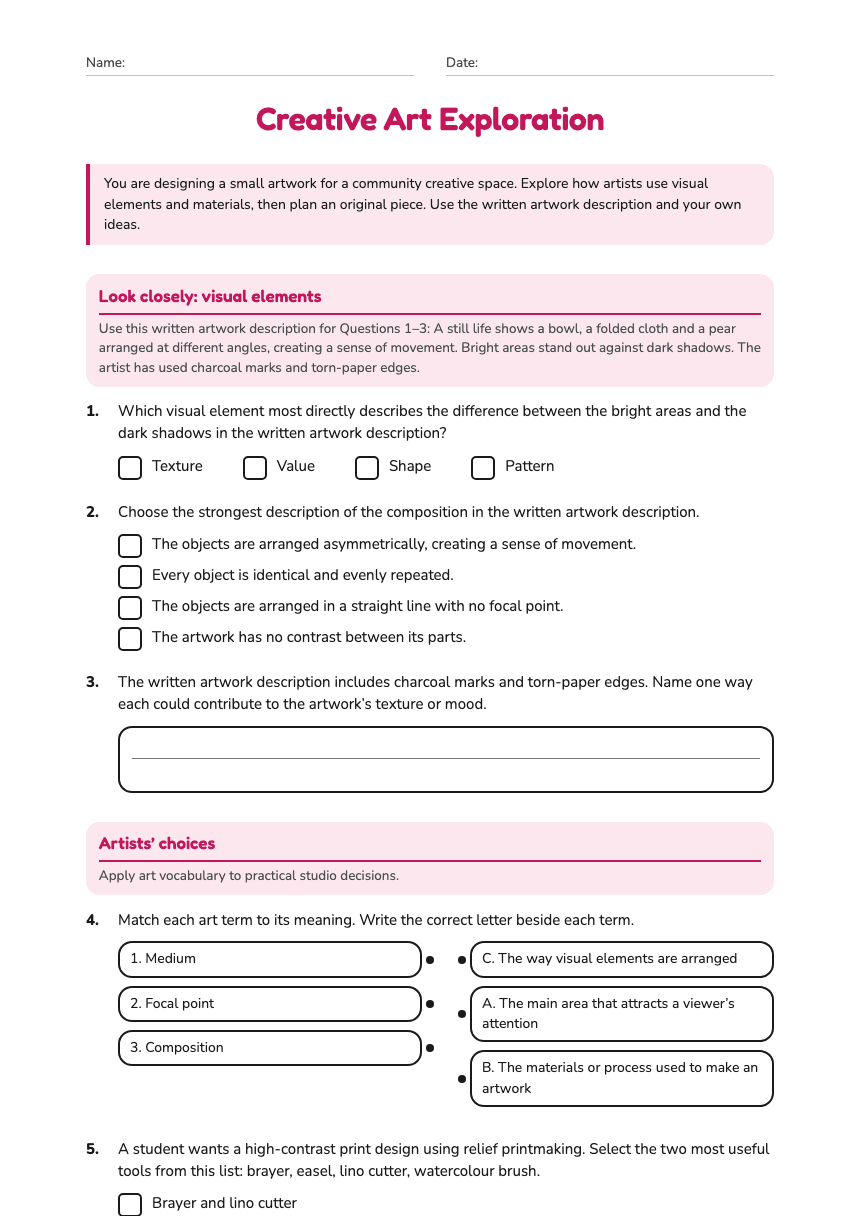
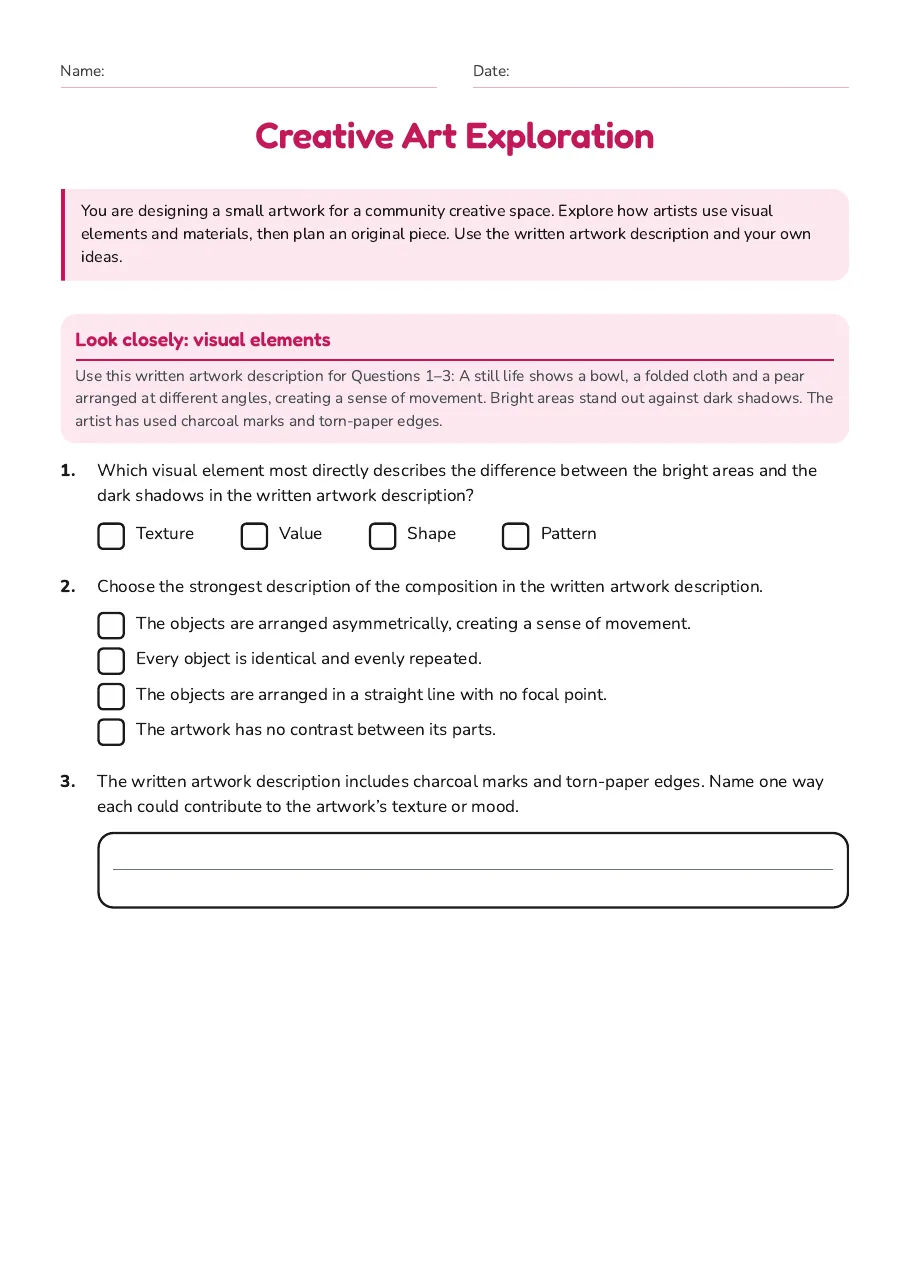
Creative Art Exploration
Look closely: visual elements
Use this written artwork description for Questions 1–3: A still life shows a bowl, a folded cloth and a pear arranged at different angles, creating a sense of movement. Bright areas stand out against dark shadows. The artist has used charcoal marks and torn-paper edges.
- Texture
- Value
- Shape
- Pattern
- The objects are arranged asymmetrically, creating a sense of movement.
- Every object is identical and evenly repeated.
- The objects are arranged in a straight line with no focal point.
- The artwork has no contrast between its parts.
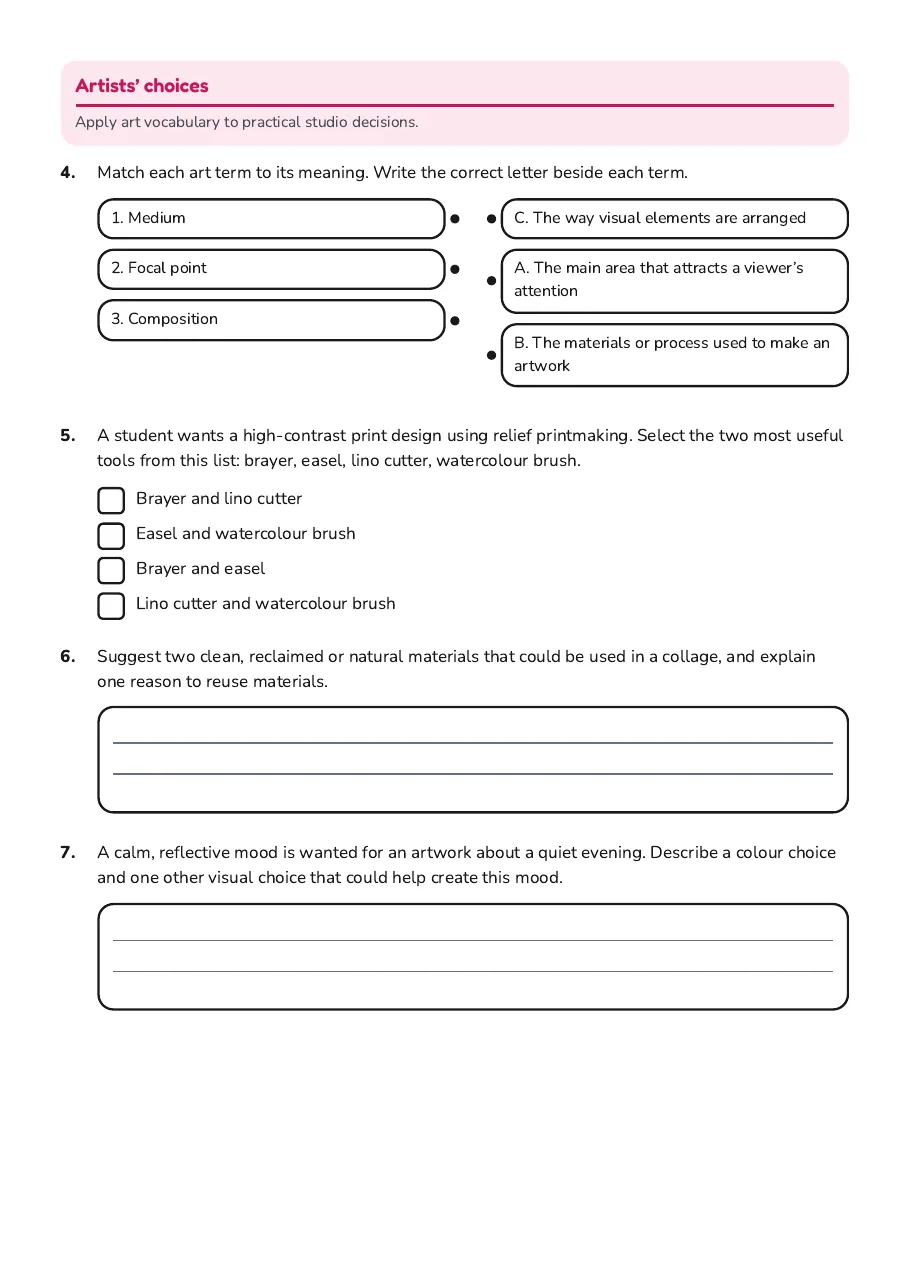
Artists’ choices
Apply art vocabulary to practical studio decisions.
- 1. Medium
- 2. Focal point
- 3. Composition
- C. The way visual elements are arranged
- A. The main area that attracts a viewer’s attention
- B. The materials or process used to make an artwork
- Brayer and lino cutter
- Easel and watercolour brush
- Brayer and easel
- Lino cutter and watercolour brush
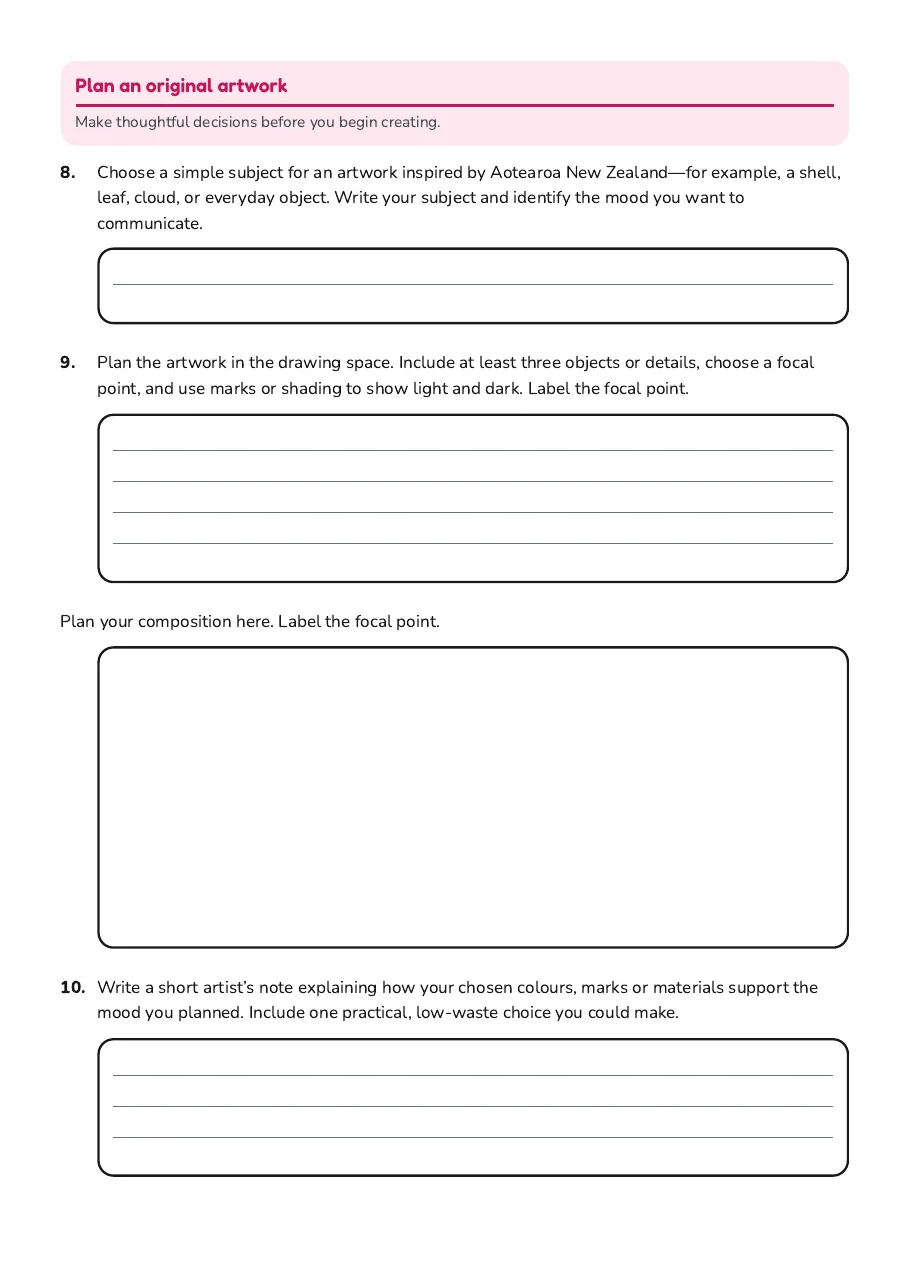
Plan an original artwork
Make thoughtful decisions before you begin creating.
3 printable pages
Page 1
Page 2
Page 3
About This Worksheet
Free in Kuraplan
Sign up free, grab the PDF, and customize it for your class.
Print-Ready
Formatted for standard paper. Clean layout, easy to read.
AI-Generated
Created with Kuraplan's AI, designed for real classroom use.
For Teachers & Parents
Use in classrooms, for homework, tutoring, or homeschool.
Need a custom version of this worksheet?
Kuraplan's AI generates custom worksheets in seconds — differentiated for every learner, aligned to your curriculum.
Generate Custom Worksheets — FreeMore Art Worksheets
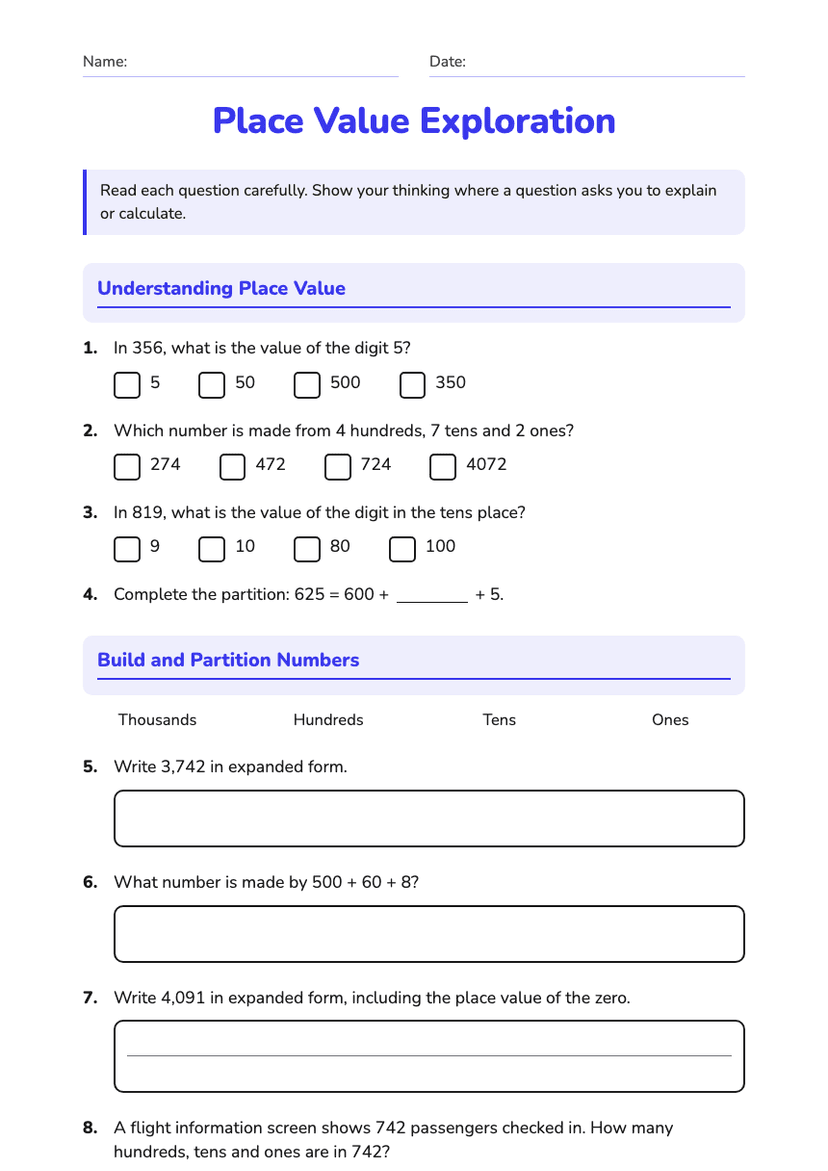
Place Value Exploration
Free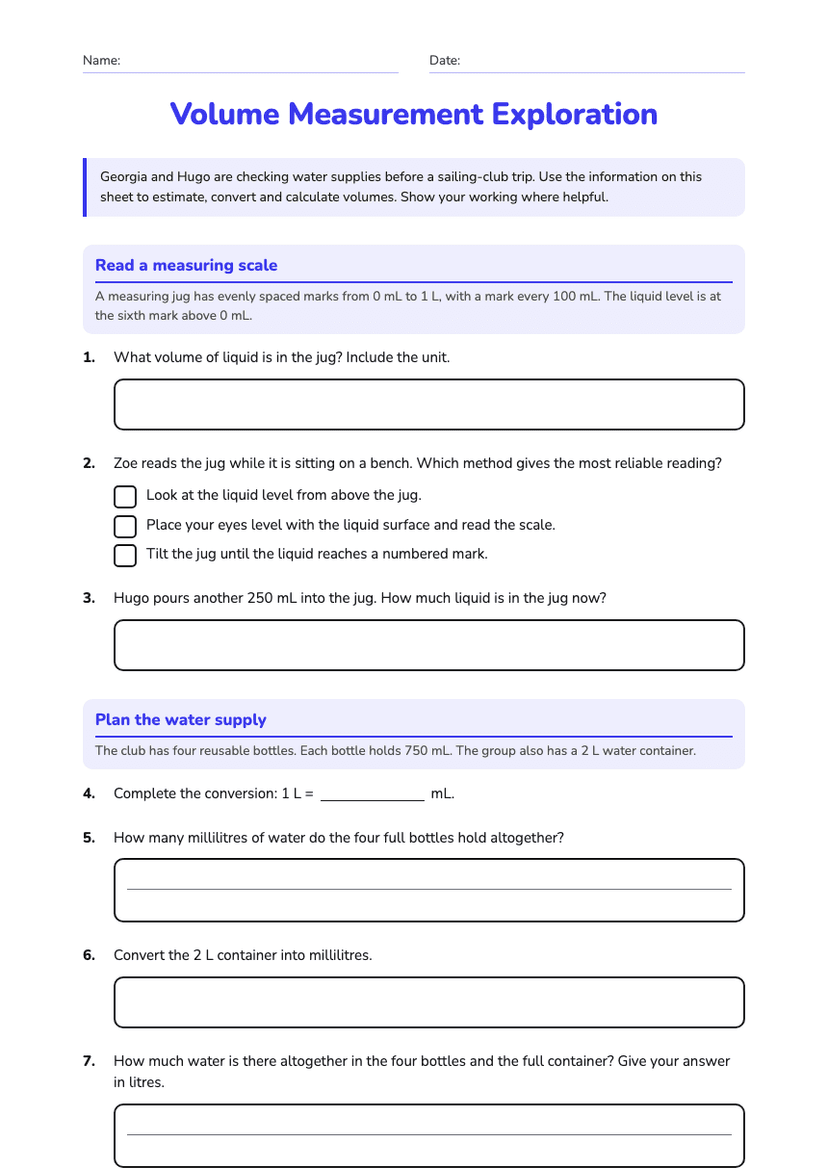
Volume Measurement Exploration
Free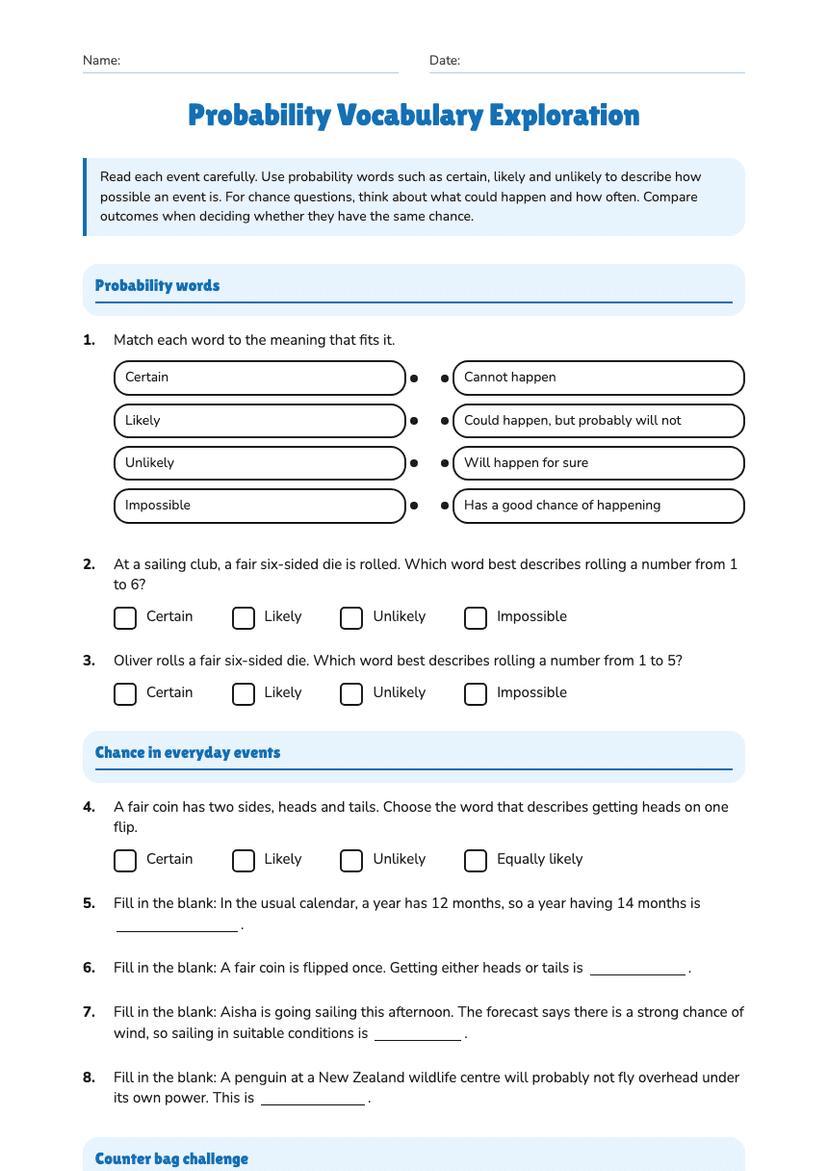
Probability Vocabulary Exploration
Free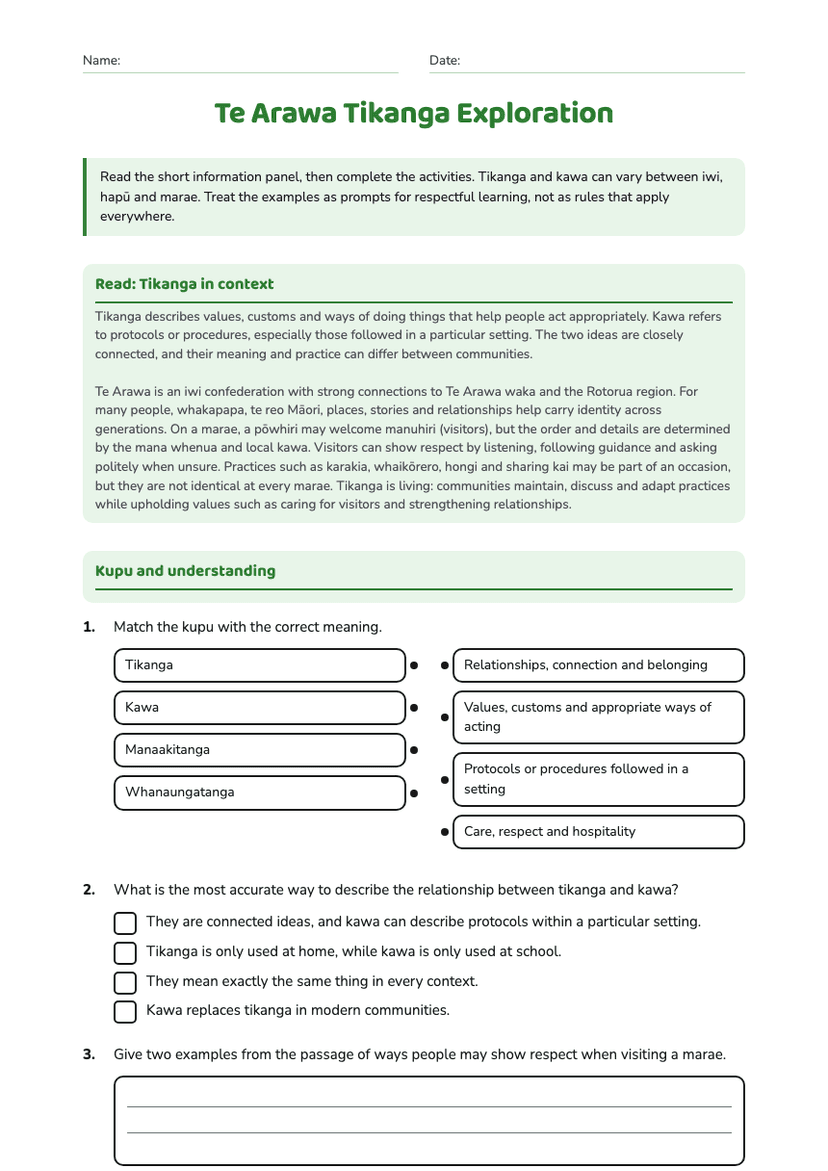
Te Arawa Tikanga Exploration
Free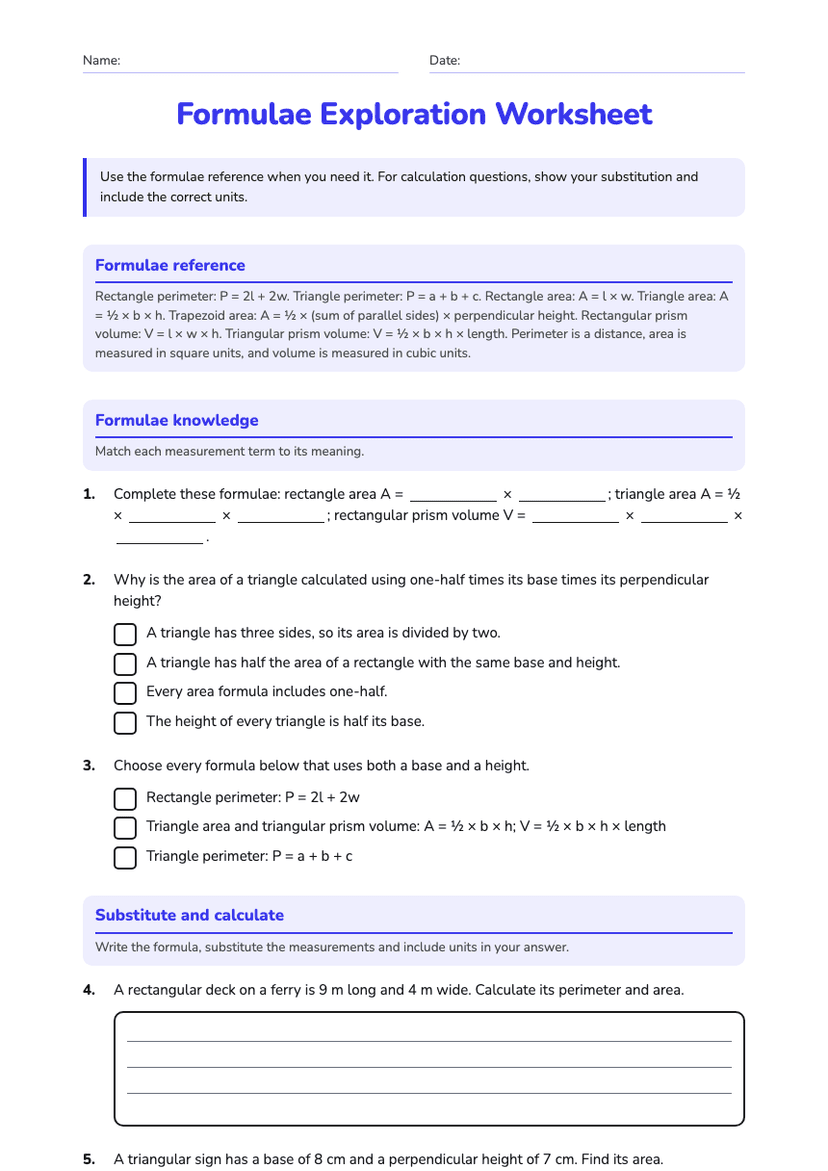
Formulae Exploration Worksheet
Free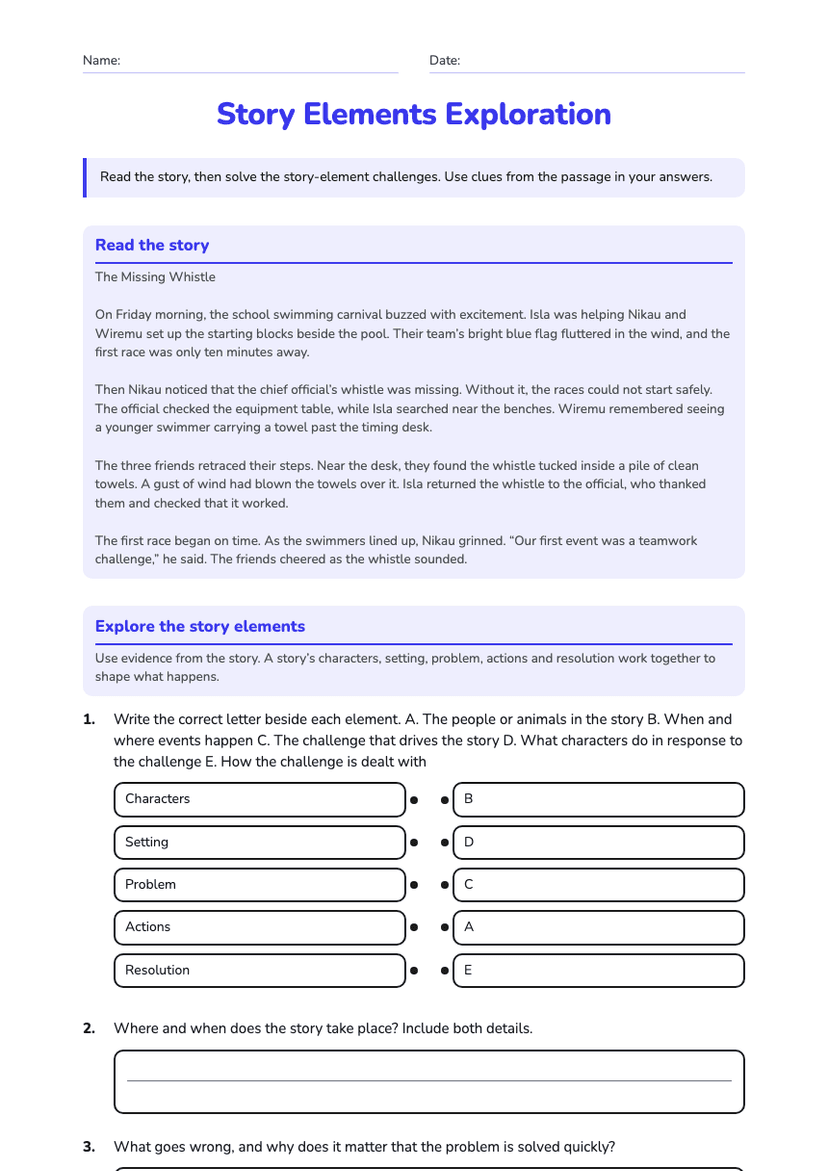
Story Elements Exploration
Free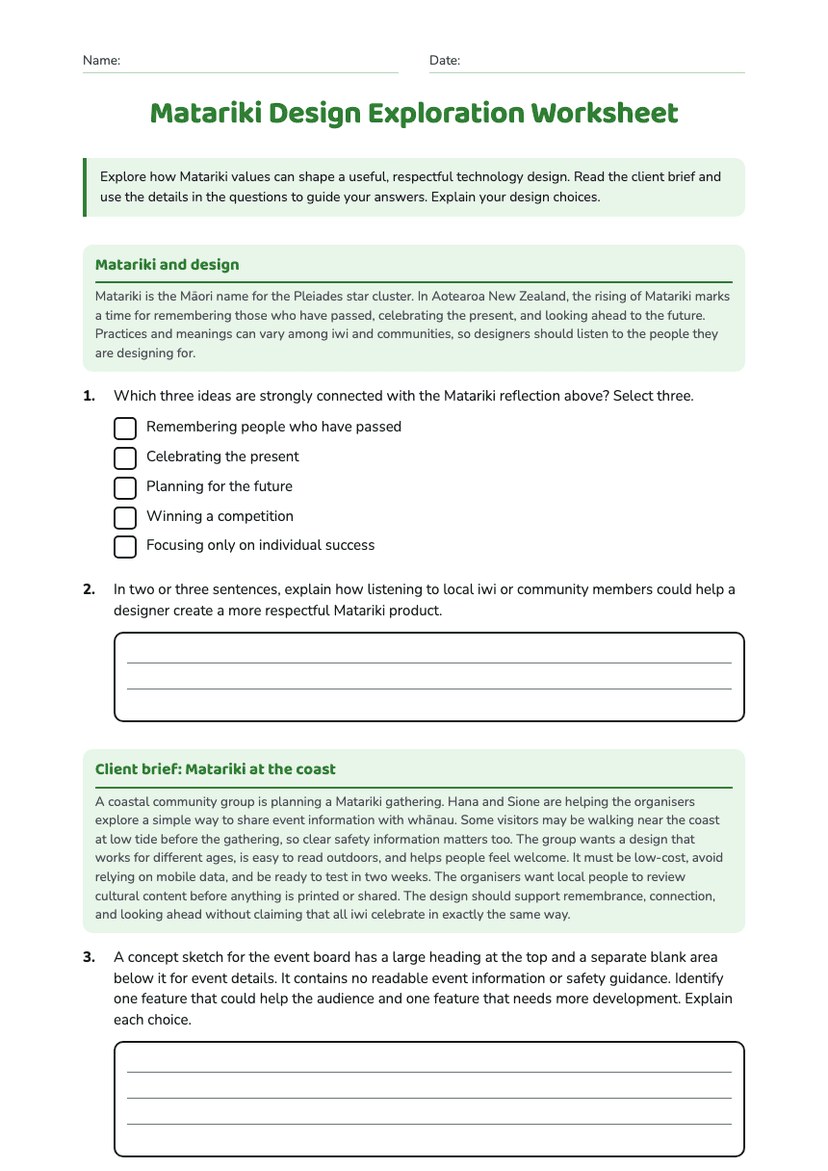
Matariki Design Exploration Worksheet
Free