Cultural Environmental Perspectives
A free science worksheet ready for your classroom. Open in Kuraplan to grab the print-ready PDF, customize it for your students, or generate a fresh version in seconds.
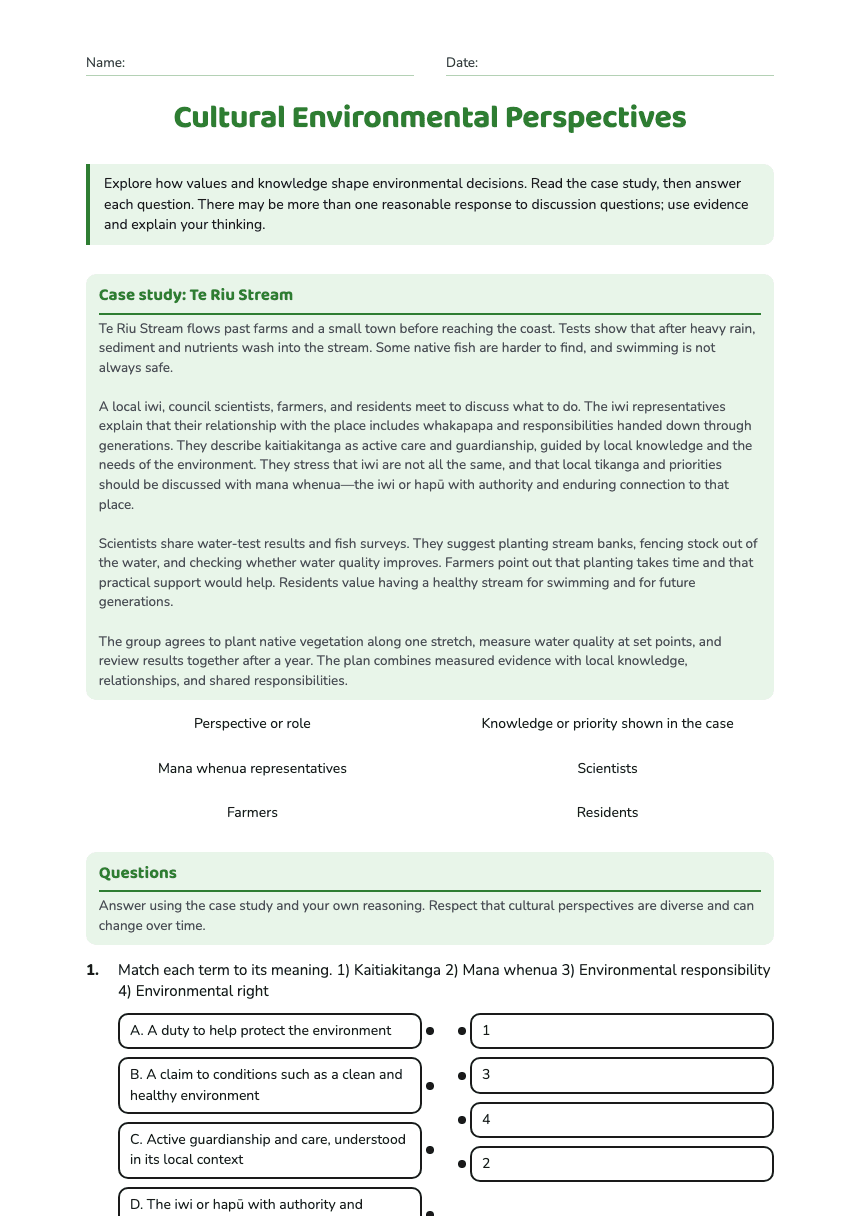
Cultural Environmental Perspectives
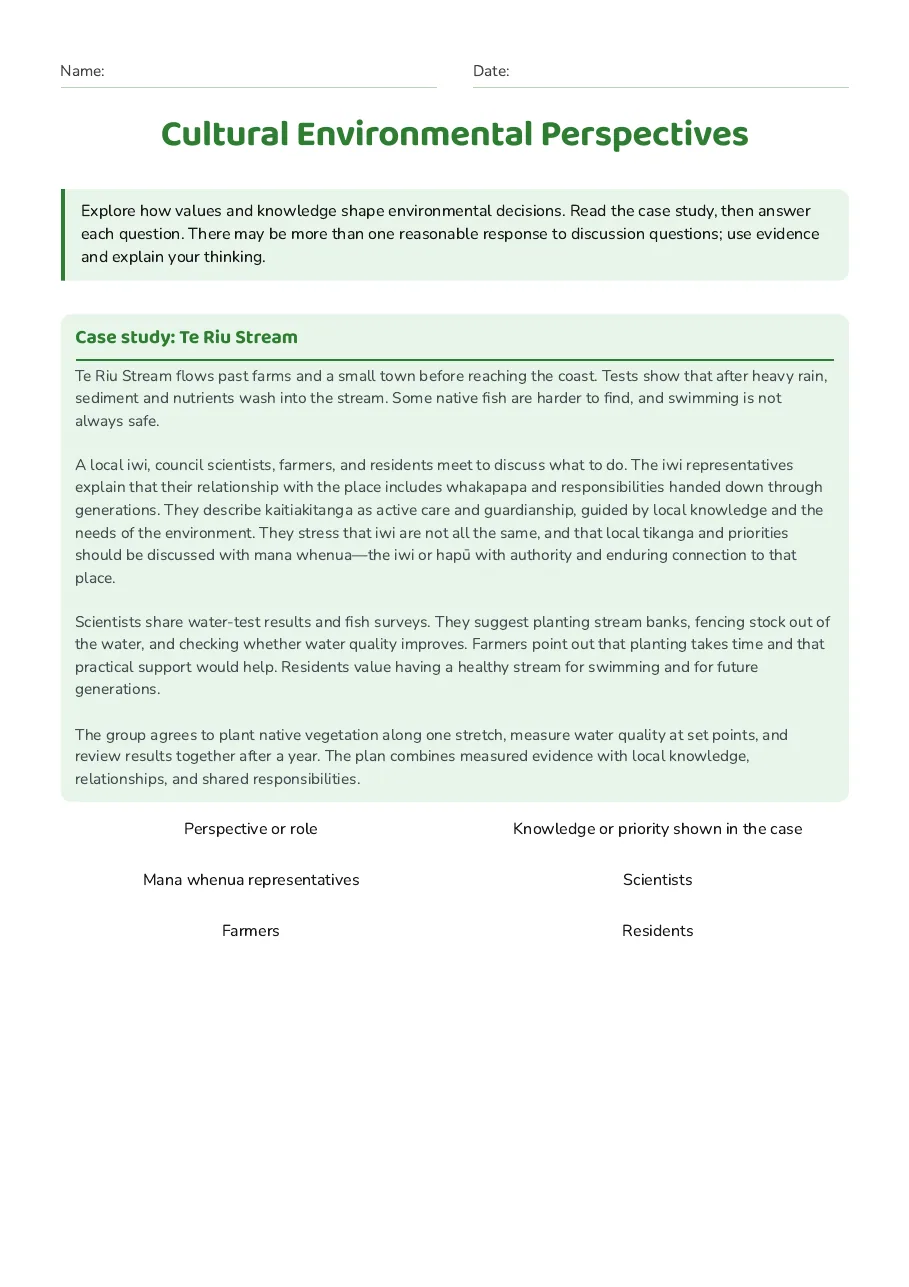
Case study: Te Riu Stream
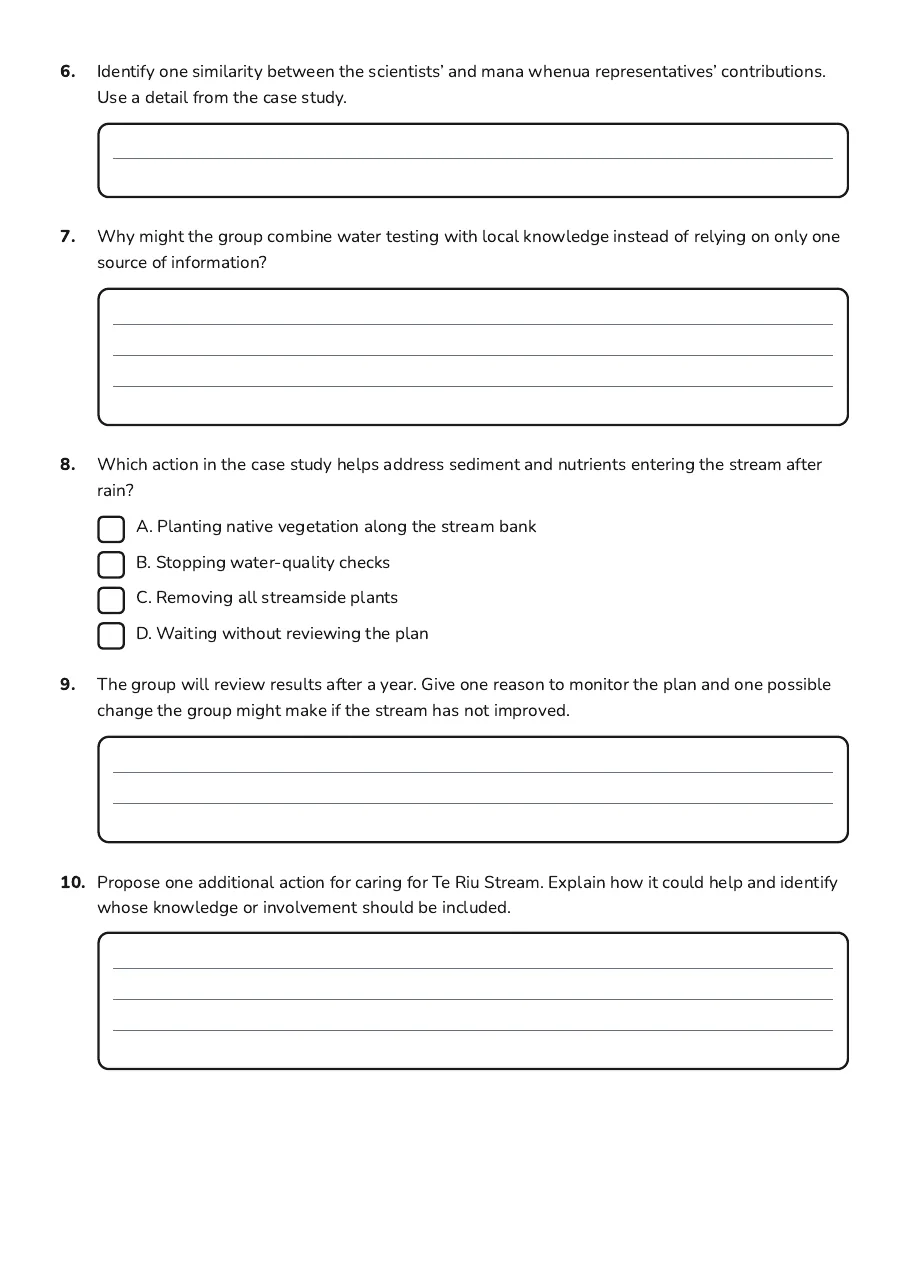
Te Riu Stream flows past farms and a small town before reaching the coast. Tests show that after heavy rain, sediment and nutrients wash into the stream. Some native fish are harder to find, and swimming is not always safe. A local iwi, council scientists, farmers, and residents meet to discuss what to do. The iwi representatives explain that their relationship with the place includes whakapapa and responsibilities handed down through generations. They describe kaitiakitanga as active care and guardianship, guided by local knowledge and the needs of the environment. They stress that iwi are not all the same, and that local tikanga and priorities should be discussed with mana whenua—the iwi or hapū with authority and enduring connection to that place. Scientists share water-test results and fish surveys. They suggest planting stream banks, fencing stock out of the water, and checking whether water quality improves. Farmers point out that planting takes time and that practical support would help. Residents value having a healthy stream for swimming and for future generations. The group agrees to plant native vegetation along one stretch, measure water quality at set points, and review results together after a year. The plan combines measured evidence with local knowledge, relationships, and shared responsibilities.
Perspective or role
Knowledge or priority shown in the case
Mana whenua representatives
Scientists
Farmers
Residents
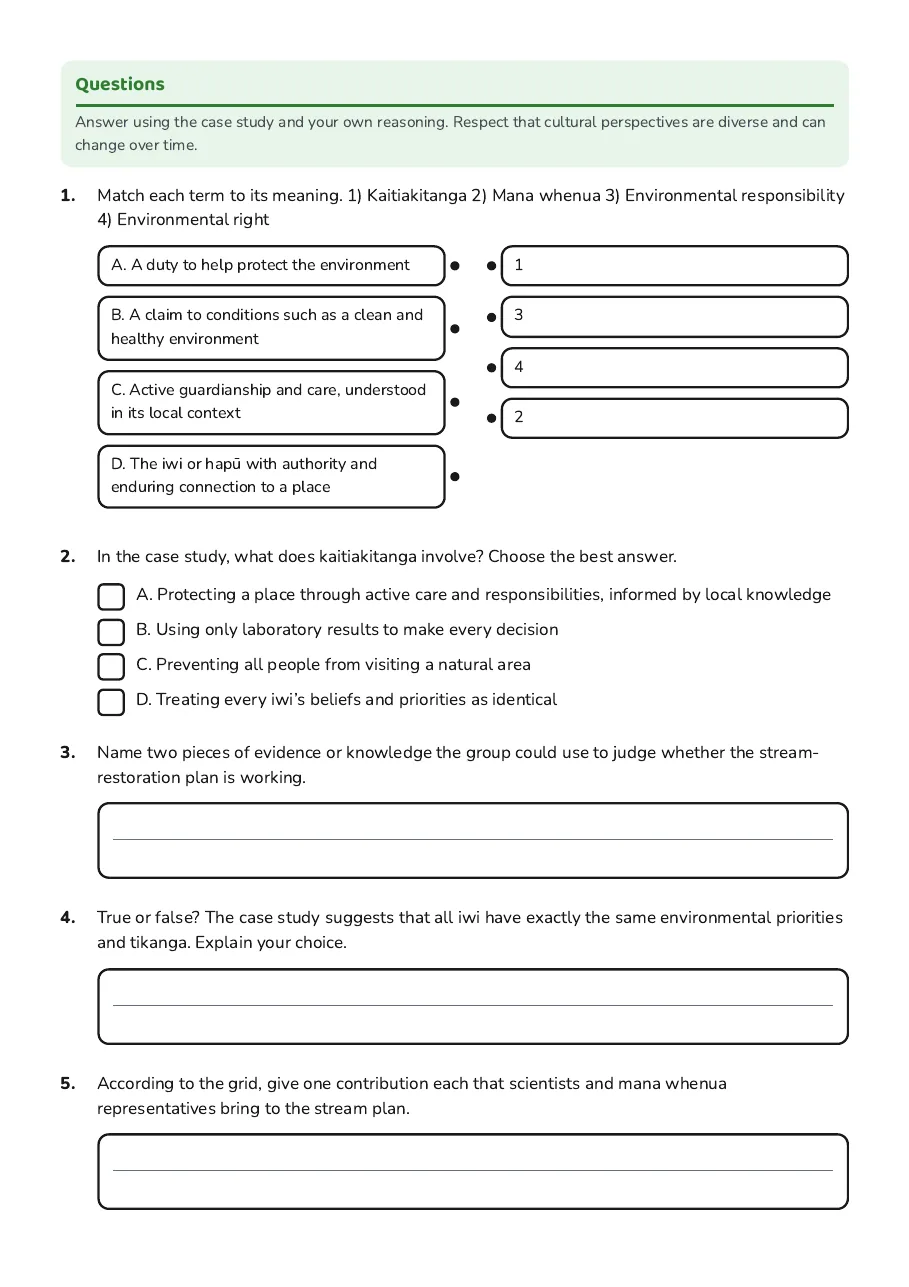
Questions
Answer using the case study and your own reasoning. Respect that cultural perspectives are diverse and can change over time.
- A. A duty to help protect the environment
- B. A claim to conditions such as a clean and healthy environment
- C. Active guardianship and care, understood in its local context
- D. The iwi or hapū with authority and enduring connection to a place
- 1
- 3
- 4
- 2
- A. Protecting a place through active care and responsibilities, informed by local knowledge
- B. Using only laboratory results to make every decision
- C. Preventing all people from visiting a natural area
- D. Treating every iwi’s beliefs and priorities as identical
- A. Planting native vegetation along the stream bank
- B. Stopping water-quality checks
- C. Removing all streamside plants
- D. Waiting without reviewing the plan
3 printable pages
Page 1
Page 2
Page 3
About This Worksheet
Free in Kuraplan
Sign up free, grab the PDF, and customize it for your class.
Print-Ready
Formatted for standard paper. Clean layout, easy to read.
AI-Generated
Created with Kuraplan's AI, designed for real classroom use.
For Teachers & Parents
Use in classrooms, for homework, tutoring, or homeschool.
Need a custom version of this worksheet?
Kuraplan's AI generates custom worksheets in seconds — differentiated for every learner, aligned to your curriculum.
Generate Custom Worksheets — FreeMore Science Worksheets
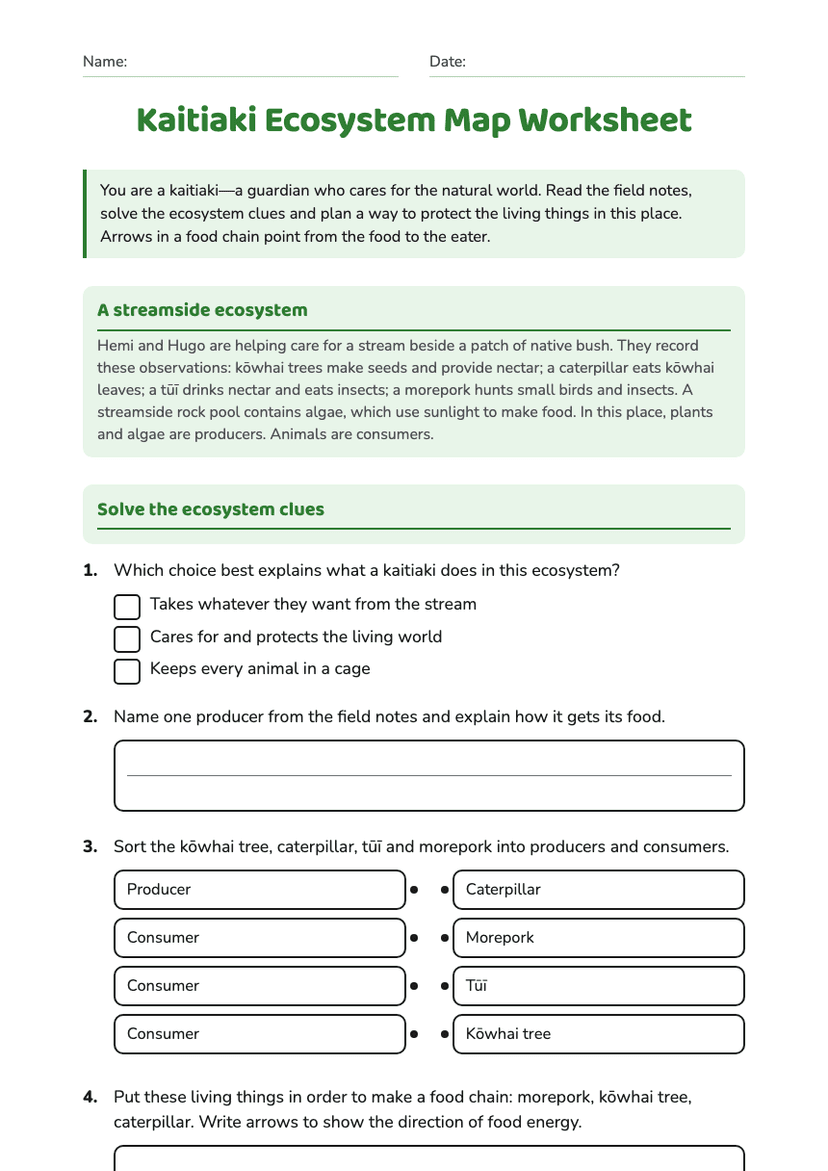
Kaitiaki Ecosystem Map Worksheet
Free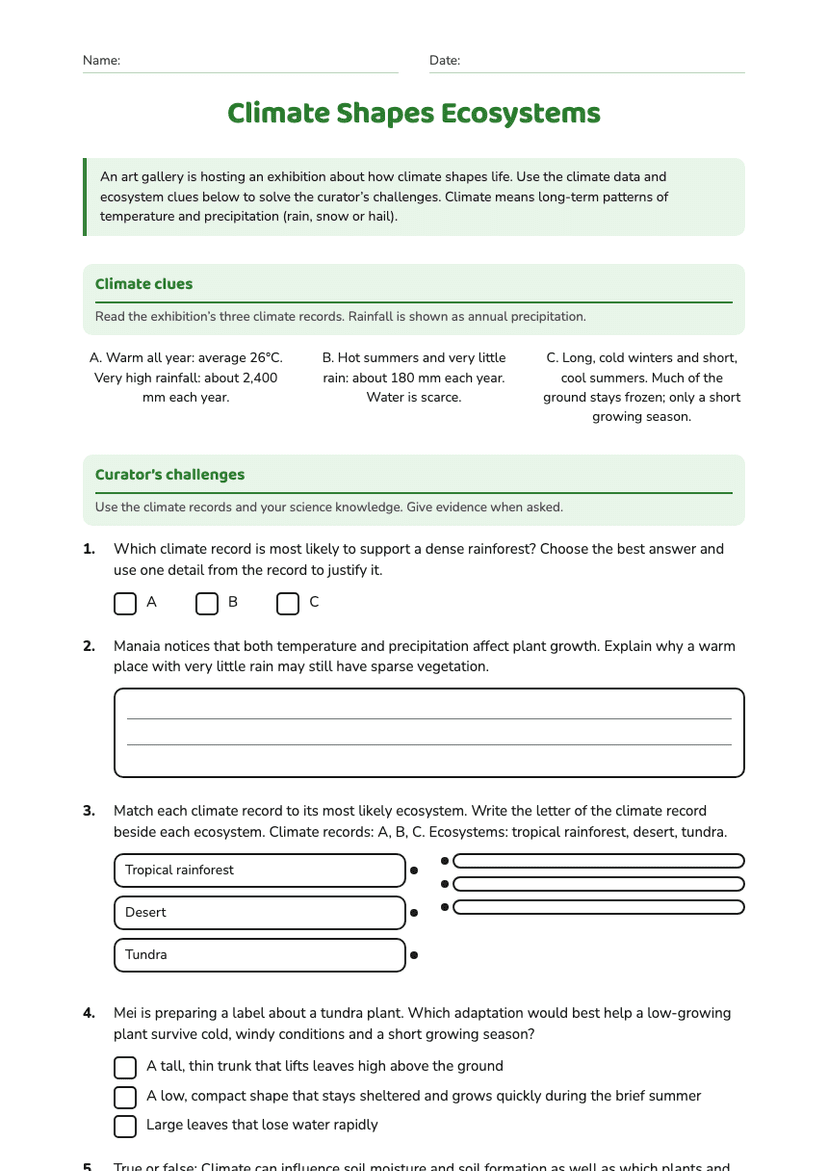
Climate Shapes Ecosystems
Free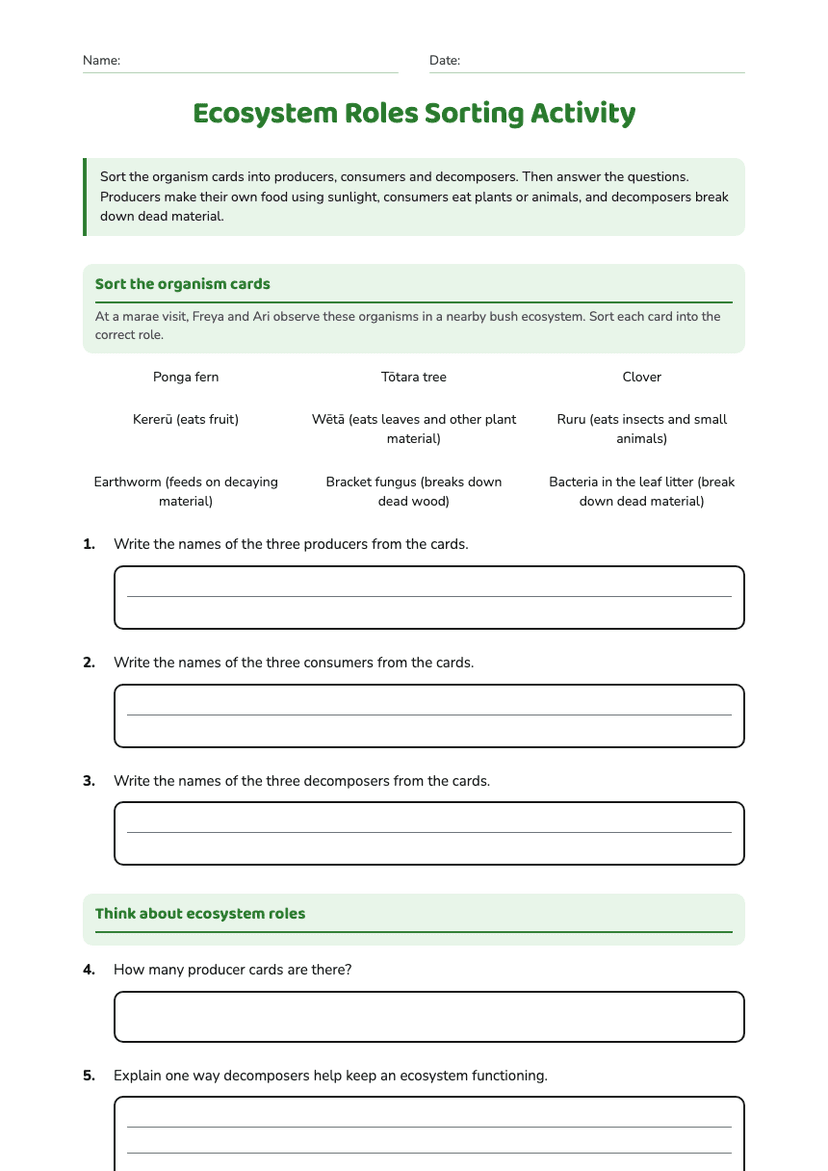
Ecosystem Roles Sorting Activity
Free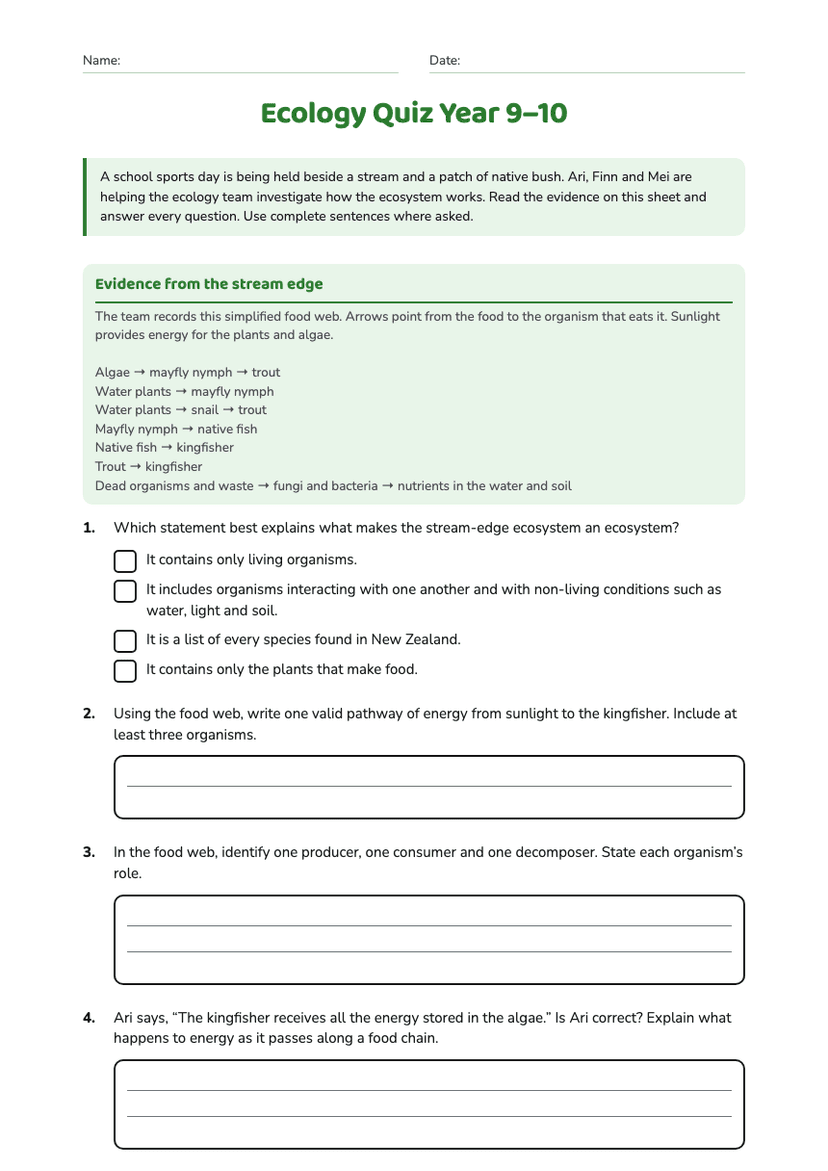
Ecology Quiz Year 9–10
Free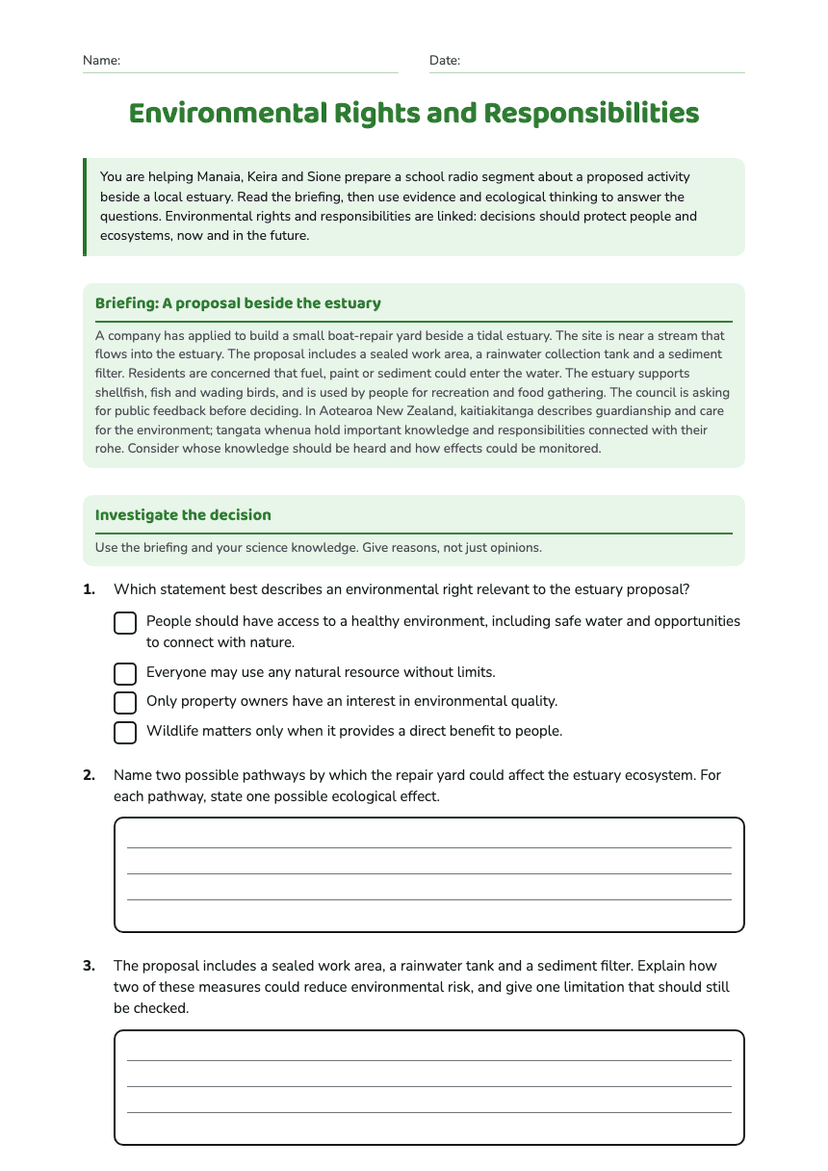
Environmental Rights and Responsibilities
Free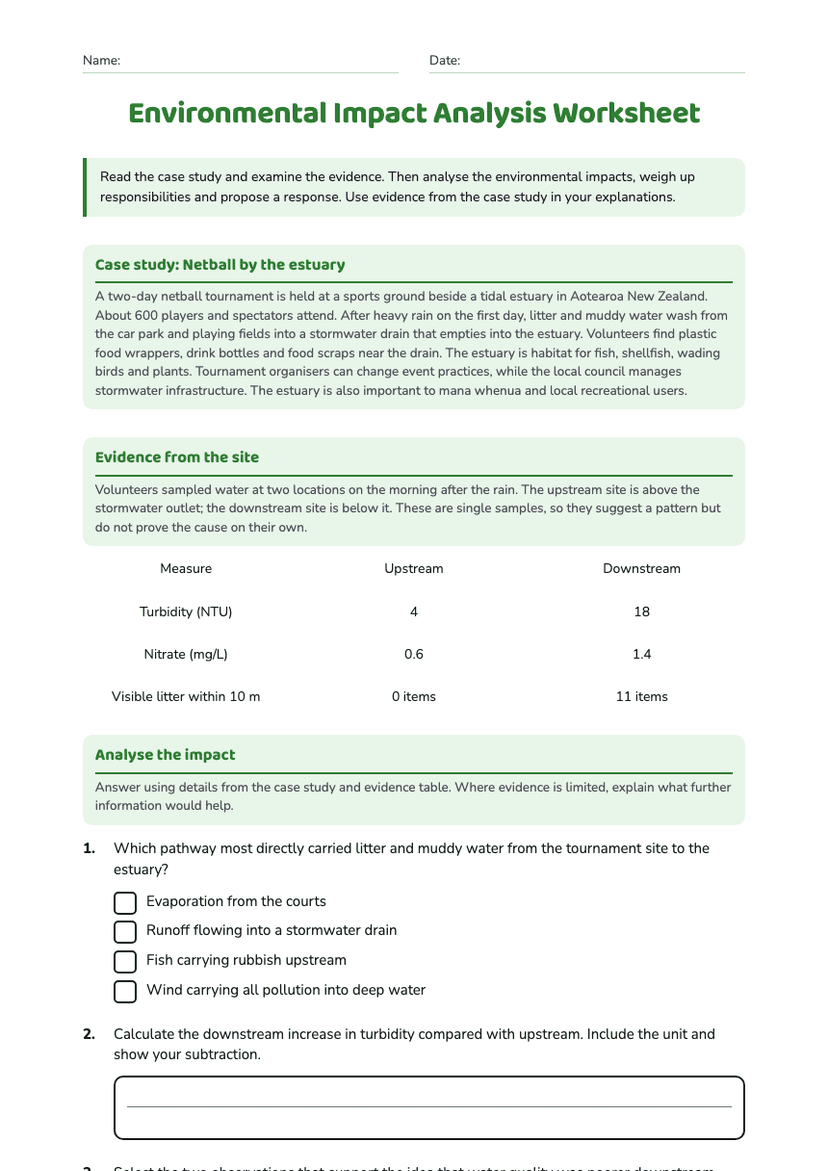
Environmental Impact Analysis Worksheet
Free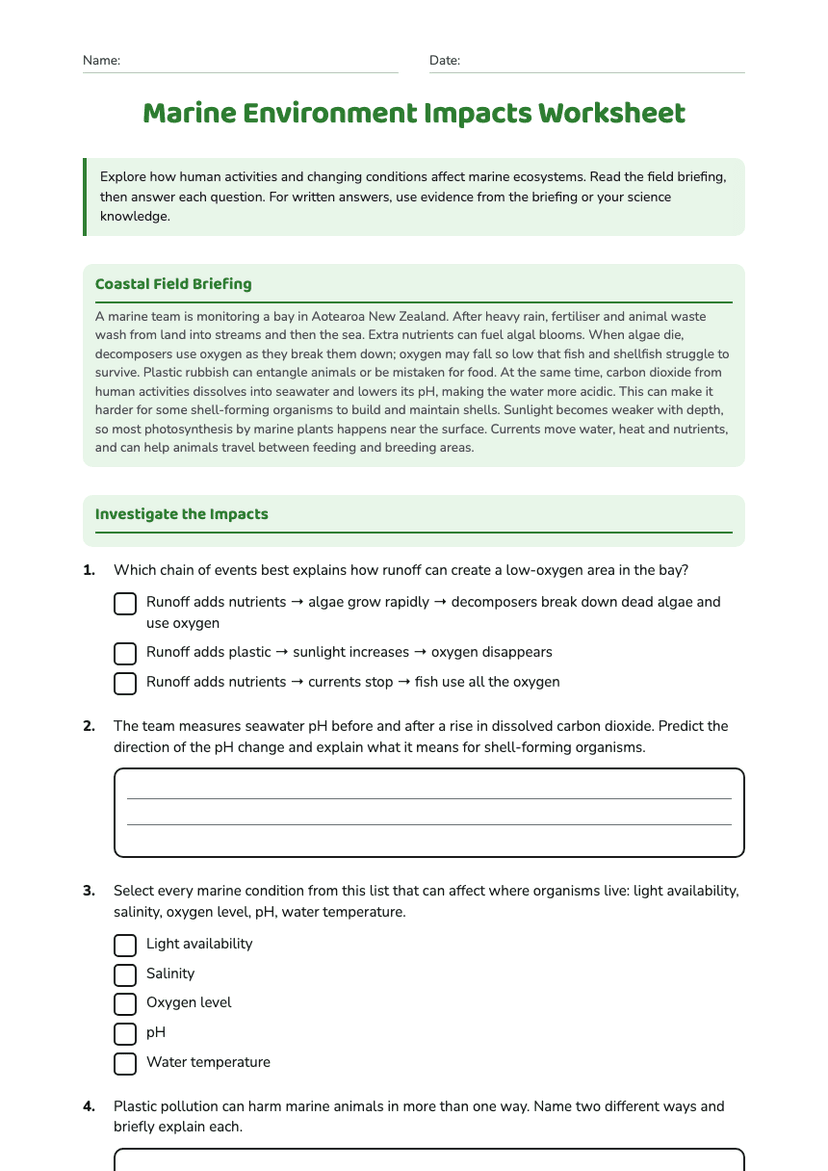
Marine Environment Impacts Worksheet
Free