Dawn Raids Historical Analysis
A free social sciences worksheet ready for your classroom. Open in Kuraplan to grab the print-ready PDF, customize it for your students, or generate a fresh version in seconds.
Dawn Raids Historical Analysis
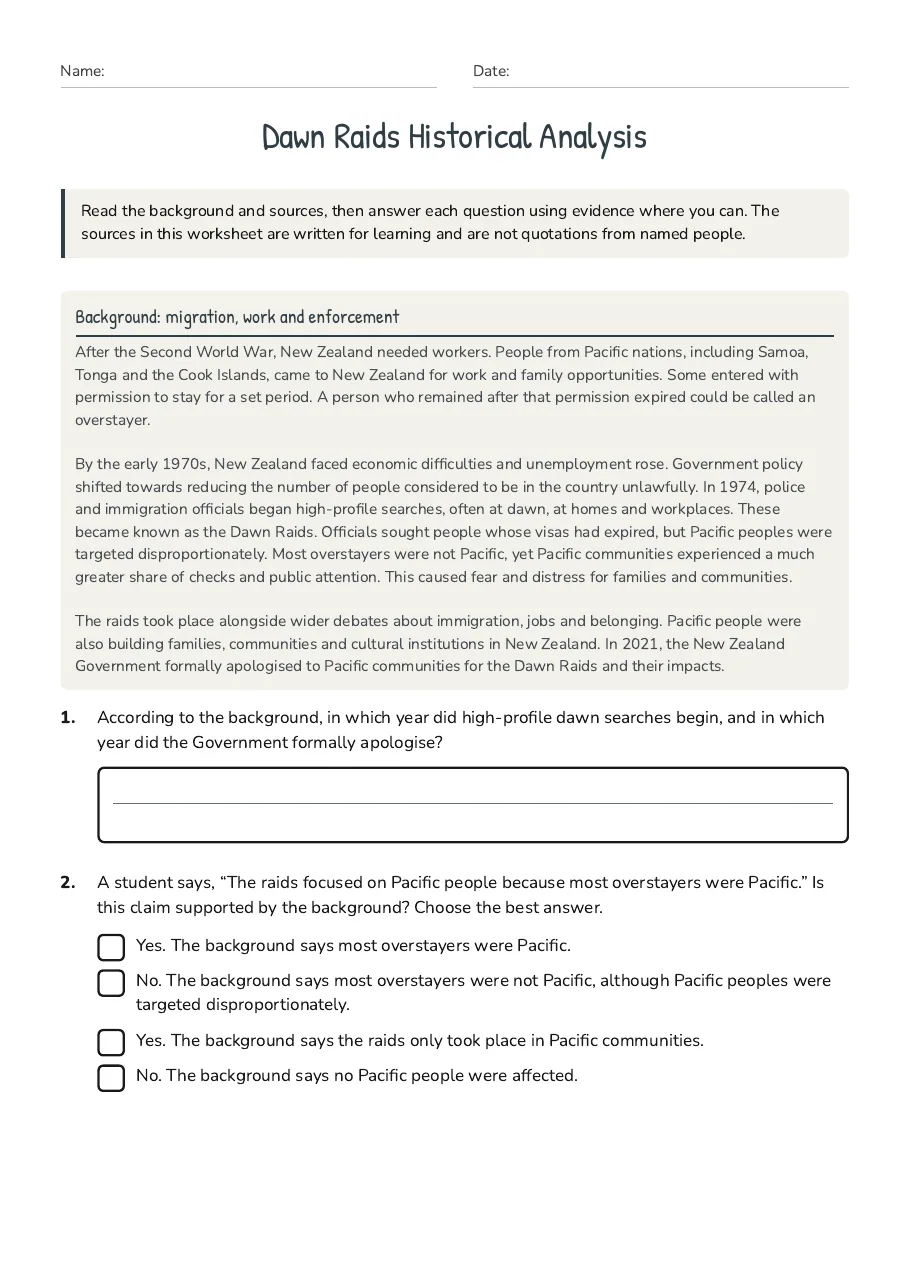
Background: migration, work and enforcement
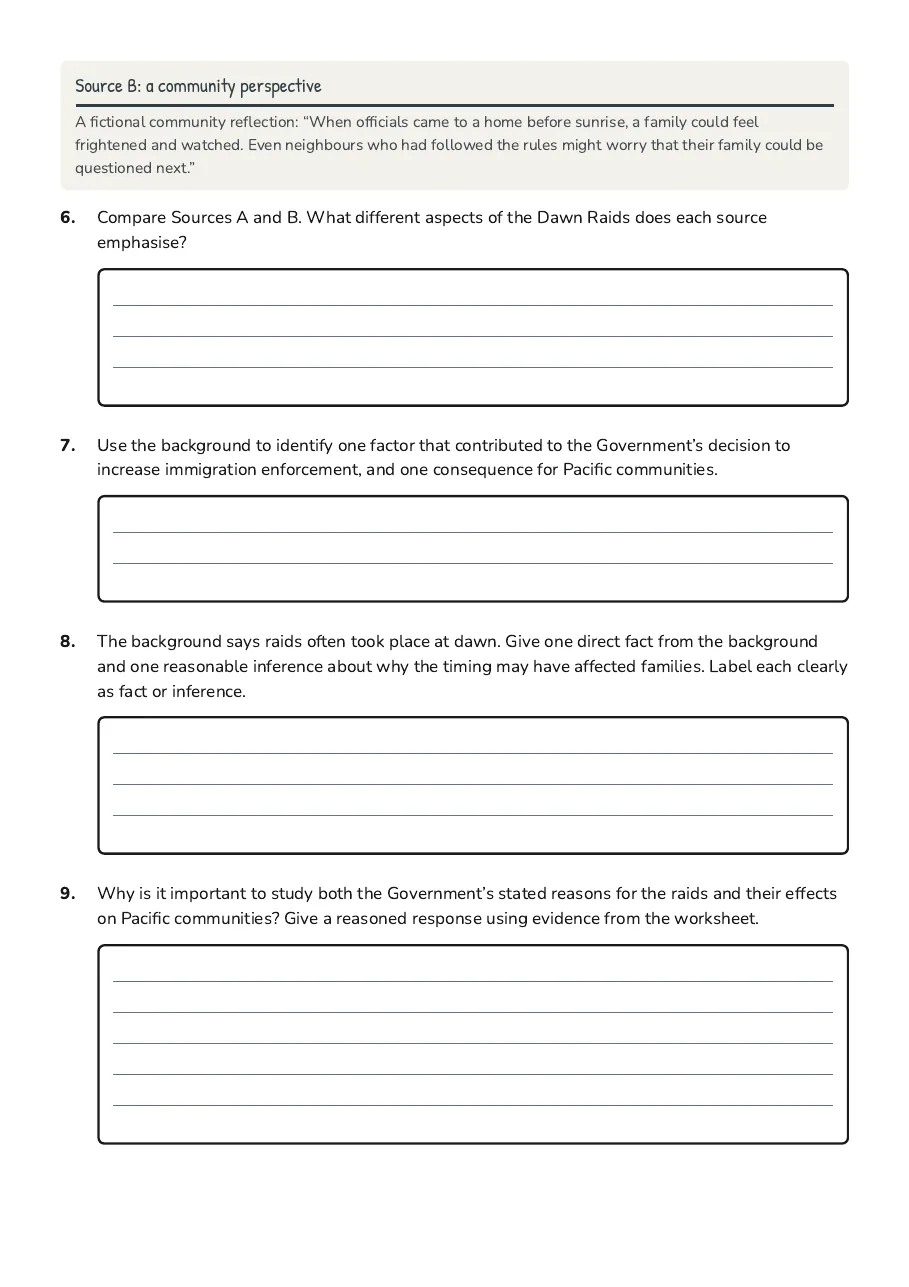
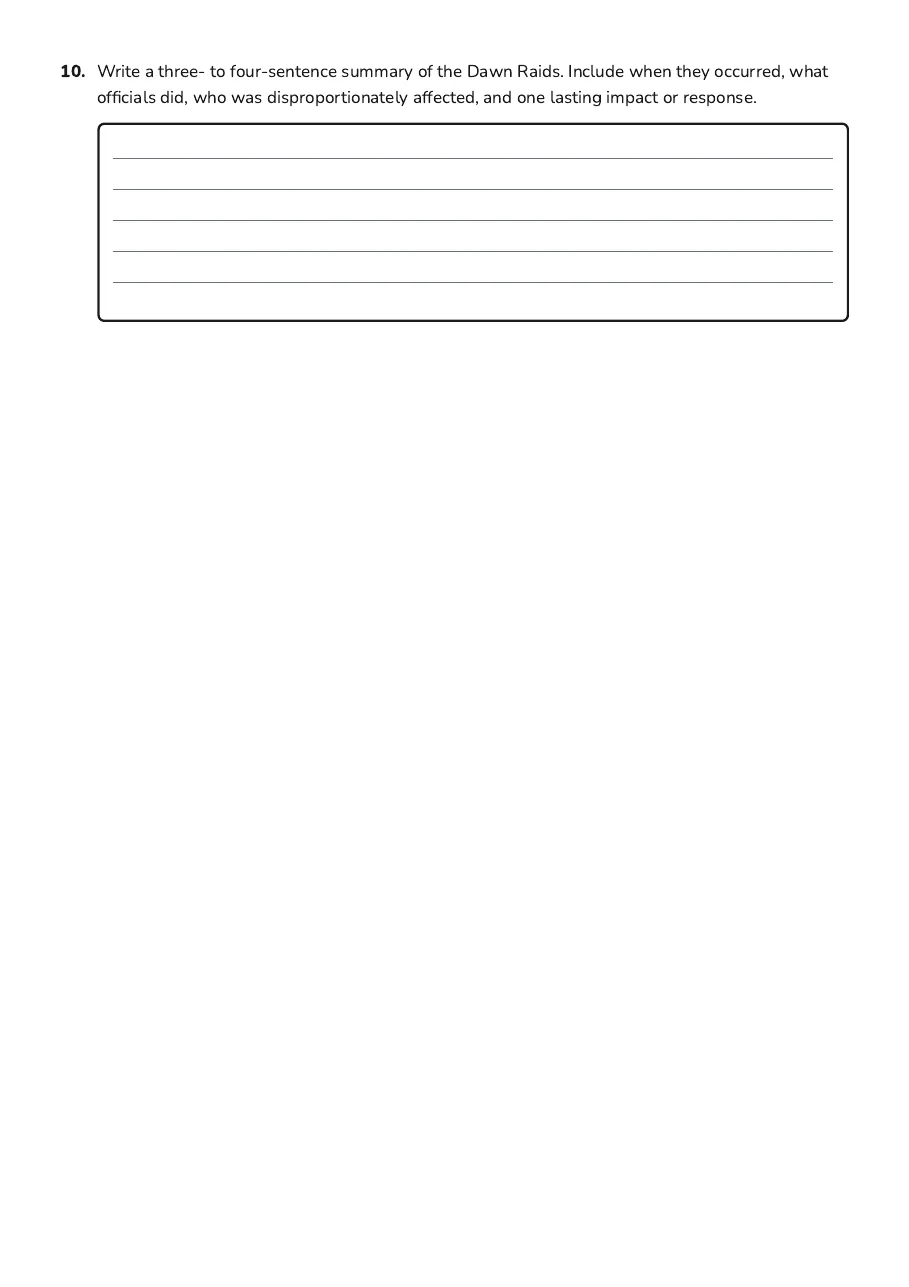
After the Second World War, New Zealand needed workers. People from Pacific nations, including Samoa, Tonga and the Cook Islands, came to New Zealand for work and family opportunities. Some entered with permission to stay for a set period. A person who remained after that permission expired could be called an overstayer. By the early 1970s, New Zealand faced economic difficulties and unemployment rose. Government policy shifted towards reducing the number of people considered to be in the country unlawfully. In 1974, police and immigration officials began high-profile searches, often at dawn, at homes and workplaces. These became known as the Dawn Raids. Officials sought people whose visas had expired, but Pacific peoples were targeted disproportionately. Most overstayers were not Pacific, yet Pacific communities experienced a much greater share of checks and public attention. This caused fear and distress for families and communities. The raids took place alongside wider debates about immigration, jobs and belonging. Pacific people were also building families, communities and cultural institutions in New Zealand. In 2021, the New Zealand Government formally apologised to Pacific communities for the Dawn Raids and their impacts.
- Yes. The background says most overstayers were Pacific.
- No. The background says most overstayers were not Pacific, although Pacific peoples were targeted disproportionately.
- Yes. The background says the raids only took place in Pacific communities.
- No. The background says no Pacific people were affected.
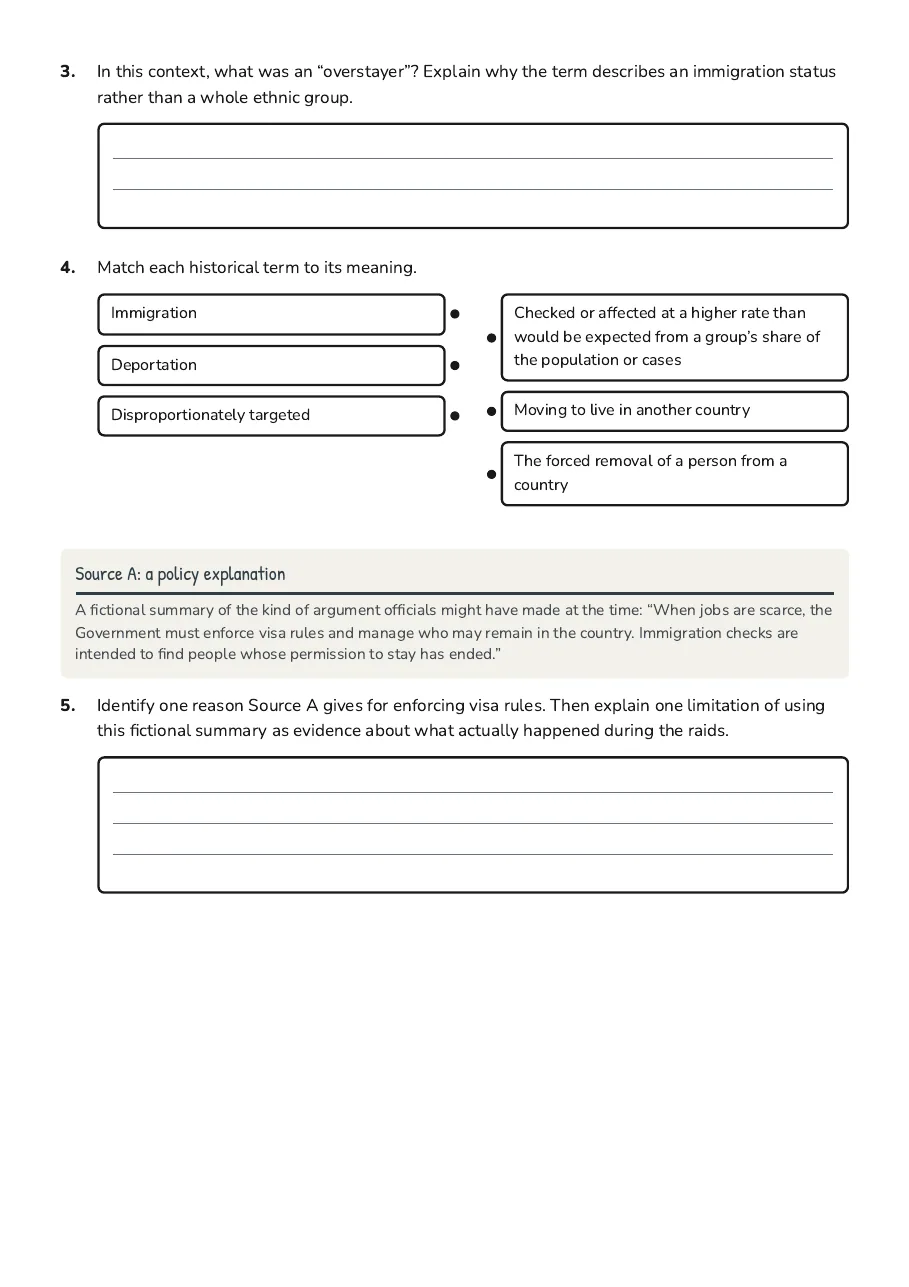
- Immigration
- Deportation
- Disproportionately targeted
- Checked or affected at a higher rate than would be expected from a group’s share of the population or cases
- Moving to live in another country
- The forced removal of a person from a country
Source A: a policy explanation
A fictional summary of the kind of argument officials might have made at the time: “When jobs are scarce, the Government must enforce visa rules and manage who may remain in the country. Immigration checks are intended to find people whose permission to stay has ended.”
Source B: a community perspective
A fictional community reflection: “When officials came to a home before sunrise, a family could feel frightened and watched. Even neighbours who had followed the rules might worry that their family could be questioned next.”
4 printable pages
Page 1
Page 2
Page 3
Page 4
About This Worksheet
Free in Kuraplan
Sign up free, grab the PDF, and customize it for your class.
Print-Ready
Formatted for standard paper. Clean layout, easy to read.
AI-Generated
Created with Kuraplan's AI, designed for real classroom use.
For Teachers & Parents
Use in classrooms, for homework, tutoring, or homeschool.
Need a custom version of this worksheet?
Kuraplan's AI generates custom worksheets in seconds — differentiated for every learner, aligned to your curriculum.
Generate Custom Worksheets — FreeMore Social Sciences Worksheets
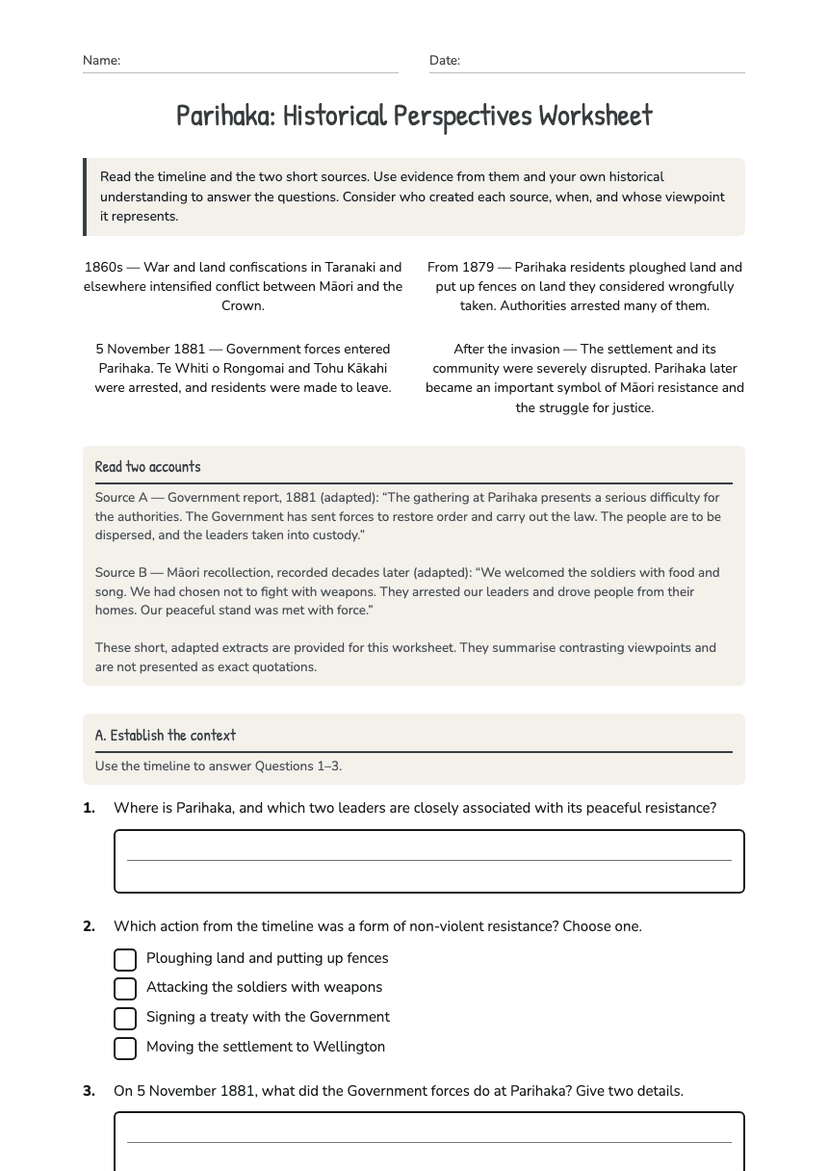
Parihaka: Historical Perspectives Worksheet
Free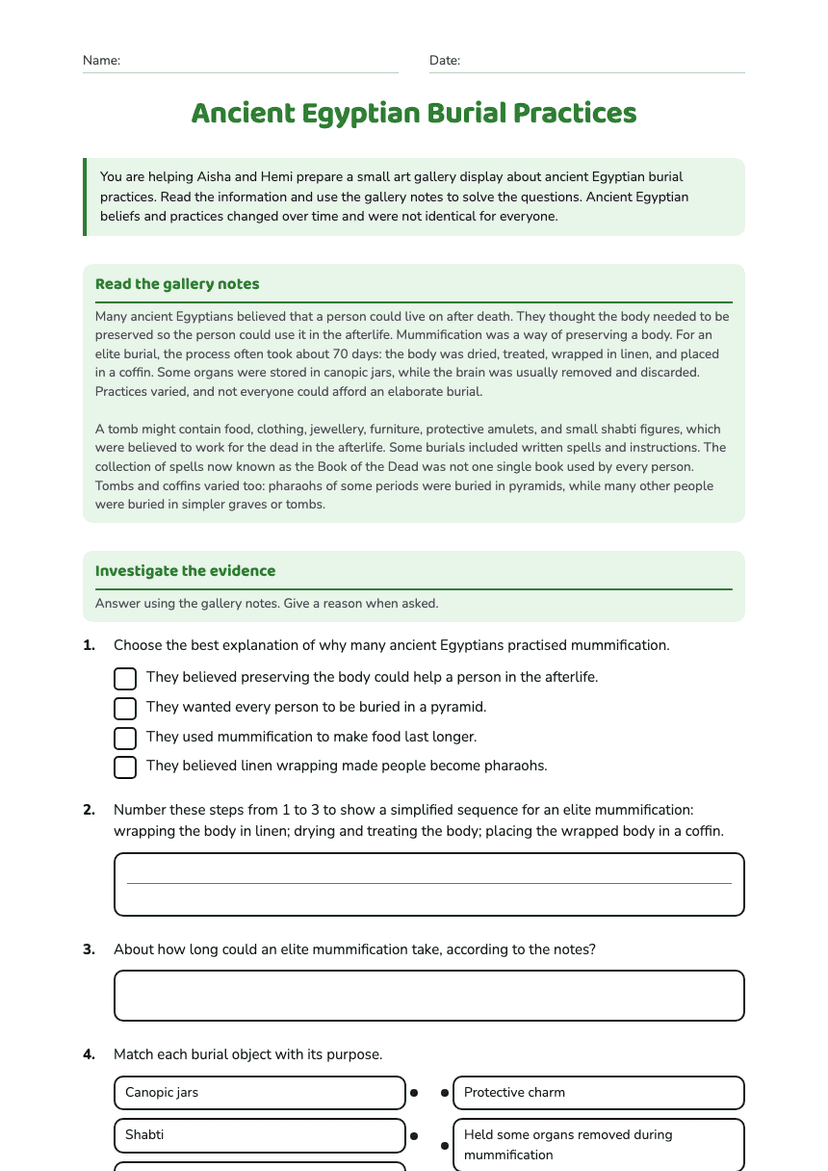
Ancient Egyptian Burial Practices
Free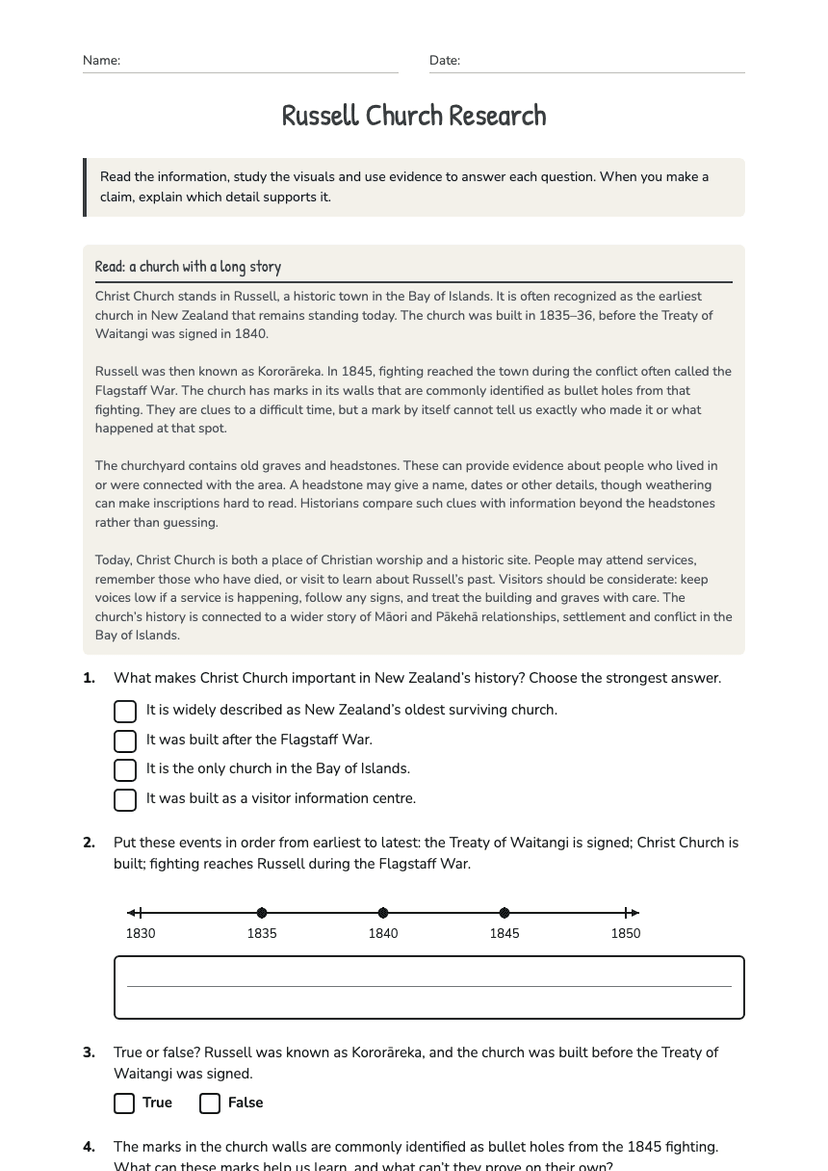
Russell Church Research
Free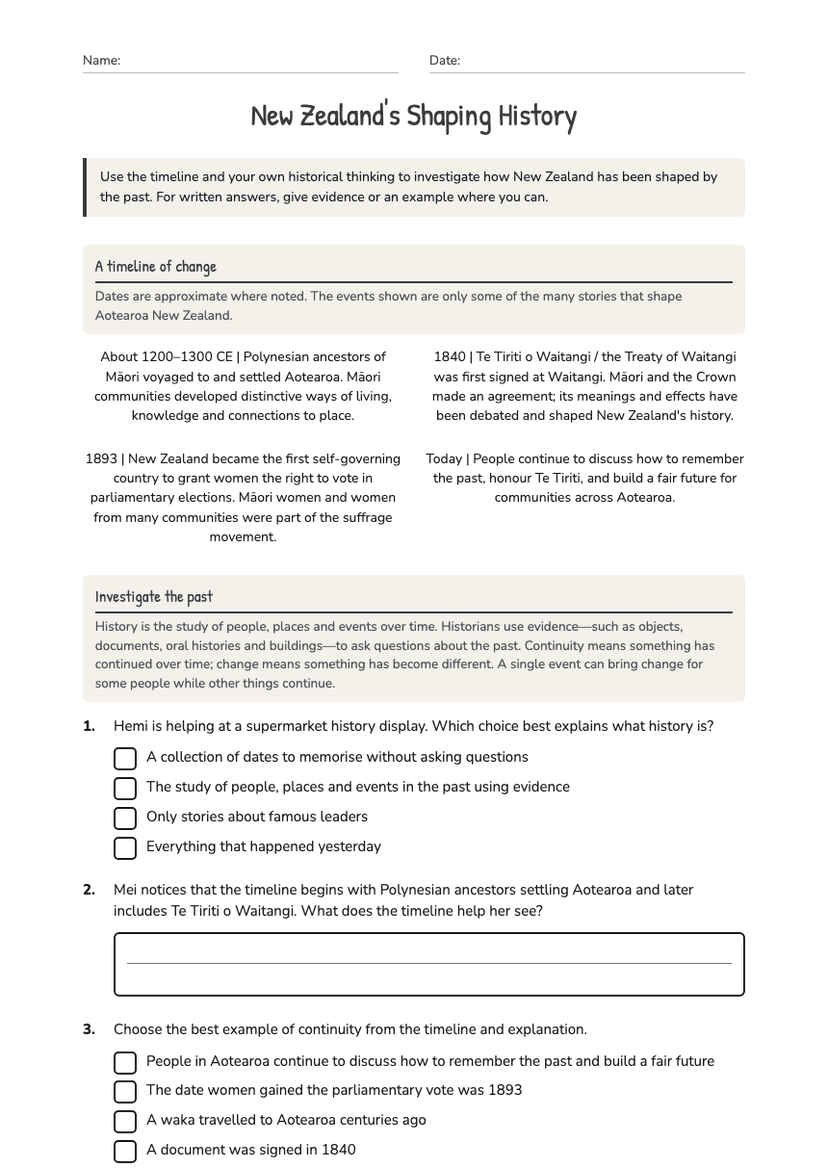
New Zealand's Shaping History
Free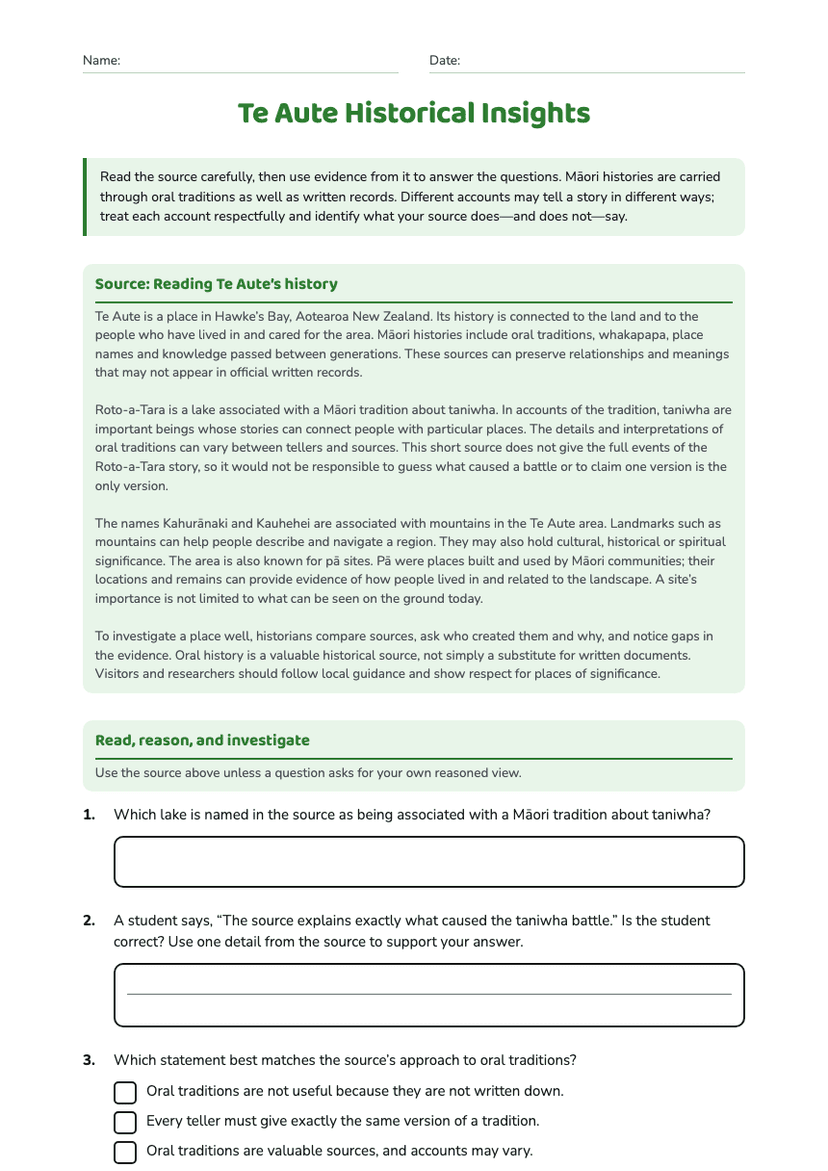
Te Aute Historical Insights
Free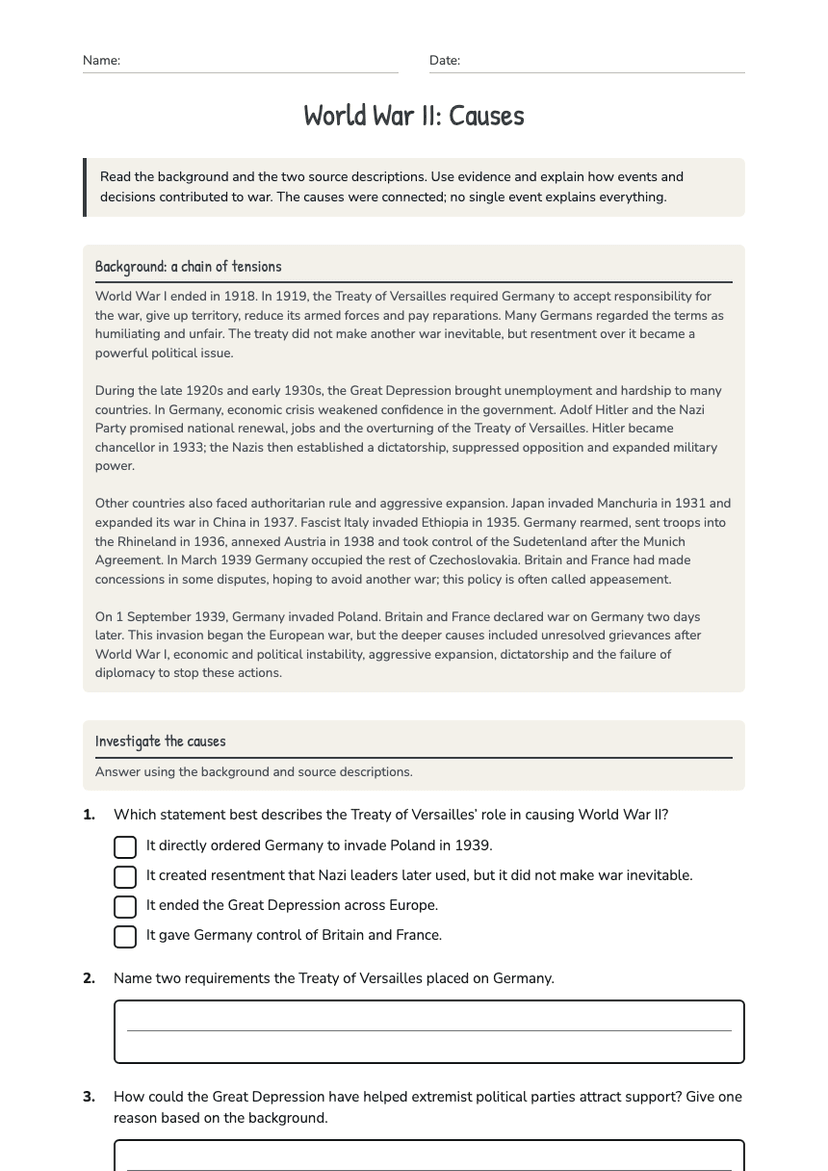
World War II: Causes
Free
Traditional and Modern Voyaging
Free