Dehumanization in History
A free social sciences worksheet ready for your classroom. Open in Kuraplan to grab the print-ready PDF, customize it for your students, or generate a fresh version in seconds.
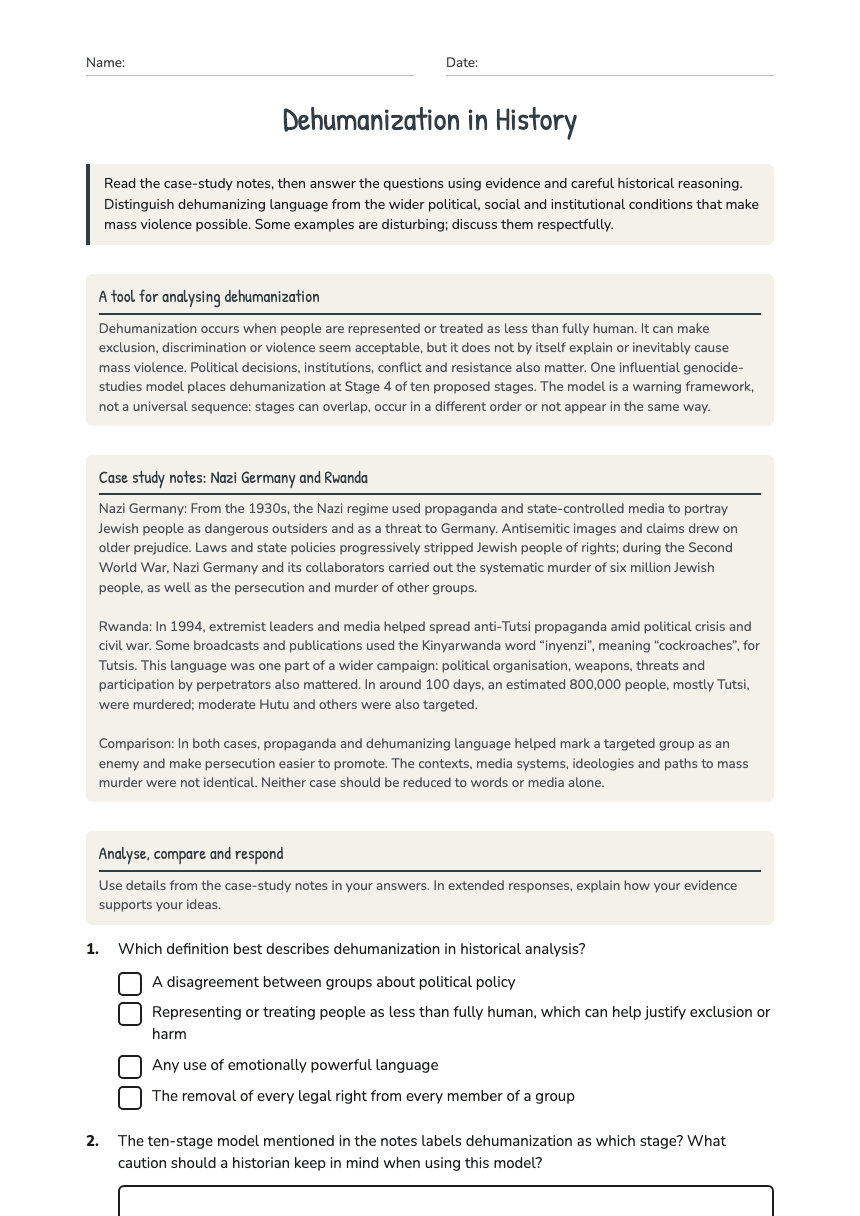
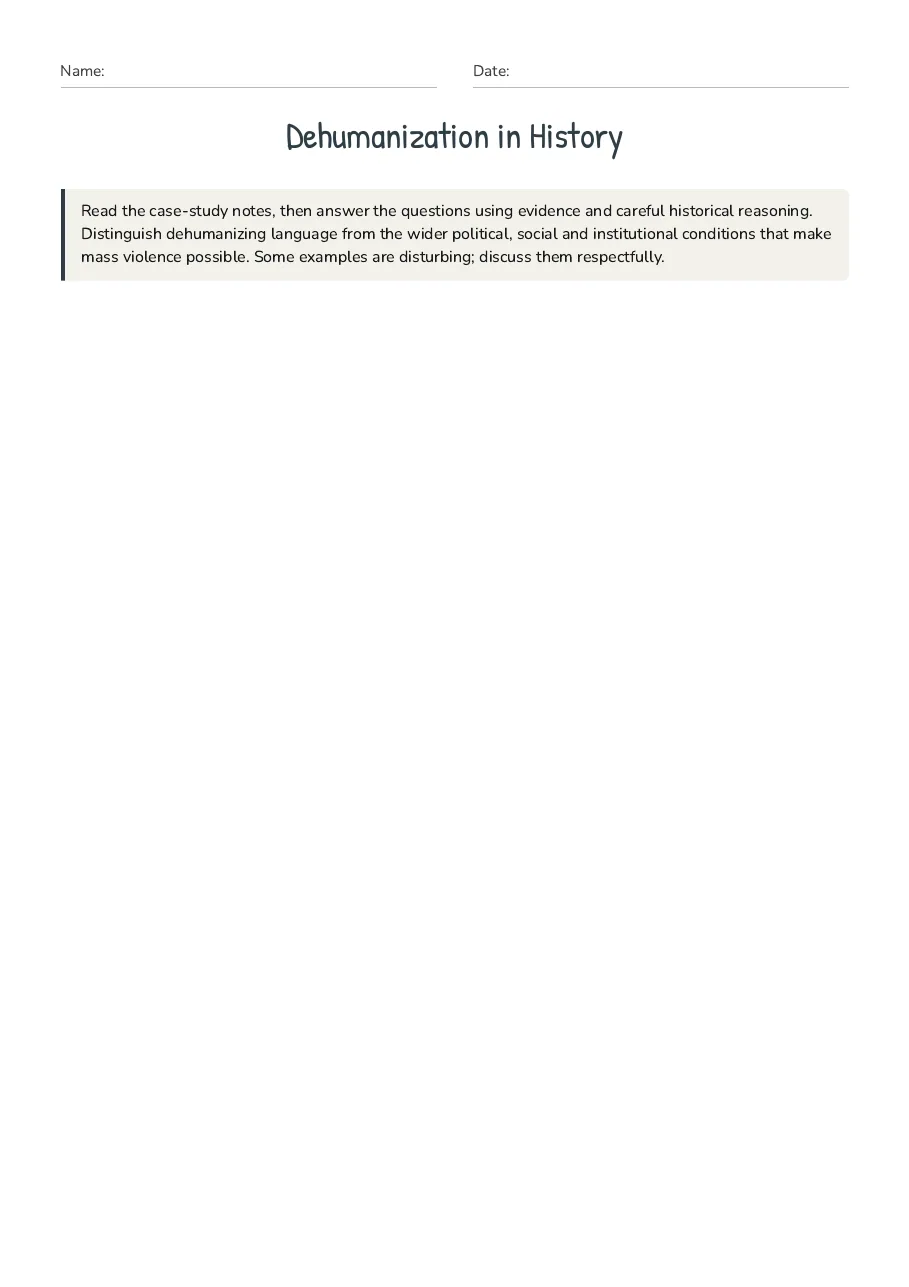
Dehumanization in History
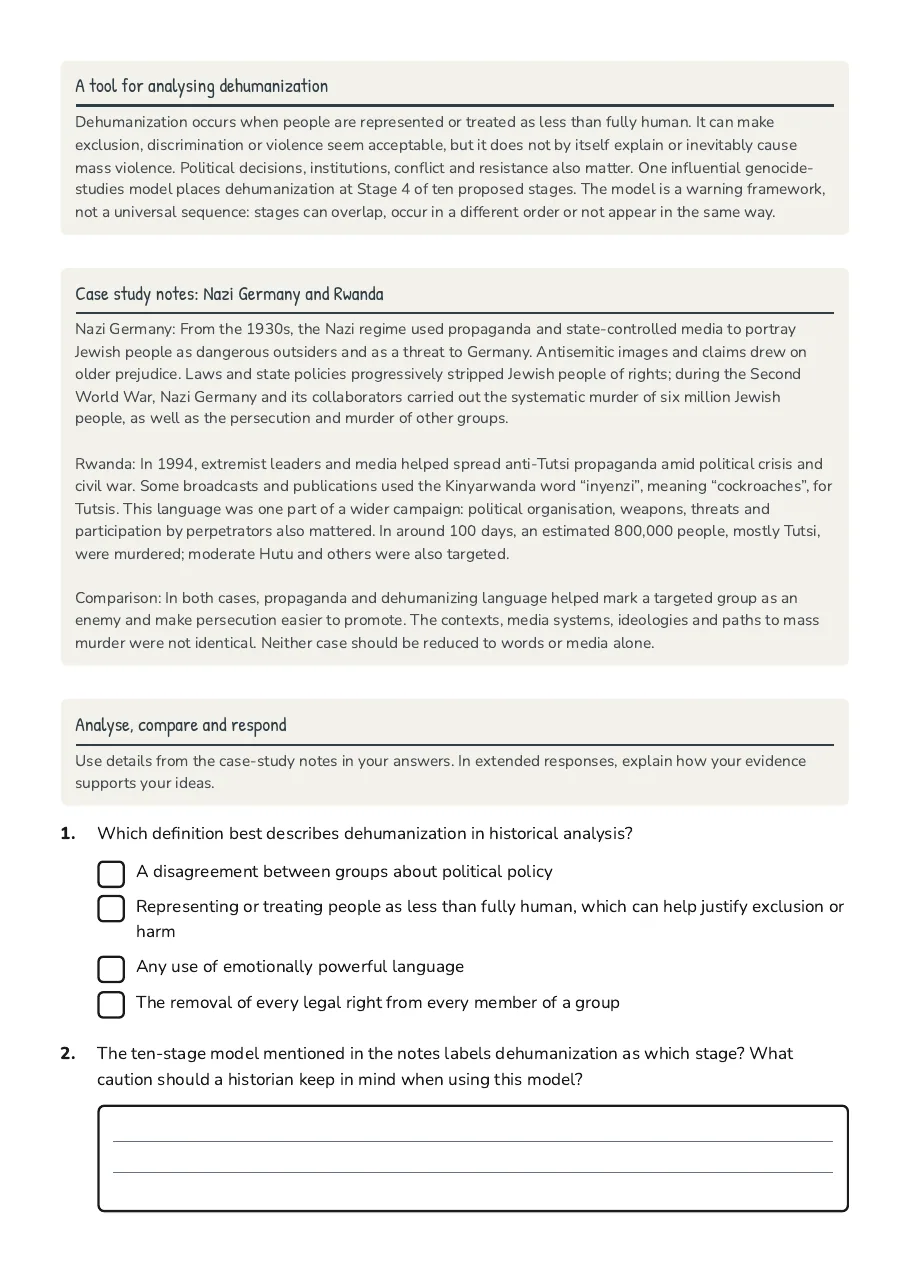
A tool for analysing dehumanization
Dehumanization occurs when people are represented or treated as less than fully human. It can make exclusion, discrimination or violence seem acceptable, but it does not by itself explain or inevitably cause mass violence. Political decisions, institutions, conflict and resistance also matter. One influential genocide-studies model places dehumanization at Stage 4 of ten proposed stages. The model is a warning framework, not a universal sequence: stages can overlap, occur in a different order or not appear in the same way.
Case study notes: Nazi Germany and Rwanda
Nazi Germany: From the 1930s, the Nazi regime used propaganda and state-controlled media to portray Jewish people as dangerous outsiders and as a threat to Germany. Antisemitic images and claims drew on older prejudice. Laws and state policies progressively stripped Jewish people of rights; during the Second World War, Nazi Germany and its collaborators carried out the systematic murder of six million Jewish people, as well as the persecution and murder of other groups. Rwanda: In 1994, extremist leaders and media helped spread anti-Tutsi propaganda amid political crisis and civil war. Some broadcasts and publications used the Kinyarwanda word “inyenzi”, meaning “cockroaches”, for Tutsis. This language was one part of a wider campaign: political organisation, weapons, threats and participation by perpetrators also mattered. In around 100 days, an estimated 800,000 people, mostly Tutsi, were murdered; moderate Hutu and others were also targeted. Comparison: In both cases, propaganda and dehumanizing language helped mark a targeted group as an enemy and make persecution easier to promote. The contexts, media systems, ideologies and paths to mass murder were not identical. Neither case should be reduced to words or media alone.
Analyse, compare and respond
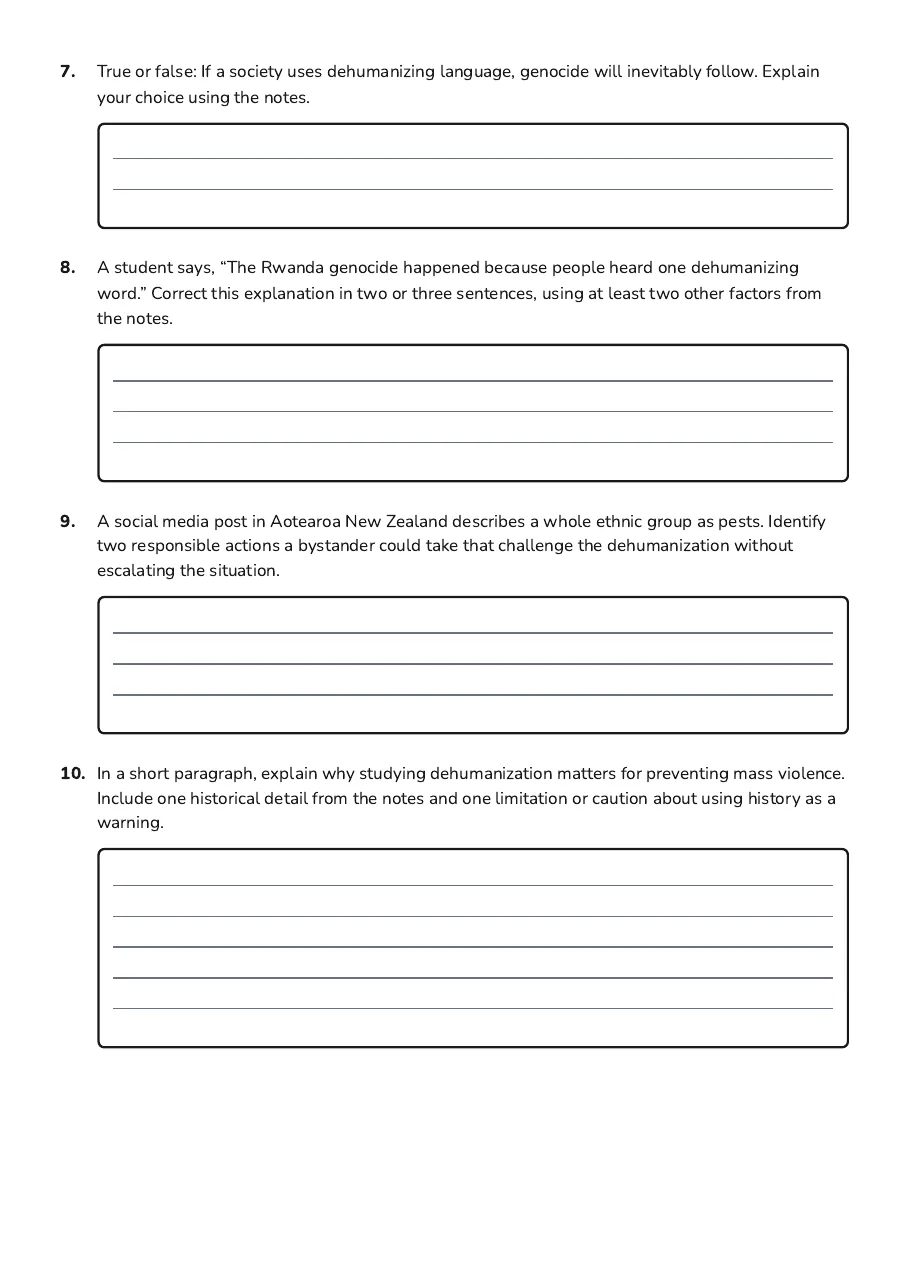
Use details from the case-study notes in your answers. In extended responses, explain how your evidence supports your ideas.
- A disagreement between groups about political policy
- Representing or treating people as less than fully human, which can help justify exclusion or harm
- Any use of emotionally powerful language
- The removal of every legal right from every member of a group
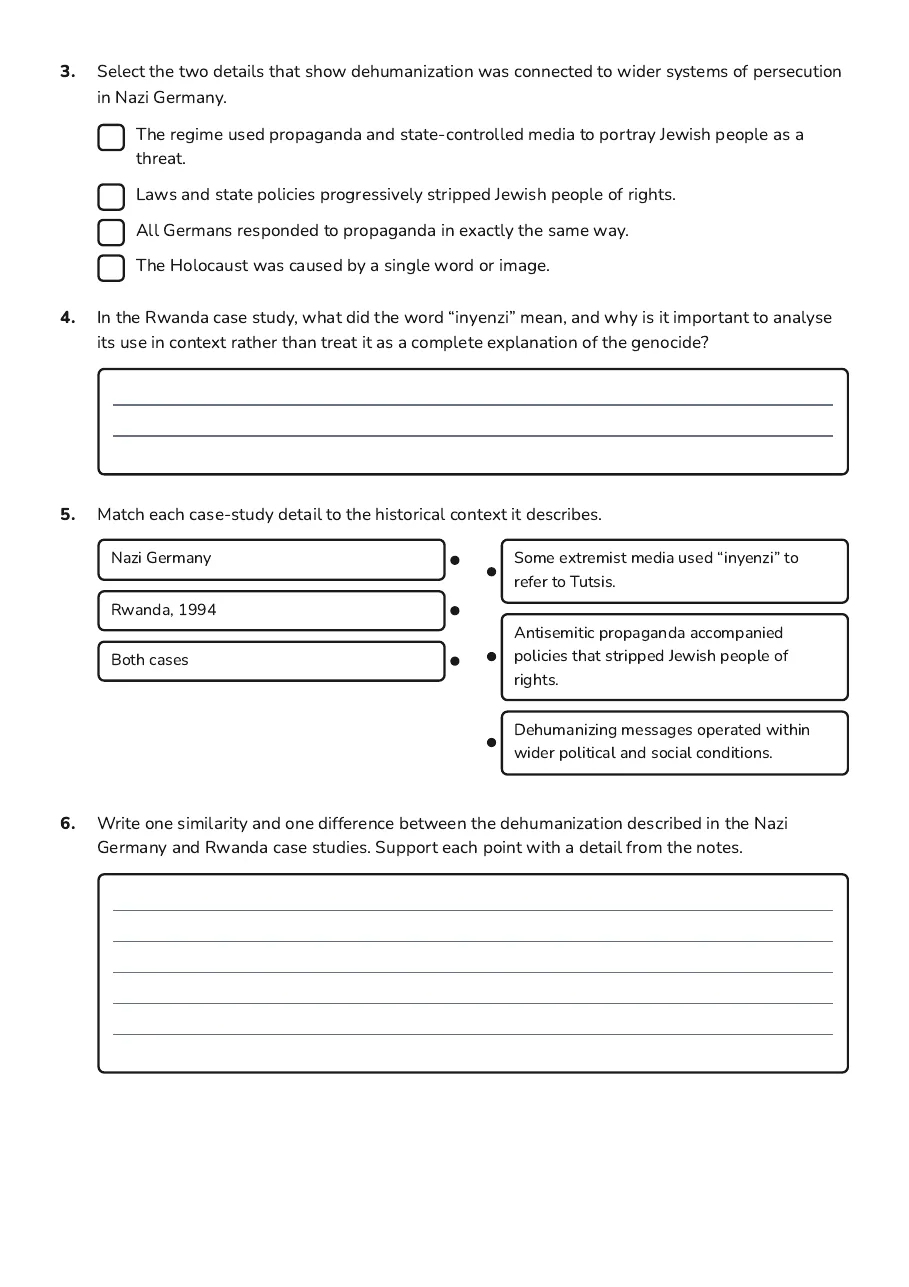
- The regime used propaganda and state-controlled media to portray Jewish people as a threat.
- Laws and state policies progressively stripped Jewish people of rights.
- All Germans responded to propaganda in exactly the same way.
- The Holocaust was caused by a single word or image.
- Nazi Germany
- Rwanda, 1994
- Both cases
- Some extremist media used “inyenzi” to refer to Tutsis.
- Antisemitic propaganda accompanied policies that stripped Jewish people of rights.
- Dehumanizing messages operated within wider political and social conditions.
4 printable pages
Page 1
Page 2
Page 3
Page 4
About This Worksheet
Free in Kuraplan
Sign up free, grab the PDF, and customize it for your class.
Print-Ready
Formatted for standard paper. Clean layout, easy to read.
AI-Generated
Created with Kuraplan's AI, designed for real classroom use.
For Teachers & Parents
Use in classrooms, for homework, tutoring, or homeschool.
Need a custom version of this worksheet?
Kuraplan's AI generates custom worksheets in seconds — differentiated for every learner, aligned to your curriculum.
Generate Custom Worksheets — FreeMore Social Sciences Worksheets
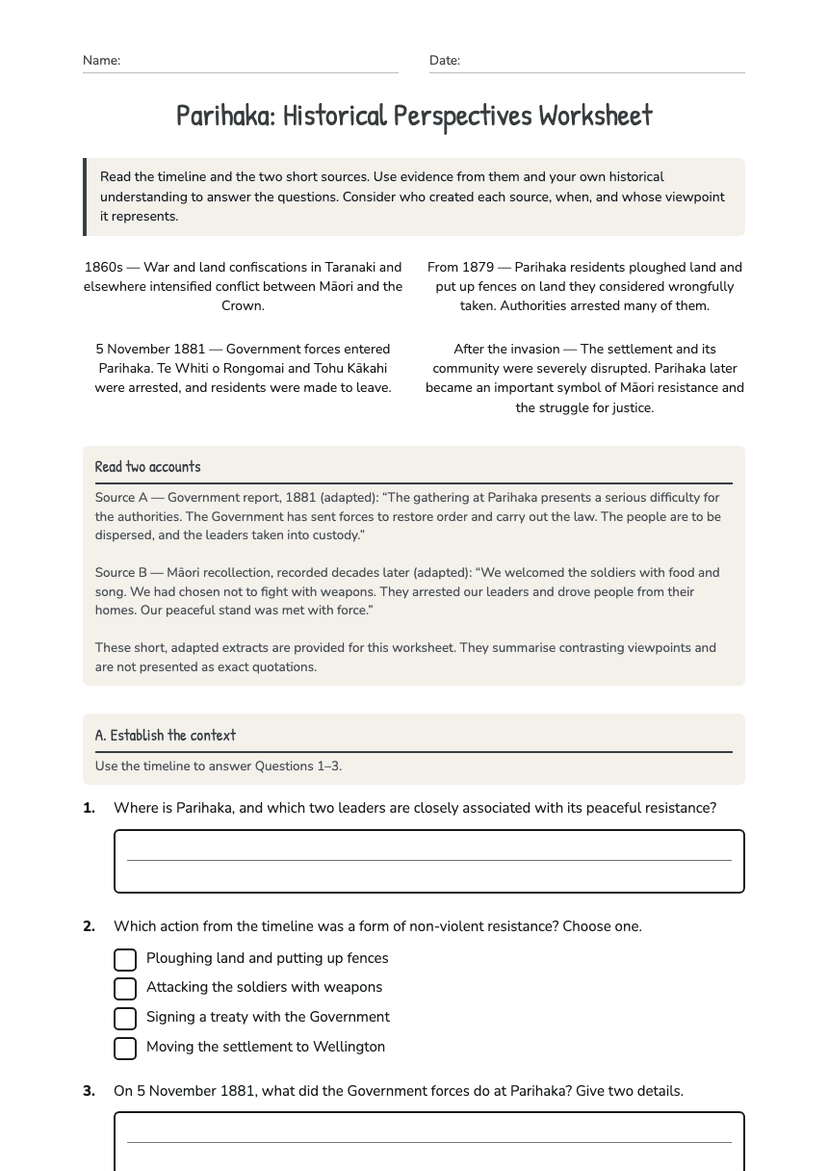
Parihaka: Historical Perspectives Worksheet
Free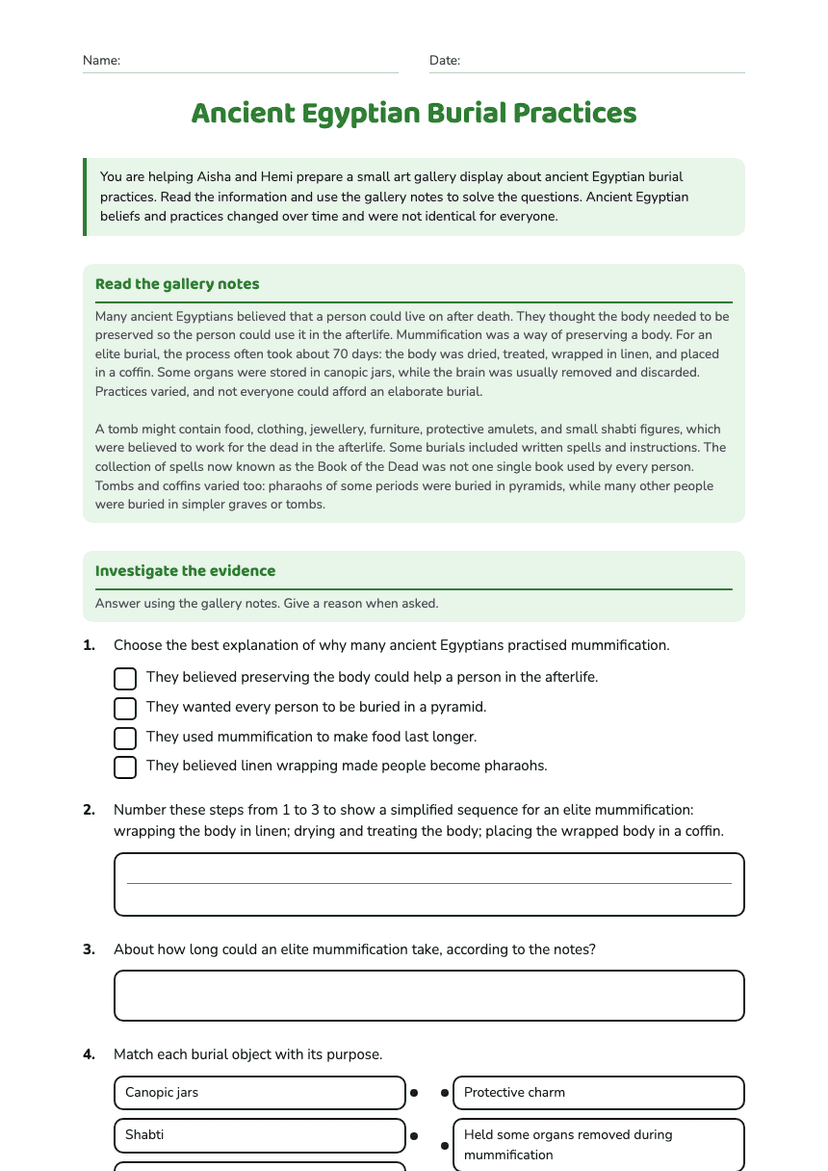
Ancient Egyptian Burial Practices
Free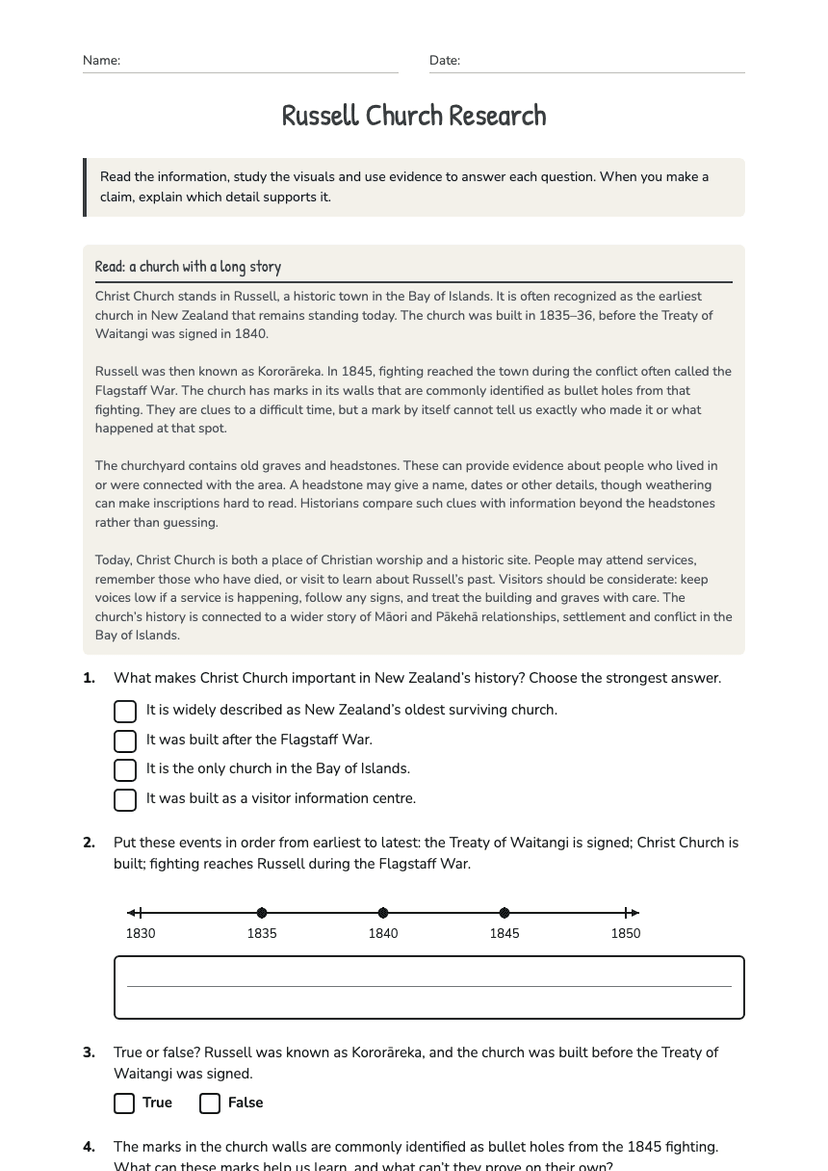
Russell Church Research
Free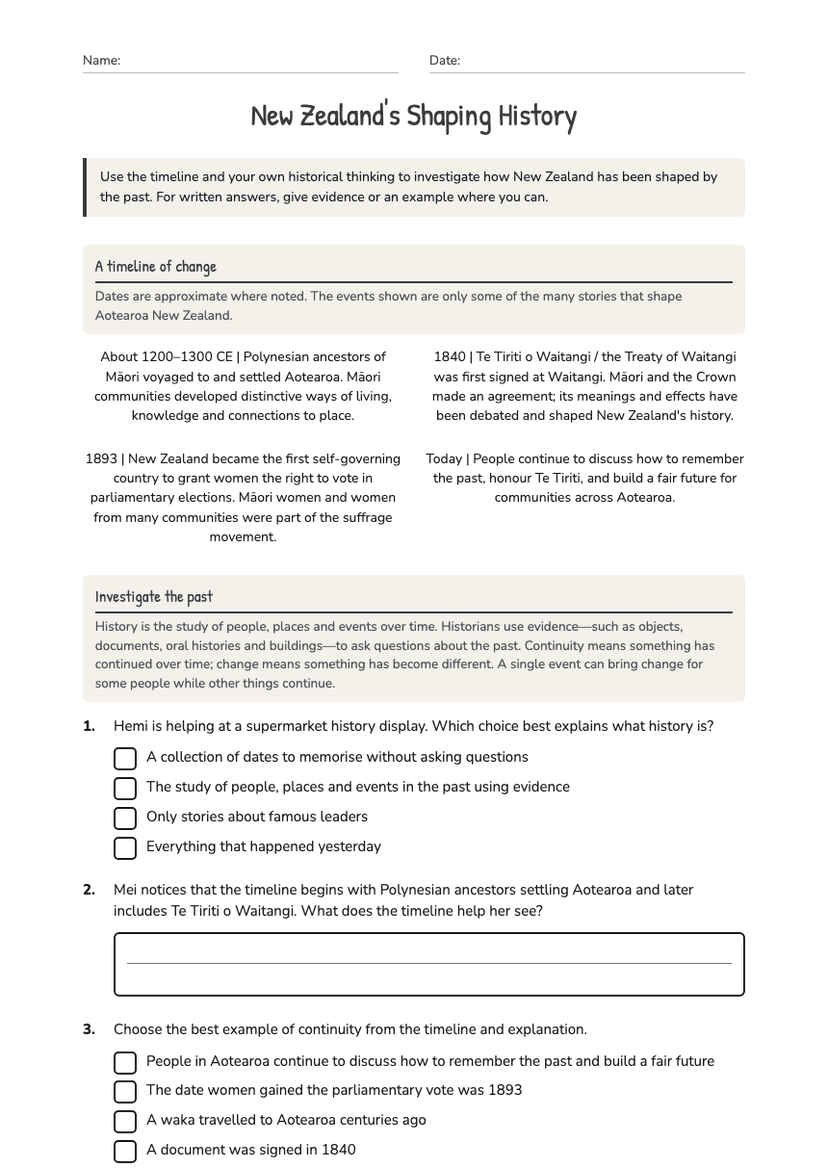
New Zealand's Shaping History
Free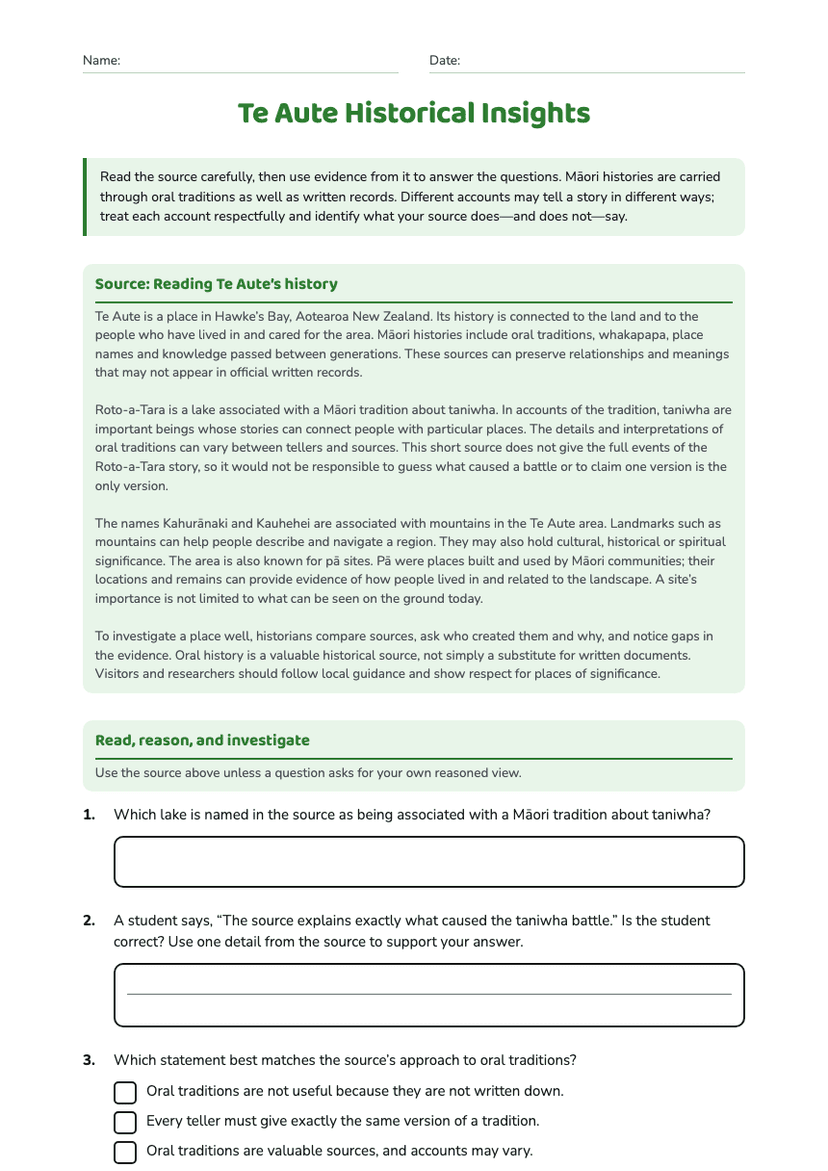
Te Aute Historical Insights
Free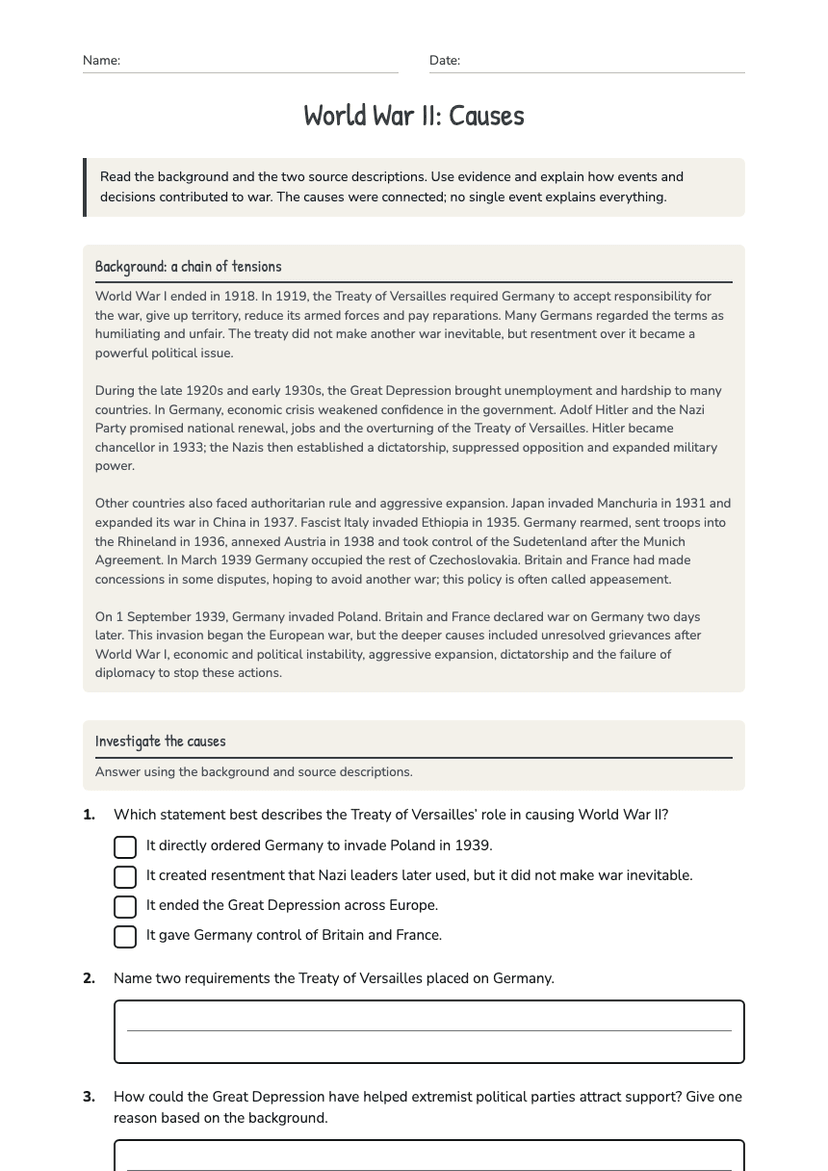
World War II: Causes
Free
Traditional and Modern Voyaging
Free