EnglishFreePrintable

Dialogue Writing Techniques

A free english worksheet ready for your classroom. Open in Kuraplan to grab the print-ready PDF, customize it for your students, or generate a fresh version in seconds.
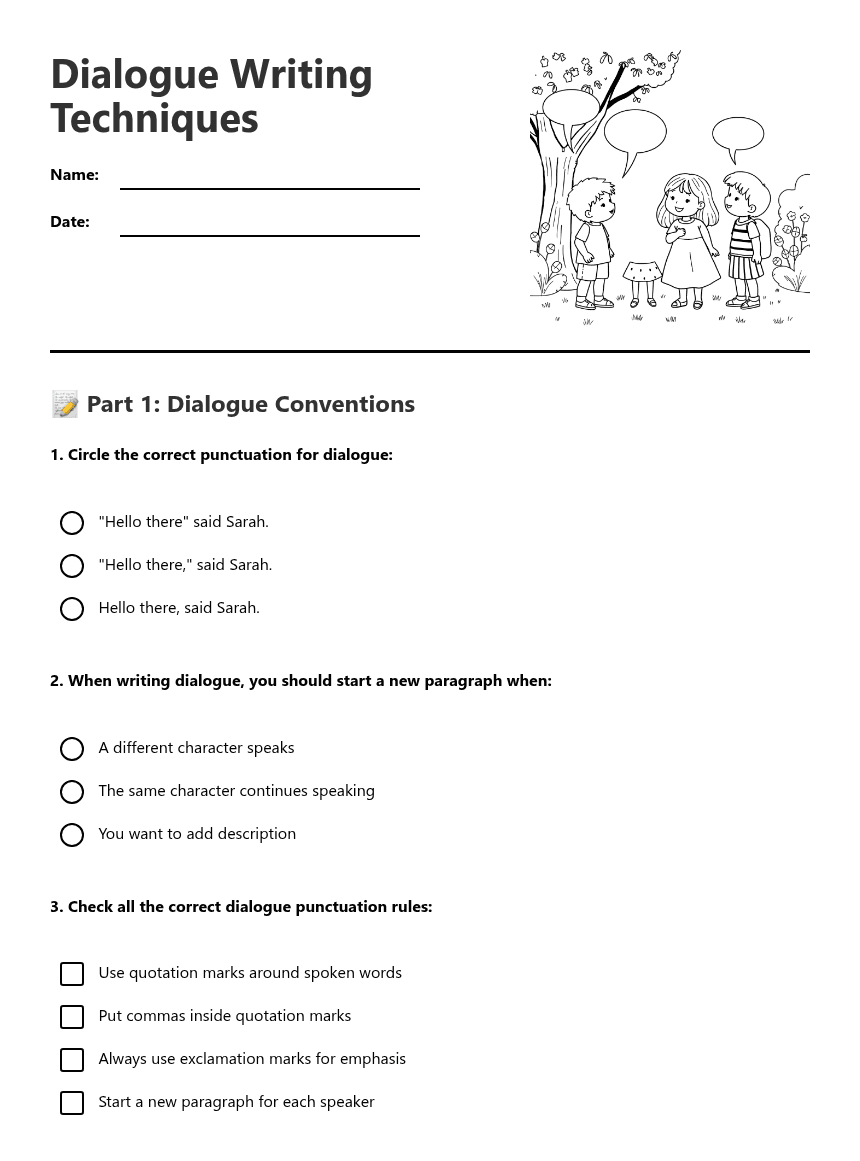
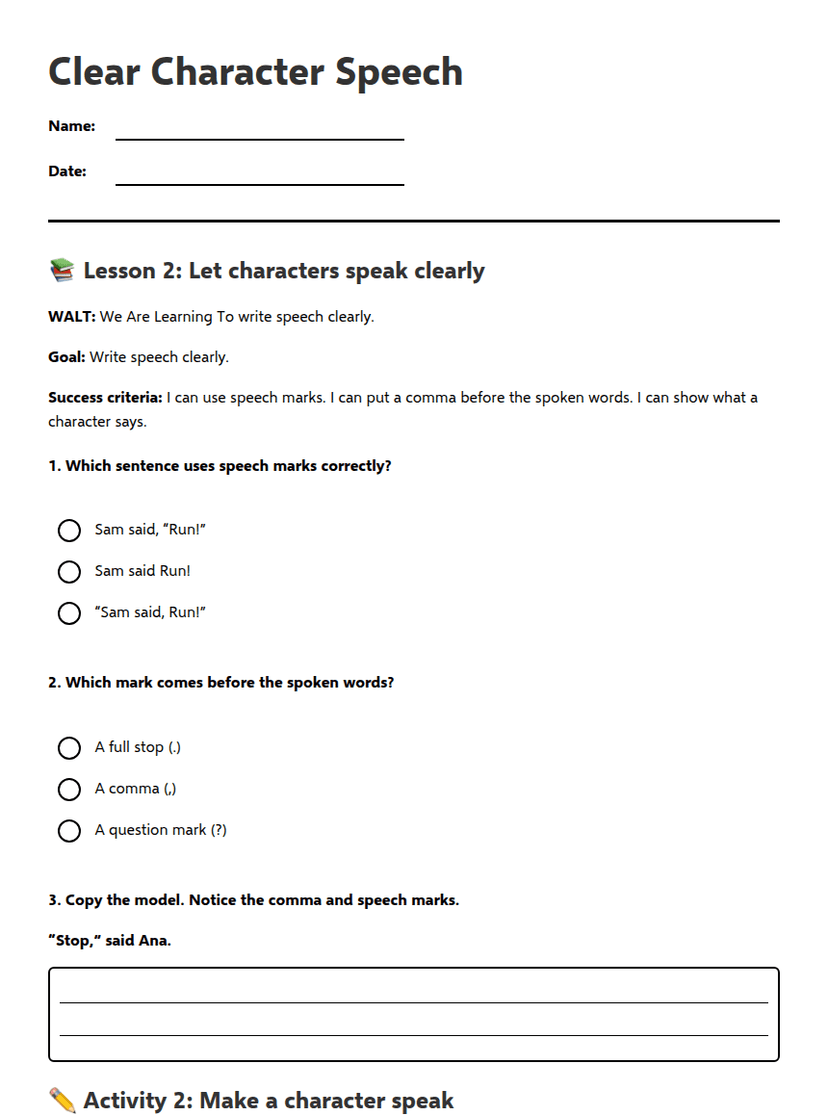
Dialogue Writing Techniques worksheet preview
Dialogue Writing Techniques

Dialogue Writing Techniques

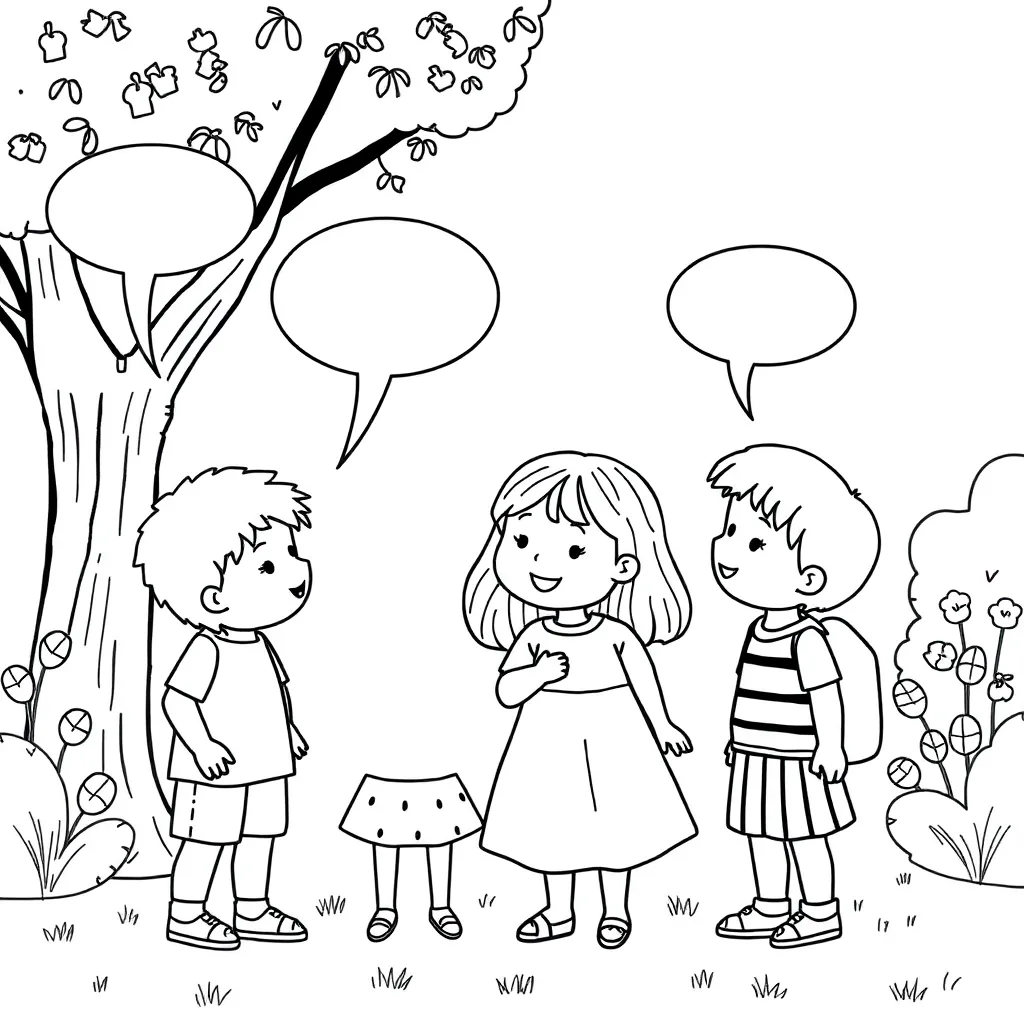
Two people having a conversation with speech bubbles

📝 Part 1: Dialogue Conventions

1. Circle the correct punctuation for dialogue:

"Hello there" said Sarah.

"Hello there," said Sarah.

Hello there, said Sarah.

2. When writing dialogue, you should start a new paragraph when:

A different character speaks

The same character continues speaking

You want to add description

3. Check all the correct dialogue punctuation rules:

Use quotation marks around spoken words

Put commas inside quotation marks

Always use exclamation marks for emphasis

Start a new paragraph for each speaker

🔍 Part 2: Analysing Dialogue

4. Read this dialogue excerpt and identify what it reveals about the character:

"I suppose I could help you with that project," mumbled Jake, avoiding eye contact. "Though I'm probably not very good at it."

What does this dialogue tell us about Jake's personality?

5. Match the dialogue techniques with their purposes:
1. Speech tags
2. Action beats
3. Subtext
A. Hidden meaning beneath words
B. Show who is speaking
C. Add movement and description

✏️ Part 3: Writing Practice

6. Complete this dialogue by filling in the blanks with appropriate punctuation and speech tags:

_________ I can't believe you forgot our meeting _________ exclaimed Maria.

_________ Sorry, I got caught up at work _________ replied Tom _________

_________ Well, next time set a reminder _________ she suggested _________

7. Write a short dialogue scene (6-8 exchanges) between two characters discussing a secret plan. Use proper dialogue conventions:

🎭 Part 4: Character Voice and Revision

8. Rewrite this bland dialogue to show more character personality and emotion:

Original: "Hi. How are you? I am fine. That's good."

Improved version:

9. List three ways dialogue can advance a story:
10. What makes dialogue sound natural and realistic? Check all that apply:

Using contractions (don't, can't, won't)

Perfect grammar in every sentence

Varied sentence lengths

Characters interrupting each other occasionally

Every character speaking the same way

📋 Part 5: Peer Review Checklist

11. Use this checklist to review a classmate's dialogue (or your own work from question 7):

Dialogue Conventions:

Quotation marks used correctly

New paragraph for each speaker

Proper punctuation with speech tags

Character and Story:

Dialogue reveals character personality

Conversation sounds natural

Dialogue advances the plot or conflict

12. Write one positive comment and one suggestion for improvement:

What worked well:

Suggestion for improvement:

About This Worksheet

Free in Kuraplan

Sign up free, grab the PDF, and customize it for your class.

Print-Ready

Formatted for standard paper. Clean layout, easy to read.

AI-Generated

Created with Kuraplan's AI, designed for real classroom use.

For Teachers & Parents

Use in classrooms, for homework, tutoring, or homeschool.

Need a custom version of this worksheet?

Kuraplan's AI generates custom worksheets in seconds — differentiated for every learner, aligned to your curriculum.

Generate Custom Worksheets — Free
No credit card Curriculum-aligned Under 60 seconds