Early New Zealand History
A free social sciences worksheet ready for your classroom. Open in Kuraplan to grab the print-ready PDF, customize it for your students, or generate a fresh version in seconds.
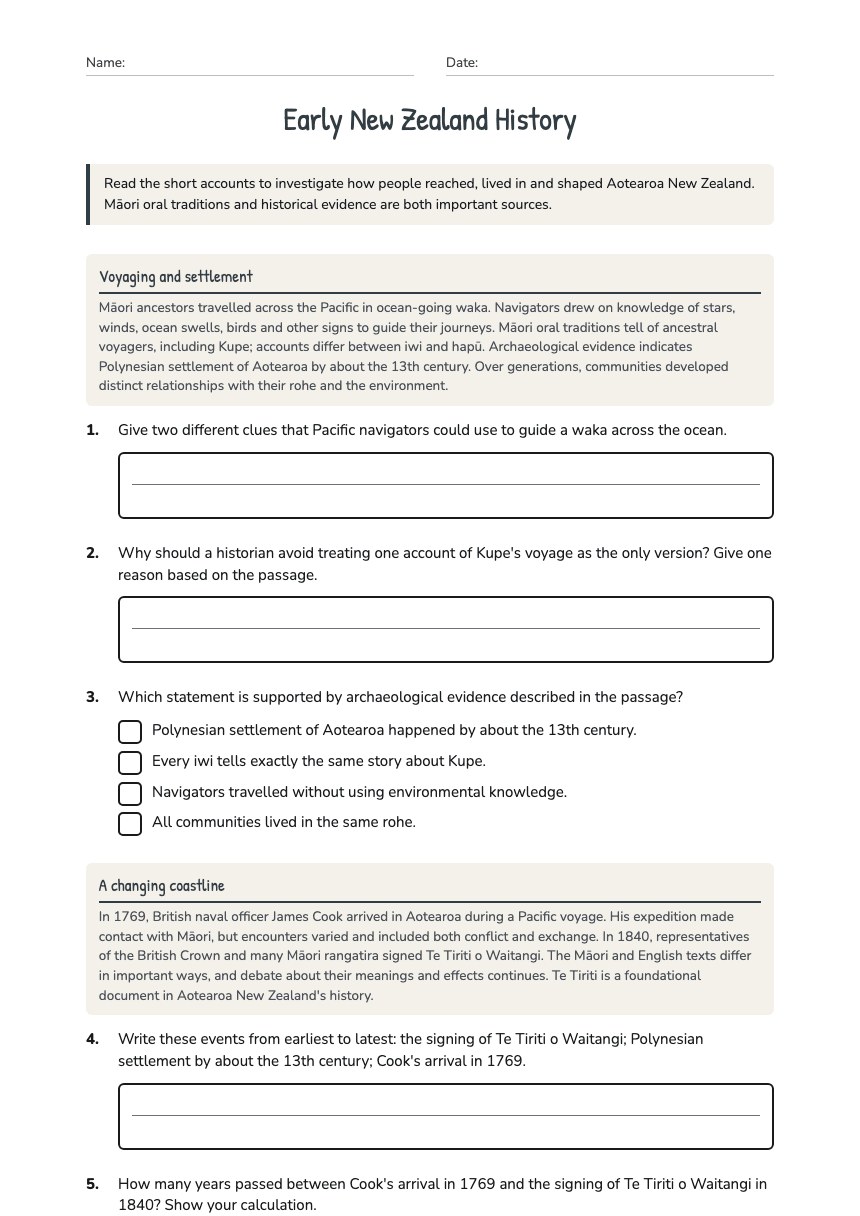
Early New Zealand History
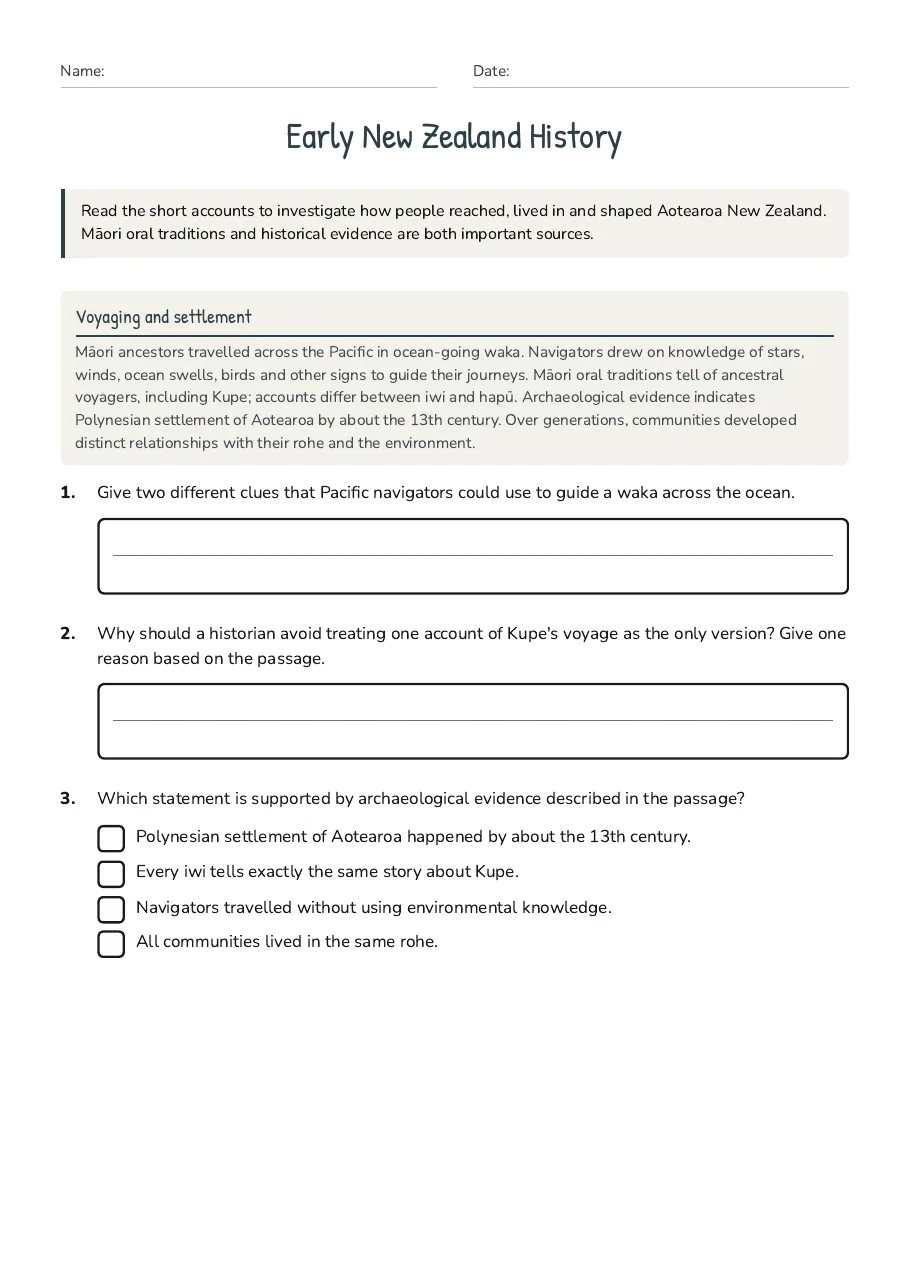
Voyaging and settlement
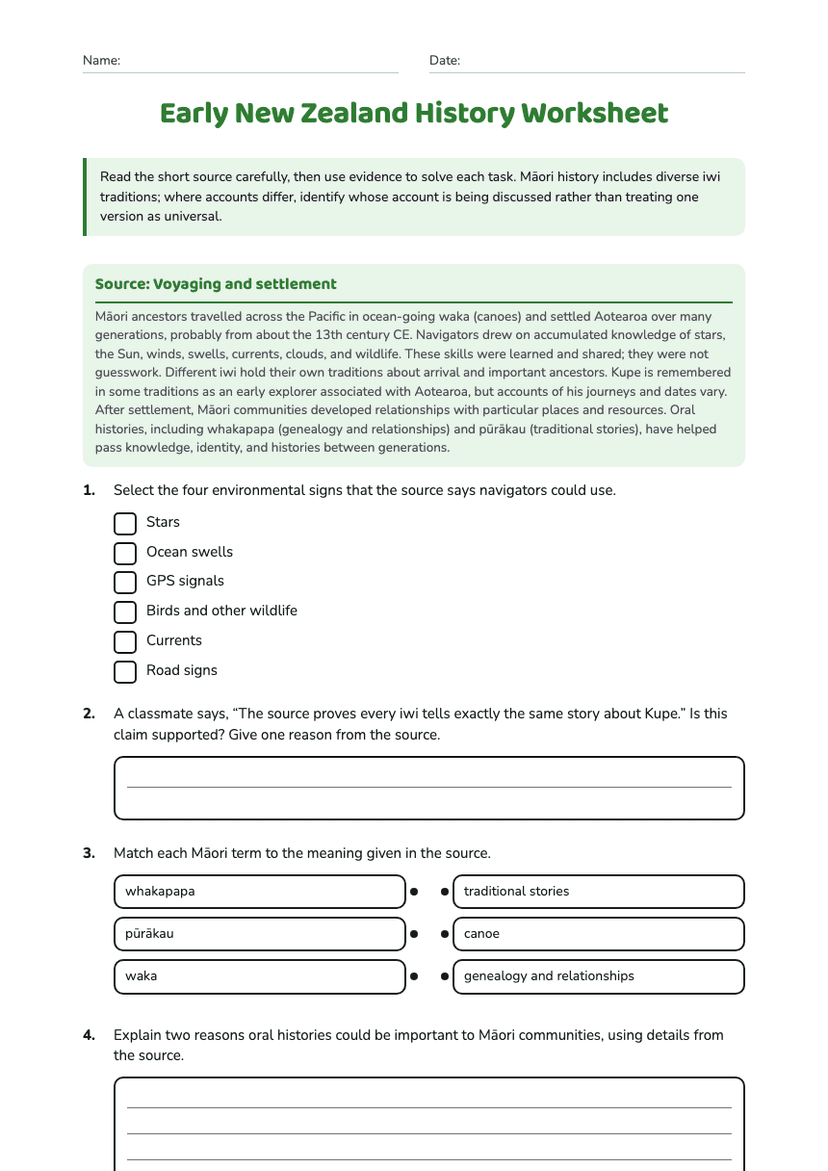
Māori ancestors travelled across the Pacific in ocean-going waka. Navigators drew on knowledge of stars, winds, ocean swells, birds and other signs to guide their journeys. Māori oral traditions tell of ancestral voyagers, including Kupe; accounts differ between iwi and hapū. Archaeological evidence indicates Polynesian settlement of Aotearoa by about the 13th century. Over generations, communities developed distinct relationships with their rohe and the environment.
- Polynesian settlement of Aotearoa happened by about the 13th century.
- Every iwi tells exactly the same story about Kupe.
- Navigators travelled without using environmental knowledge.
- All communities lived in the same rohe.
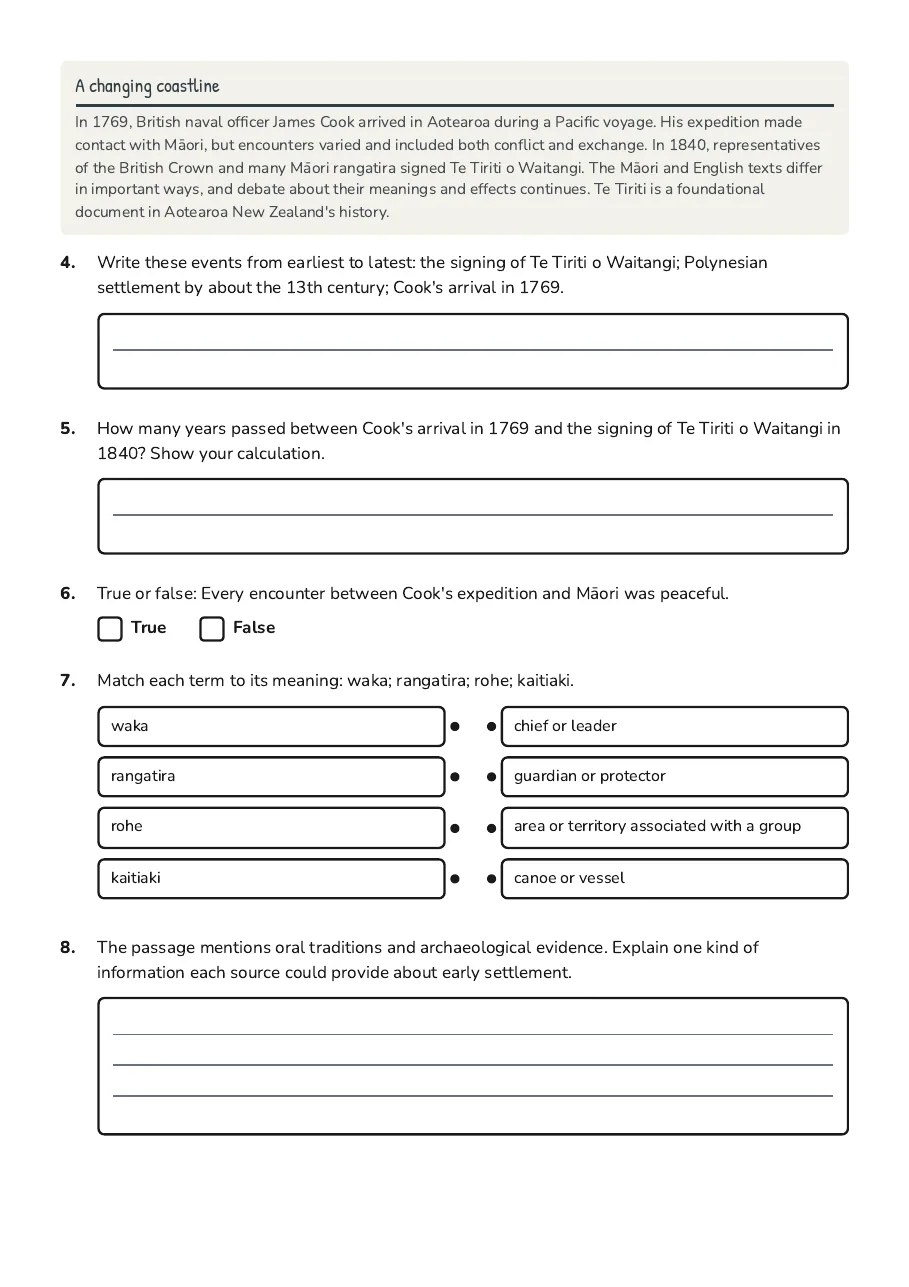
A changing coastline
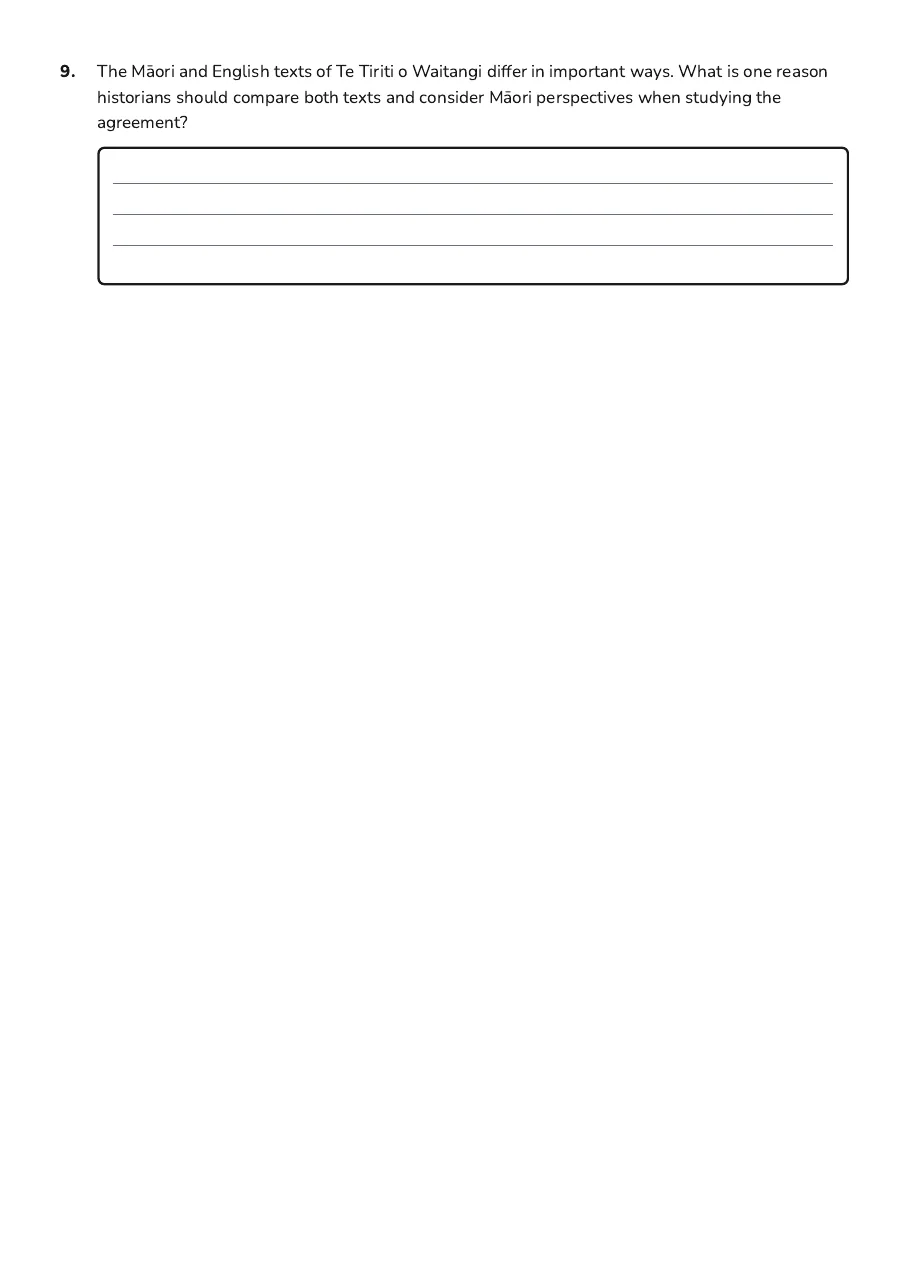
In 1769, British naval officer James Cook arrived in Aotearoa during a Pacific voyage. His expedition made contact with Māori, but encounters varied and included both conflict and exchange. In 1840, representatives of the British Crown and many Māori rangatira signed Te Tiriti o Waitangi. The Māori and English texts differ in important ways, and debate about their meanings and effects continues. Te Tiriti is a foundational document in Aotearoa New Zealand's history.
- waka
- rangatira
- rohe
- kaitiaki
- chief or leader
- guardian or protector
- area or territory associated with a group
- canoe or vessel
3 printable pages
Page 1
Page 2
Page 3
About This Worksheet
Free in Kuraplan
Sign up free, grab the PDF, and customize it for your class.
Print-Ready
Formatted for standard paper. Clean layout, easy to read.
AI-Generated
Created with Kuraplan's AI, designed for real classroom use.
For Teachers & Parents
Use in classrooms, for homework, tutoring, or homeschool.
Need a custom version of this worksheet?
Kuraplan's AI generates custom worksheets in seconds — differentiated for every learner, aligned to your curriculum.
Generate Custom Worksheets — FreeMore Social Sciences Worksheets
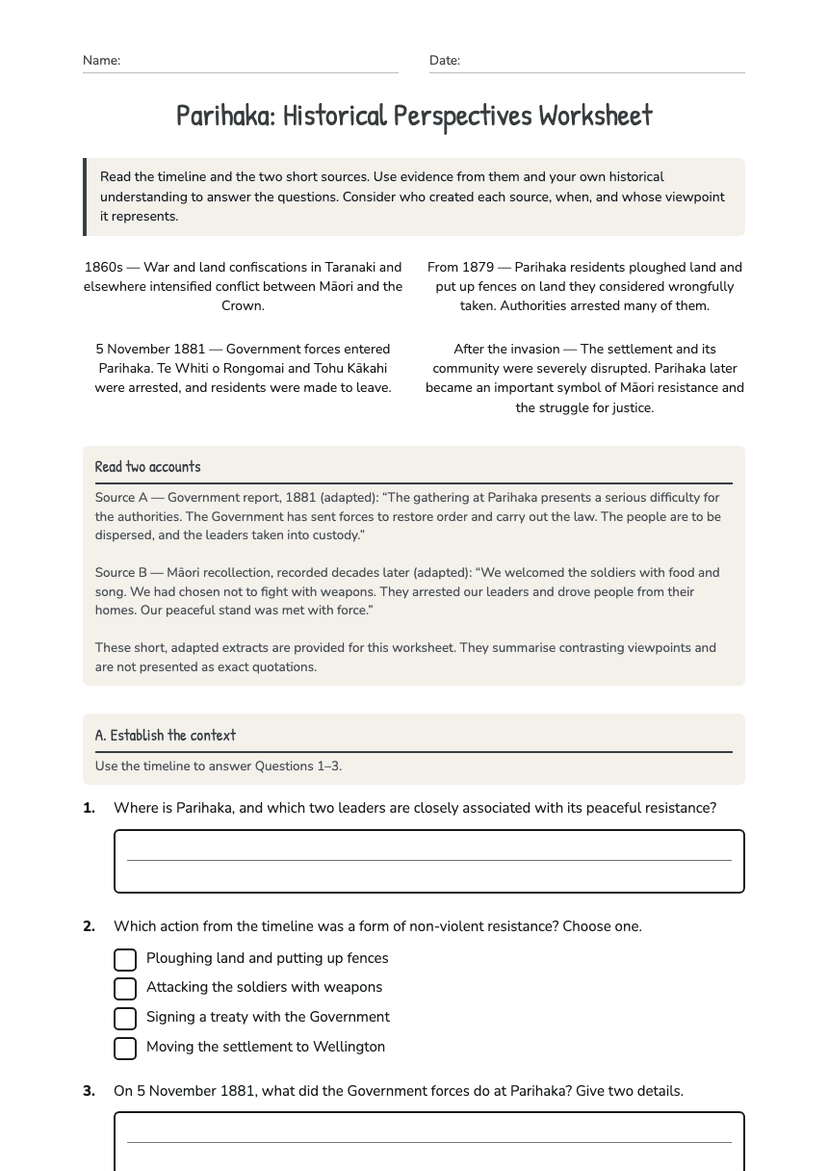
Parihaka: Historical Perspectives Worksheet
Free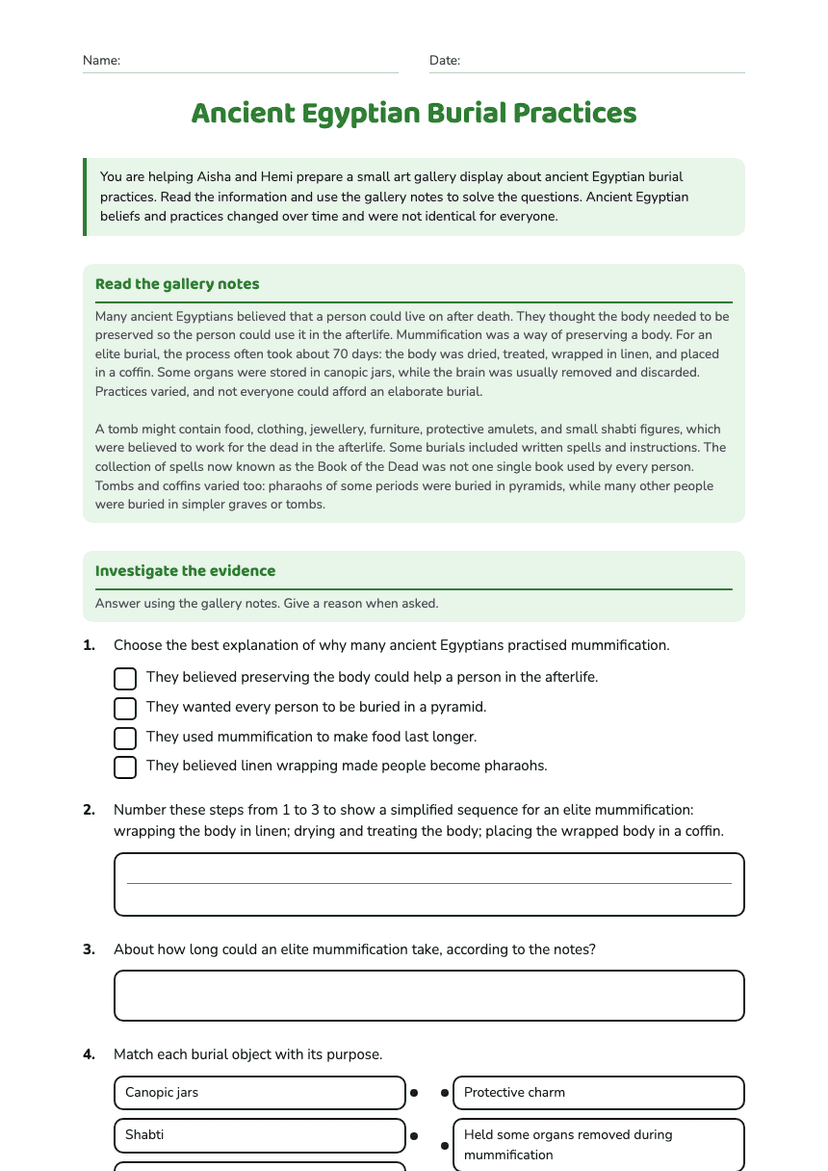
Ancient Egyptian Burial Practices
Free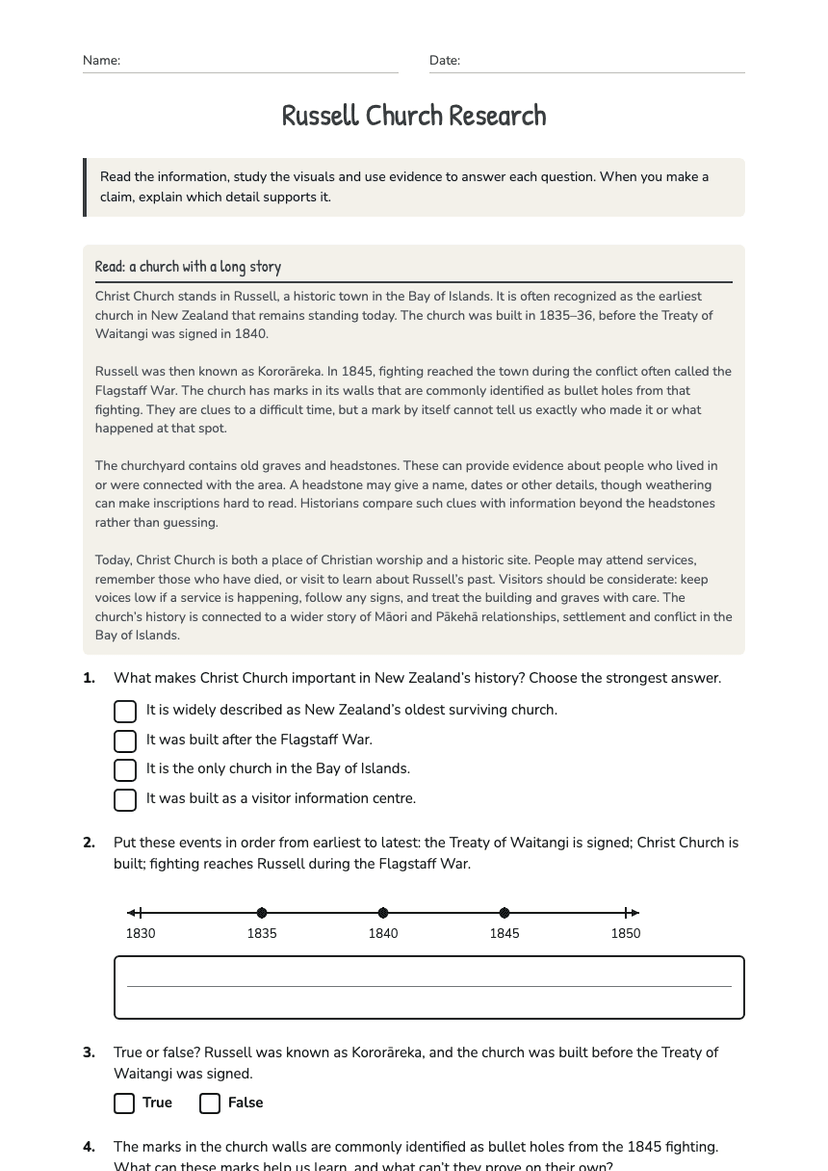
Russell Church Research
Free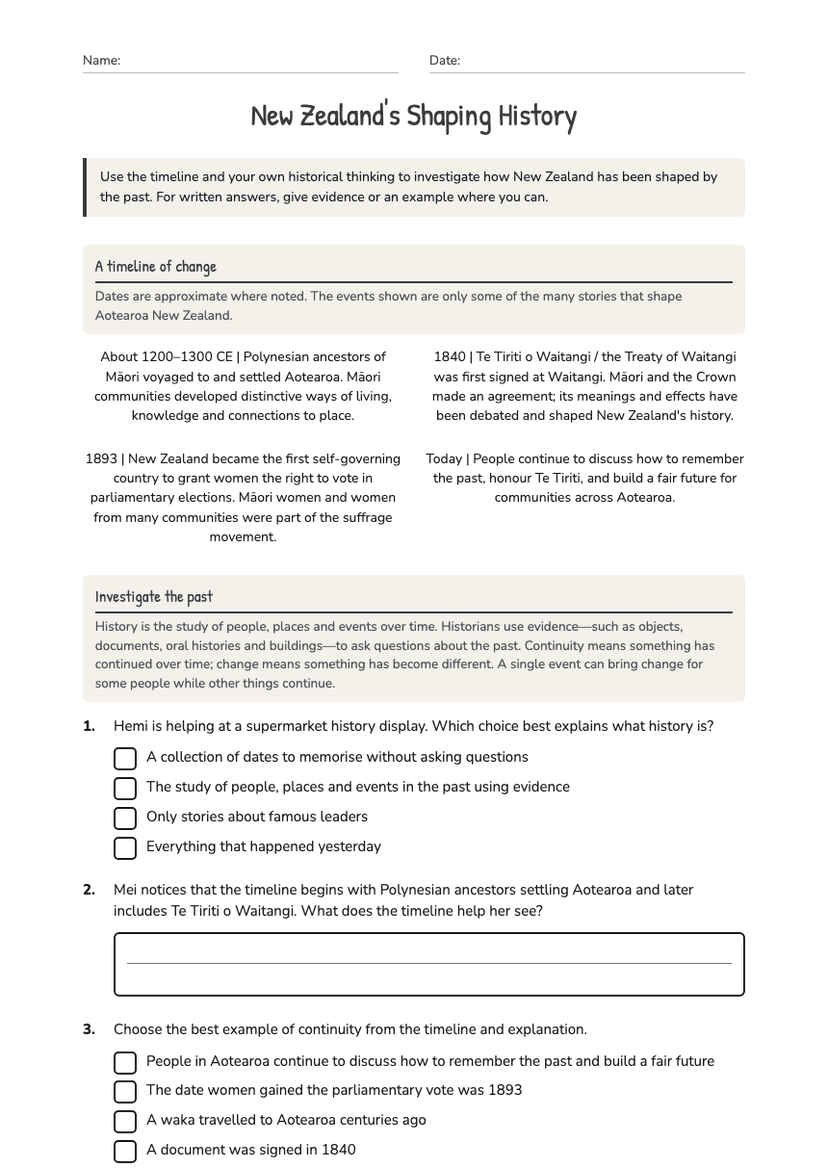
New Zealand's Shaping History
Free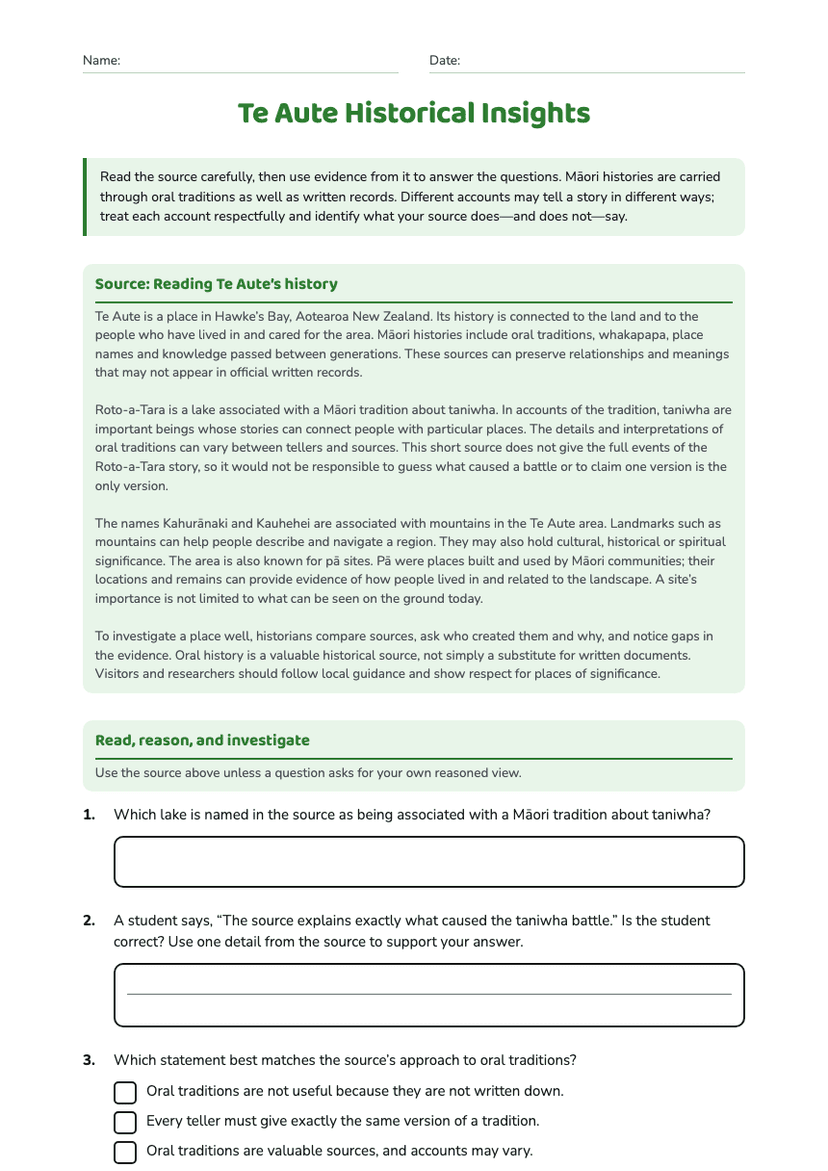
Te Aute Historical Insights
Free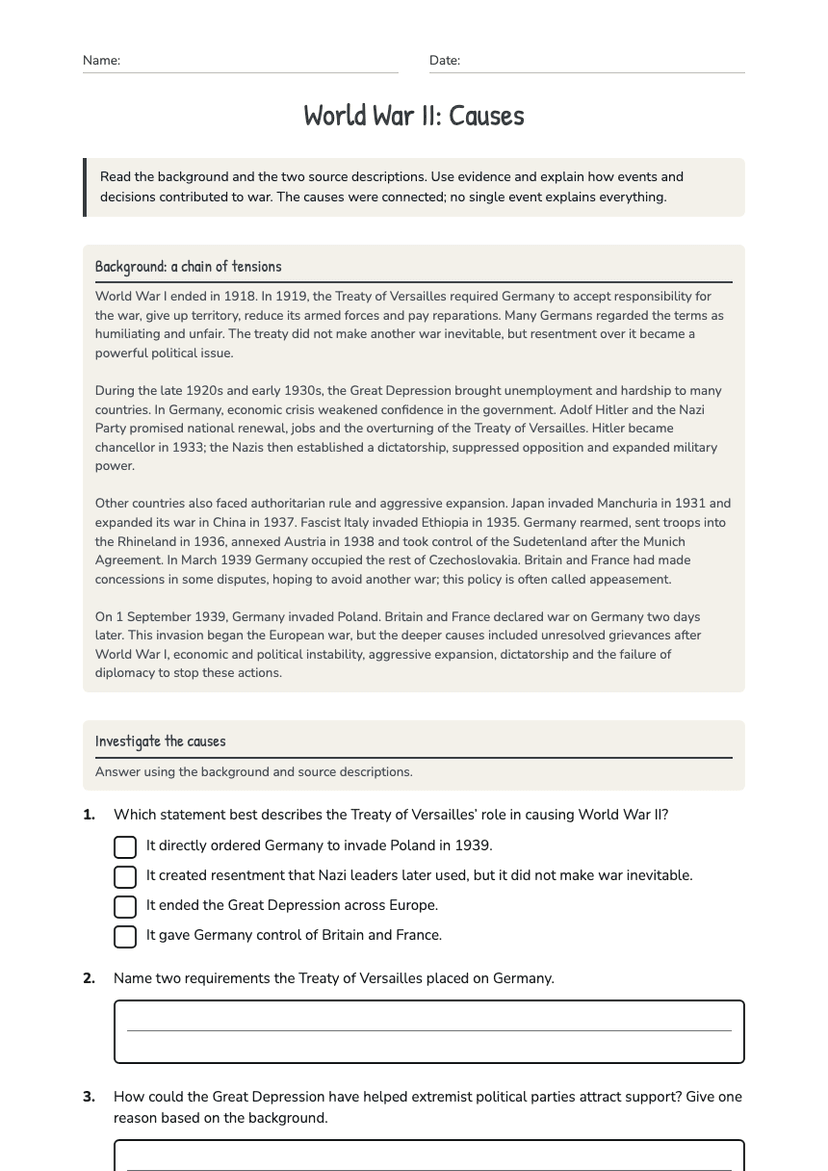
World War II: Causes
Free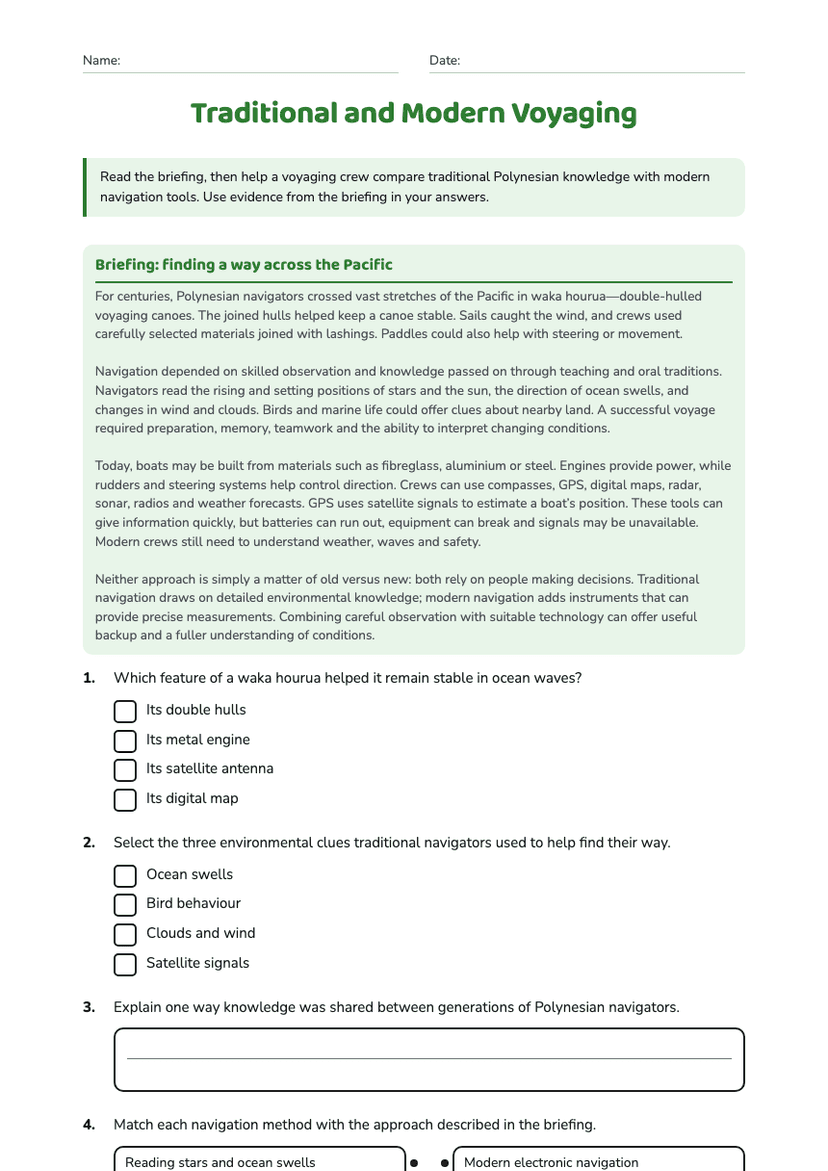
Traditional and Modern Voyaging
Free