Ecology and Ecosystems
A free science worksheet ready for your classroom. Open in Kuraplan to grab the print-ready PDF, customize it for your students, or generate a fresh version in seconds.
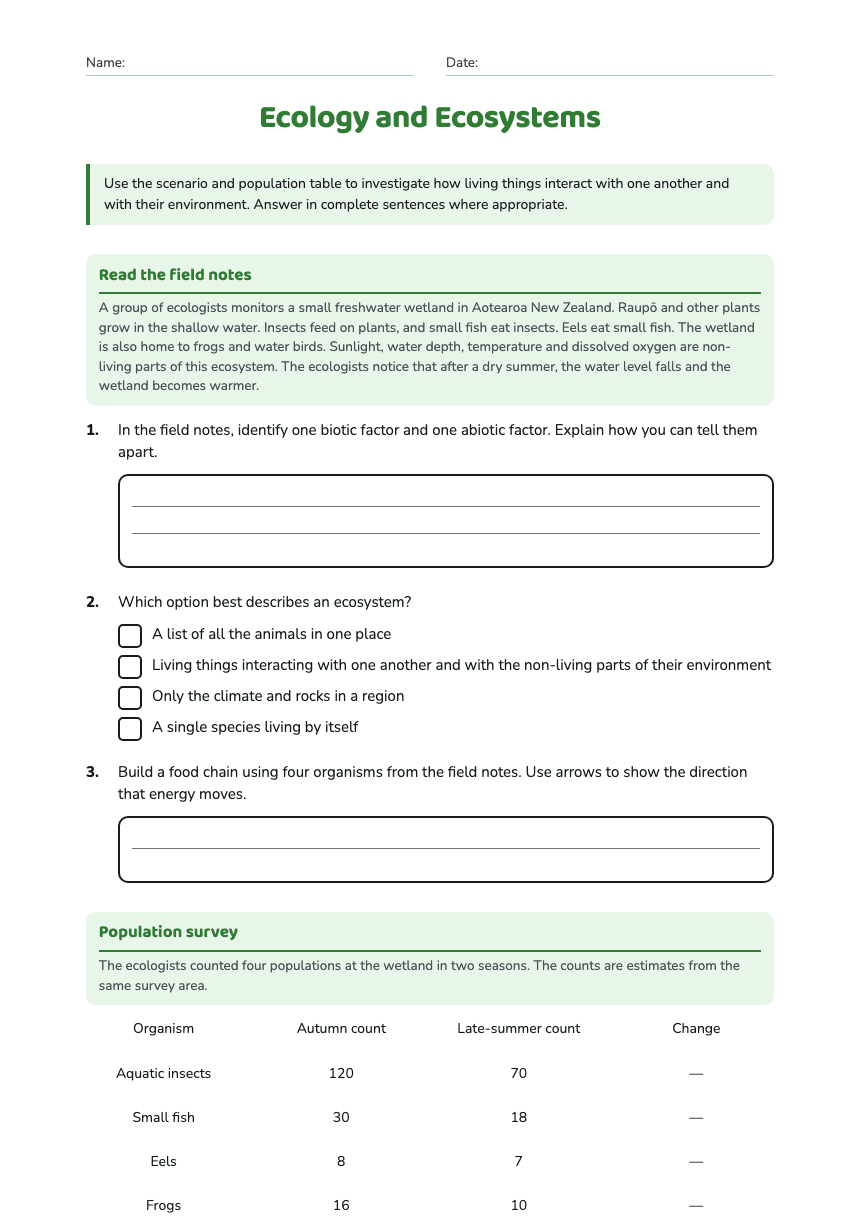
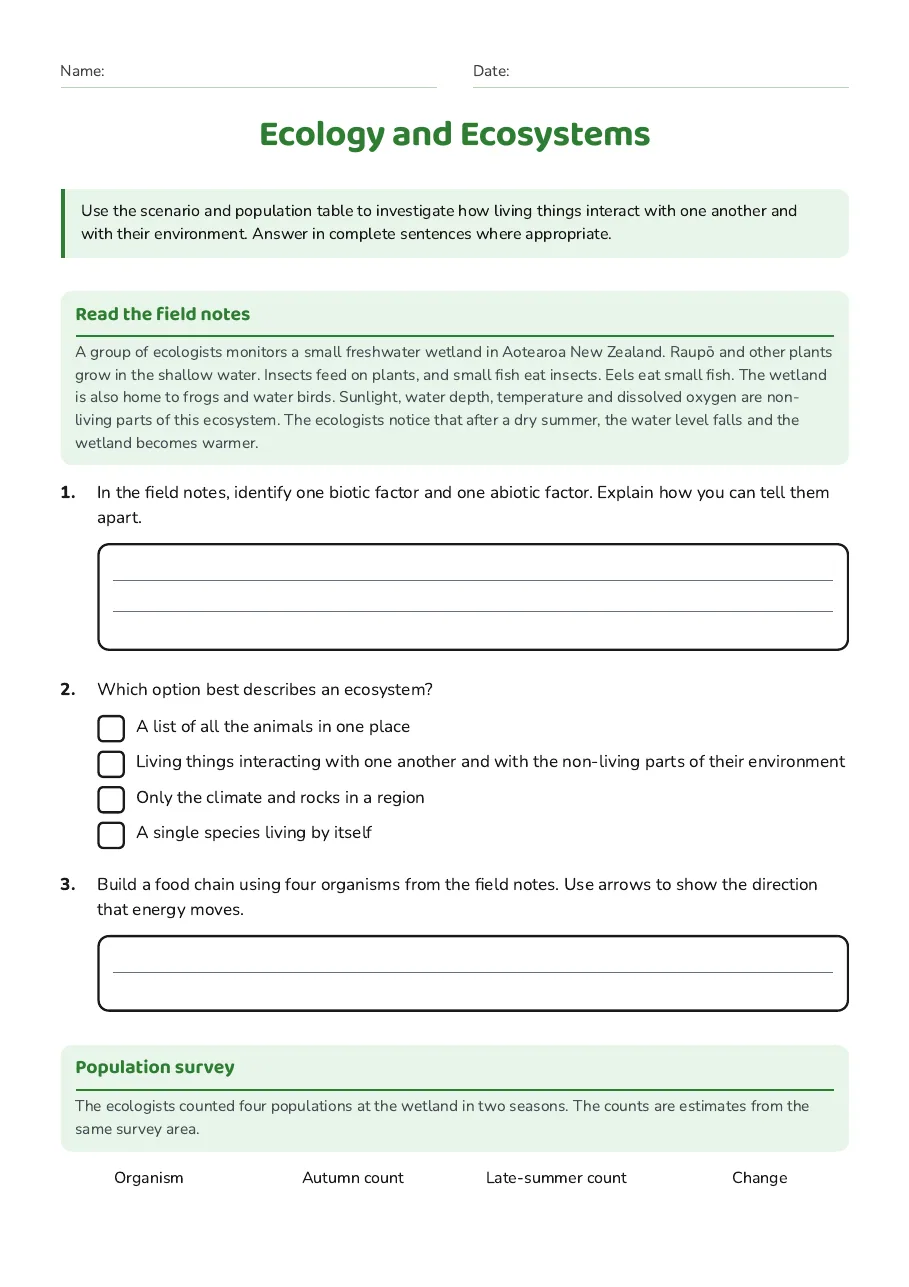
Ecology and Ecosystems
Read the field notes
A group of ecologists monitors a small freshwater wetland in Aotearoa New Zealand. Raupō and other plants grow in the shallow water. Insects feed on plants, and small fish eat insects. Eels eat small fish. The wetland is also home to frogs and water birds. Sunlight, water depth, temperature and dissolved oxygen are non-living parts of this ecosystem. The ecologists notice that after a dry summer, the water level falls and the wetland becomes warmer.
- A list of all the animals in one place
- Living things interacting with one another and with the non-living parts of their environment
- Only the climate and rocks in a region
- A single species living by itself
Population survey
The ecologists counted four populations at the wetland in two seasons. The counts are estimates from the same survey area.
Organism
Autumn count
Late-summer count
Change
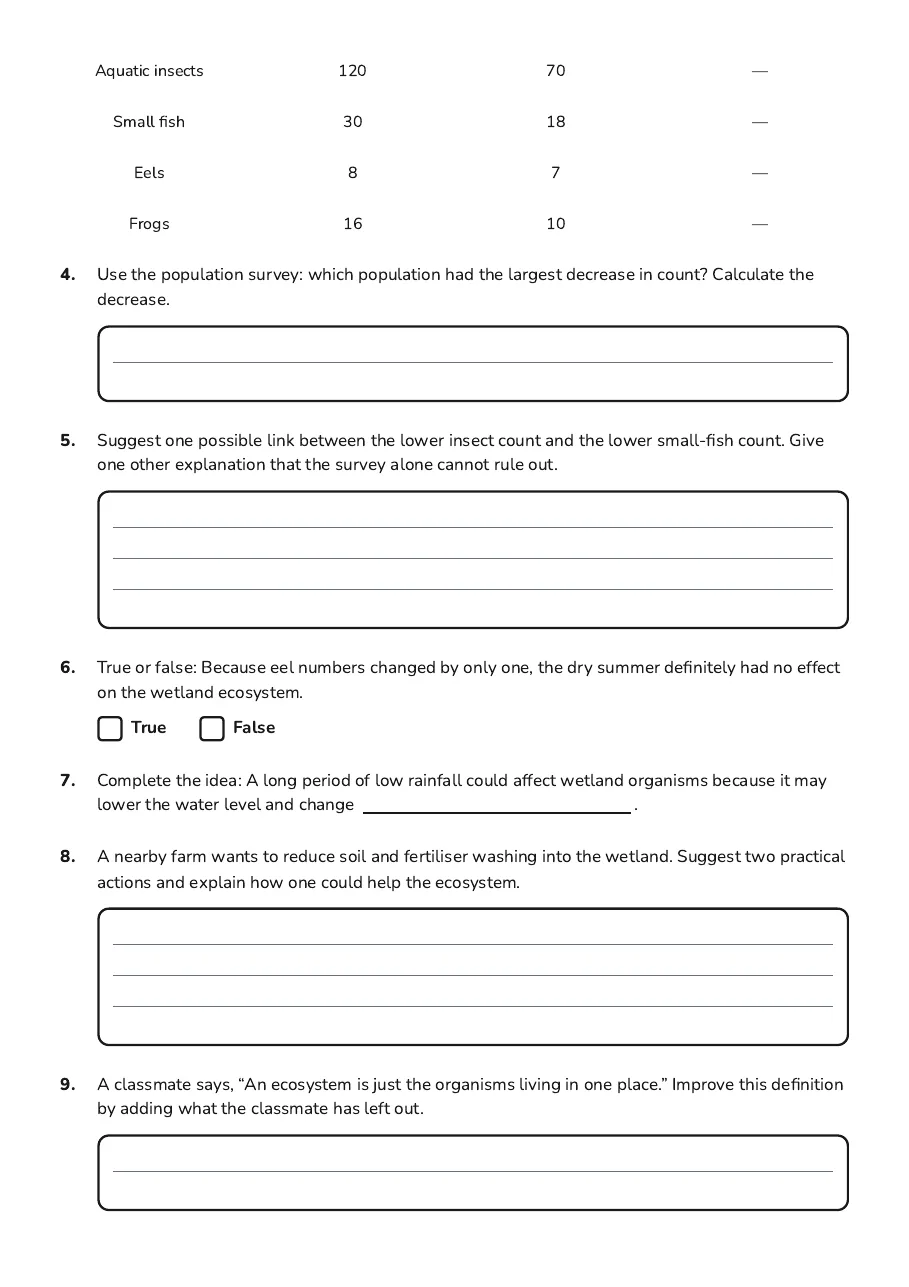
Aquatic insects
120
70
—
Small fish
30
18
—
Eels
8
7
—
Frogs
16
10
—
2 printable pages
Page 1
Page 2
About This Worksheet
Free in Kuraplan
Sign up free, grab the PDF, and customize it for your class.
Print-Ready
Formatted for standard paper. Clean layout, easy to read.
AI-Generated
Created with Kuraplan's AI, designed for real classroom use.
For Teachers & Parents
Use in classrooms, for homework, tutoring, or homeschool.
Need a custom version of this worksheet?
Kuraplan's AI generates custom worksheets in seconds — differentiated for every learner, aligned to your curriculum.
Generate Custom Worksheets — FreeMore Science Worksheets
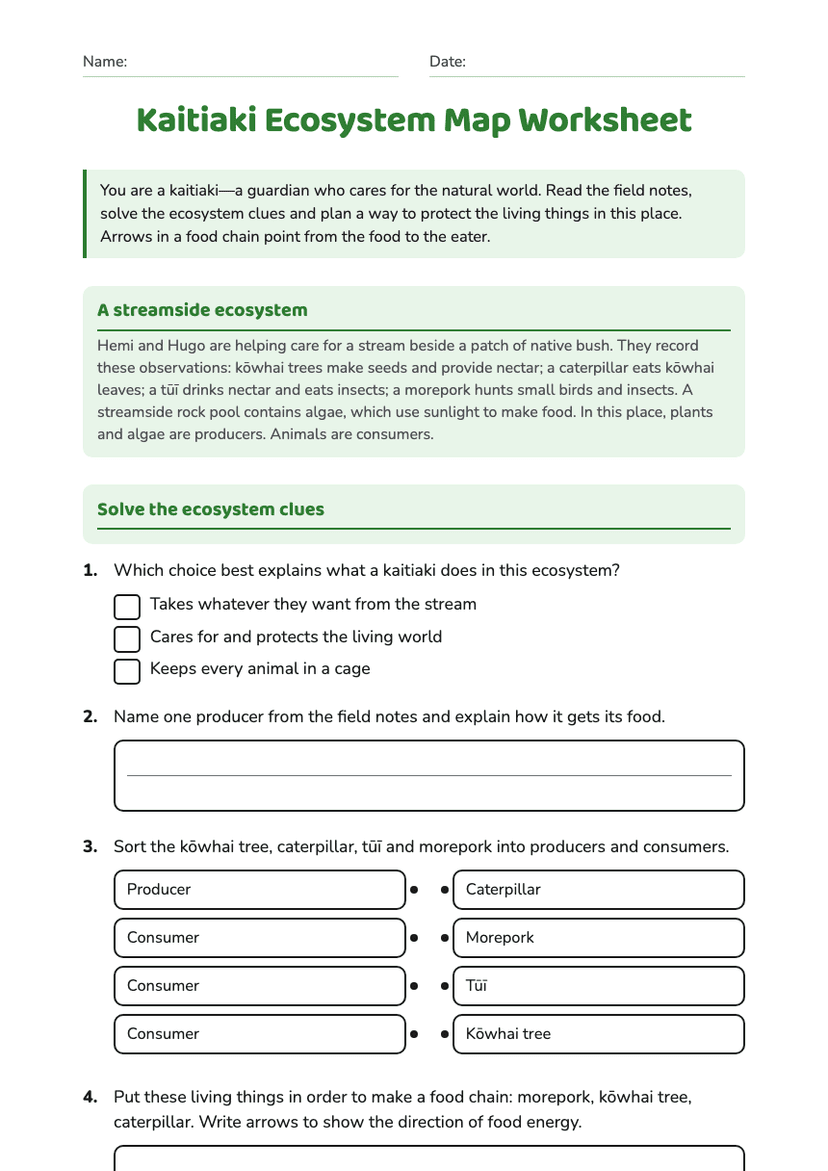
Kaitiaki Ecosystem Map Worksheet
Free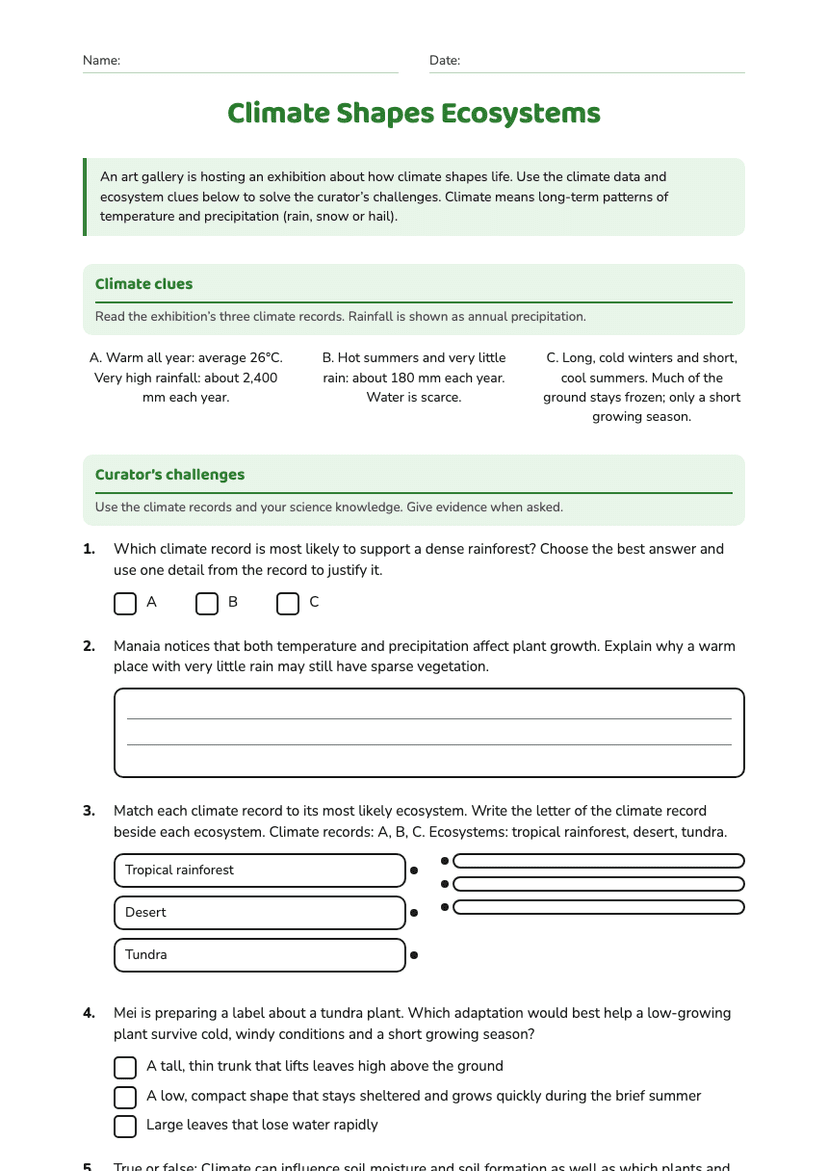
Climate Shapes Ecosystems
Free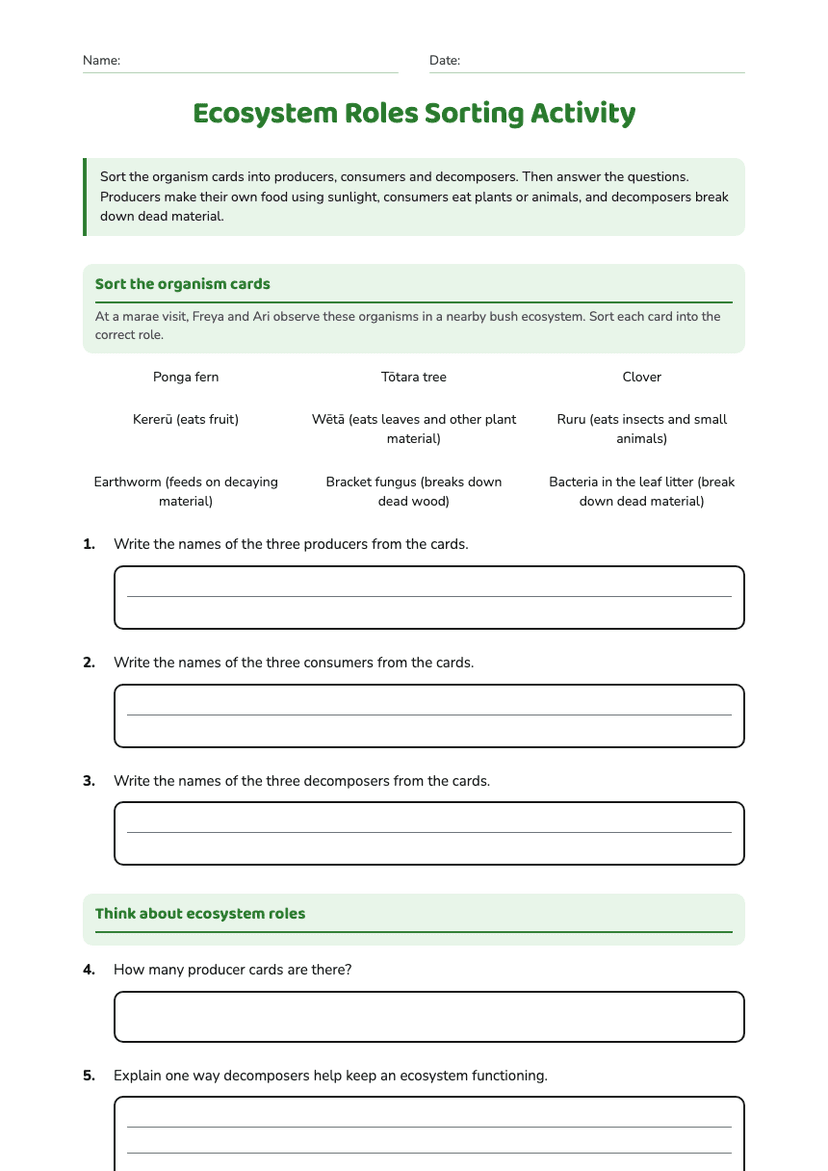
Ecosystem Roles Sorting Activity
Free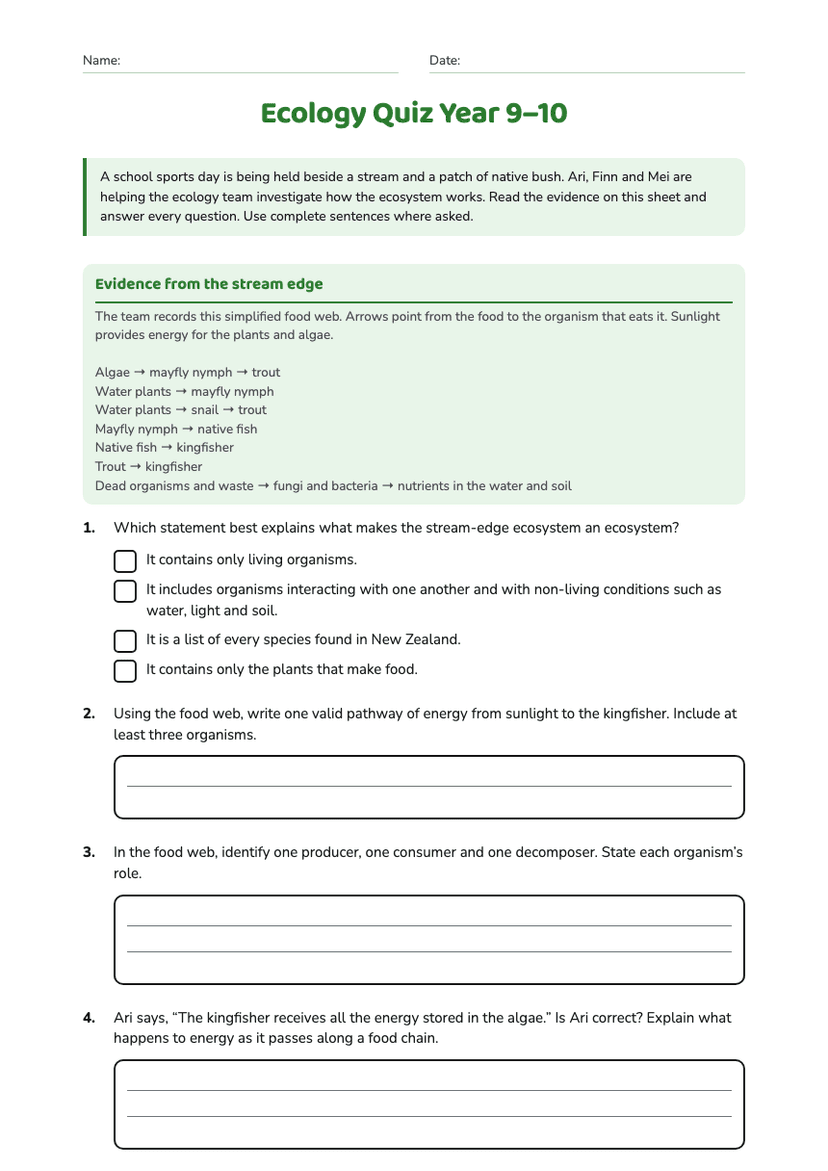
Ecology Quiz Year 9–10
Free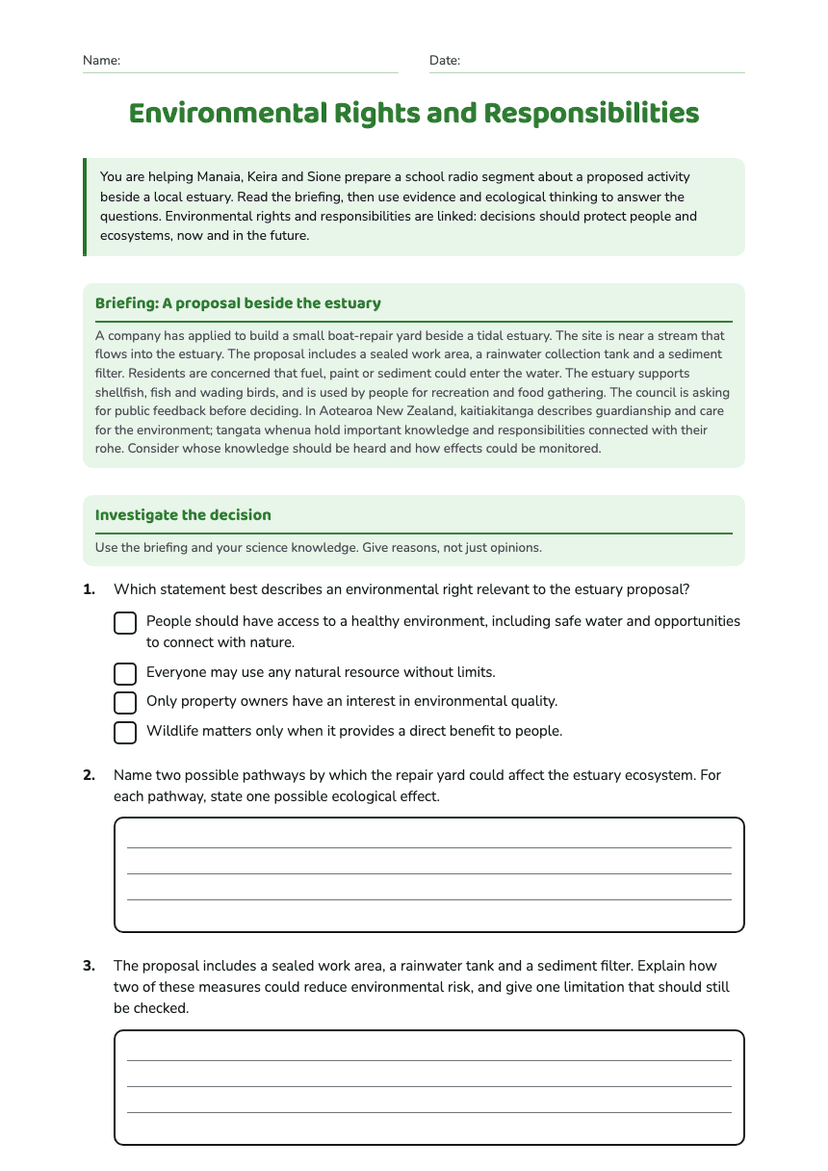
Environmental Rights and Responsibilities
Free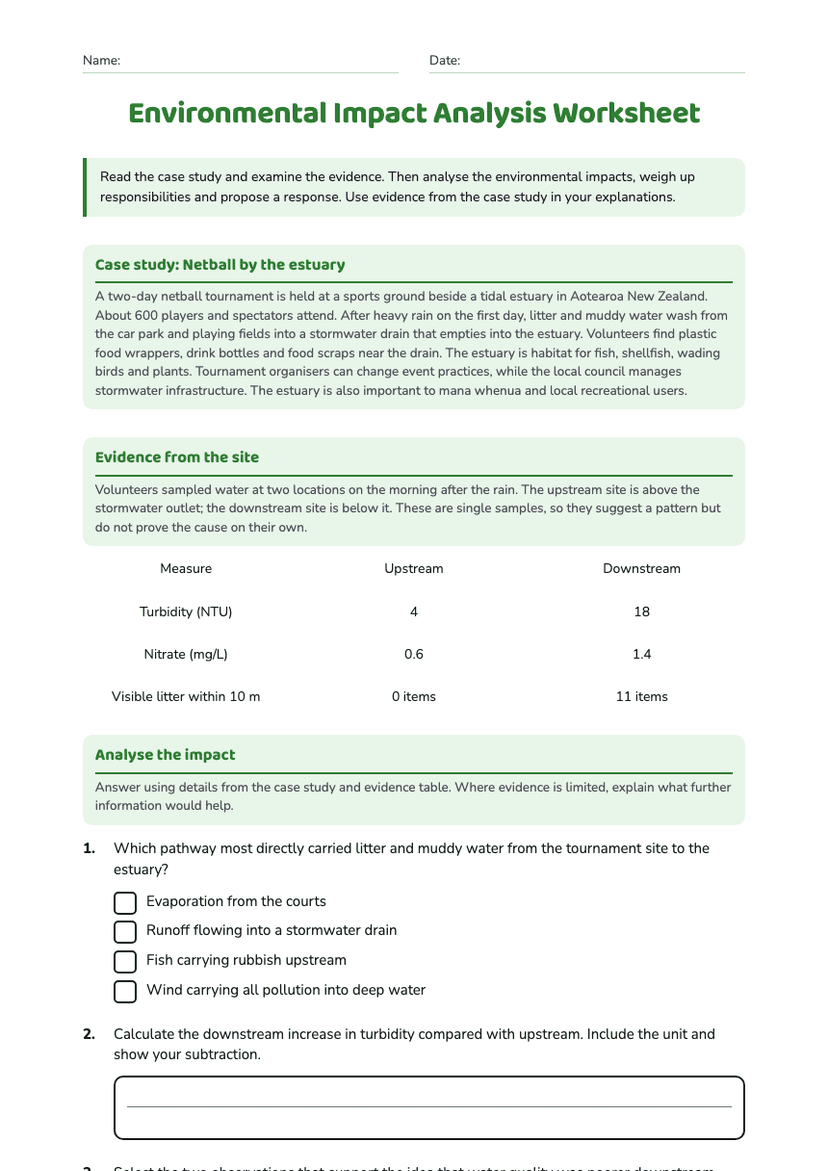
Environmental Impact Analysis Worksheet
Free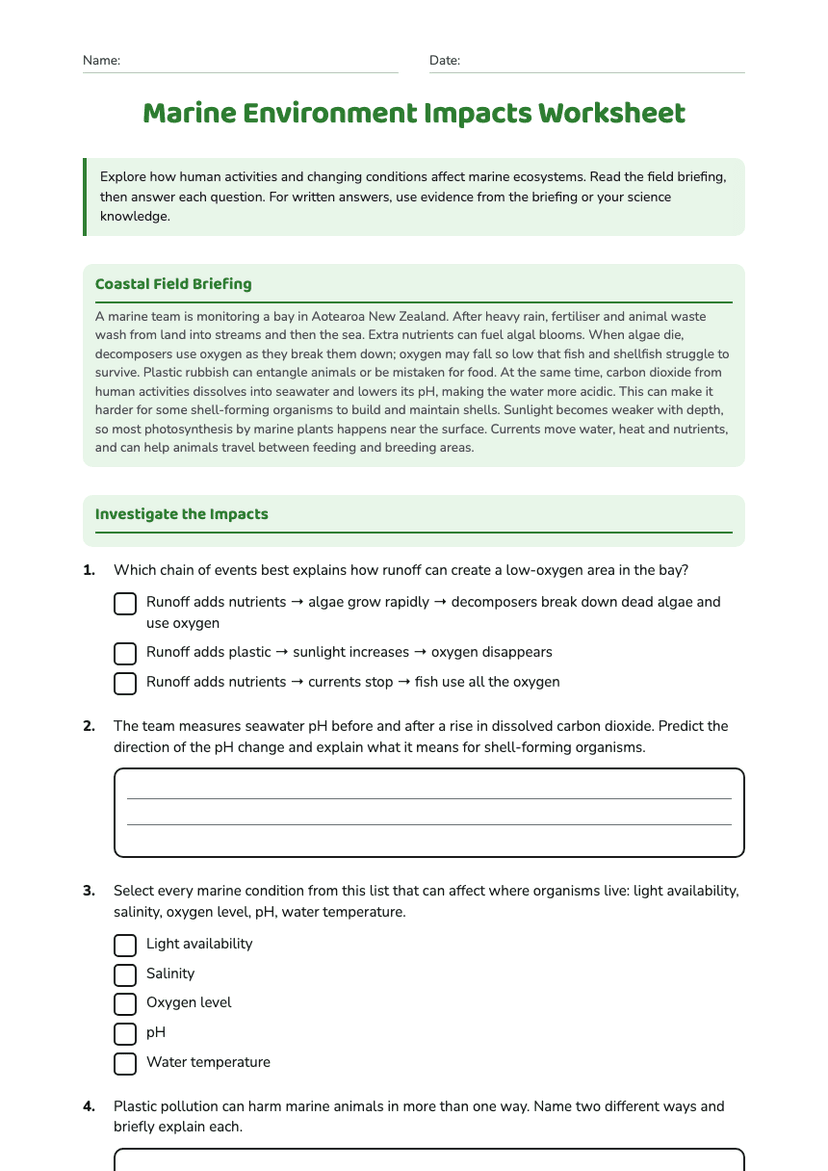
Marine Environment Impacts Worksheet
Free