Energy, Force, Work Worksheet
A free science worksheet ready for your classroom. Open in Kuraplan to grab the print-ready PDF, customize it for your students, or generate a fresh version in seconds.
📚 Reading Passage: Advanced Concepts in Energy, Force, and Work
In physics, energy is defined as the capacity to perform work, existing in various forms such as kinetic energy (KE) and potential energy (PE). Kinetic energy is quantified by the equation KE = 1/2 mv², where m represents mass and v represents velocity. This form of energy is evident in scenarios such as a speeding vehicle or a flowing river, where the motion of the object is critical to its energy state.
Potential energy, on the other hand, is energy stored due to an object's position or configuration. The gravitational potential energy (GPE) can be calculated using the formula GPE = mgh, where m is mass, g is the acceleration due to gravity, and h is the height above a reference point. A classic example is a boulder resting at the edge of a cliff, poised to fall, where its potential energy is maximized.
Work (W) is defined as the process of energy transfer that occurs when a force (F) acts upon an object to cause displacement (d). The formula for work is W = F × d × cos(θ), where θ is the angle between the force and the direction of motion. Understanding these principles is essential for analyzing physical systems and their interactions. Tēnā koutou, let’s delve deeper into these concepts!
📝 Research Questions - Whakatōhia! (Let's explore!)
✏️ Extension Questions - Ka pai, let's think deeper!
Tino pai! Well done completing this worksheet!
About This Worksheet
Free in Kuraplan
Sign up free, grab the PDF, and customize it for your class.
Print-Ready
Formatted for standard paper. Clean layout, easy to read.
AI-Generated
Created with Kuraplan's AI, designed for real classroom use.
For Teachers & Parents
Use in classrooms, for homework, tutoring, or homeschool.
Need a custom version of this worksheet?
Kuraplan's AI generates custom worksheets in seconds — differentiated for every learner, aligned to your curriculum.
Generate Custom Worksheets — FreeMore Science Worksheets
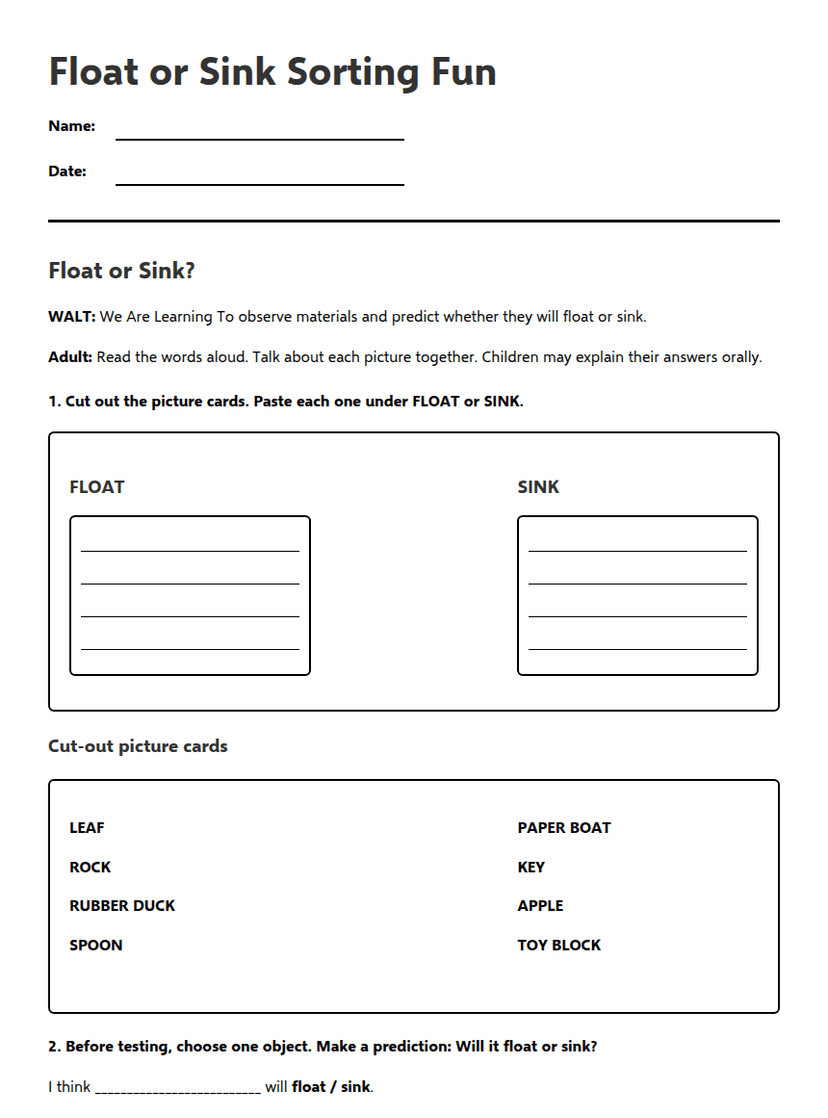
Float or Sink Sorting Fun
Free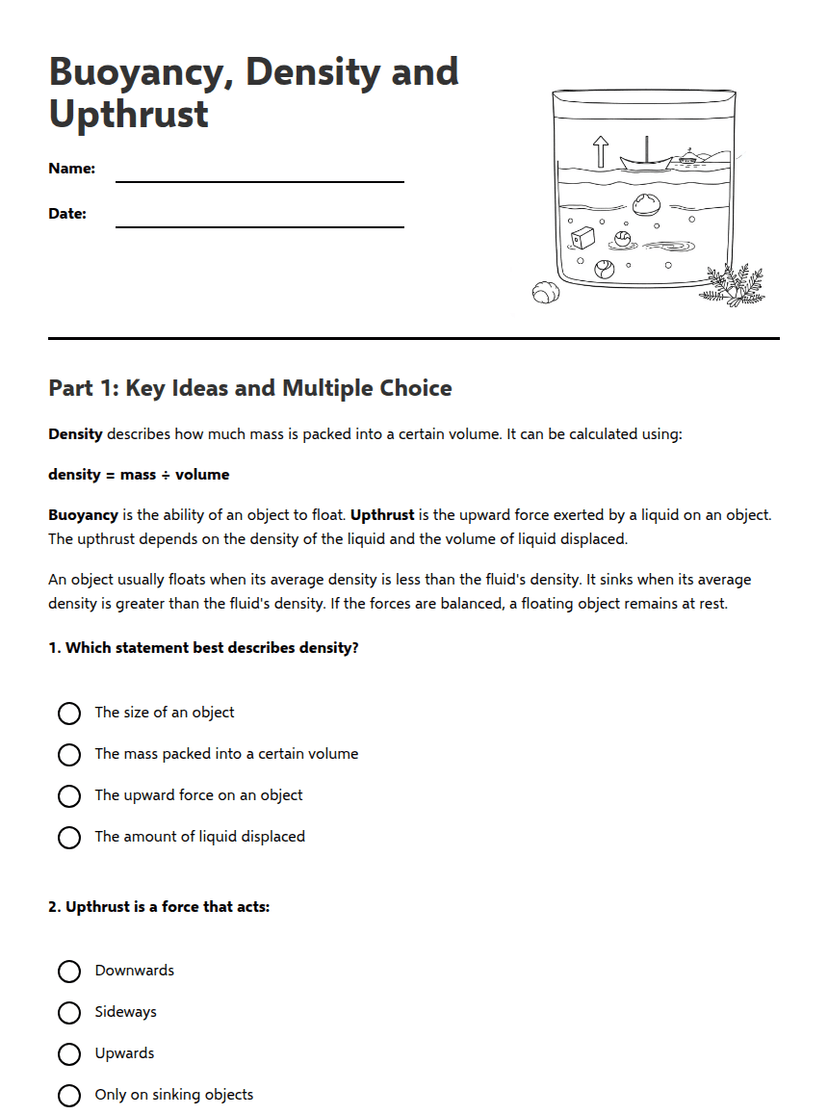
Buoyancy, Density and Upthrust
Free
Waka Buoyancy Science Worksheet
Free
Ō Ahupūngao: Forces and Motion
Free
Aircraft Design and Aerodynamics
Free
Circular Motion Physics
Free
Buoyancy and Flotation Diagnostic
Free