EnglishFreePrintable
Explanatory Writing Skills Practice
A free english worksheet ready for your classroom. Open in Kuraplan to grab the print-ready PDF, customize it for your students, or generate a fresh version in seconds.
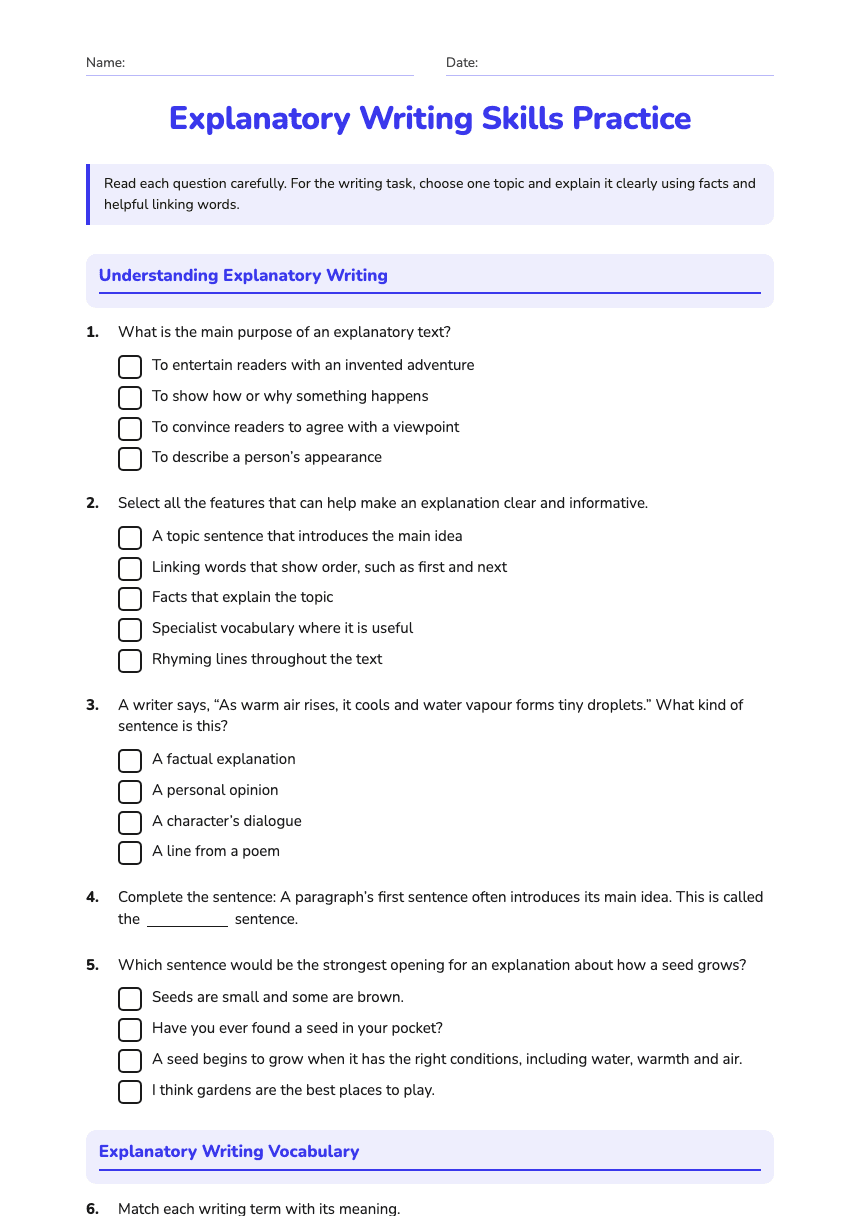
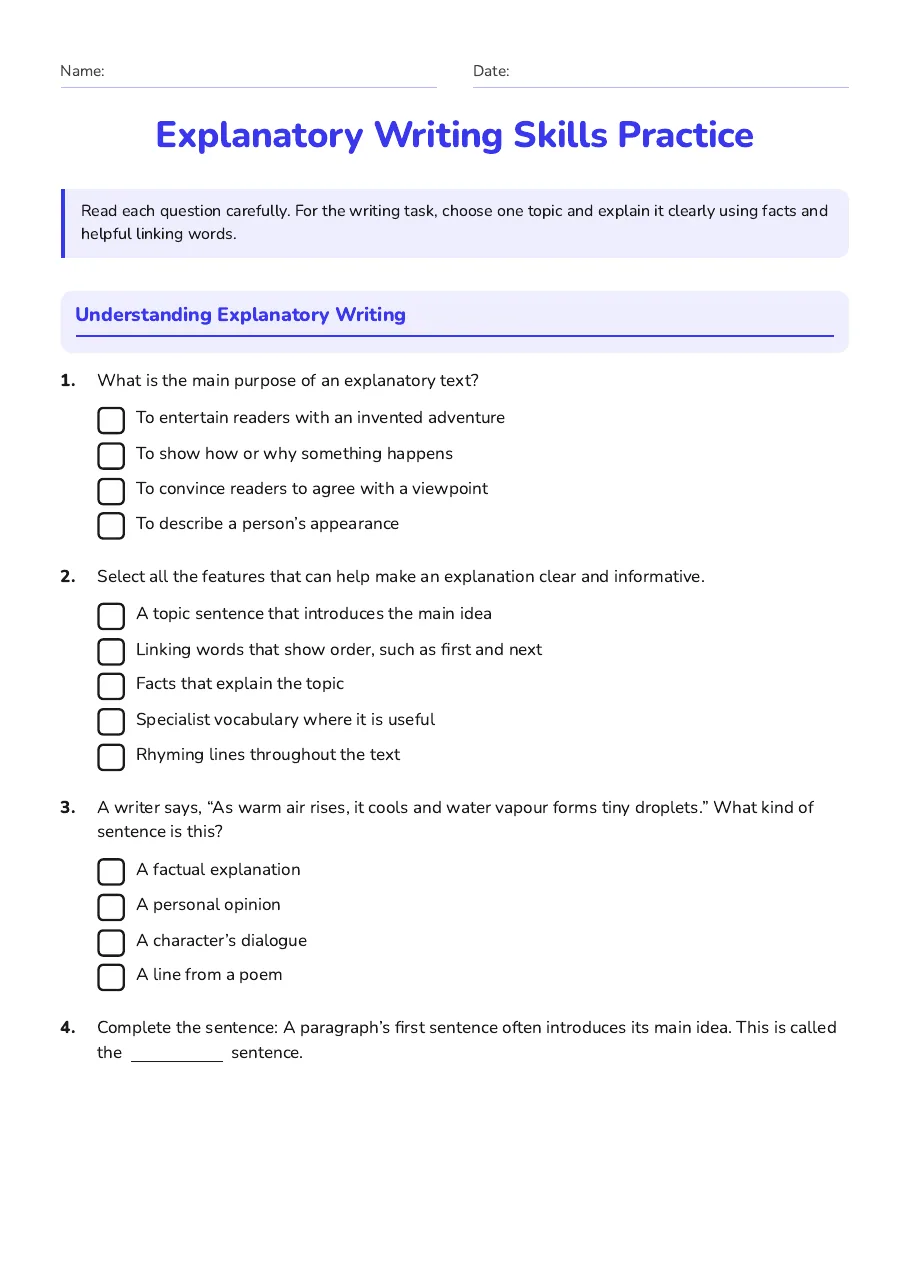
Name:Date:
Explanatory Writing Skills Practice
Read each question carefully. For the writing task, choose one topic and explain it clearly using facts and helpful linking words.
Understanding Explanatory Writing
1.What is the main purpose of an explanatory text?
- To entertain readers with an invented adventure
- To show how or why something happens
- To convince readers to agree with a viewpoint
- To describe a person’s appearance
2.Select all the features that can help make an explanation clear and informative.
- A topic sentence that introduces the main idea
- Linking words that show order, such as first and next
- Facts that explain the topic
- Specialist vocabulary where it is useful
- Rhyming lines throughout the text
3.A writer says, “As warm air rises, it cools and water vapour forms tiny droplets.” What kind of sentence is this?
- A factual explanation
- A personal opinion
- A character’s dialogue
- A line from a poem
4.Complete the sentence: A paragraph’s first sentence often introduces its main idea. This is called the sentence.
5.Which sentence would be the strongest opening for an explanation about how a seed grows?
- Seeds are small and some are brown.
- Have you ever found a seed in your pocket?
- A seed begins to grow when it has the right conditions, including water, warmth and air.
- I think gardens are the best places to play.
Explanatory Writing Vocabulary
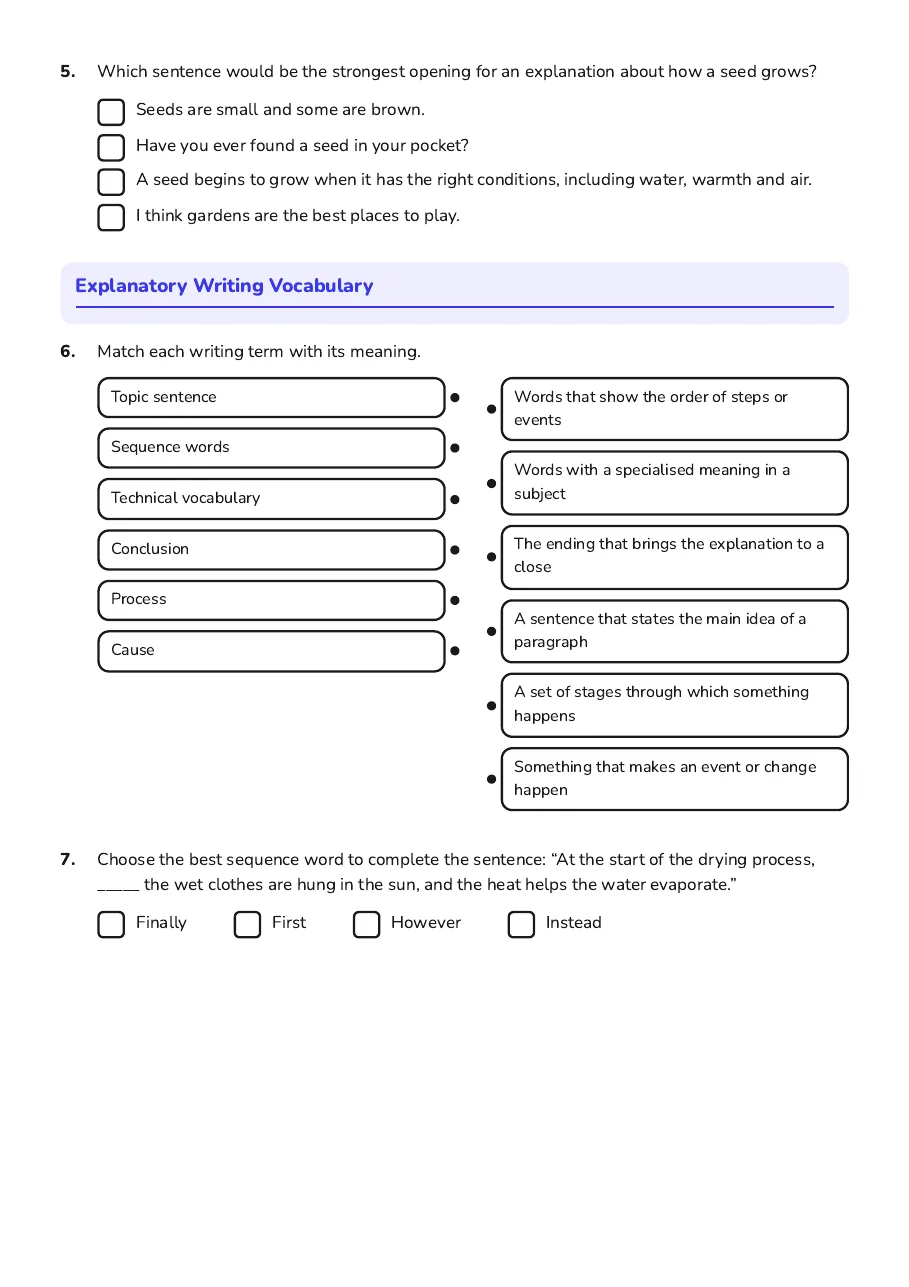
6.Match each writing term with its meaning.
- Topic sentence
- Sequence words
- Technical vocabulary
- Conclusion
- Process
- Cause
- Words that show the order of steps or events
- Words with a specialised meaning in a subject
- The ending that brings the explanation to a close
- A sentence that states the main idea of a paragraph
- A set of stages through which something happens
- Something that makes an event or change happen
7.Choose the best sequence word to complete the sentence: “At the start of the drying process, _____ the wet clothes are hung in the sun, and the heat helps the water evaporate.”
- Finally
- First
- However
- Instead
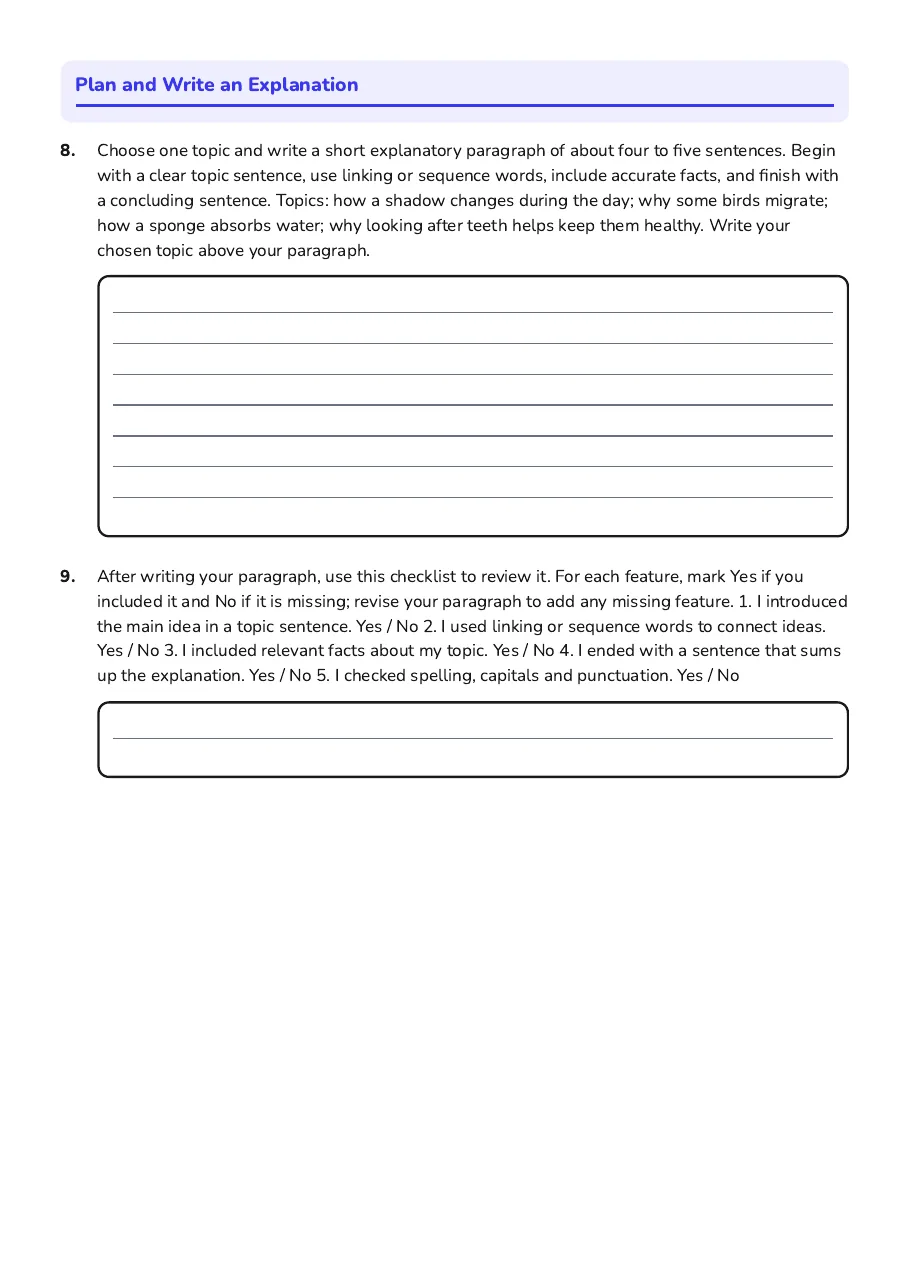
Plan and Write an Explanation
8.Choose one topic and write a short explanatory paragraph of about four to five sentences. Begin with a clear topic sentence, use linking or sequence words, include accurate facts, and finish with a concluding sentence. Topics: how a shadow changes during the day; why some birds migrate; how a sponge absorbs water; why looking after teeth helps keep them healthy. Write your chosen topic above your paragraph.
9.After writing your paragraph, use this checklist to review it. For each feature, mark Yes if you included it and No if it is missing; revise your paragraph to add any missing feature.
1. I introduced the main idea in a topic sentence. Yes / No
2. I used linking or sequence words to connect ideas. Yes / No
3. I included relevant facts about my topic. Yes / No
4. I ended with a sentence that sums up the explanation. Yes / No
5. I checked spelling, capitals and punctuation. Yes / No
3 printable pages
Page 1
Page 2
Page 3
About This Worksheet
Free in Kuraplan
Sign up free, grab the PDF, and customize it for your class.
Print-Ready
Formatted for standard paper. Clean layout, easy to read.
AI-Generated
Created with Kuraplan's AI, designed for real classroom use.
For Teachers & Parents
Use in classrooms, for homework, tutoring, or homeschool.
Need a custom version of this worksheet?
Kuraplan's AI generates custom worksheets in seconds — differentiated for every learner, aligned to your curriculum.
Generate Custom Worksheets — Free No credit card Curriculum-aligned Under 60 seconds
More English Worksheets
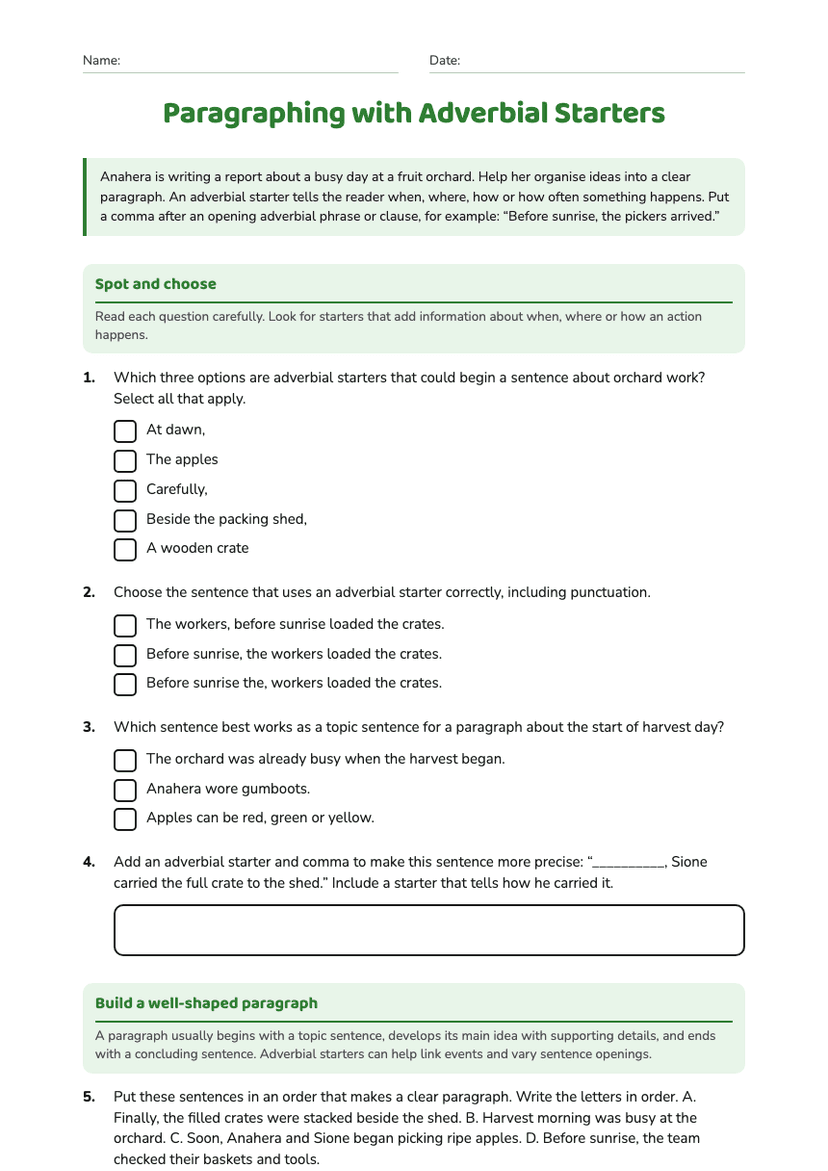
Year 5
Paragraphing with Adverbial Starters
Free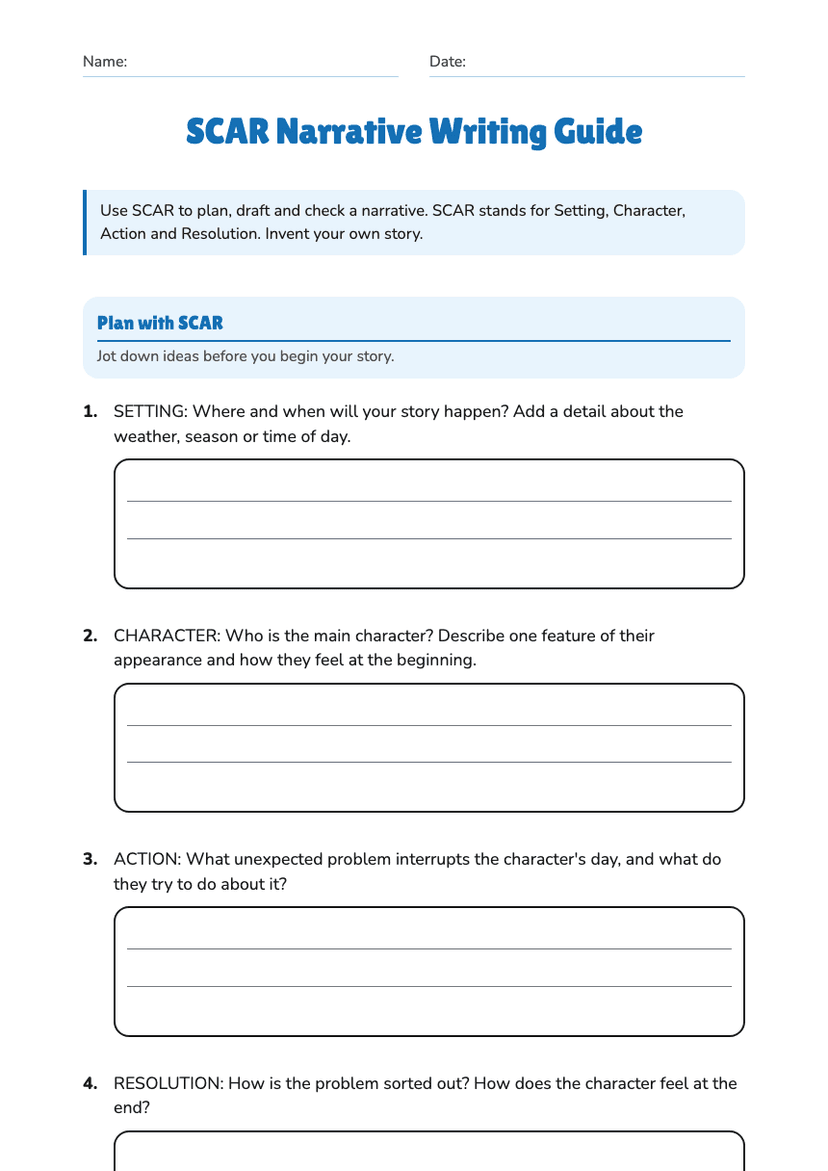
SCAR Narrative Writing Guide
Free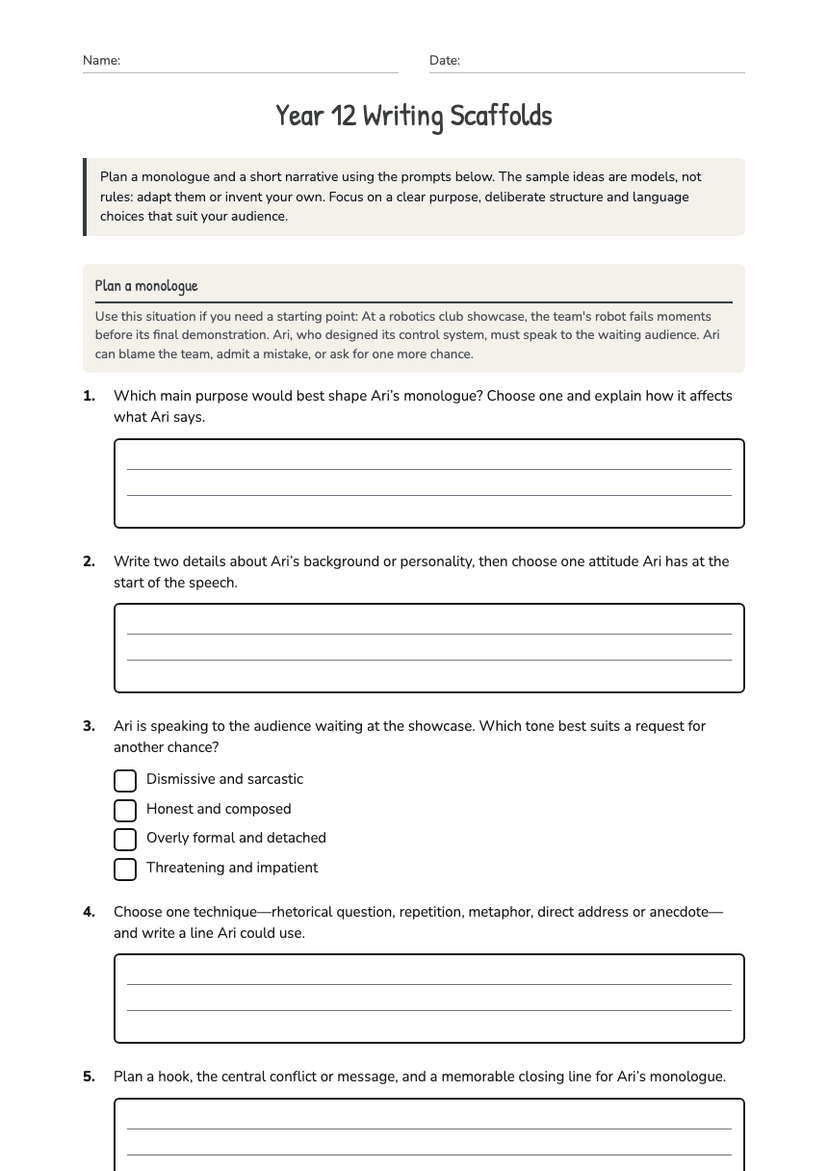
Year 12 Writing Scaffolds
Free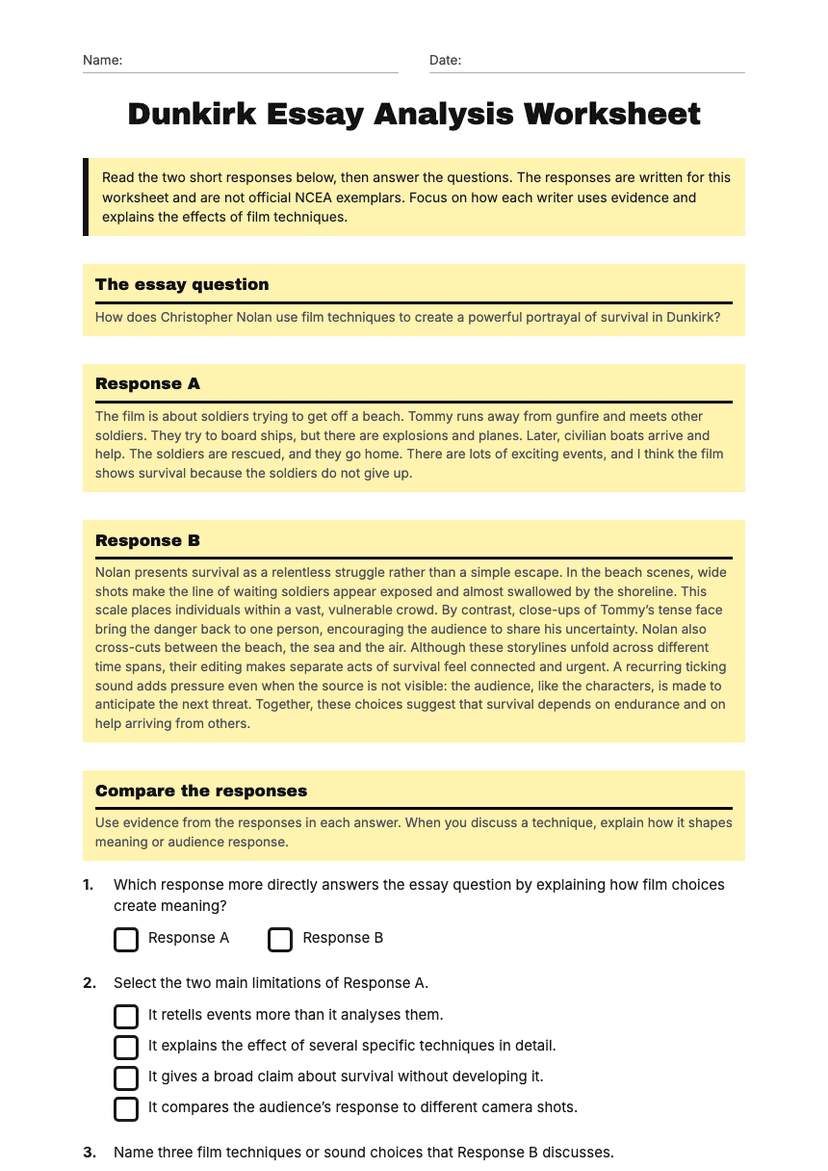
Year 12
Dunkirk Essay Analysis Worksheet
Free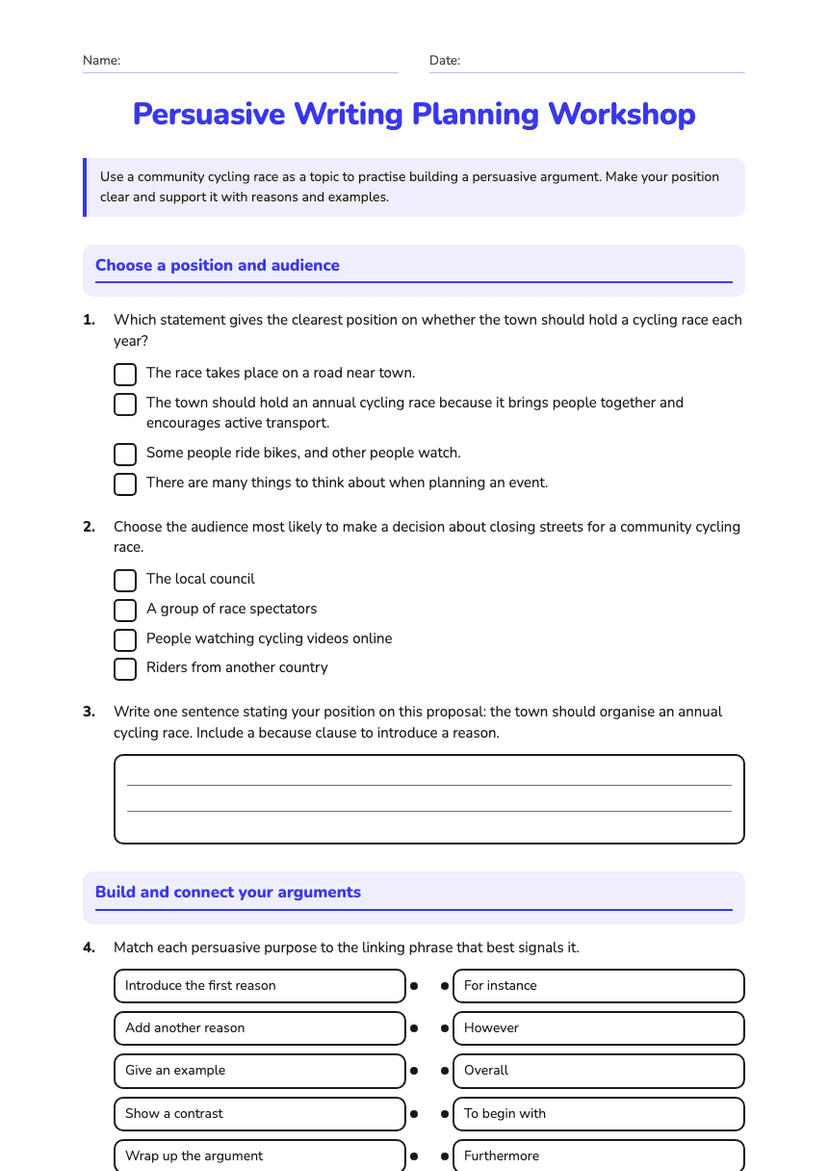
Year 7–8
Persuasive Writing Planning Workshop
Free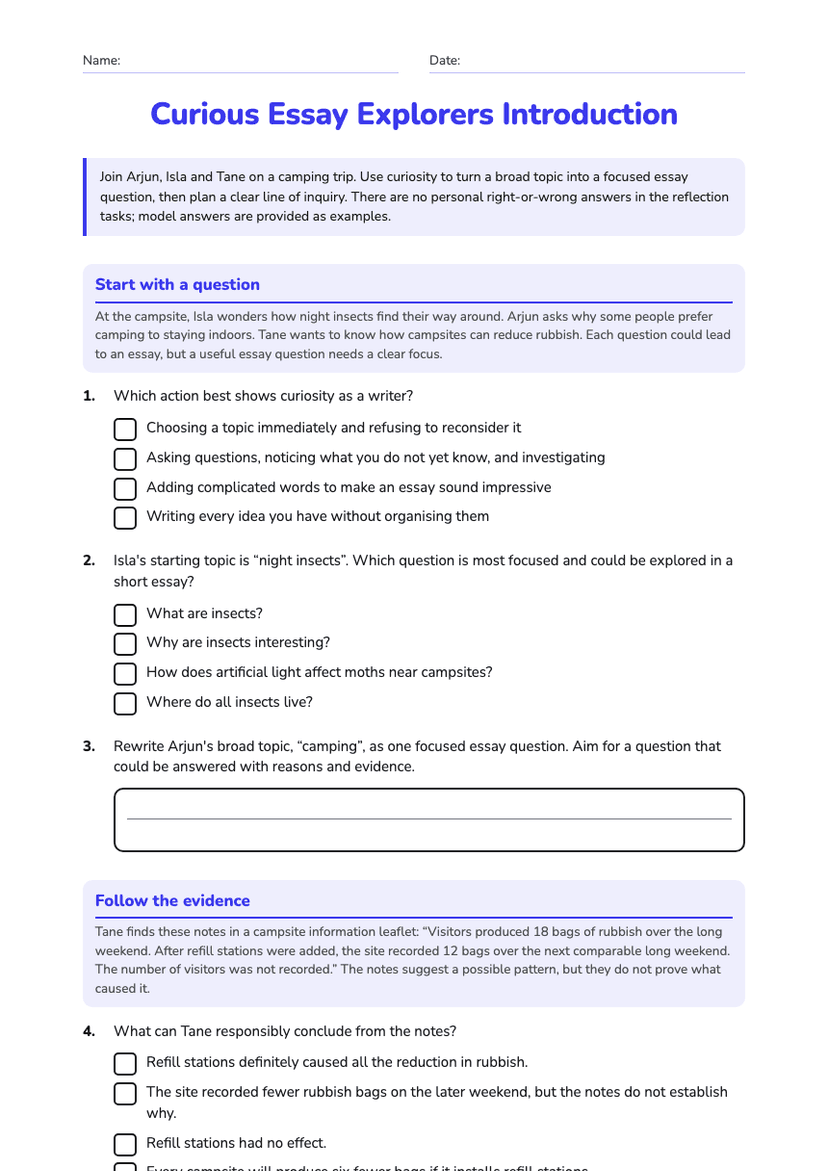
Year 9
Curious Essay Explorers Introduction
Free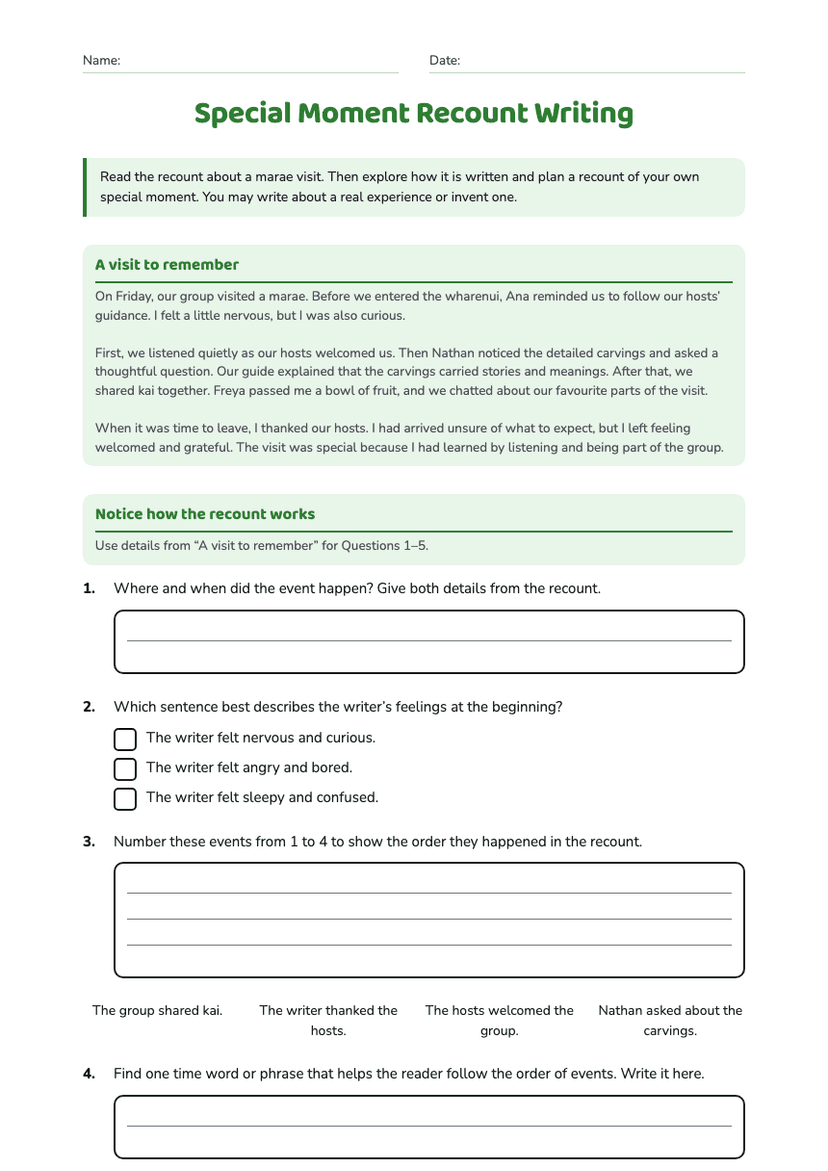
Year 5–6
Special Moment Recount Writing
Free
Year 2–3