ScienceFreePrintable
Exploring Chemical Change
A free science worksheet ready for your classroom. Open in Kuraplan to grab the print-ready PDF, customize it for your students, or generate a fresh version in seconds.
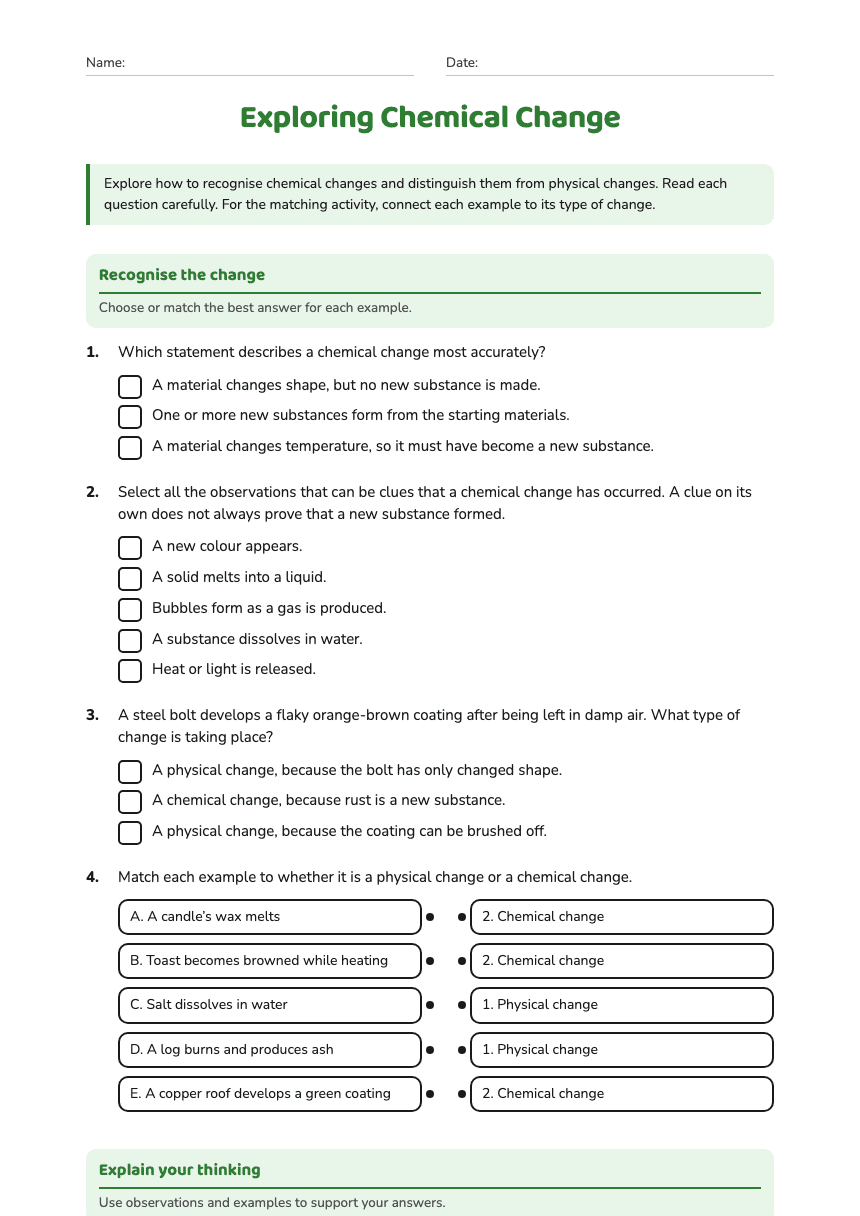
Name:Date:
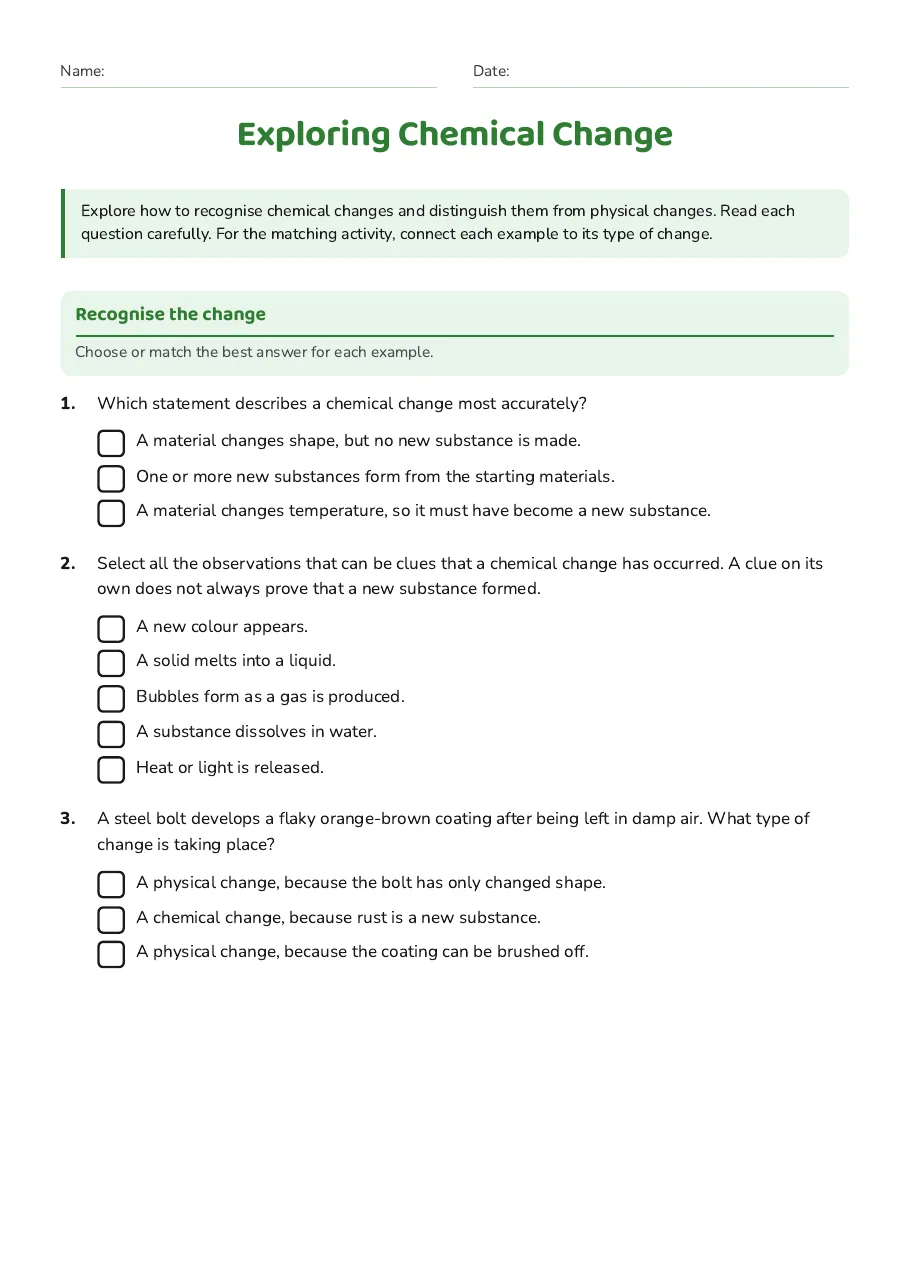
Exploring Chemical Change
Explore how to recognise chemical changes and distinguish them from physical changes. Read each question carefully. For the matching activity, connect each example to its type of change.
Recognise the change
Choose or match the best answer for each example.
1.Which statement describes a chemical change most accurately?
- A material changes shape, but no new substance is made.
- One or more new substances form from the starting materials.
- A material changes temperature, so it must have become a new substance.
2.Select all the observations that can be clues that a chemical change has occurred. A clue on its own does not always prove that a new substance formed.
- A new colour appears.
- A solid melts into a liquid.
- Bubbles form as a gas is produced.
- A substance dissolves in water.
- Heat or light is released.
3.A steel bolt develops a flaky orange-brown coating after being left in damp air. What type of change is taking place?
- A physical change, because the bolt has only changed shape.
- A chemical change, because rust is a new substance.
- A physical change, because the coating can be brushed off.
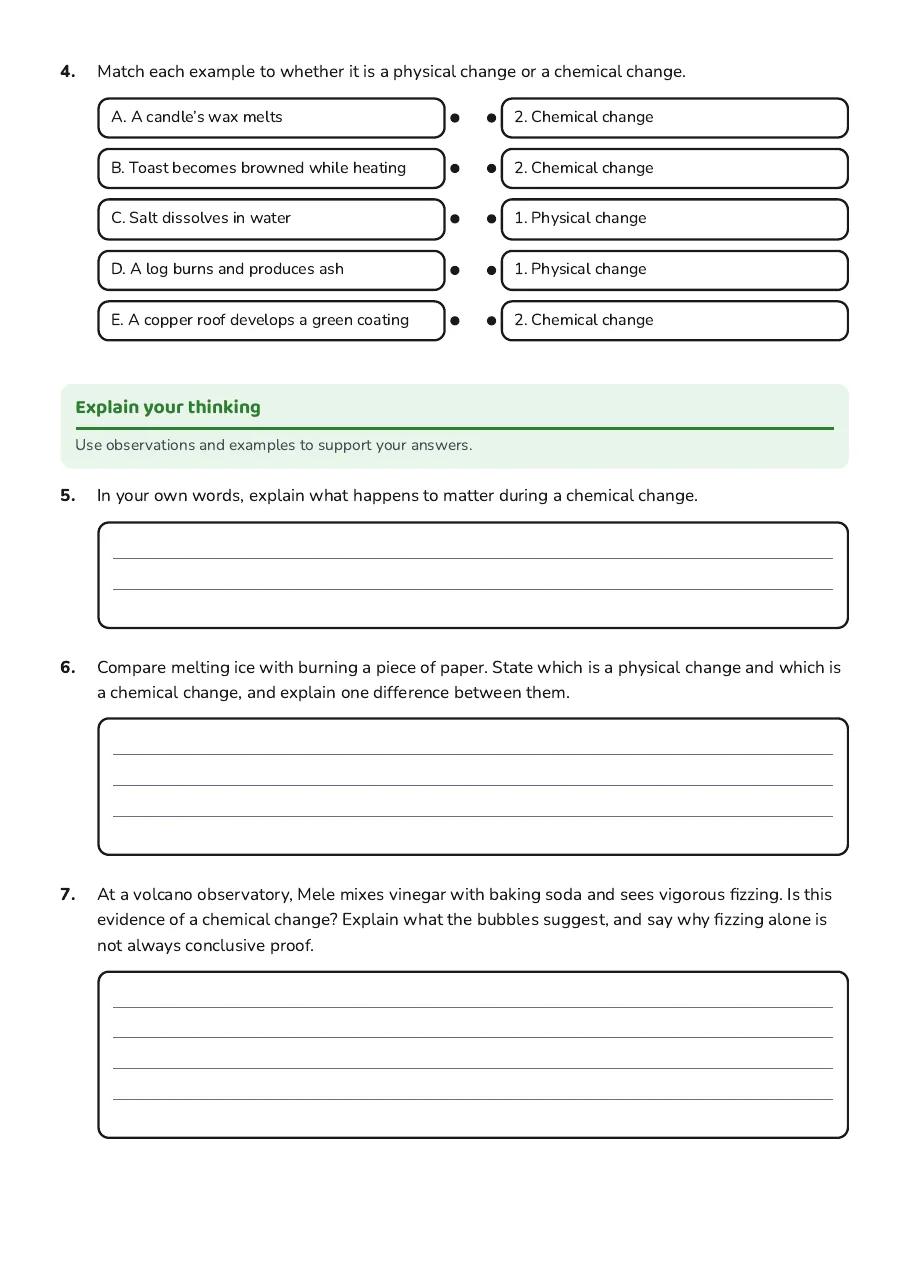
4.Match each example to whether it is a physical change or a chemical change.
- A. A candle’s wax melts
- B. Toast becomes browned while heating
- C. Salt dissolves in water
- D. A log burns and produces ash
- E. A copper roof develops a green coating
- 2. Chemical change
- 2. Chemical change
- 1. Physical change
- 1. Physical change
- 2. Chemical change
Explain your thinking
Use observations and examples to support your answers.
5.In your own words, explain what happens to matter during a chemical change.
6.Compare melting ice with burning a piece of paper. State which is a physical change and which is a chemical change, and explain one difference between them.
7.At a volcano observatory, Mele mixes vinegar with baking soda and sees vigorous fizzing. Is this evidence of a chemical change? Explain what the bubbles suggest, and say why fizzing alone is not always conclusive proof.
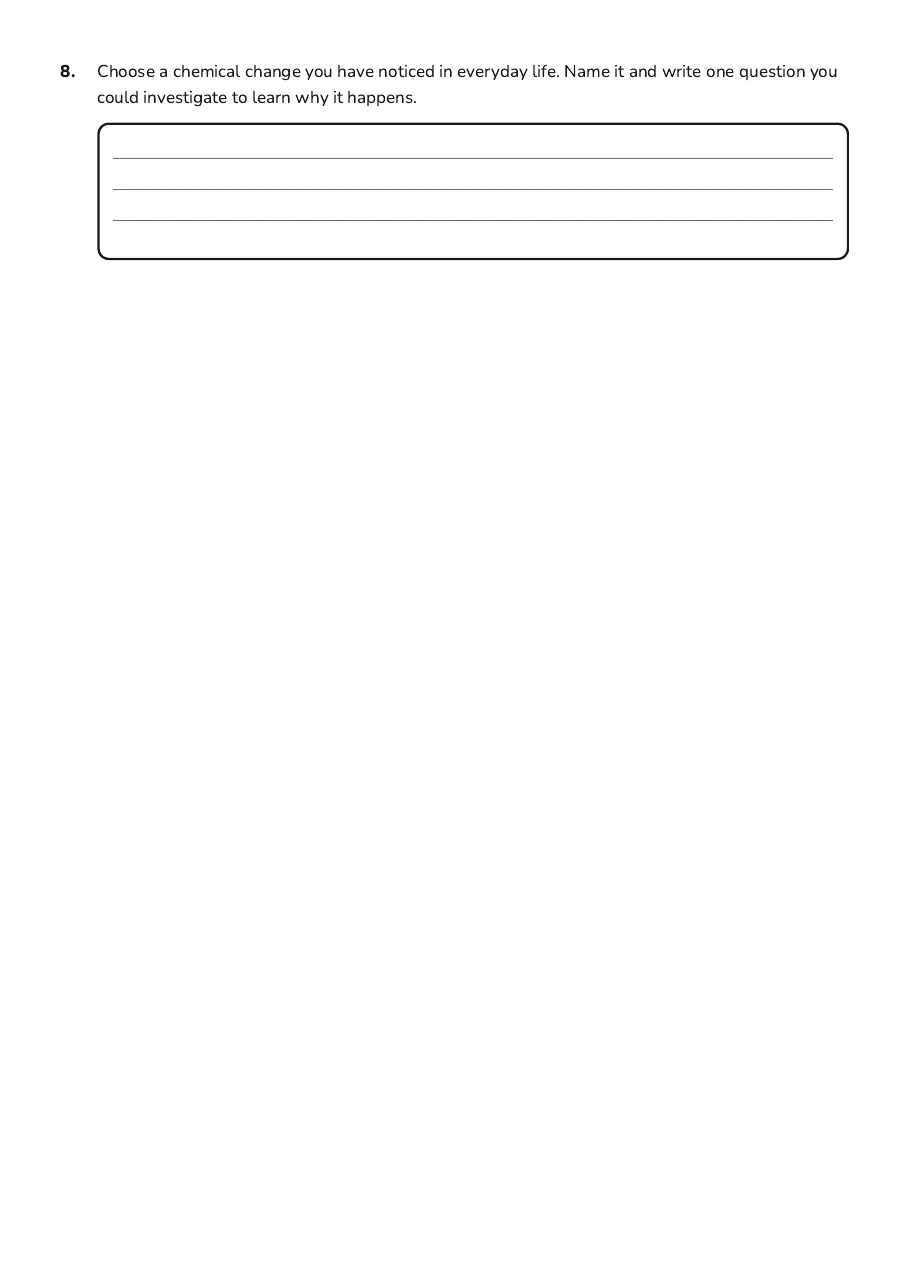
8.Choose a chemical change you have noticed in everyday life. Name it and write one question you could investigate to learn why it happens.
3 printable pages
Page 1
Page 2
Page 3
About This Worksheet
Free in Kuraplan
Sign up free, grab the PDF, and customize it for your class.
Print-Ready
Formatted for standard paper. Clean layout, easy to read.
AI-Generated
Created with Kuraplan's AI, designed for real classroom use.
For Teachers & Parents
Use in classrooms, for homework, tutoring, or homeschool.
Need a custom version of this worksheet?
Kuraplan's AI generates custom worksheets in seconds — differentiated for every learner, aligned to your curriculum.
Generate Custom Worksheets — Free No credit card Curriculum-aligned Under 60 seconds
More Science Worksheets
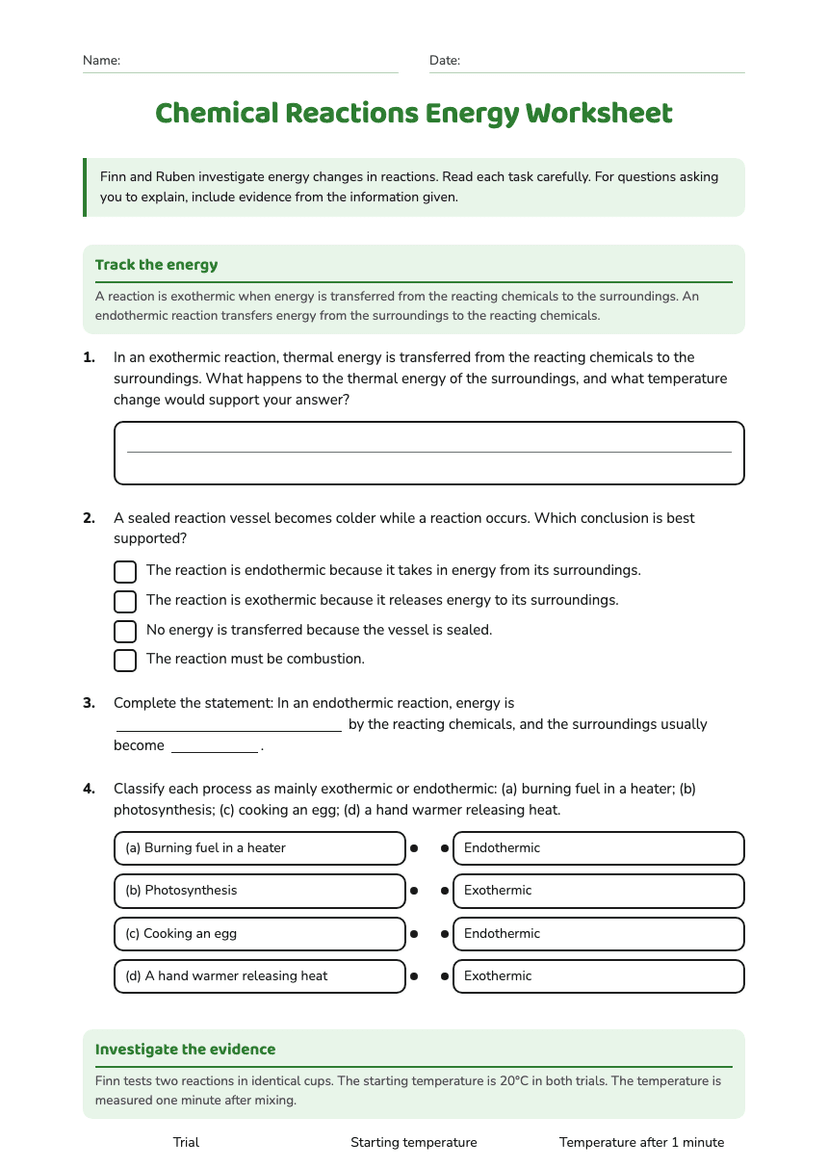
Chemical Reactions Energy Worksheet
Free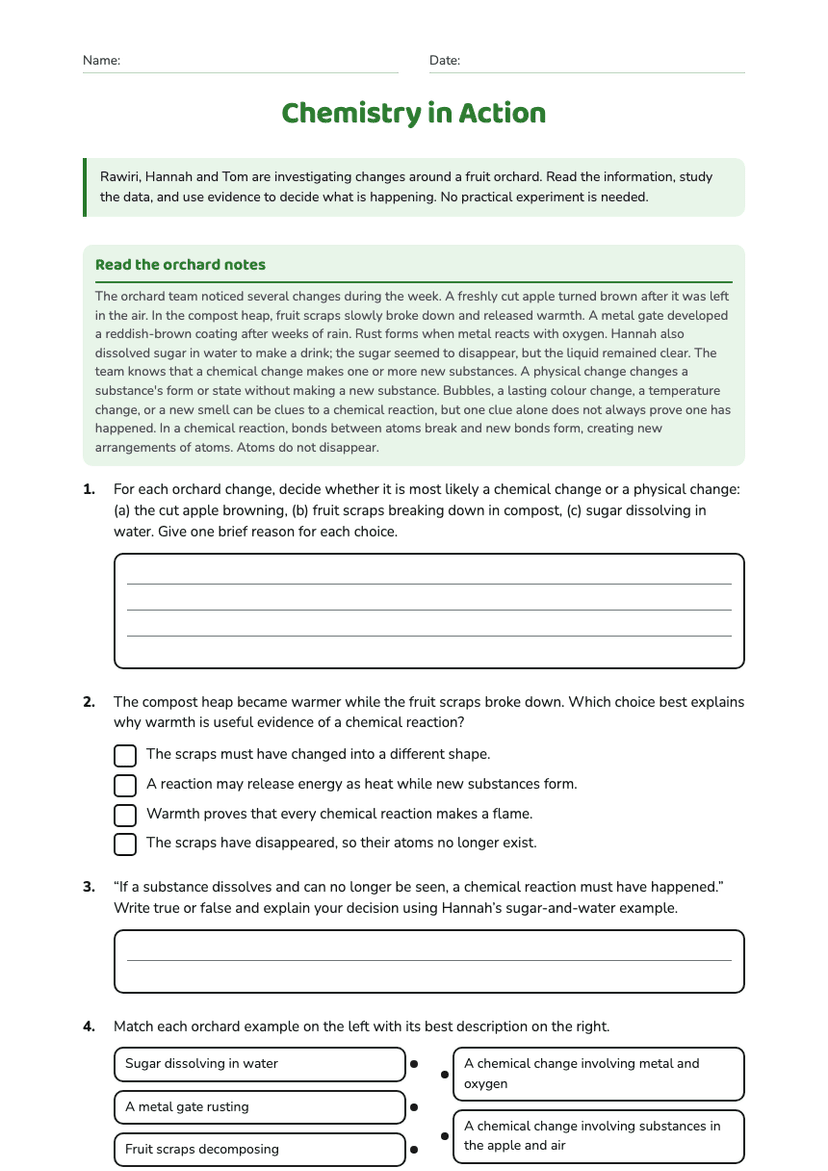
Year 7
Chemistry in Action
Free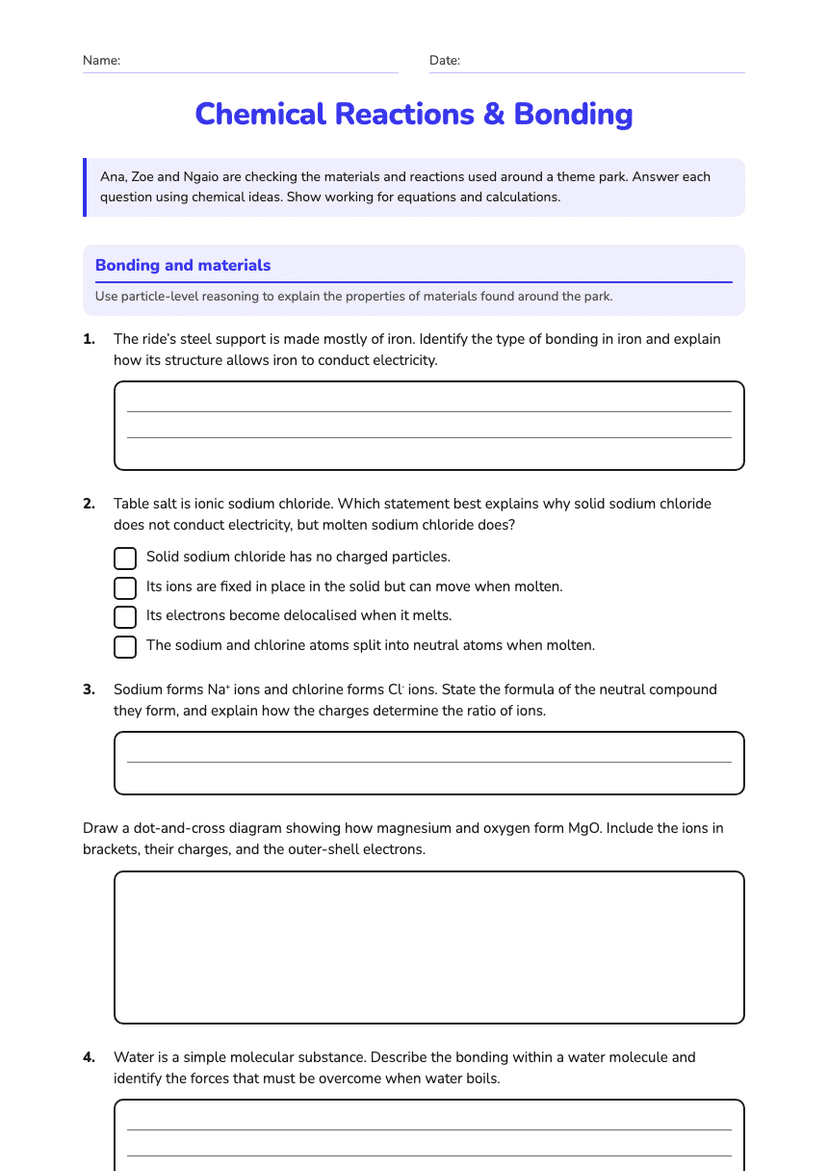
Year 11
Chemical Reactions & Bonding
Free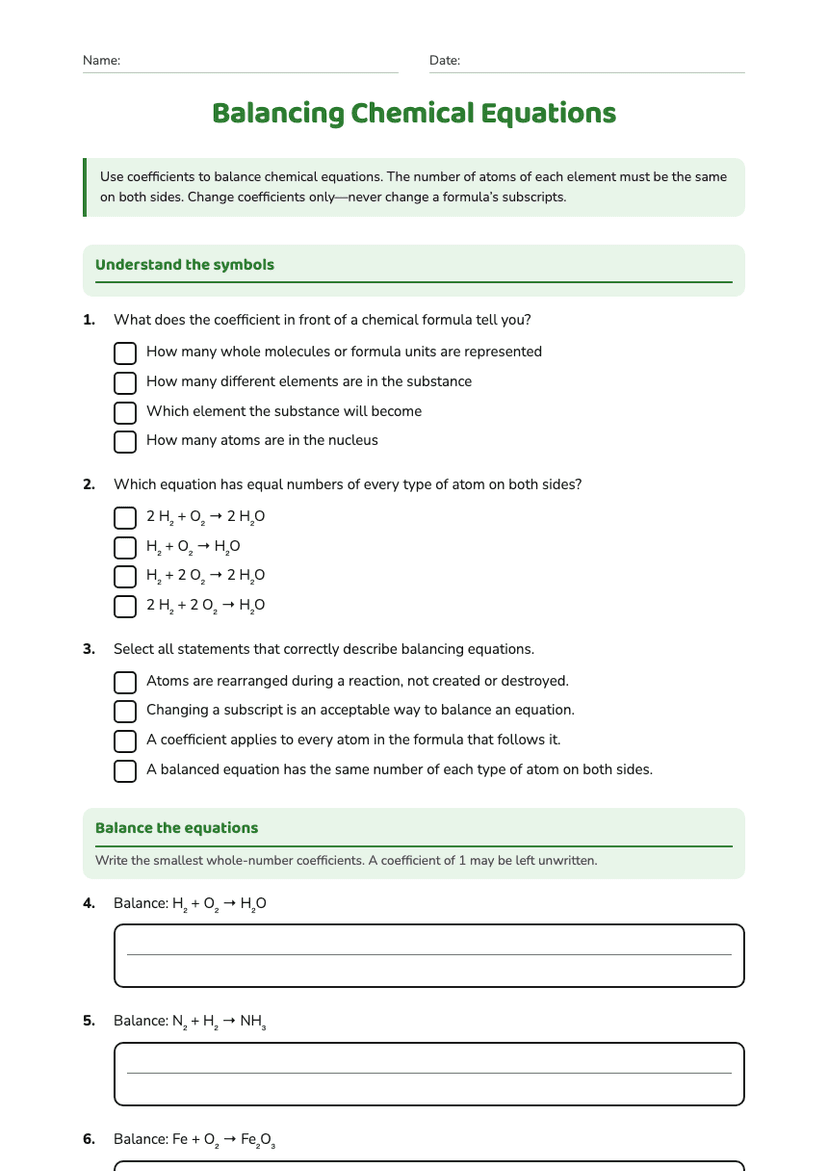
Year 7–8
Balancing Chemical Equations
Free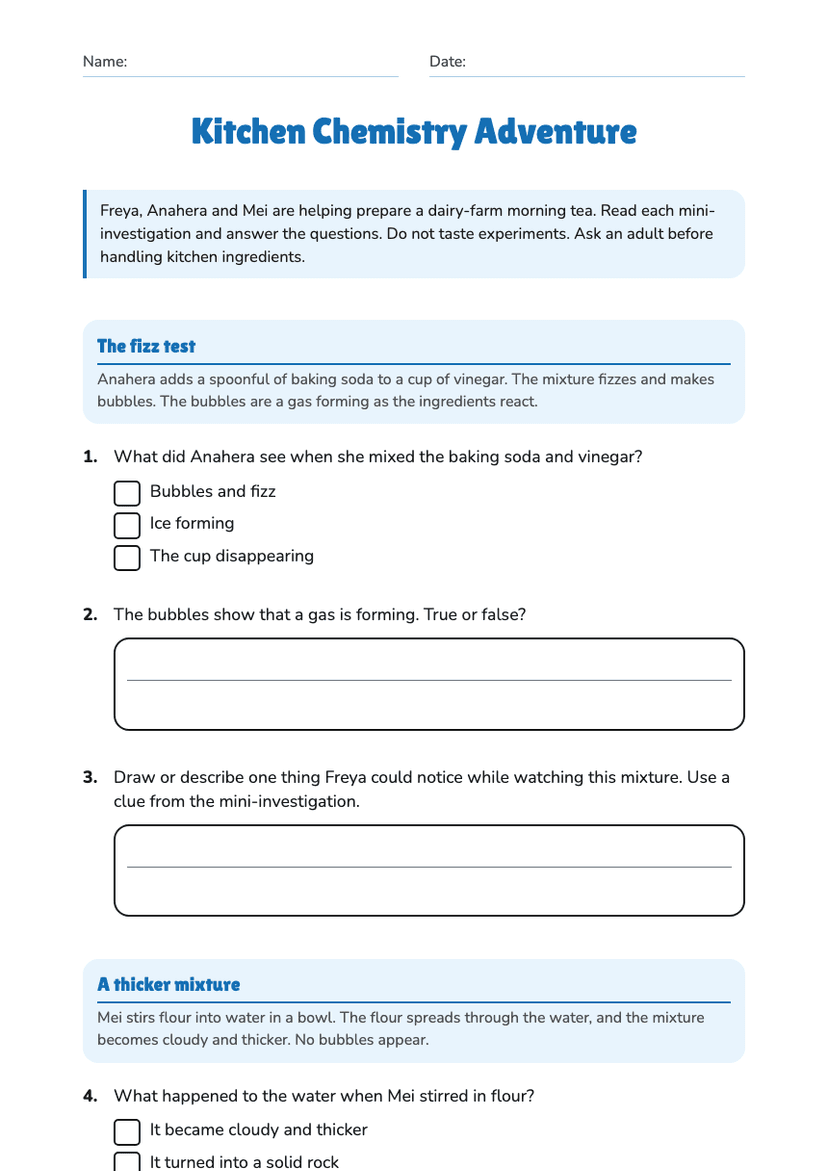
Year 2
Kitchen Chemistry Adventure
Free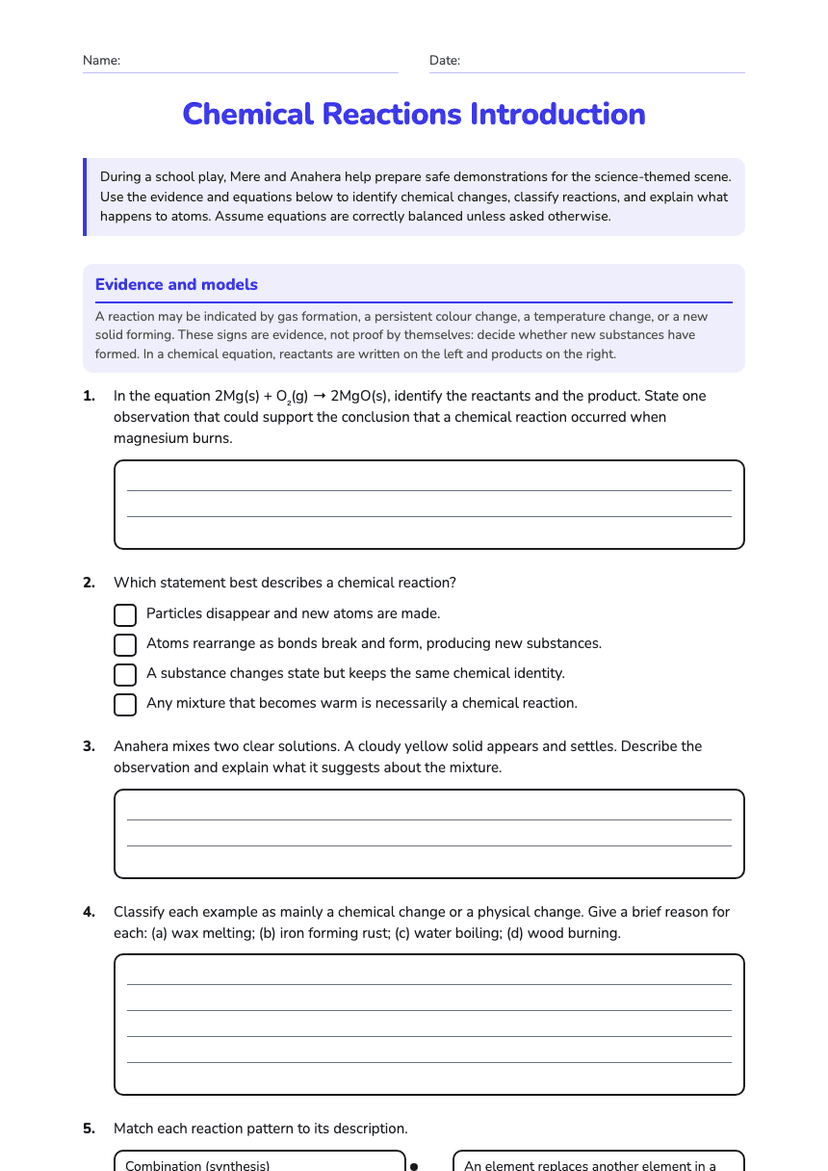
Year 11
Chemical Reactions Introduction
Free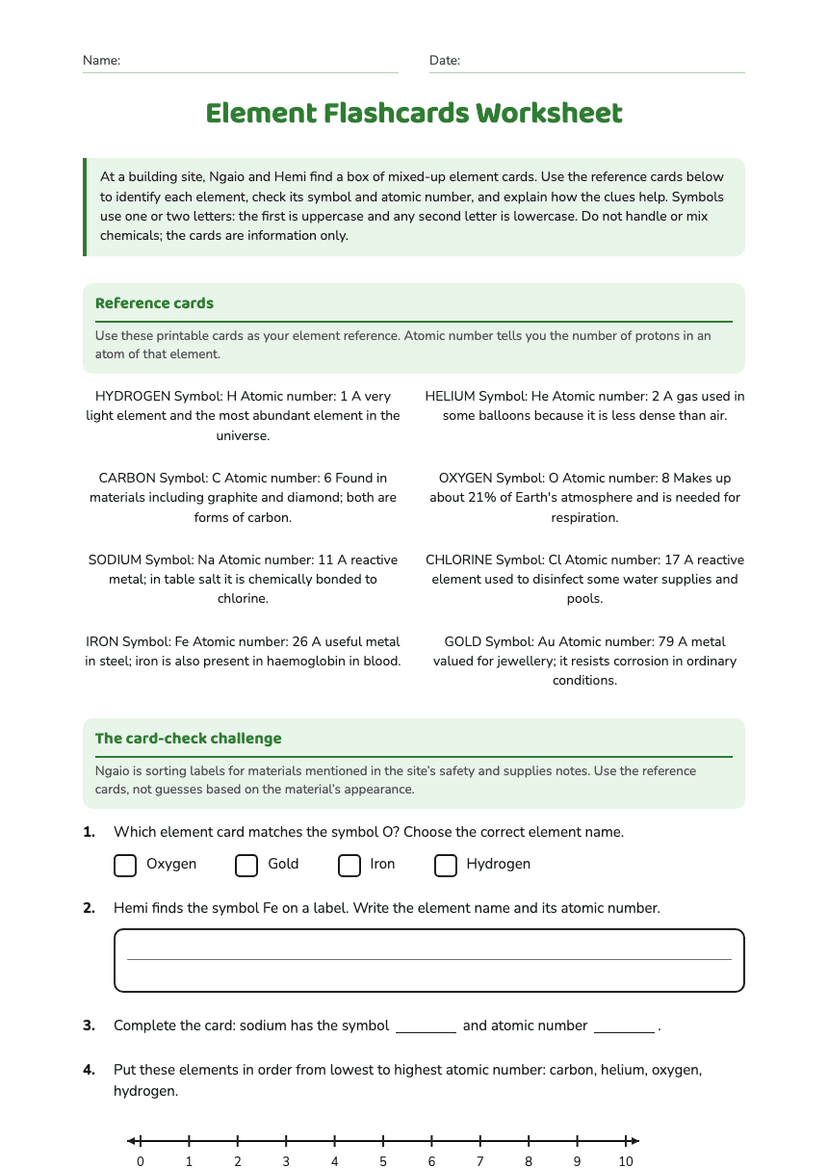
Year 9
Element Flashcards Worksheet
Free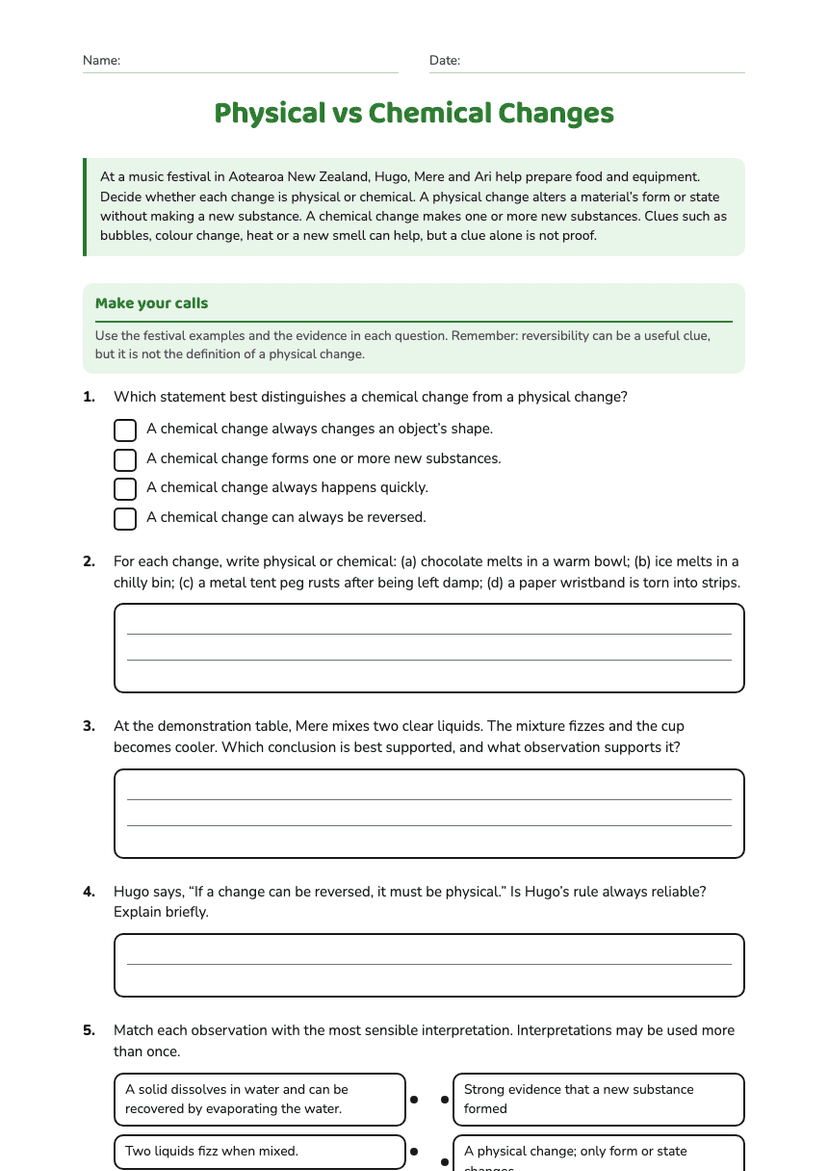
Year 7–8