Film History Quiz
A free social sciences worksheet ready for your classroom. Open in Kuraplan to grab the print-ready PDF, customize it for your students, or generate a fresh version in seconds.
Film History Quiz
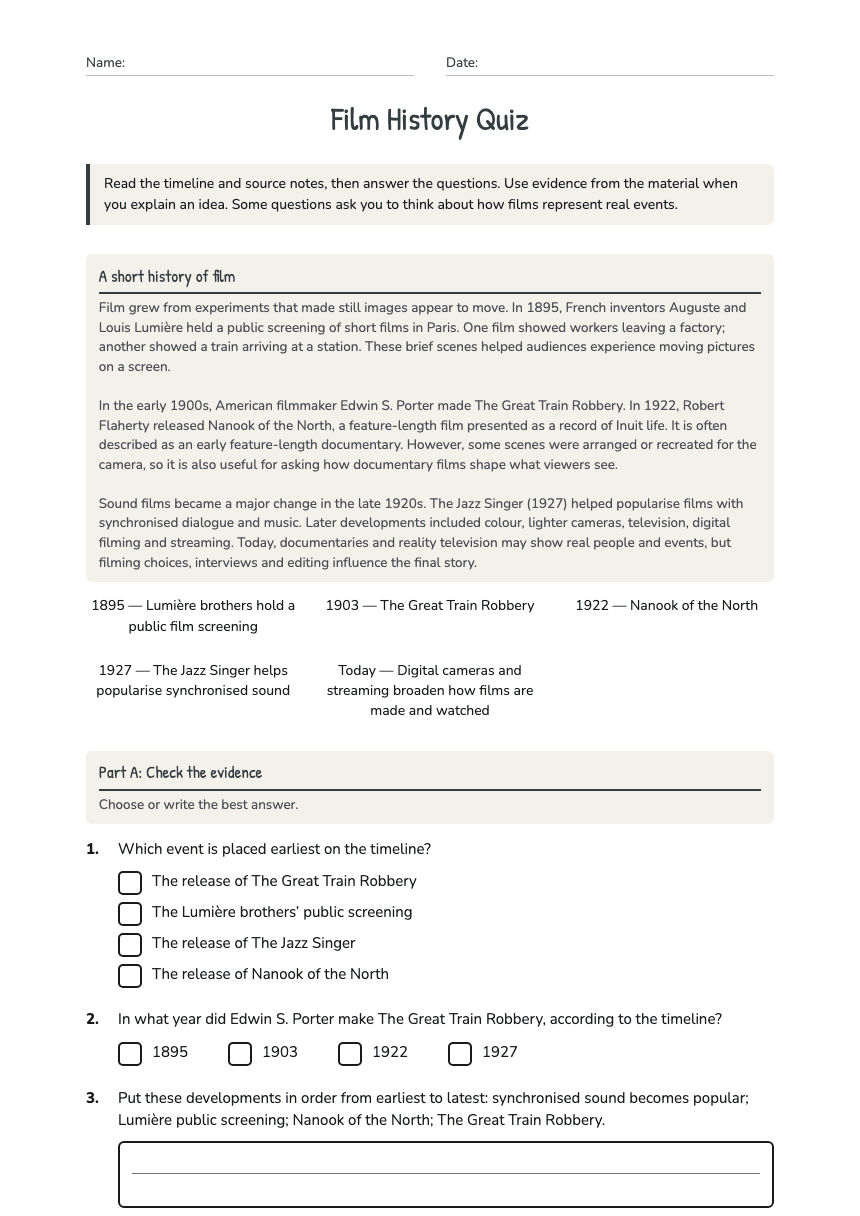
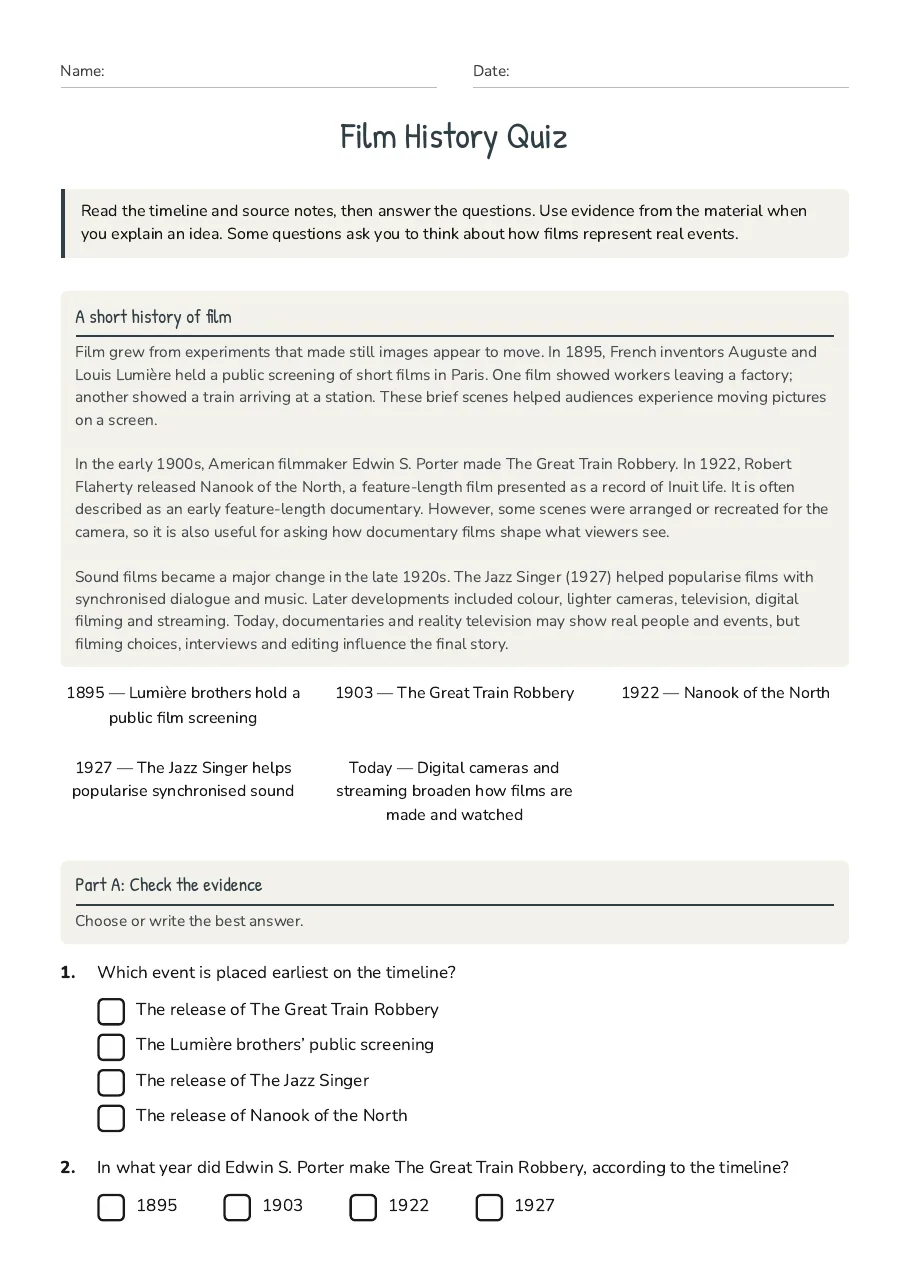
A short history of film
Film grew from experiments that made still images appear to move. In 1895, French inventors Auguste and Louis Lumière held a public screening of short films in Paris. One film showed workers leaving a factory; another showed a train arriving at a station. These brief scenes helped audiences experience moving pictures on a screen. In the early 1900s, American filmmaker Edwin S. Porter made The Great Train Robbery. In 1922, Robert Flaherty released Nanook of the North, a feature-length film presented as a record of Inuit life. It is often described as an early feature-length documentary. However, some scenes were arranged or recreated for the camera, so it is also useful for asking how documentary films shape what viewers see. Sound films became a major change in the late 1920s. The Jazz Singer (1927) helped popularise films with synchronised dialogue and music. Later developments included colour, lighter cameras, television, digital filming and streaming. Today, documentaries and reality television may show real people and events, but filming choices, interviews and editing influence the final story.
1895 — Lumière brothers hold a public film screening
1903 — The Great Train Robbery
1922 — Nanook of the North
1927 — The Jazz Singer helps popularise synchronised sound
Today — Digital cameras and streaming broaden how films are made and watched
Part A: Check the evidence
Choose or write the best answer.
- The release of The Great Train Robbery
- The Lumière brothers’ public screening
- The release of The Jazz Singer
- The release of Nanook of the North
- 1895
- 1903
- 1922
- 1927
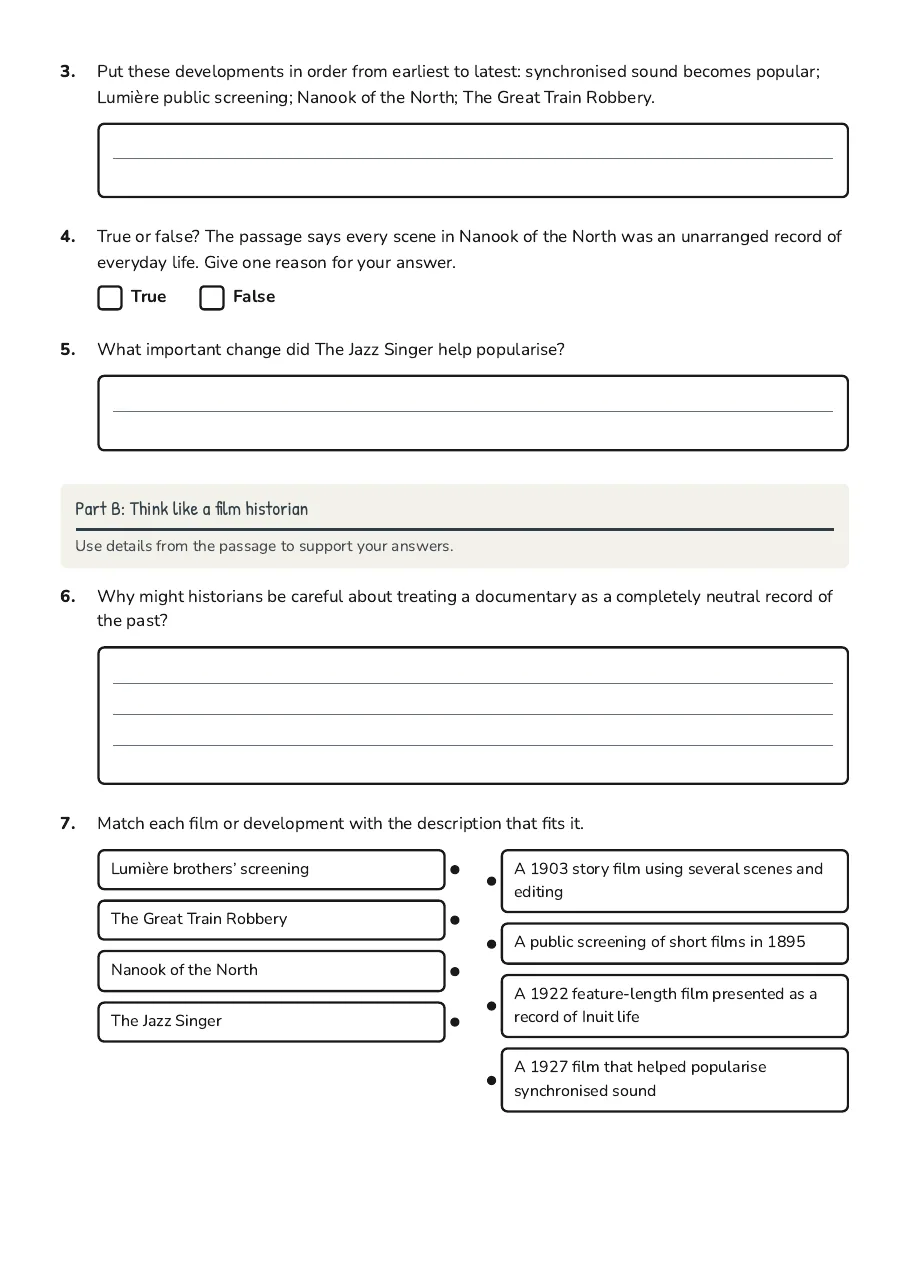
Part B: Think like a film historian
Use details from the passage to support your answers.
- Lumière brothers’ screening
- The Great Train Robbery
- Nanook of the North
- The Jazz Singer
- A 1903 story film using several scenes and editing
- A public screening of short films in 1895
- A 1922 feature-length film presented as a record of Inuit life
- A 1927 film that helped popularise synchronised sound
3 printable pages
Page 1
Page 2
Page 3
About This Worksheet
Free in Kuraplan
Sign up free, grab the PDF, and customize it for your class.
Print-Ready
Formatted for standard paper. Clean layout, easy to read.
AI-Generated
Created with Kuraplan's AI, designed for real classroom use.
For Teachers & Parents
Use in classrooms, for homework, tutoring, or homeschool.
Need a custom version of this worksheet?
Kuraplan's AI generates custom worksheets in seconds — differentiated for every learner, aligned to your curriculum.
Generate Custom Worksheets — FreeMore Social Sciences Worksheets
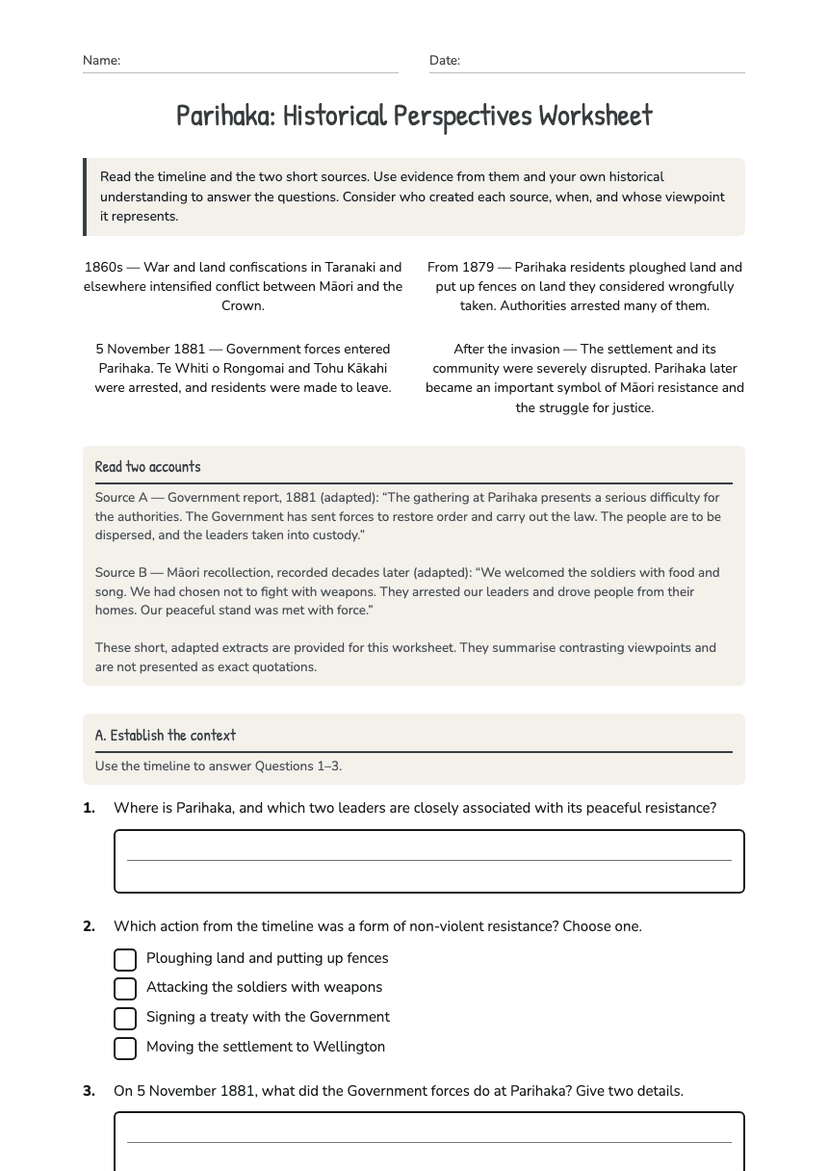
Parihaka: Historical Perspectives Worksheet
Free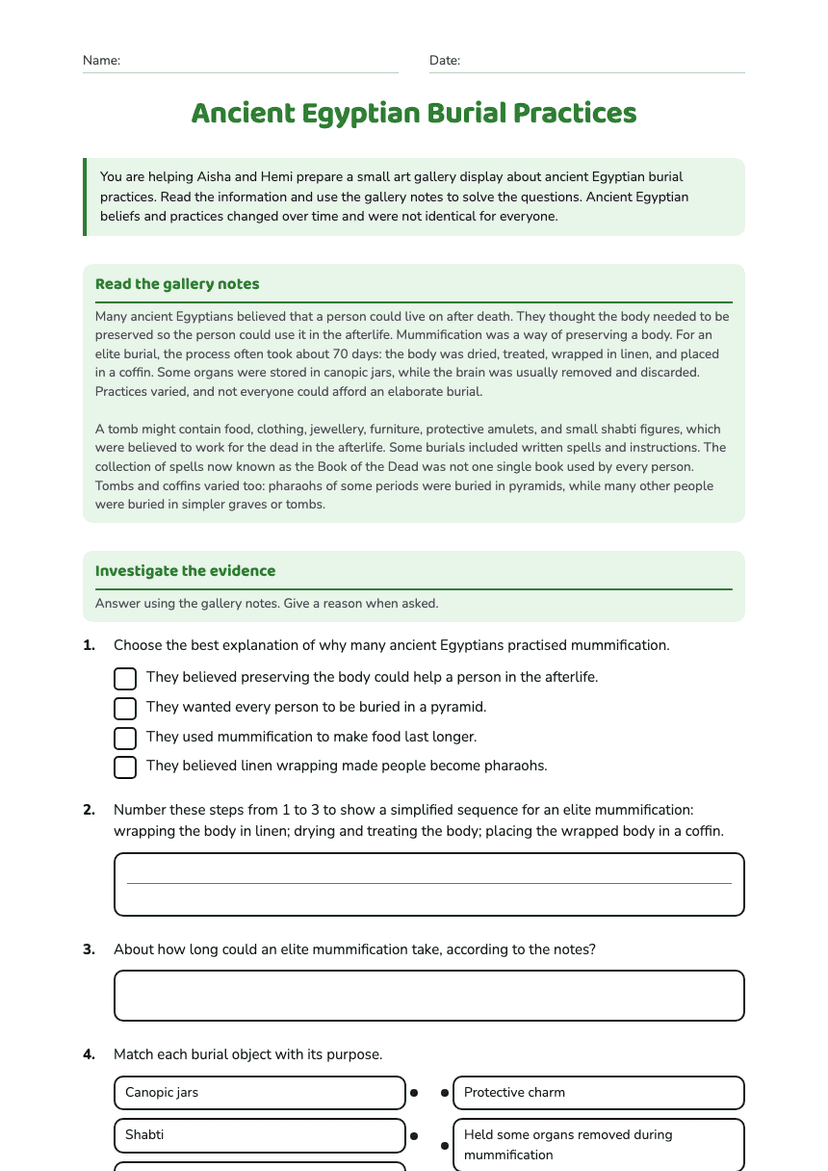
Ancient Egyptian Burial Practices
Free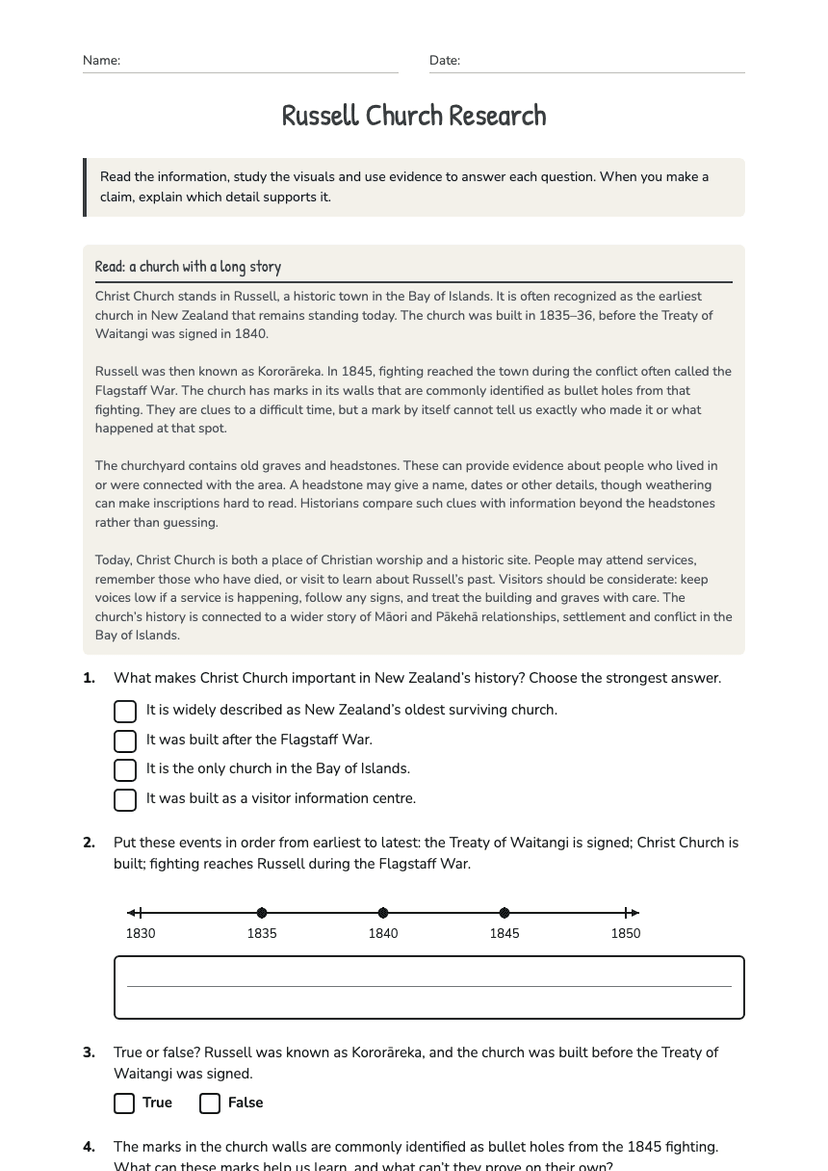
Russell Church Research
Free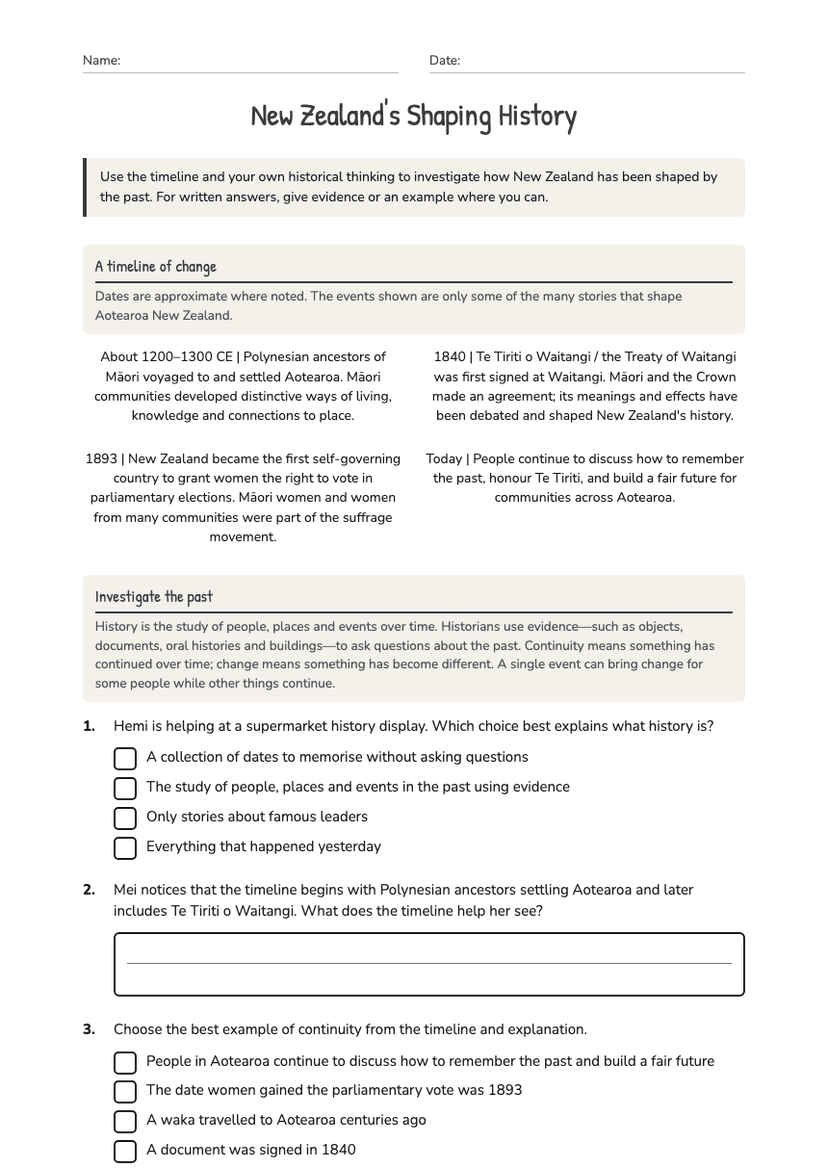
New Zealand's Shaping History
Free
Te Aute Historical Insights
Free
World War II: Causes
Free
Traditional and Modern Voyaging
Free