Forest Ecosystem Exploration
A free science worksheet ready for your classroom. Open in Kuraplan to grab the print-ready PDF, customize it for your students, or generate a fresh version in seconds.
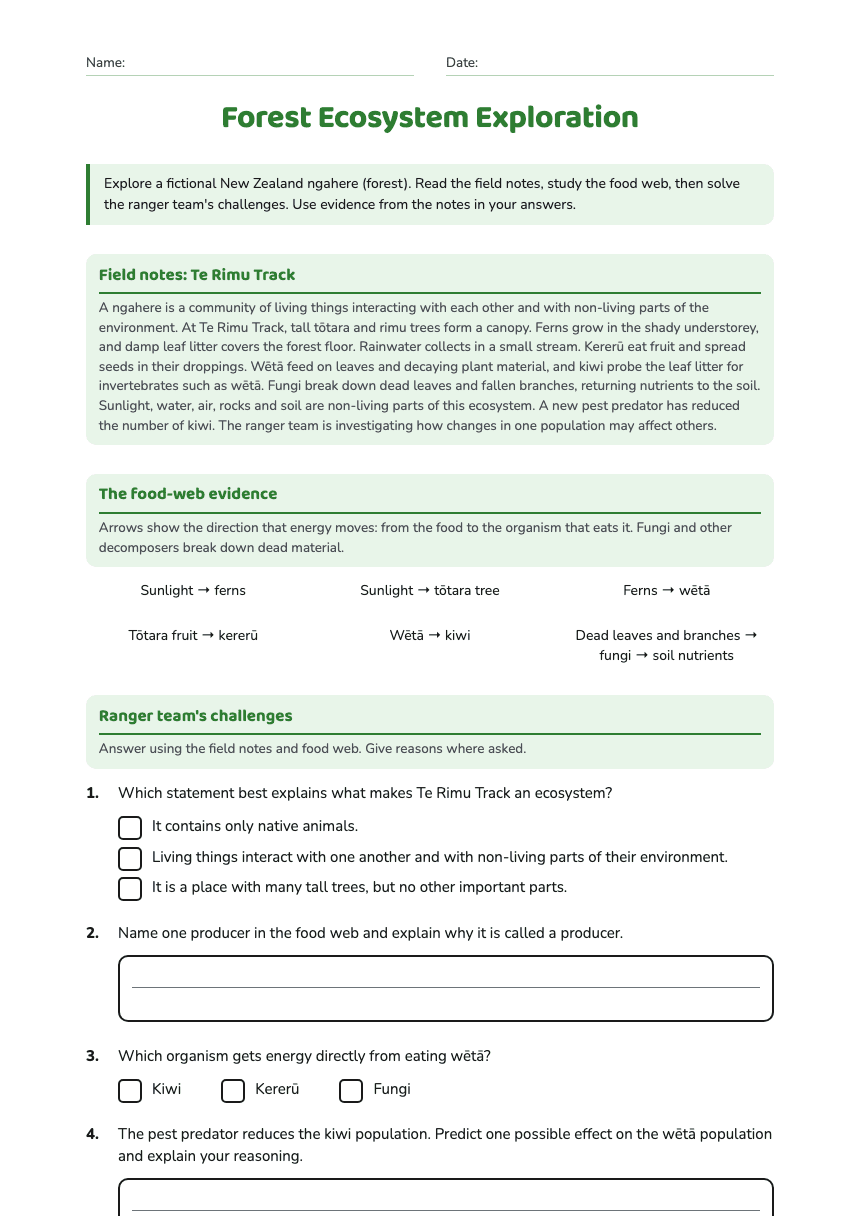
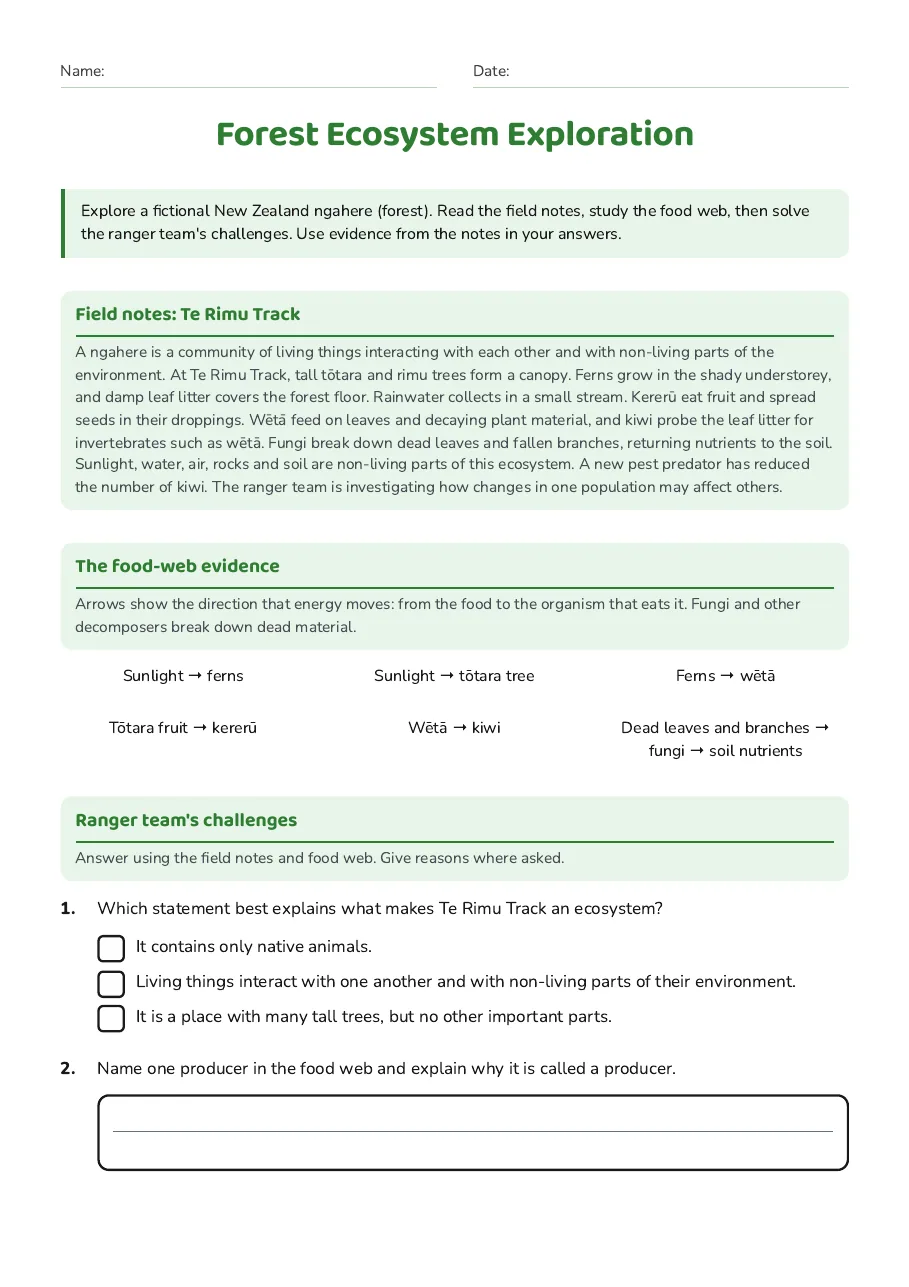
Forest Ecosystem Exploration
Field notes: Te Rimu Track
A ngahere is a community of living things interacting with each other and with non-living parts of the environment. At Te Rimu Track, tall tōtara and rimu trees form a canopy. Ferns grow in the shady understorey, and damp leaf litter covers the forest floor. Rainwater collects in a small stream. Kererū eat fruit and spread seeds in their droppings. Wētā feed on leaves and decaying plant material, and kiwi probe the leaf litter for invertebrates such as wētā. Fungi break down dead leaves and fallen branches, returning nutrients to the soil. Sunlight, water, air, rocks and soil are non-living parts of this ecosystem. A new pest predator has reduced the number of kiwi. The ranger team is investigating how changes in one population may affect others.
The food-web evidence
Arrows show the direction that energy moves: from the food to the organism that eats it. Fungi and other decomposers break down dead material.
Sunlight → ferns
Sunlight → tōtara tree
Ferns → wētā
Tōtara fruit → kererū
Wētā → kiwi
Dead leaves and branches → fungi → soil nutrients
Ranger team's challenges
Answer using the field notes and food web. Give reasons where asked.
- It contains only native animals.
- Living things interact with one another and with non-living parts of their environment.
- It is a place with many tall trees, but no other important parts.
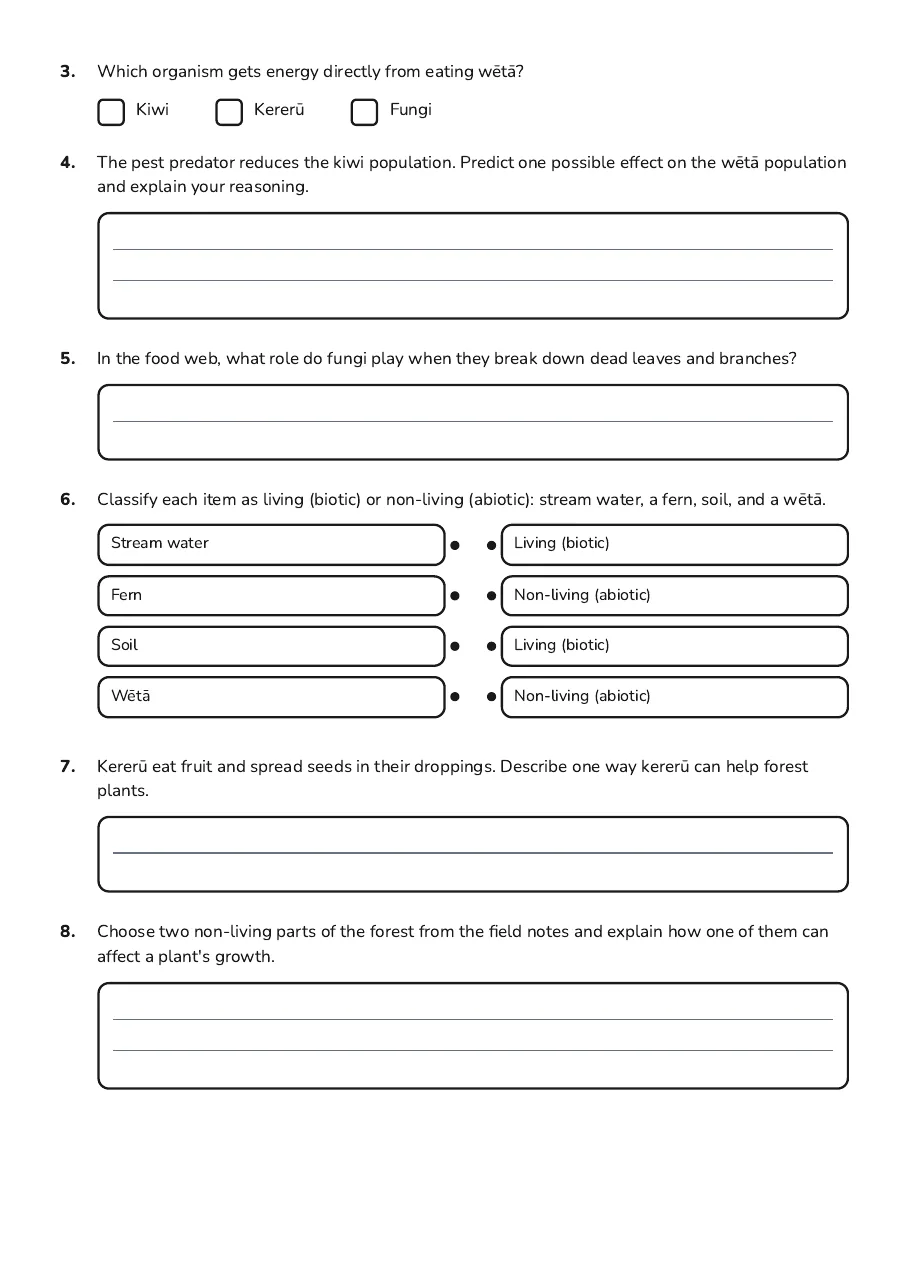
- Kiwi
- Kererū
- Fungi
- Stream water
- Fern
- Soil
- Wētā
- Living (biotic)
- Non-living (abiotic)
- Living (biotic)
- Non-living (abiotic)
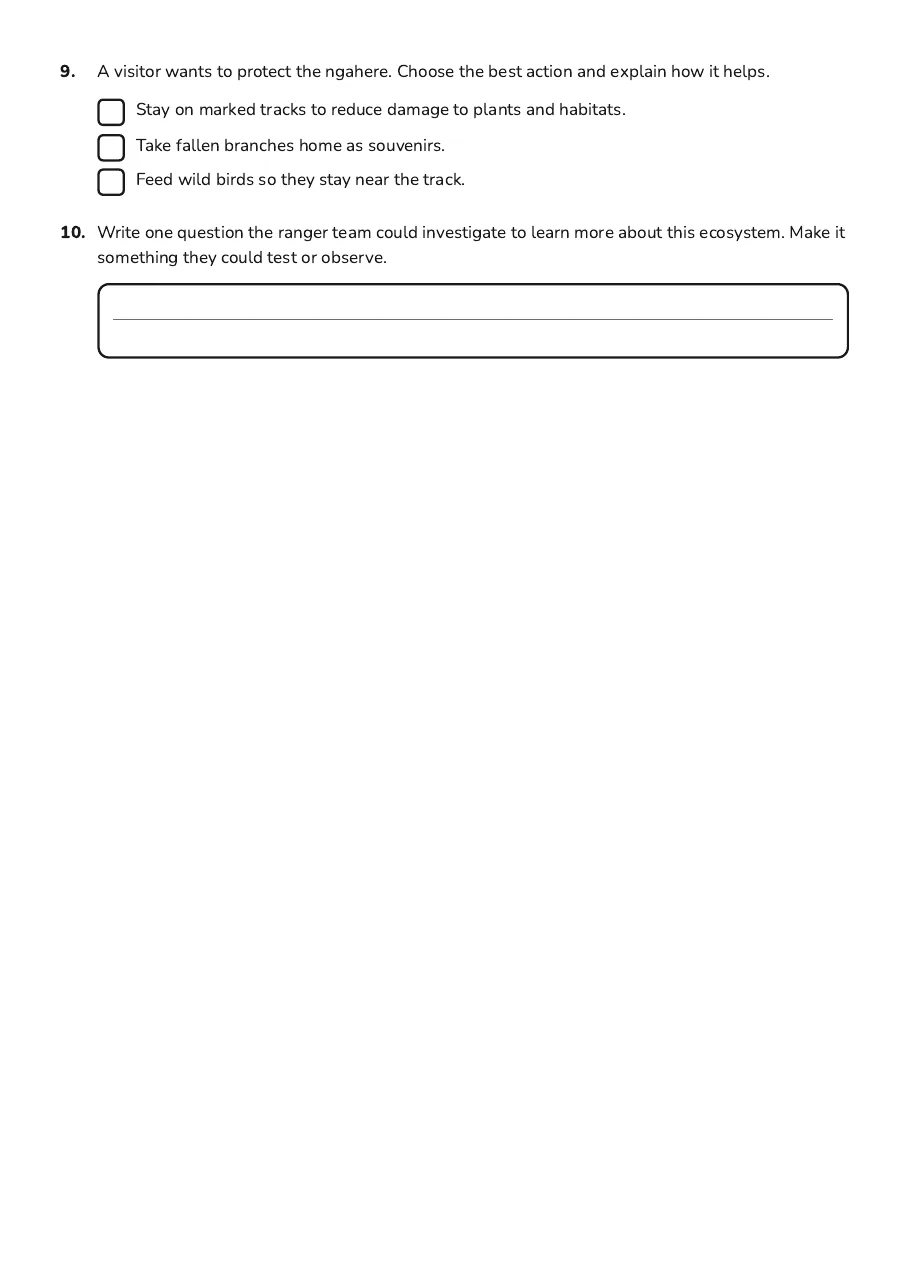
- Stay on marked tracks to reduce damage to plants and habitats.
- Take fallen branches home as souvenirs.
- Feed wild birds so they stay near the track.
3 printable pages
Page 1
Page 2
Page 3
About This Worksheet
Free in Kuraplan
Sign up free, grab the PDF, and customize it for your class.
Print-Ready
Formatted for standard paper. Clean layout, easy to read.
AI-Generated
Created with Kuraplan's AI, designed for real classroom use.
For Teachers & Parents
Use in classrooms, for homework, tutoring, or homeschool.
Need a custom version of this worksheet?
Kuraplan's AI generates custom worksheets in seconds — differentiated for every learner, aligned to your curriculum.
Generate Custom Worksheets — FreeMore Science Worksheets
Kaitiaki Ecosystem Map Worksheet
Free
Climate Shapes Ecosystems
Free
Ecosystem Roles Sorting Activity
Free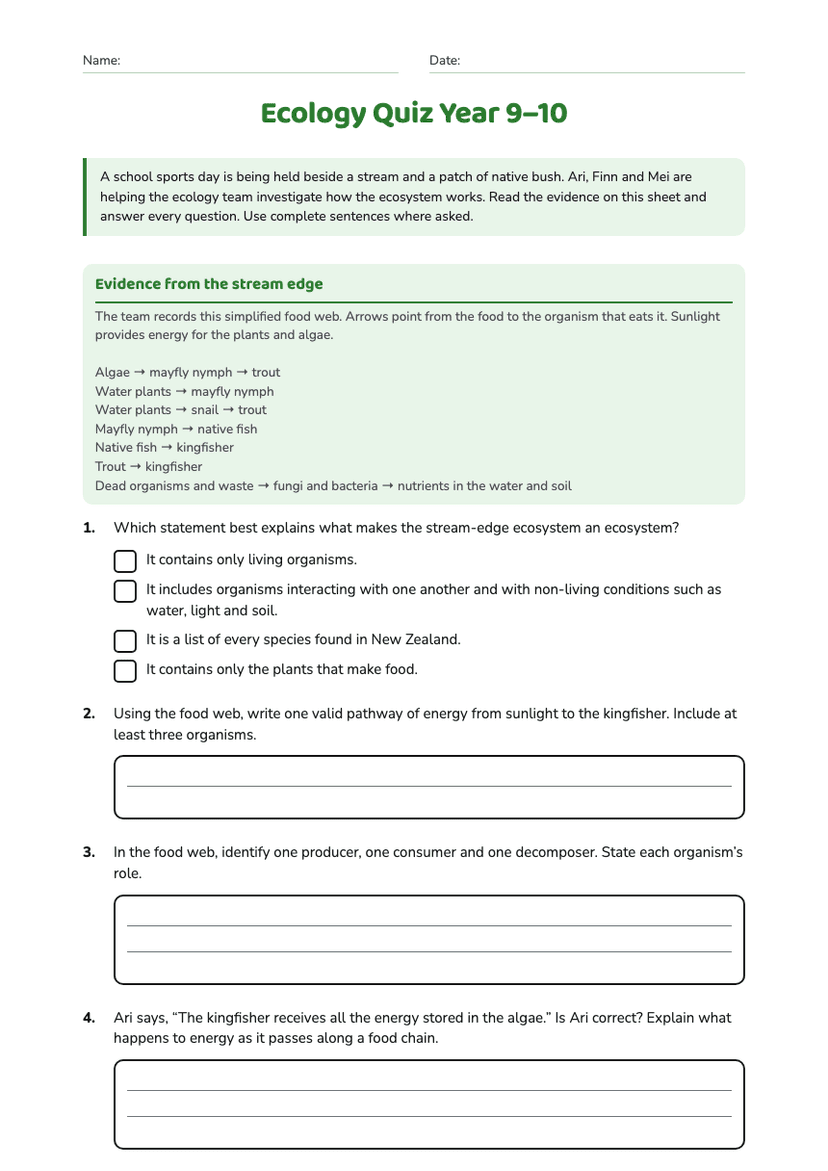
Ecology Quiz Year 9–10
Free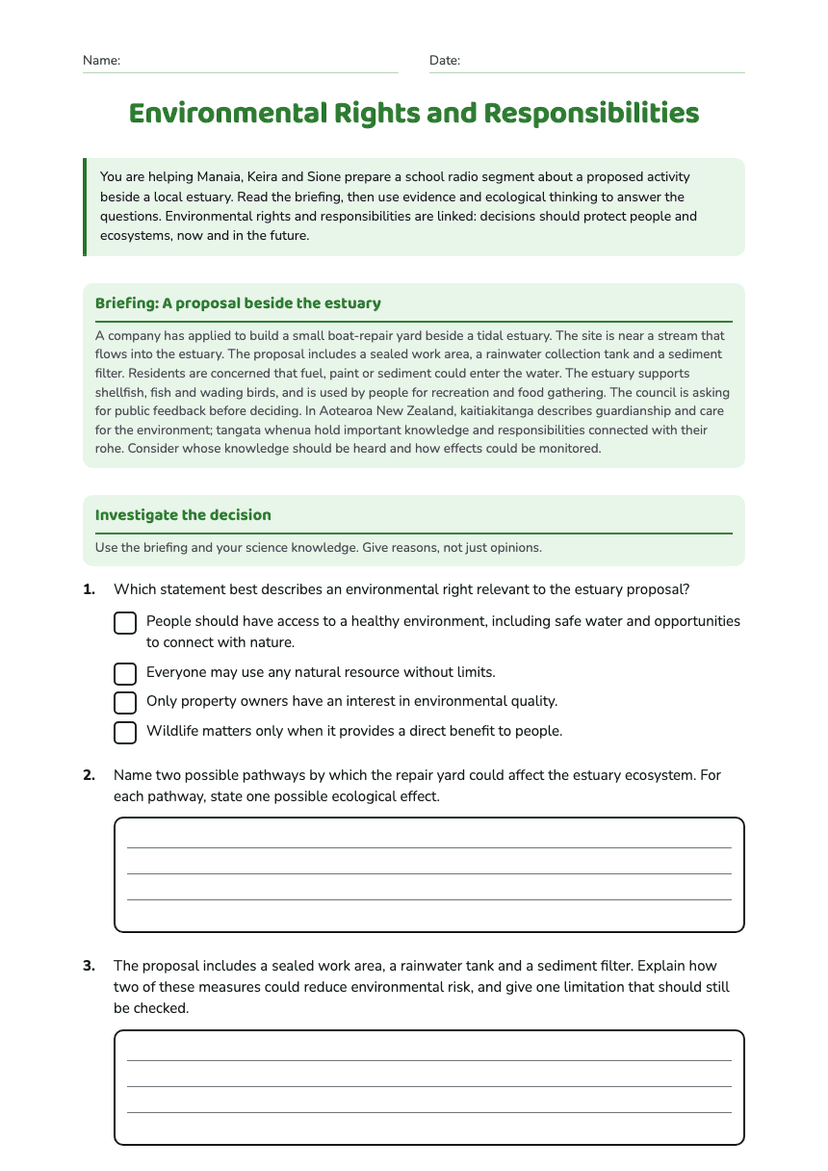
Environmental Rights and Responsibilities
Free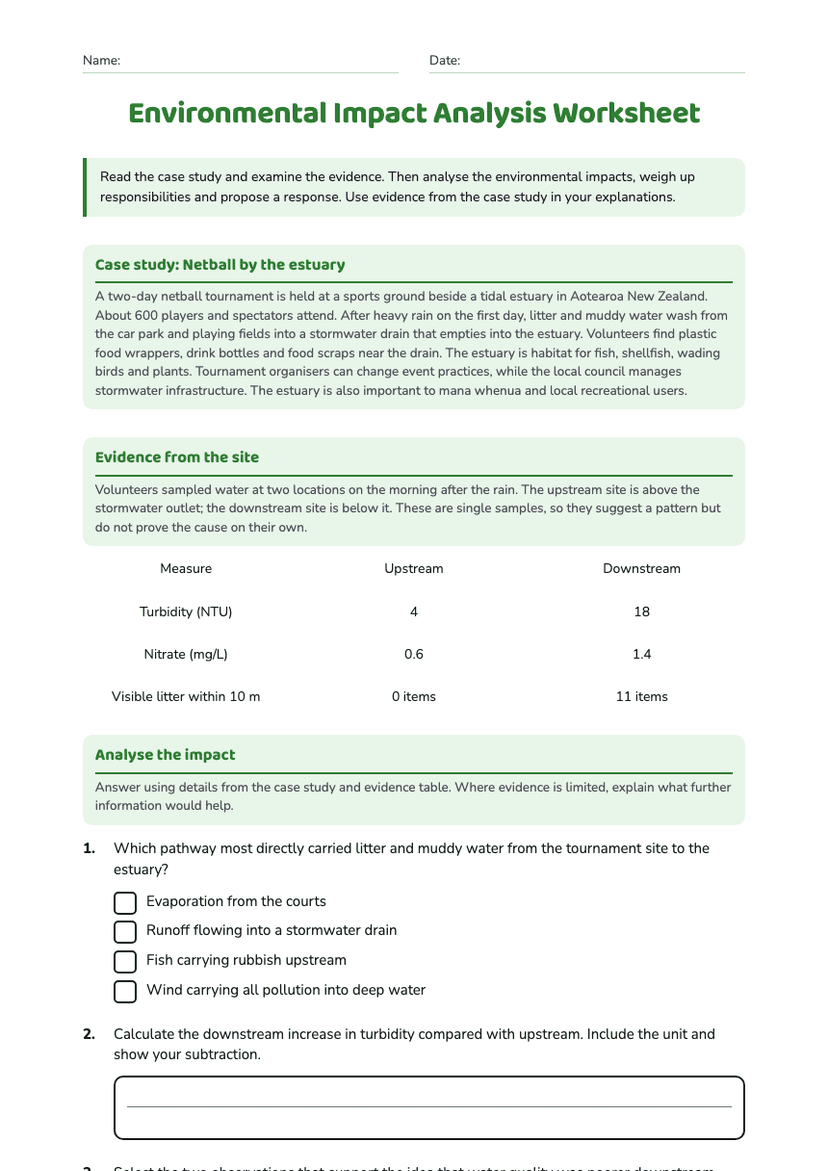
Environmental Impact Analysis Worksheet
Free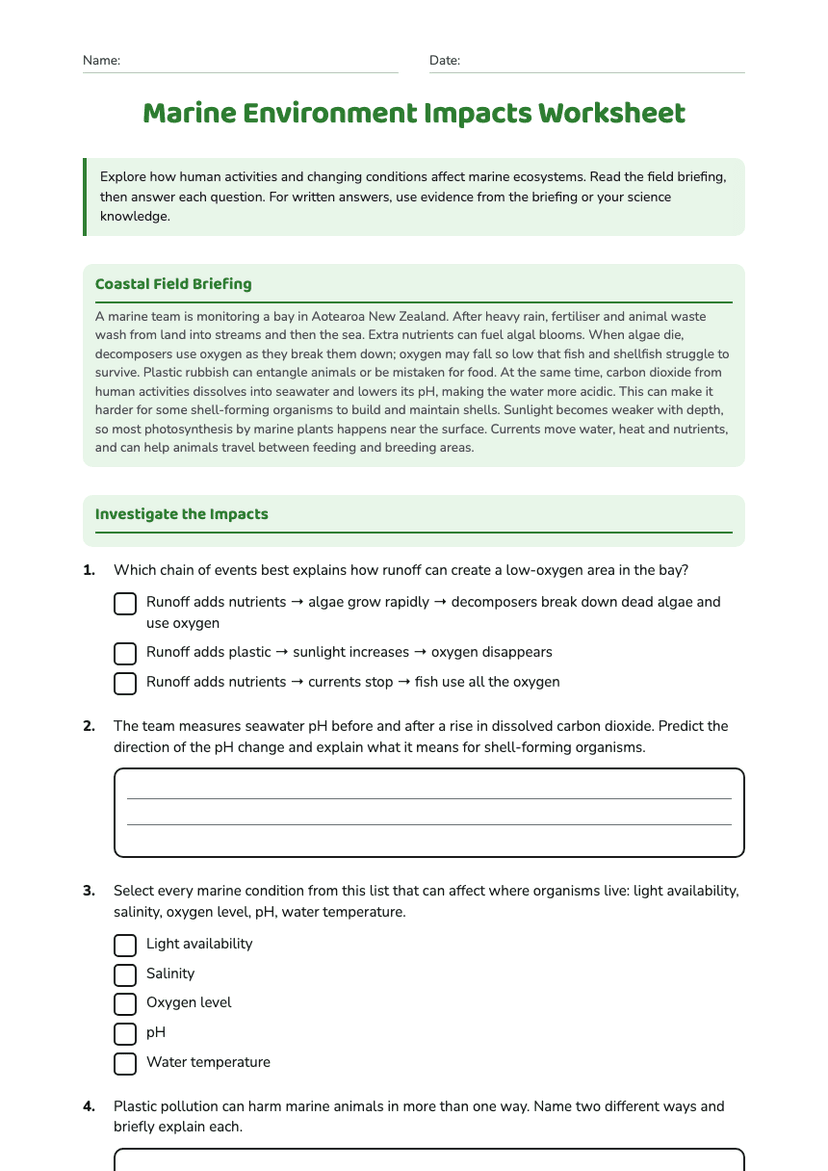
Marine Environment Impacts Worksheet
Free