Garden Bed Restoration Project
A free science worksheet ready for your classroom. Open in Kuraplan to grab the print-ready PDF, customize it for your students, or generate a fresh version in seconds.
Garden Bed Restoration Project
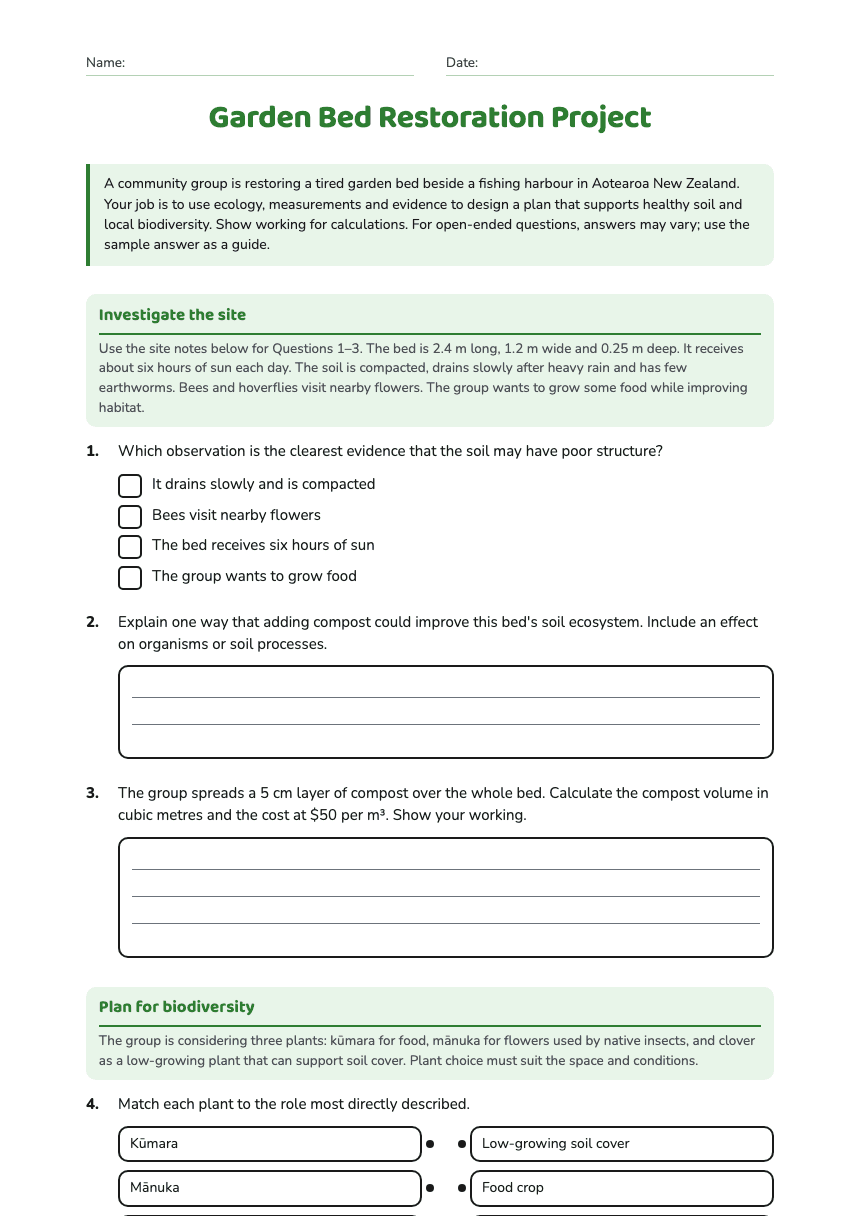
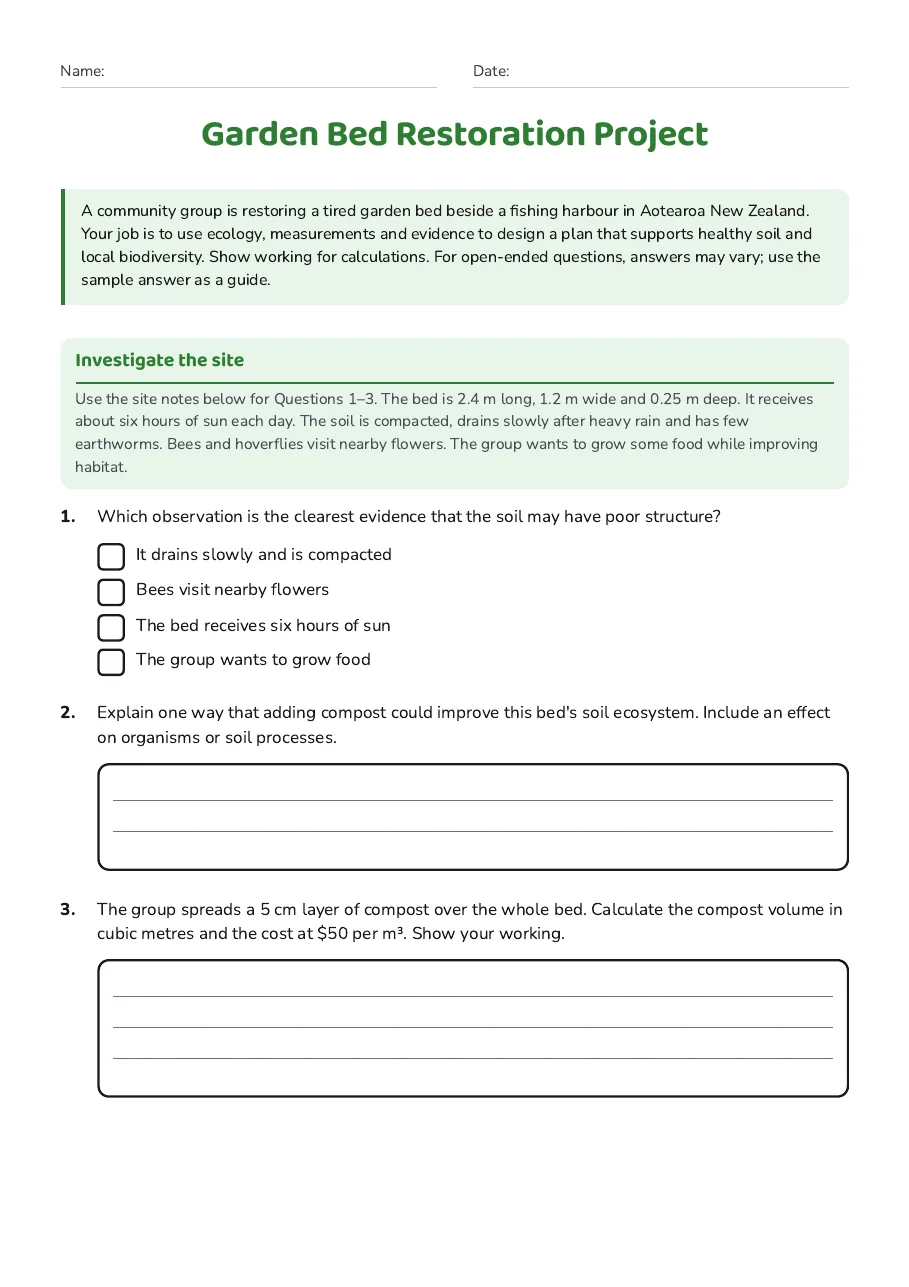
Investigate the site
Use the site notes below for Questions 1–3. The bed is 2.4 m long, 1.2 m wide and 0.25 m deep. It receives about six hours of sun each day. The soil is compacted, drains slowly after heavy rain and has few earthworms. Bees and hoverflies visit nearby flowers. The group wants to grow some food while improving habitat.
- It drains slowly and is compacted
- Bees visit nearby flowers
- The bed receives six hours of sun
- The group wants to grow food
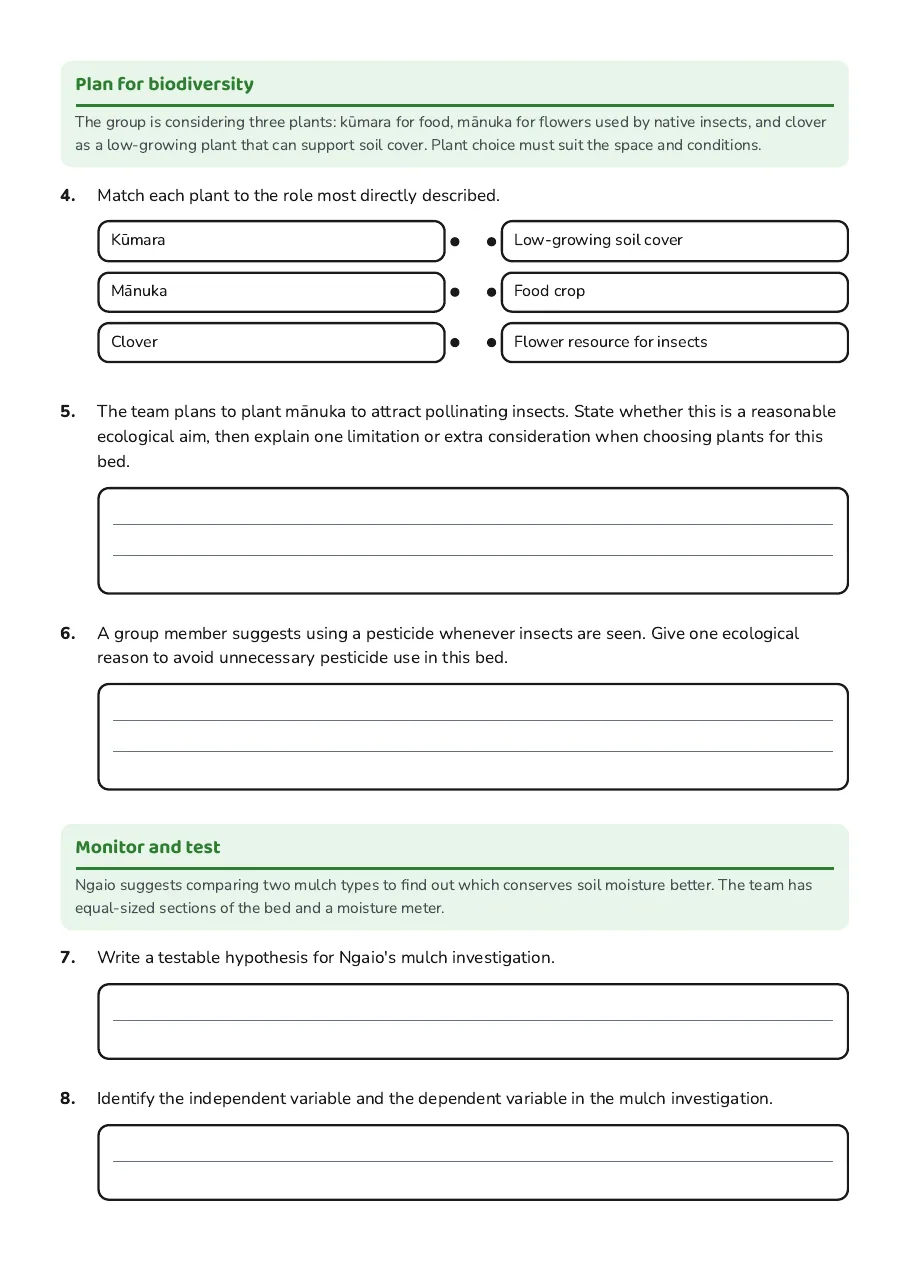
Plan for biodiversity
The group is considering three plants: kūmara for food, mānuka for flowers used by native insects, and clover as a low-growing plant that can support soil cover. Plant choice must suit the space and conditions.
- Kūmara
- Mānuka
- Clover
- Low-growing soil cover
- Food crop
- Flower resource for insects
Monitor and test
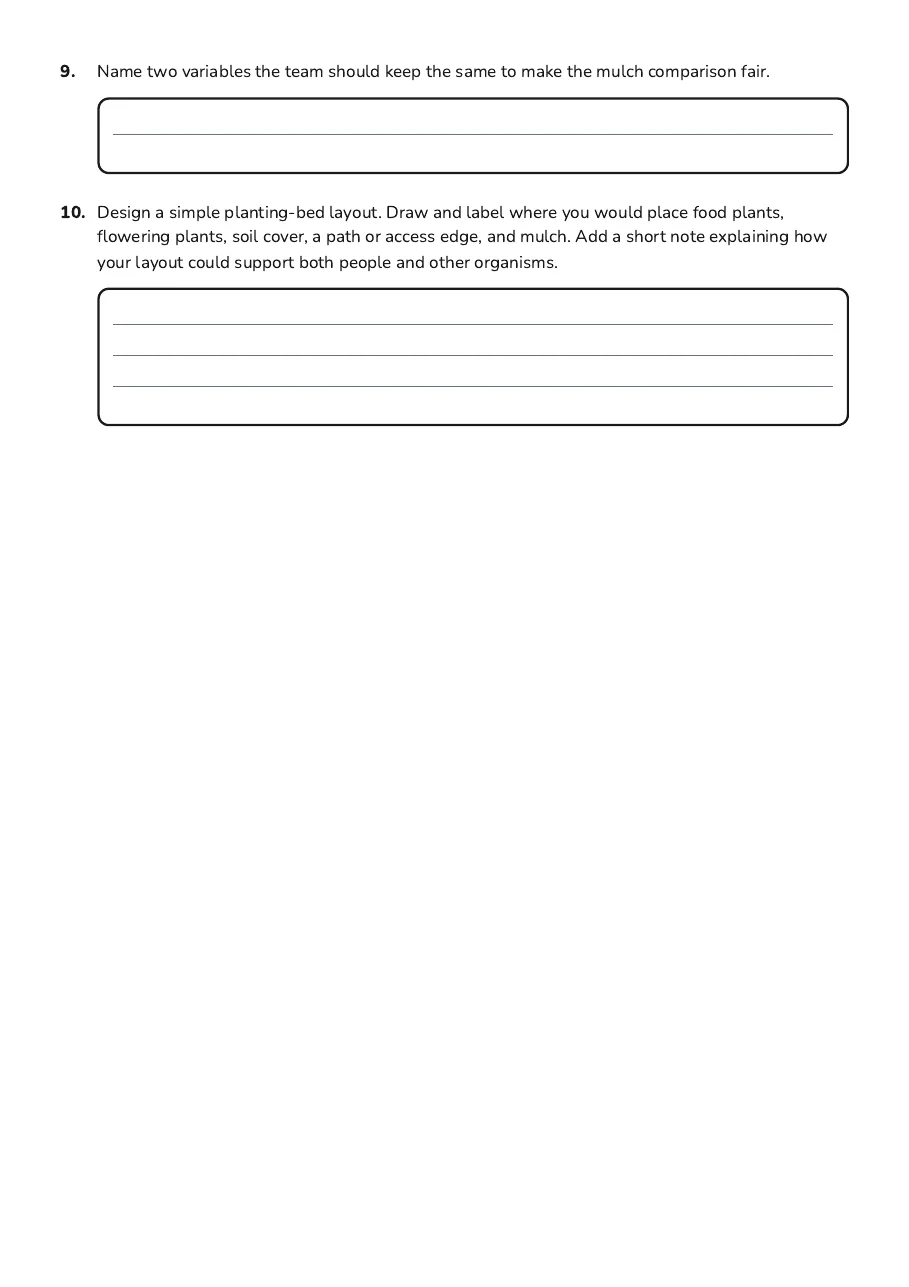
Ngaio suggests comparing two mulch types to find out which conserves soil moisture better. The team has equal-sized sections of the bed and a moisture meter.
3 printable pages
Page 1
Page 2
Page 3
About This Worksheet
Free in Kuraplan
Sign up free, grab the PDF, and customize it for your class.
Print-Ready
Formatted for standard paper. Clean layout, easy to read.
AI-Generated
Created with Kuraplan's AI, designed for real classroom use.
For Teachers & Parents
Use in classrooms, for homework, tutoring, or homeschool.
Need a custom version of this worksheet?
Kuraplan's AI generates custom worksheets in seconds — differentiated for every learner, aligned to your curriculum.
Generate Custom Worksheets — FreeMore Science Worksheets
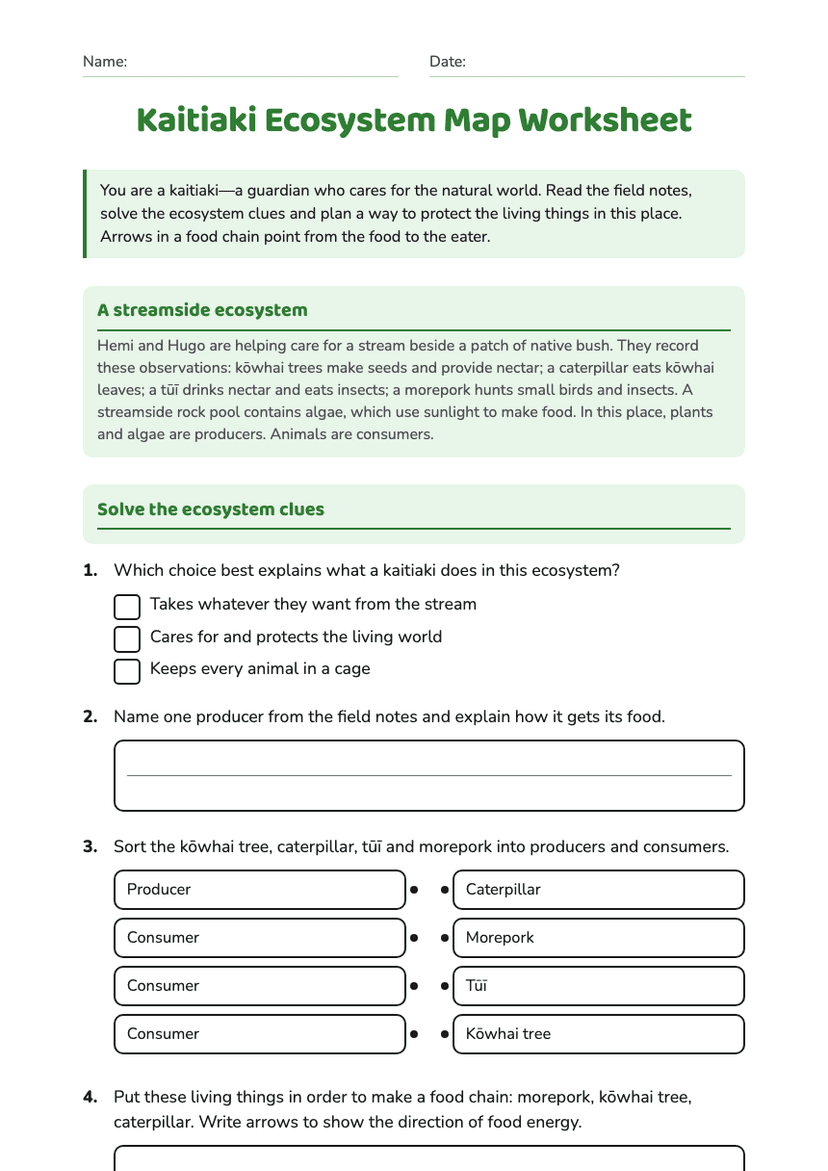
Kaitiaki Ecosystem Map Worksheet
Free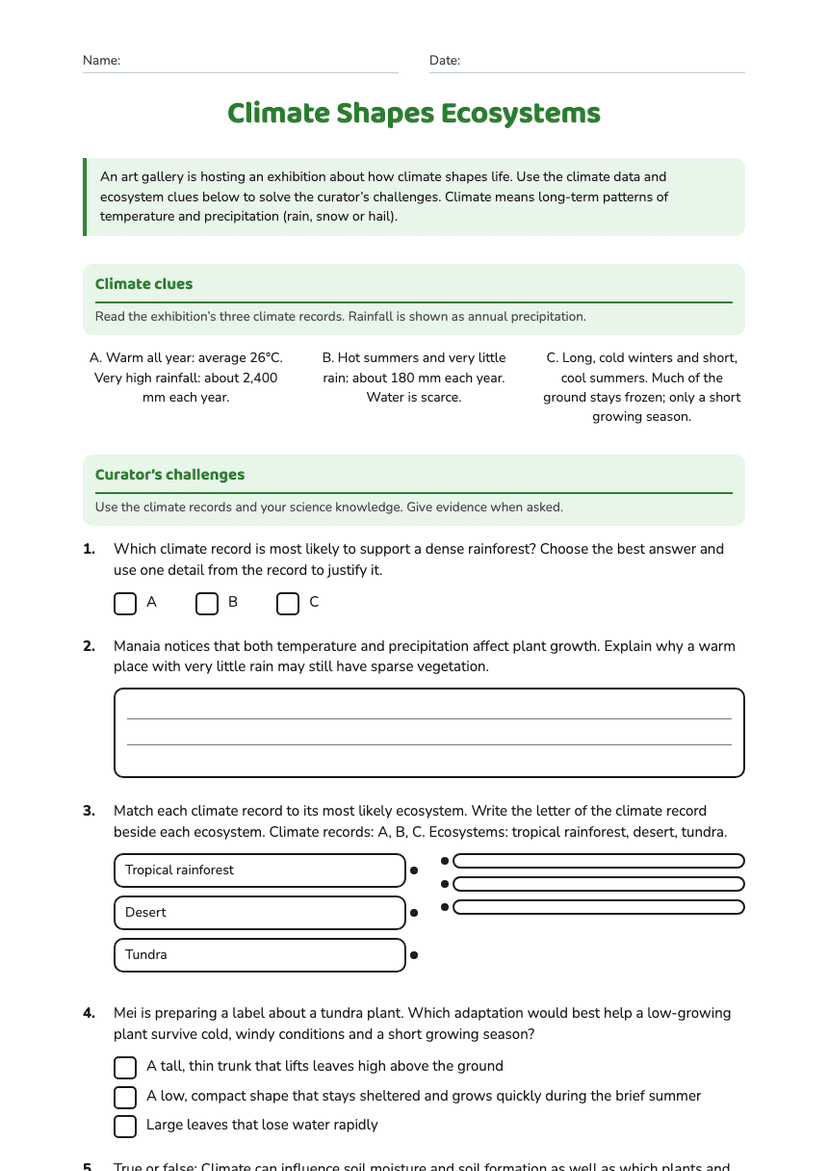
Climate Shapes Ecosystems
Free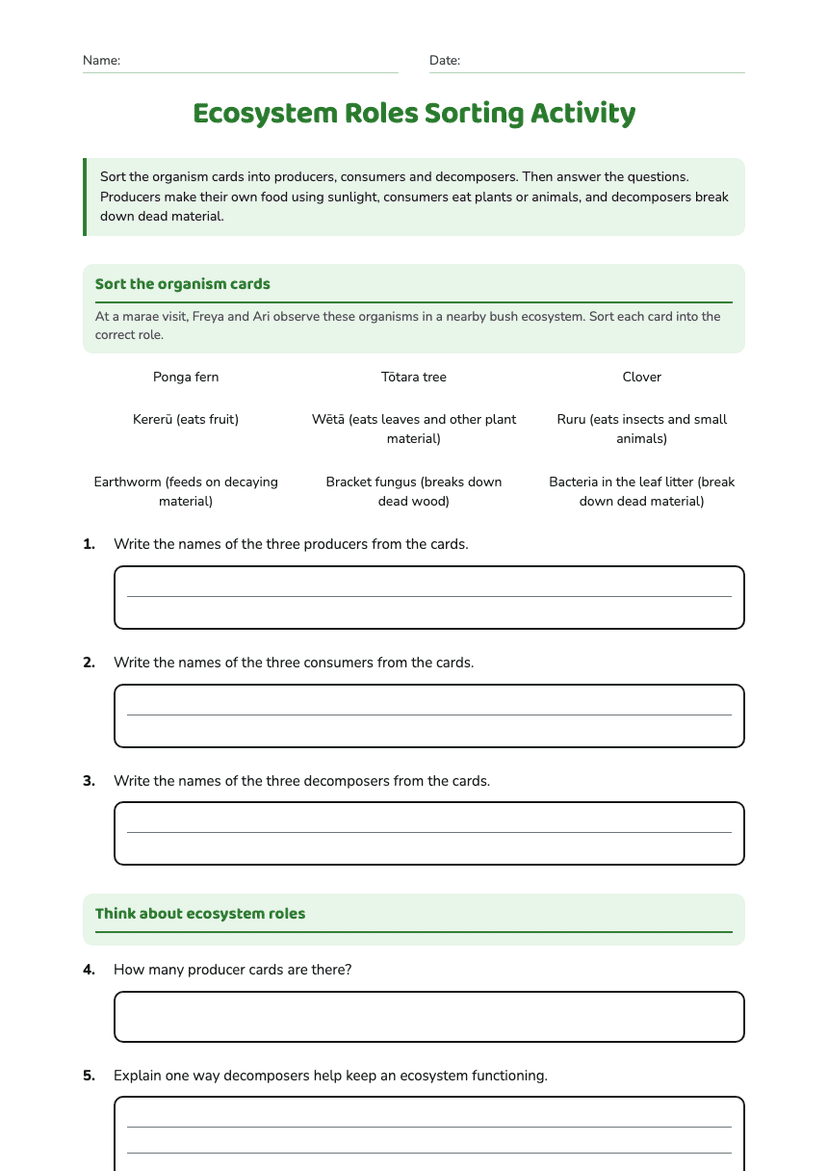
Ecosystem Roles Sorting Activity
Free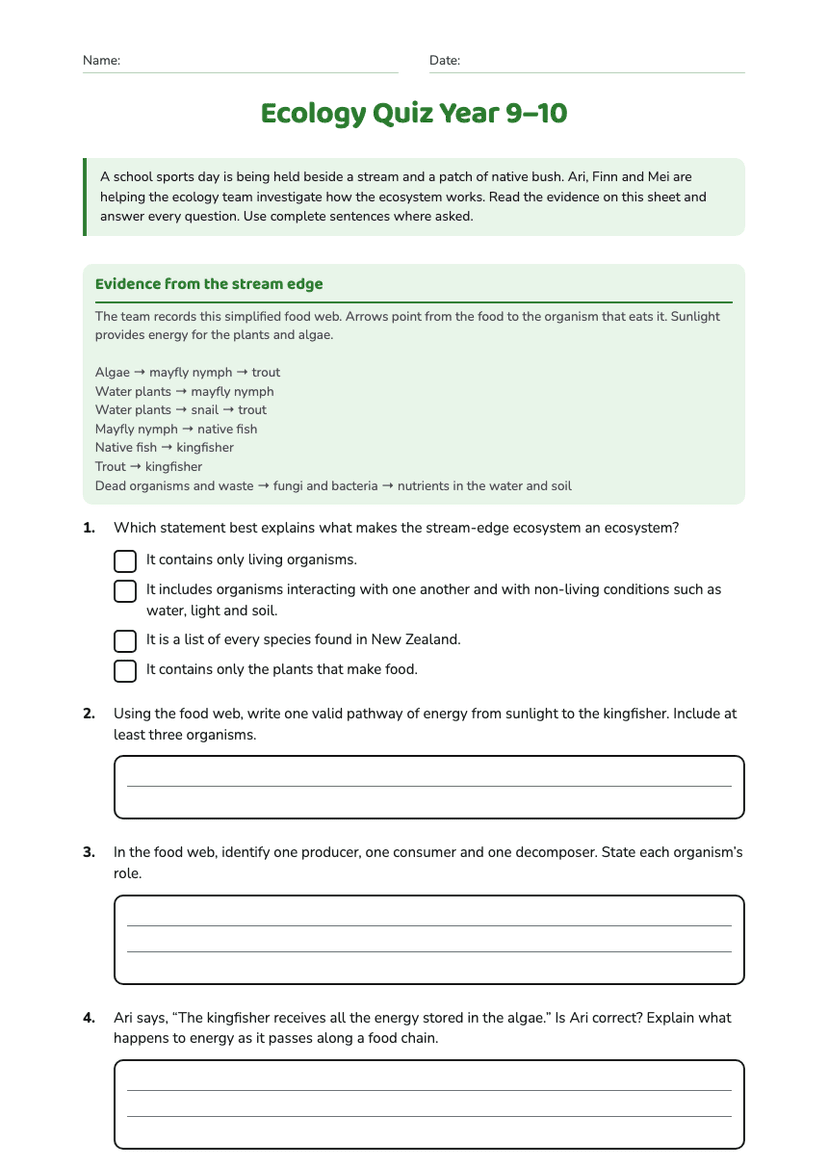
Ecology Quiz Year 9–10
Free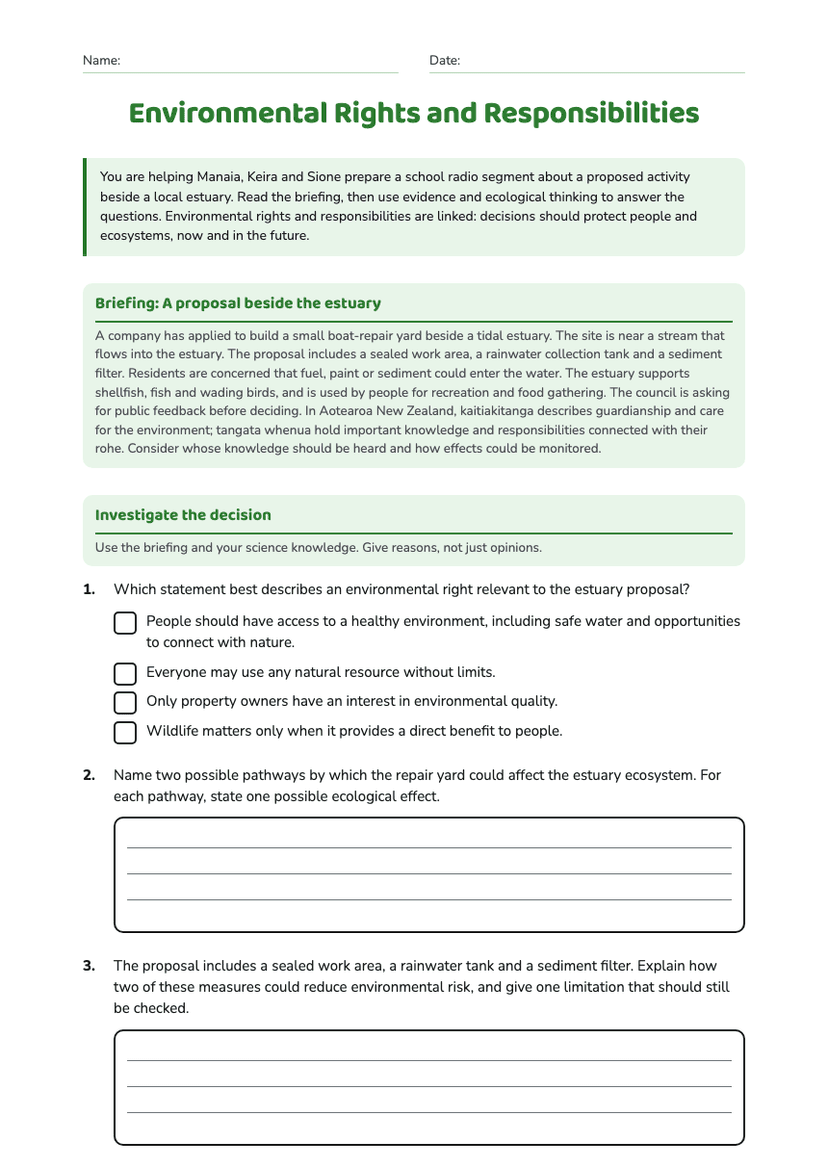
Environmental Rights and Responsibilities
Free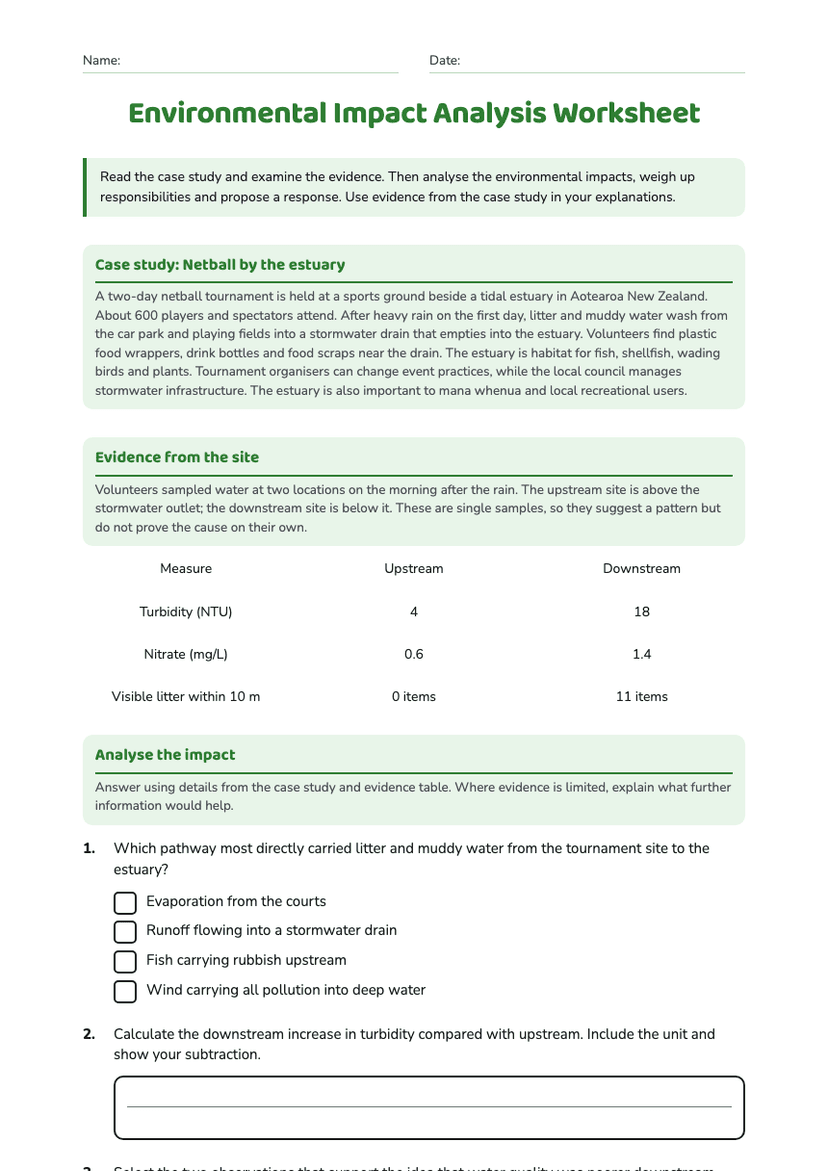
Environmental Impact Analysis Worksheet
Free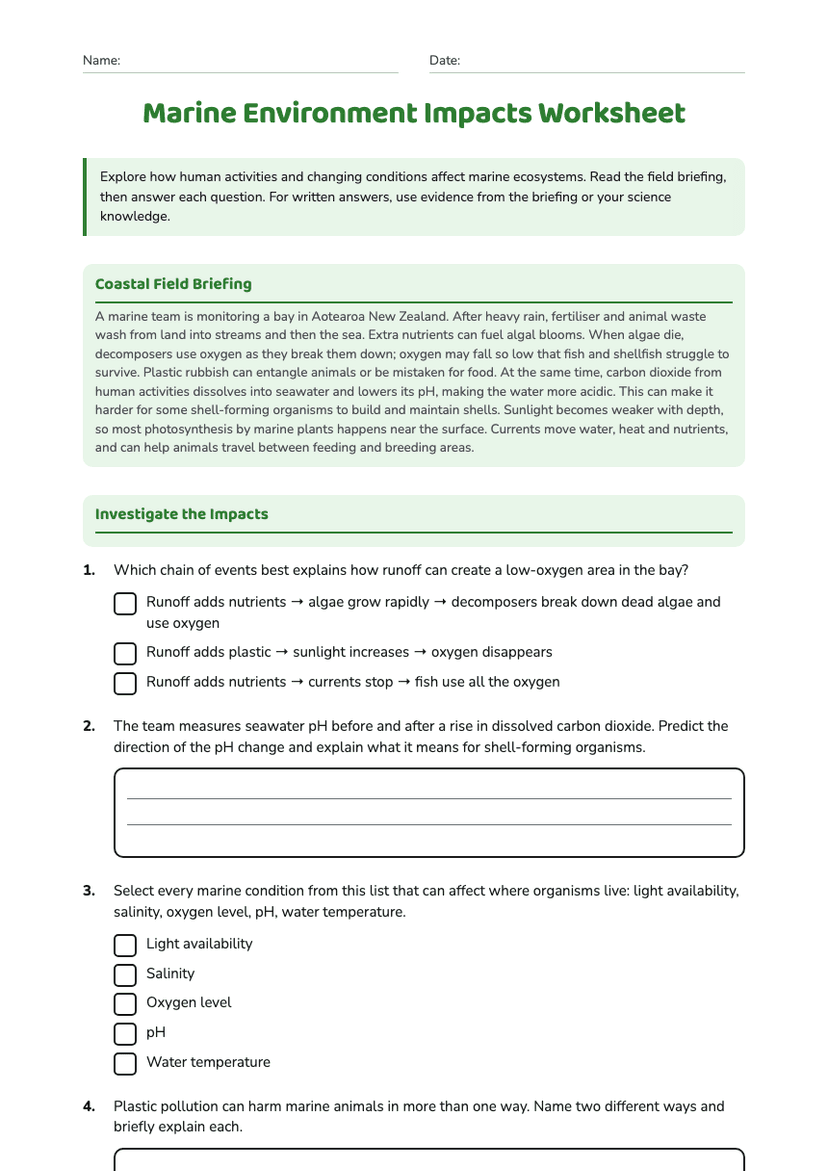
Marine Environment Impacts Worksheet
Free