Government Environmental Policies
A free social sciences worksheet ready for your classroom. Open in Kuraplan to grab the print-ready PDF, customize it for your students, or generate a fresh version in seconds.
Government Environmental Policies
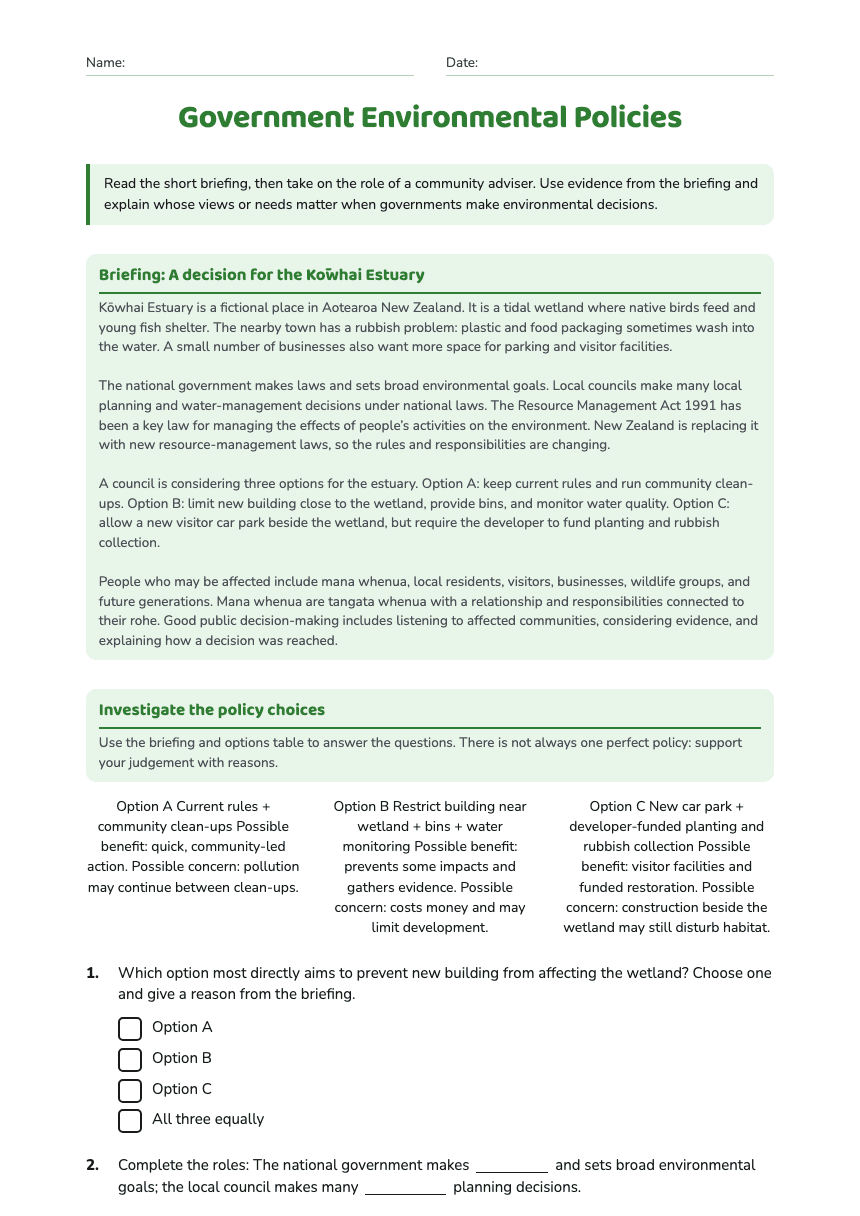
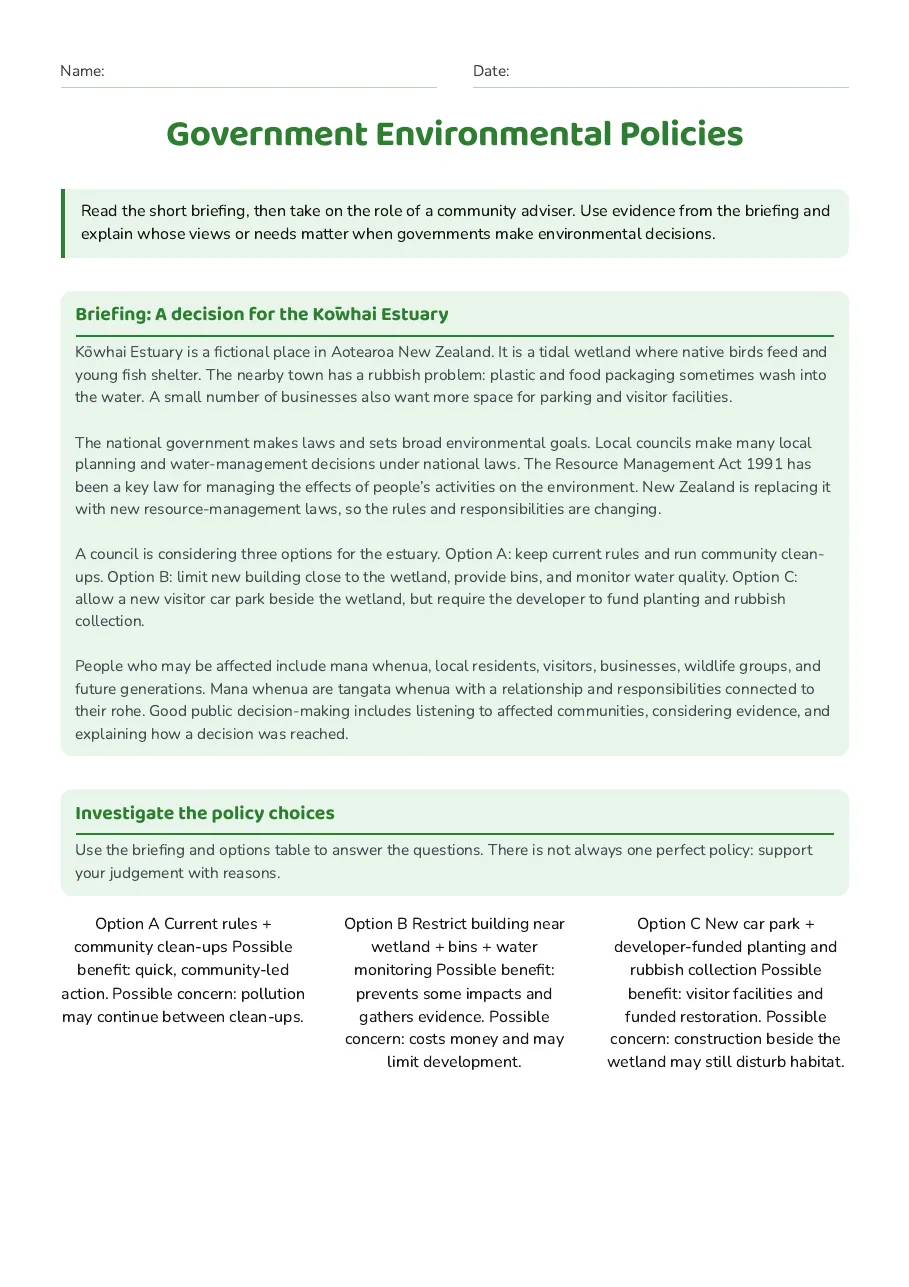
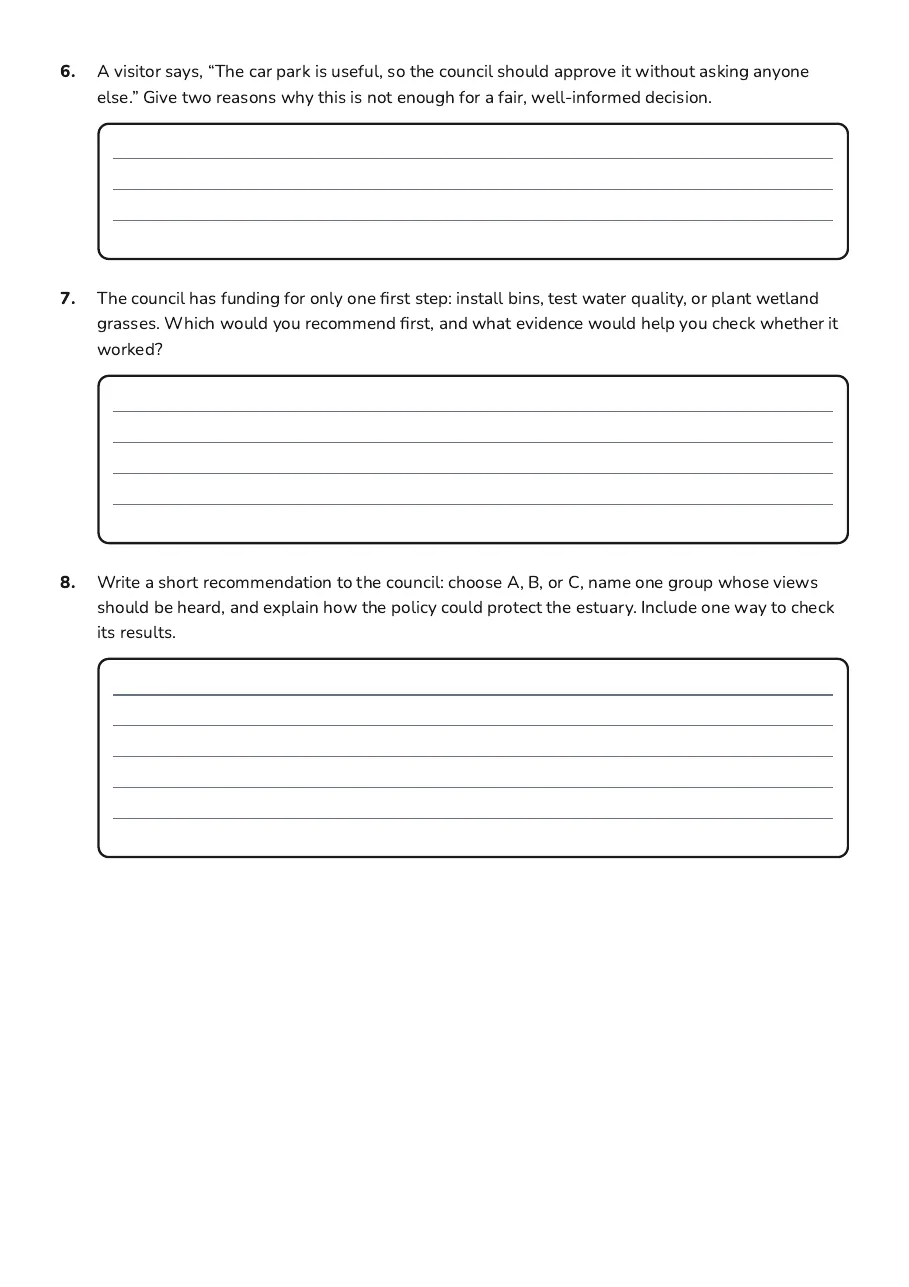
Briefing: A decision for the Kōwhai Estuary
Kōwhai Estuary is a fictional place in Aotearoa New Zealand. It is a tidal wetland where native birds feed and young fish shelter. The nearby town has a rubbish problem: plastic and food packaging sometimes wash into the water. A small number of businesses also want more space for parking and visitor facilities. The national government makes laws and sets broad environmental goals. Local councils make many local planning and water-management decisions under national laws. The Resource Management Act 1991 has been a key law for managing the effects of people’s activities on the environment. New Zealand is replacing it with new resource-management laws, so the rules and responsibilities are changing. A council is considering three options for the estuary. Option A: keep current rules and run community clean-ups. Option B: limit new building close to the wetland, provide bins, and monitor water quality. Option C: allow a new visitor car park beside the wetland, but require the developer to fund planting and rubbish collection. People who may be affected include mana whenua, local residents, visitors, businesses, wildlife groups, and future generations. Mana whenua are tangata whenua with a relationship and responsibilities connected to their rohe. Good public decision-making includes listening to affected communities, considering evidence, and explaining how a decision was reached.
Investigate the policy choices
Use the briefing and options table to answer the questions. There is not always one perfect policy: support your judgement with reasons.
Option A Current rules + community clean-ups Possible benefit: quick, community-led action. Possible concern: pollution may continue between clean-ups.
Option B Restrict building near wetland + bins + water monitoring Possible benefit: prevents some impacts and gathers evidence. Possible concern: costs money and may limit development.
Option C New car park + developer-funded planting and rubbish collection Possible benefit: visitor facilities and funded restoration. Possible concern: construction beside the wetland may still disturb habitat.
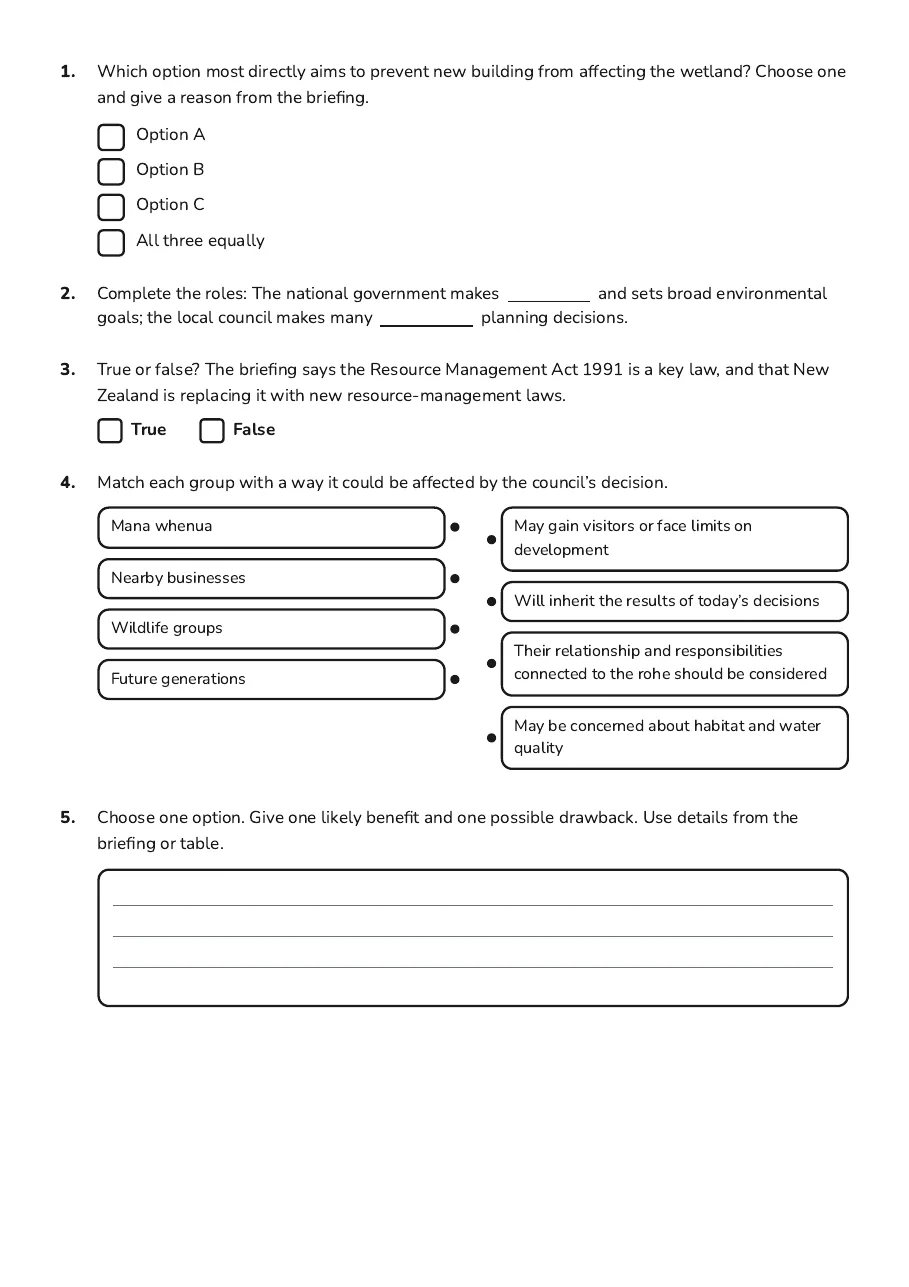
- Option A
- Option B
- Option C
- All three equally
- Mana whenua
- Nearby businesses
- Wildlife groups
- Future generations
- May gain visitors or face limits on development
- Will inherit the results of today’s decisions
- Their relationship and responsibilities connected to the rohe should be considered
- May be concerned about habitat and water quality
3 printable pages
Page 1
Page 2
Page 3
About This Worksheet
Free in Kuraplan
Sign up free, grab the PDF, and customize it for your class.
Print-Ready
Formatted for standard paper. Clean layout, easy to read.
AI-Generated
Created with Kuraplan's AI, designed for real classroom use.
For Teachers & Parents
Use in classrooms, for homework, tutoring, or homeschool.
Need a custom version of this worksheet?
Kuraplan's AI generates custom worksheets in seconds — differentiated for every learner, aligned to your curriculum.
Generate Custom Worksheets — FreeMore Social Sciences Worksheets
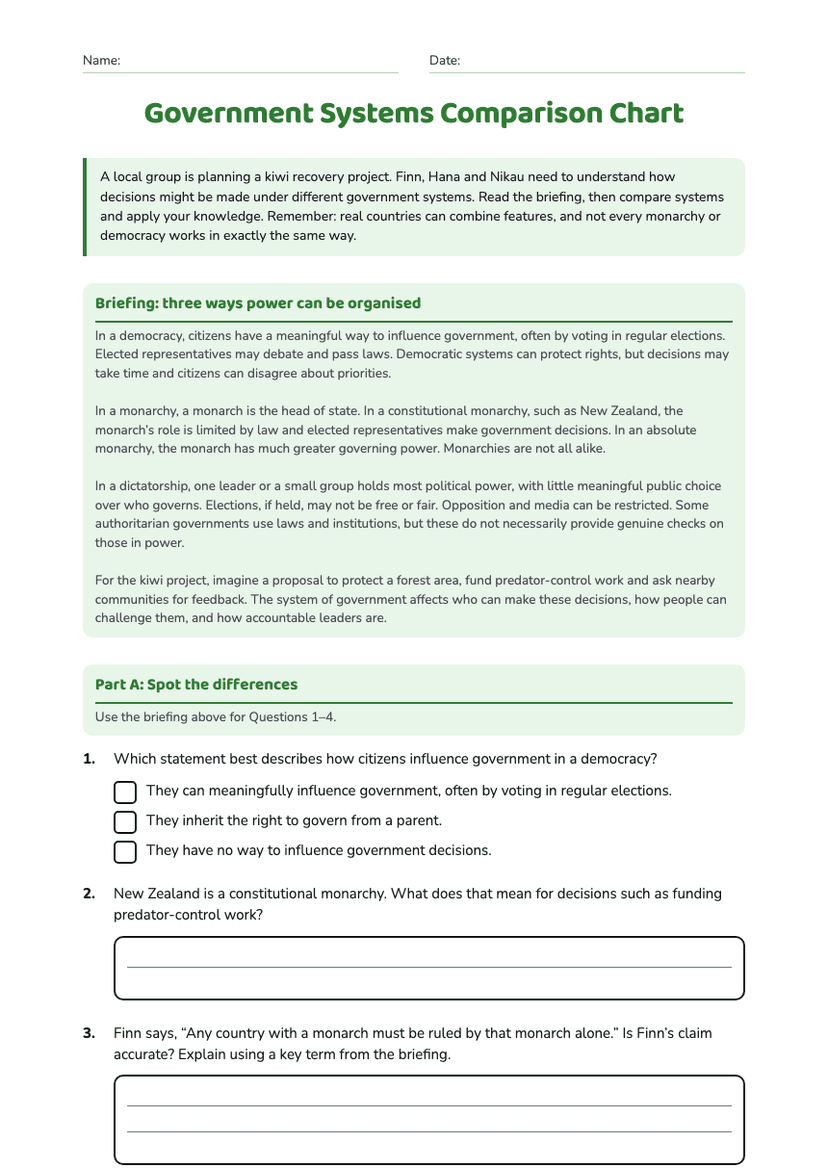
Government Systems Comparison Chart
Free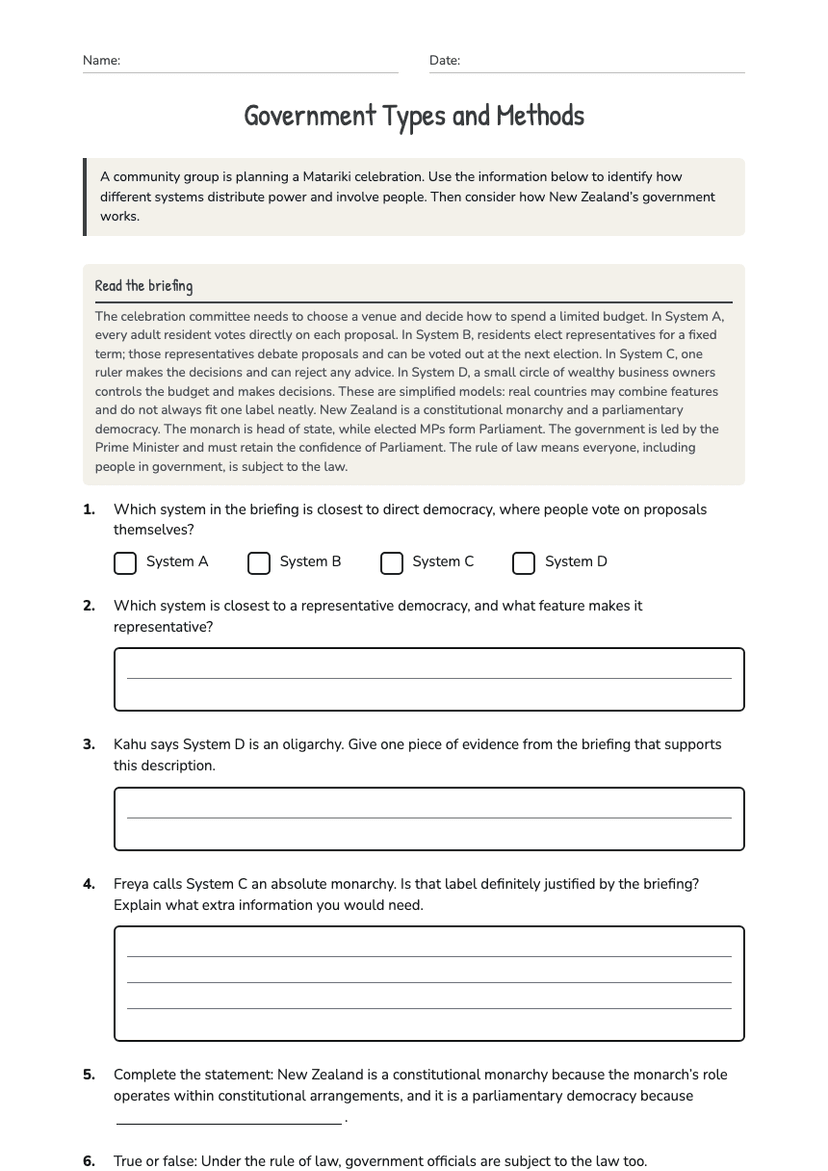
Government Types and Methods
Free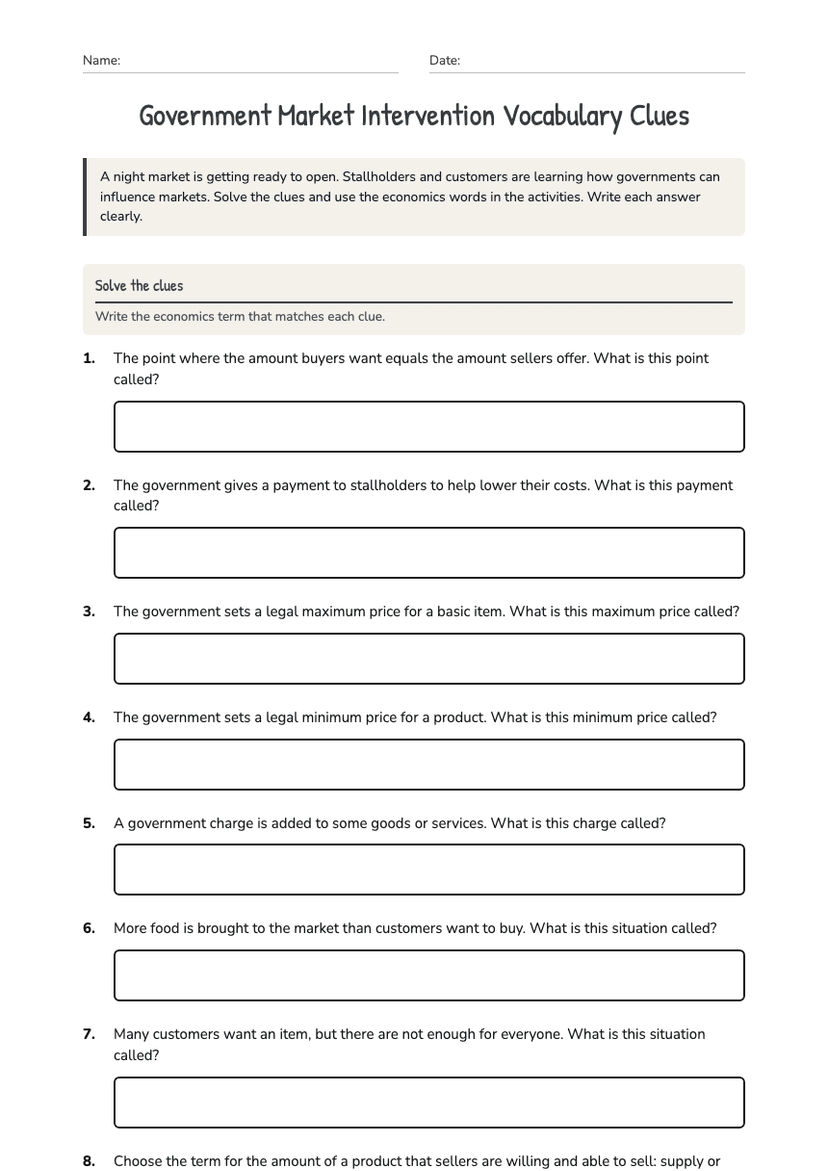
Government Market Intervention Vocabulary Clues
Free
Government Concepts Overview
Free
Understanding Government Systems
Free
Government Systems Comparison
Free
Growing Communities Worksheet
Free