Government Systems Overview
A free social sciences worksheet ready for your classroom. Open in Kuraplan to grab the print-ready PDF, customize it for your students, or generate a fresh version in seconds.
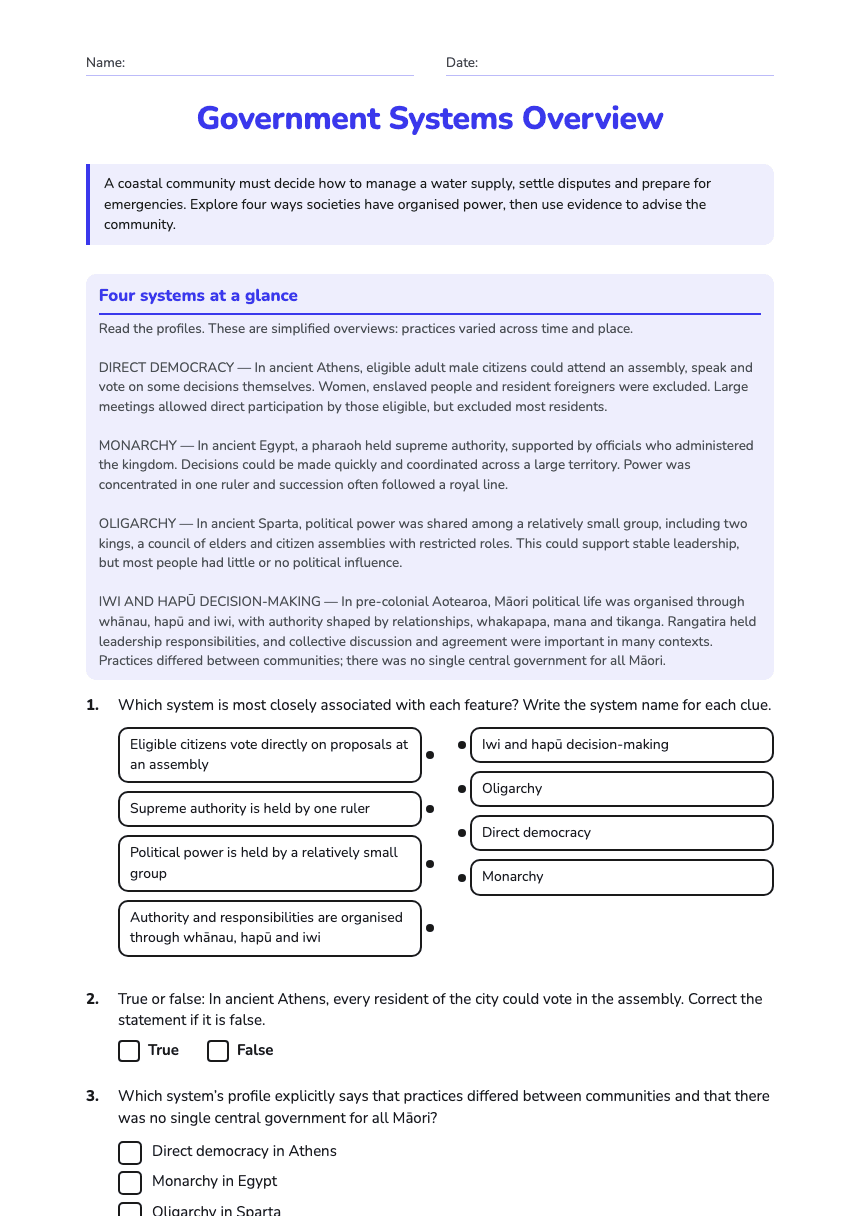
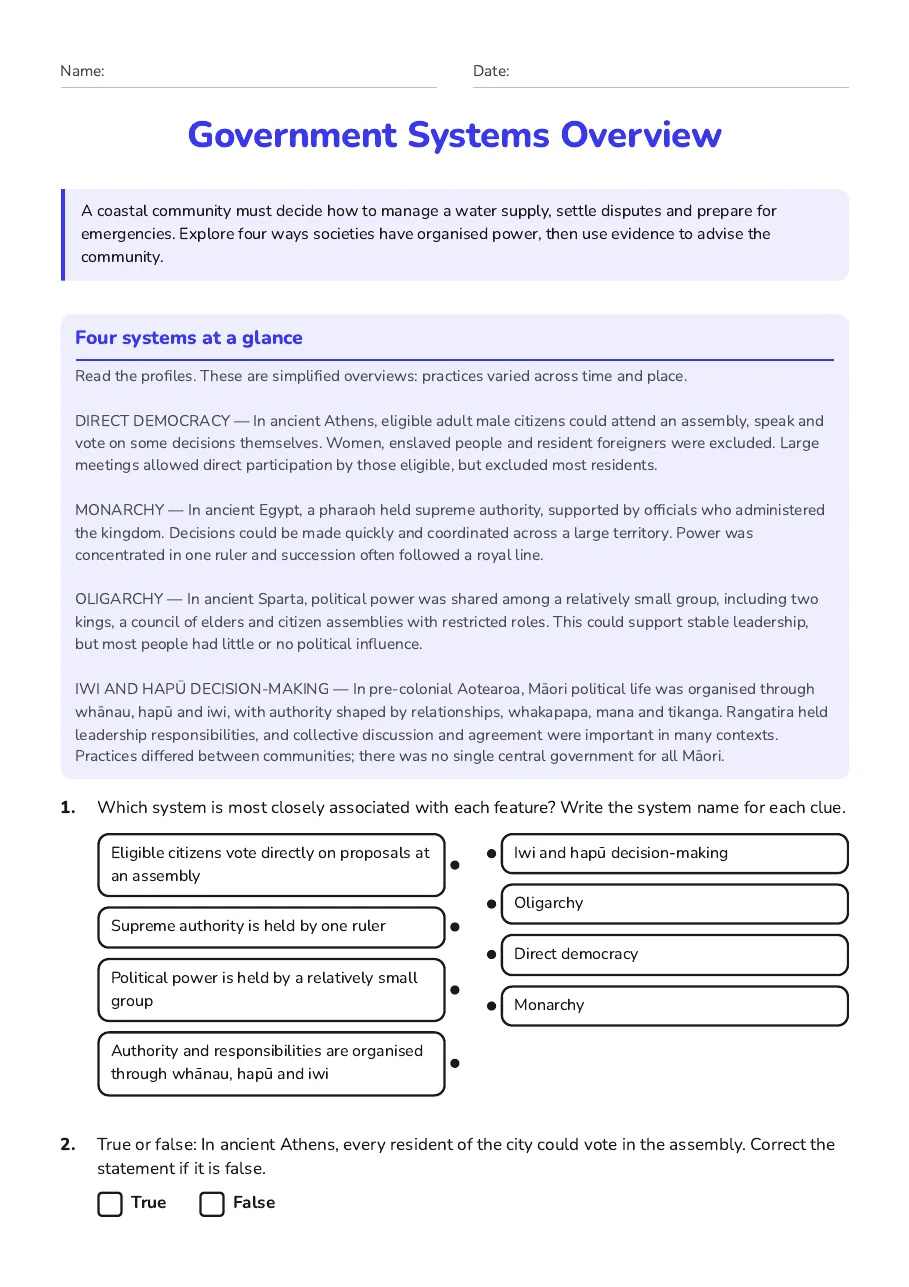
Government Systems Overview
Four systems at a glance
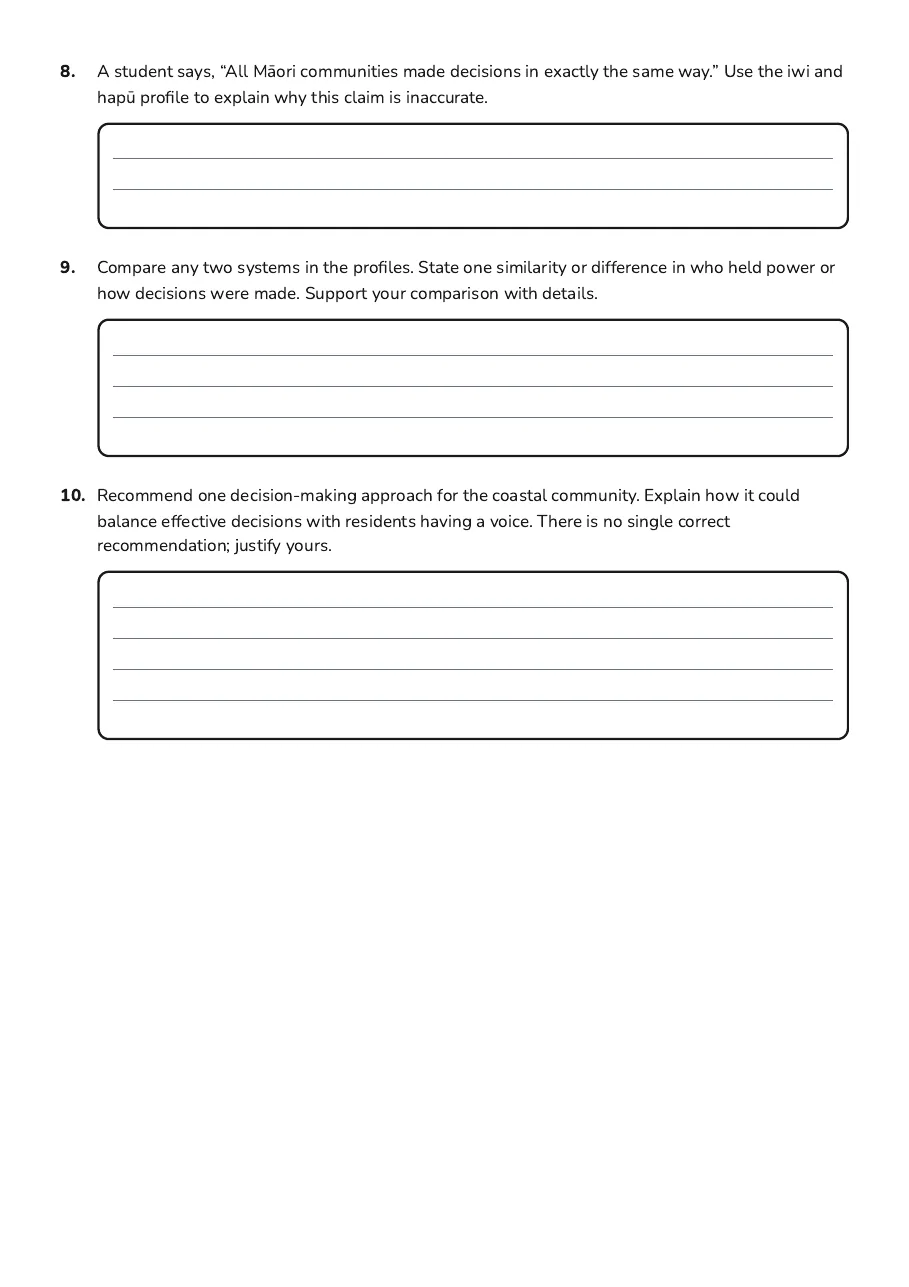
Read the profiles. These are simplified overviews: practices varied across time and place. DIRECT DEMOCRACY — In ancient Athens, eligible adult male citizens could attend an assembly, speak and vote on some decisions themselves. Women, enslaved people and resident foreigners were excluded. Large meetings allowed direct participation by those eligible, but excluded most residents. MONARCHY — In ancient Egypt, a pharaoh held supreme authority, supported by officials who administered the kingdom. Decisions could be made quickly and coordinated across a large territory. Power was concentrated in one ruler and succession often followed a royal line. OLIGARCHY — In ancient Sparta, political power was shared among a relatively small group, including two kings, a council of elders and citizen assemblies with restricted roles. This could support stable leadership, but most people had little or no political influence. IWI AND HAPŪ DECISION-MAKING — In pre-colonial Aotearoa, Māori political life was organised through whānau, hapū and iwi, with authority shaped by relationships, whakapapa, mana and tikanga. Rangatira held leadership responsibilities, and collective discussion and agreement were important in many contexts. Practices differed between communities; there was no single central government for all Māori.
- Eligible citizens vote directly on proposals at an assembly
- Supreme authority is held by one ruler
- Political power is held by a relatively small group
- Authority and responsibilities are organised through whānau, hapū and iwi
- Iwi and hapū decision-making
- Oligarchy
- Direct democracy
- Monarchy
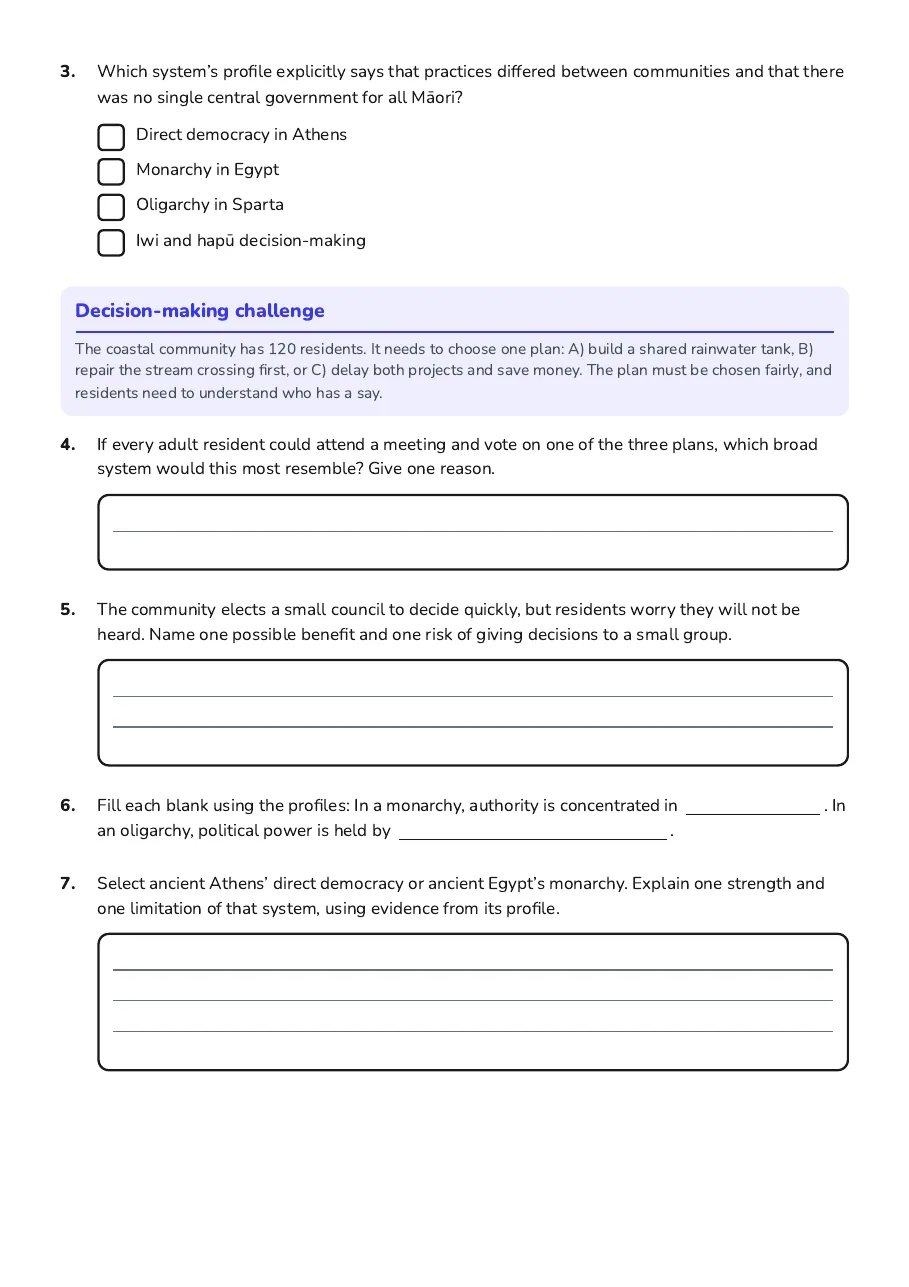
- Direct democracy in Athens
- Monarchy in Egypt
- Oligarchy in Sparta
- Iwi and hapū decision-making
Decision-making challenge
The coastal community has 120 residents. It needs to choose one plan: A) build a shared rainwater tank, B) repair the stream crossing first, or C) delay both projects and save money. The plan must be chosen fairly, and residents need to understand who has a say.
3 printable pages
Page 1
Page 2
Page 3
About This Worksheet
Free in Kuraplan
Sign up free, grab the PDF, and customize it for your class.
Print-Ready
Formatted for standard paper. Clean layout, easy to read.
AI-Generated
Created with Kuraplan's AI, designed for real classroom use.
For Teachers & Parents
Use in classrooms, for homework, tutoring, or homeschool.
Need a custom version of this worksheet?
Kuraplan's AI generates custom worksheets in seconds — differentiated for every learner, aligned to your curriculum.
Generate Custom Worksheets — FreeMore Social Sciences Worksheets
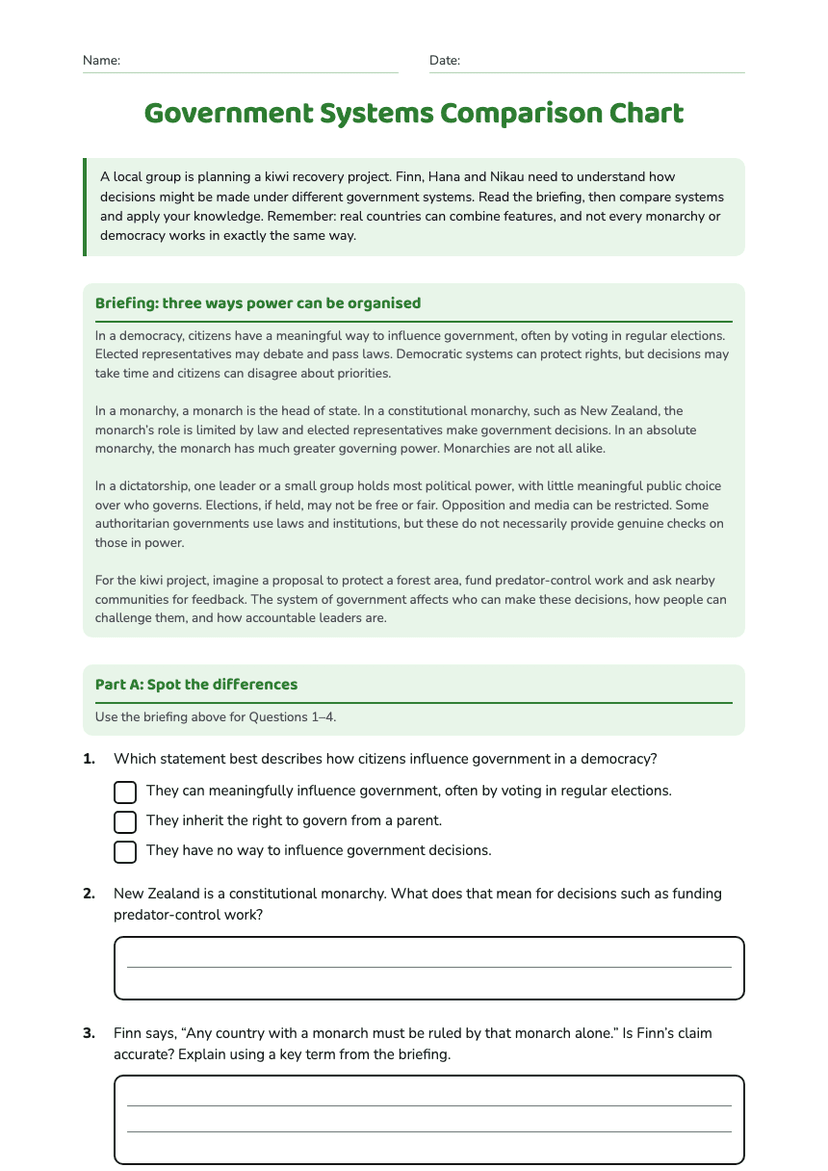
Government Systems Comparison Chart
Free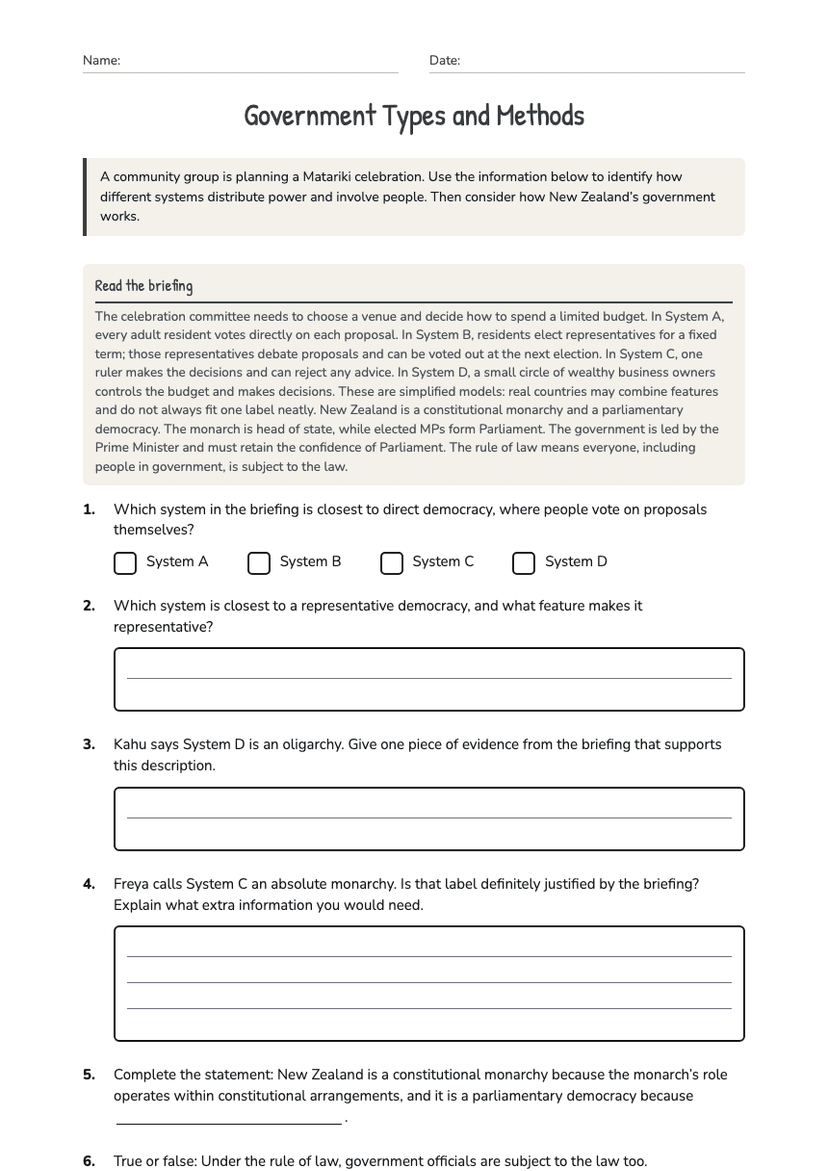
Government Types and Methods
Free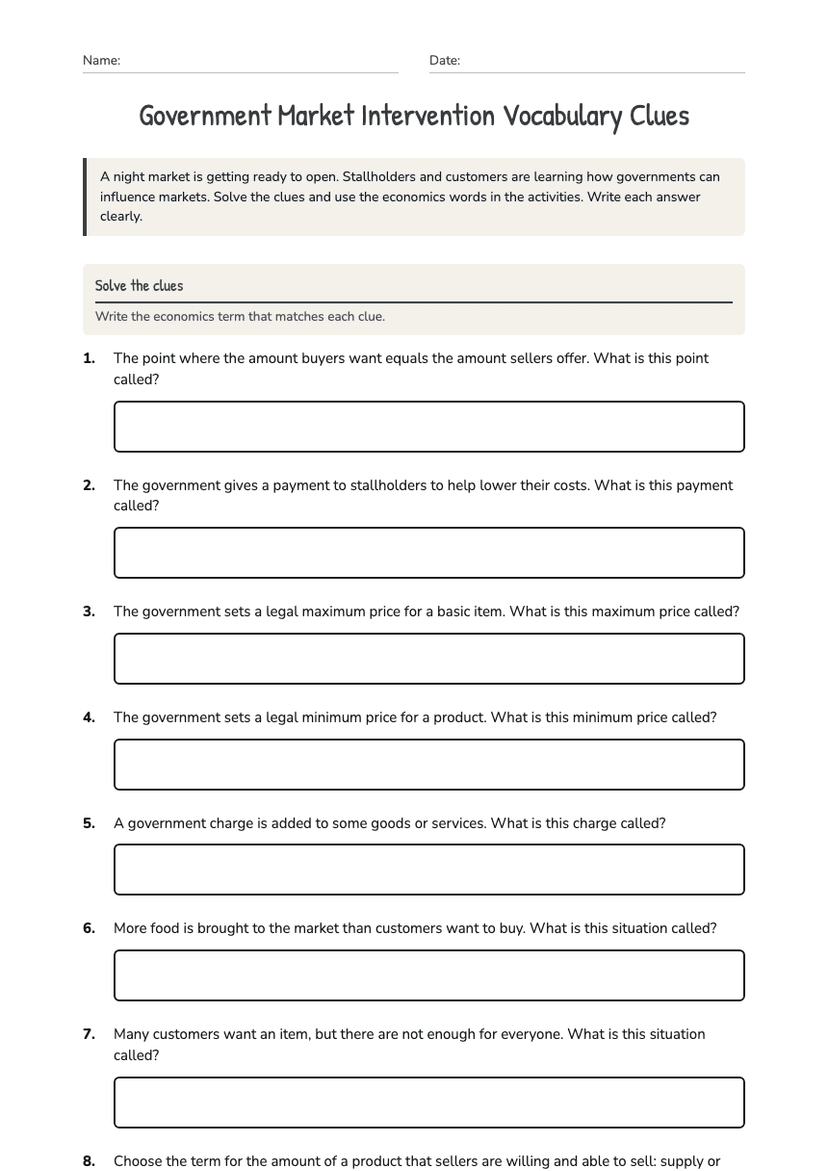
Government Market Intervention Vocabulary Clues
Free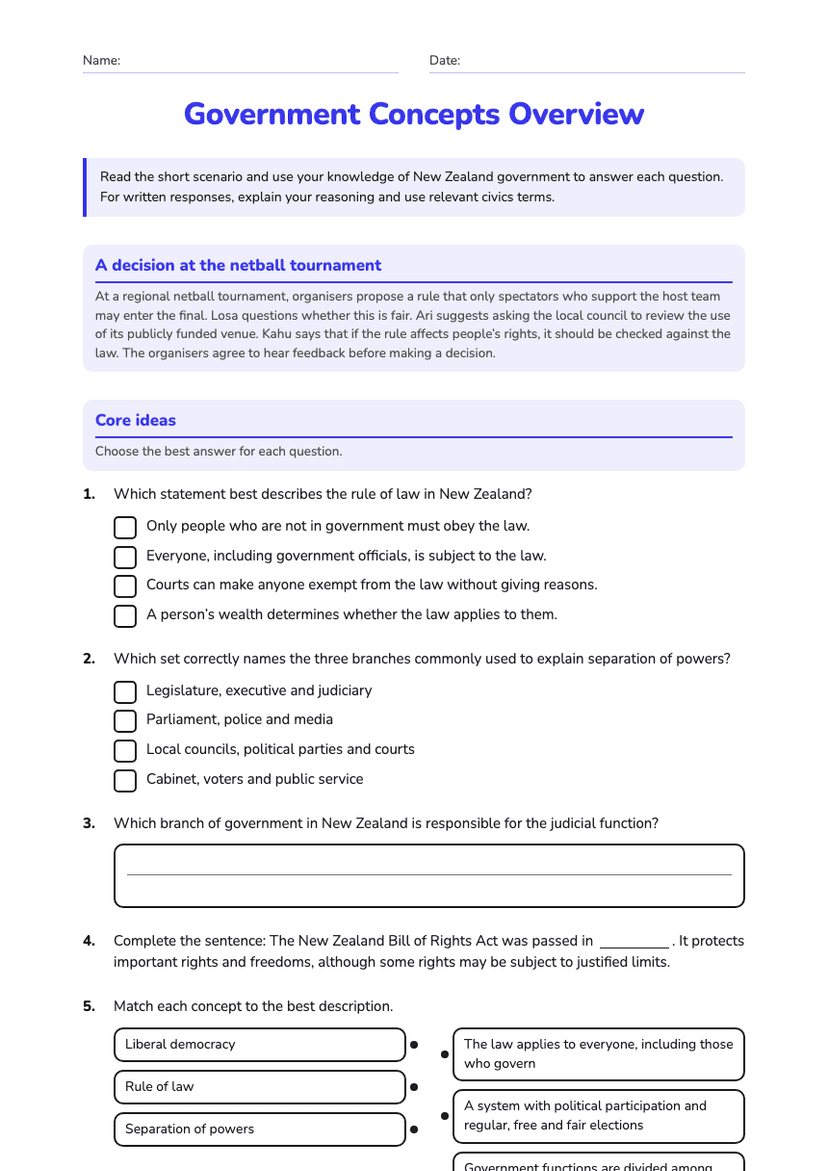
Government Concepts Overview
Free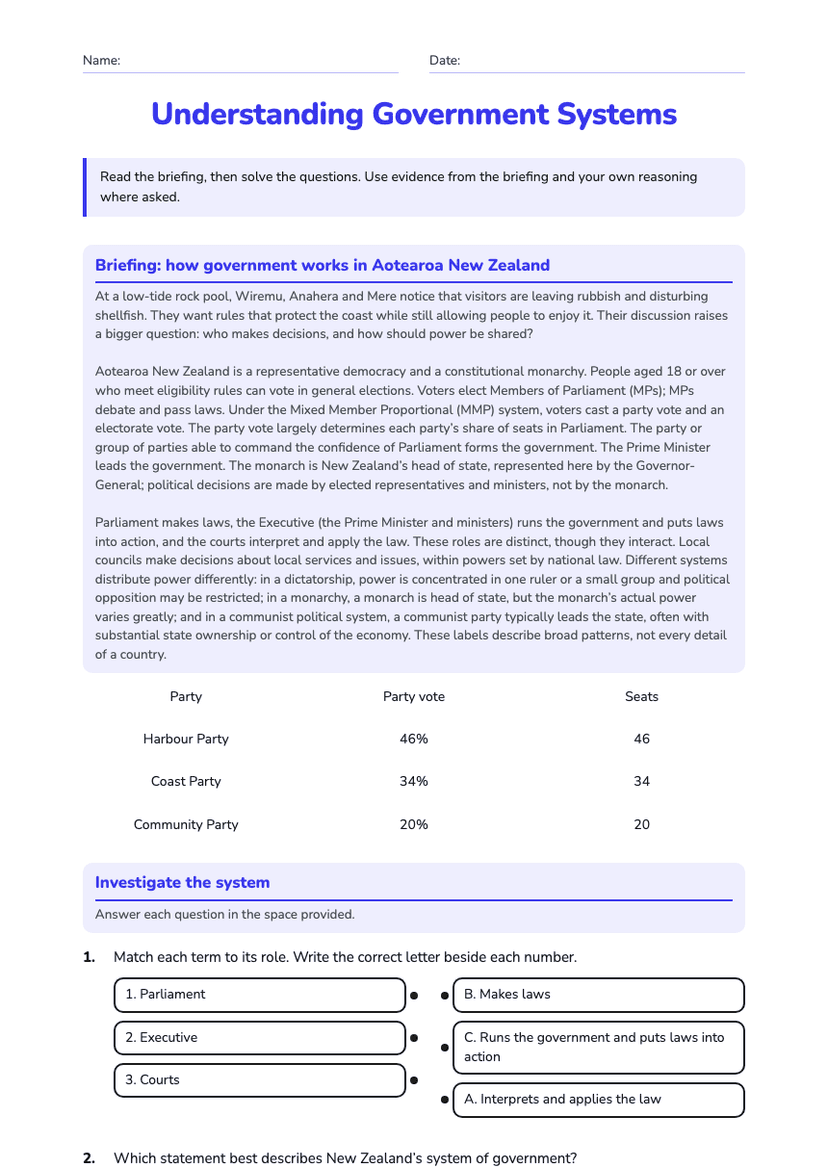
Understanding Government Systems
Free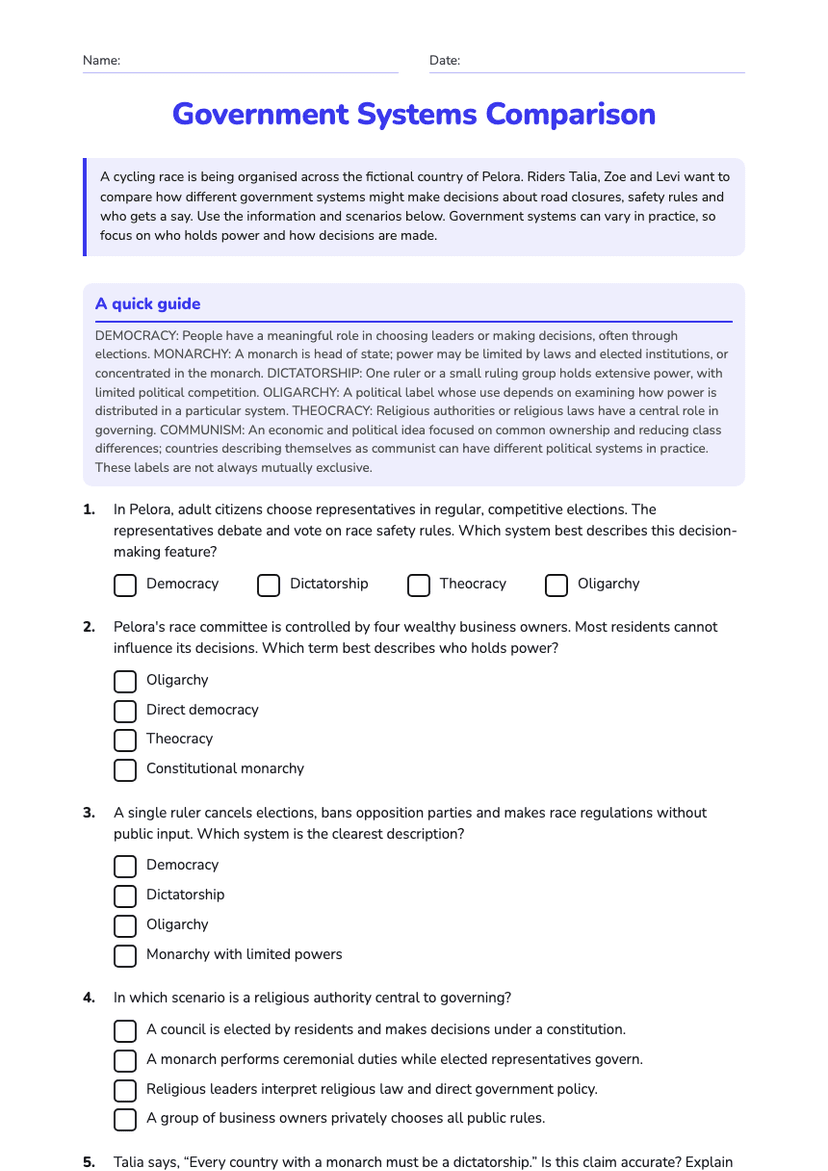
Government Systems Comparison
Free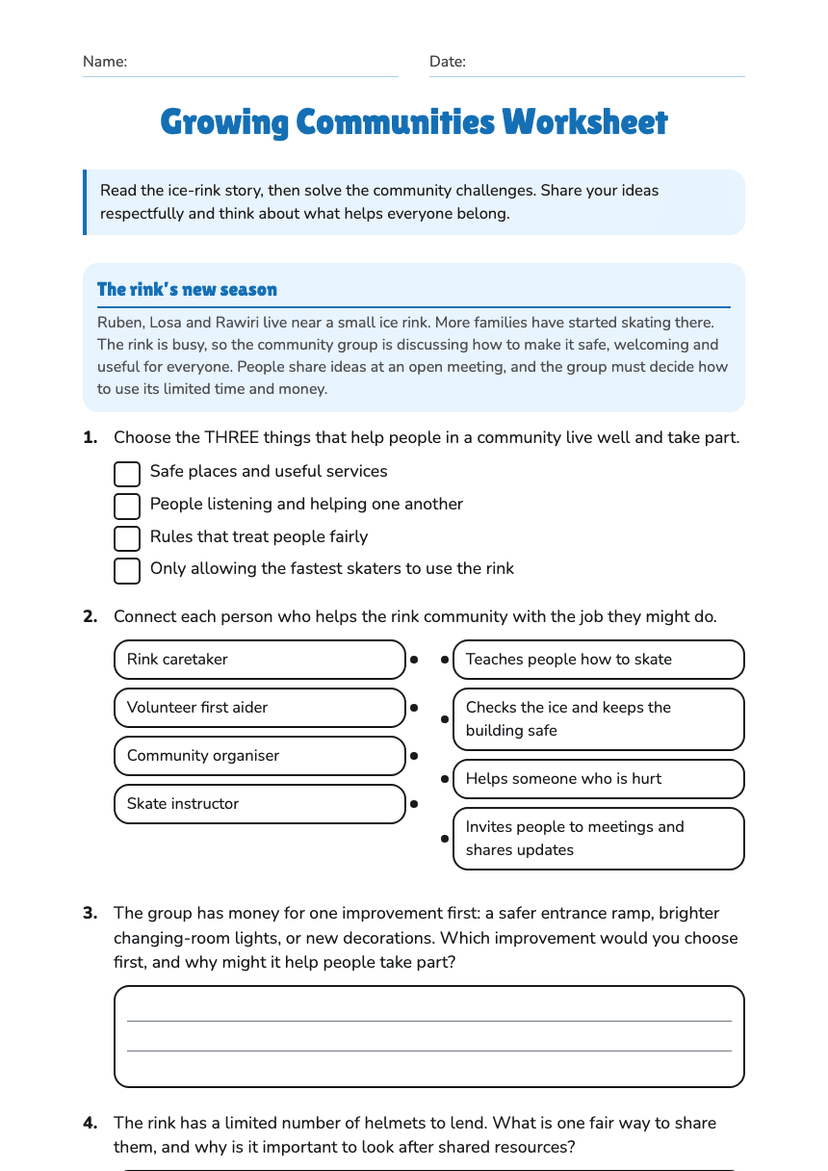
Growing Communities Worksheet
Free