Historical Cults Overview
A free social sciences worksheet ready for your classroom. Open in Kuraplan to grab the print-ready PDF, customize it for your students, or generate a fresh version in seconds.
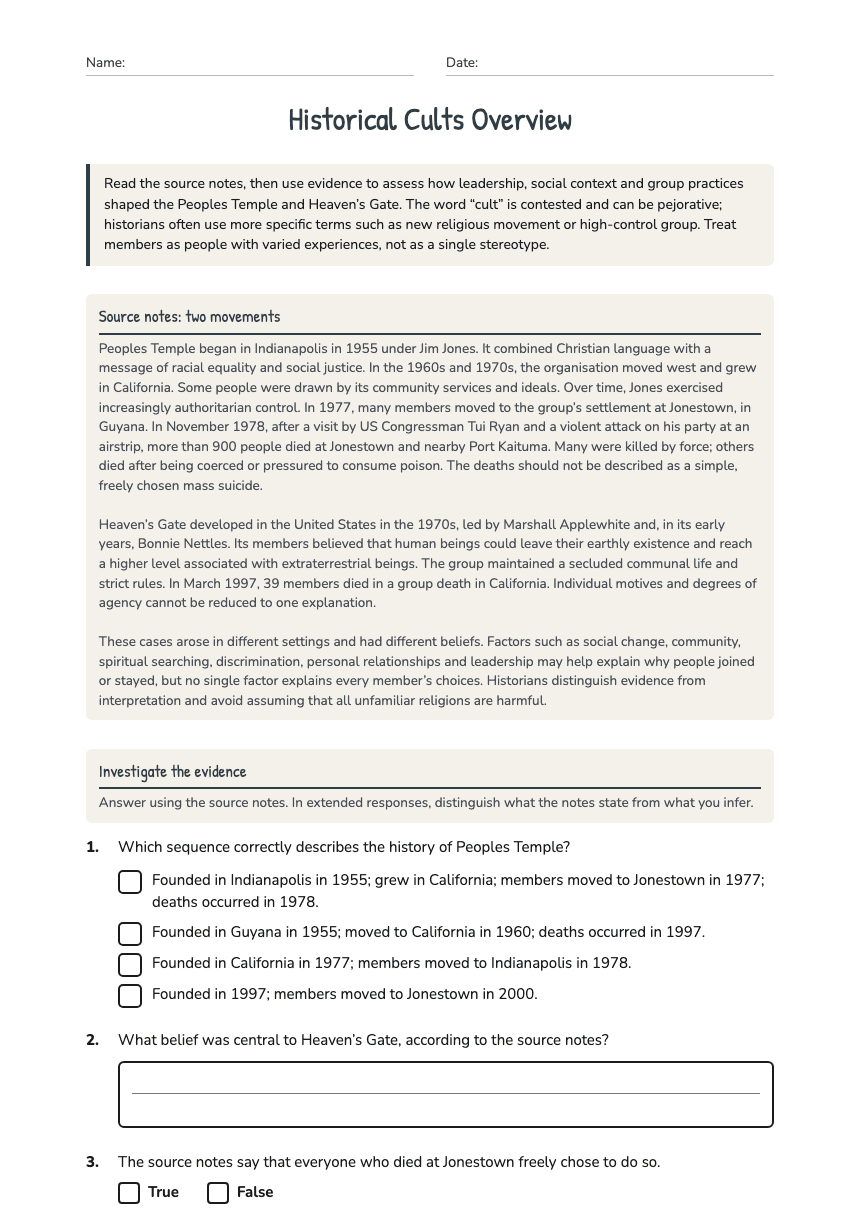
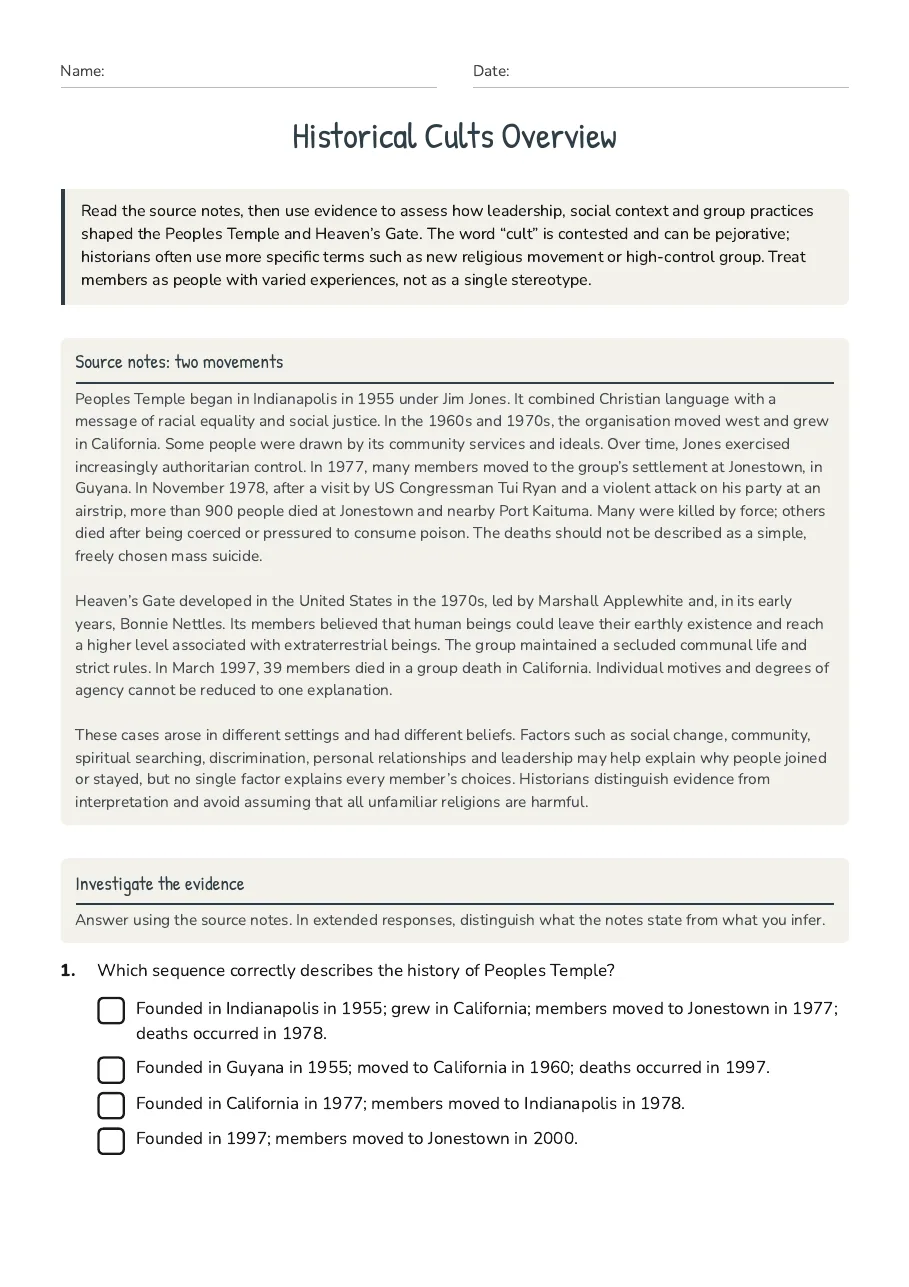
Historical Cults Overview
Source notes: two movements
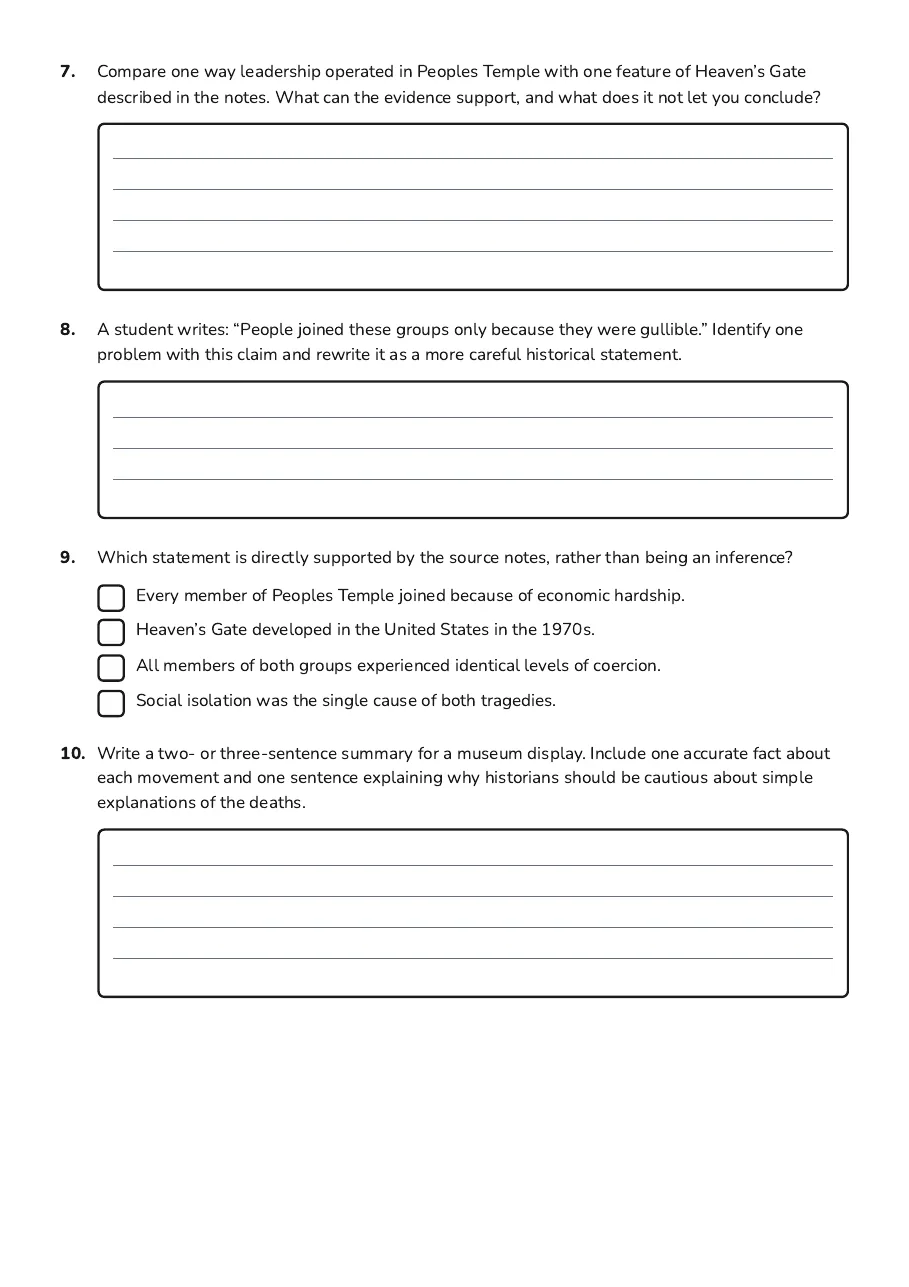
Peoples Temple began in Indianapolis in 1955 under Jim Jones. It combined Christian language with a message of racial equality and social justice. In the 1960s and 1970s, the organisation moved west and grew in California. Some people were drawn by its community services and ideals. Over time, Jones exercised increasingly authoritarian control. In 1977, many members moved to the group’s settlement at Jonestown, in Guyana. In November 1978, after a visit by US Congressman Tui Ryan and a violent attack on his party at an airstrip, more than 900 people died at Jonestown and nearby Port Kaituma. Many were killed by force; others died after being coerced or pressured to consume poison. The deaths should not be described as a simple, freely chosen mass suicide. Heaven’s Gate developed in the United States in the 1970s, led by Marshall Applewhite and, in its early years, Bonnie Nettles. Its members believed that human beings could leave their earthly existence and reach a higher level associated with extraterrestrial beings. The group maintained a secluded communal life and strict rules. In March 1997, 39 members died in a group death in California. Individual motives and degrees of agency cannot be reduced to one explanation. These cases arose in different settings and had different beliefs. Factors such as social change, community, spiritual searching, discrimination, personal relationships and leadership may help explain why people joined or stayed, but no single factor explains every member’s choices. Historians distinguish evidence from interpretation and avoid assuming that all unfamiliar religions are harmful.
Investigate the evidence
Answer using the source notes. In extended responses, distinguish what the notes state from what you infer.
- Founded in Indianapolis in 1955; grew in California; members moved to Jonestown in 1977; deaths occurred in 1978.
- Founded in Guyana in 1955; moved to California in 1960; deaths occurred in 1997.
- Founded in California in 1977; members moved to Indianapolis in 1978.
- Founded in 1997; members moved to Jonestown in 2000.
- Every member of Peoples Temple joined because of economic hardship.
- Heaven’s Gate developed in the United States in the 1970s.
- All members of both groups experienced identical levels of coercion.
- Social isolation was the single cause of both tragedies.
3 printable pages
Page 1
Page 2
Page 3
About This Worksheet
Free in Kuraplan
Sign up free, grab the PDF, and customize it for your class.
Print-Ready
Formatted for standard paper. Clean layout, easy to read.
AI-Generated
Created with Kuraplan's AI, designed for real classroom use.
For Teachers & Parents
Use in classrooms, for homework, tutoring, or homeschool.
Need a custom version of this worksheet?
Kuraplan's AI generates custom worksheets in seconds — differentiated for every learner, aligned to your curriculum.
Generate Custom Worksheets — FreeMore Social Sciences Worksheets
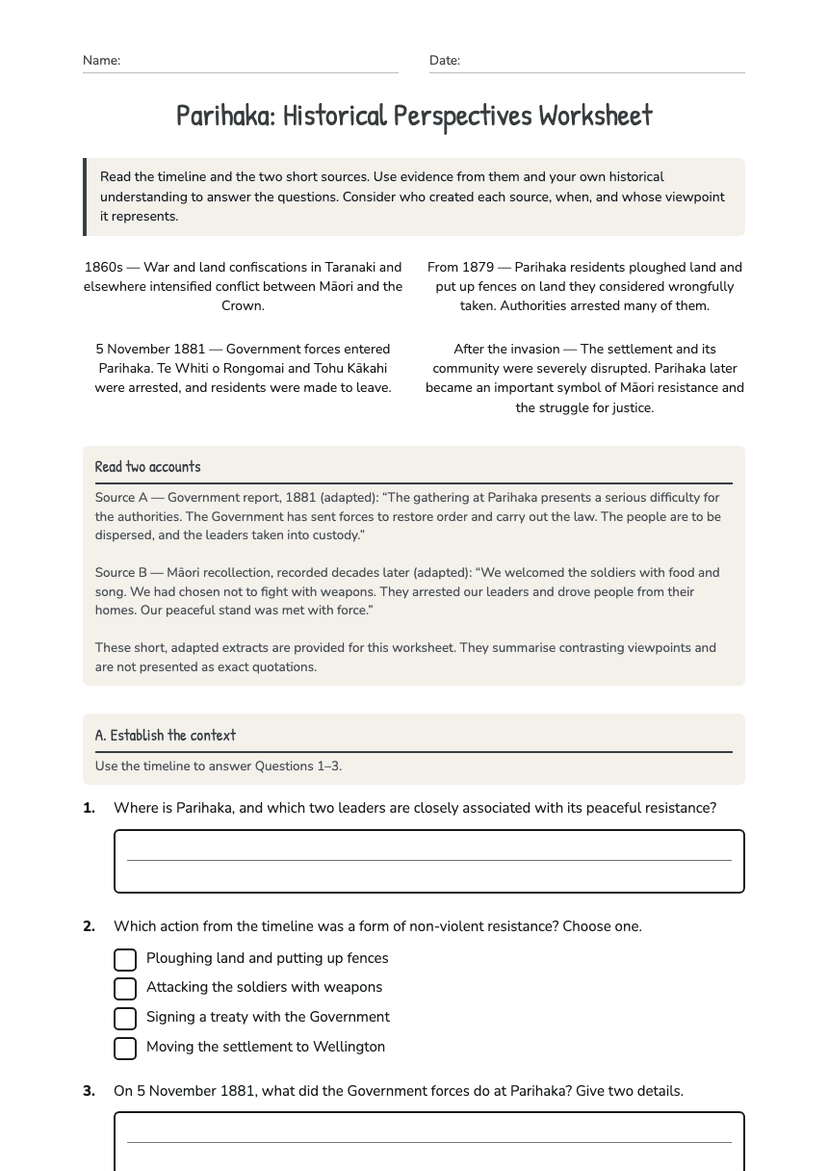
Parihaka: Historical Perspectives Worksheet
Free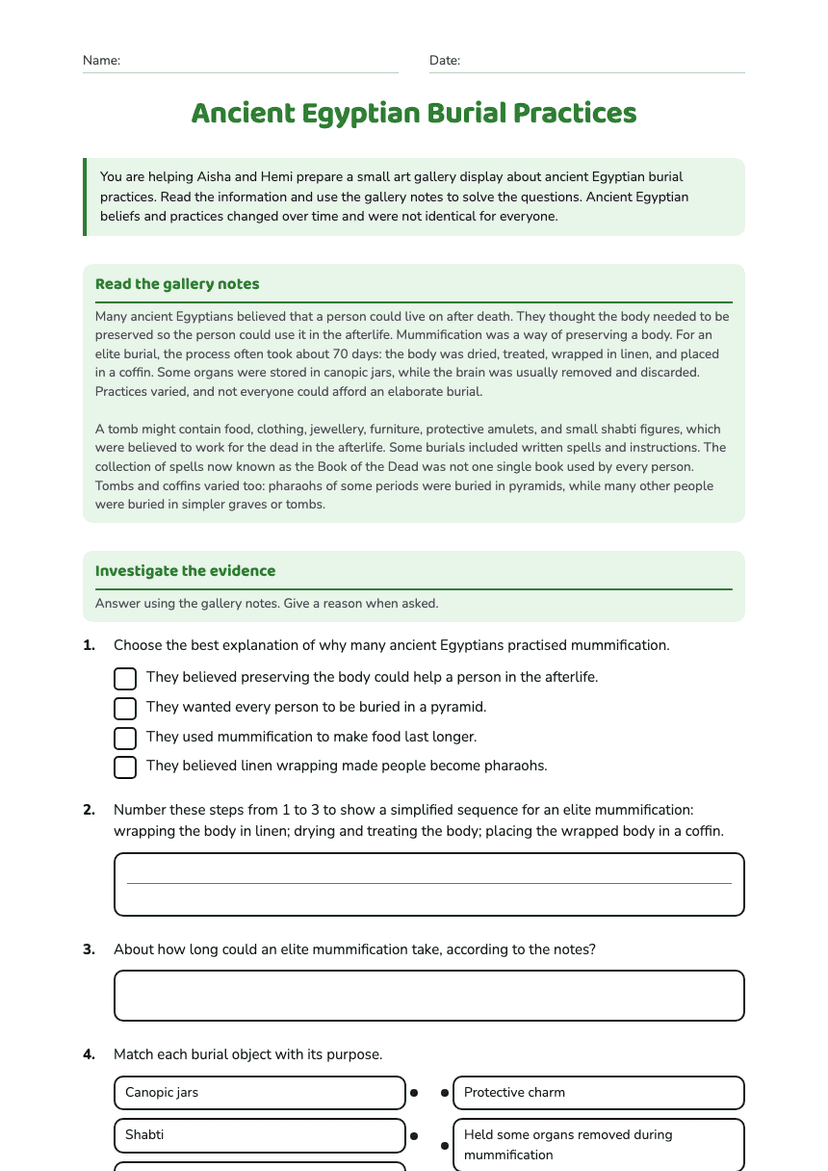
Ancient Egyptian Burial Practices
Free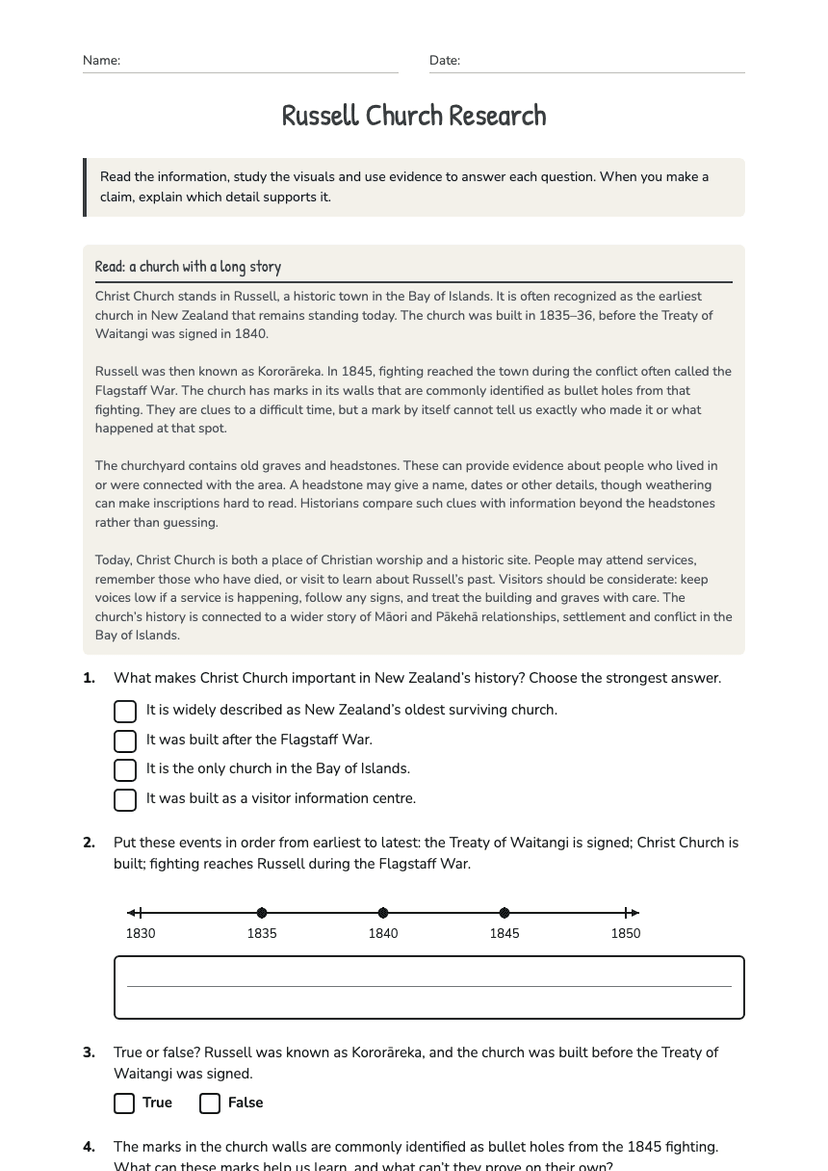
Russell Church Research
Free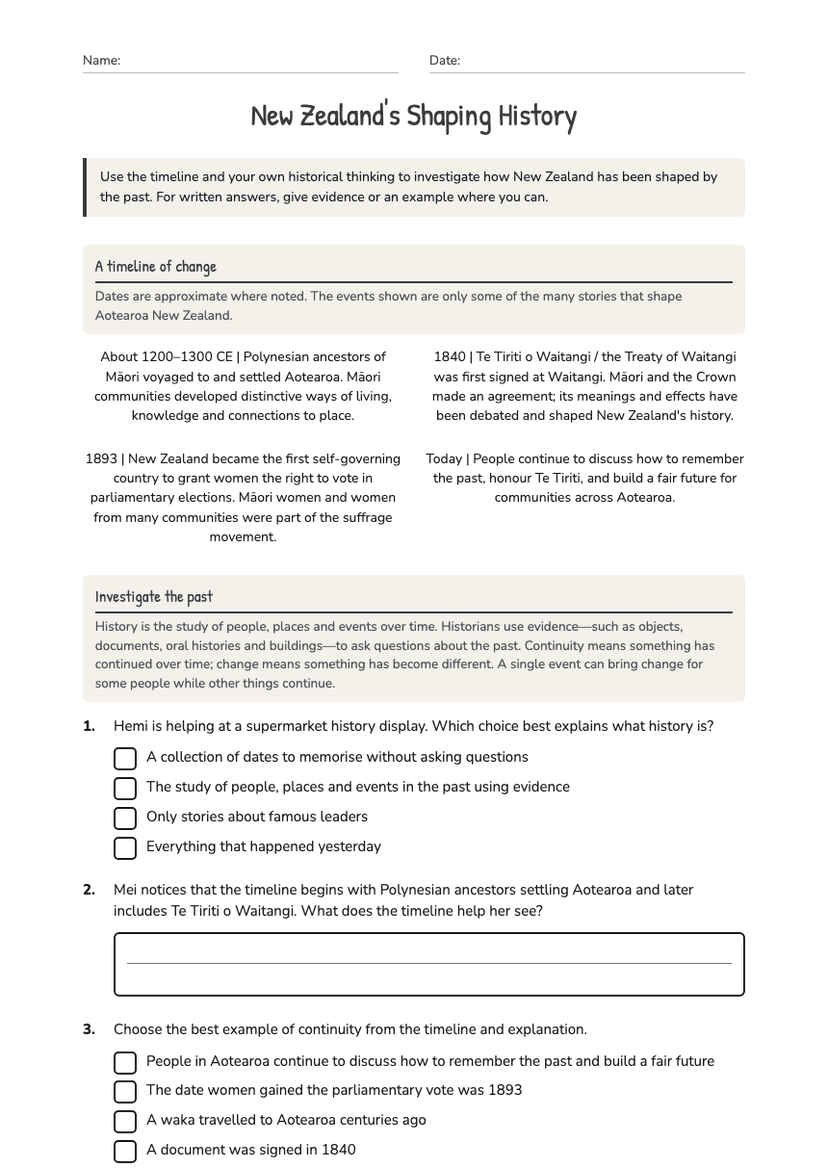
New Zealand's Shaping History
Free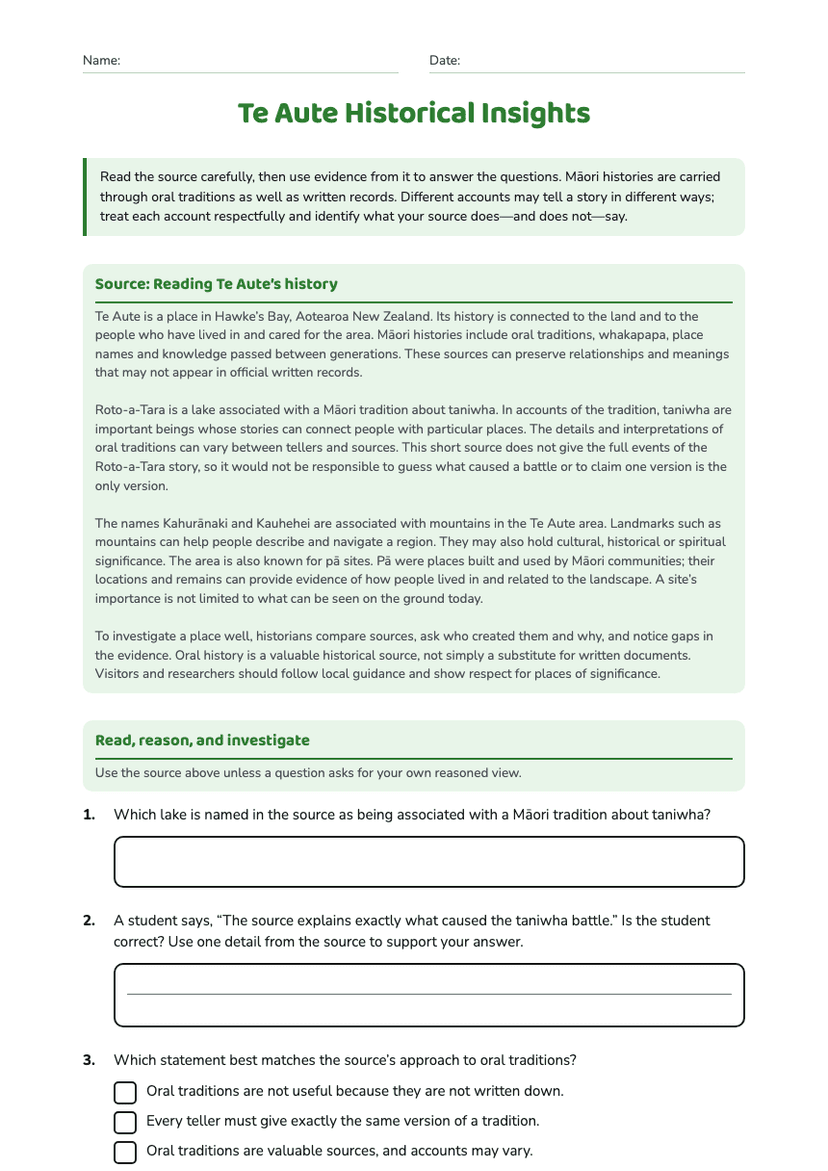
Te Aute Historical Insights
Free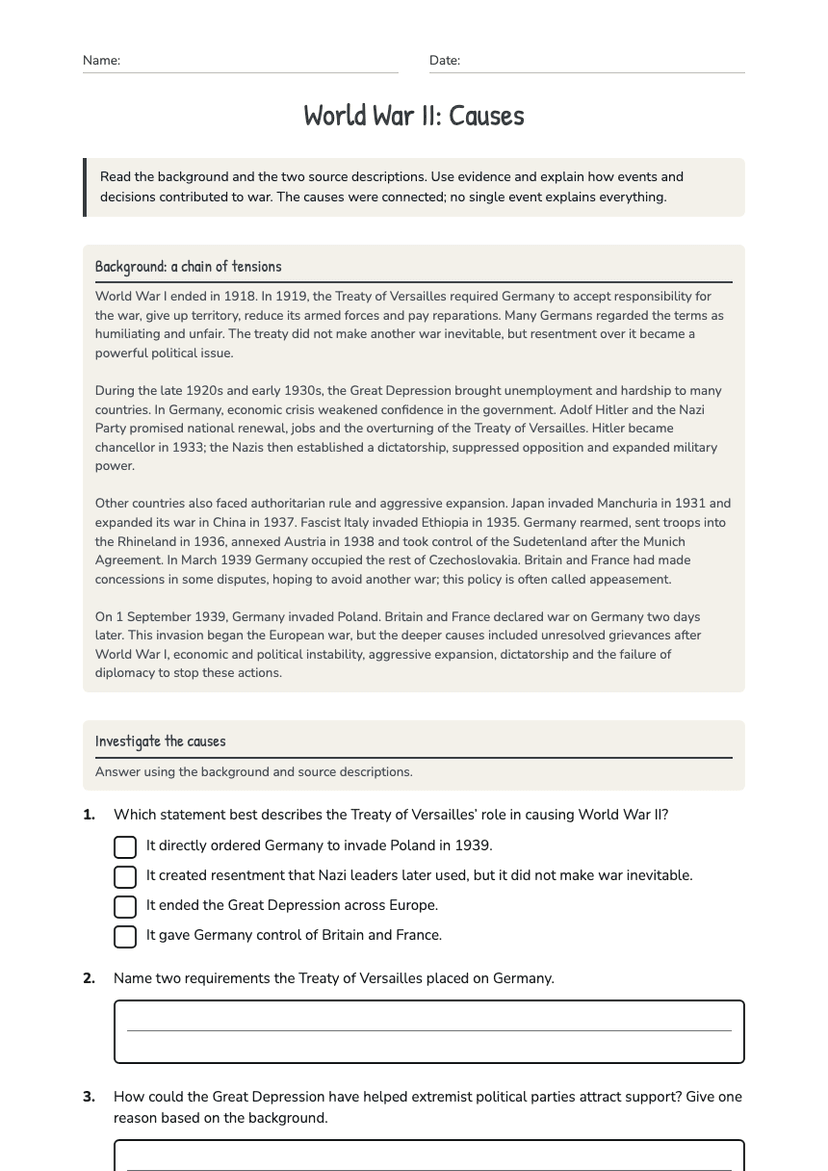
World War II: Causes
Free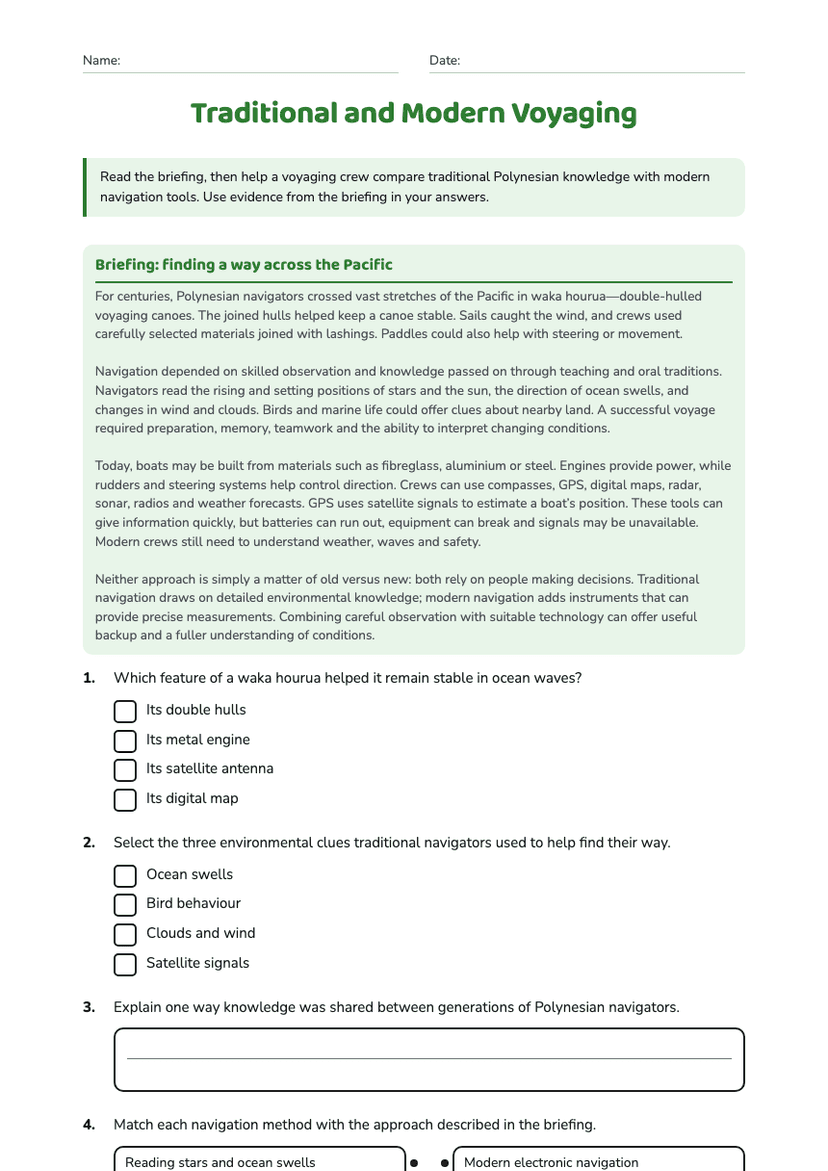
Traditional and Modern Voyaging
Free