Social SciencesFreePrintable

Historical Epidemics Overview

A free social sciences worksheet ready for your classroom. Open in Kuraplan to grab the print-ready PDF, customize it for your students, or generate a fresh version in seconds.
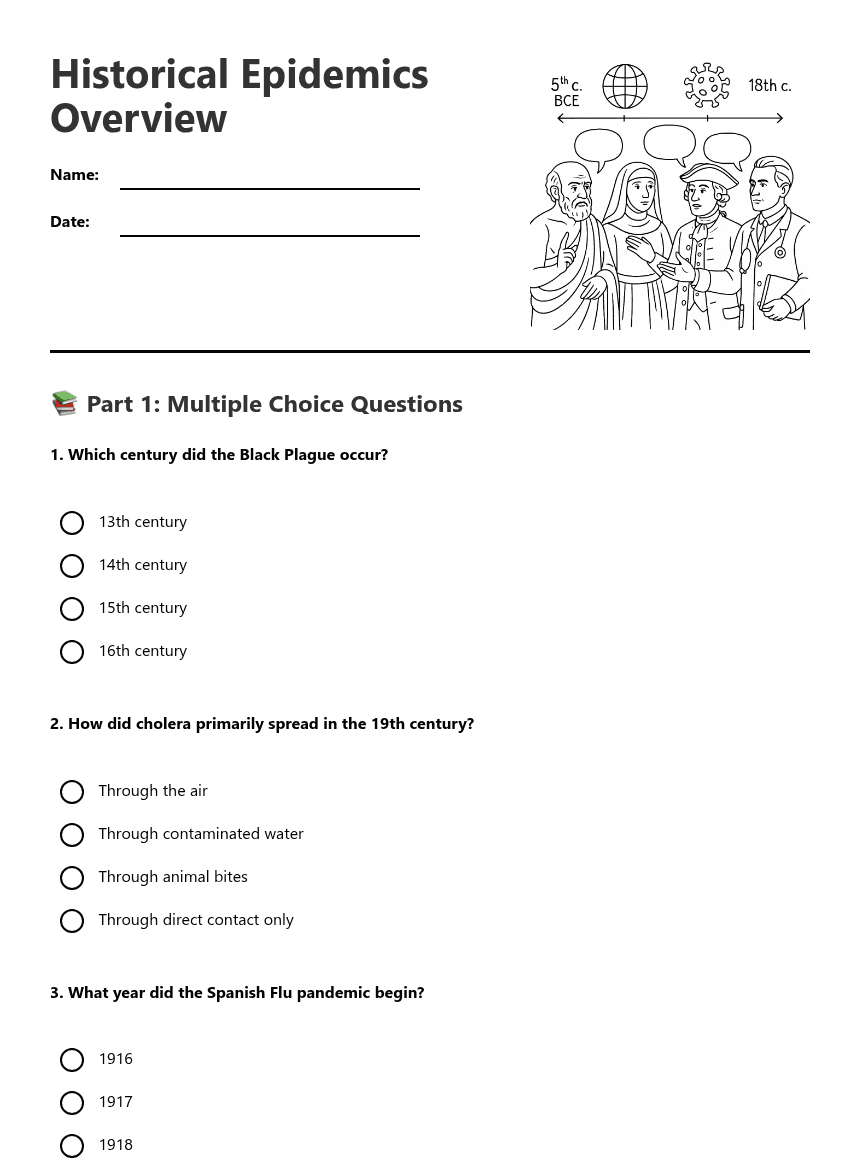
Historical Epidemics Overview worksheet preview
Historical Epidemics Overview

Historical Epidemics Overview

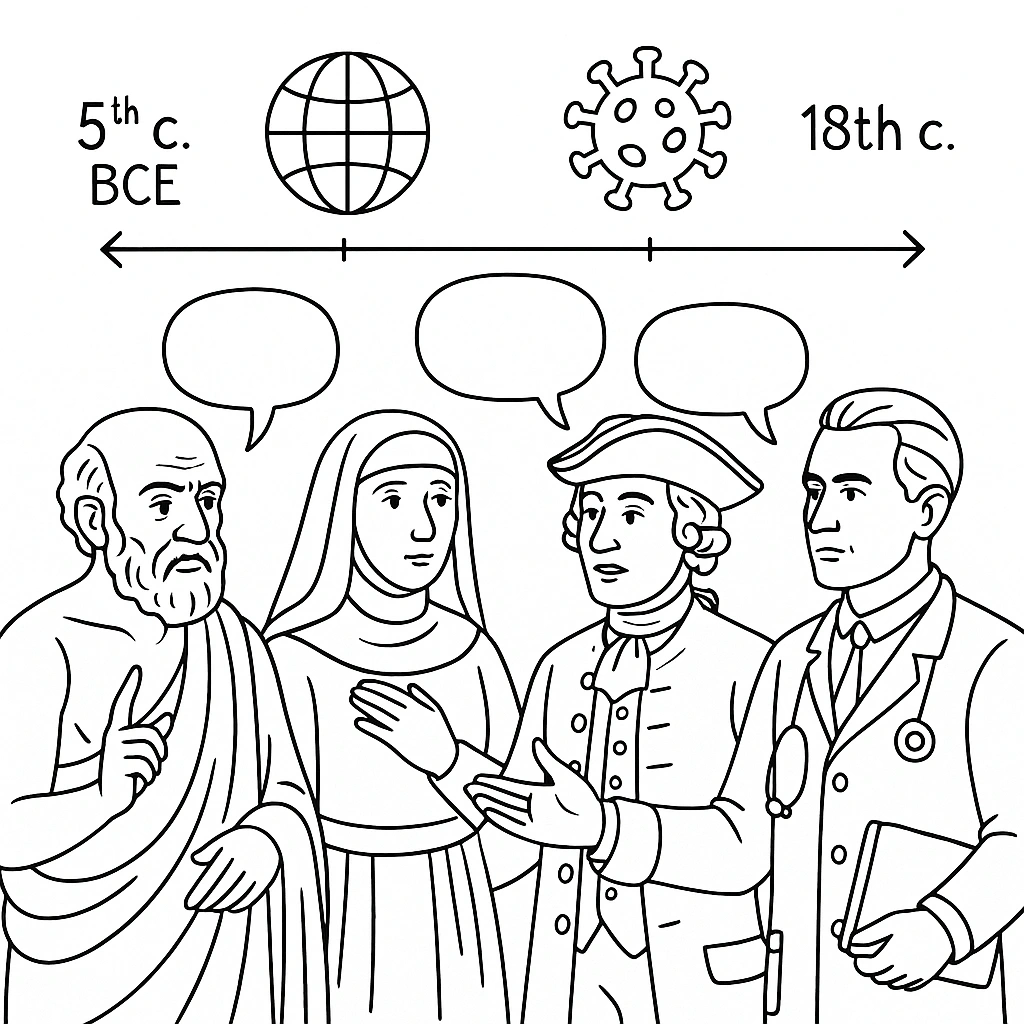
Historical epidemic illustration

📚 Part 1: Multiple Choice Questions

1. Which century did the Black Plague occur?

13th century

14th century

15th century

16th century

2. How did cholera primarily spread in the 19th century?

Through the air

Through contaminated water

Through animal bites

Through direct contact only

3. What year did the Spanish Flu pandemic begin?

1916

1917

1918

1919

4. Which epidemic had the greatest impact on Europe during the medieval period?

Cholera

Spanish Flu

Black Plague

Smallpox

☑️ Part 2: Multiple Selection - Common Features of Epidemics

5. Check all the common features that historical epidemics shared:

Rapid spread through communities

Impact on trade and economy

Changes in social behaviour

Only affected wealthy people

Led to medical advances

Caused fear and panic

6. Which groups were typically most affected by historical epidemics? (Check all that apply)

Poor communities

Urban populations

Children and elderly

People with weakened immune systems

Only rural farmers

📝 Part 3: Fill in the Blanks

7. Complete the sentences about historical epidemics:

The Black Plague was also known as the _____________ and killed approximately _______ of Europe's population. It was spread by _______ that lived on rats.

8. Fill in the missing information about cholera:

Cholera epidemics in the _______ century were particularly devastating in _______ areas where sanitation was poor. The disease spread through contaminated _______ supplies.

9. Complete this sentence about the Spanish Flu:

The 1918 Spanish Flu pandemic affected people _______ and even reached New Zealand, causing the government to implement _______ measures to control its spread.

🔗 Part 4: Matching Activity - Causes and Consequences

10. Match each epidemic with its primary cause:
1. Black Plague
2. Cholera
3. Spanish Flu
A. Viral infection spread through respiratory droplets
B. Bacterial infection from contaminated water
C. Bacterial infection spread by fleas on rats
11. Match each societal response with the appropriate epidemic:
1. Quarantine of ships
2. Improved sewage systems
3. Wearing masks in public
A. Spanish Flu response
B. Black Plague response
C. Cholera response

💭 Part 5: Short Answer Questions

12. Explain why urban communities were particularly affected by cholera epidemics:
13. Describe two ways that the Black Plague changed European society:
14. How did the Spanish Flu pandemic affect New Zealand specifically?

🎨 Part 6: Creative Response

15. Create a simple timeline showing the three major epidemics discussed in class. Include the dates and one key impact for each:
16. Why is it important to learn about past epidemics? Write your personal reflection:

❓ Part 7: Critical Thinking

17. What similarities can you identify between historical epidemics and modern health challenges? List at least three:
18. Write one question you have about historical epidemics that you would like to research further:

About This Worksheet

Free in Kuraplan

Sign up free, grab the PDF, and customize it for your class.

Print-Ready

Formatted for standard paper. Clean layout, easy to read.

AI-Generated

Created with Kuraplan's AI, designed for real classroom use.

For Teachers & Parents

Use in classrooms, for homework, tutoring, or homeschool.

Need a custom version of this worksheet?

Kuraplan's AI generates custom worksheets in seconds — differentiated for every learner, aligned to your curriculum.

Generate Custom Worksheets — Free
No credit card Curriculum-aligned Under 60 seconds