Human Environmental Impact Challenges
A free science worksheet ready for your classroom. Open in Kuraplan to grab the print-ready PDF, customize it for your students, or generate a fresh version in seconds.
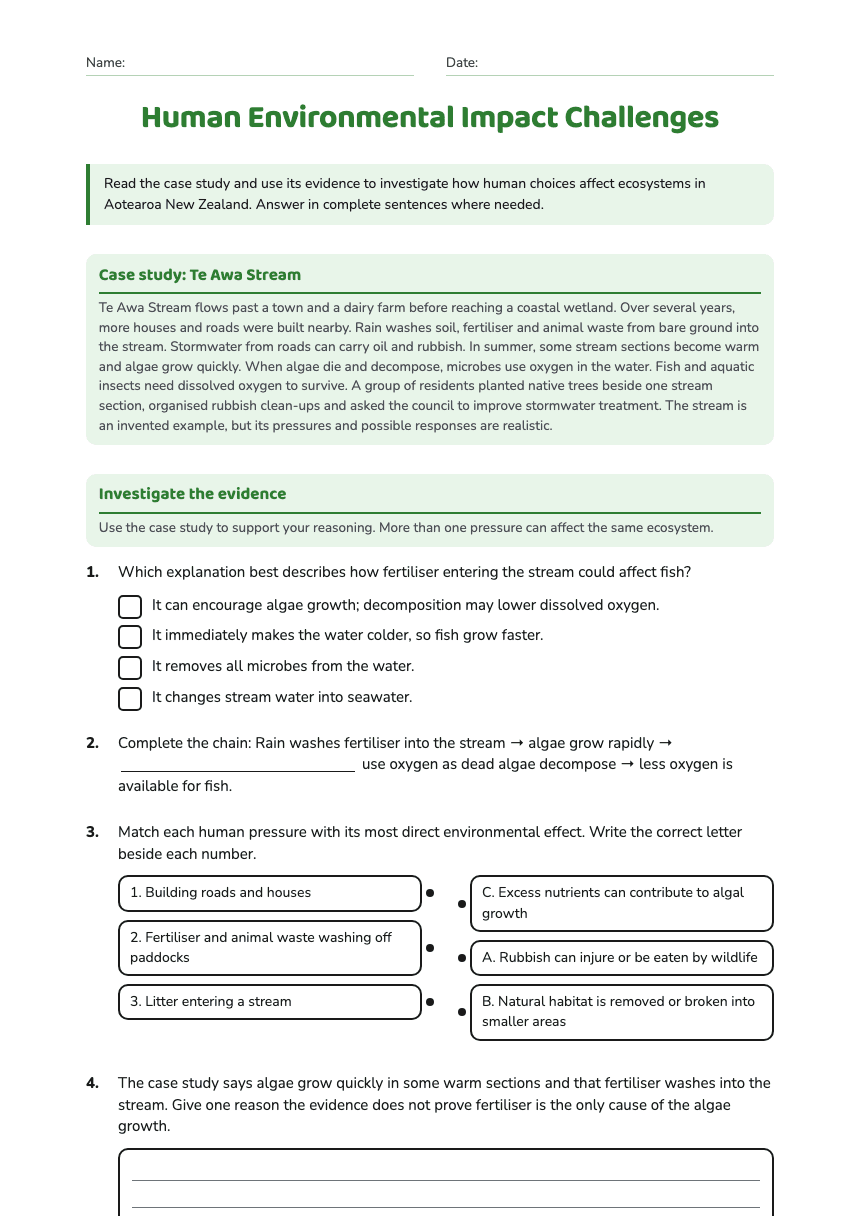
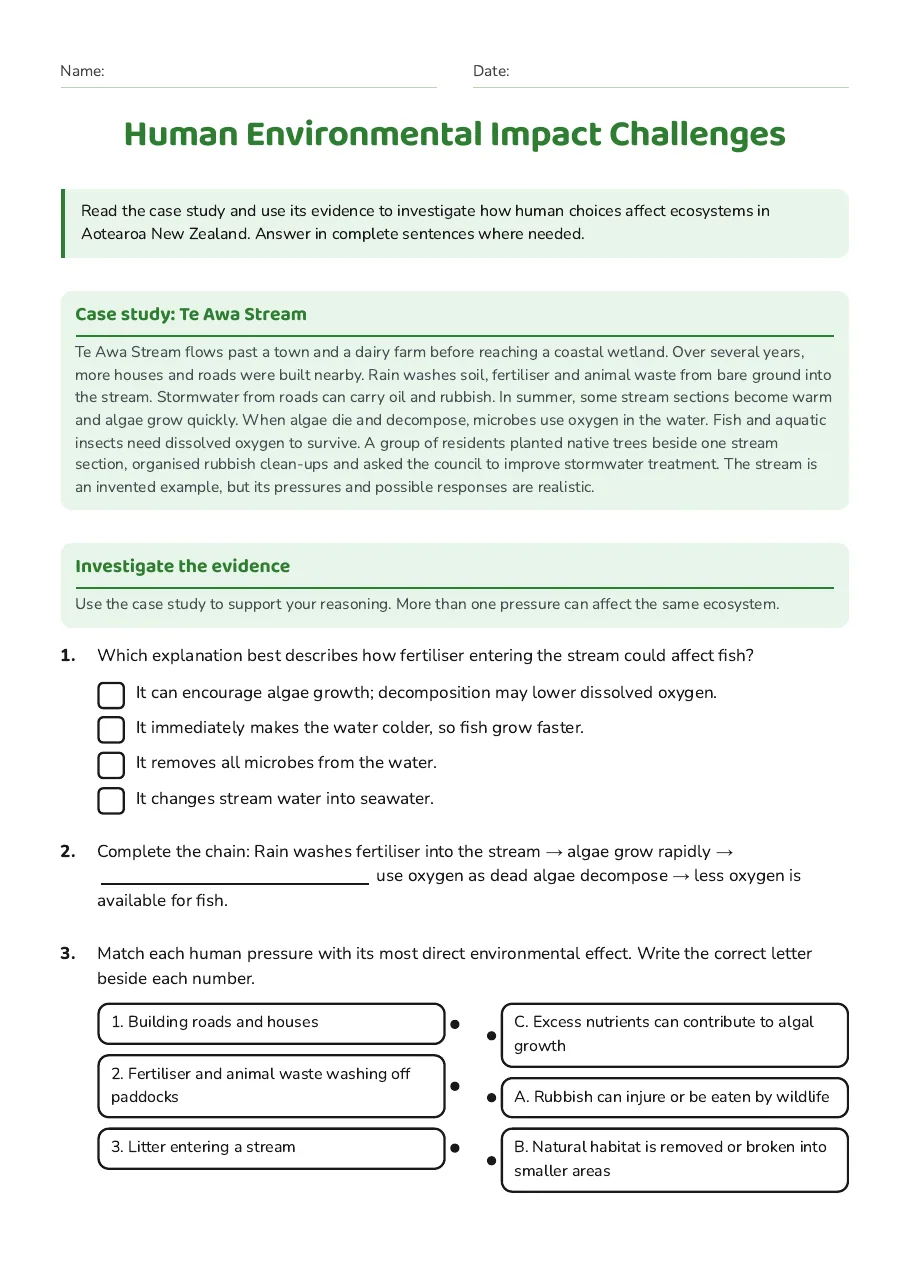
Human Environmental Impact Challenges
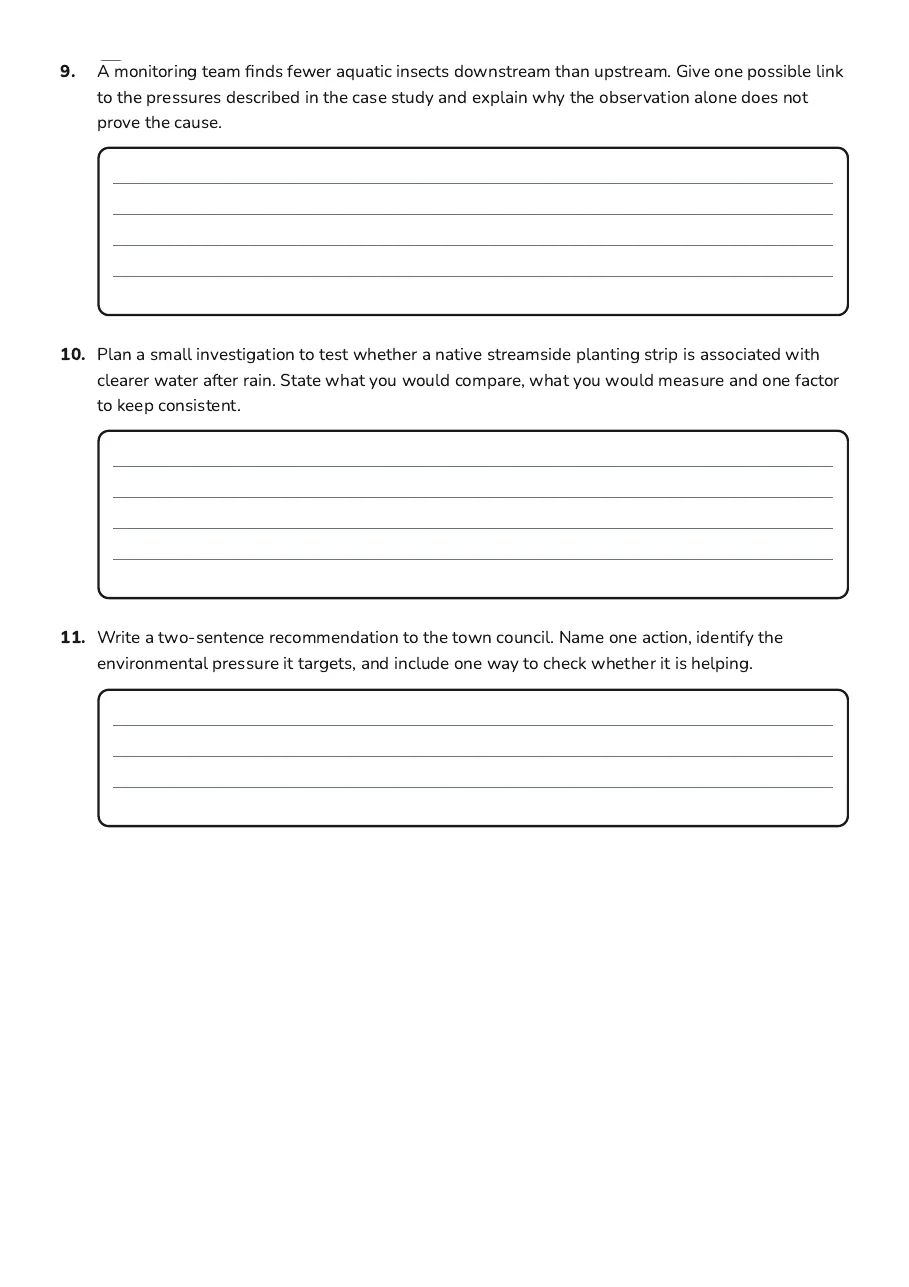
Case study: Te Awa Stream
Te Awa Stream flows past a town and a dairy farm before reaching a coastal wetland. Over several years, more houses and roads were built nearby. Rain washes soil, fertiliser and animal waste from bare ground into the stream. Stormwater from roads can carry oil and rubbish. In summer, some stream sections become warm and algae grow quickly. When algae die and decompose, microbes use oxygen in the water. Fish and aquatic insects need dissolved oxygen to survive. A group of residents planted native trees beside one stream section, organised rubbish clean-ups and asked the council to improve stormwater treatment. The stream is an invented example, but its pressures and possible responses are realistic.
Investigate the evidence
Use the case study to support your reasoning. More than one pressure can affect the same ecosystem.
- It can encourage algae growth; decomposition may lower dissolved oxygen.
- It immediately makes the water colder, so fish grow faster.
- It removes all microbes from the water.
- It changes stream water into seawater.
- 1. Building roads and houses
- 2. Fertiliser and animal waste washing off paddocks
- 3. Litter entering a stream
- C. Excess nutrients can contribute to algal growth
- A. Rubbish can injure or be eaten by wildlife
- B. Natural habitat is removed or broken into smaller areas
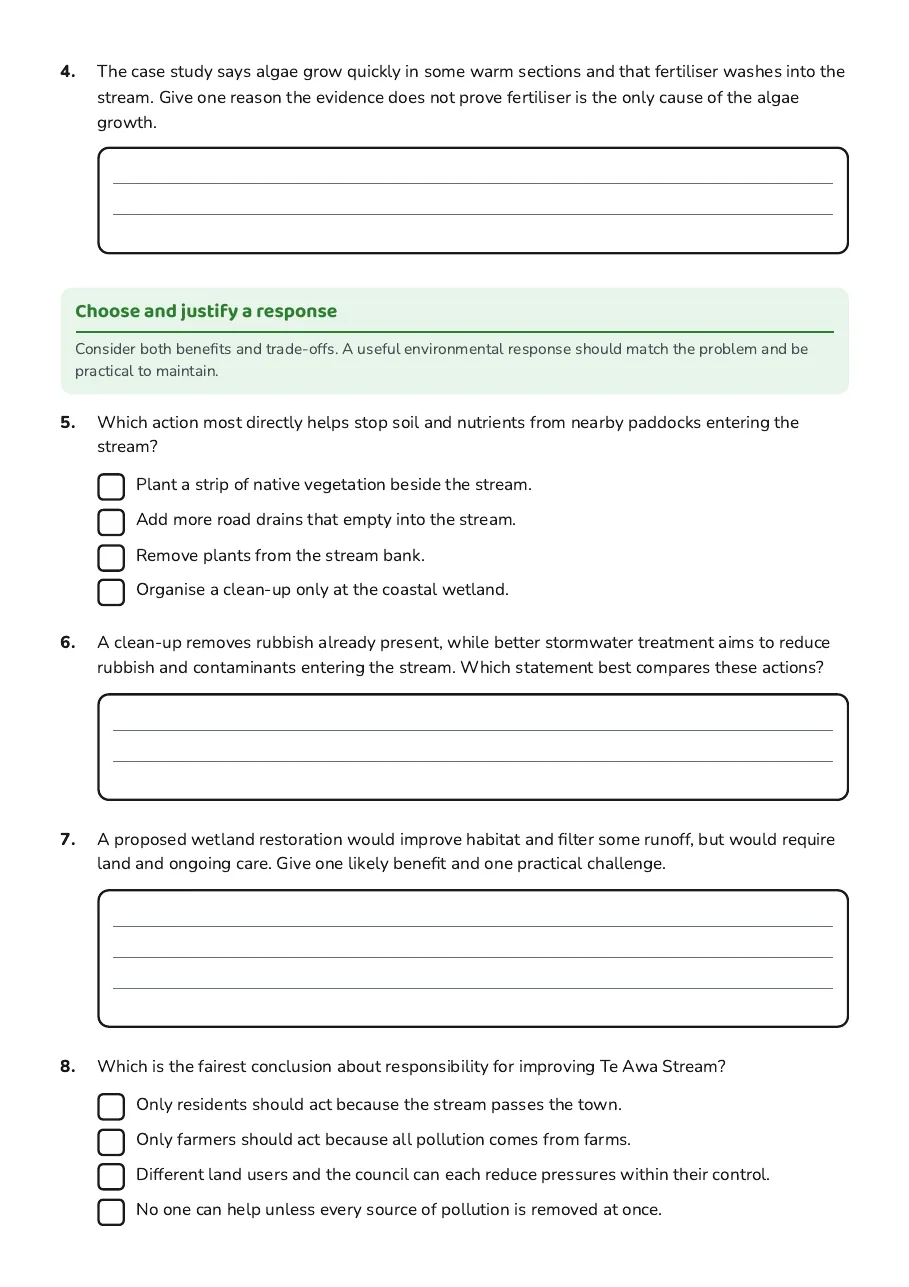
Choose and justify a response
Consider both benefits and trade-offs. A useful environmental response should match the problem and be practical to maintain.
- Plant a strip of native vegetation beside the stream.
- Add more road drains that empty into the stream.
- Remove plants from the stream bank.
- Organise a clean-up only at the coastal wetland.
- Only residents should act because the stream passes the town.
- Only farmers should act because all pollution comes from farms.
- Different land users and the council can each reduce pressures within their control.
- No one can help unless every source of pollution is removed at once.
3 printable pages
Page 1
Page 2
Page 3
About This Worksheet
Free in Kuraplan
Sign up free, grab the PDF, and customize it for your class.
Print-Ready
Formatted for standard paper. Clean layout, easy to read.
AI-Generated
Created with Kuraplan's AI, designed for real classroom use.
For Teachers & Parents
Use in classrooms, for homework, tutoring, or homeschool.
Need a custom version of this worksheet?
Kuraplan's AI generates custom worksheets in seconds — differentiated for every learner, aligned to your curriculum.
Generate Custom Worksheets — FreeMore Science Worksheets
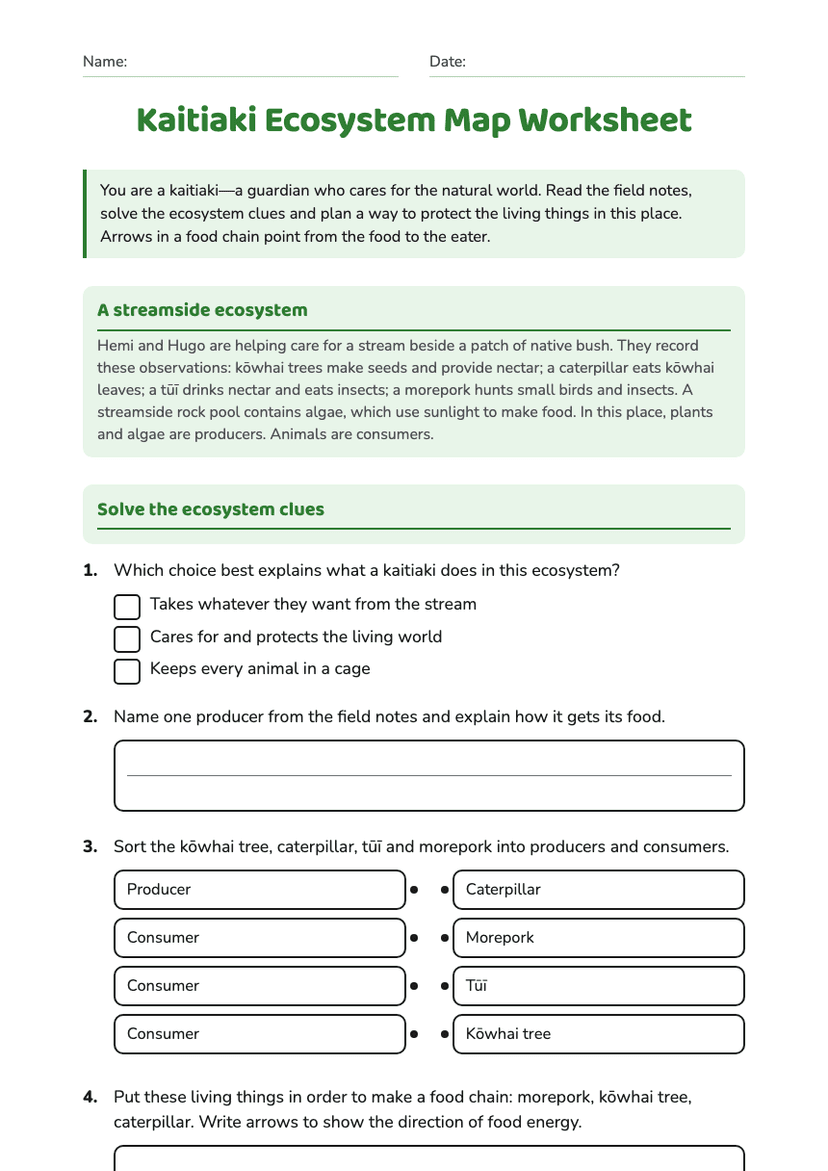
Kaitiaki Ecosystem Map Worksheet
Free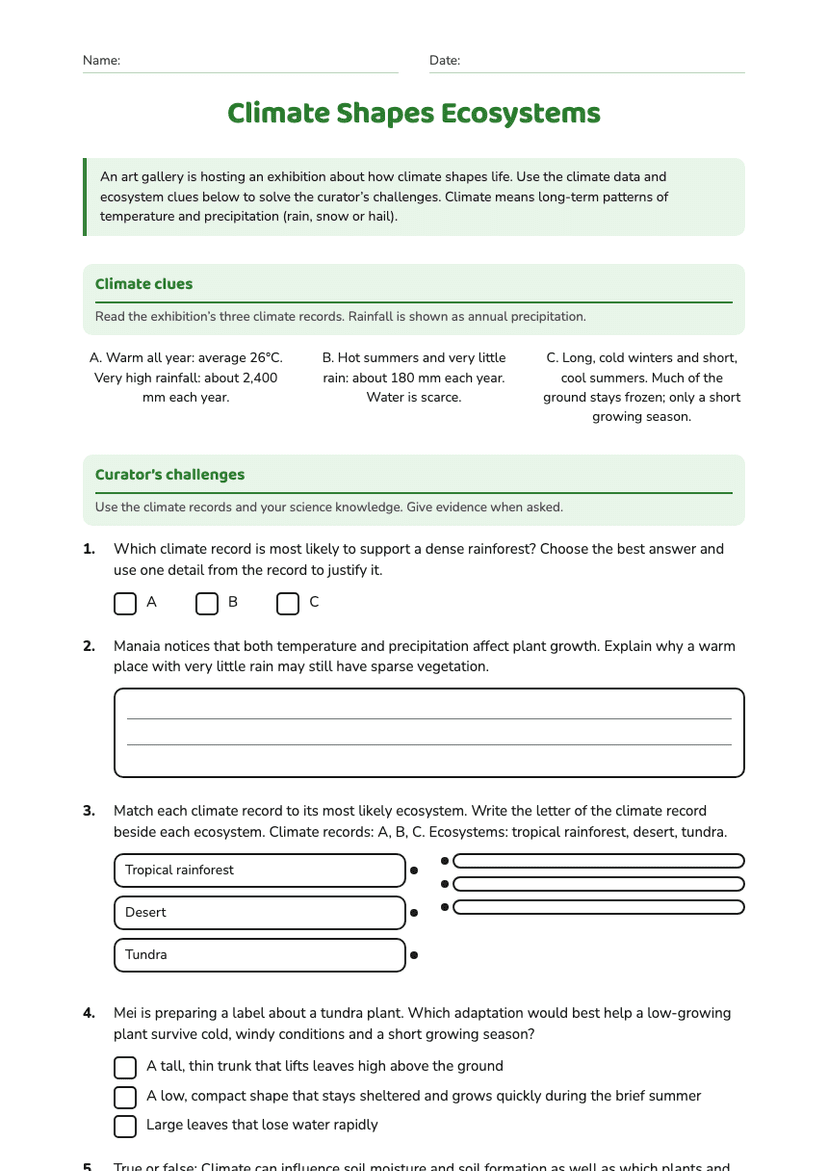
Climate Shapes Ecosystems
Free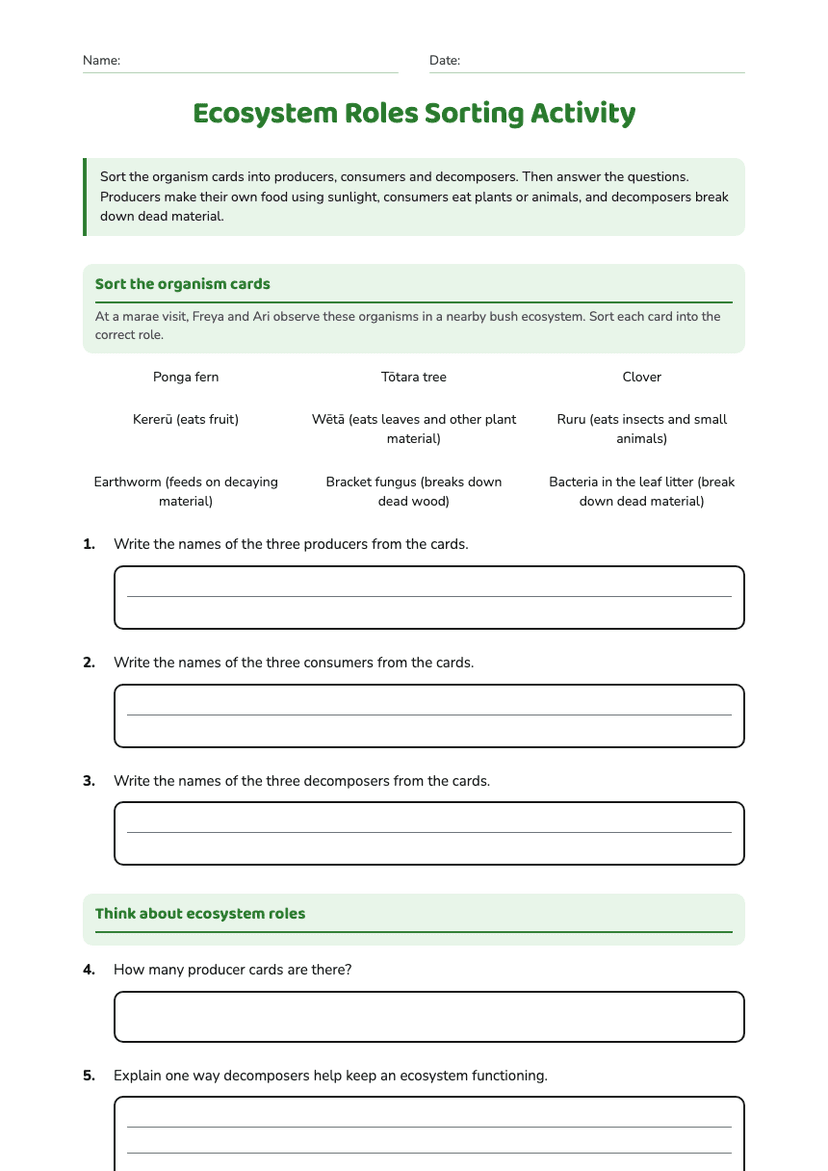
Ecosystem Roles Sorting Activity
Free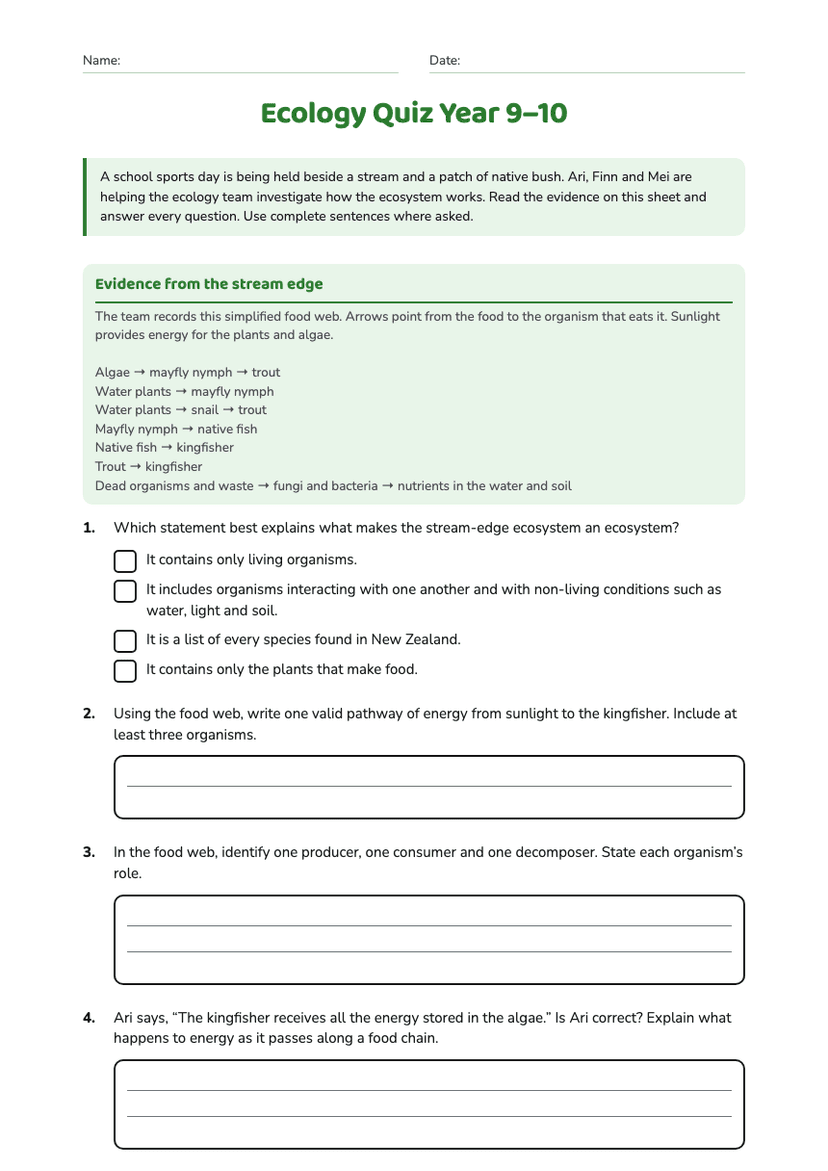
Ecology Quiz Year 9–10
Free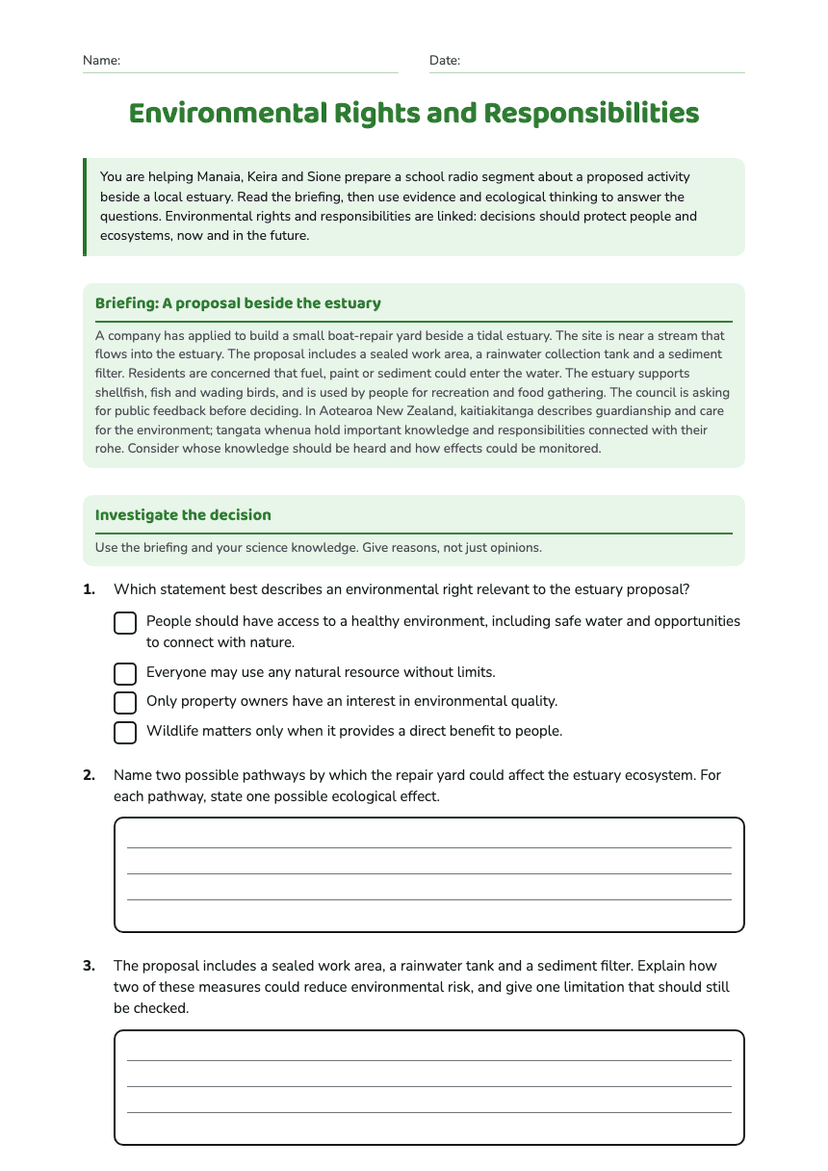
Environmental Rights and Responsibilities
Free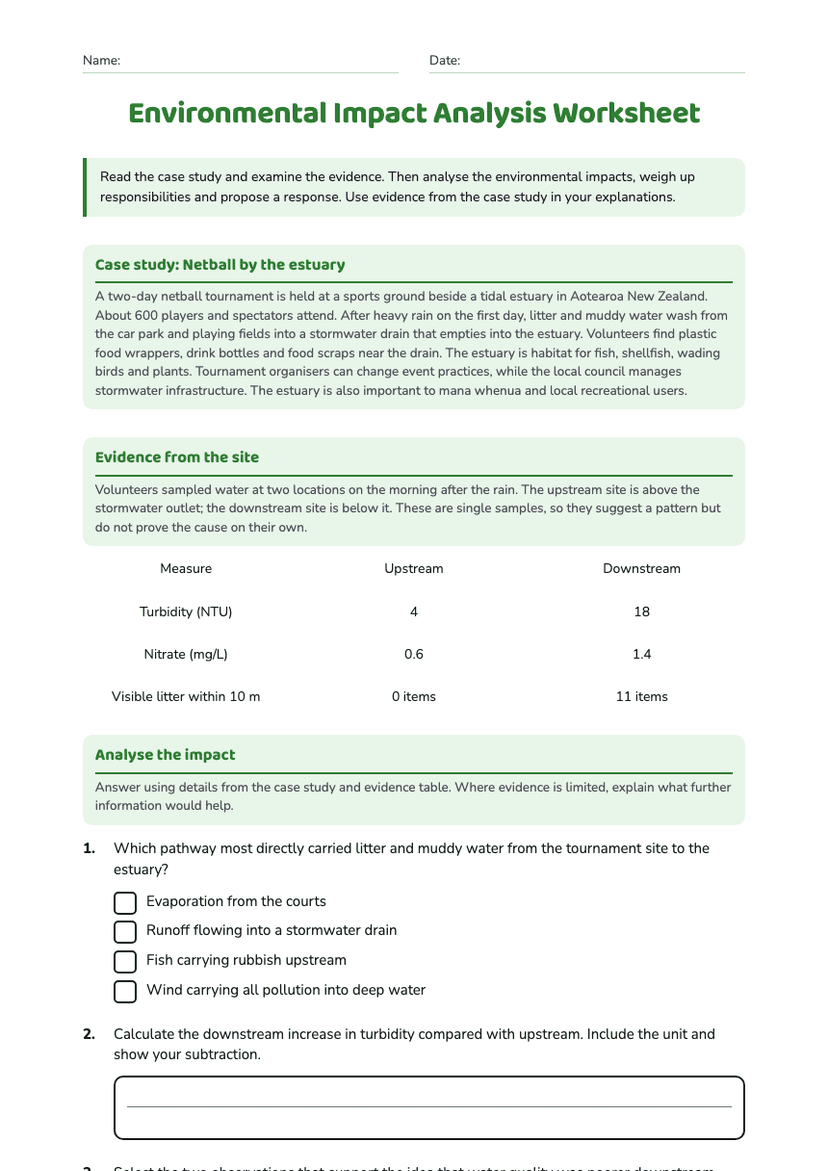
Environmental Impact Analysis Worksheet
Free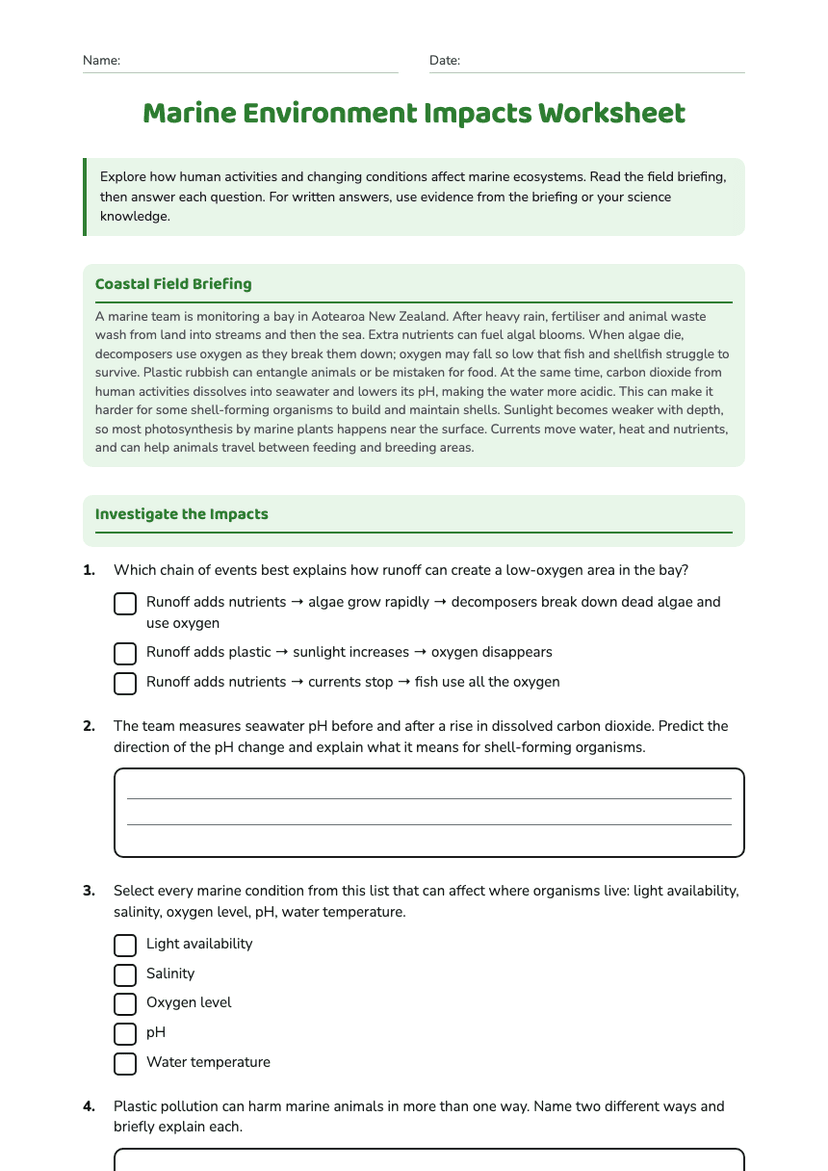
Marine Environment Impacts Worksheet
Free