Introduction to Recount Writing
A free english worksheet ready for your classroom. Open in Kuraplan to grab the print-ready PDF, customize it for your students, or generate a fresh version in seconds.
Introduction to Recount Writing
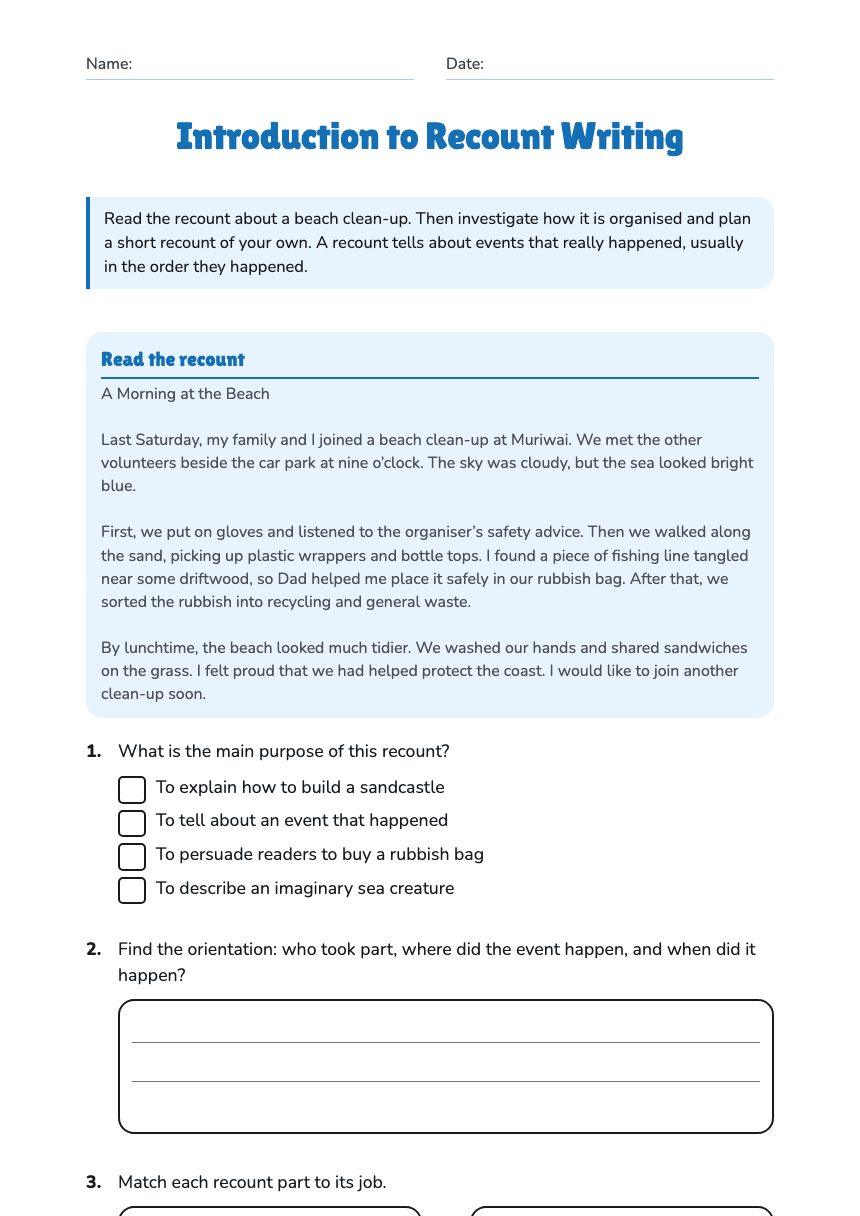
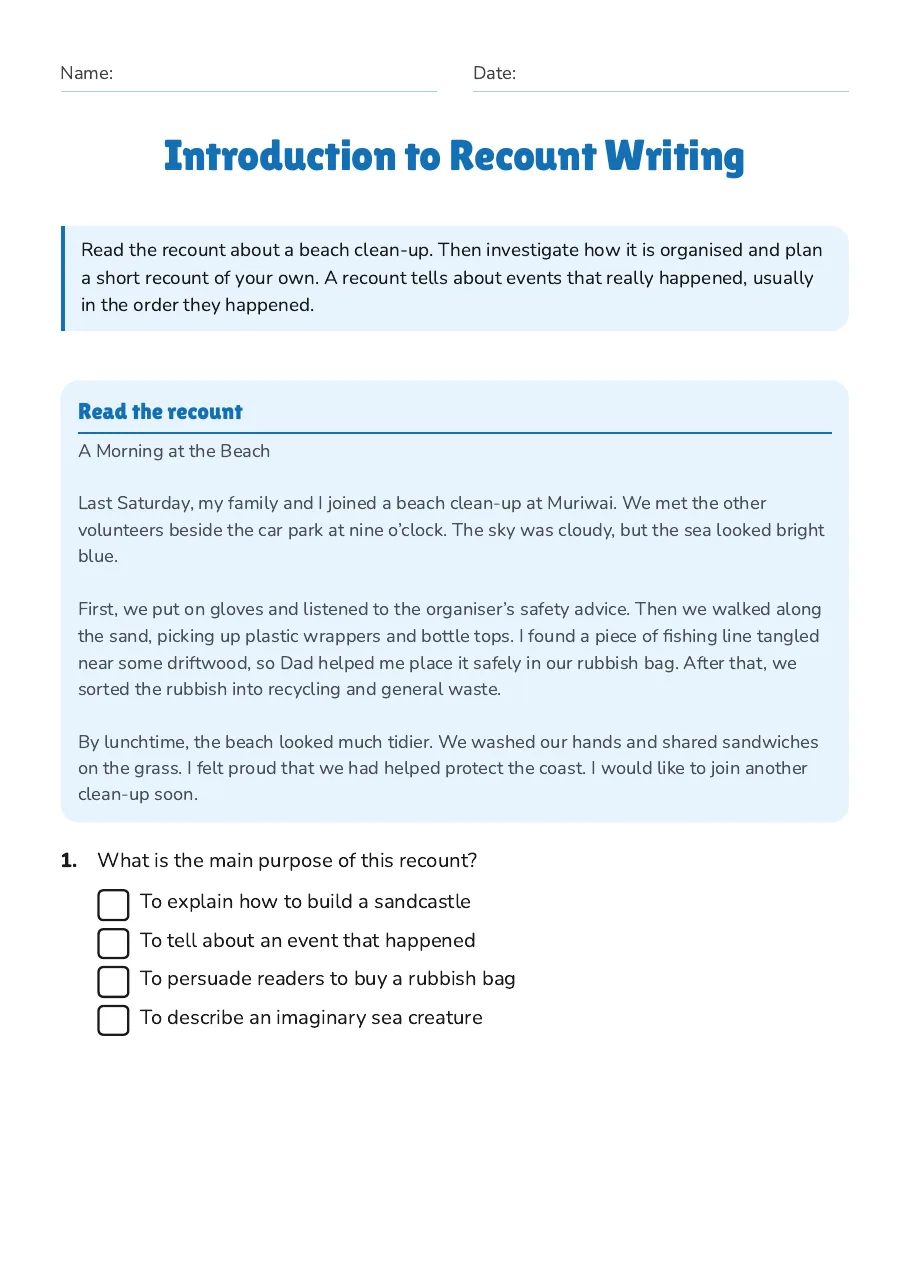
Read the recount
A Morning at the Beach Last Saturday, my family and I joined a beach clean-up at Muriwai. We met the other volunteers beside the car park at nine o’clock. The sky was cloudy, but the sea looked bright blue. First, we put on gloves and listened to the organiser’s safety advice. Then we walked along the sand, picking up plastic wrappers and bottle tops. I found a piece of fishing line tangled near some driftwood, so Dad helped me place it safely in our rubbish bag. After that, we sorted the rubbish into recycling and general waste. By lunchtime, the beach looked much tidier. We washed our hands and shared sandwiches on the grass. I felt proud that we had helped protect the coast. I would like to join another clean-up soon.
- To explain how to build a sandcastle
- To tell about an event that happened
- To persuade readers to buy a rubbish bag
- To describe an imaginary sea creature
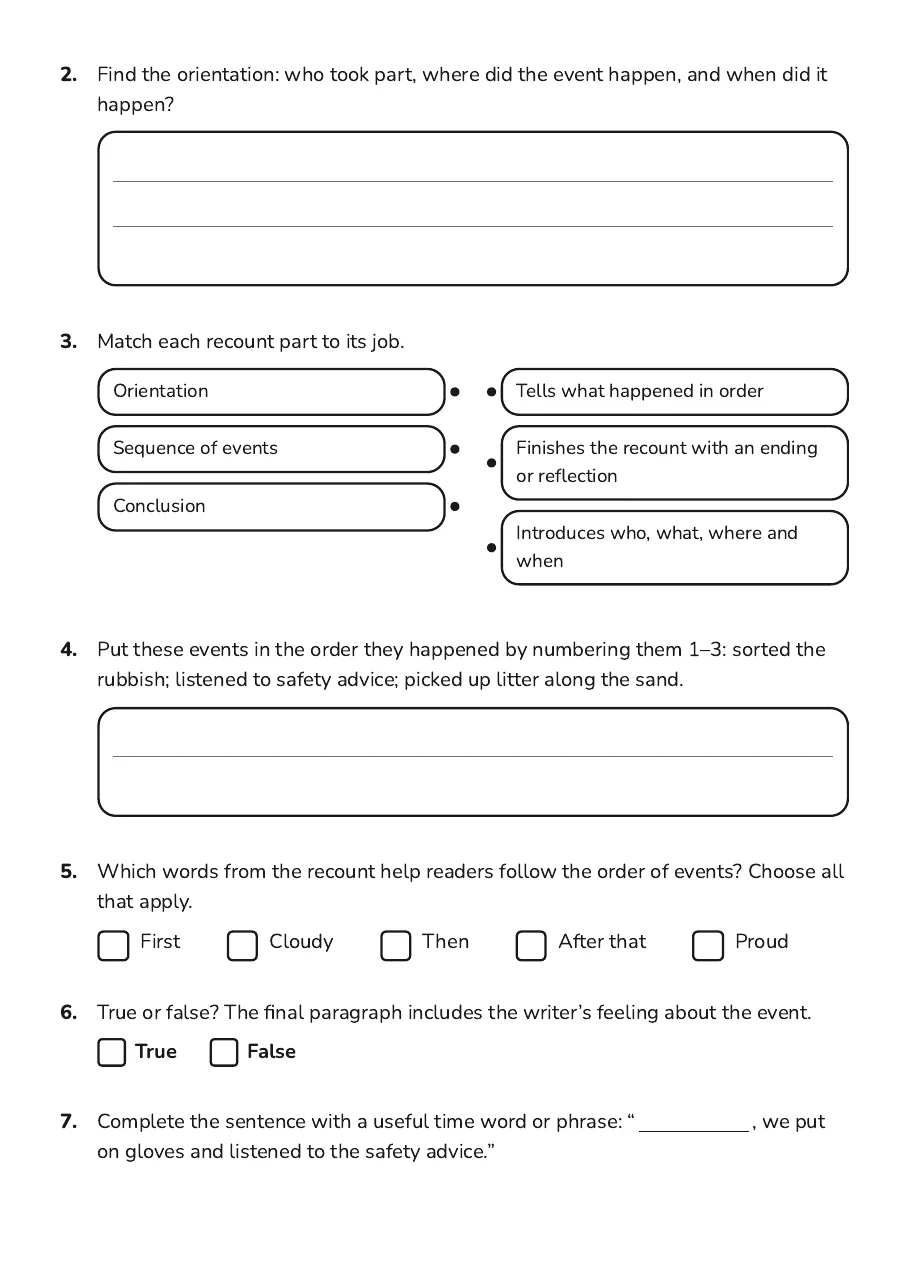
- Orientation
- Sequence of events
- Conclusion
- Tells what happened in order
- Finishes the recount with an ending or reflection
- Introduces who, what, where and when
- First
- Cloudy
- Then
- After that
- Proud
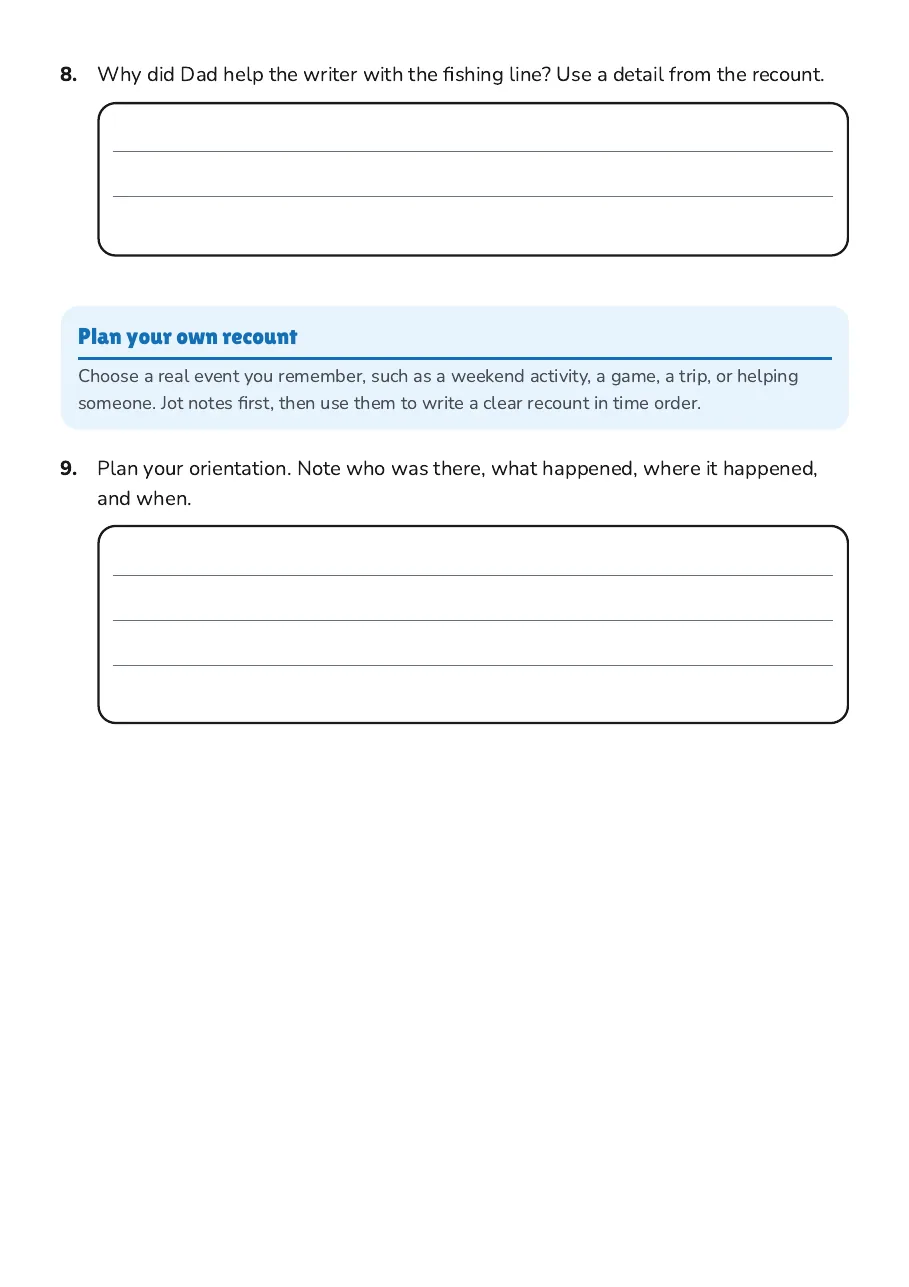
Plan your own recount
Choose a real event you remember, such as a weekend activity, a game, a trip, or helping someone. Jot notes first, then use them to write a clear recount in time order.
4 printable pages
Page 1
Page 2
Page 3
Page 4
About This Worksheet
Free in Kuraplan
Sign up free, grab the PDF, and customize it for your class.
Print-Ready
Formatted for standard paper. Clean layout, easy to read.
AI-Generated
Created with Kuraplan's AI, designed for real classroom use.
For Teachers & Parents
Use in classrooms, for homework, tutoring, or homeschool.
Need a custom version of this worksheet?
Kuraplan's AI generates custom worksheets in seconds — differentiated for every learner, aligned to your curriculum.
Generate Custom Worksheets — FreeMore English Worksheets
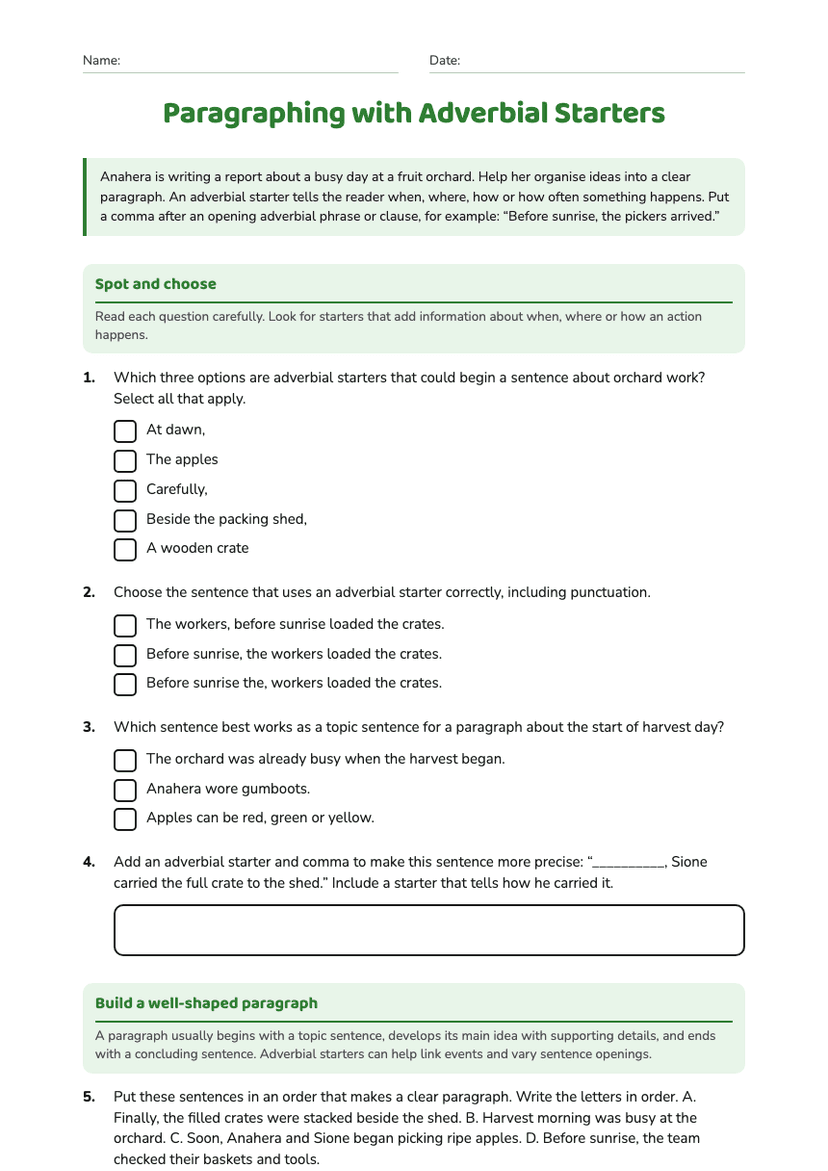
Paragraphing with Adverbial Starters
Free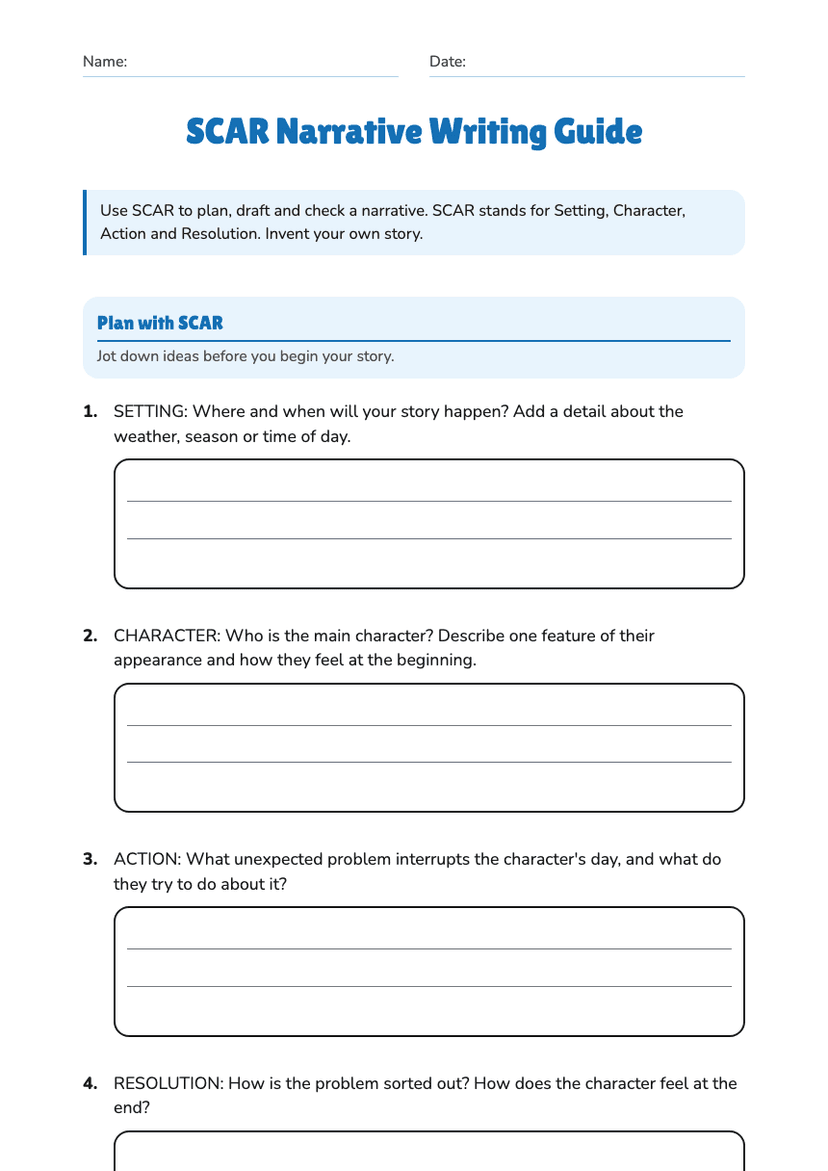
SCAR Narrative Writing Guide
Free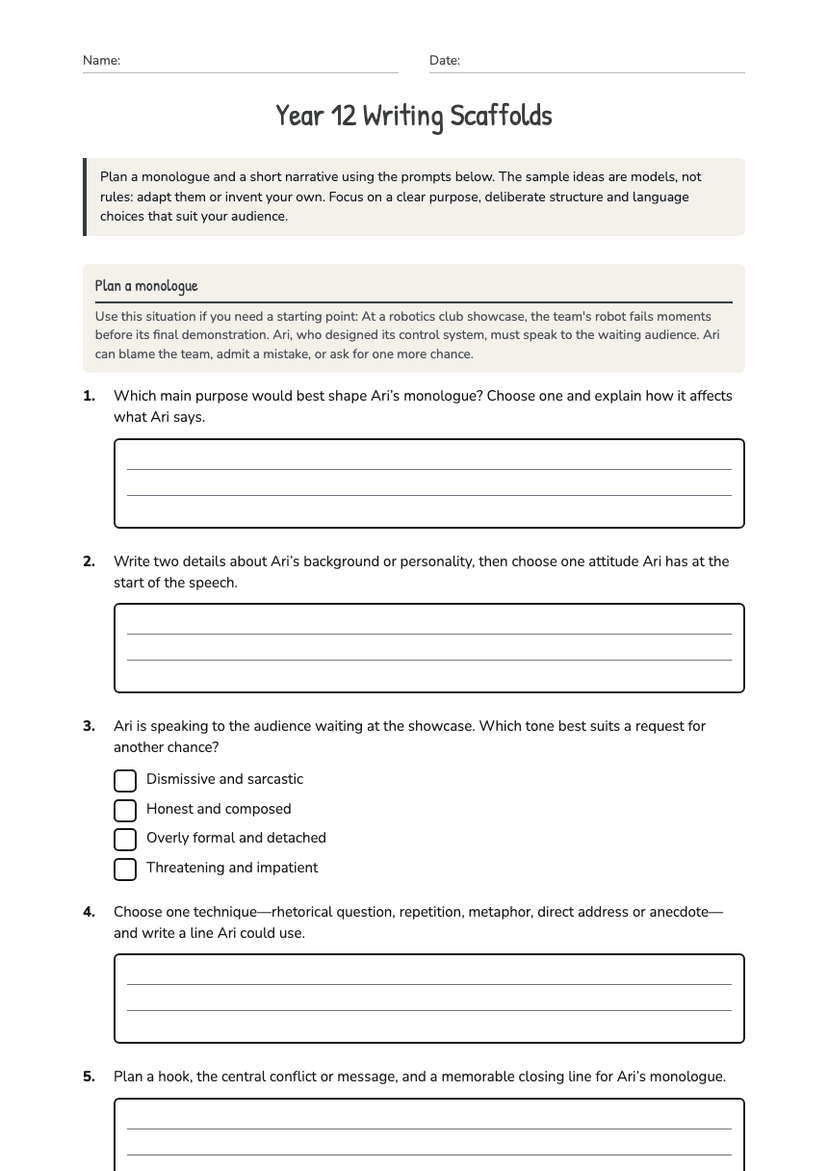
Year 12 Writing Scaffolds
Free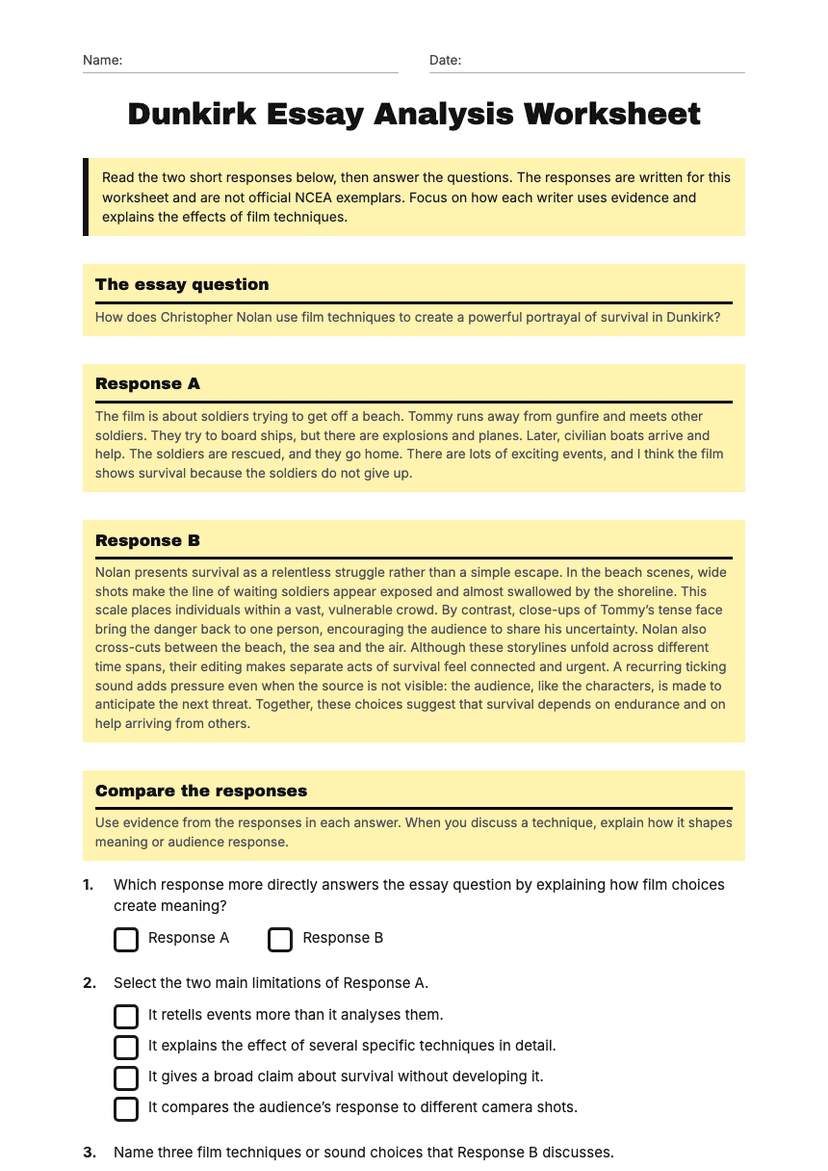
Dunkirk Essay Analysis Worksheet
Free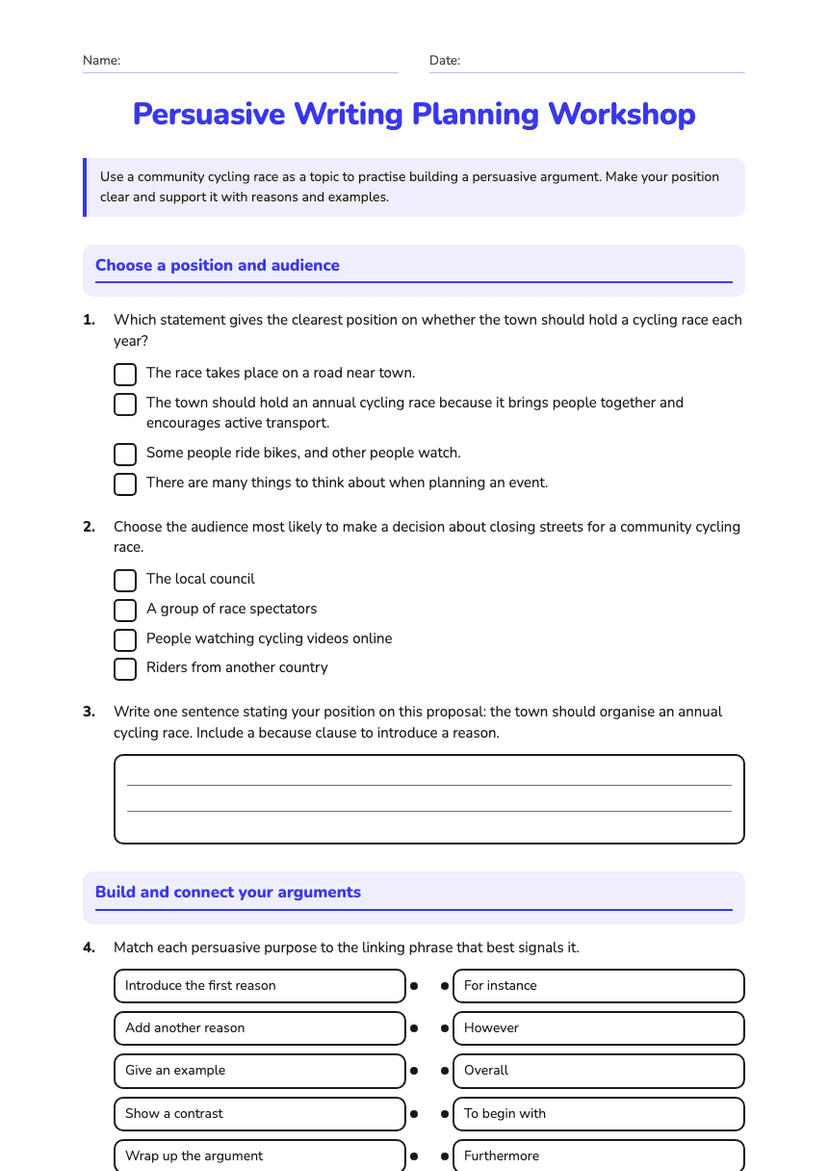
Persuasive Writing Planning Workshop
Free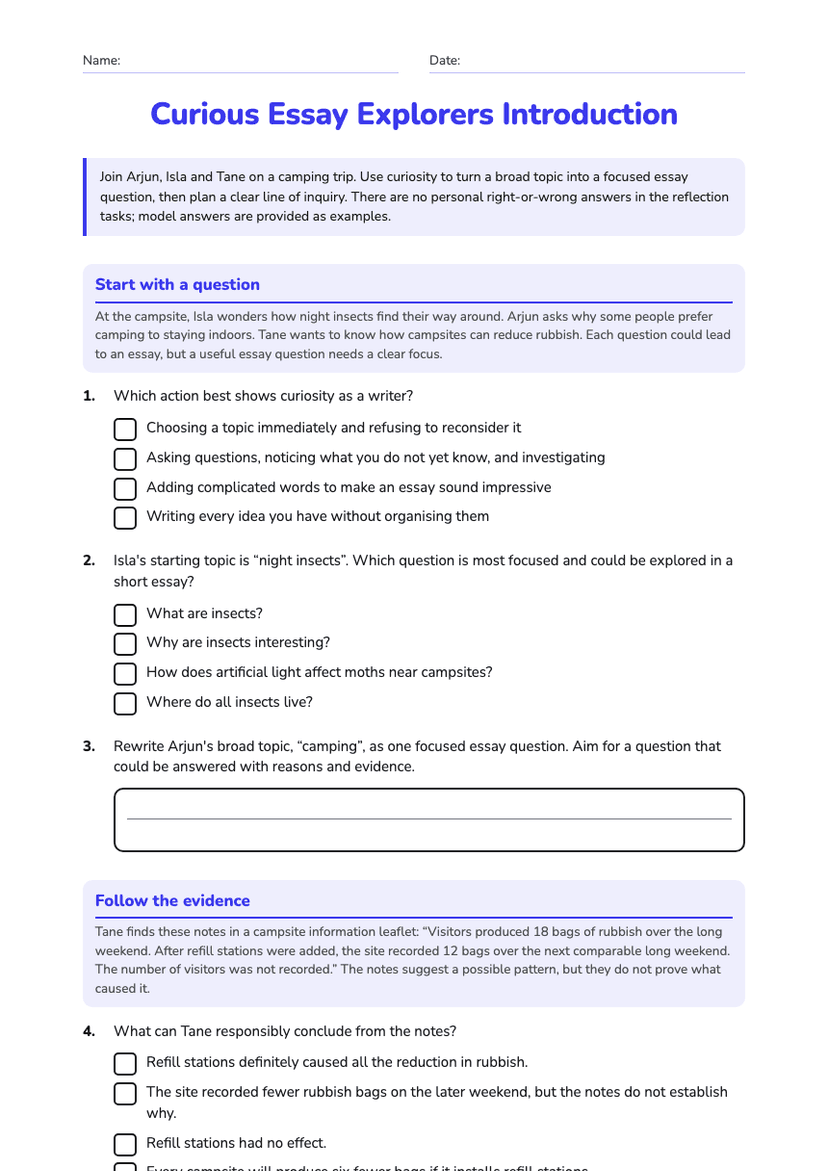
Curious Essay Explorers Introduction
Free
Special Moment Recount Writing
Free