Introduction to Tikanga Māori
A free te reo māori worksheet ready for your classroom. Open in Kuraplan to grab the print-ready PDF, customize it for your students, or generate a fresh version in seconds.
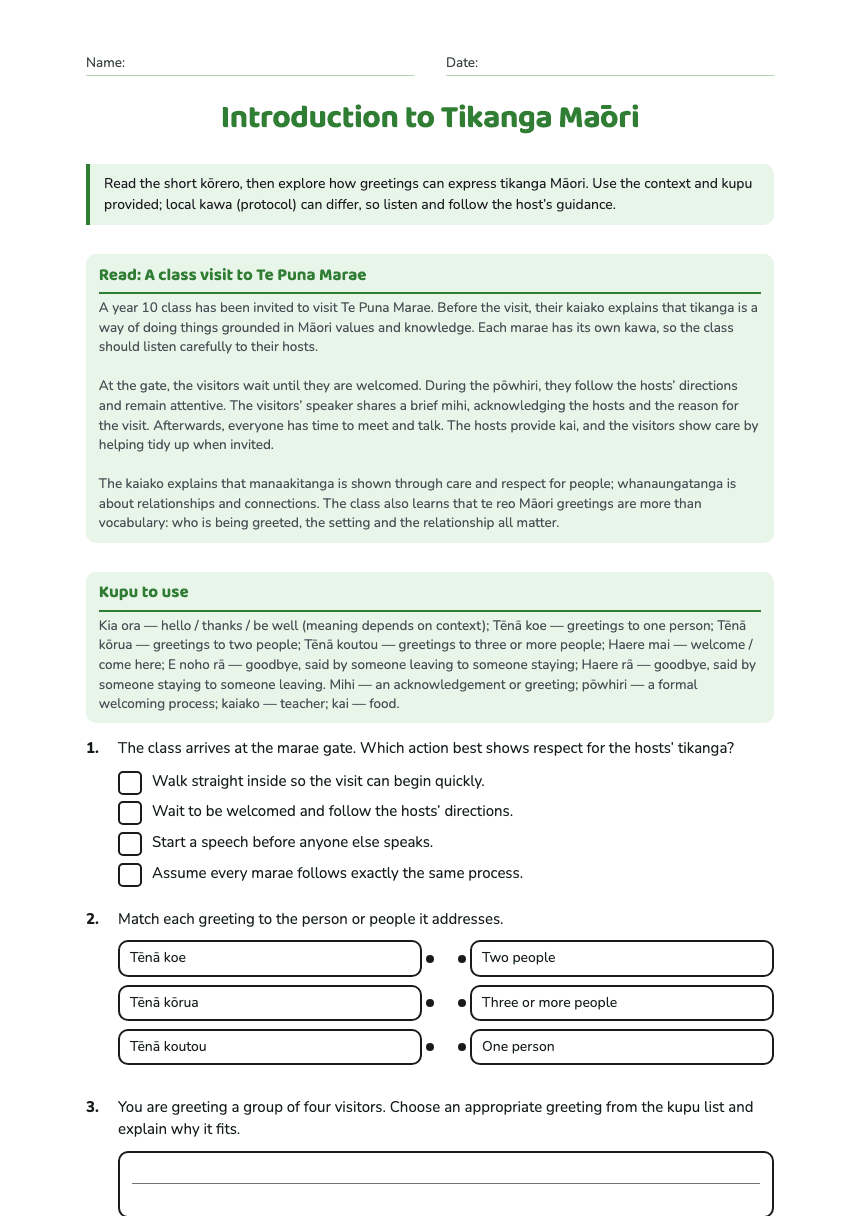
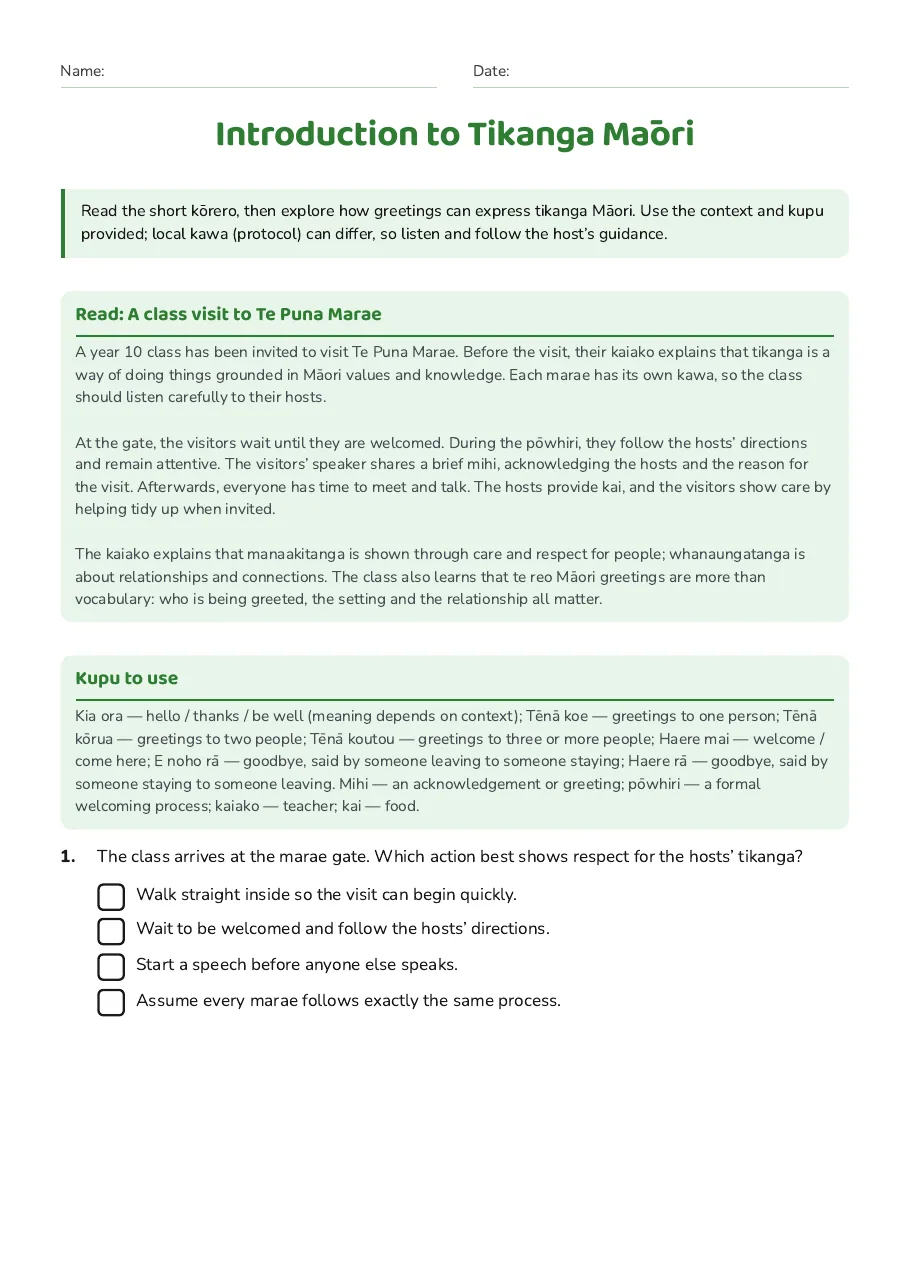
Introduction to Tikanga Māori
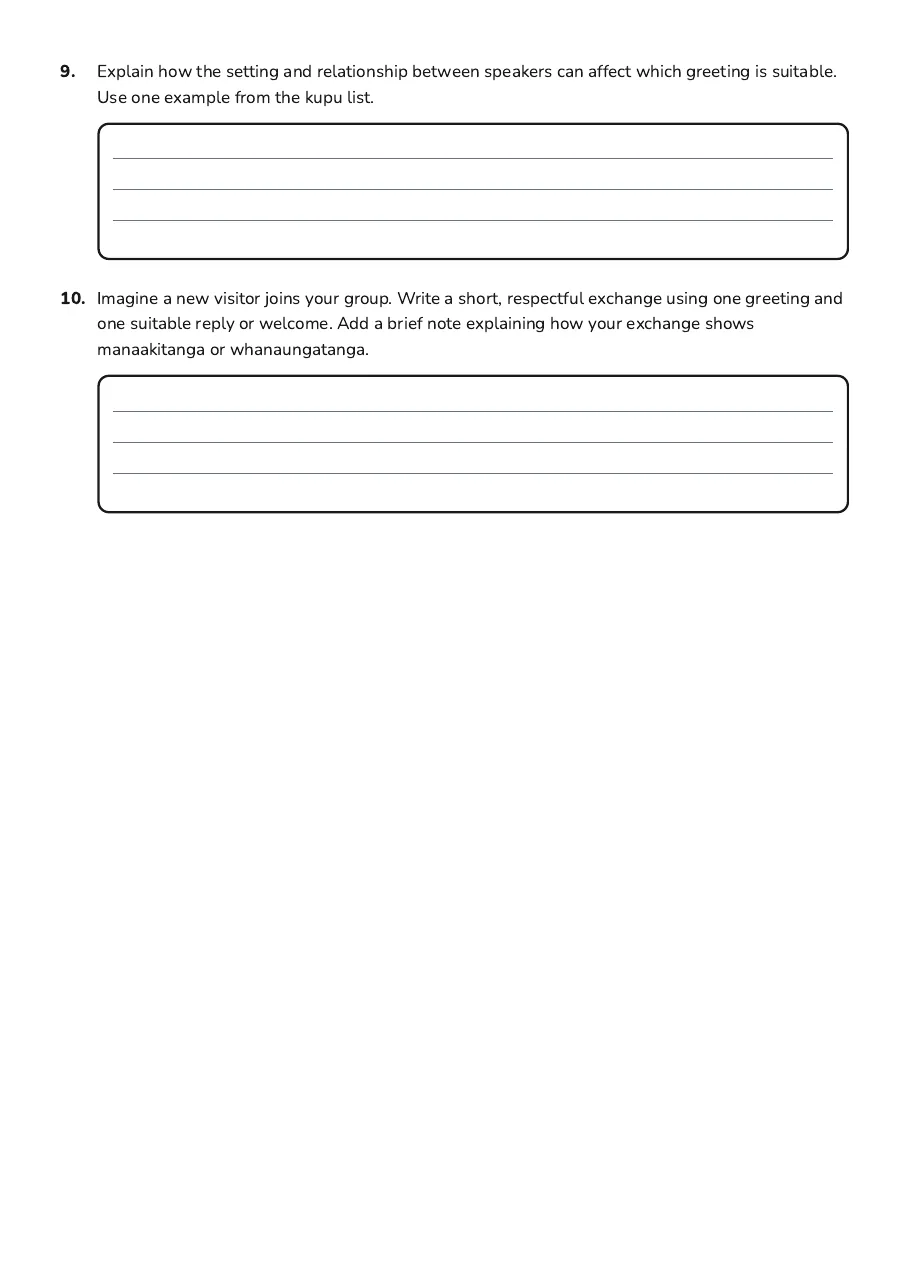
Read: A class visit to Te Puna Marae
A year 10 class has been invited to visit Te Puna Marae. Before the visit, their kaiako explains that tikanga is a way of doing things grounded in Māori values and knowledge. Each marae has its own kawa, so the class should listen carefully to their hosts. At the gate, the visitors wait until they are welcomed. During the pōwhiri, they follow the hosts’ directions and remain attentive. The visitors’ speaker shares a brief mihi, acknowledging the hosts and the reason for the visit. Afterwards, everyone has time to meet and talk. The hosts provide kai, and the visitors show care by helping tidy up when invited. The kaiako explains that manaakitanga is shown through care and respect for people; whanaungatanga is about relationships and connections. The class also learns that te reo Māori greetings are more than vocabulary: who is being greeted, the setting and the relationship all matter.
Kupu to use
Kia ora — hello / thanks / be well (meaning depends on context); Tēnā koe — greetings to one person; Tēnā kōrua — greetings to two people; Tēnā koutou — greetings to three or more people; Haere mai — welcome / come here; E noho rā — goodbye, said by someone leaving to someone staying; Haere rā — goodbye, said by someone staying to someone leaving. Mihi — an acknowledgement or greeting; pōwhiri — a formal welcoming process; kaiako — teacher; kai — food.
- Walk straight inside so the visit can begin quickly.
- Wait to be welcomed and follow the hosts’ directions.
- Start a speech before anyone else speaks.
- Assume every marae follows exactly the same process.
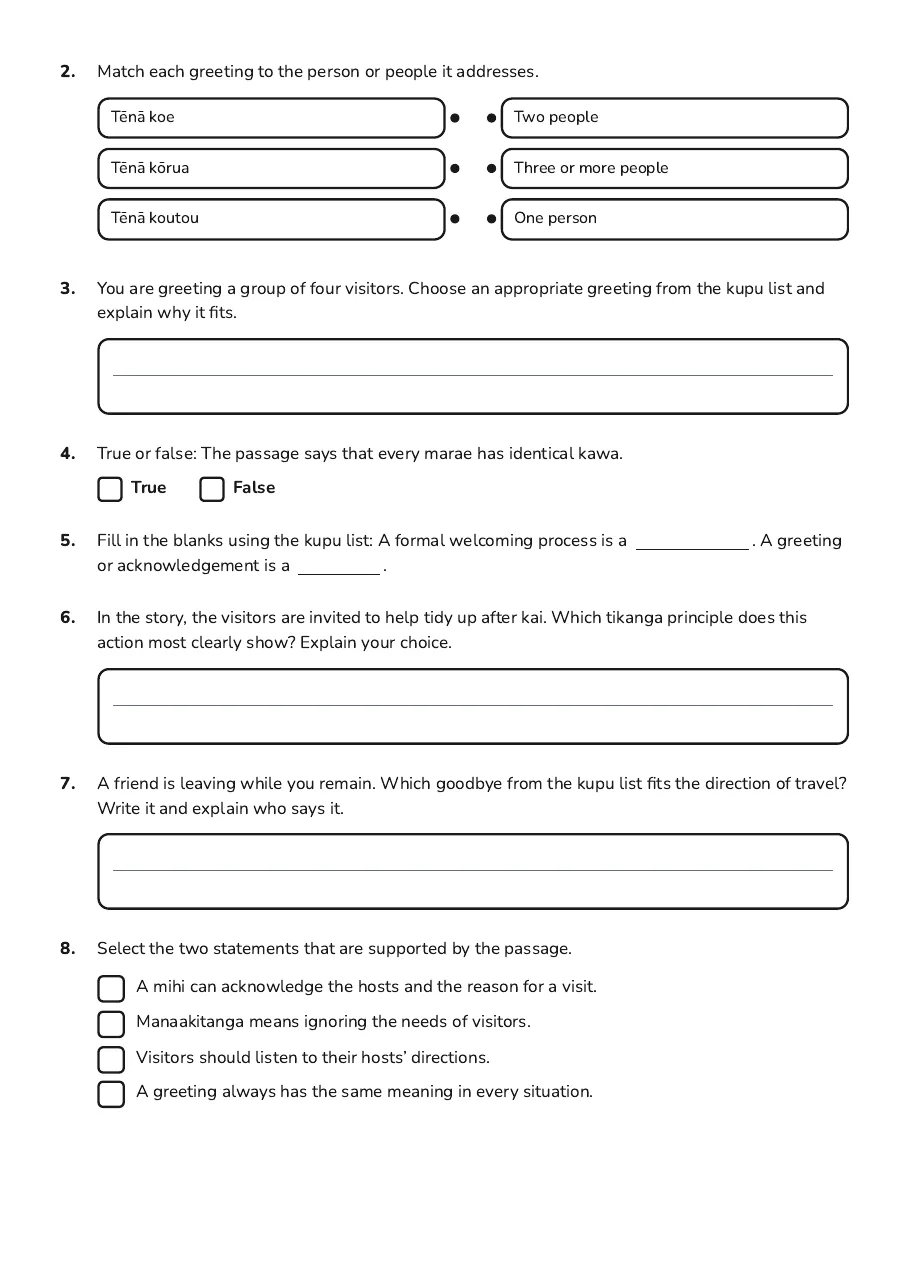
- Tēnā koe
- Tēnā kōrua
- Tēnā koutou
- Two people
- Three or more people
- One person
- A mihi can acknowledge the hosts and the reason for a visit.
- Manaakitanga means ignoring the needs of visitors.
- Visitors should listen to their hosts’ directions.
- A greeting always has the same meaning in every situation.
3 printable pages
Page 1
Page 2
Page 3
About This Worksheet
Free in Kuraplan
Sign up free, grab the PDF, and customize it for your class.
Print-Ready
Formatted for standard paper. Clean layout, easy to read.
AI-Generated
Created with Kuraplan's AI, designed for real classroom use.
For Teachers & Parents
Use in classrooms, for homework, tutoring, or homeschool.
Need a custom version of this worksheet?
Kuraplan's AI generates custom worksheets in seconds — differentiated for every learner, aligned to your curriculum.
Generate Custom Worksheets — FreeMore Te Reo Māori Worksheets
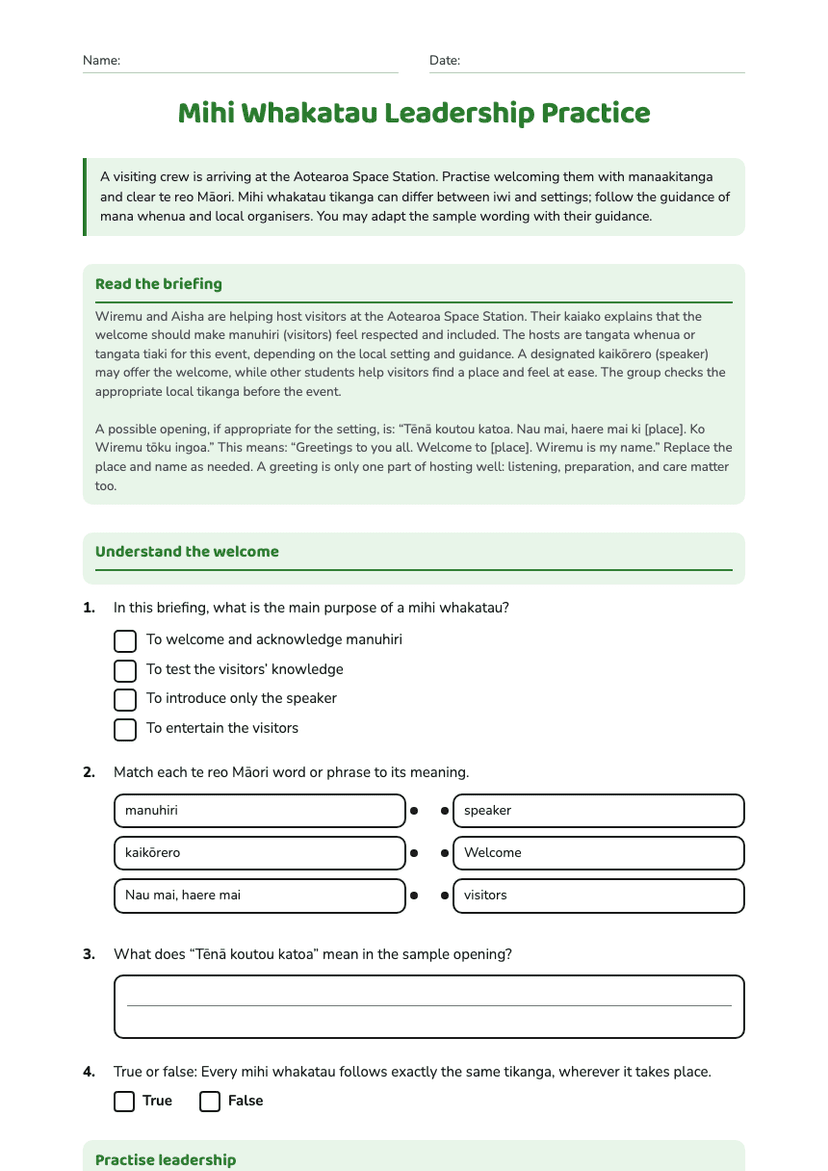
Mihi Whakatau Leadership Practice
Free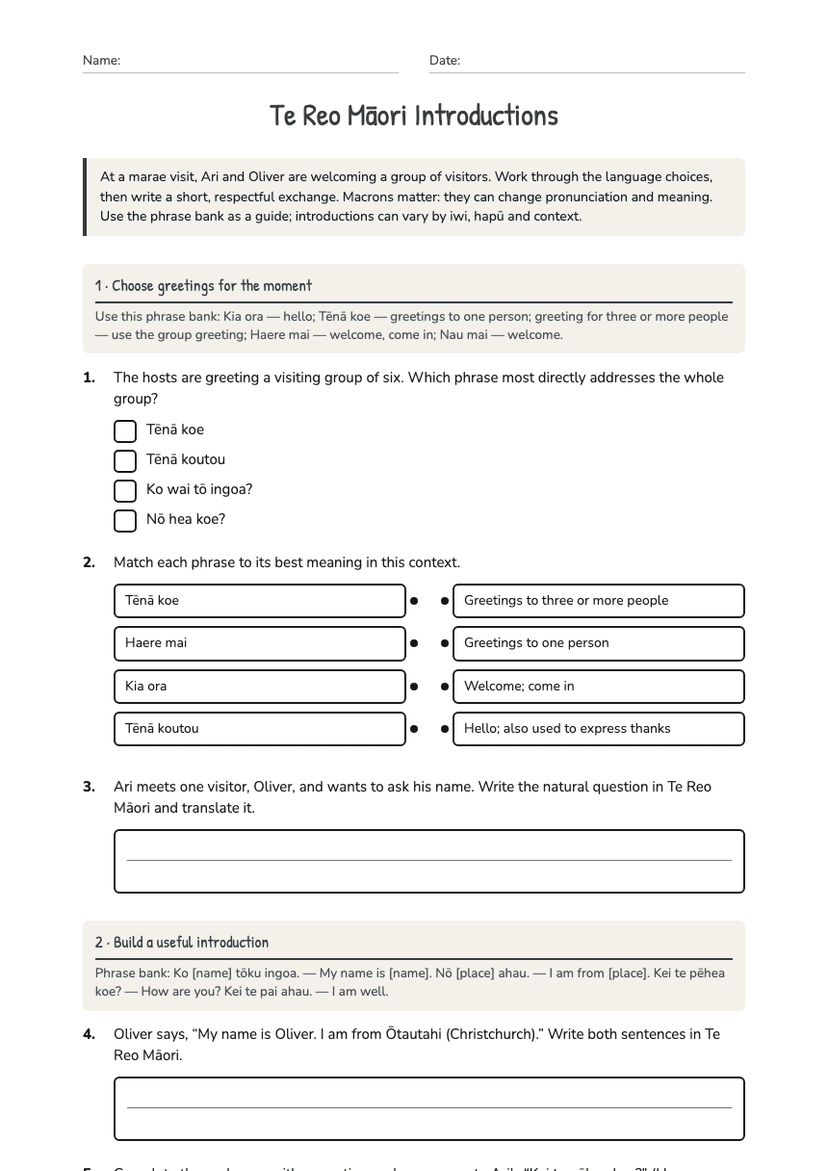
Te Reo Māori Introductions
Free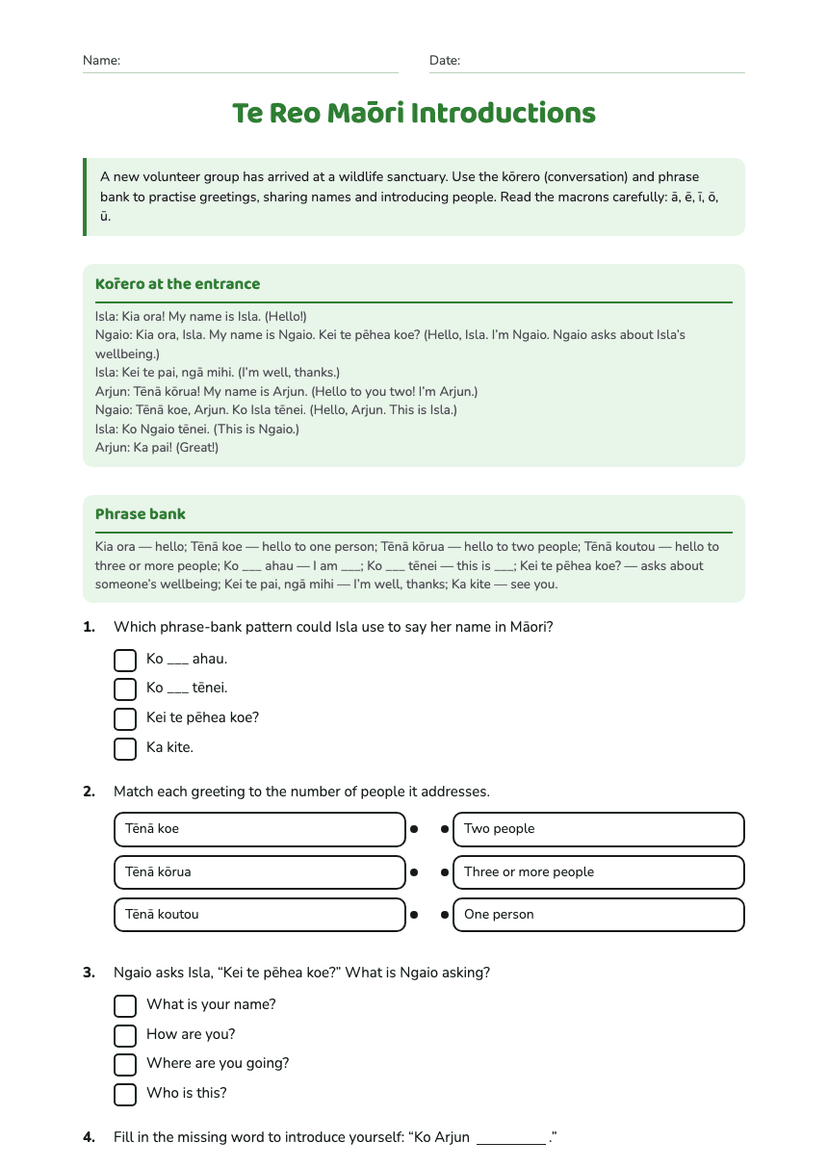
Te Reo Māori Introductions
Free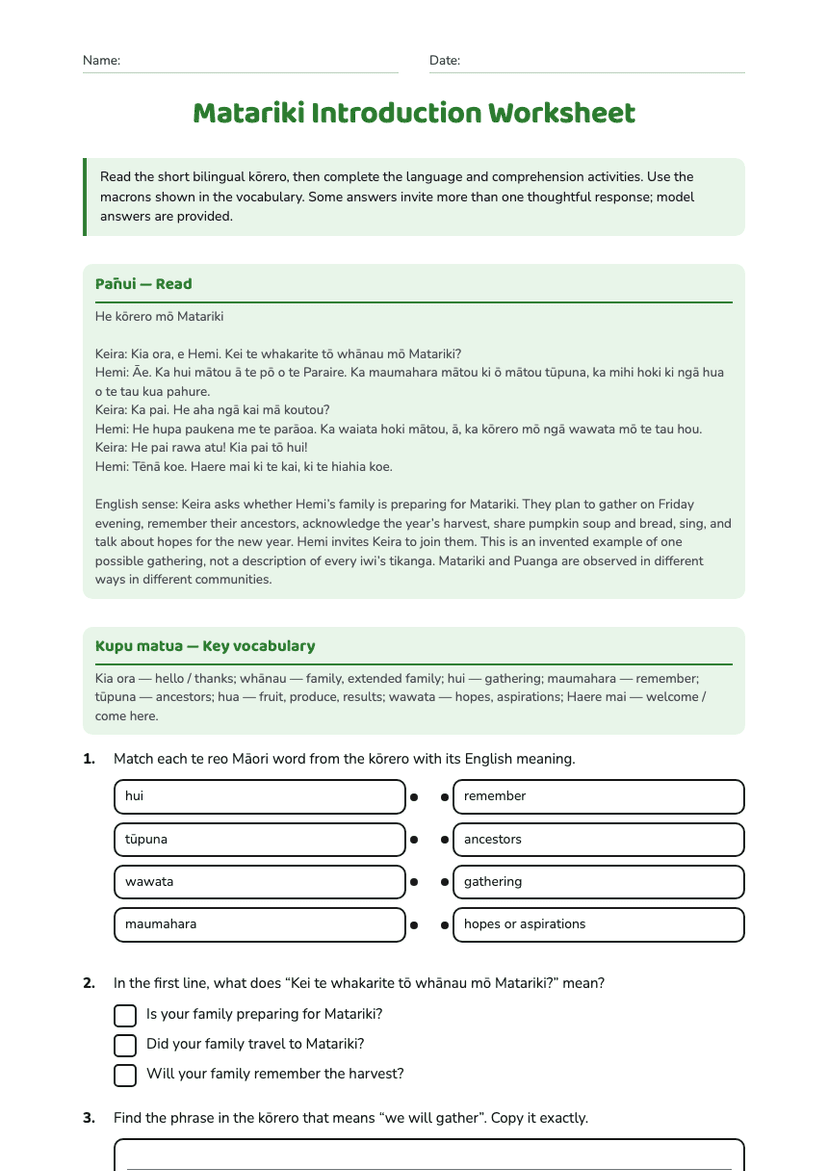
Matariki Introduction Worksheet
Free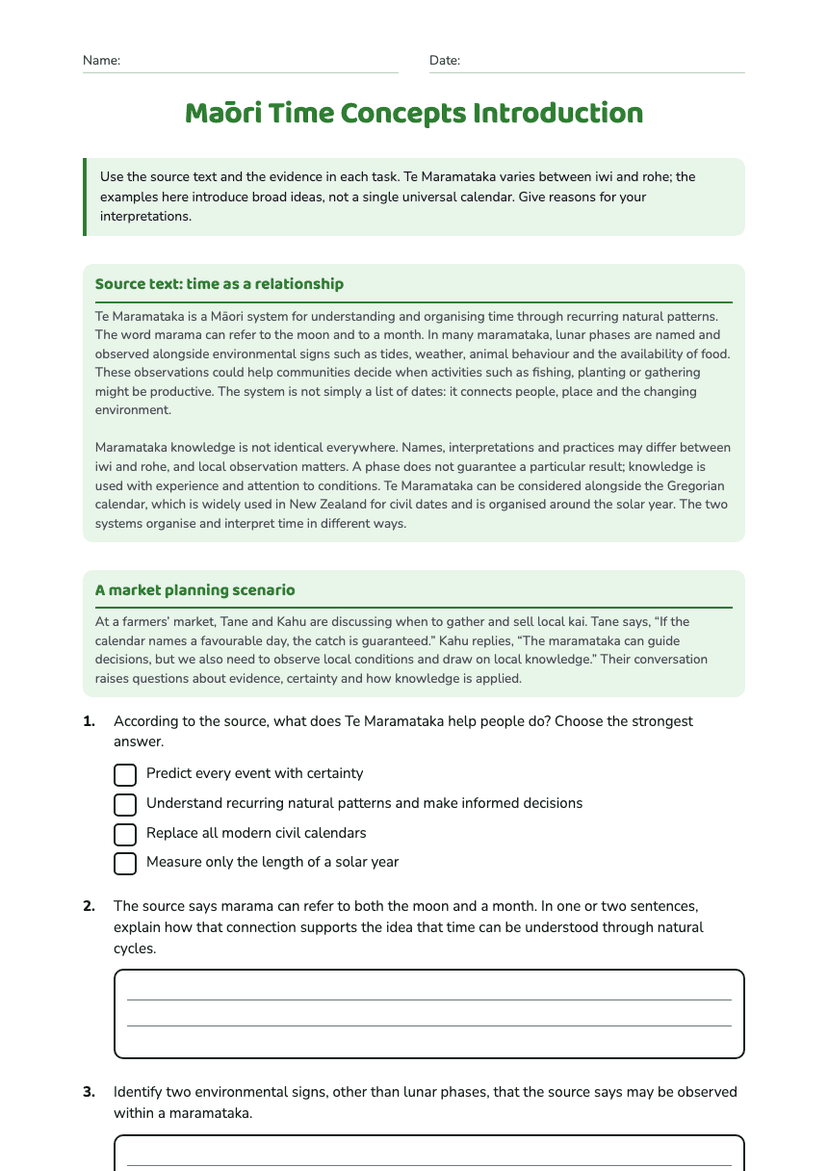
Māori Time Concepts Introduction
Free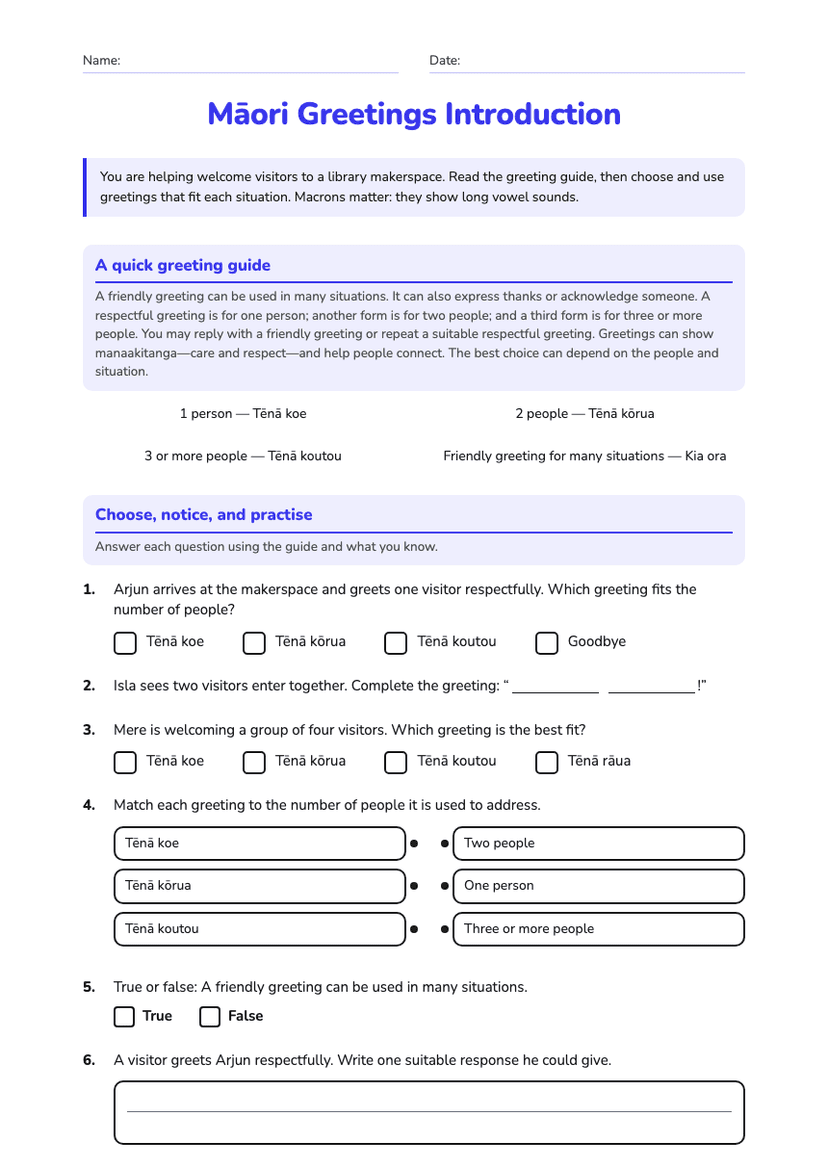
Māori Greetings Introduction
Free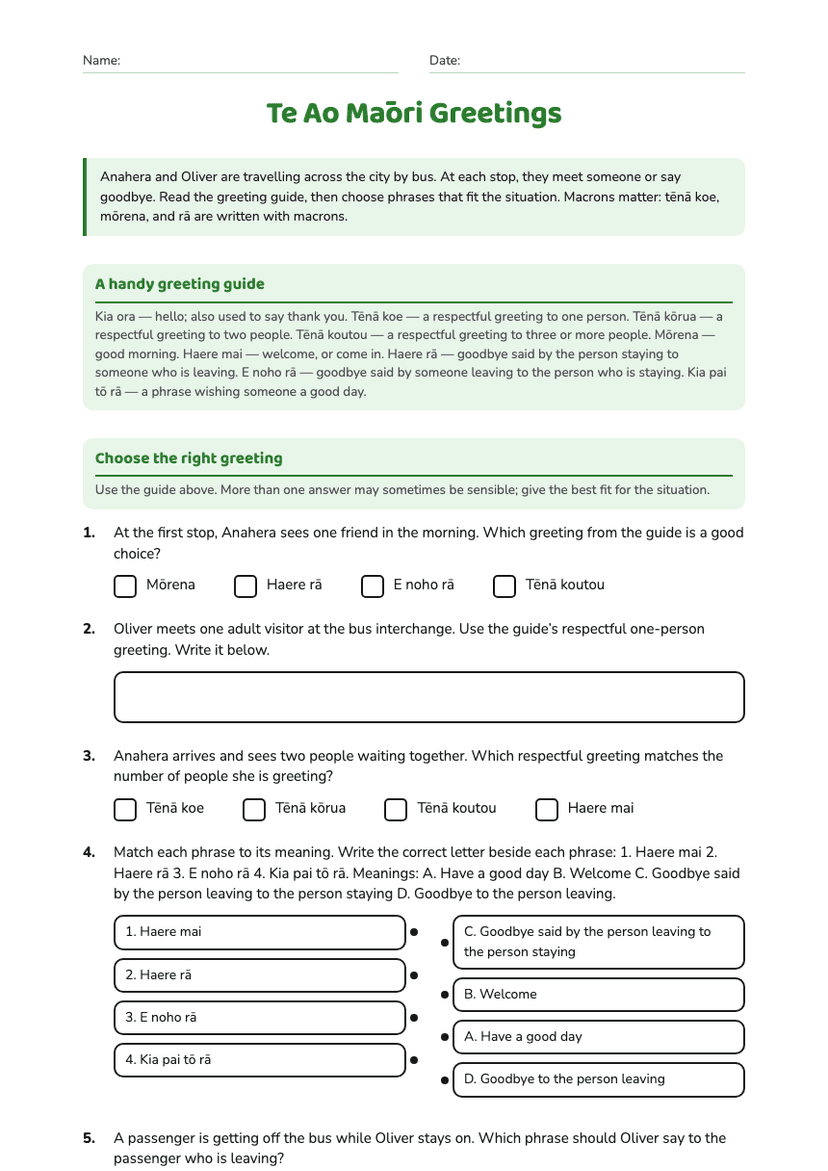
Te Ao Māori Greetings
Free