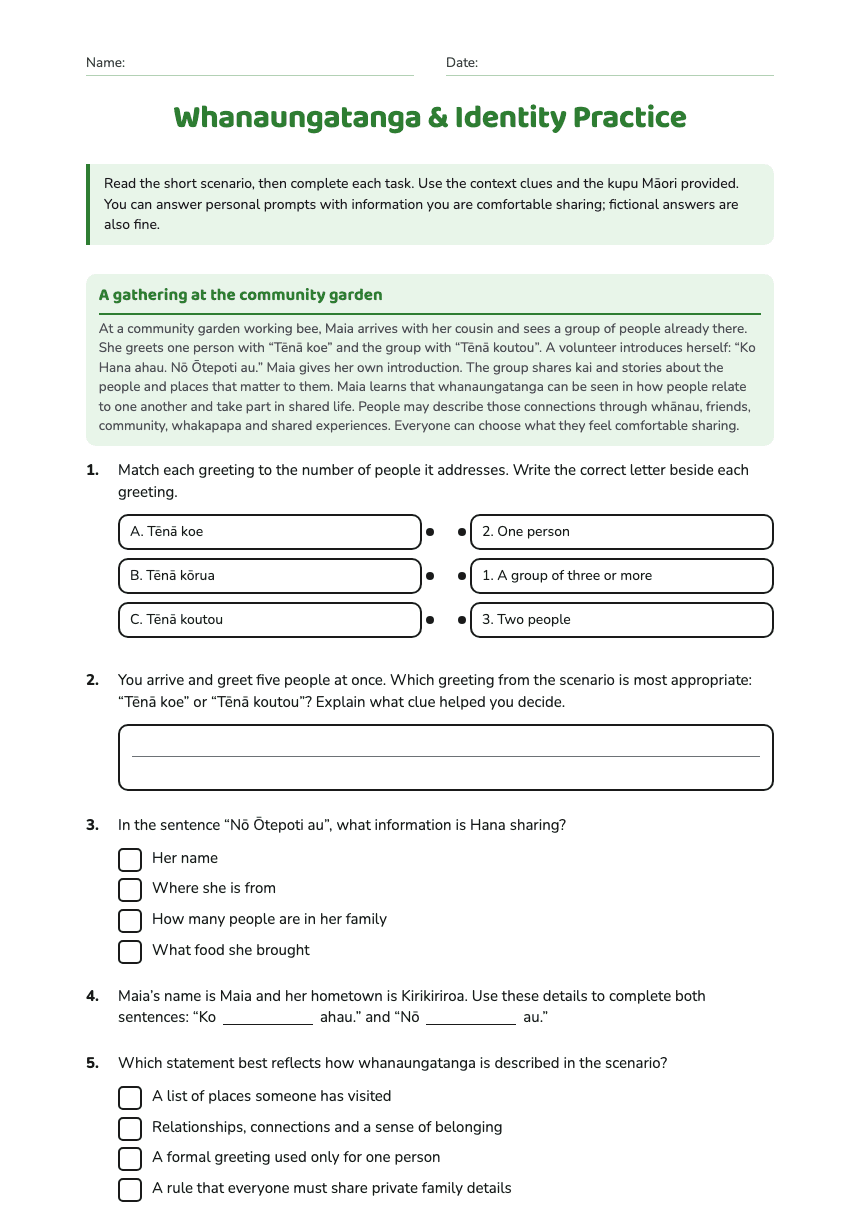
Whanaungatanga & Identity Practice
A free te reo māori worksheet ready for your classroom. Open in Kuraplan to grab the print-ready PDF, customize it for your students, or generate a fresh version in seconds.
Whanaungatanga & Identity Practice
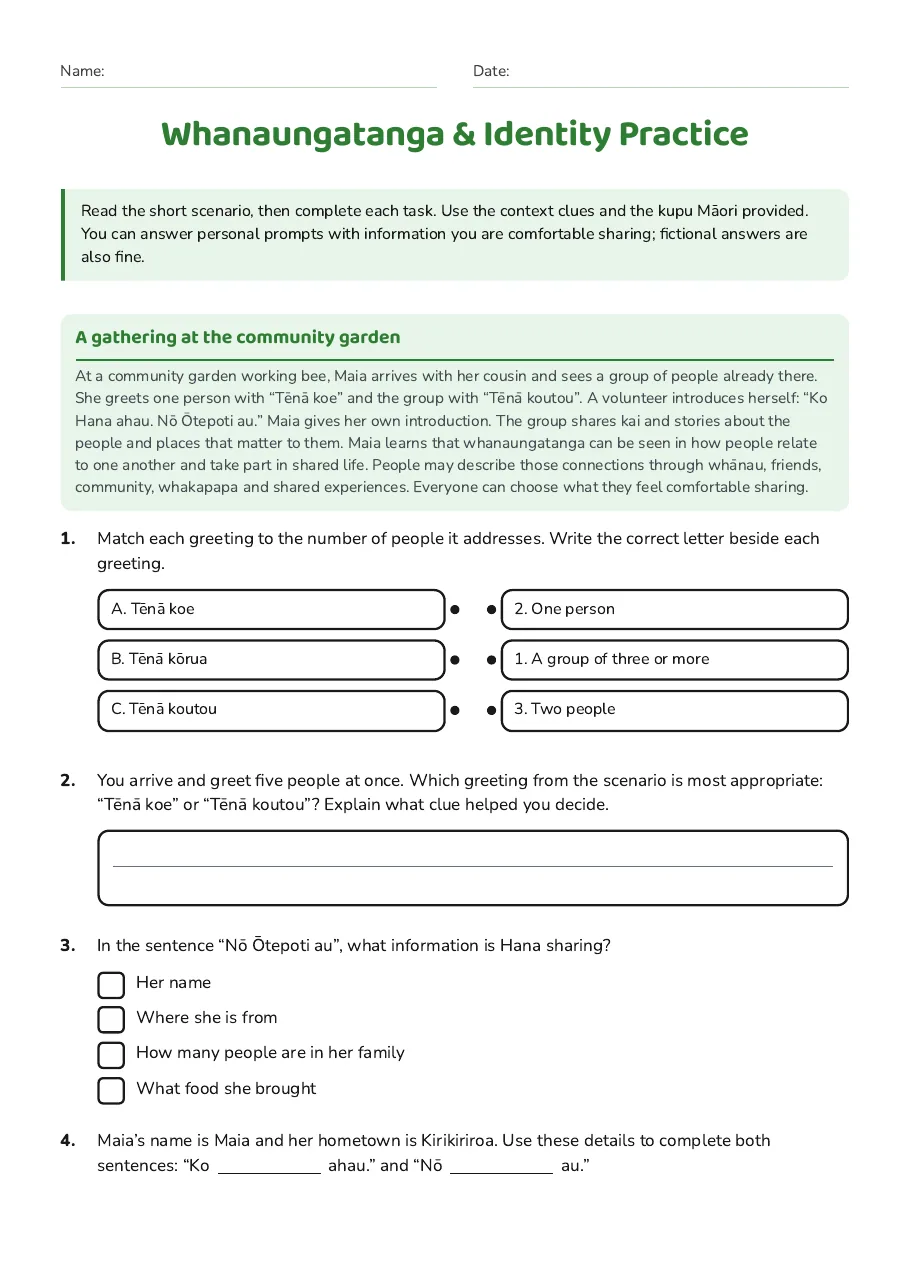
A gathering at the community garden
At a community garden working bee, Maia arrives with her cousin and sees a group of people already there. She greets one person with “Tēnā koe” and the group with “Tēnā koutou”. A volunteer introduces herself: “Ko Hana ahau. Nō Ōtepoti au.” Maia gives her own introduction. The group shares kai and stories about the people and places that matter to them. Maia learns that whanaungatanga can be seen in how people relate to one another and take part in shared life. People may describe those connections through whānau, friends, community, whakapapa and shared experiences. Everyone can choose what they feel comfortable sharing.
- A. Tēnā koe
- B. Tēnā kōrua
- C. Tēnā koutou
- 2. One person
- 1. A group of three or more
- 3. Two people
- Her name
- Where she is from
- How many people are in her family
- What food she brought
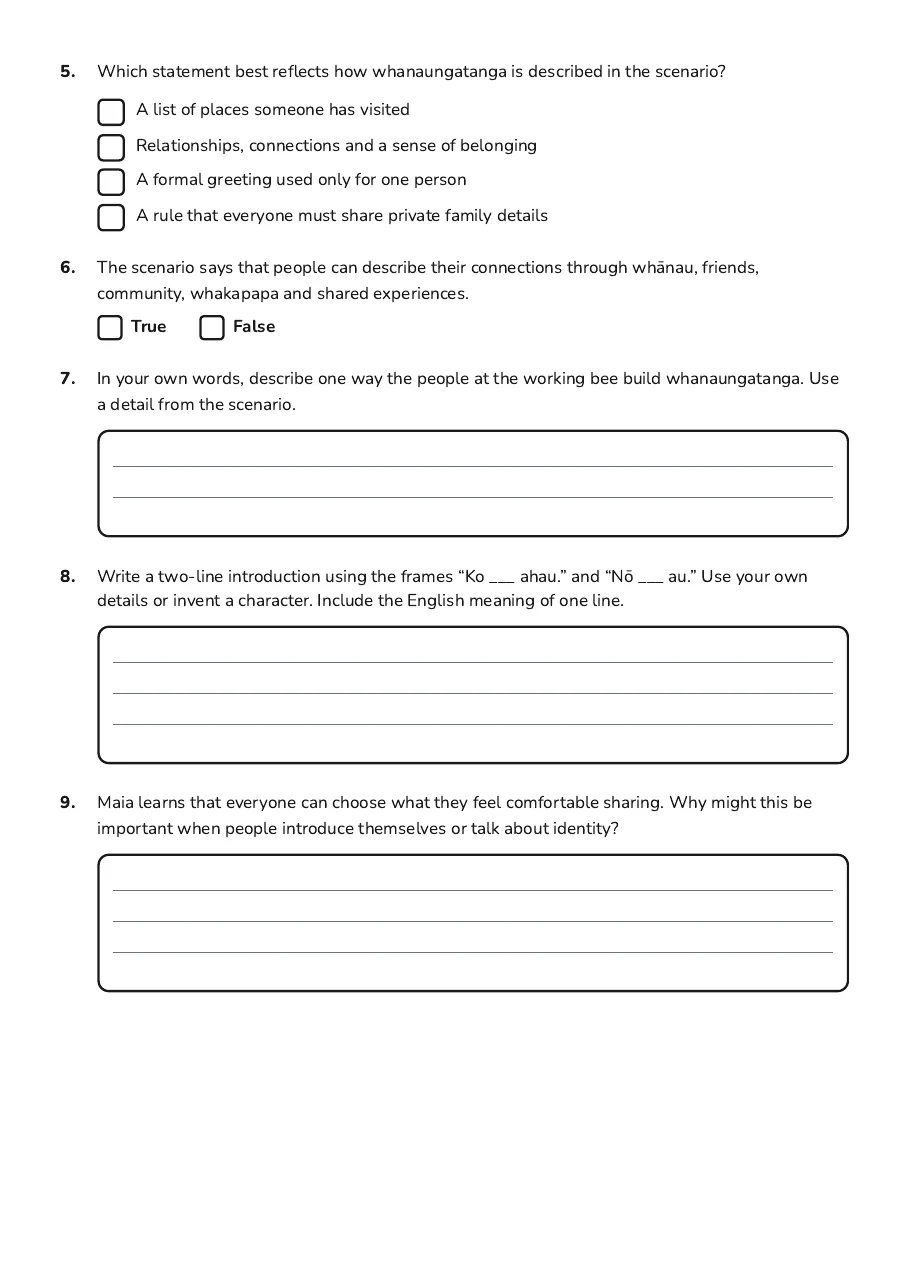
- A list of places someone has visited
- Relationships, connections and a sense of belonging
- A formal greeting used only for one person
- A rule that everyone must share private family details
2 printable pages
Page 1
Page 2
About This Worksheet
Free in Kuraplan
Sign up free, grab the PDF, and customize it for your class.
Print-Ready
Formatted for standard paper. Clean layout, easy to read.
AI-Generated
Created with Kuraplan's AI, designed for real classroom use.
For Teachers & Parents
Use in classrooms, for homework, tutoring, or homeschool.
Need a custom version of this worksheet?
Kuraplan's AI generates custom worksheets in seconds — differentiated for every learner, aligned to your curriculum.
Generate Custom Worksheets — Free