EnglishFreePrintable
Introduction to Writing Wonders
A free english worksheet ready for your classroom. Open in Kuraplan to grab the print-ready PDF, customize it for your students, or generate a fresh version in seconds.
Name:Date:
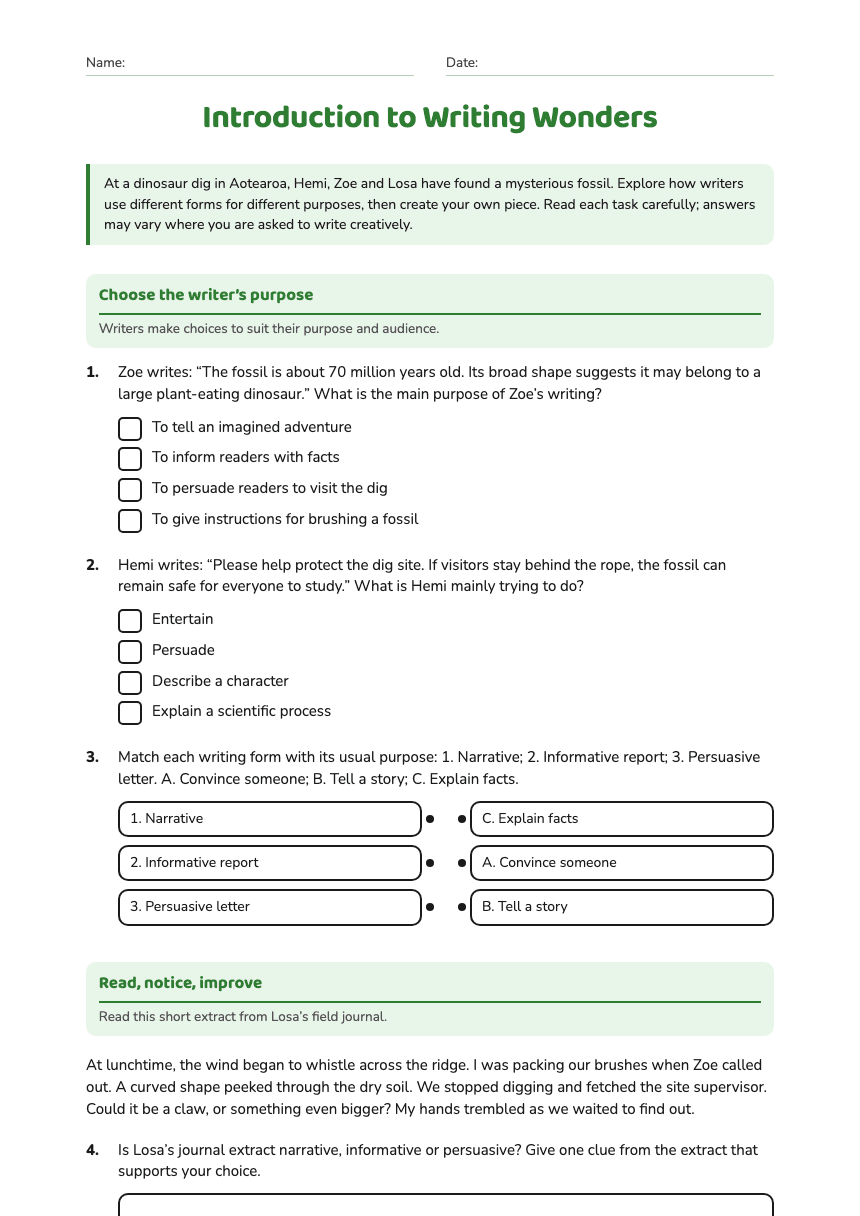
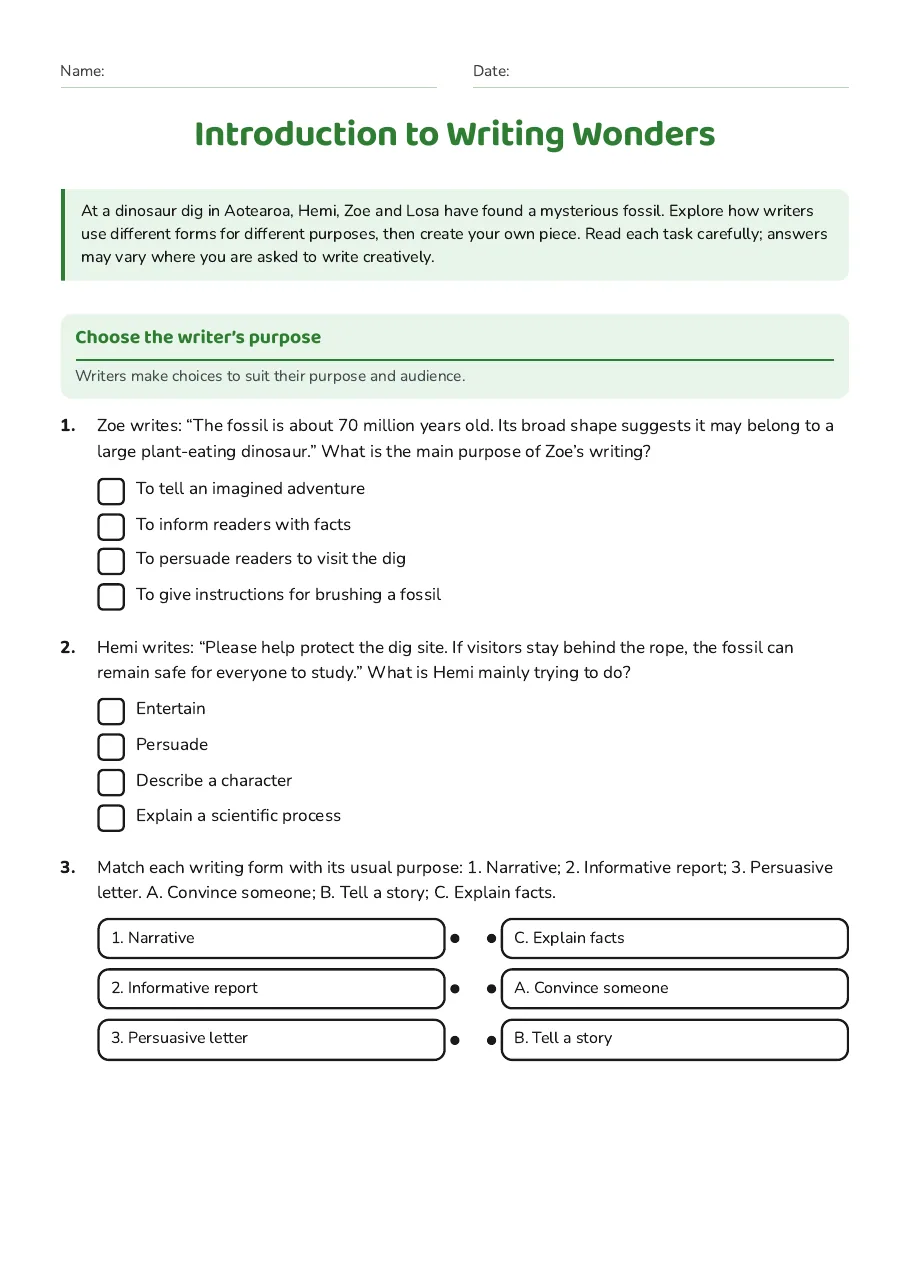
Introduction to Writing Wonders
At a dinosaur dig in Aotearoa, Hemi, Zoe and Losa have found a mysterious fossil. Explore how writers use different forms for different purposes, then create your own piece. Read each task carefully; answers may vary where you are asked to write creatively.
Choose the writer’s purpose
Writers make choices to suit their purpose and audience.
1.Zoe writes: “The fossil is about 70 million years old. Its broad shape suggests it may belong to a large plant-eating dinosaur.” What is the main purpose of Zoe’s writing?
- To tell an imagined adventure
- To inform readers with facts
- To persuade readers to visit the dig
- To give instructions for brushing a fossil
2.Hemi writes: “Please help protect the dig site. If visitors stay behind the rope, the fossil can remain safe for everyone to study.” What is Hemi mainly trying to do?
- Entertain
- Persuade
- Describe a character
- Explain a scientific process
3.Match each writing form with its usual purpose: 1. Narrative; 2. Informative report; 3. Persuasive letter. A. Convince someone; B. Tell a story; C. Explain facts.
- 1. Narrative
- 2. Informative report
- 3. Persuasive letter
- C. Explain facts
- A. Convince someone
- B. Tell a story
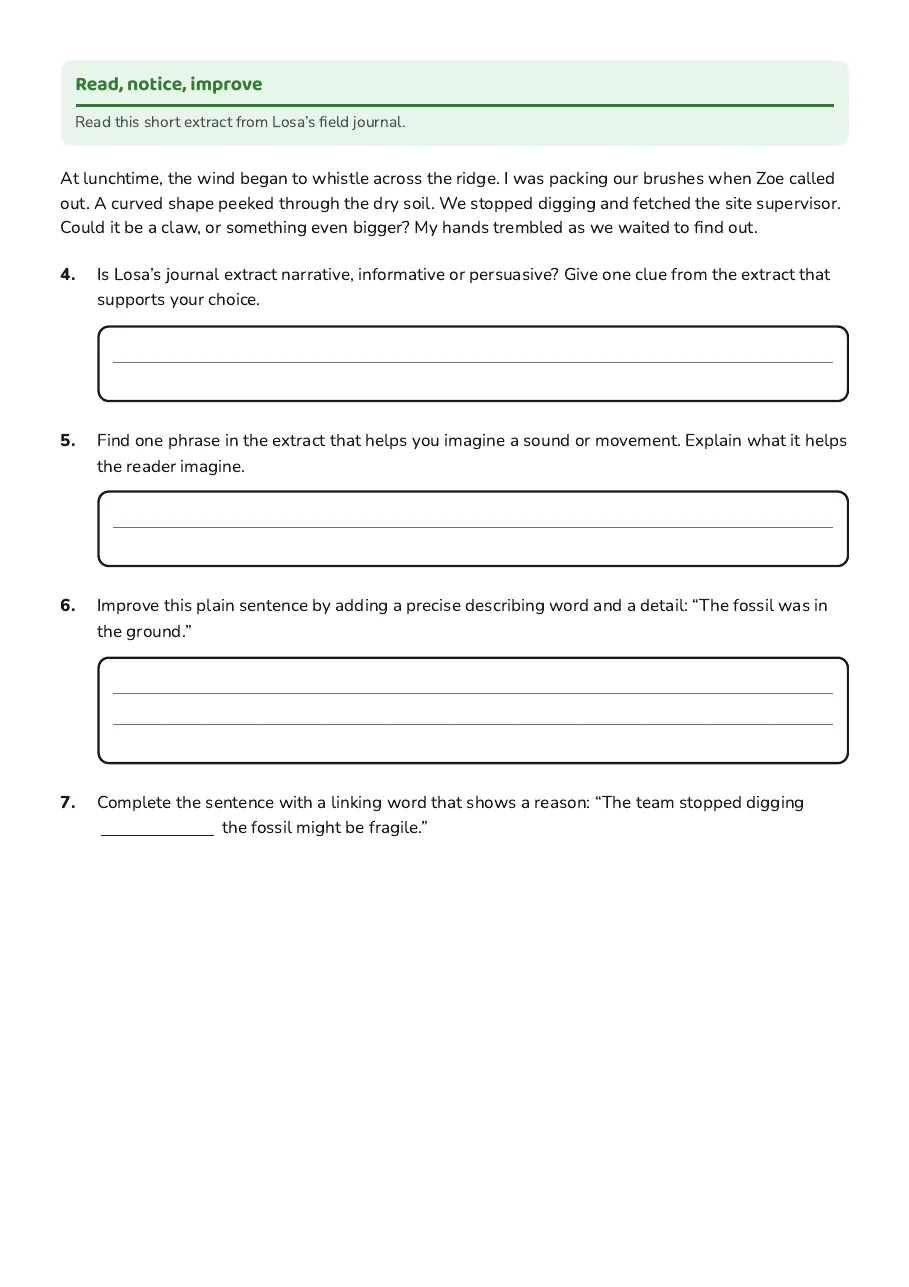
Read, notice, improve
Read this short extract from Losa’s field journal.
At lunchtime, the wind began to whistle across the ridge. I was packing our brushes when Zoe called out. A curved shape peeked through the dry soil. We stopped digging and fetched the site supervisor. Could it be a claw, or something even bigger? My hands trembled as we waited to find out.
4.Is Losa’s journal extract narrative, informative or persuasive? Give one clue from the extract that supports your choice.
5.Find one phrase in the extract that helps you imagine a sound or movement. Explain what it helps the reader imagine.
6.Improve this plain sentence by adding a precise describing word and a detail: “The fossil was in the ground.”
7.Complete the sentence with a linking word that shows a reason: “The team stopped digging the fossil might be fragile.”
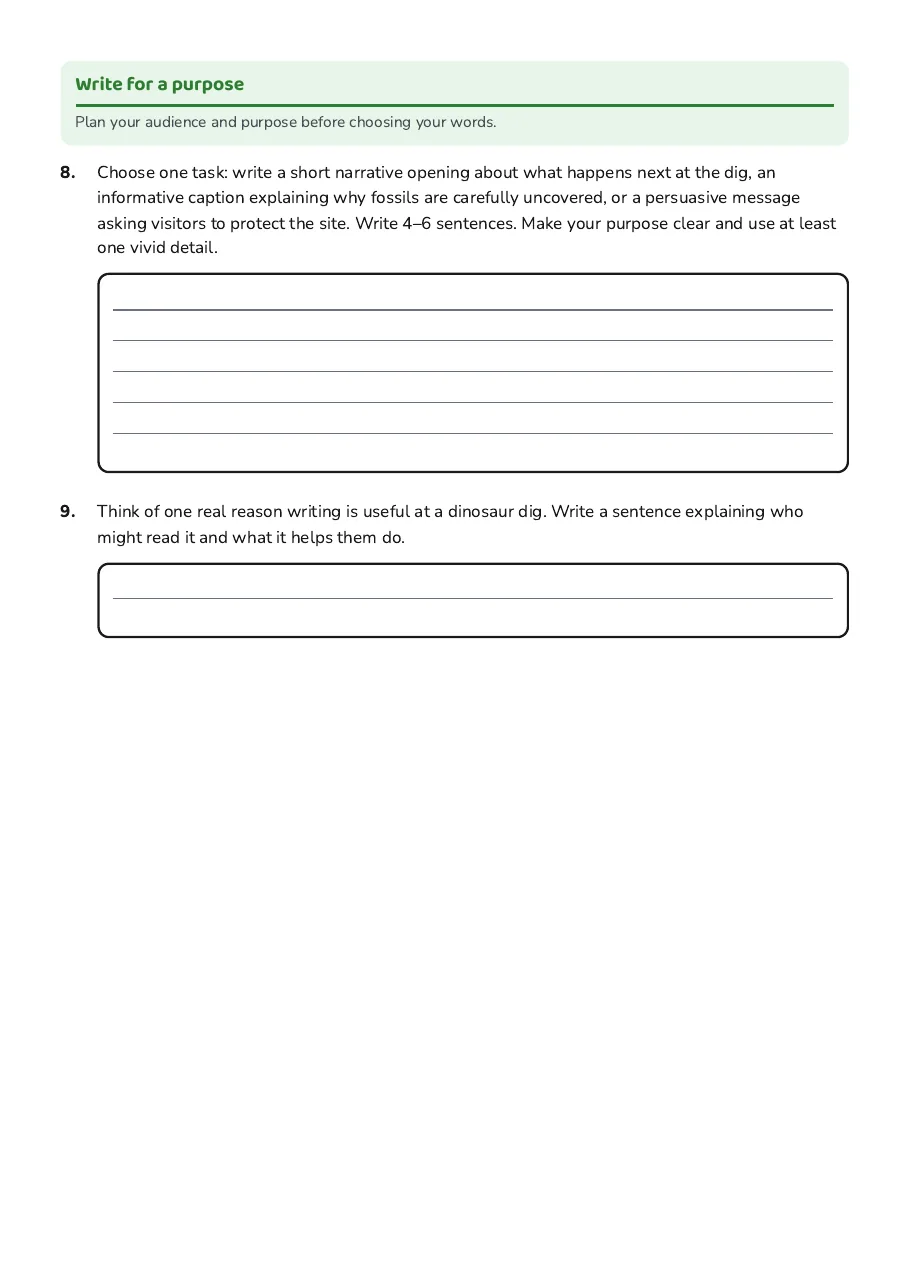
Write for a purpose
Plan your audience and purpose before choosing your words.
8.Choose one task: write a short narrative opening about what happens next at the dig, an informative caption explaining why fossils are carefully uncovered, or a persuasive message asking visitors to protect the site. Write 4–6 sentences. Make your purpose clear and use at least one vivid detail.
9.Think of one real reason writing is useful at a dinosaur dig. Write a sentence explaining who might read it and what it helps them do.
3 printable pages
Page 1
Page 2
Page 3
About This Worksheet
Free in Kuraplan
Sign up free, grab the PDF, and customize it for your class.
Print-Ready
Formatted for standard paper. Clean layout, easy to read.
AI-Generated
Created with Kuraplan's AI, designed for real classroom use.
For Teachers & Parents
Use in classrooms, for homework, tutoring, or homeschool.
Need a custom version of this worksheet?
Kuraplan's AI generates custom worksheets in seconds — differentiated for every learner, aligned to your curriculum.
Generate Custom Worksheets — Free No credit card Curriculum-aligned Under 60 seconds
More English Worksheets
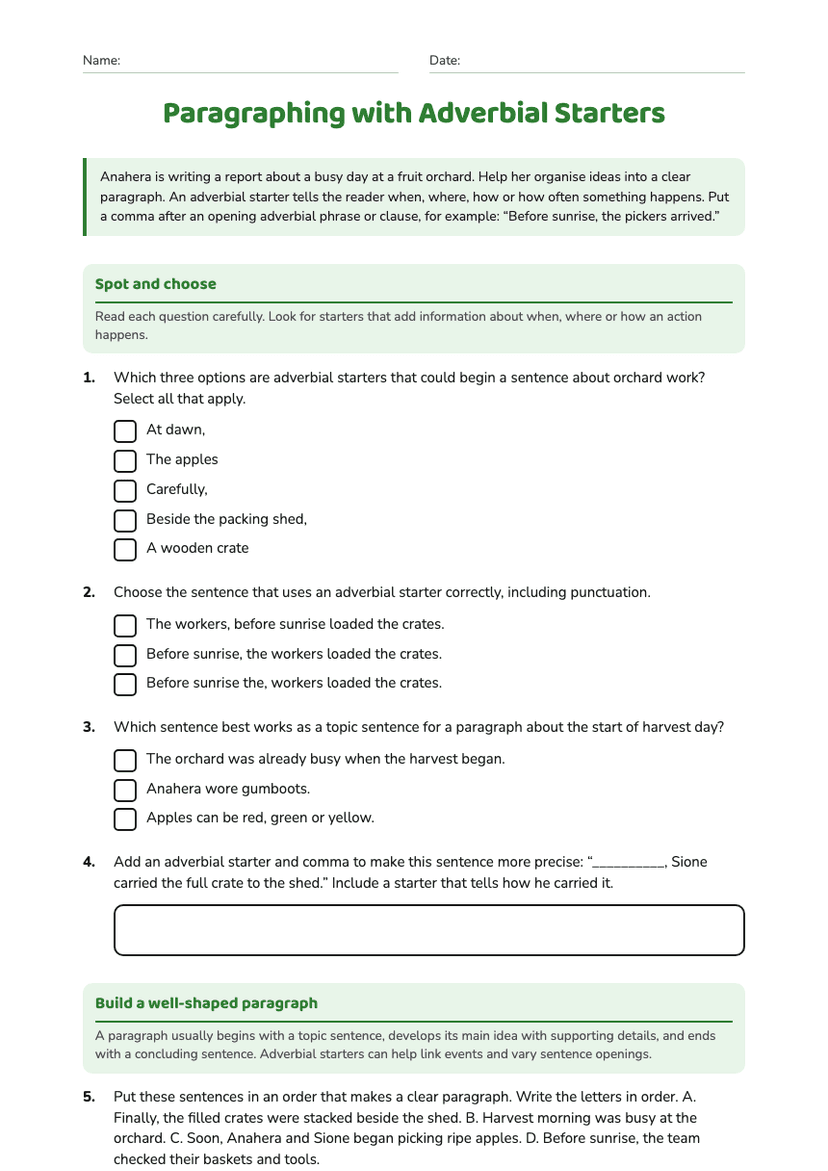
Year 5
Paragraphing with Adverbial Starters
Free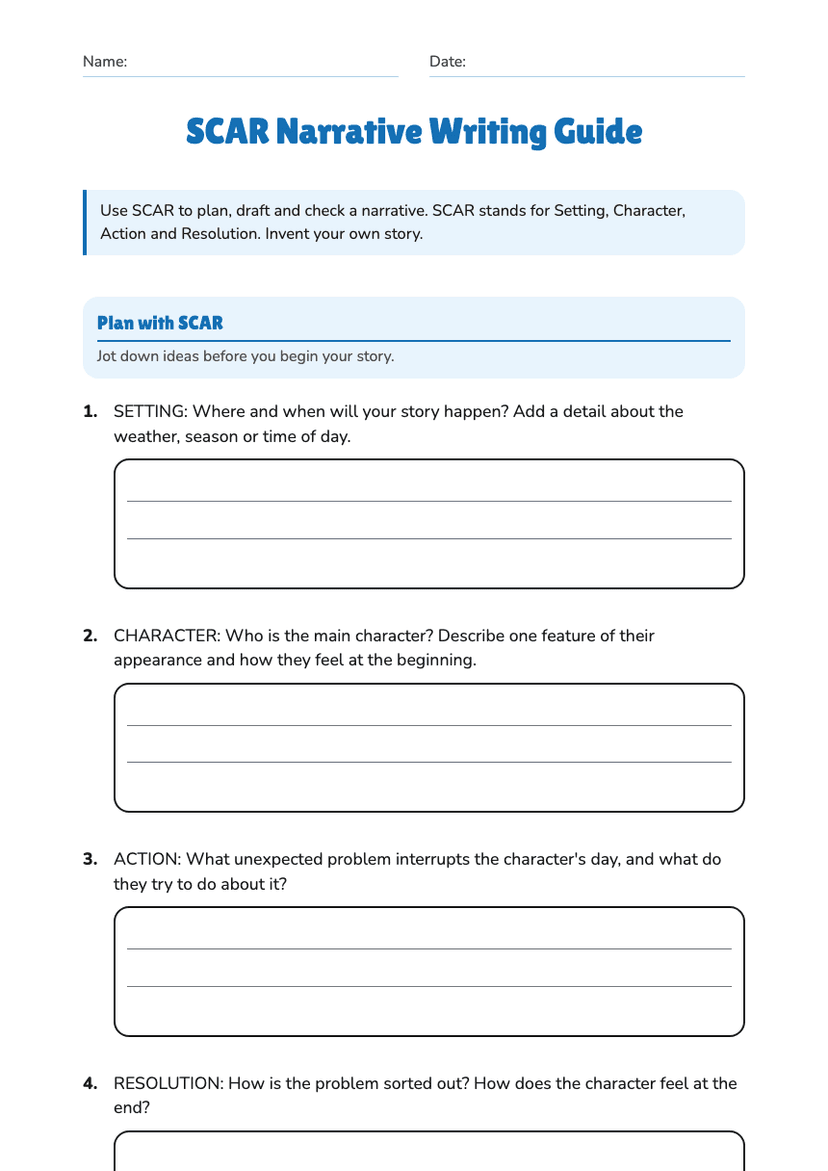
SCAR Narrative Writing Guide
Free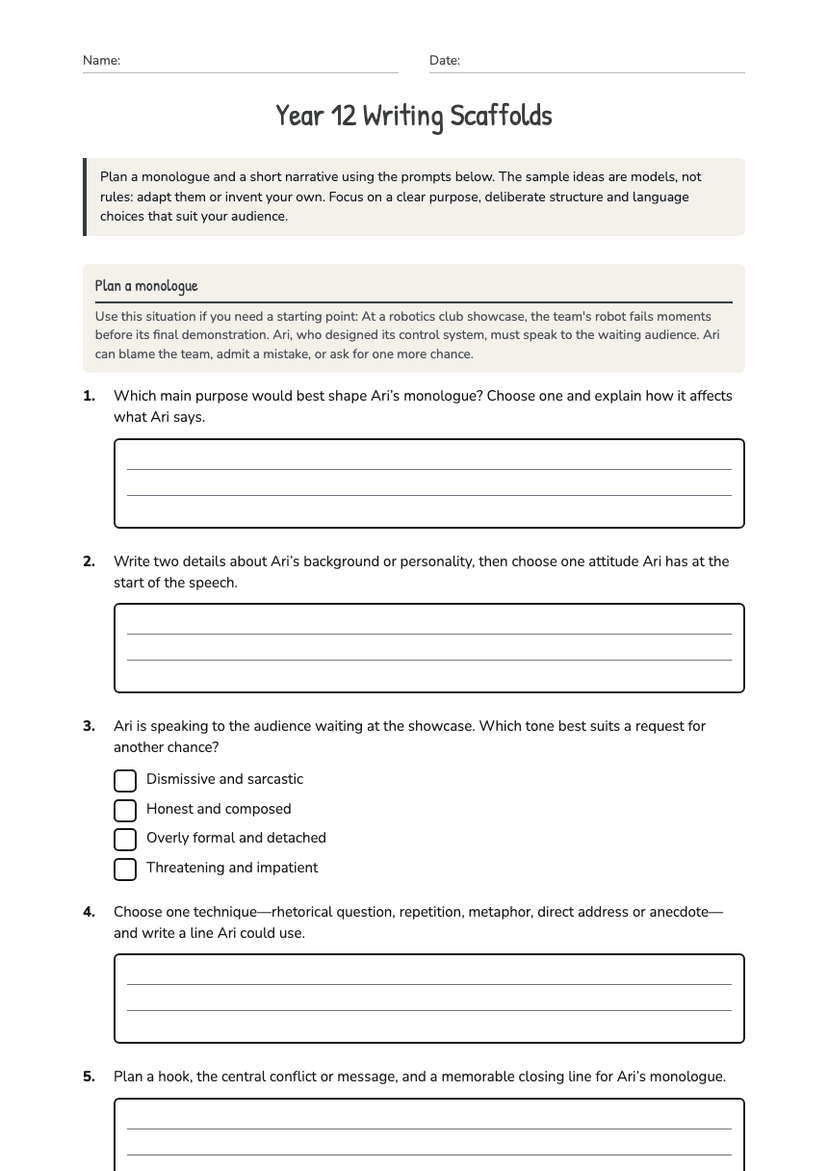
Year 12 Writing Scaffolds
Free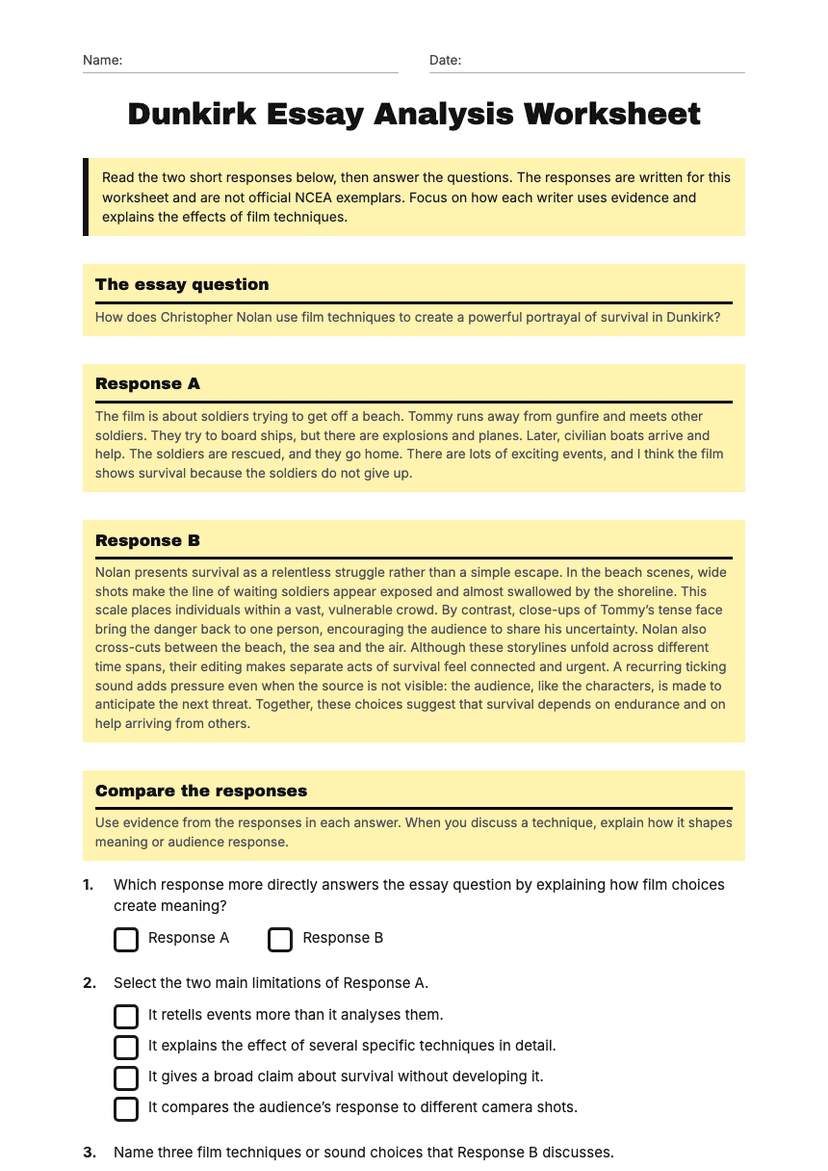
Year 12
Dunkirk Essay Analysis Worksheet
Free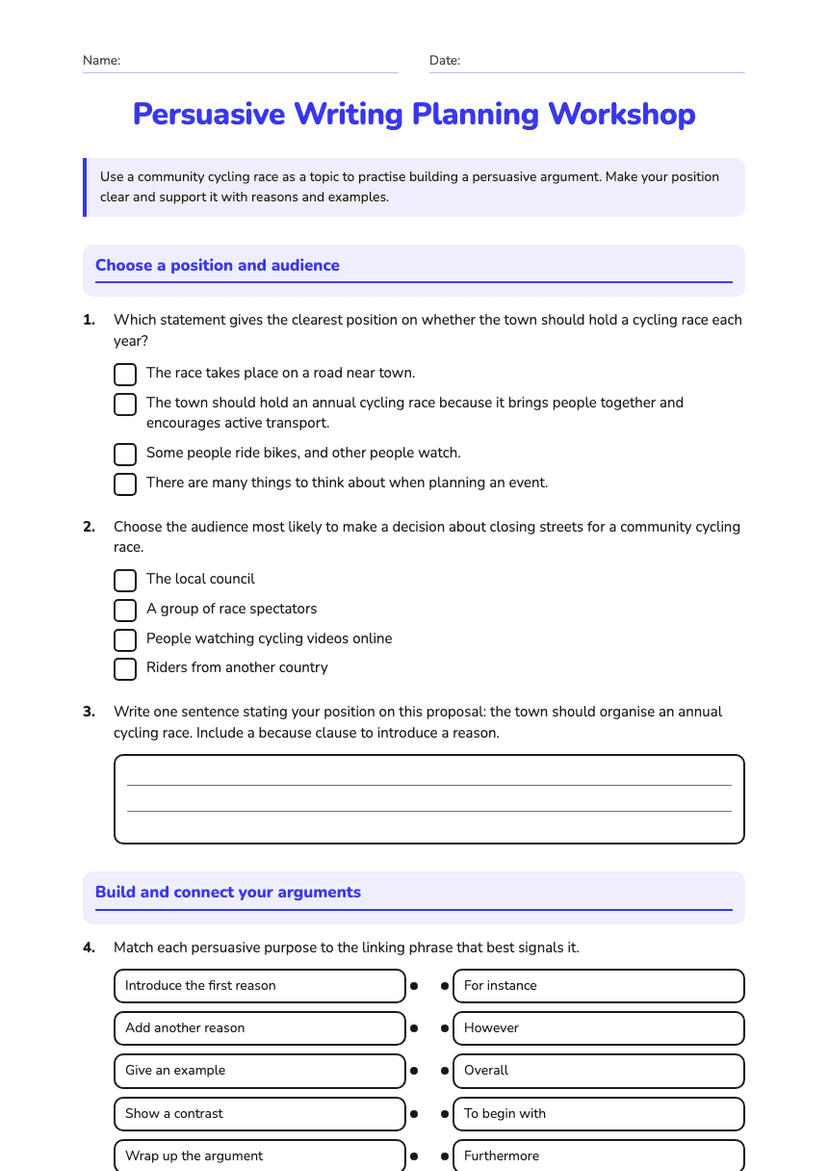
Year 7–8
Persuasive Writing Planning Workshop
Free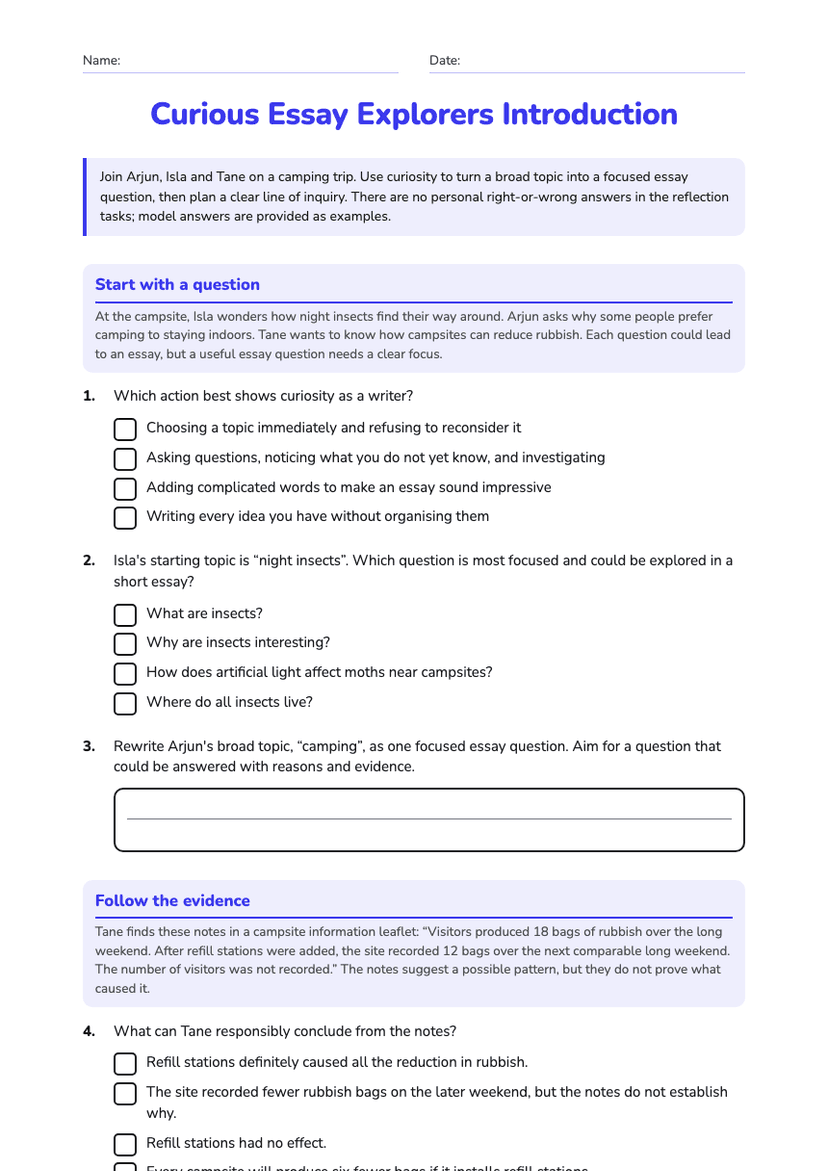
Year 9
Curious Essay Explorers Introduction
Free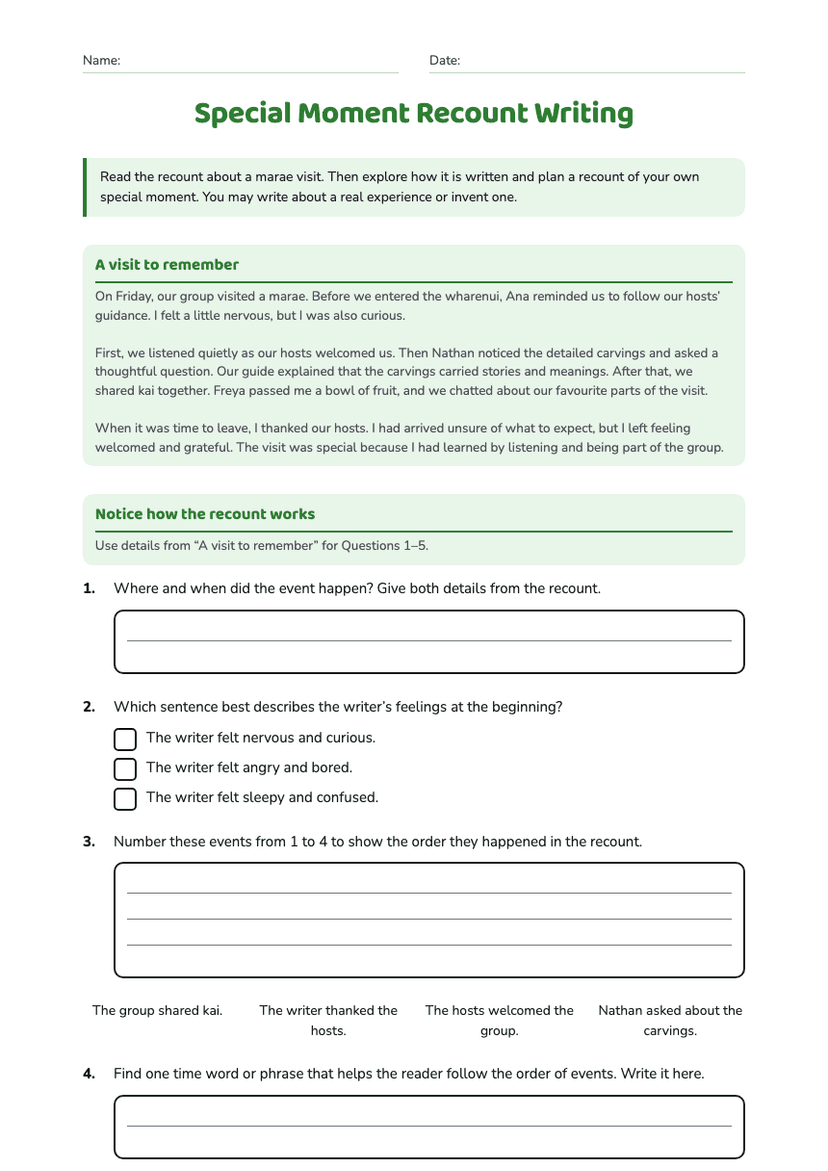
Year 5–6
Special Moment Recount Writing
Free
Year 2–3