Kiwis: Identity and History
A free social sciences worksheet ready for your classroom. Open in Kuraplan to grab the print-ready PDF, customize it for your students, or generate a fresh version in seconds.
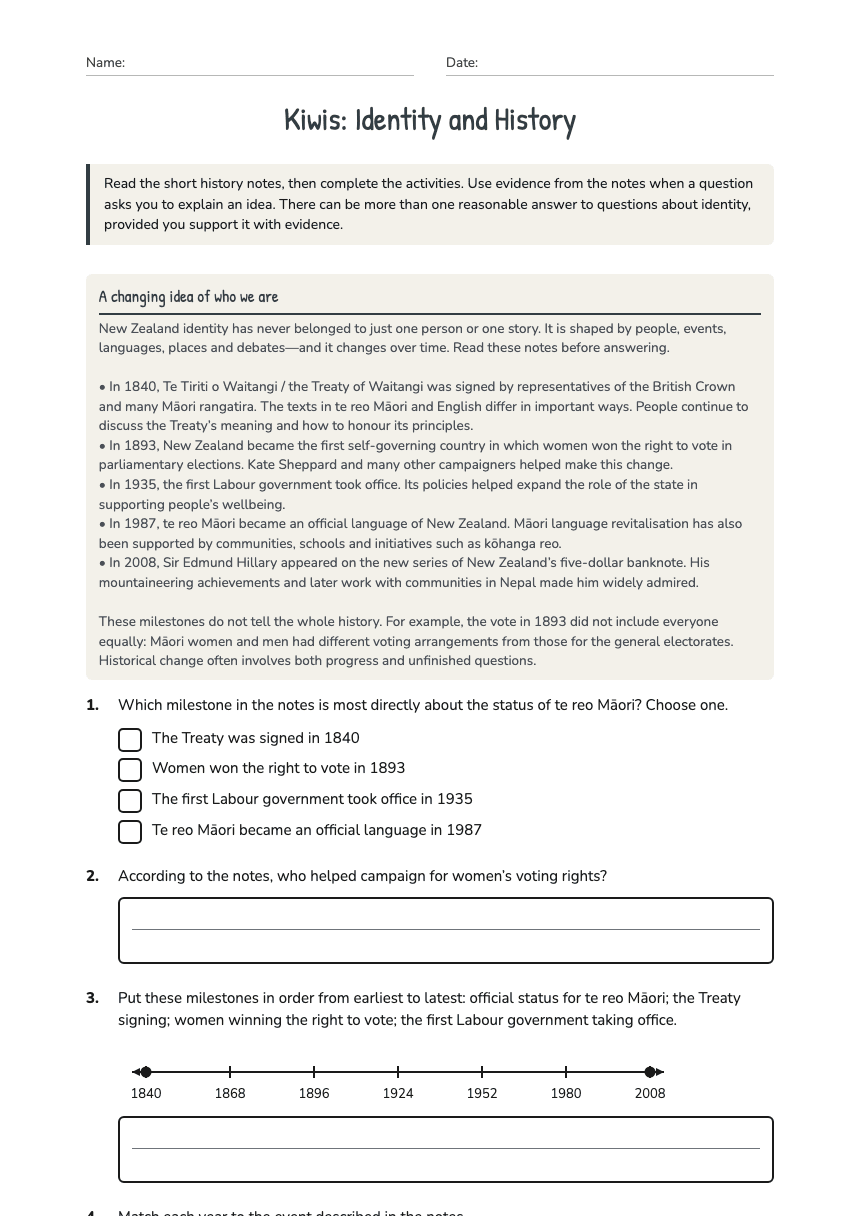
Kiwis: Identity and History
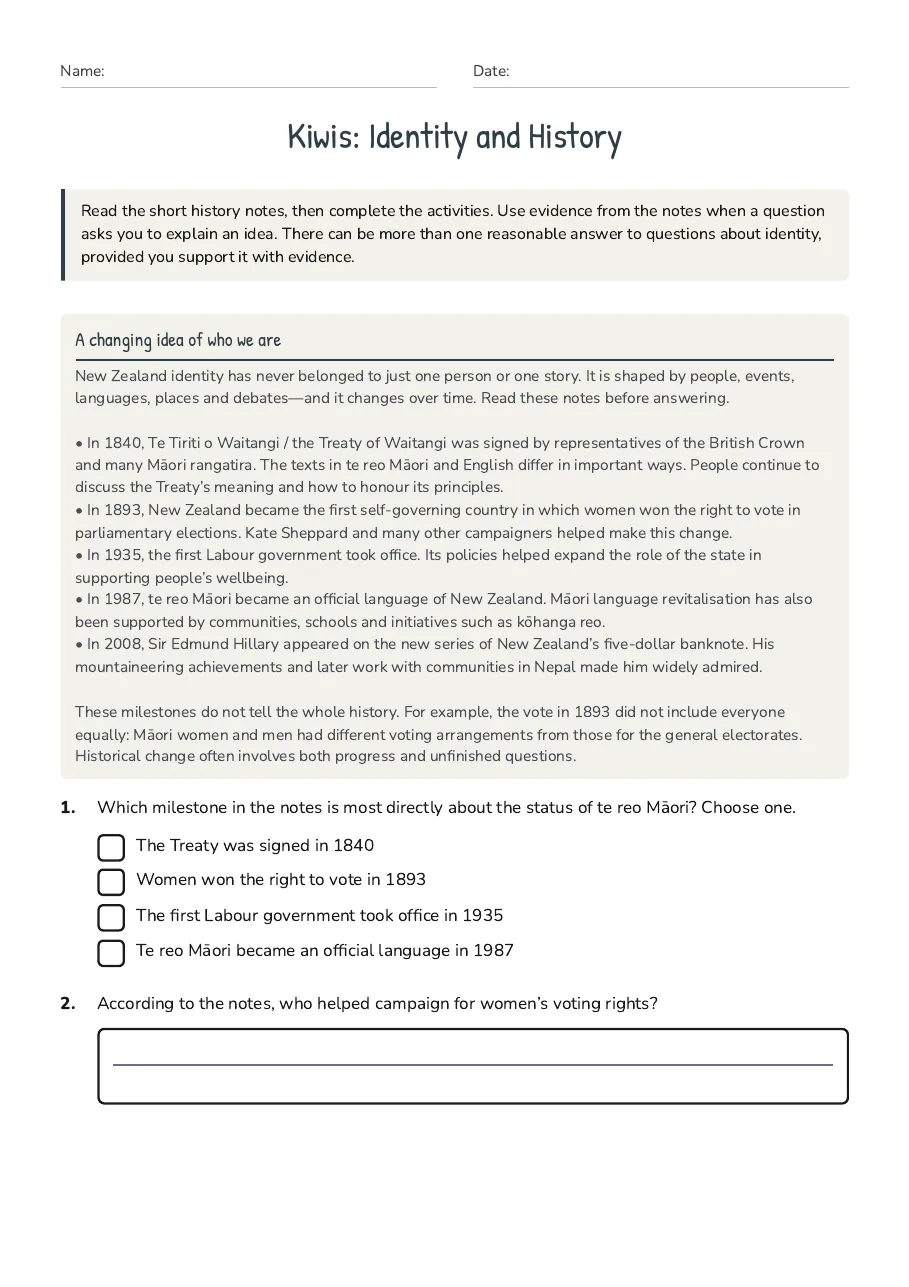
A changing idea of who we are
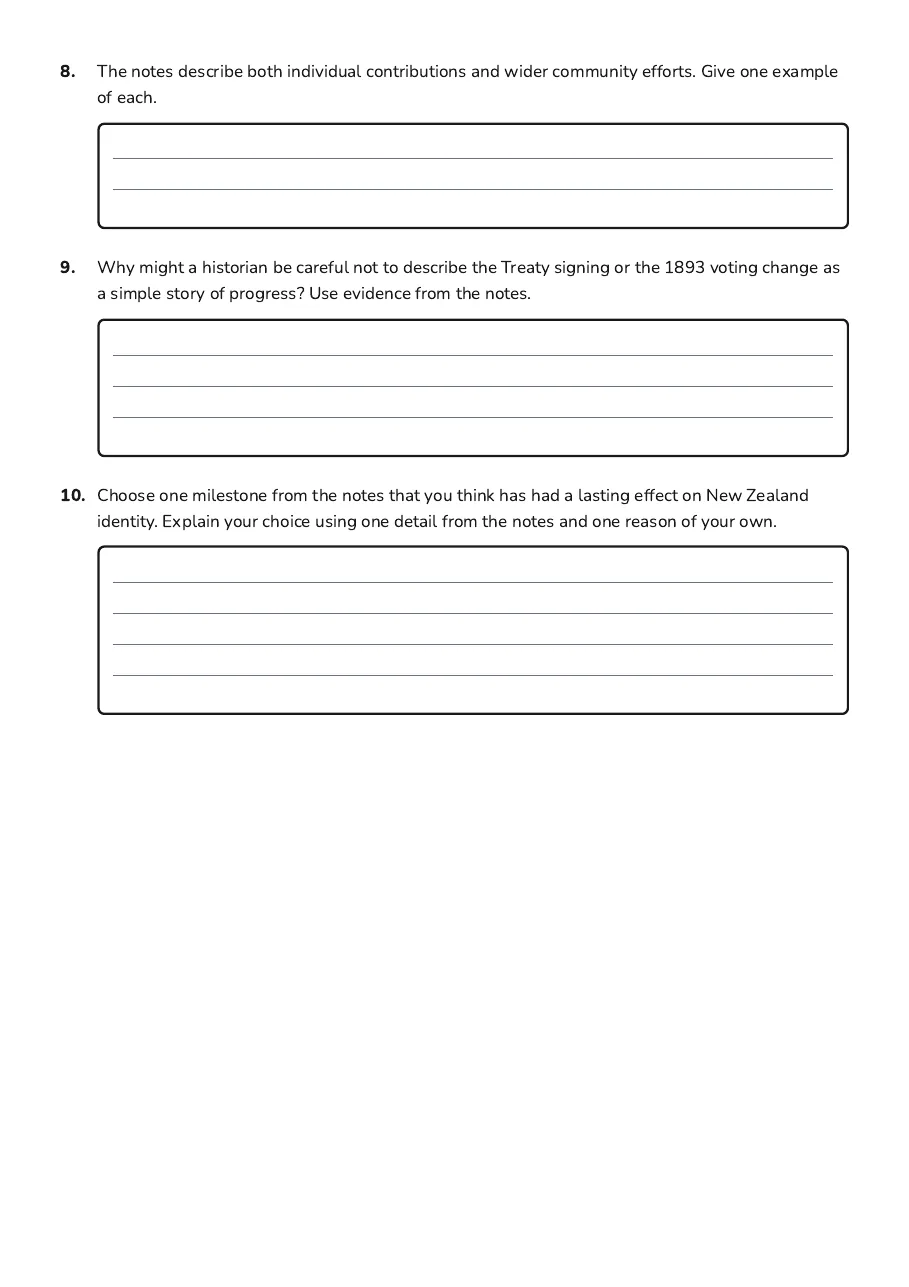
New Zealand identity has never belonged to just one person or one story. It is shaped by people, events, languages, places and debates—and it changes over time. Read these notes before answering. • In 1840, Te Tiriti o Waitangi / the Treaty of Waitangi was signed by representatives of the British Crown and many Māori rangatira. The texts in te reo Māori and English differ in important ways. People continue to discuss the Treaty’s meaning and how to honour its principles. • In 1893, New Zealand became the first self-governing country in which women won the right to vote in parliamentary elections. Kate Sheppard and many other campaigners helped make this change. • In 1935, the first Labour government took office. Its policies helped expand the role of the state in supporting people’s wellbeing. • In 1987, te reo Māori became an official language of New Zealand. Māori language revitalisation has also been supported by communities, schools and initiatives such as kōhanga reo. • In 2008, Sir Edmund Hillary appeared on the new series of New Zealand’s five-dollar banknote. His mountaineering achievements and later work with communities in Nepal made him widely admired. These milestones do not tell the whole history. For example, the vote in 1893 did not include everyone equally: Māori women and men had different voting arrangements from those for the general electorates. Historical change often involves both progress and unfinished questions.
- The Treaty was signed in 1840
- Women won the right to vote in 1893
- The first Labour government took office in 1935
- Te reo Māori became an official language in 1987
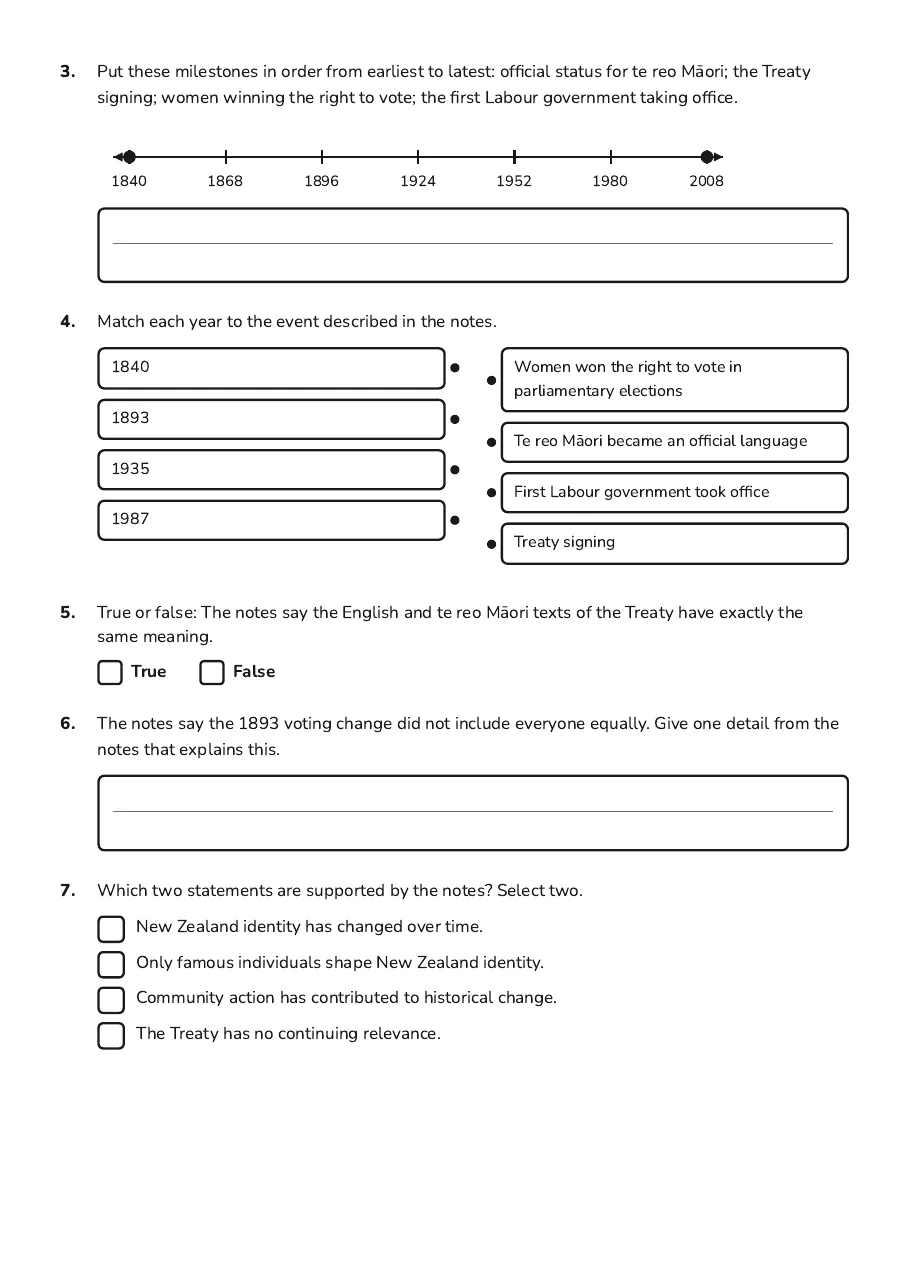
- 1840
- 1893
- 1935
- 1987
- Women won the right to vote in parliamentary elections
- Te reo Māori became an official language
- First Labour government took office
- Treaty signing
- New Zealand identity has changed over time.
- Only famous individuals shape New Zealand identity.
- Community action has contributed to historical change.
- The Treaty has no continuing relevance.
3 printable pages
Page 1
Page 2
Page 3
About This Worksheet
Free in Kuraplan
Sign up free, grab the PDF, and customize it for your class.
Print-Ready
Formatted for standard paper. Clean layout, easy to read.
AI-Generated
Created with Kuraplan's AI, designed for real classroom use.
For Teachers & Parents
Use in classrooms, for homework, tutoring, or homeschool.
Need a custom version of this worksheet?
Kuraplan's AI generates custom worksheets in seconds — differentiated for every learner, aligned to your curriculum.
Generate Custom Worksheets — FreeMore Social Sciences Worksheets
Parihaka: Historical Perspectives Worksheet
Free
Ancient Egyptian Burial Practices
Free
Russell Church Research
Free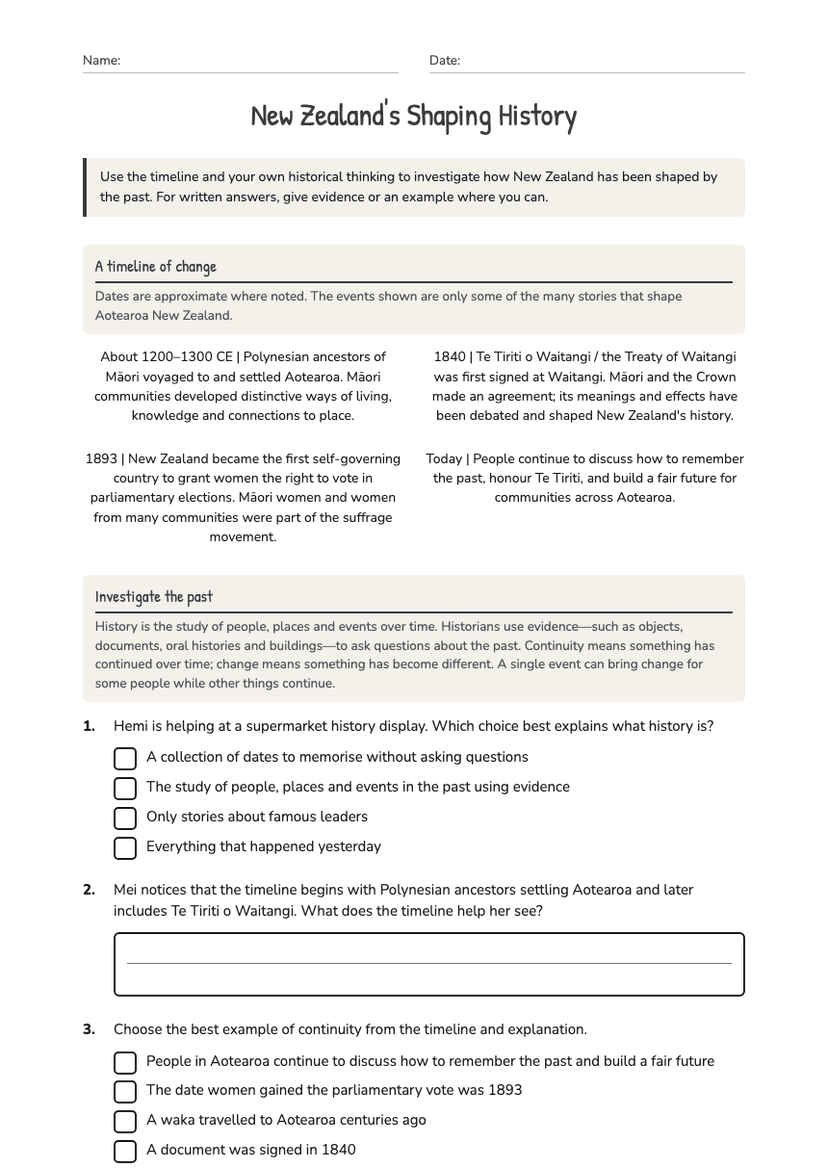
New Zealand's Shaping History
Free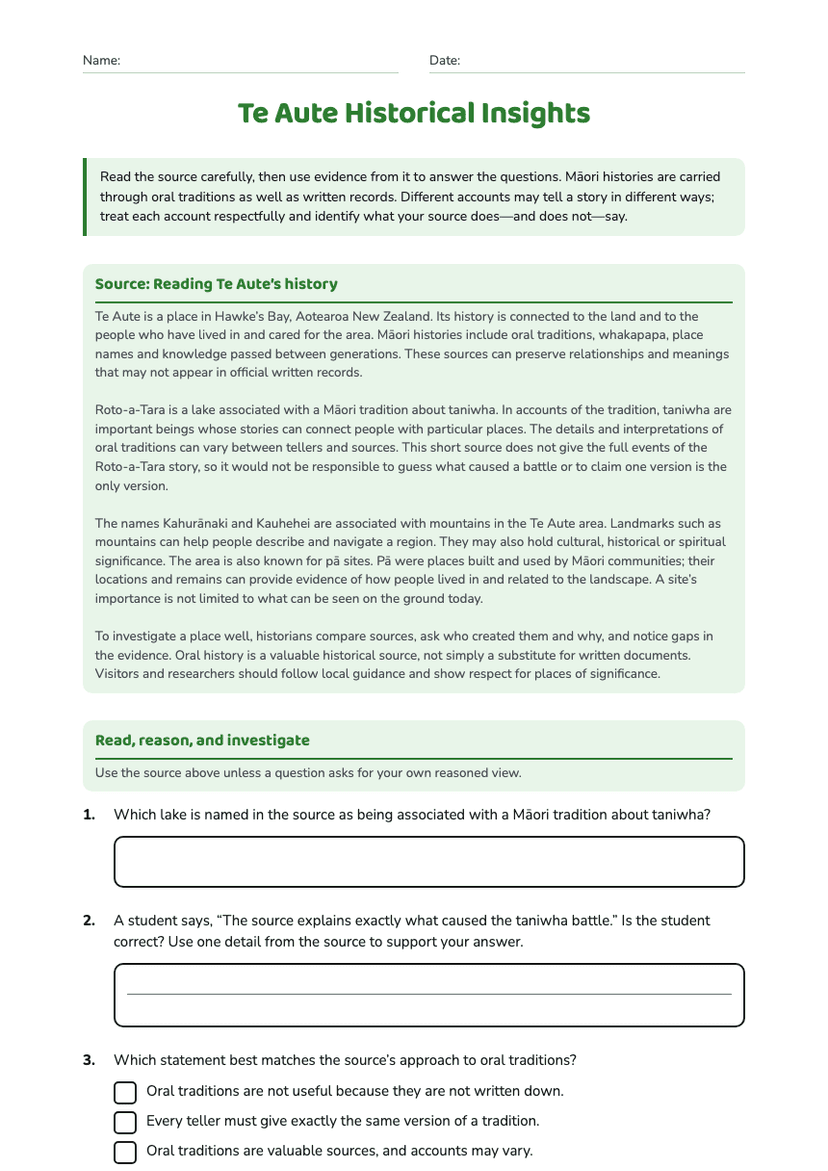
Te Aute Historical Insights
Free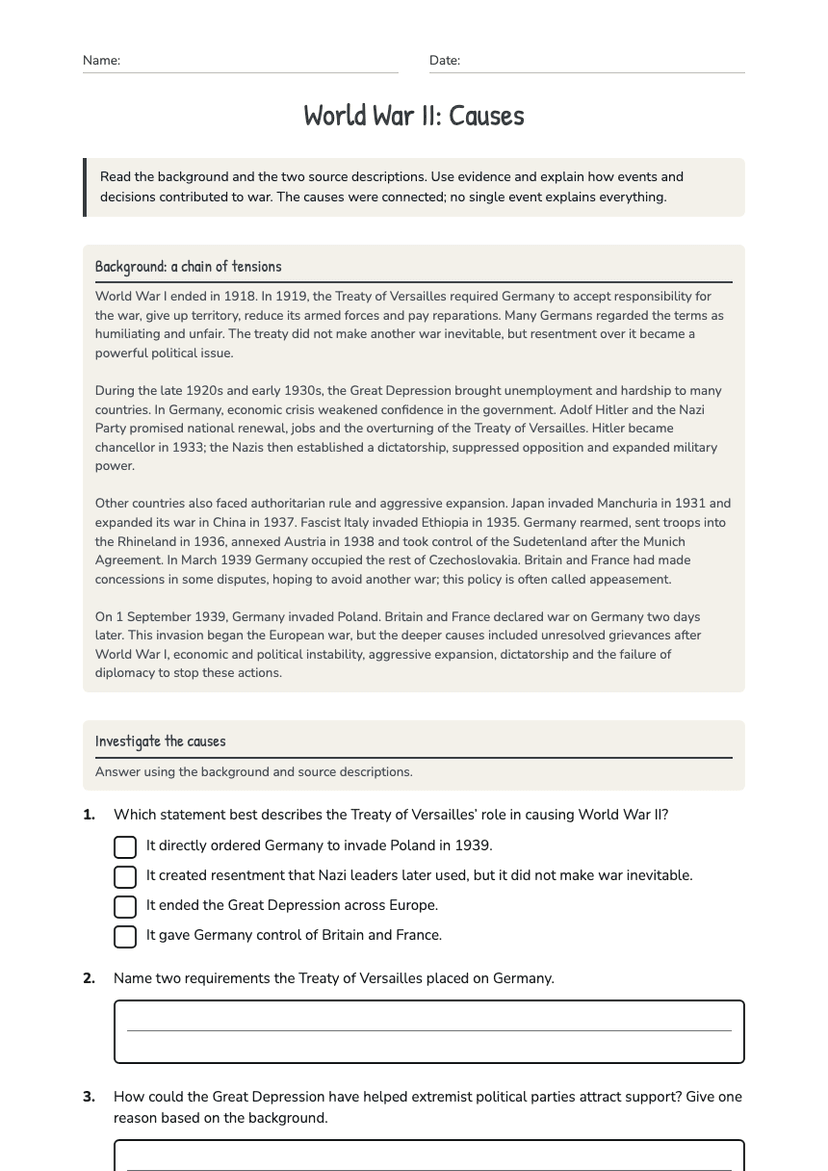
World War II: Causes
Free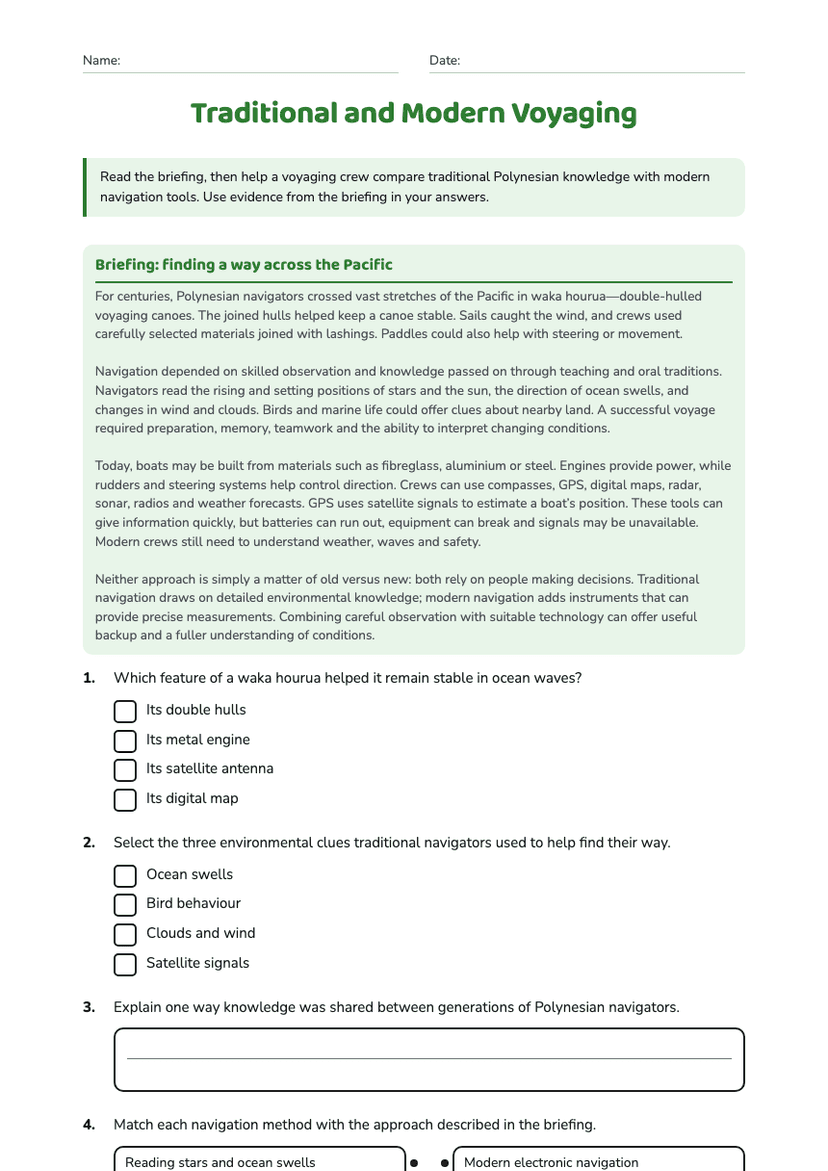
Traditional and Modern Voyaging
Free