Little Rock Nine Overview
A free social sciences worksheet ready for your classroom. Open in Kuraplan to grab the print-ready PDF, customize it for your students, or generate a fresh version in seconds.
Little Rock Nine Overview
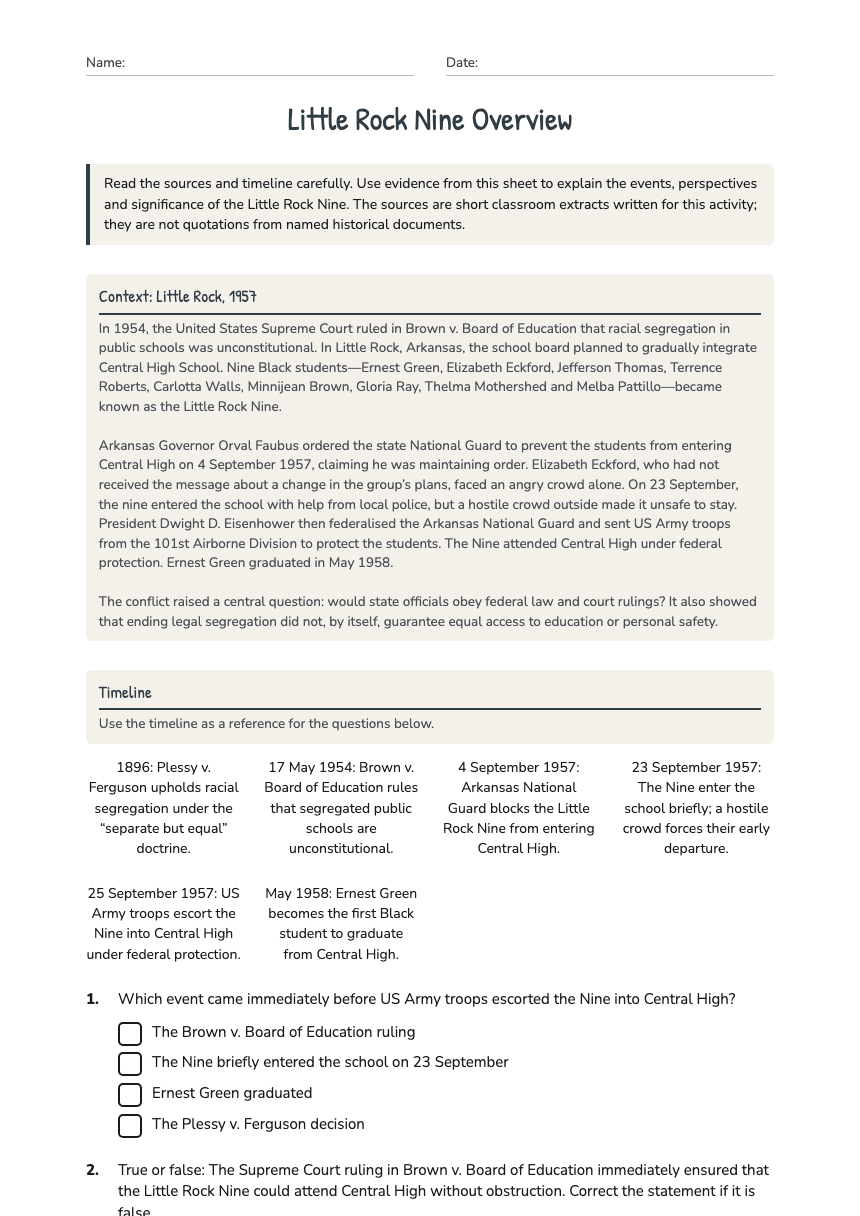
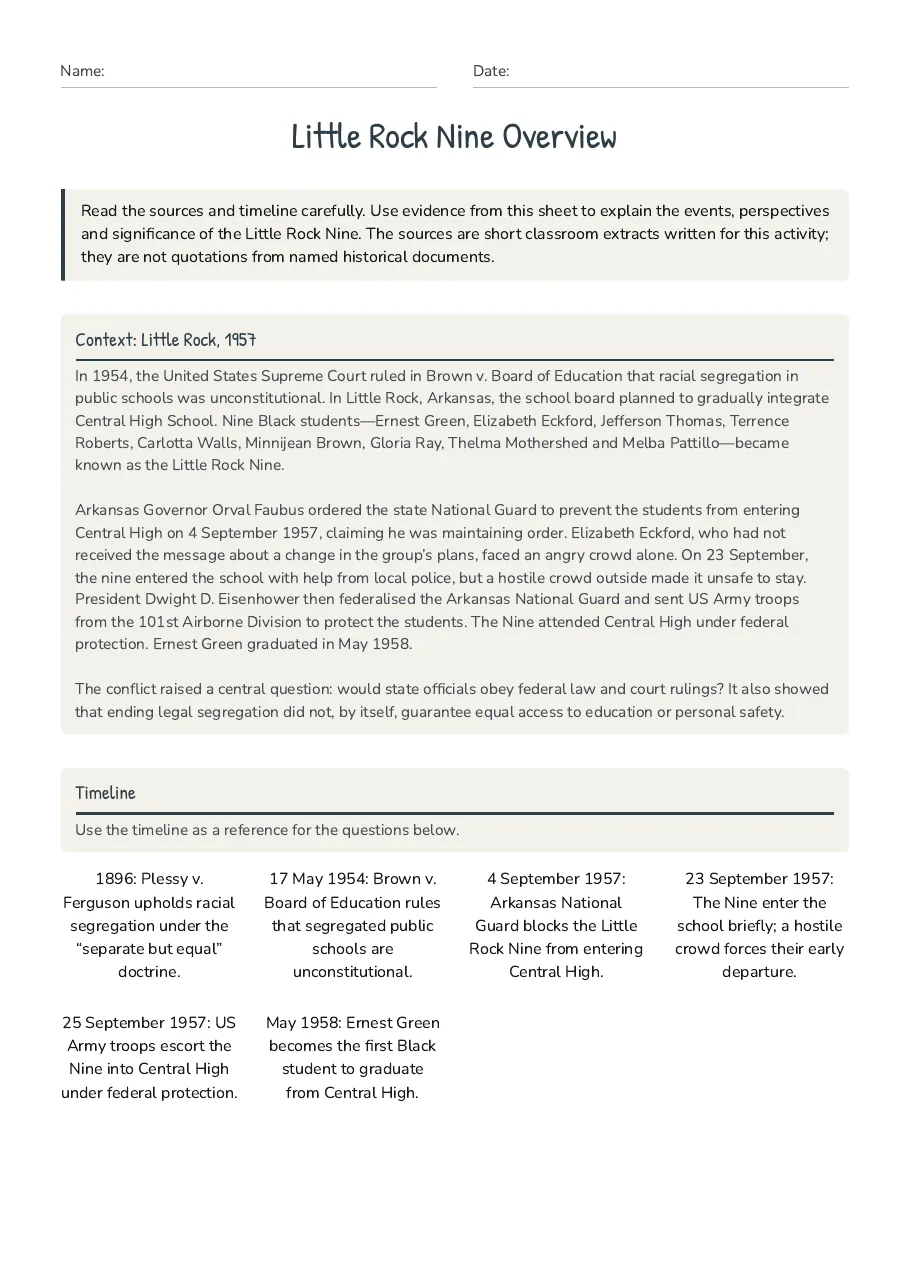
Context: Little Rock, 1957
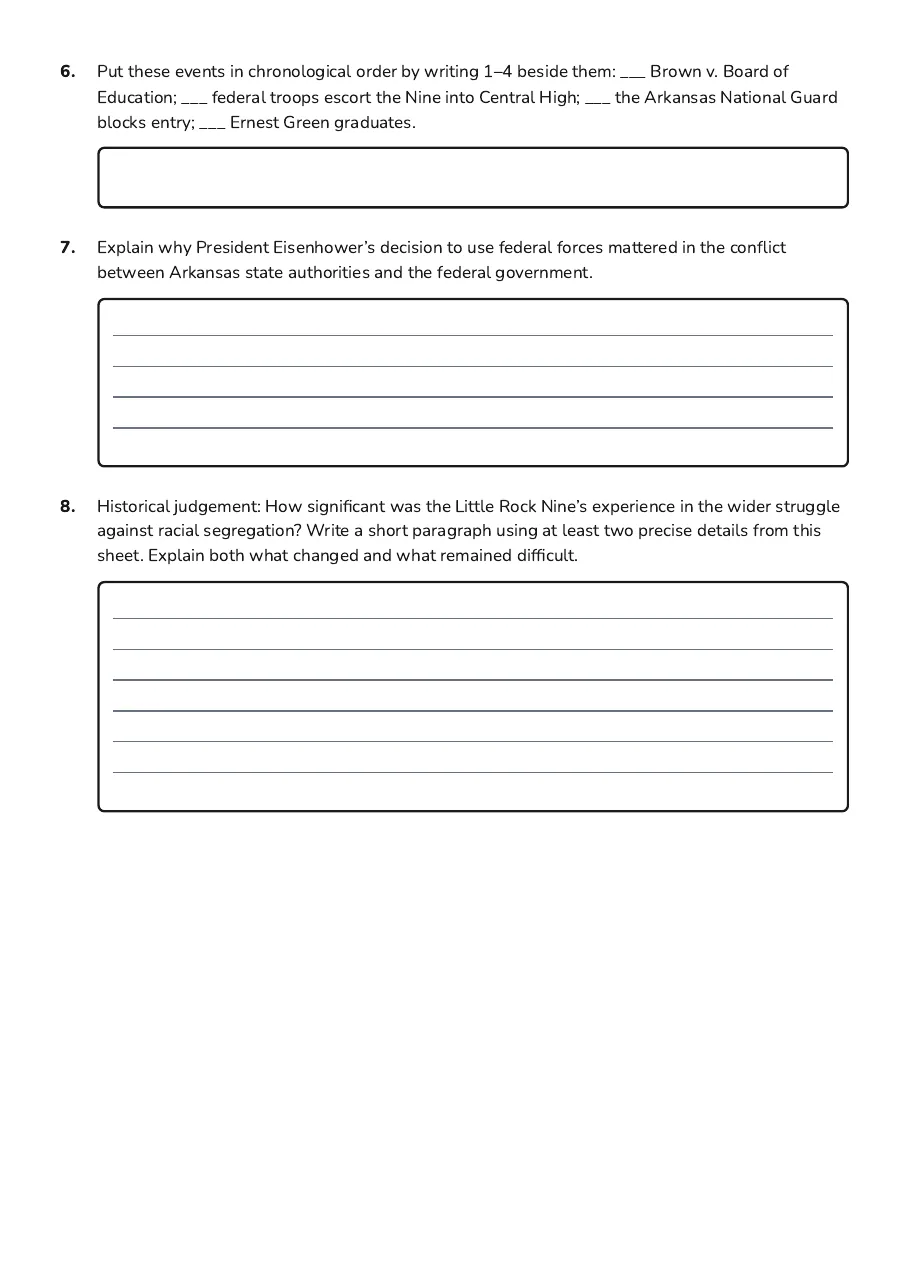
In 1954, the United States Supreme Court ruled in Brown v. Board of Education that racial segregation in public schools was unconstitutional. In Little Rock, Arkansas, the school board planned to gradually integrate Central High School. Nine Black students—Ernest Green, Elizabeth Eckford, Jefferson Thomas, Terrence Roberts, Carlotta Walls, Minnijean Brown, Gloria Ray, Thelma Mothershed and Melba Pattillo—became known as the Little Rock Nine. Arkansas Governor Orval Faubus ordered the state National Guard to prevent the students from entering Central High on 4 September 1957, claiming he was maintaining order. Elizabeth Eckford, who had not received the message about a change in the group’s plans, faced an angry crowd alone. On 23 September, the nine entered the school with help from local police, but a hostile crowd outside made it unsafe to stay. President Dwight D. Eisenhower then federalised the Arkansas National Guard and sent US Army troops from the 101st Airborne Division to protect the students. The Nine attended Central High under federal protection. Ernest Green graduated in May 1958. The conflict raised a central question: would state officials obey federal law and court rulings? It also showed that ending legal segregation did not, by itself, guarantee equal access to education or personal safety.
Timeline
Use the timeline as a reference for the questions below.
1896: Plessy v. Ferguson upholds racial segregation under the “separate but equal” doctrine.
17 May 1954: Brown v. Board of Education rules that segregated public schools are unconstitutional.
4 September 1957: Arkansas National Guard blocks the Little Rock Nine from entering Central High.
23 September 1957: The Nine enter the school briefly; a hostile crowd forces their early departure.
25 September 1957: US Army troops escort the Nine into Central High under federal protection.
May 1958: Ernest Green becomes the first Black student to graduate from Central High.
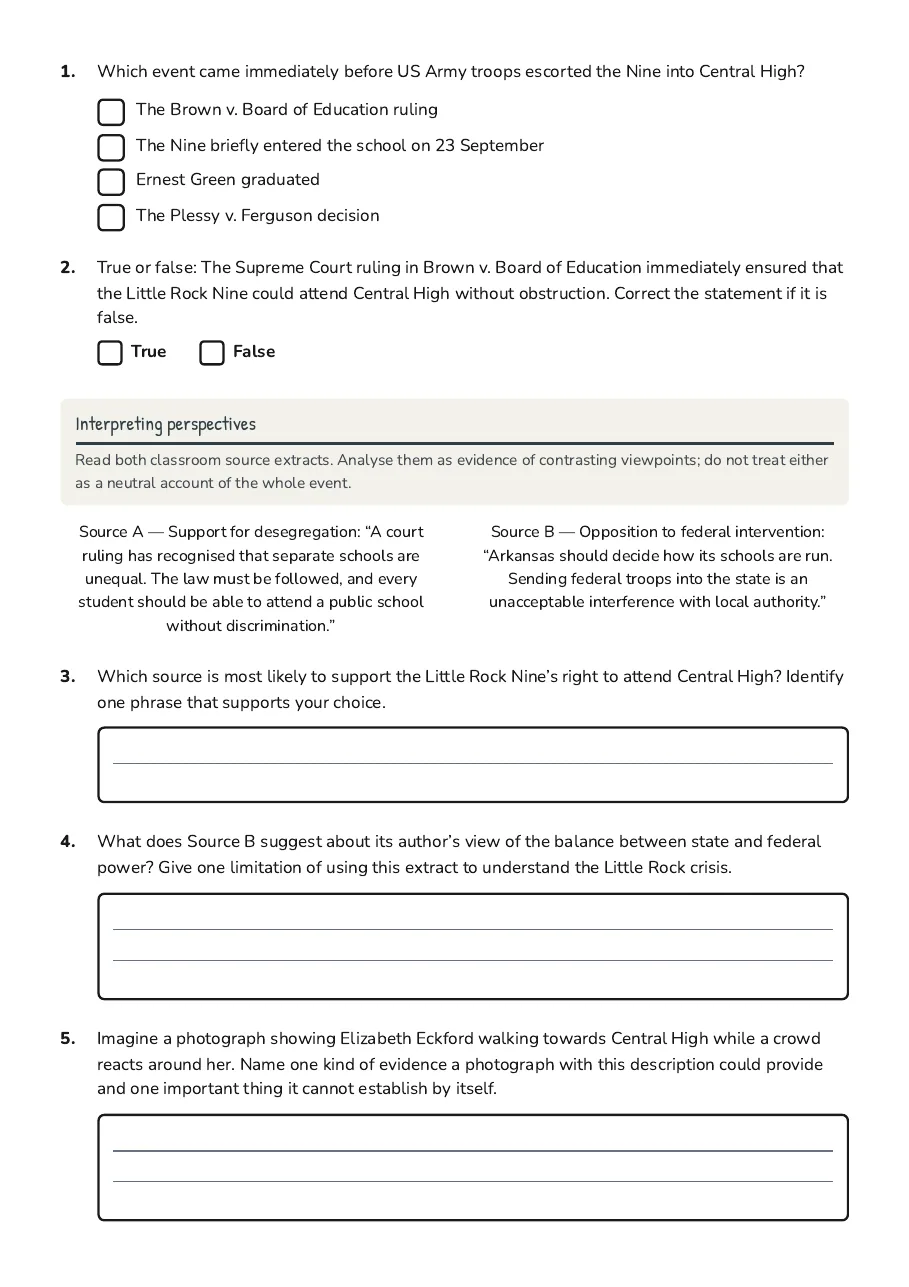
- The Brown v. Board of Education ruling
- The Nine briefly entered the school on 23 September
- Ernest Green graduated
- The Plessy v. Ferguson decision
Interpreting perspectives
Read both classroom source extracts. Analyse them as evidence of contrasting viewpoints; do not treat either as a neutral account of the whole event.
Source A — Support for desegregation: “A court ruling has recognised that separate schools are unequal. The law must be followed, and every student should be able to attend a public school without discrimination.”
Source B — Opposition to federal intervention: “Arkansas should decide how its schools are run. Sending federal troops into the state is an unacceptable interference with local authority.”
3 printable pages
Page 1
Page 2
Page 3
About This Worksheet
Free in Kuraplan
Sign up free, grab the PDF, and customize it for your class.
Print-Ready
Formatted for standard paper. Clean layout, easy to read.
AI-Generated
Created with Kuraplan's AI, designed for real classroom use.
For Teachers & Parents
Use in classrooms, for homework, tutoring, or homeschool.
Need a custom version of this worksheet?
Kuraplan's AI generates custom worksheets in seconds — differentiated for every learner, aligned to your curriculum.
Generate Custom Worksheets — FreeMore Social Sciences Worksheets
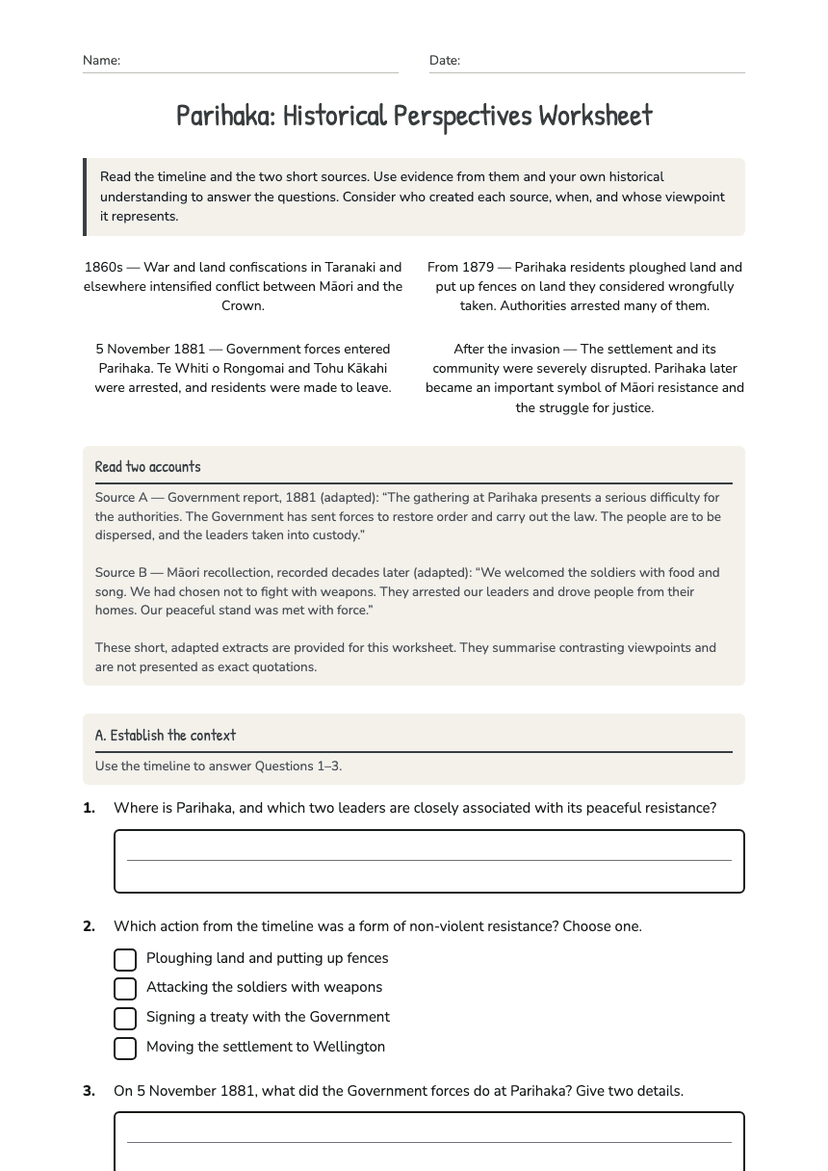
Parihaka: Historical Perspectives Worksheet
Free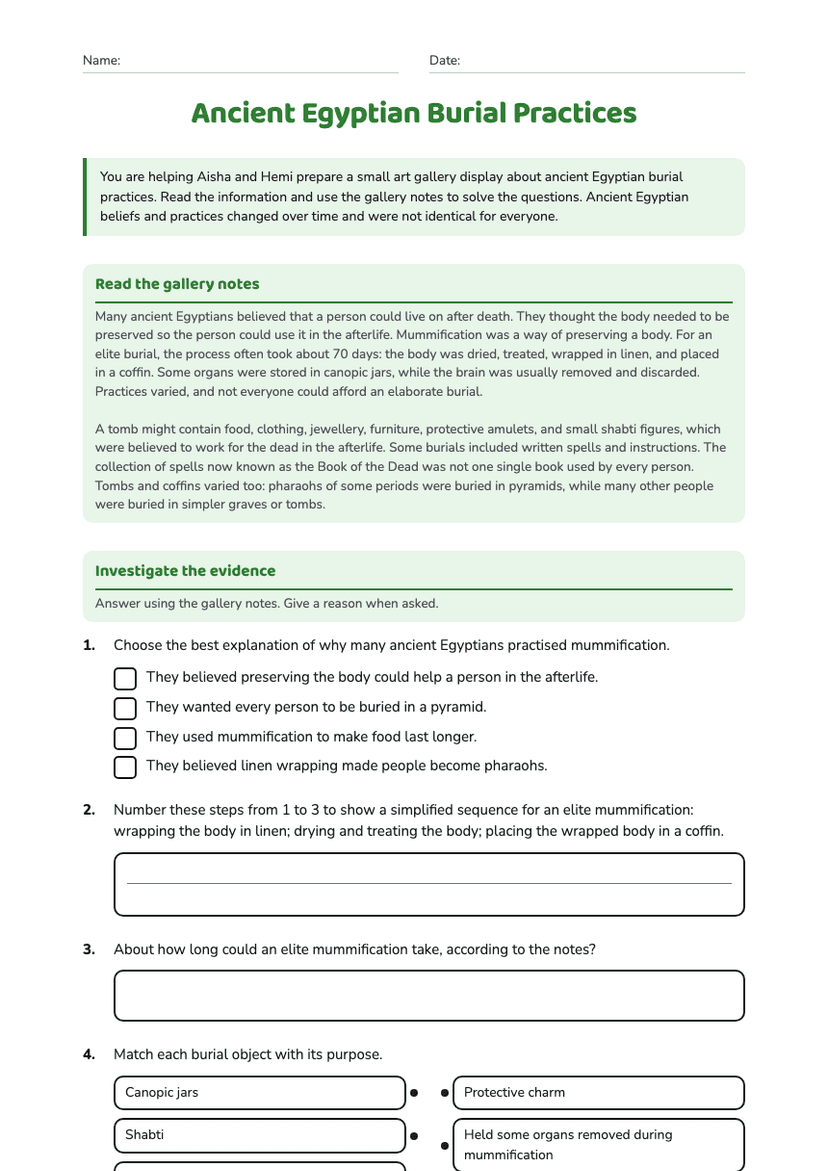
Ancient Egyptian Burial Practices
Free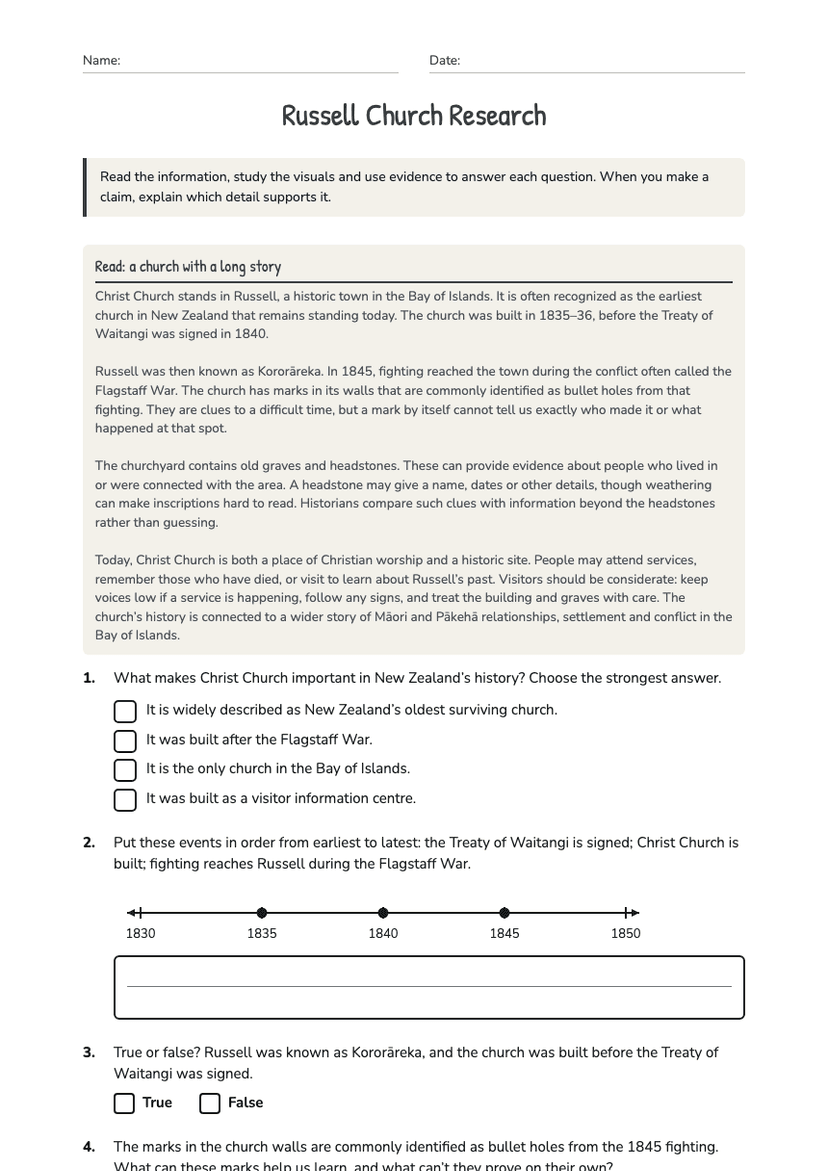
Russell Church Research
Free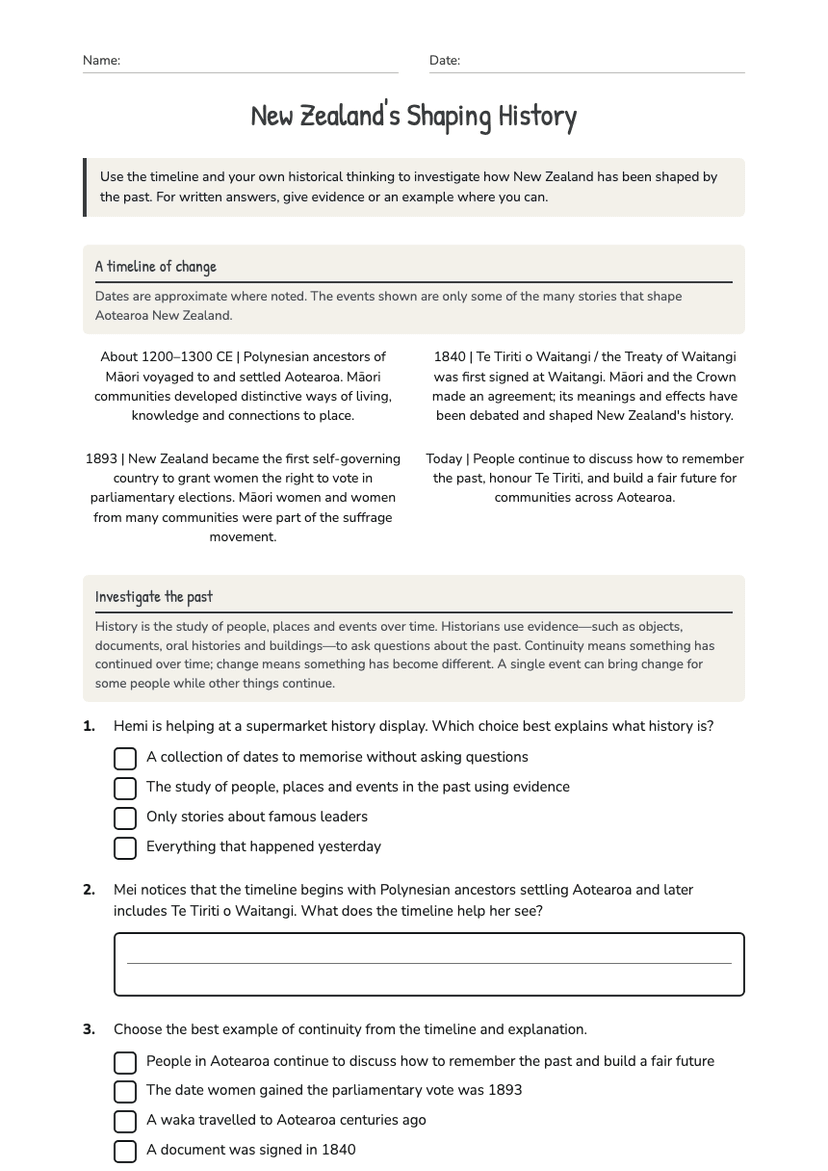
New Zealand's Shaping History
Free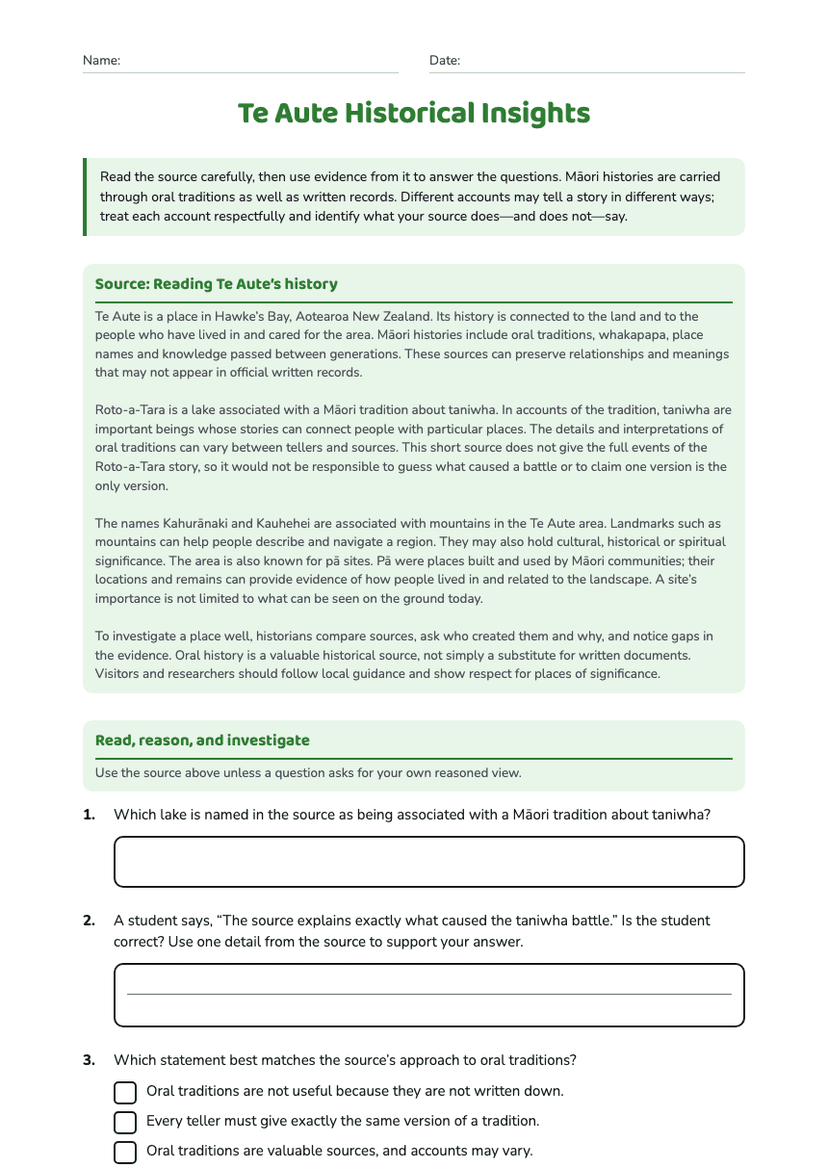
Te Aute Historical Insights
Free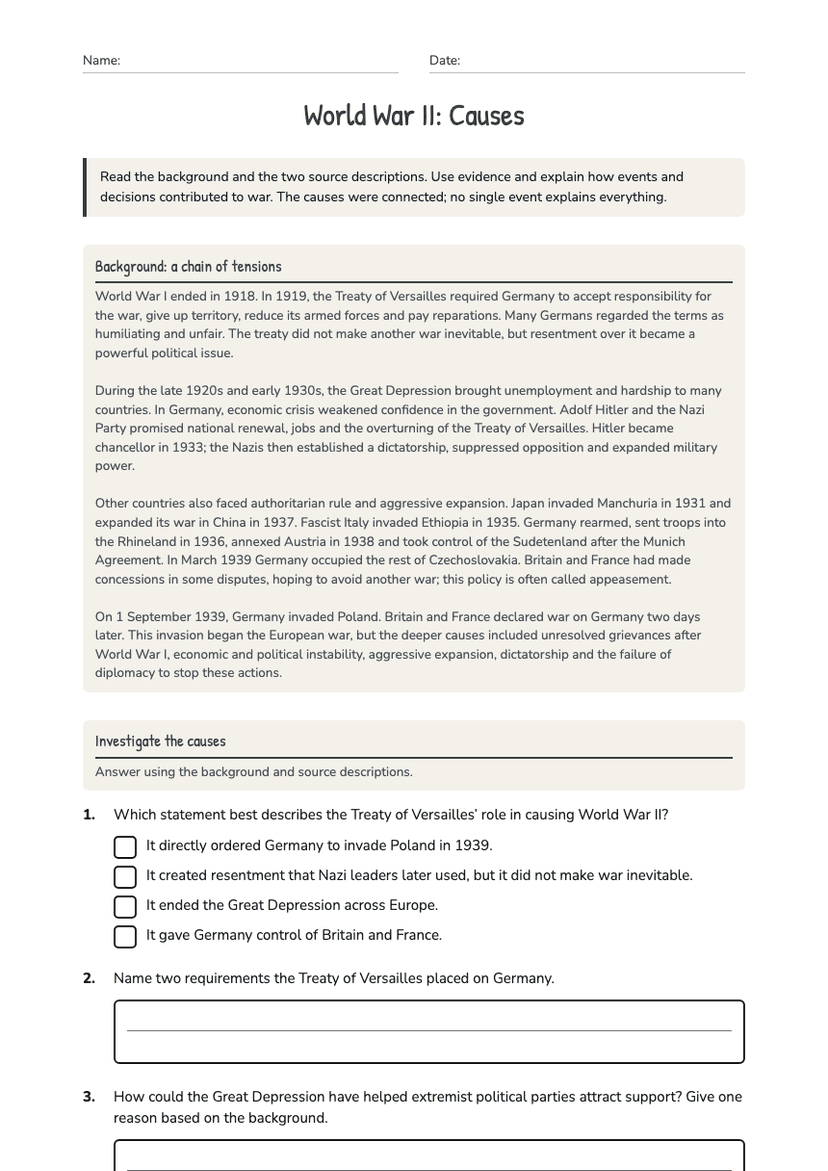
World War II: Causes
Free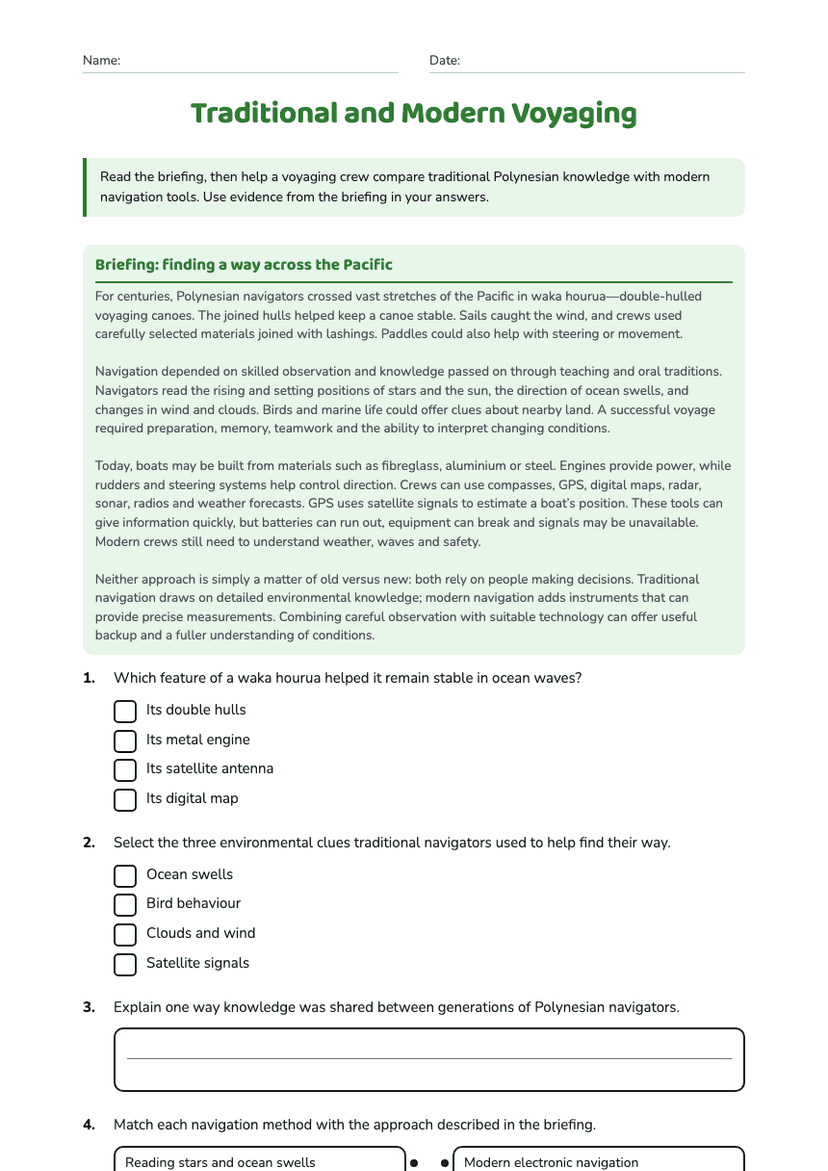
Traditional and Modern Voyaging
Free