Mānuka and Kawakawa Exploration
A free nz history worksheet ready for your classroom. Open in Kuraplan to grab the print-ready PDF, customize it for your students, or generate a fresh version in seconds.

Mānuka and Kawakawa Exploration
Rongoā Māori — Healing Plants of Aotearoa
🌿 WALT (We Are Learning To):
Recognise kawakawa and mānuka as special healing plants in Māori culture, and understand how they help people feel better.
✅ Success Criteria — I can:
⭐ Name the two special plants
⭐ Say one way each plant helps people
⭐ Describe how a plant looks, smells, or feels
🌺 Part 1: Match the Plant
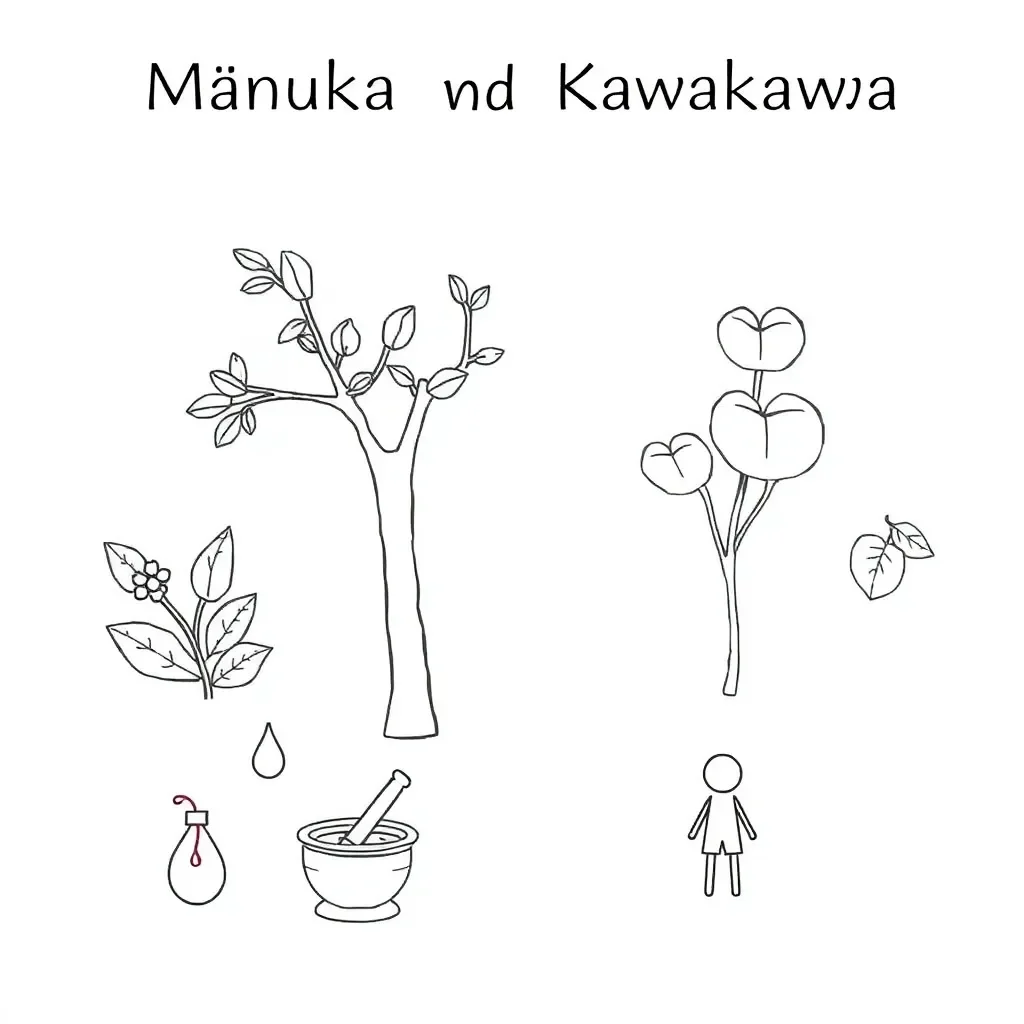
Draw a line to match each plant to what it looks like. Ask your teacher or kaiako to help read if needed.
🌸 Part 2: What Do You Know?
Word box: heal, leaves, mānuka, kawakawa, special
In Māori culture, plants are _________________ and important. The _________________ plant has big leaves with holes. The _________________ plant has small flowers. Both plants help people _________________ and feel better. Māori healers use the _________________ and flowers of these plants.
✏️ Part 2: My Thoughts and Senses
Kawakawa smells like...
Mānuka feels like...
🌟 Extension Activity (Challenge Yourself!)
💡 Dyslexia-Friendly Tips for This Worksheet
🔤 Ask your teacher to read questions aloud to you.
🖊️ You can draw your answers instead of writing.
🌈 Use colour to highlight words that help you.
🤝 Work with a buddy if that helps you think!
🌺 Our Karakia (Say Together):
"Thank you, kawakawa and mānuka,
For your leaves and flowers so bright.
You help us heal and feel strong,
We care for you with love and light."
About This Worksheet
Free in Kuraplan
Sign up free, grab the PDF, and customize it for your class.
Print-Ready
Formatted for standard paper. Clean layout, easy to read.
AI-Generated
Created with Kuraplan's AI, designed for real classroom use.
For Teachers & Parents
Use in classrooms, for homework, tutoring, or homeschool.
Need a custom version of this worksheet?
Kuraplan's AI generates custom worksheets in seconds — differentiated for every learner, aligned to your curriculum.
Generate Custom Worksheets — Free