Māori Voices in WWI
A free nz history worksheet ready for your classroom. Open in Kuraplan to grab the print-ready PDF, customize it for your students, or generate a fresh version in seconds.
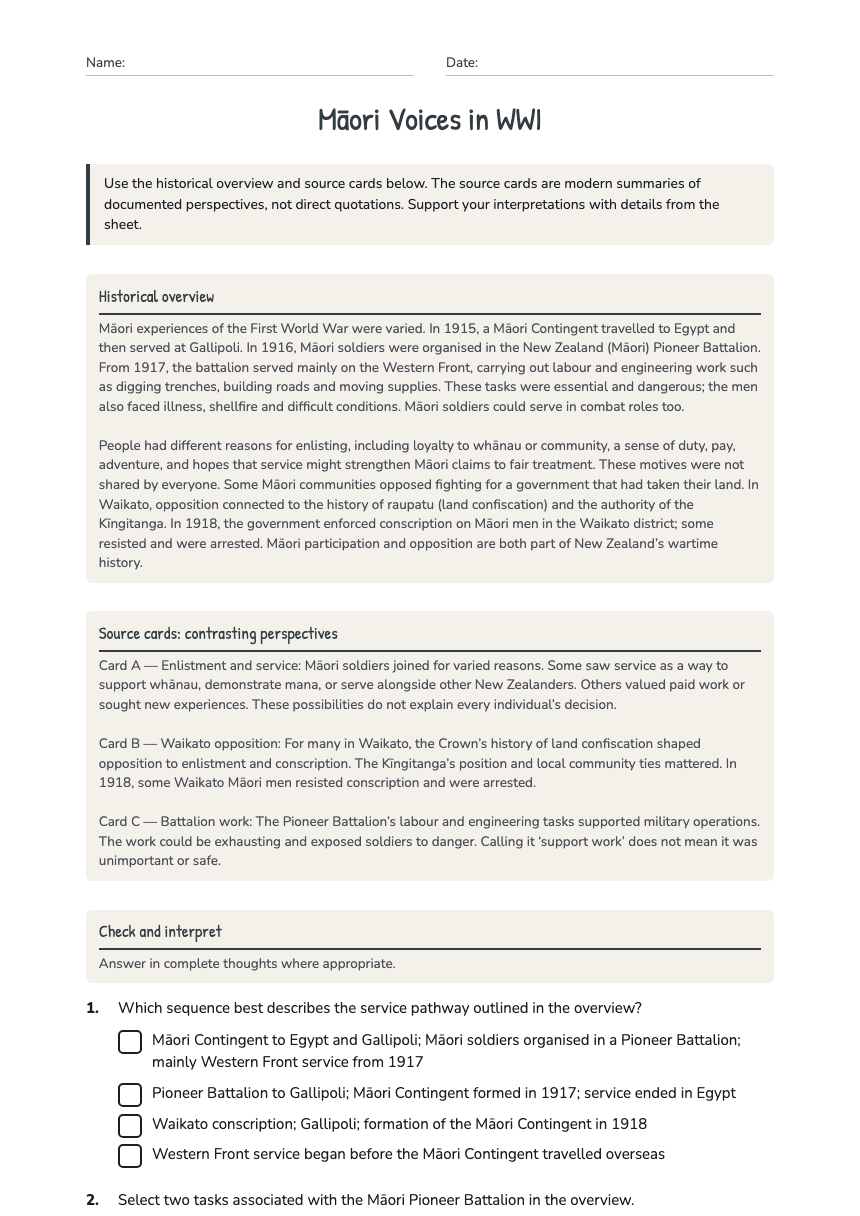
Māori Voices in WWI
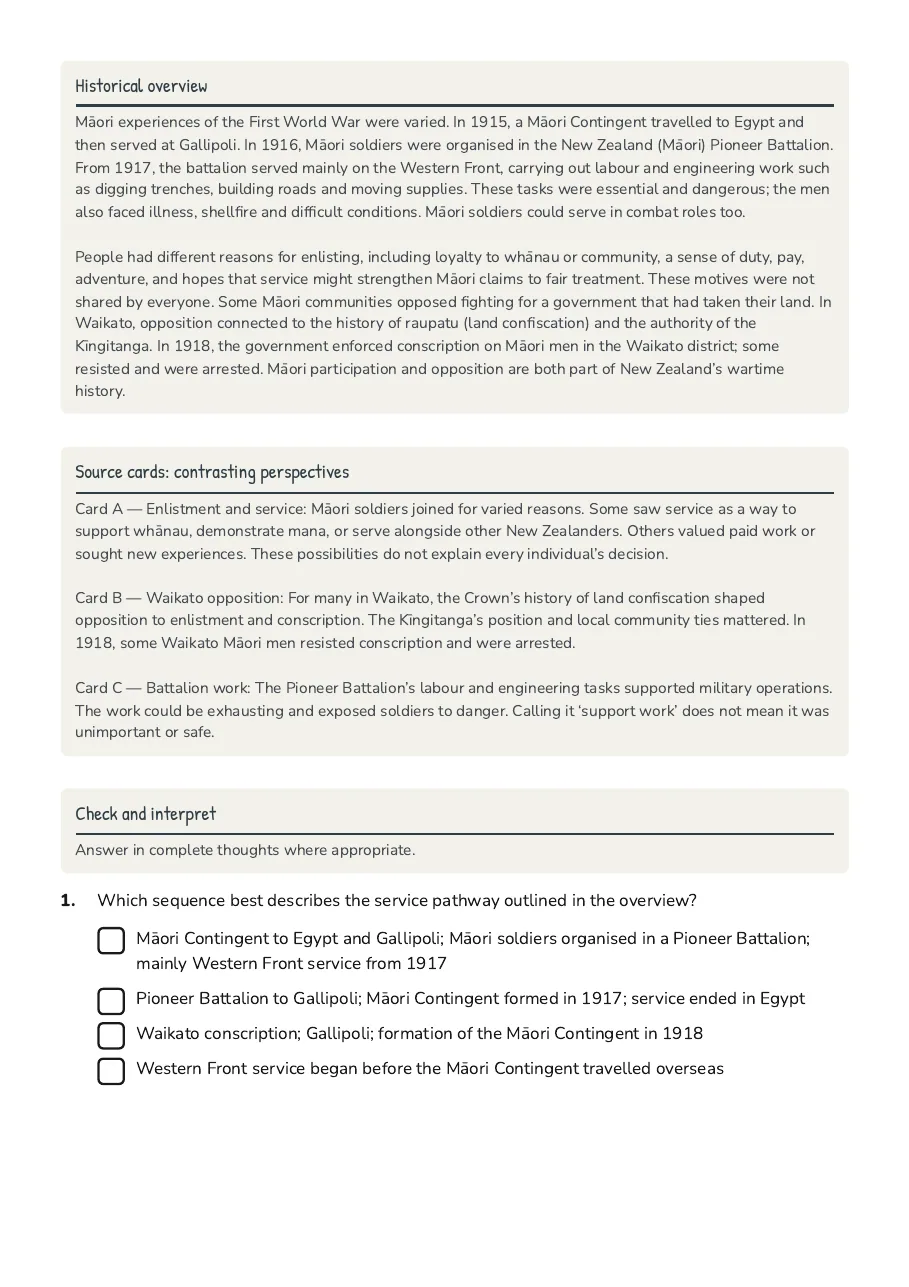
Historical overview
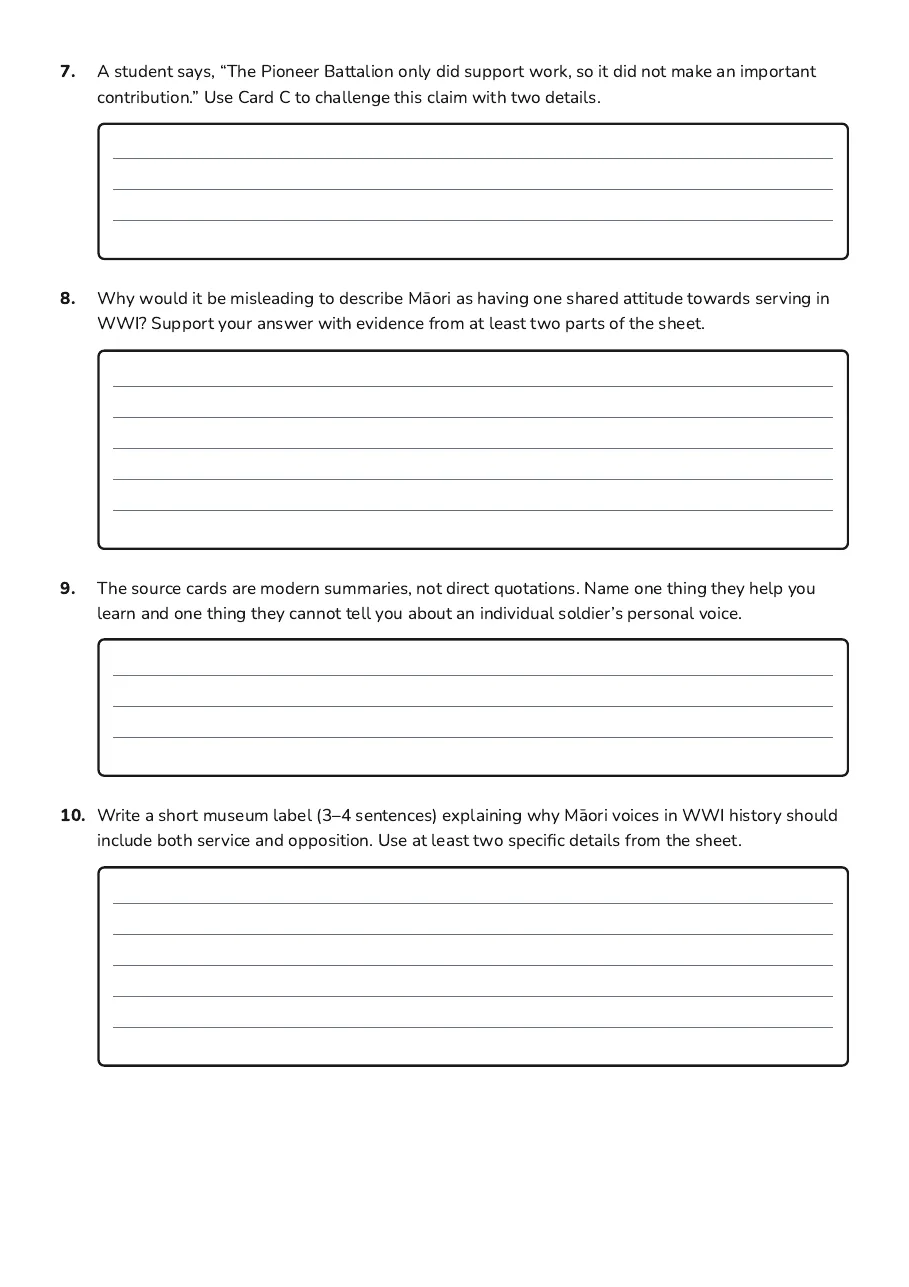
Māori experiences of the First World War were varied. In 1915, a Māori Contingent travelled to Egypt and then served at Gallipoli. In 1916, Māori soldiers were organised in the New Zealand (Māori) Pioneer Battalion. From 1917, the battalion served mainly on the Western Front, carrying out labour and engineering work such as digging trenches, building roads and moving supplies. These tasks were essential and dangerous; the men also faced illness, shellfire and difficult conditions. Māori soldiers could serve in combat roles too. People had different reasons for enlisting, including loyalty to whānau or community, a sense of duty, pay, adventure, and hopes that service might strengthen Māori claims to fair treatment. These motives were not shared by everyone. Some Māori communities opposed fighting for a government that had taken their land. In Waikato, opposition connected to the history of raupatu (land confiscation) and the authority of the Kīngitanga. In 1918, the government enforced conscription on Māori men in the Waikato district; some resisted and were arrested. Māori participation and opposition are both part of New Zealand’s wartime history.
Source cards: contrasting perspectives
Card A — Enlistment and service: Māori soldiers joined for varied reasons. Some saw service as a way to support whānau, demonstrate mana, or serve alongside other New Zealanders. Others valued paid work or sought new experiences. These possibilities do not explain every individual’s decision. Card B — Waikato opposition: For many in Waikato, the Crown’s history of land confiscation shaped opposition to enlistment and conscription. The Kīngitanga’s position and local community ties mattered. In 1918, some Waikato Māori men resisted conscription and were arrested. Card C — Battalion work: The Pioneer Battalion’s labour and engineering tasks supported military operations. The work could be exhausting and exposed soldiers to danger. Calling it ‘support work’ does not mean it was unimportant or safe.
Check and interpret
Answer in complete thoughts where appropriate.
- Māori Contingent to Egypt and Gallipoli; Māori soldiers organised in a Pioneer Battalion; mainly Western Front service from 1917
- Pioneer Battalion to Gallipoli; Māori Contingent formed in 1917; service ended in Egypt
- Waikato conscription; Gallipoli; formation of the Māori Contingent in 1918
- Western Front service began before the Māori Contingent travelled overseas
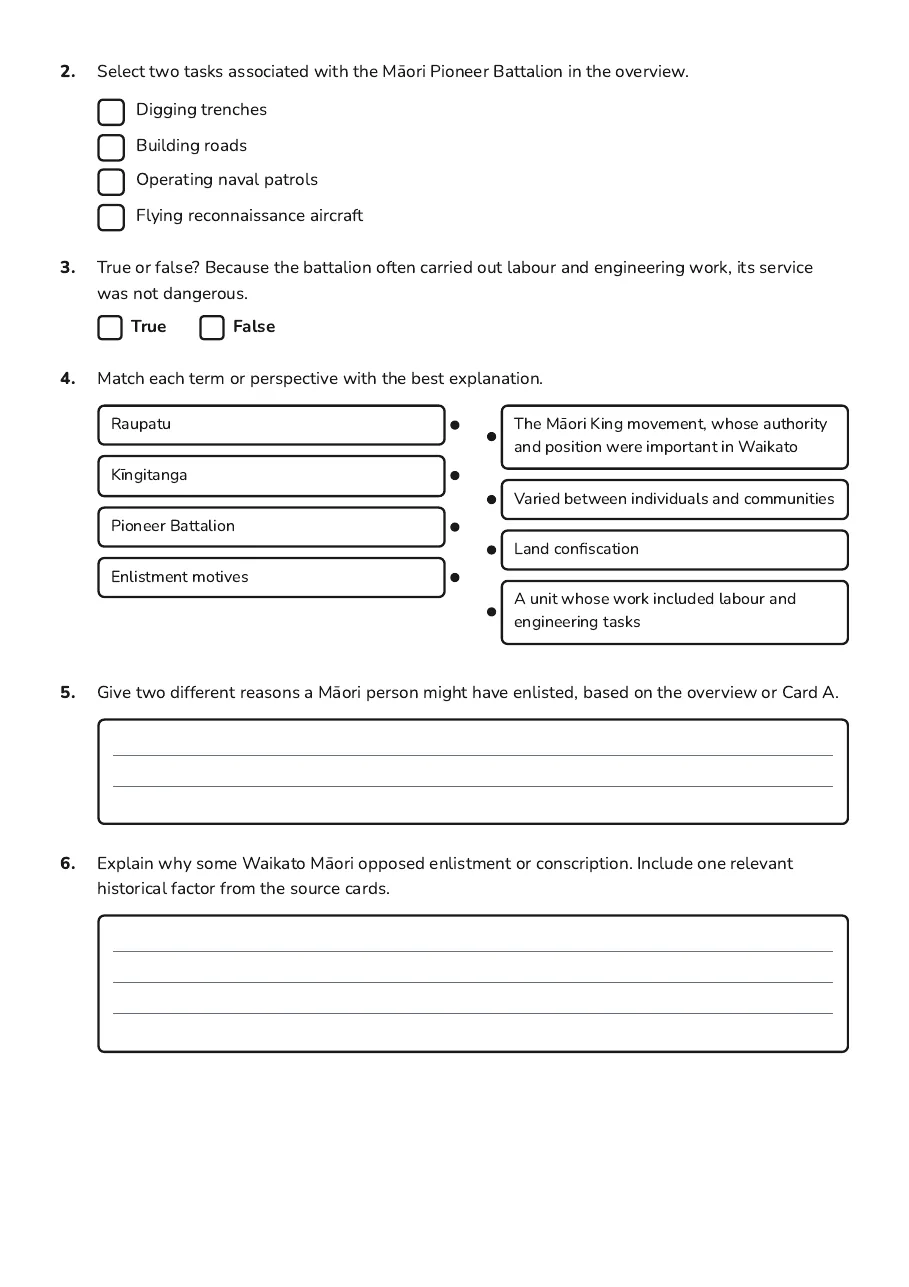
- Digging trenches
- Building roads
- Operating naval patrols
- Flying reconnaissance aircraft
- Raupatu
- Kīngitanga
- Pioneer Battalion
- Enlistment motives
- The Māori King movement, whose authority and position were important in Waikato
- Varied between individuals and communities
- Land confiscation
- A unit whose work included labour and engineering tasks
4 printable pages

Page 1
Page 2
Page 3
Page 4
About This Worksheet
Free in Kuraplan
Sign up free, grab the PDF, and customize it for your class.
Print-Ready
Formatted for standard paper. Clean layout, easy to read.
AI-Generated
Created with Kuraplan's AI, designed for real classroom use.
For Teachers & Parents
Use in classrooms, for homework, tutoring, or homeschool.
Need a custom version of this worksheet?
Kuraplan's AI generates custom worksheets in seconds — differentiated for every learner, aligned to your curriculum.
Generate Custom Worksheets — FreeMore NZ History Worksheets
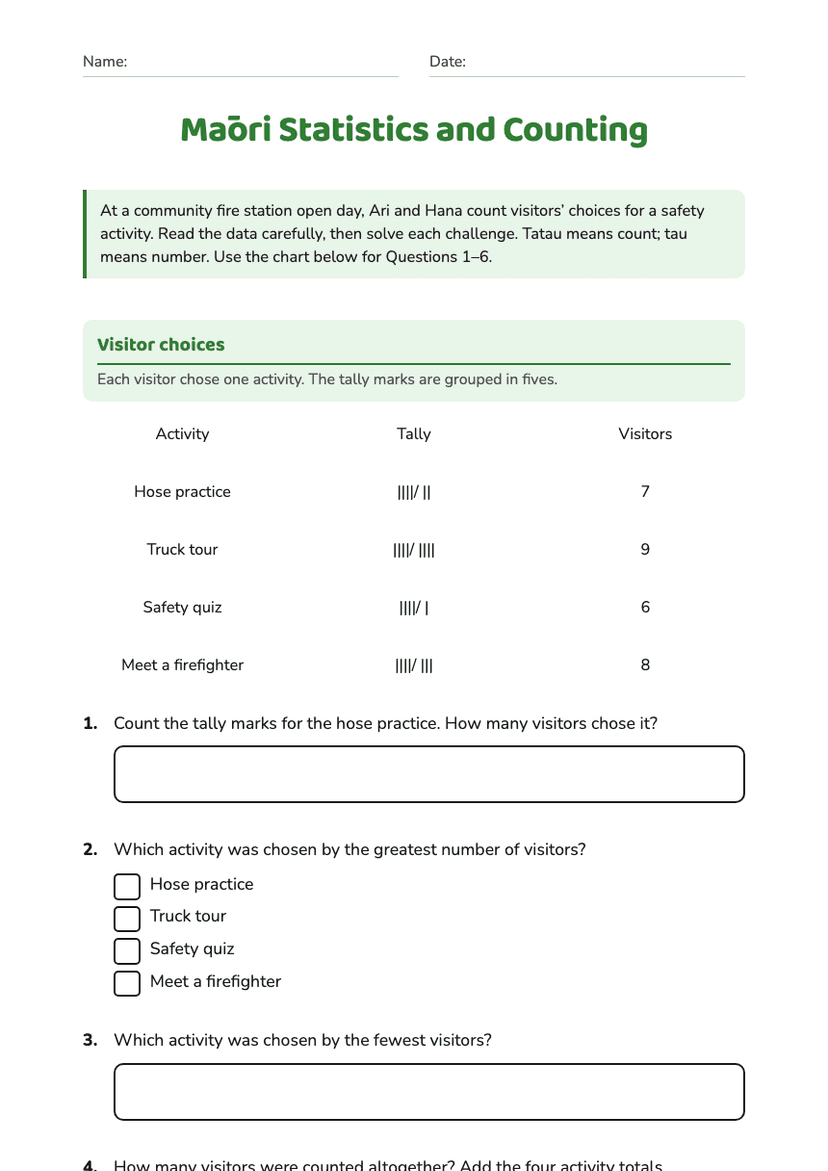
Māori Statistics and Counting
Free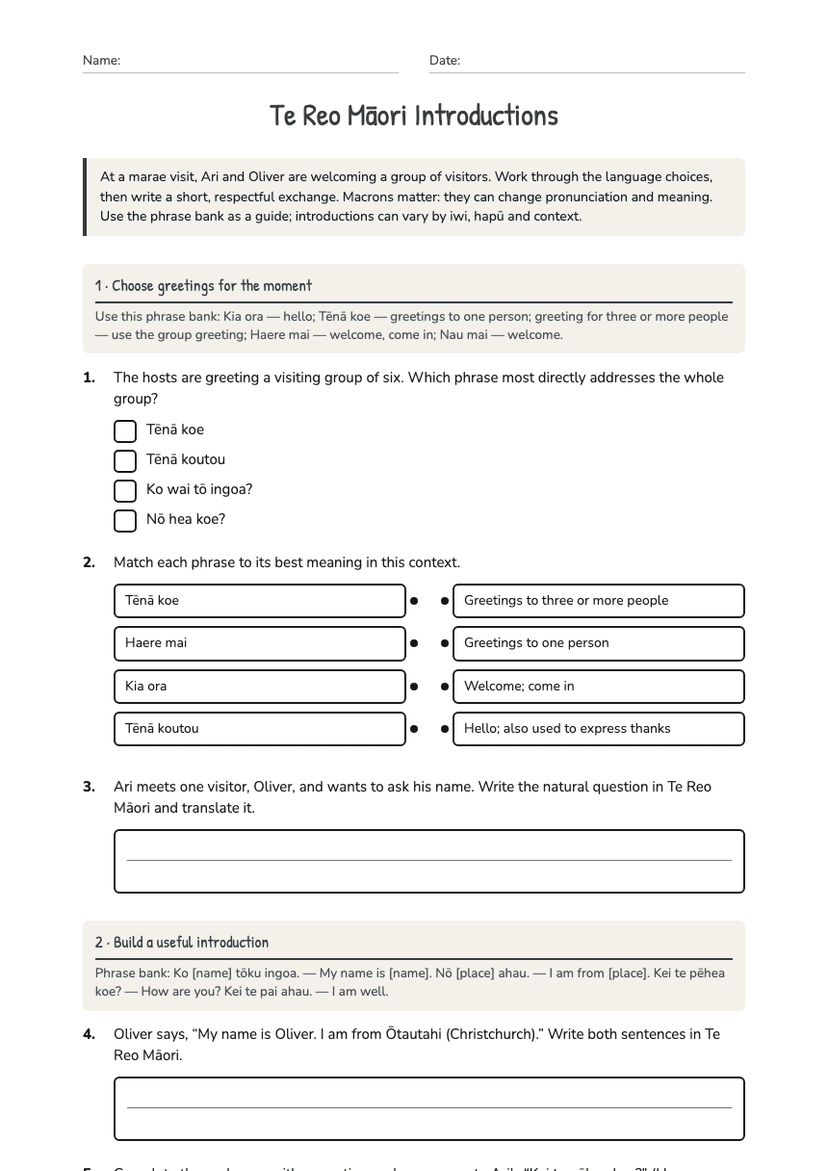
Te Reo Māori Introductions
Free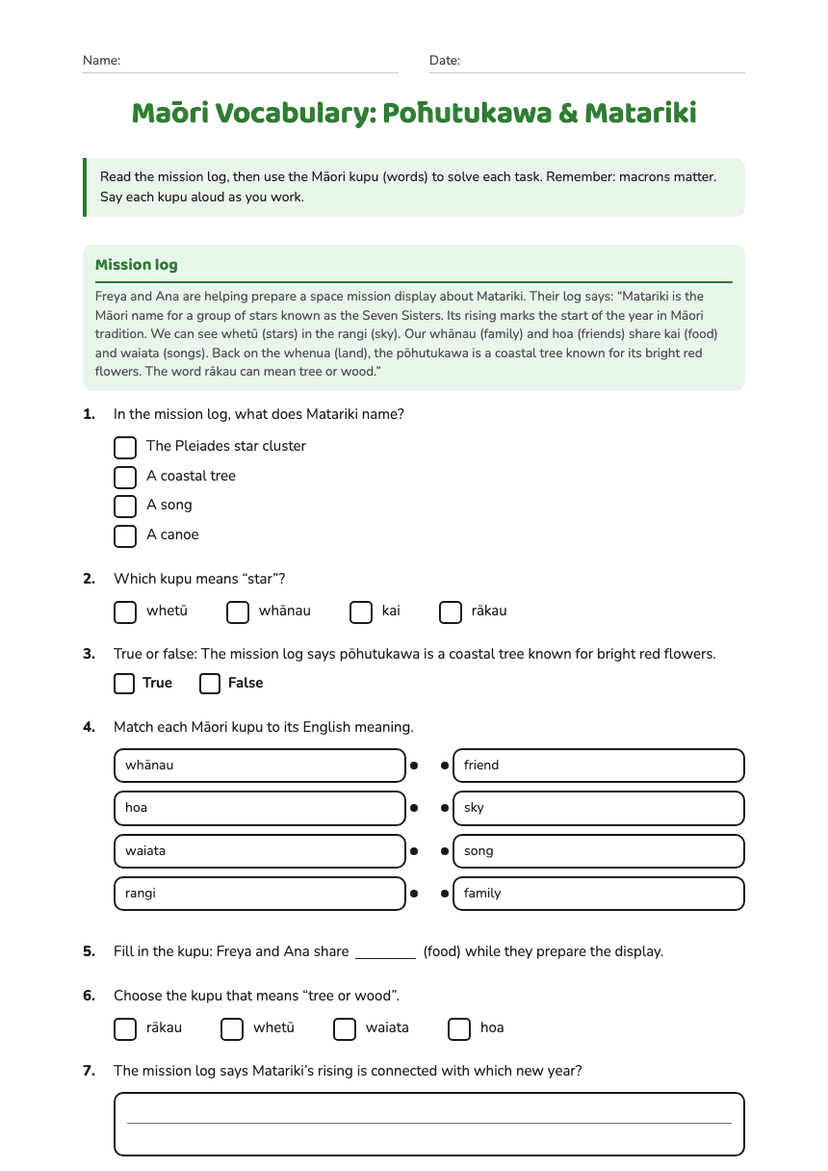
Māori Vocabulary: Pōhutukawa & Matariki
Free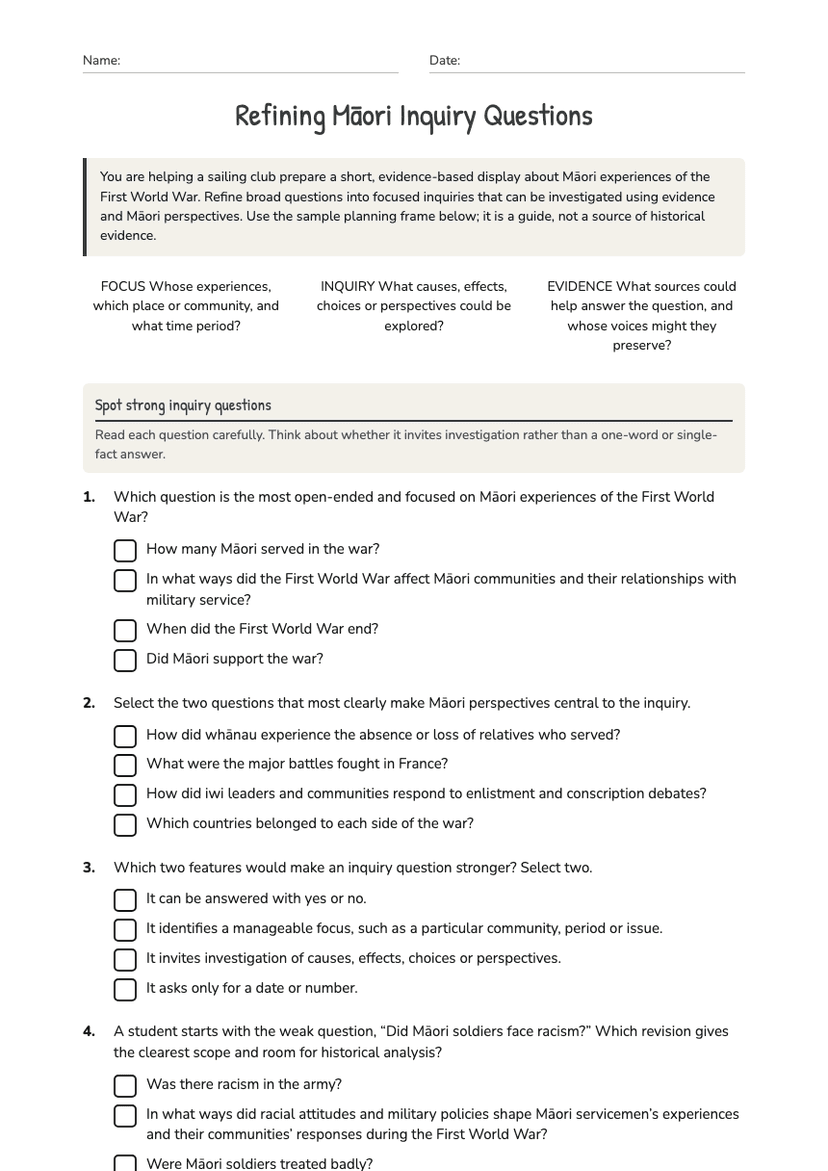
Refining Māori Inquiry Questions
Free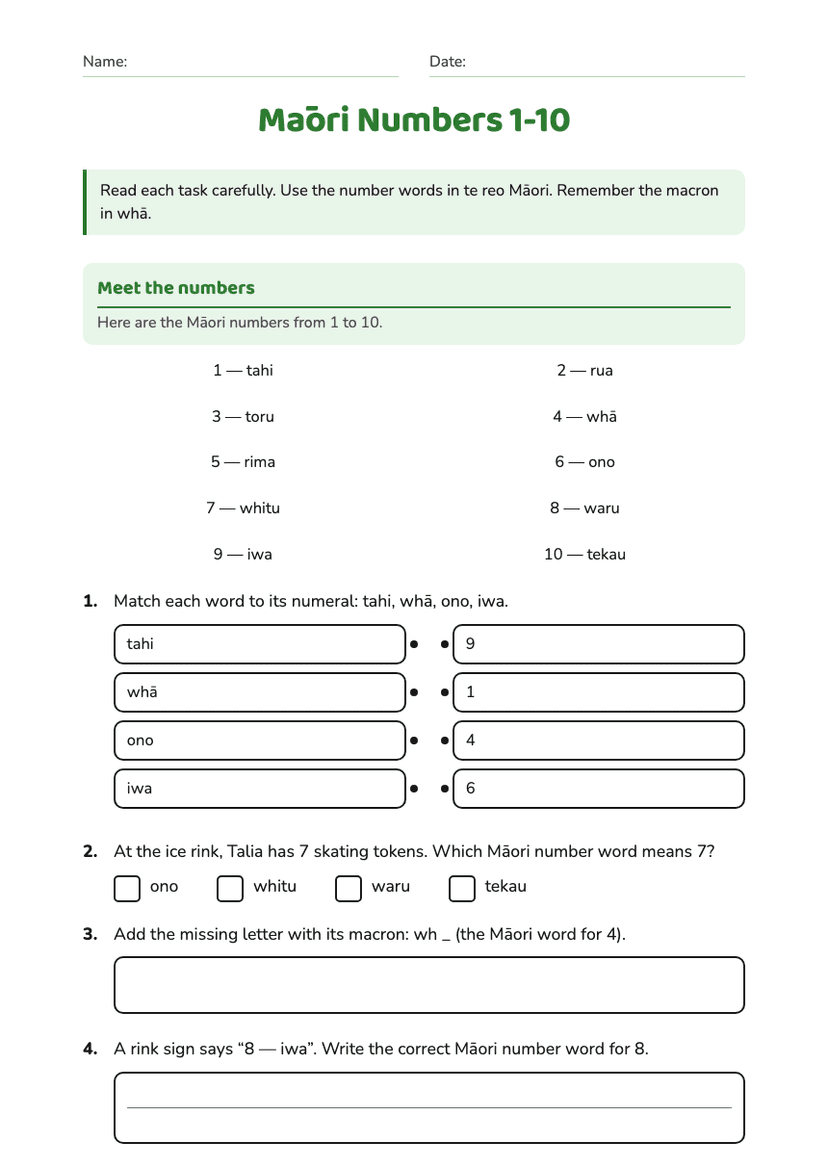
Māori Numbers 1-10
Free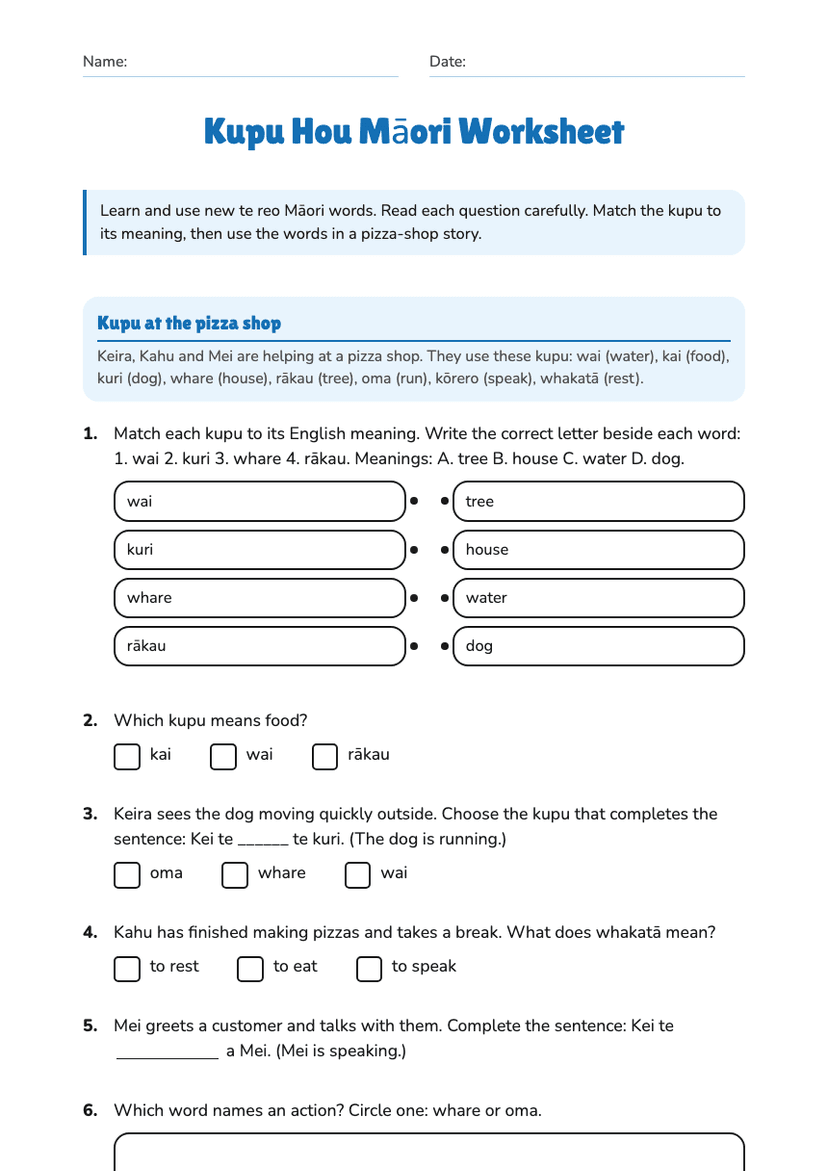
Kupu Hou Māori Worksheet
Free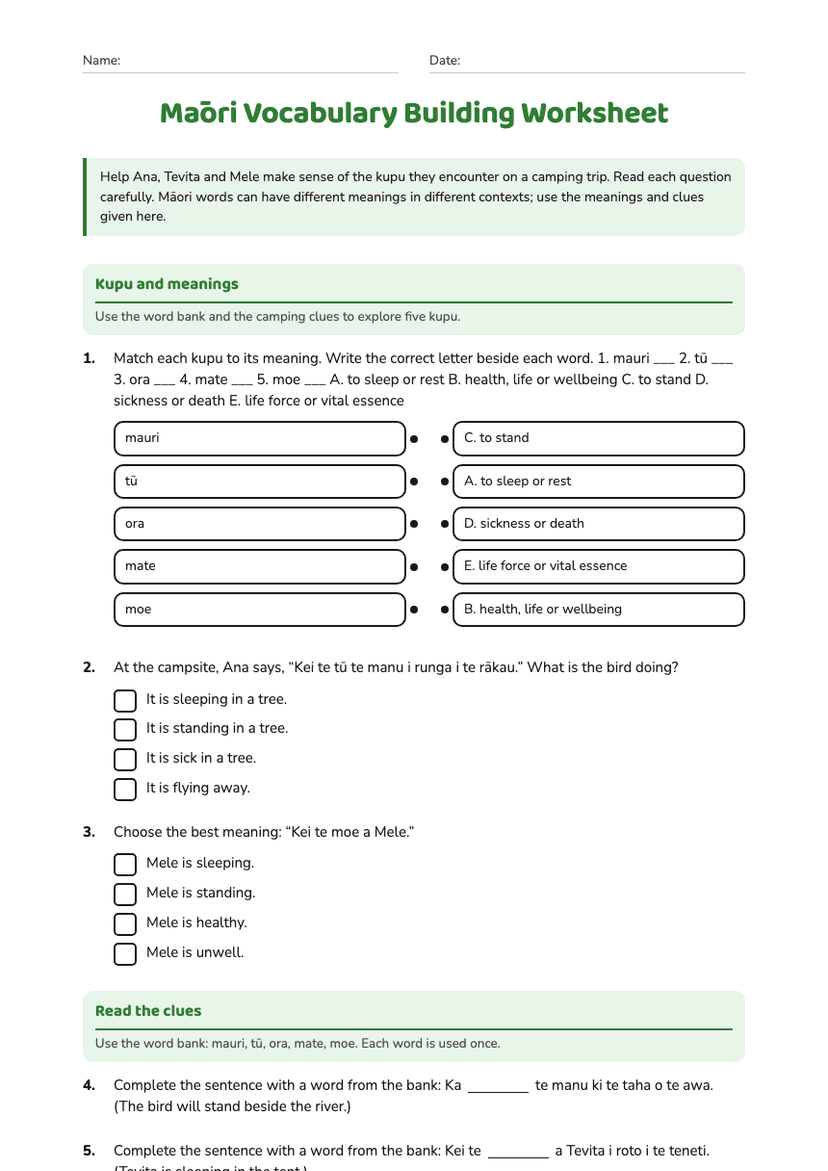
Māori Vocabulary Building Worksheet
Free