Māori Music Exploration Workshop
A free music worksheet ready for your classroom. Open in Kuraplan to grab the print-ready PDF, customize it for your students, or generate a fresh version in seconds.
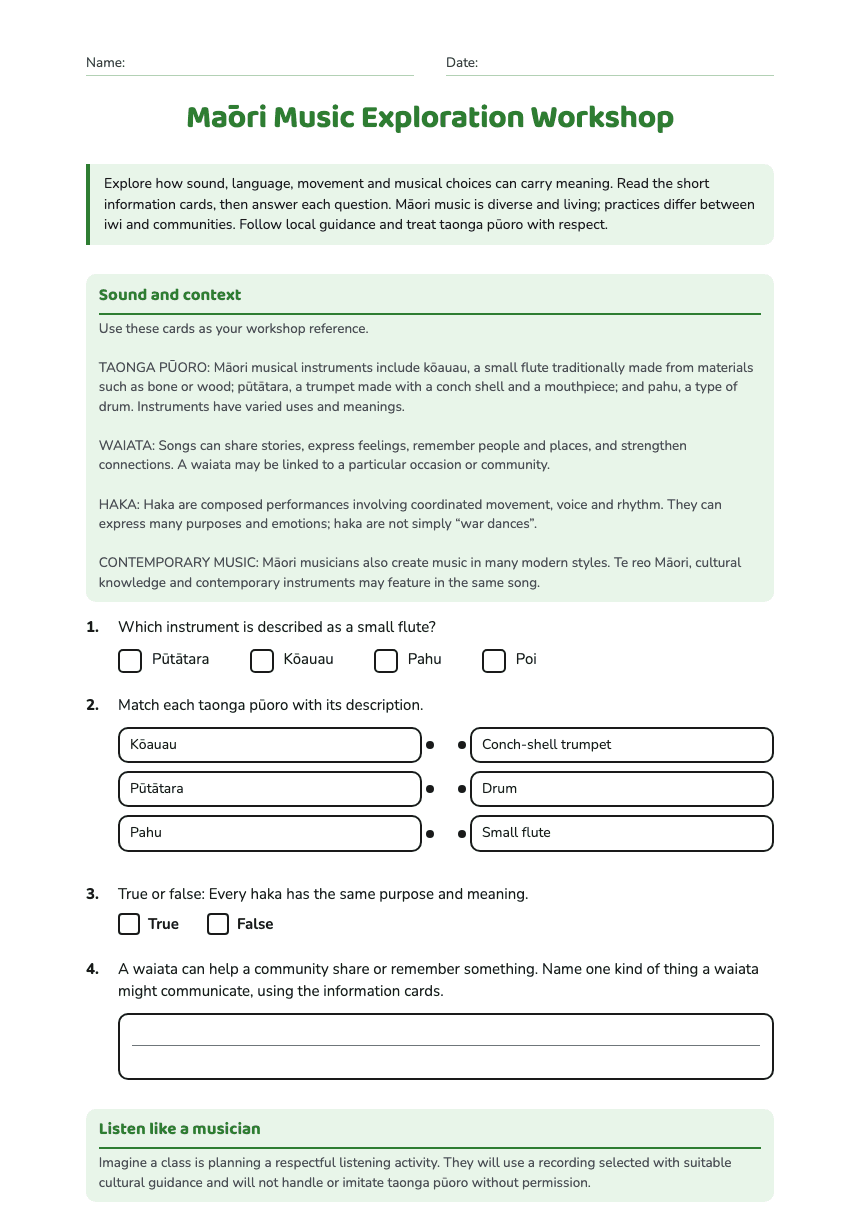
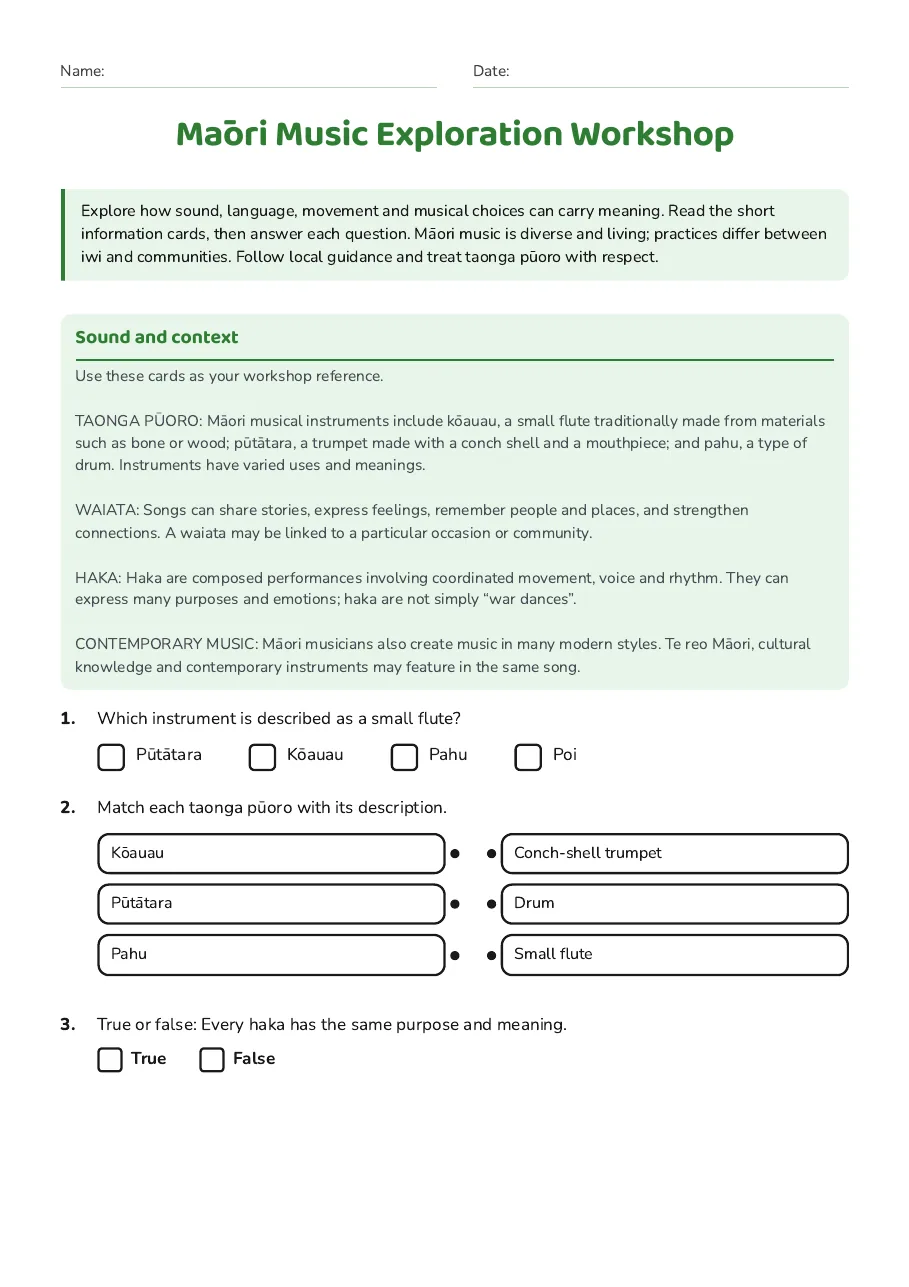
Māori Music Exploration Workshop
Sound and context
Use these cards as your workshop reference. TAONGA PŪORO: Māori musical instruments include kōauau, a small flute traditionally made from materials such as bone or wood; pūtātara, a trumpet made with a conch shell and a mouthpiece; and pahu, a type of drum. Instruments have varied uses and meanings. WAIATA: Songs can share stories, express feelings, remember people and places, and strengthen connections. A waiata may be linked to a particular occasion or community. HAKA: Haka are composed performances involving coordinated movement, voice and rhythm. They can express many purposes and emotions; haka are not simply “war dances”. CONTEMPORARY MUSIC: Māori musicians also create music in many modern styles. Te reo Māori, cultural knowledge and contemporary instruments may feature in the same song.
- Pūtātara
- Kōauau
- Pahu
- Poi
- Kōauau
- Pūtātara
- Pahu
- Conch-shell trumpet
- Drum
- Small flute
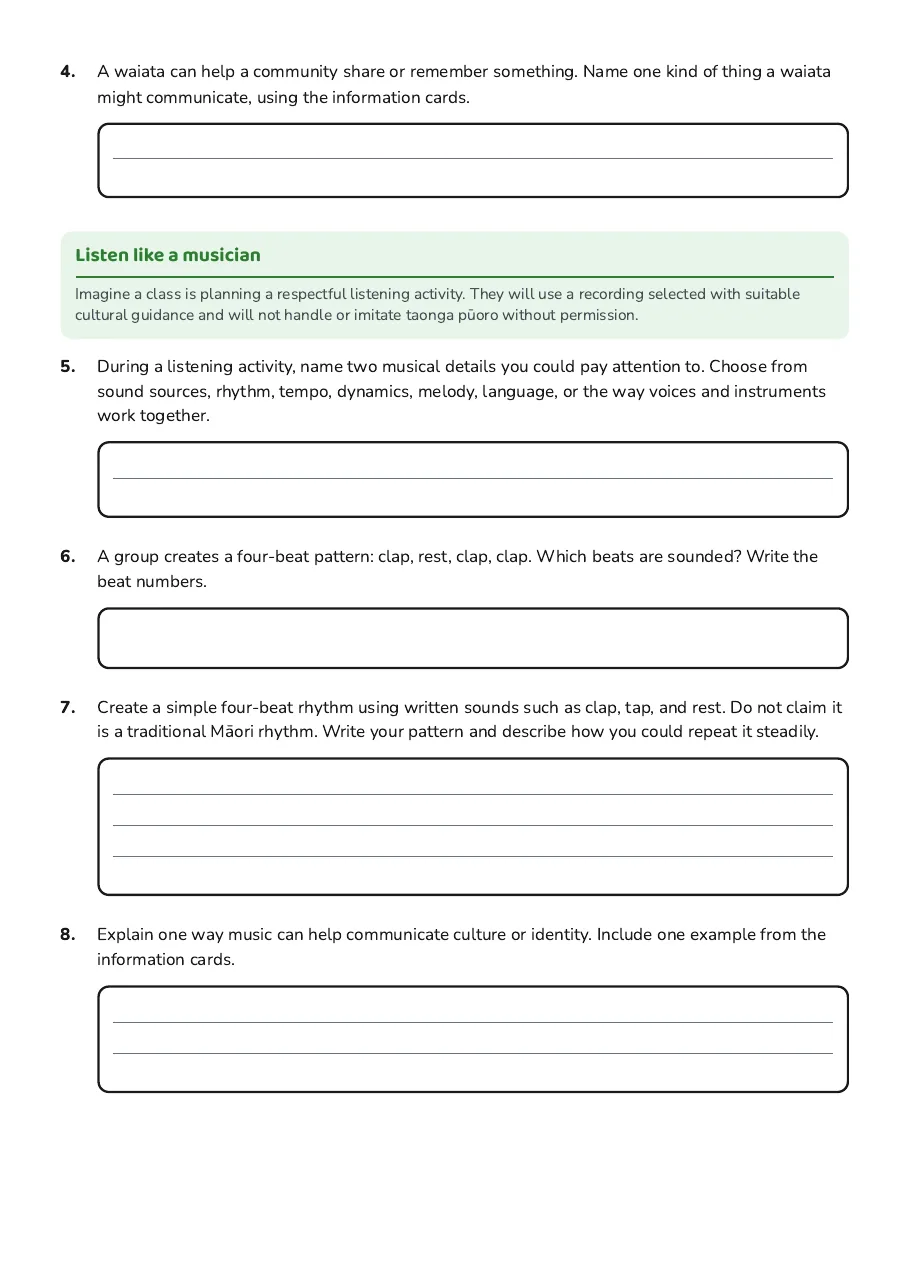
Listen like a musician
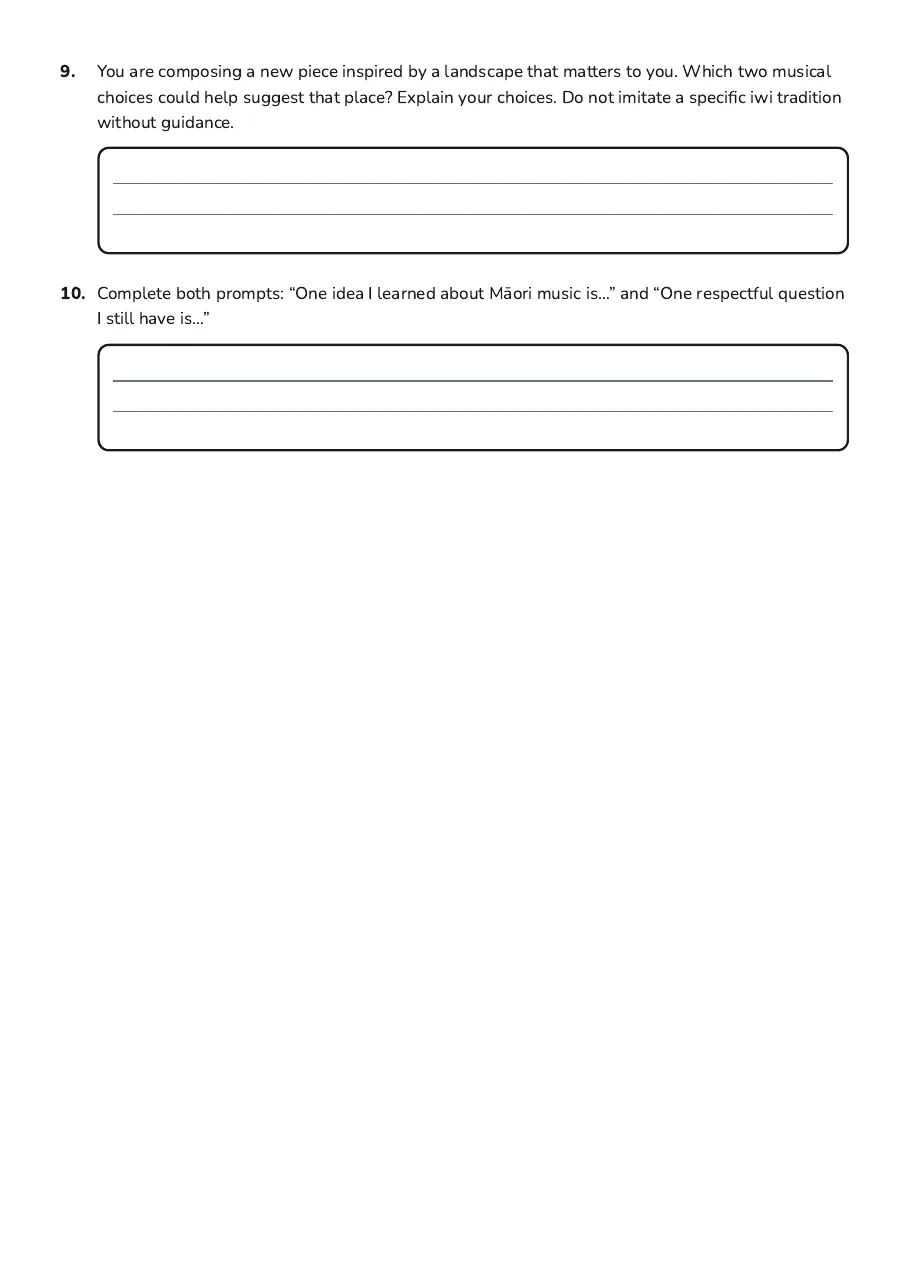
Imagine a class is planning a respectful listening activity. They will use a recording selected with suitable cultural guidance and will not handle or imitate taonga pūoro without permission.
3 printable pages
Page 1
Page 2
Page 3
About This Worksheet
Free in Kuraplan
Sign up free, grab the PDF, and customize it for your class.
Print-Ready
Formatted for standard paper. Clean layout, easy to read.
AI-Generated
Created with Kuraplan's AI, designed for real classroom use.
For Teachers & Parents
Use in classrooms, for homework, tutoring, or homeschool.
Need a custom version of this worksheet?
Kuraplan's AI generates custom worksheets in seconds — differentiated for every learner, aligned to your curriculum.
Generate Custom Worksheets — FreeMore Music Worksheets
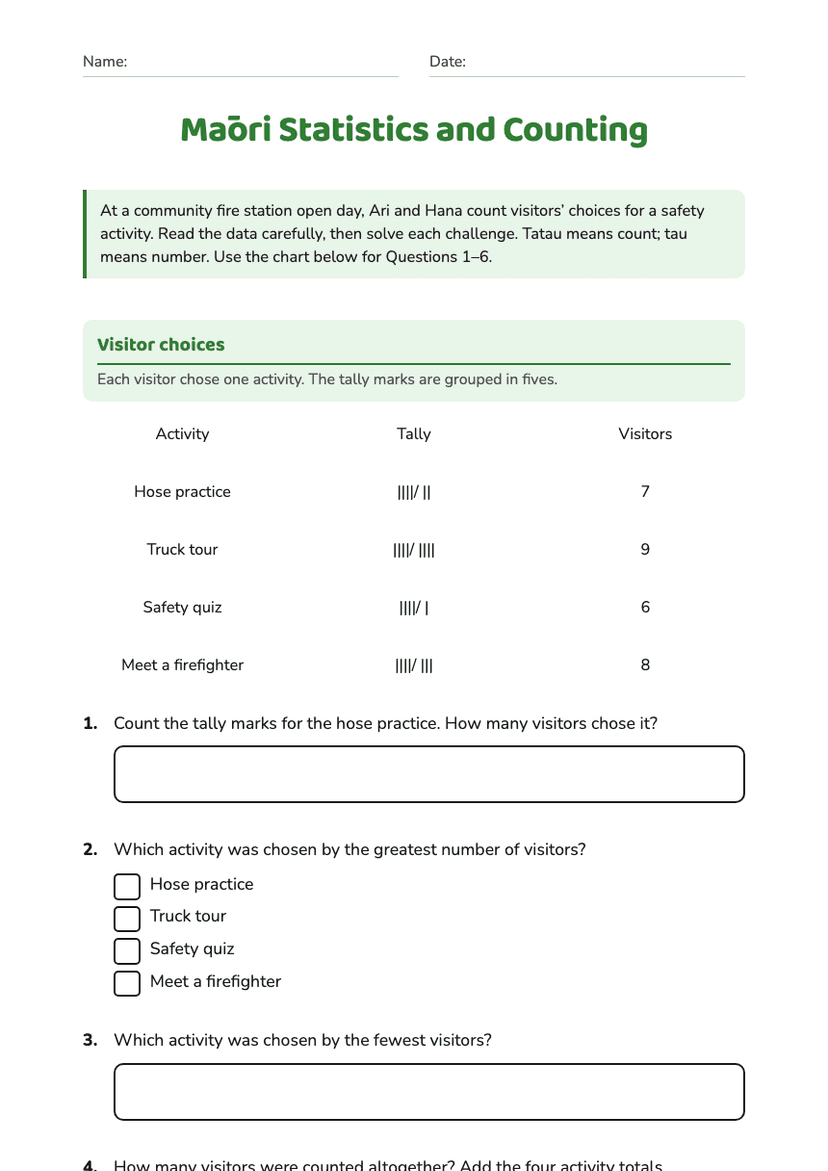
Māori Statistics and Counting
Free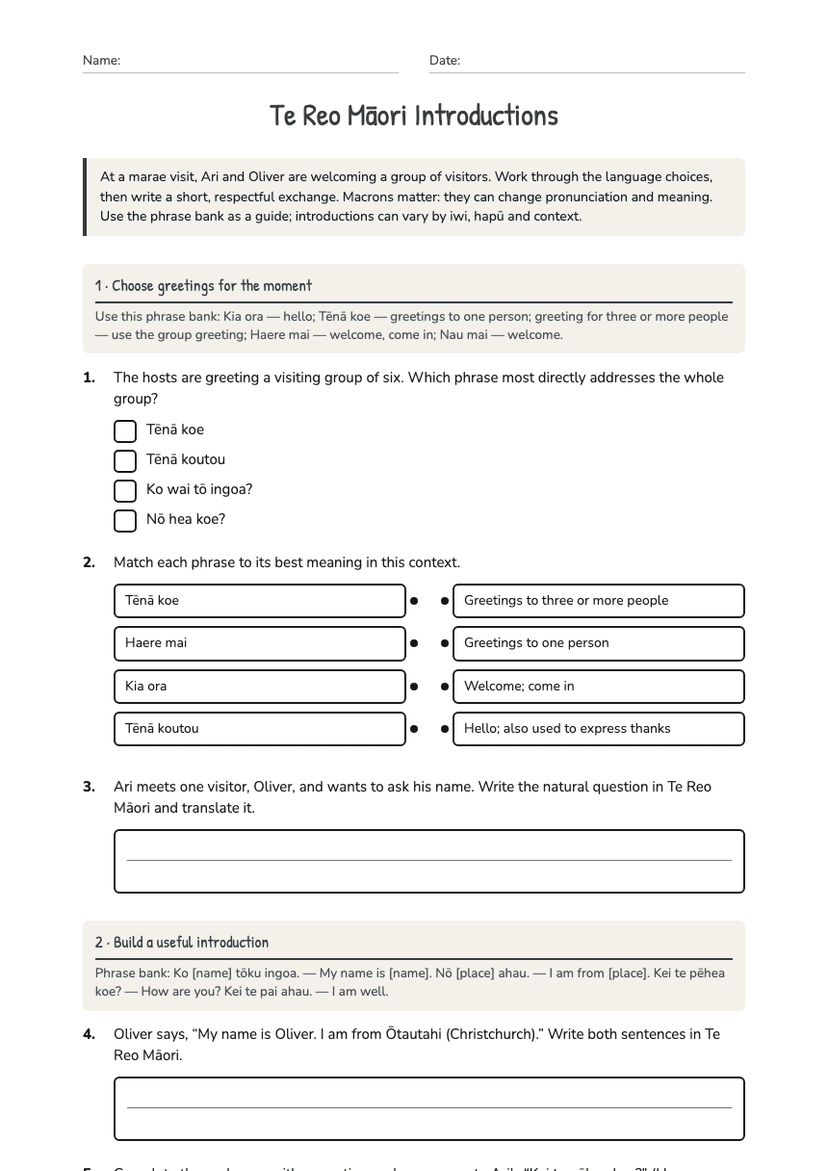
Te Reo Māori Introductions
Free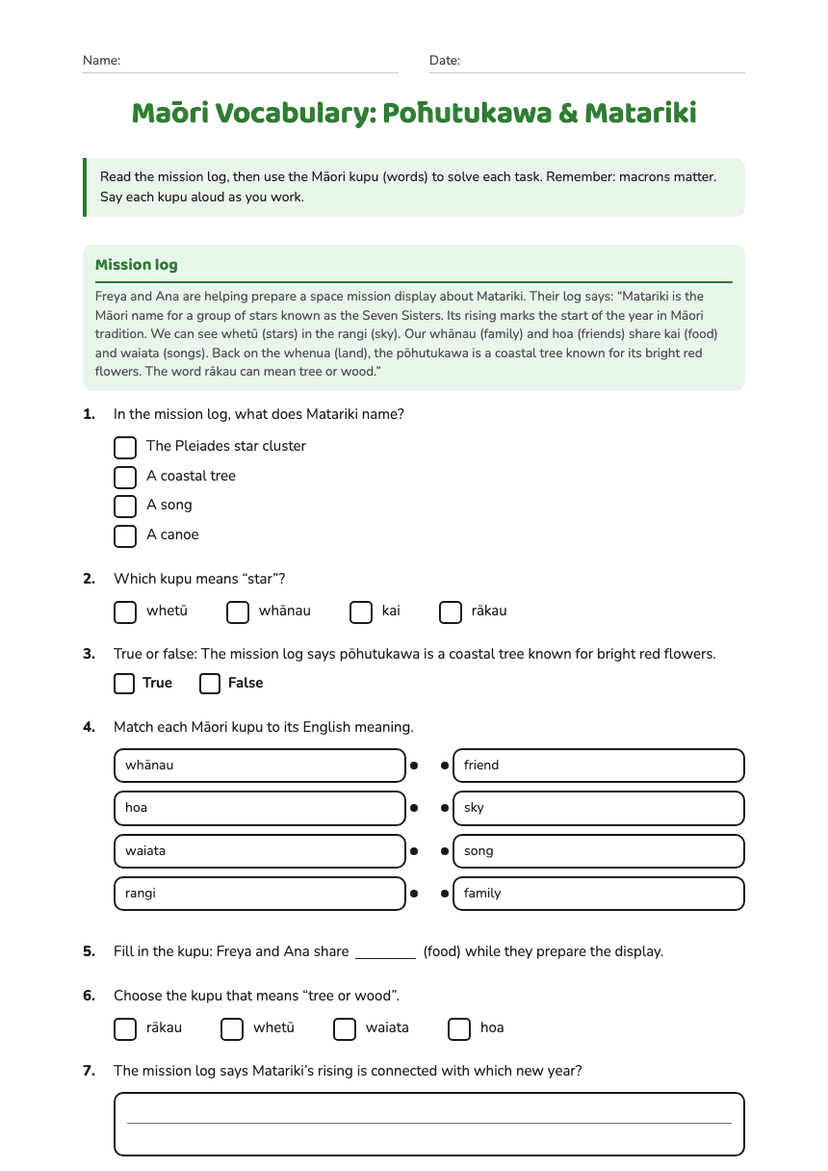
Māori Vocabulary: Pōhutukawa & Matariki
Free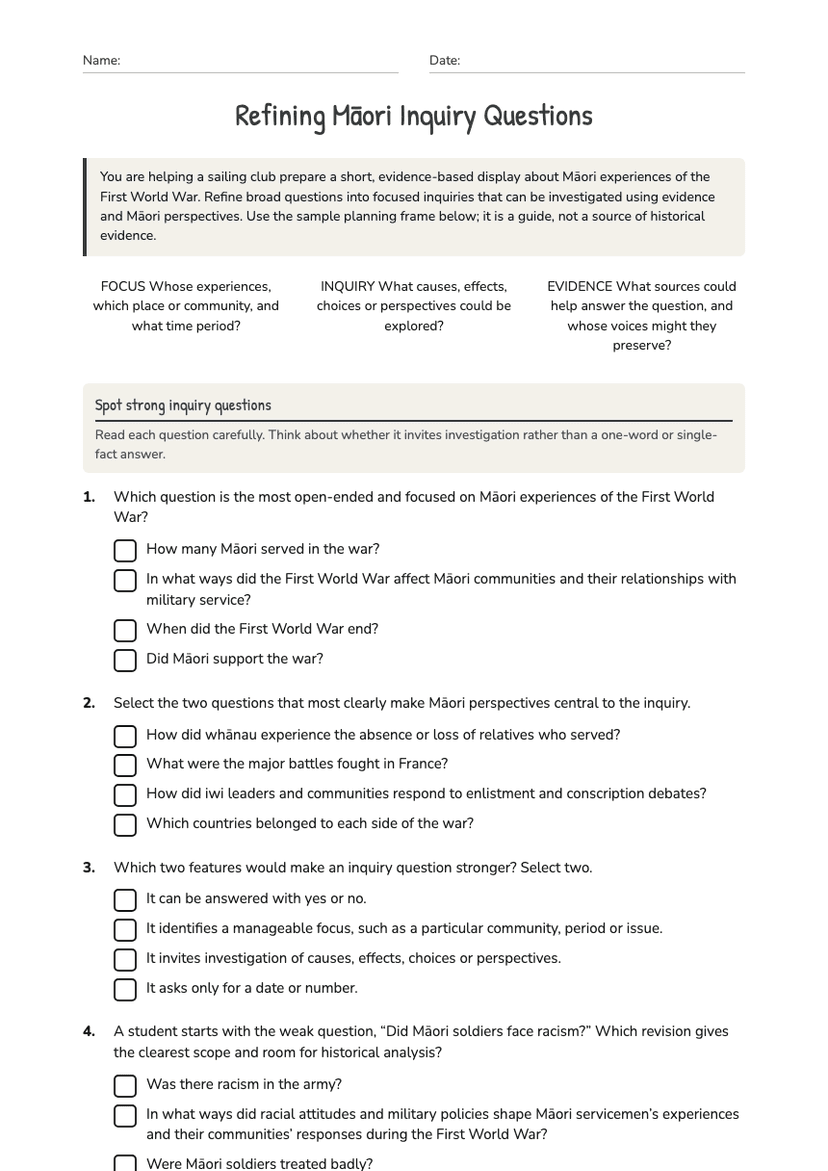
Refining Māori Inquiry Questions
Free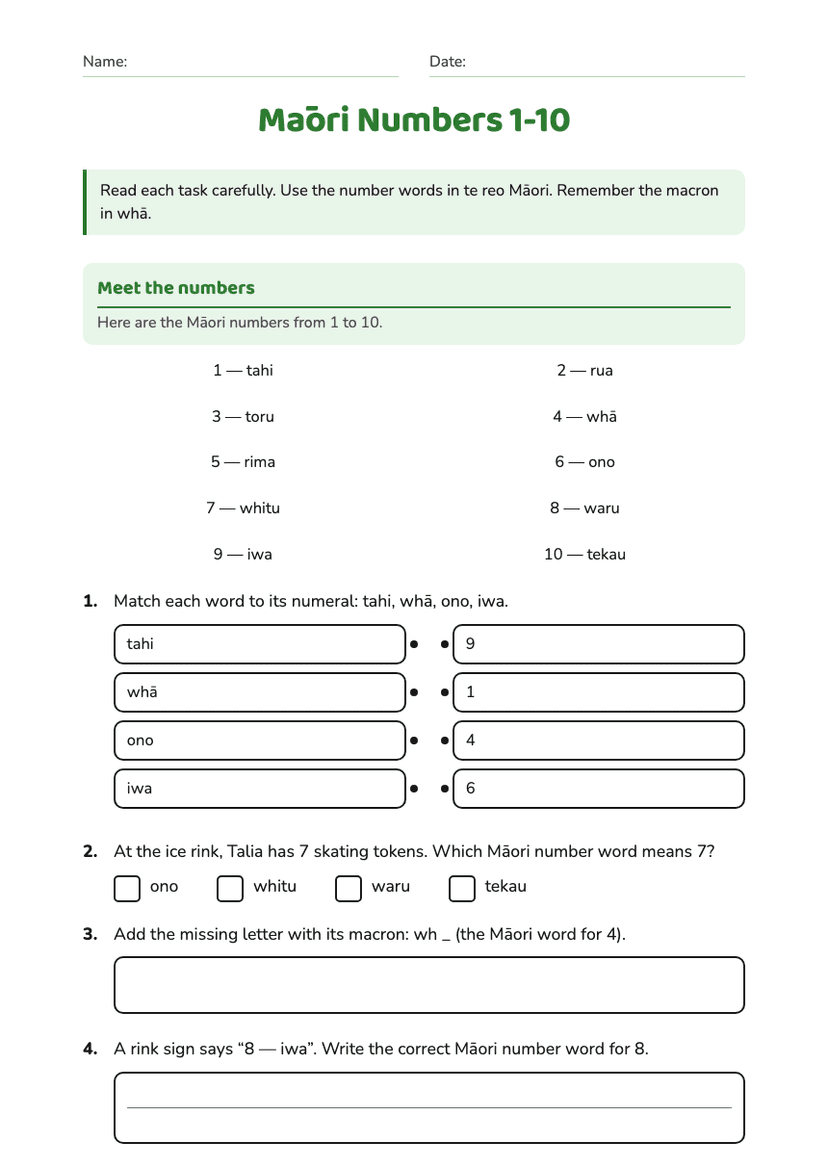
Māori Numbers 1-10
Free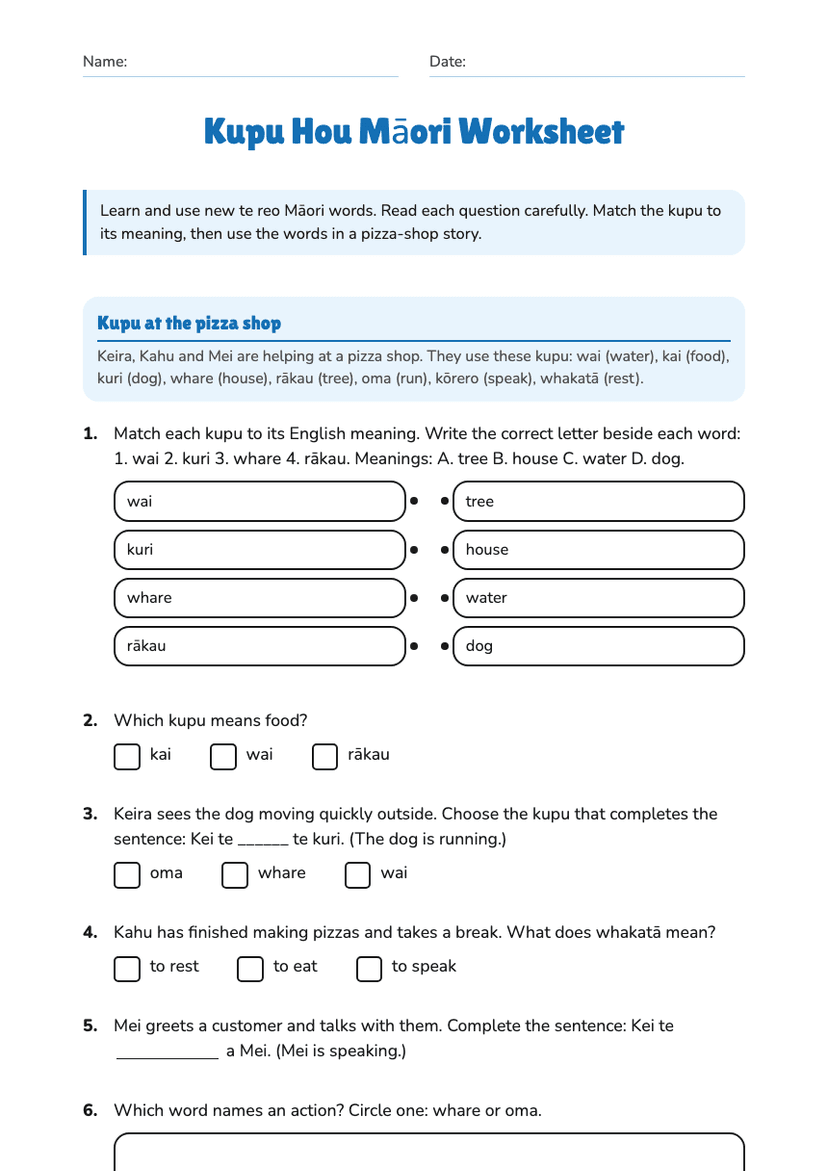
Kupu Hou Māori Worksheet
Free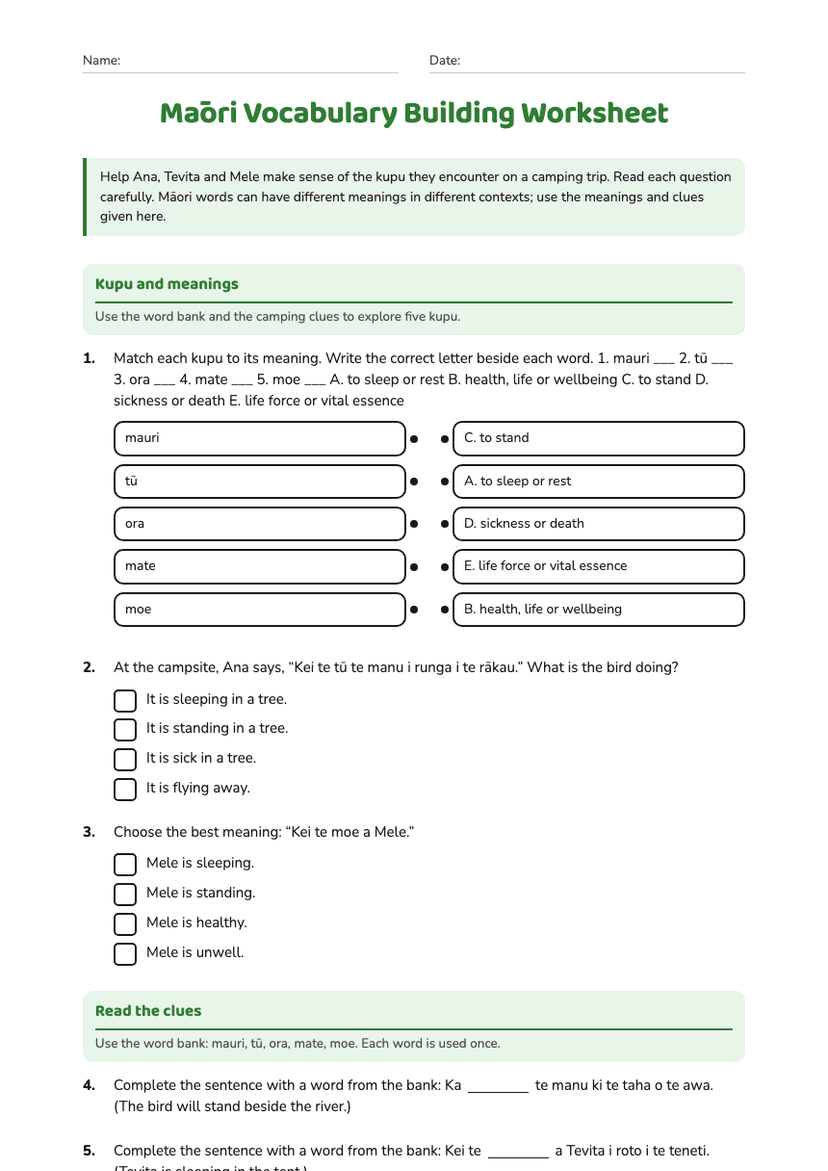
Māori Vocabulary Building Worksheet
Free