Musical Notation Basics
A free music worksheet ready for your classroom. Open in Kuraplan to grab the print-ready PDF, customize it for your students, or generate a fresh version in seconds.
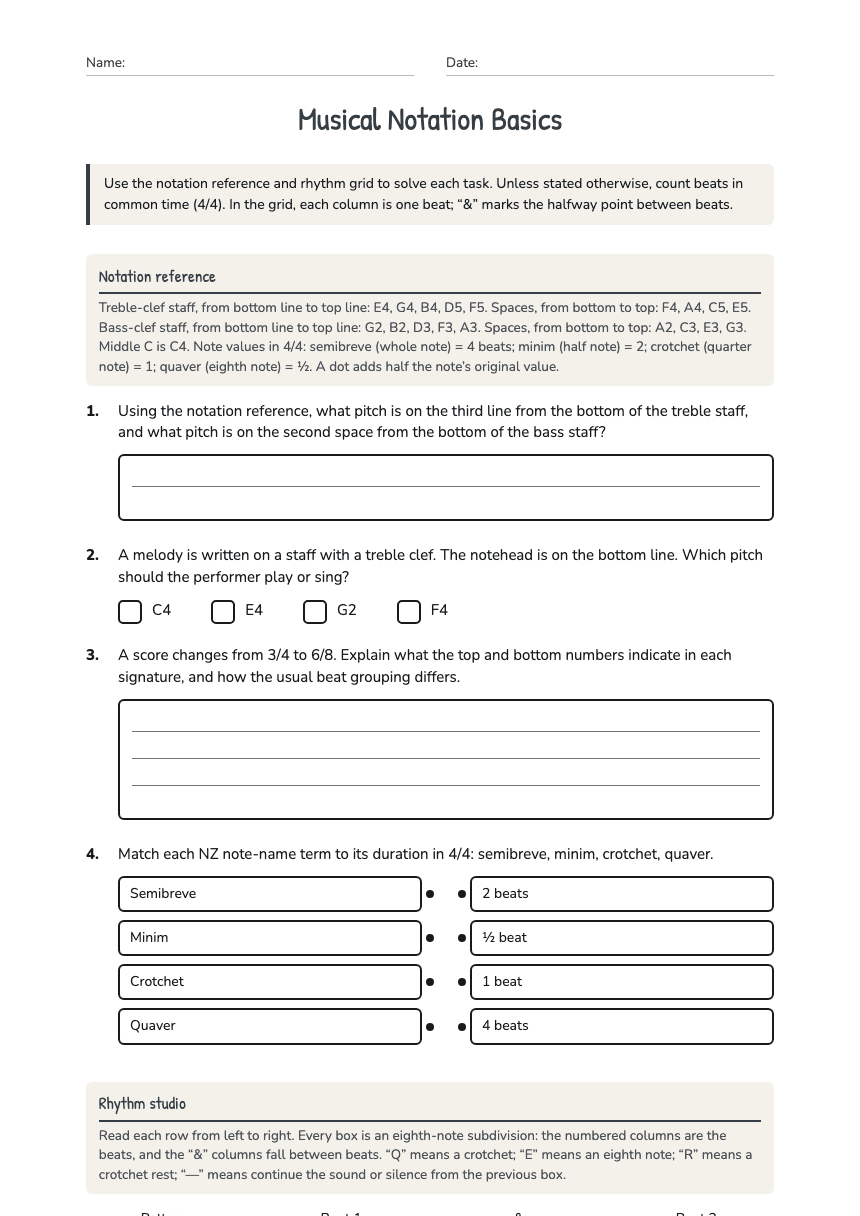
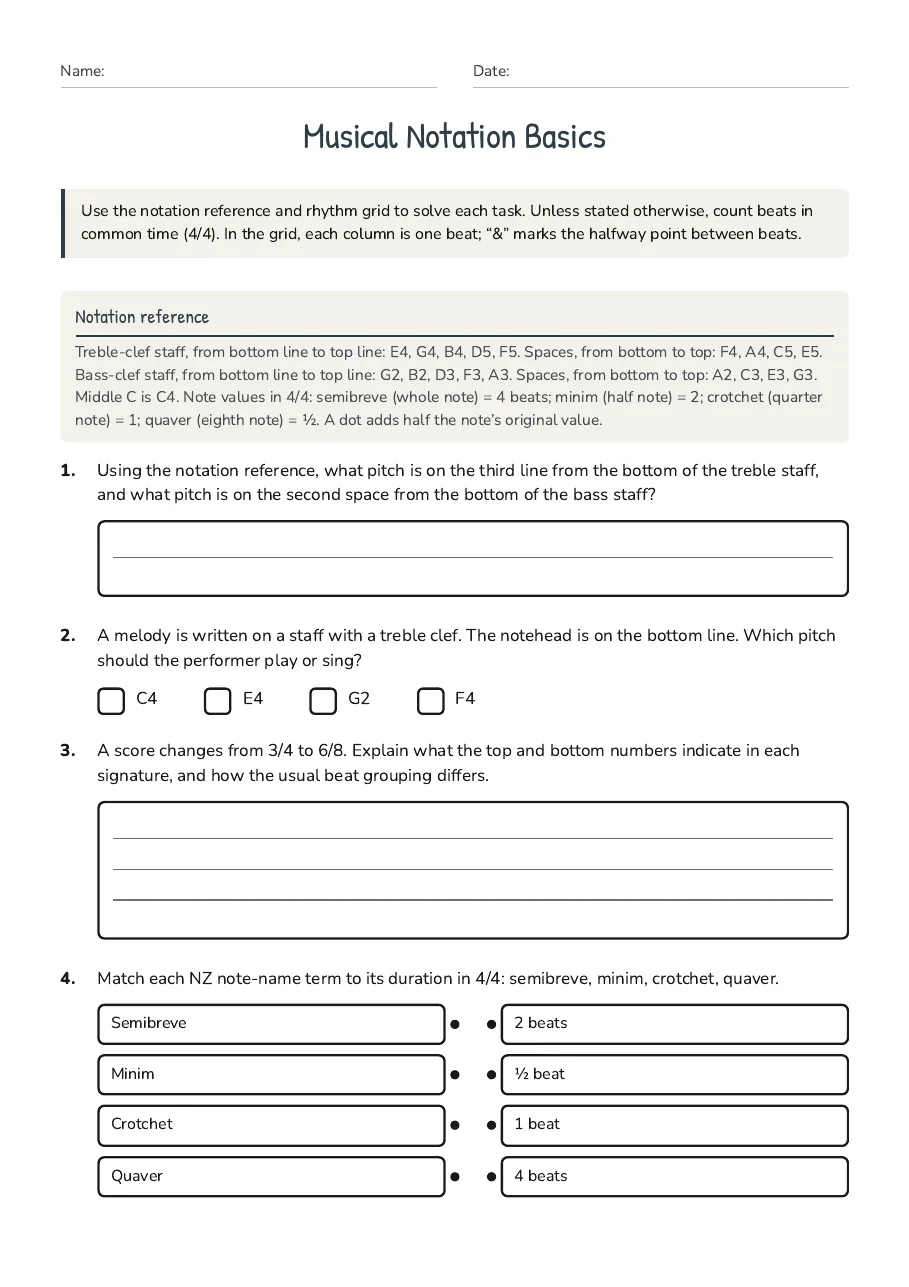
Musical Notation Basics
Notation reference
Treble-clef staff, from bottom line to top line: E4, G4, B4, D5, F5. Spaces, from bottom to top: F4, A4, C5, E5. Bass-clef staff, from bottom line to top line: G2, B2, D3, F3, A3. Spaces, from bottom to top: A2, C3, E3, G3. Middle C is C4. Note values in 4/4: semibreve (whole note) = 4 beats; minim (half note) = 2; crotchet (quarter note) = 1; quaver (eighth note) = ½. A dot adds half the note’s original value.
- C4
- E4
- G2
- F4
- Semibreve
- Minim
- Crotchet
- Quaver
- 2 beats
- ½ beat
- 1 beat
- 4 beats
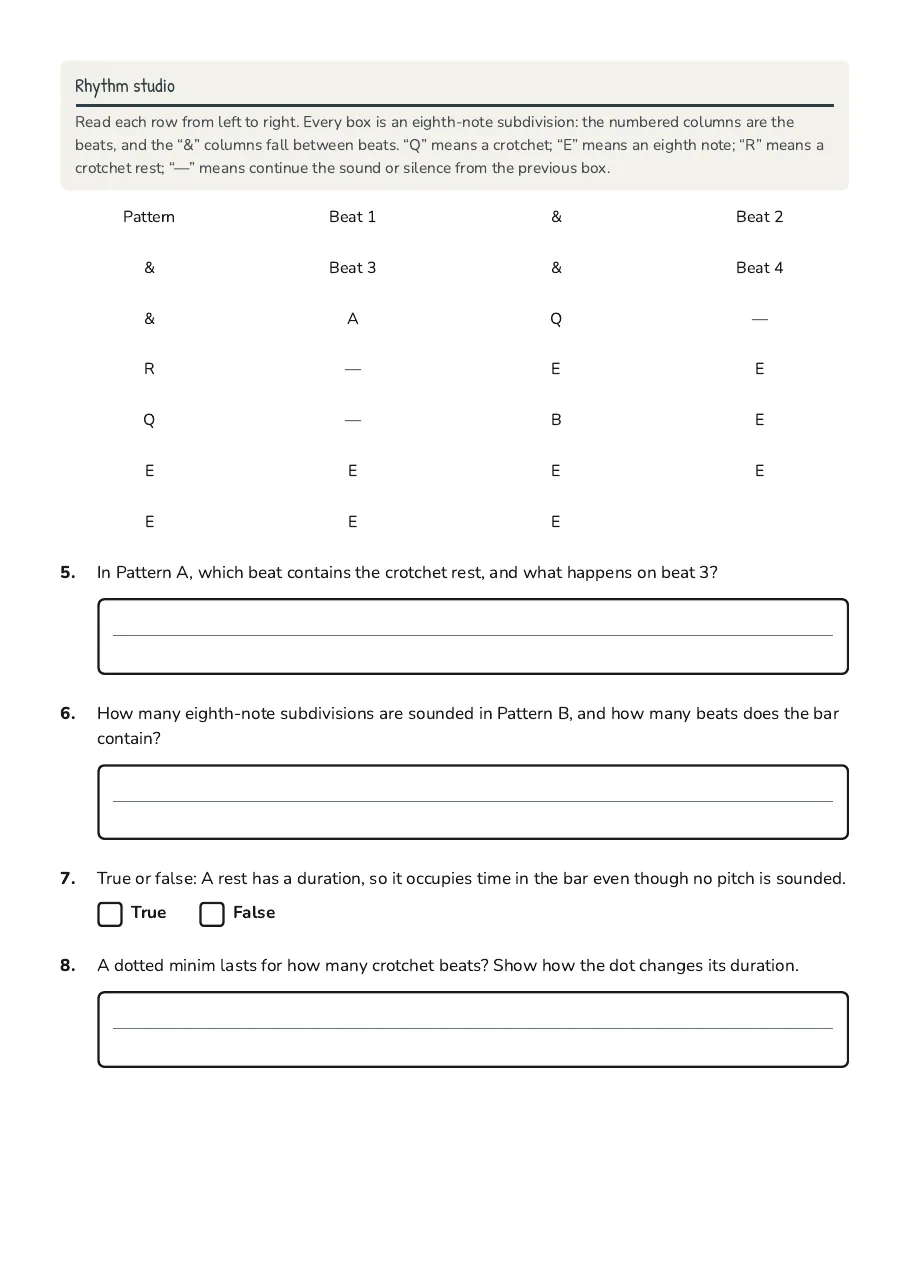
Rhythm studio
Read each row from left to right. Every box is an eighth-note subdivision: the numbered columns are the beats, and the “&” columns fall between beats. “Q” means a crotchet; “E” means an eighth note; “R” means a crotchet rest; “—” means continue the sound or silence from the previous box.
Pattern
Beat 1
&
Beat 2
&
Beat 3
&
Beat 4
&
A
Q
—
R
—
E
E
Q
—
B
E
E
E
E
E
E
E
E
3 printable pages
Page 1
Page 2
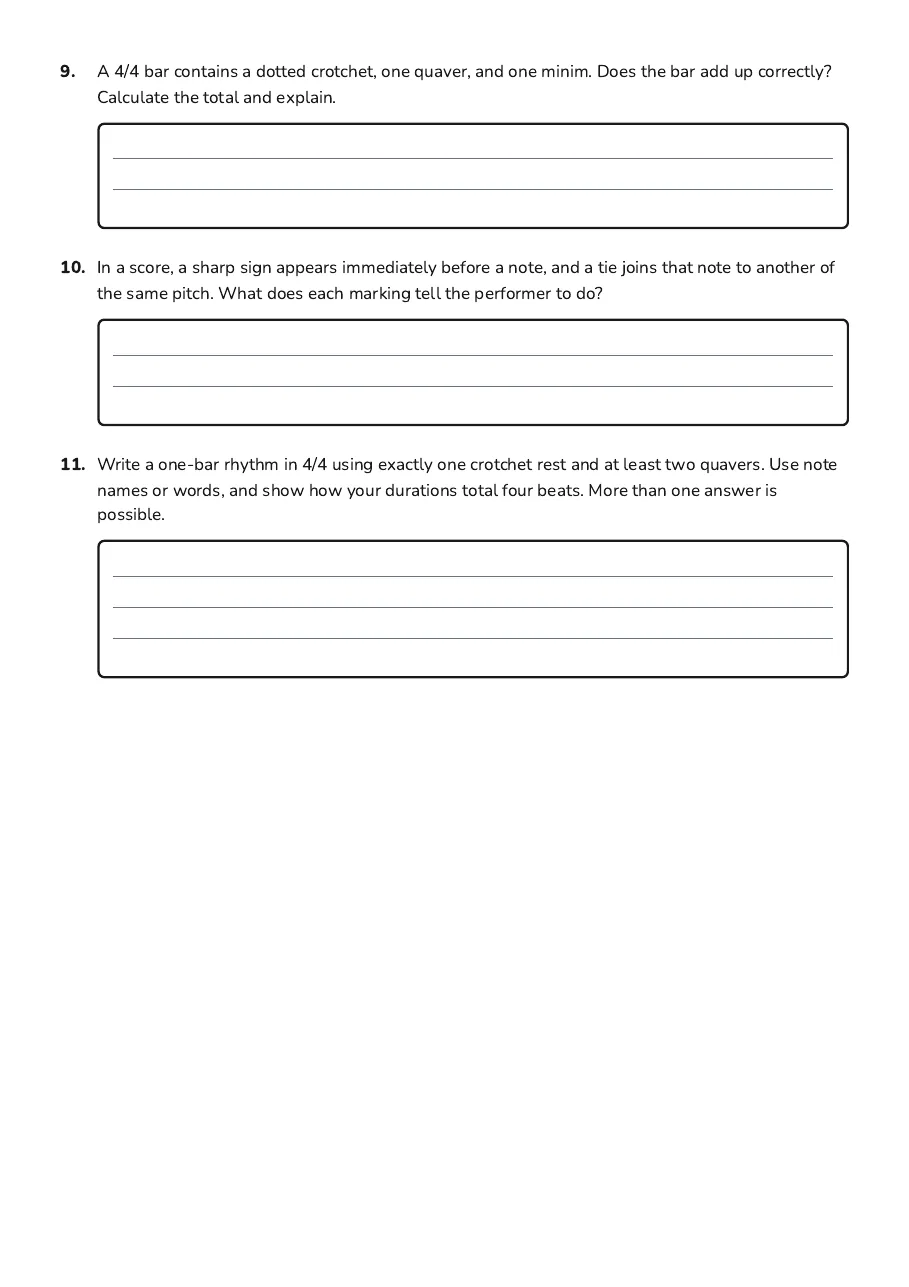
Page 3
About This Worksheet
Free in Kuraplan
Sign up free, grab the PDF, and customize it for your class.
Print-Ready
Formatted for standard paper. Clean layout, easy to read.
AI-Generated
Created with Kuraplan's AI, designed for real classroom use.
For Teachers & Parents
Use in classrooms, for homework, tutoring, or homeschool.
Need a custom version of this worksheet?
Kuraplan's AI generates custom worksheets in seconds — differentiated for every learner, aligned to your curriculum.
Generate Custom Worksheets — FreeMore Music Worksheets
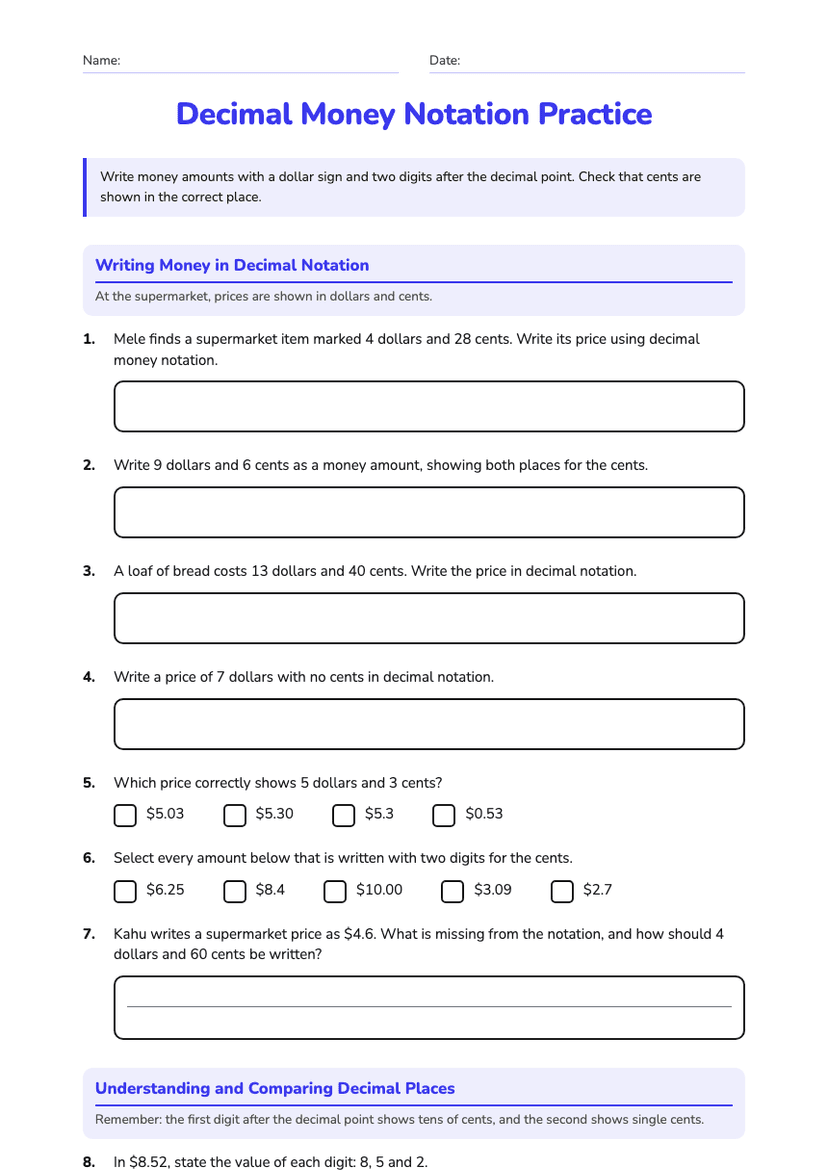
Decimal Money Notation Practice
Free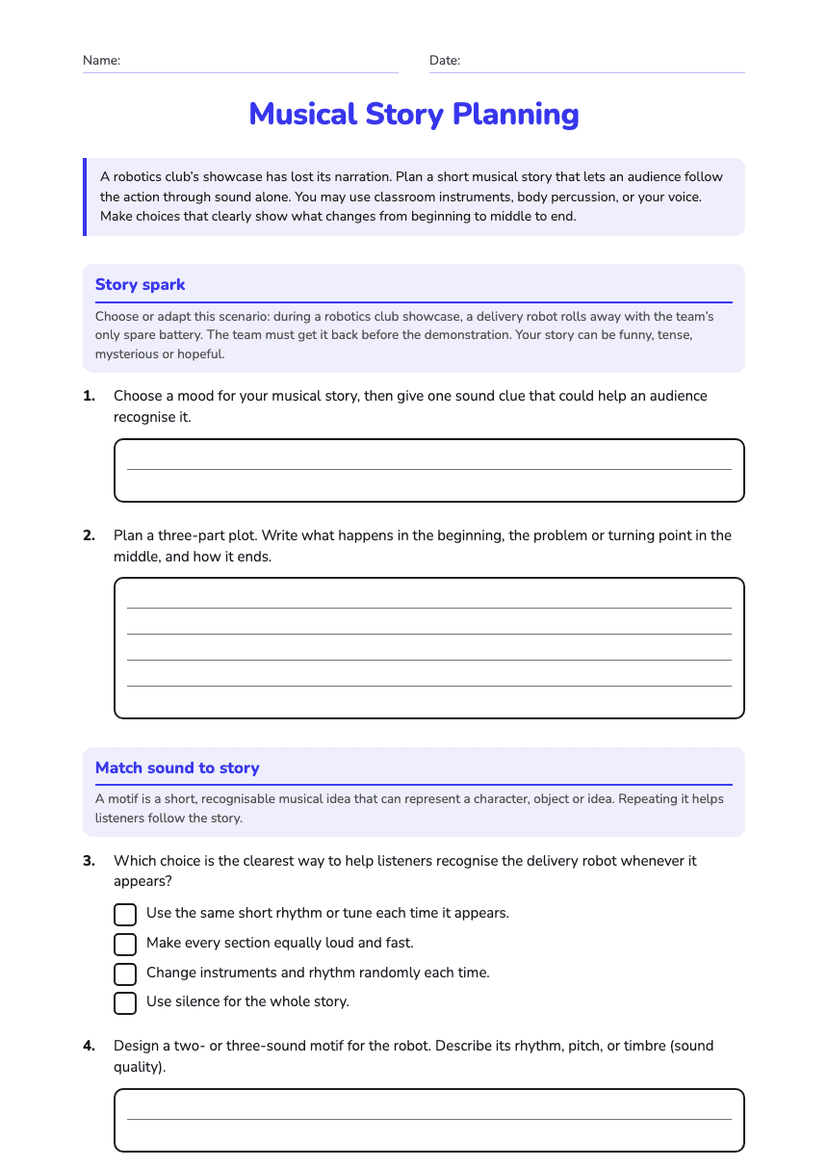
Musical Story Planning
Free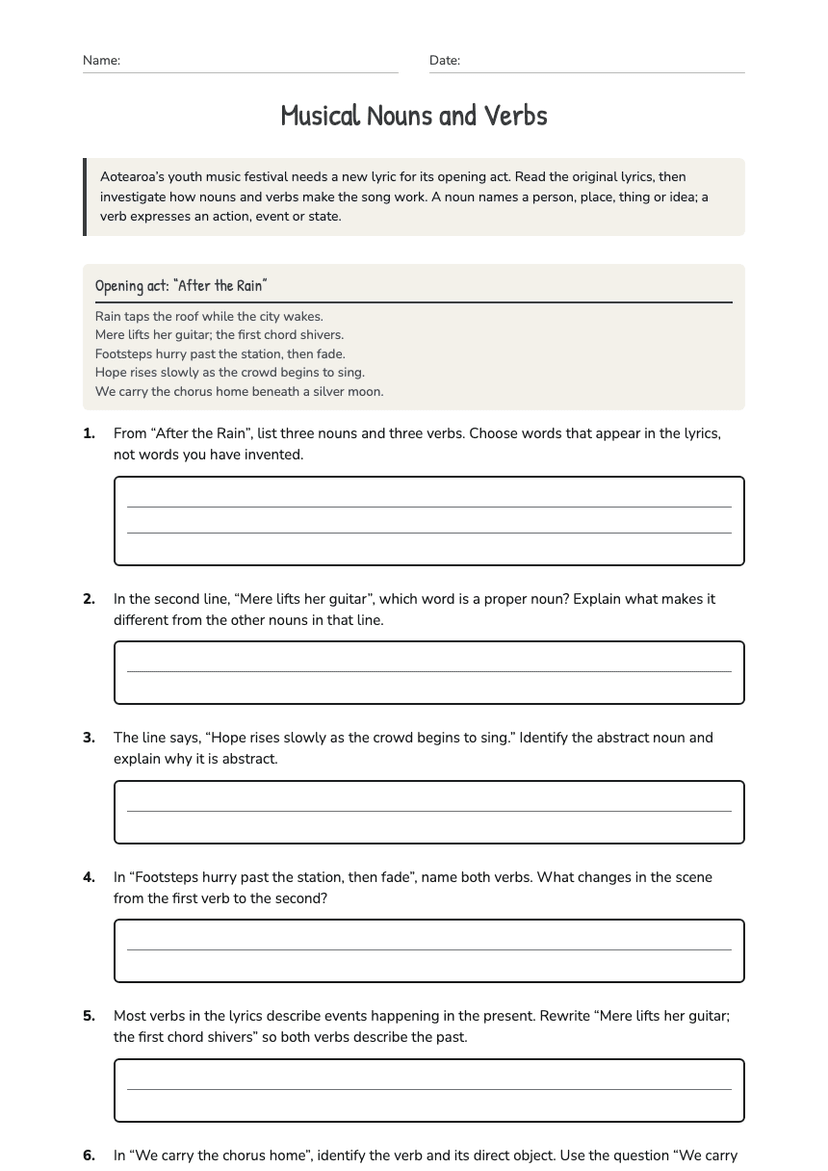
Musical Nouns and Verbs
Free
Scientific Notation Operations Worksheet
Free
Algebraic Notation Practice
Free
Scientific Notation Basics
Free
Music Notation Basics
Free