Māori Post-WWII History
A free social sciences worksheet ready for your classroom. Open in Kuraplan to grab the print-ready PDF, customize it for your students, or generate a fresh version in seconds.
Māori Post-WWII History
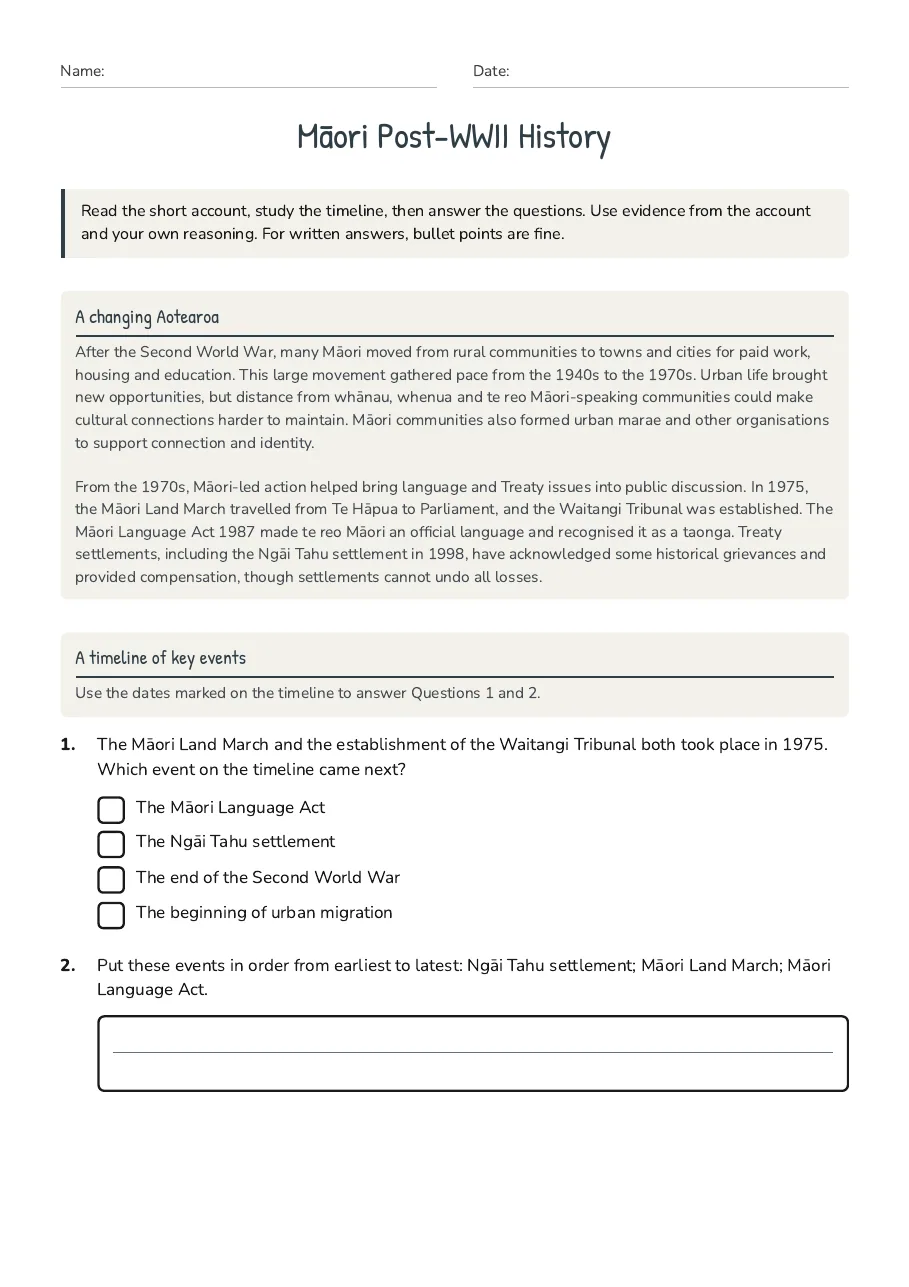
A changing Aotearoa
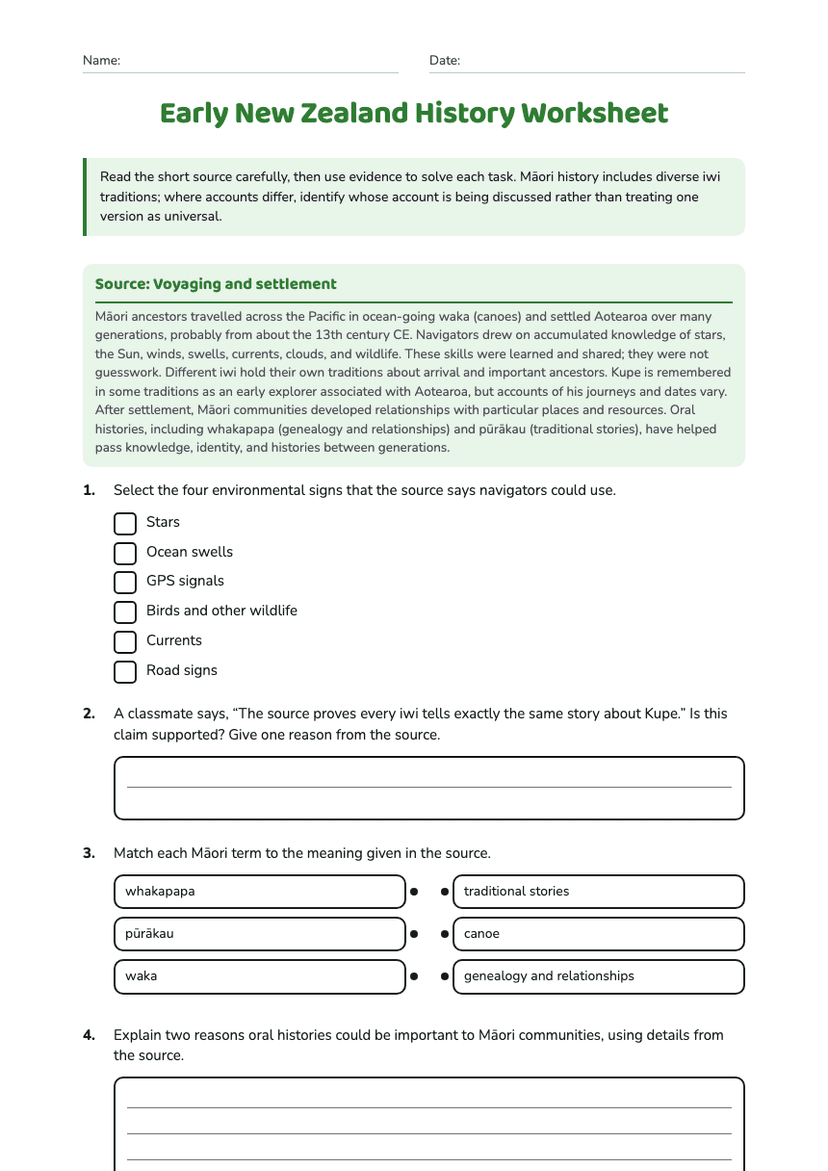
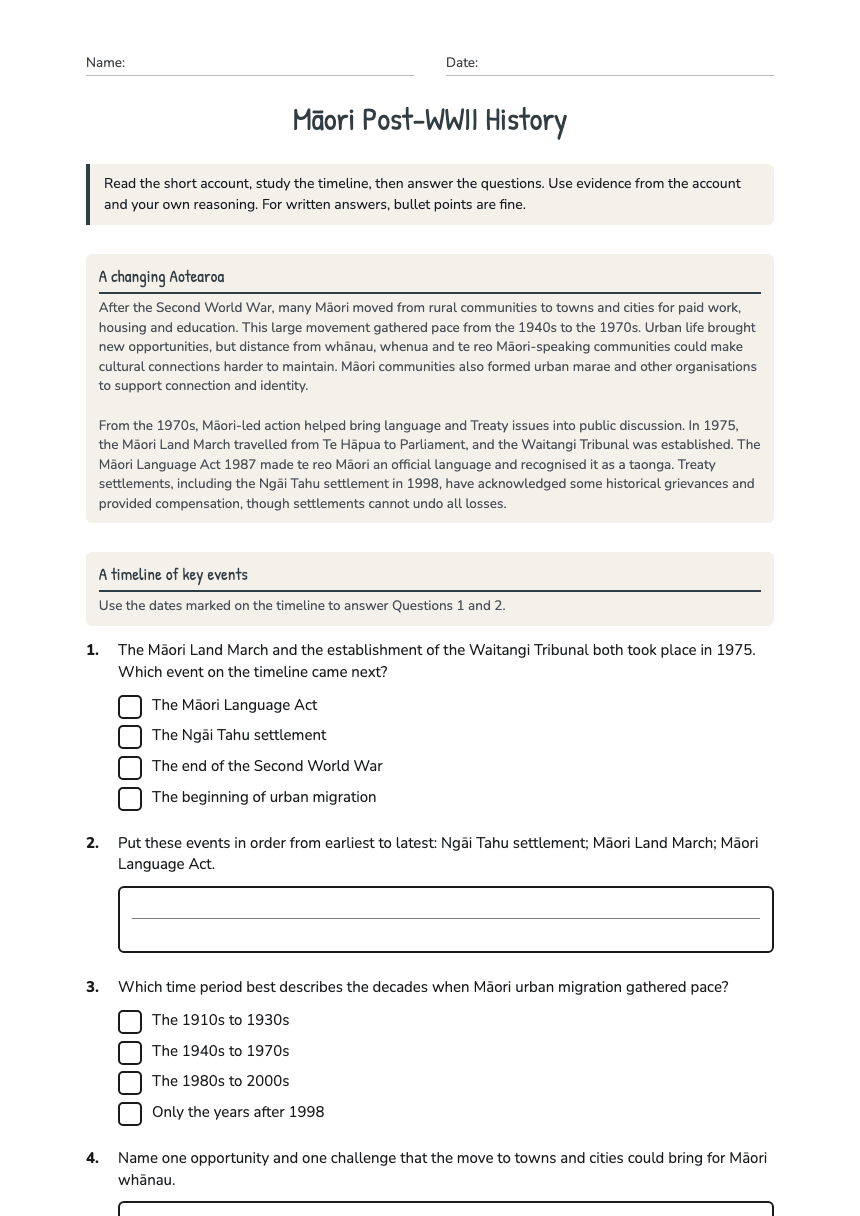
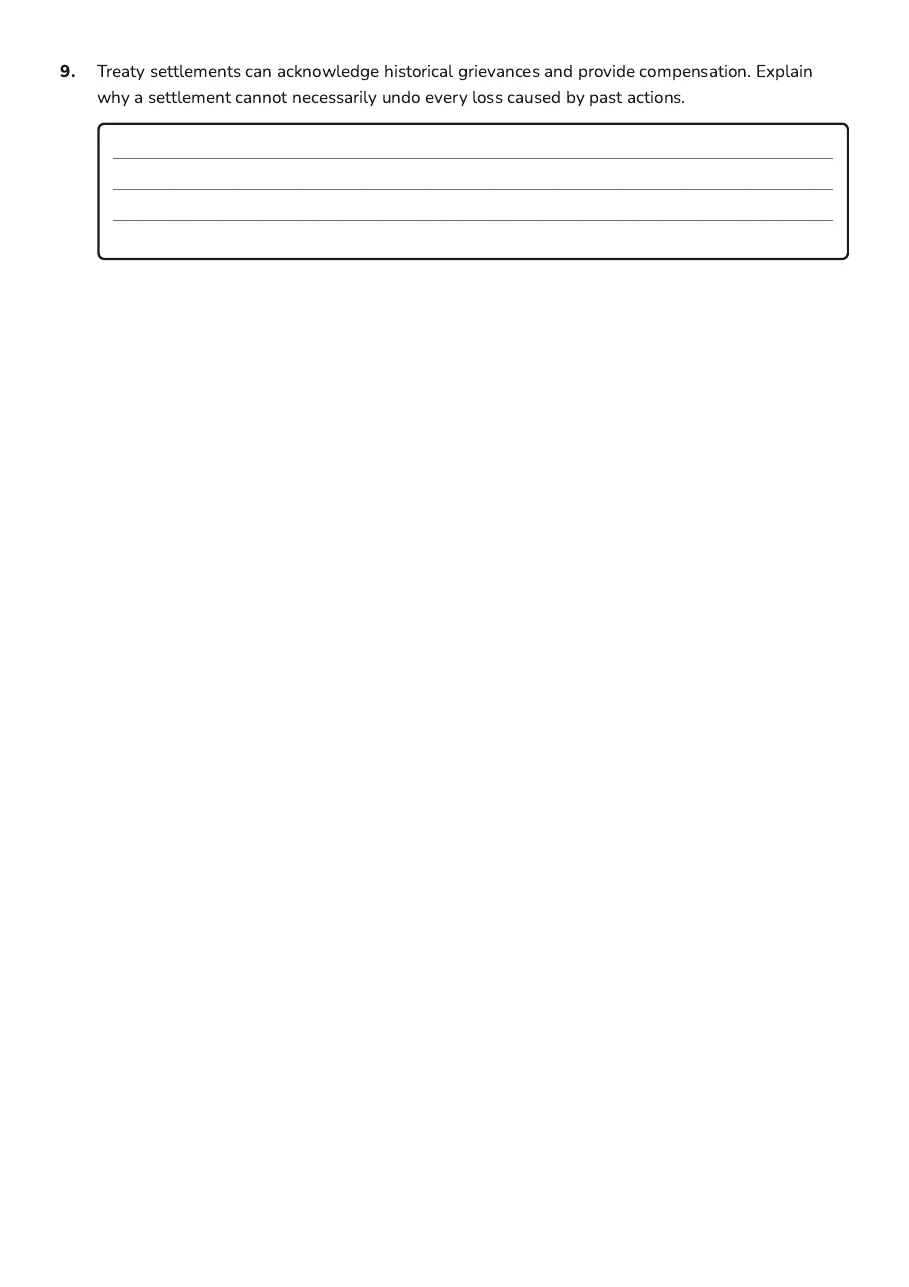
After the Second World War, many Māori moved from rural communities to towns and cities for paid work, housing and education. This large movement gathered pace from the 1940s to the 1970s. Urban life brought new opportunities, but distance from whānau, whenua and te reo Māori-speaking communities could make cultural connections harder to maintain. Māori communities also formed urban marae and other organisations to support connection and identity. From the 1970s, Māori-led action helped bring language and Treaty issues into public discussion. In 1975, the Māori Land March travelled from Te Hāpua to Parliament, and the Waitangi Tribunal was established. The Māori Language Act 1987 made te reo Māori an official language and recognised it as a taonga. Treaty settlements, including the Ngāi Tahu settlement in 1998, have acknowledged some historical grievances and provided compensation, though settlements cannot undo all losses.
A timeline of key events
Use the dates marked on the timeline to answer Questions 1 and 2.
- The Māori Language Act
- The Ngāi Tahu settlement
- The end of the Second World War
- The beginning of urban migration
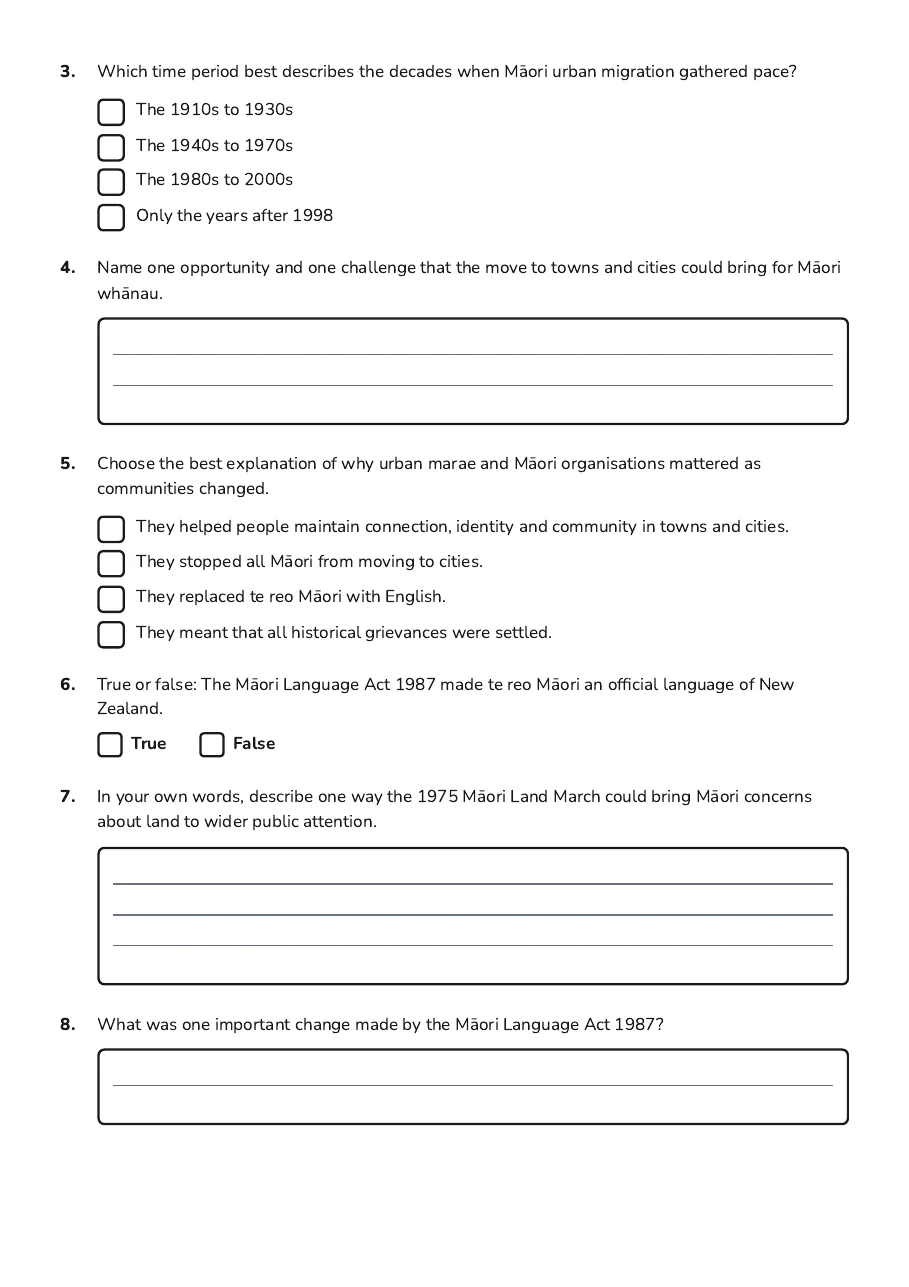
- The 1910s to 1930s
- The 1940s to 1970s
- The 1980s to 2000s
- Only the years after 1998
- They helped people maintain connection, identity and community in towns and cities.
- They stopped all Māori from moving to cities.
- They replaced te reo Māori with English.
- They meant that all historical grievances were settled.
3 printable pages
Page 1
Page 2
Page 3
About This Worksheet
Free in Kuraplan
Sign up free, grab the PDF, and customize it for your class.
Print-Ready
Formatted for standard paper. Clean layout, easy to read.
AI-Generated
Created with Kuraplan's AI, designed for real classroom use.
For Teachers & Parents
Use in classrooms, for homework, tutoring, or homeschool.
Need a custom version of this worksheet?
Kuraplan's AI generates custom worksheets in seconds — differentiated for every learner, aligned to your curriculum.
Generate Custom Worksheets — FreeMore Social Sciences Worksheets
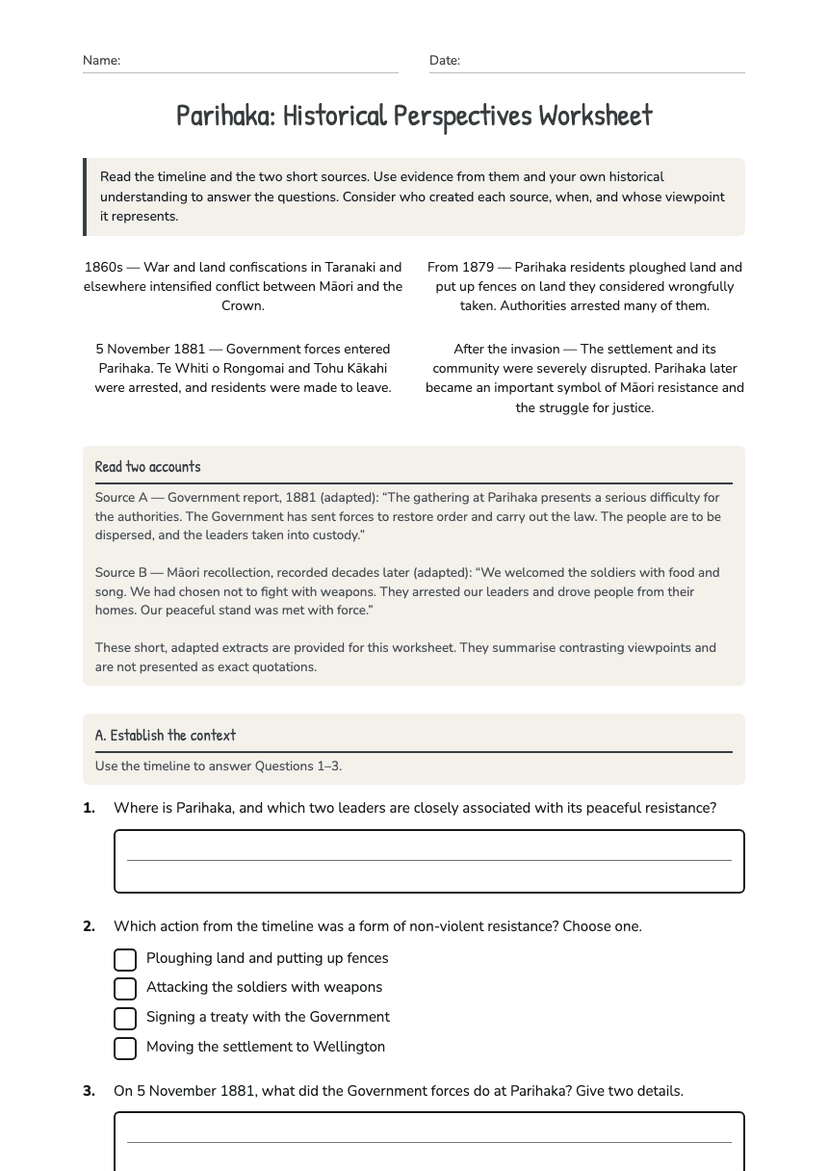
Parihaka: Historical Perspectives Worksheet
Free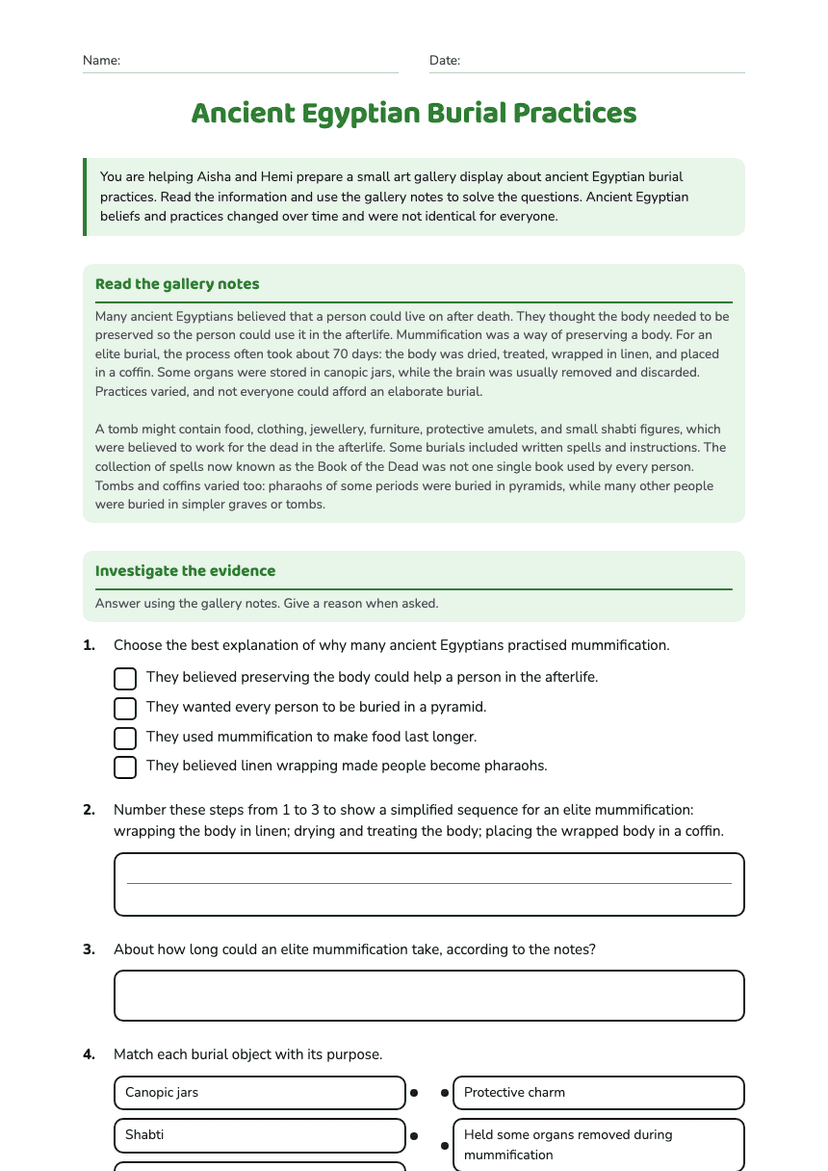
Ancient Egyptian Burial Practices
Free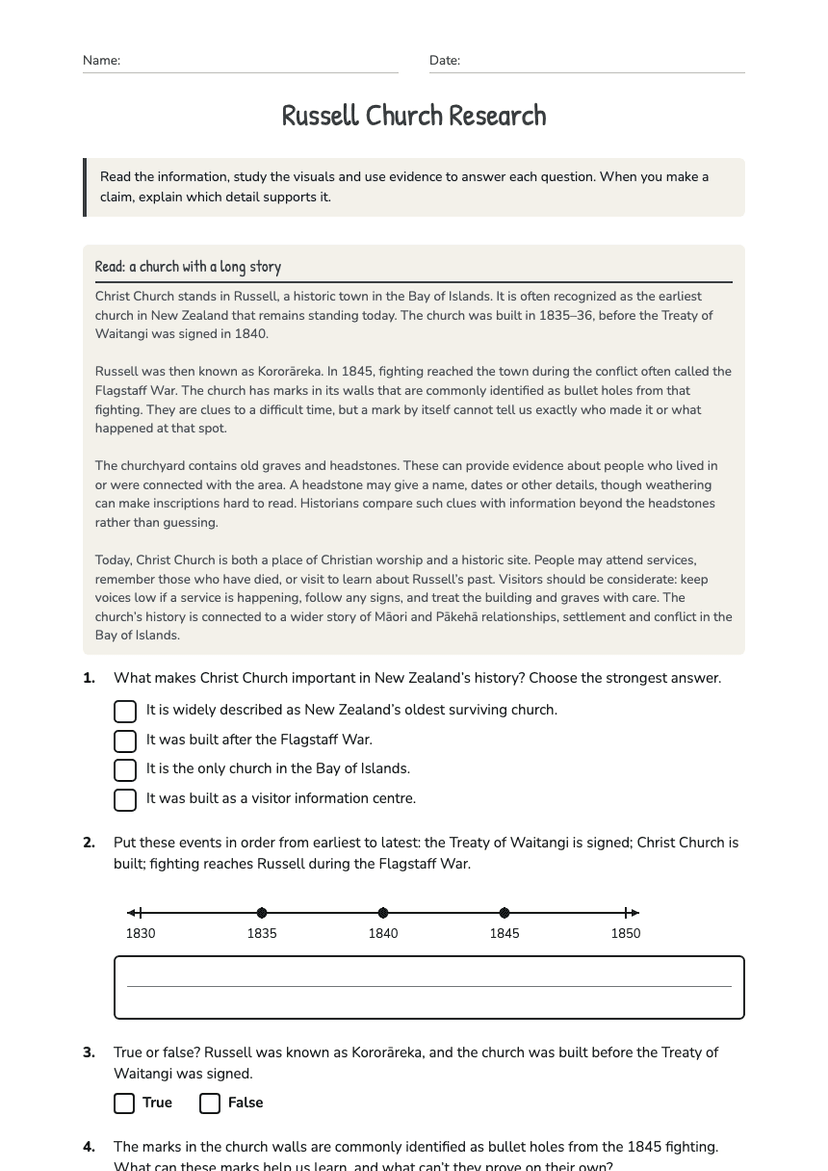
Russell Church Research
Free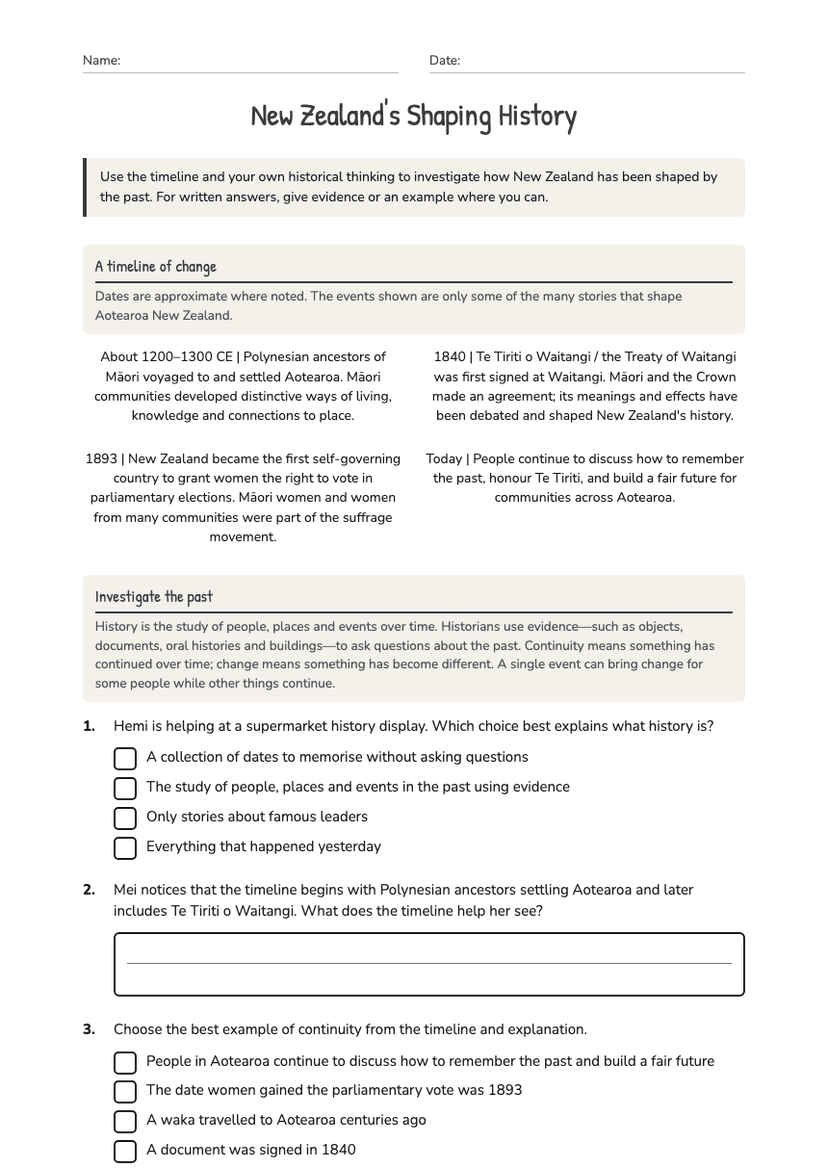
New Zealand's Shaping History
Free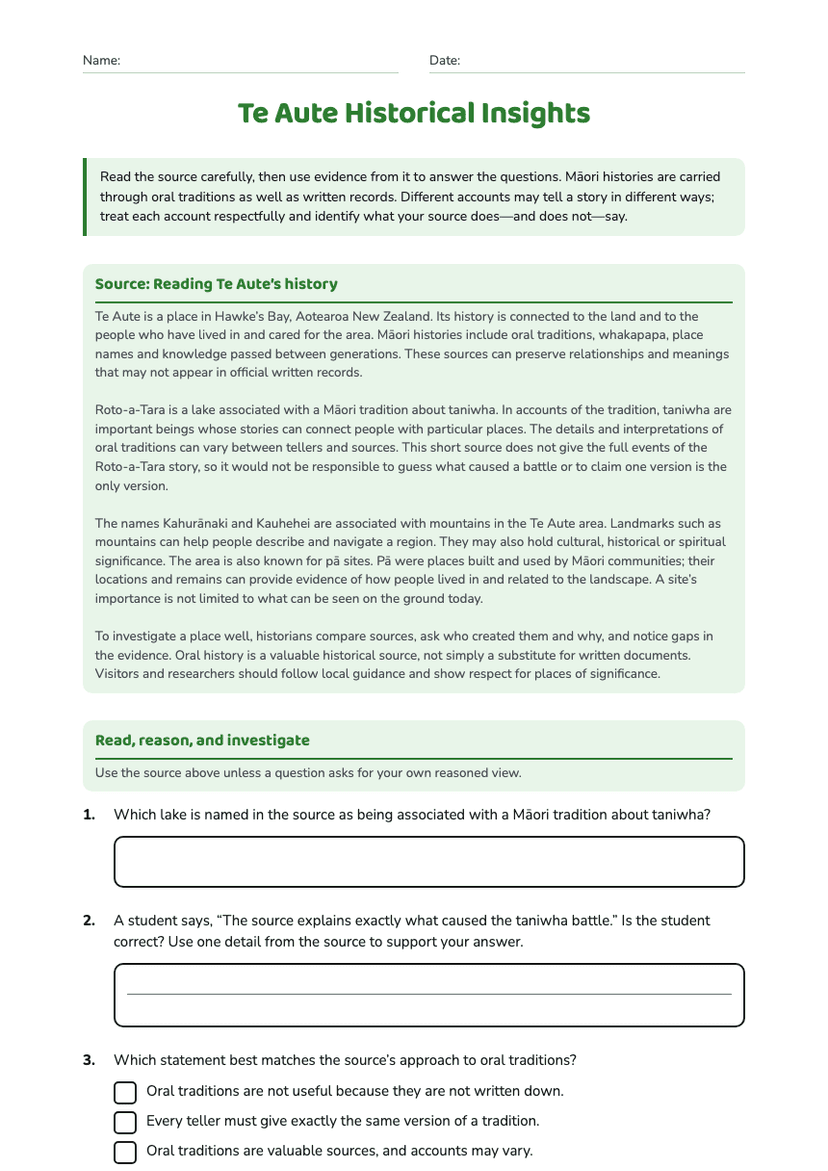
Te Aute Historical Insights
Free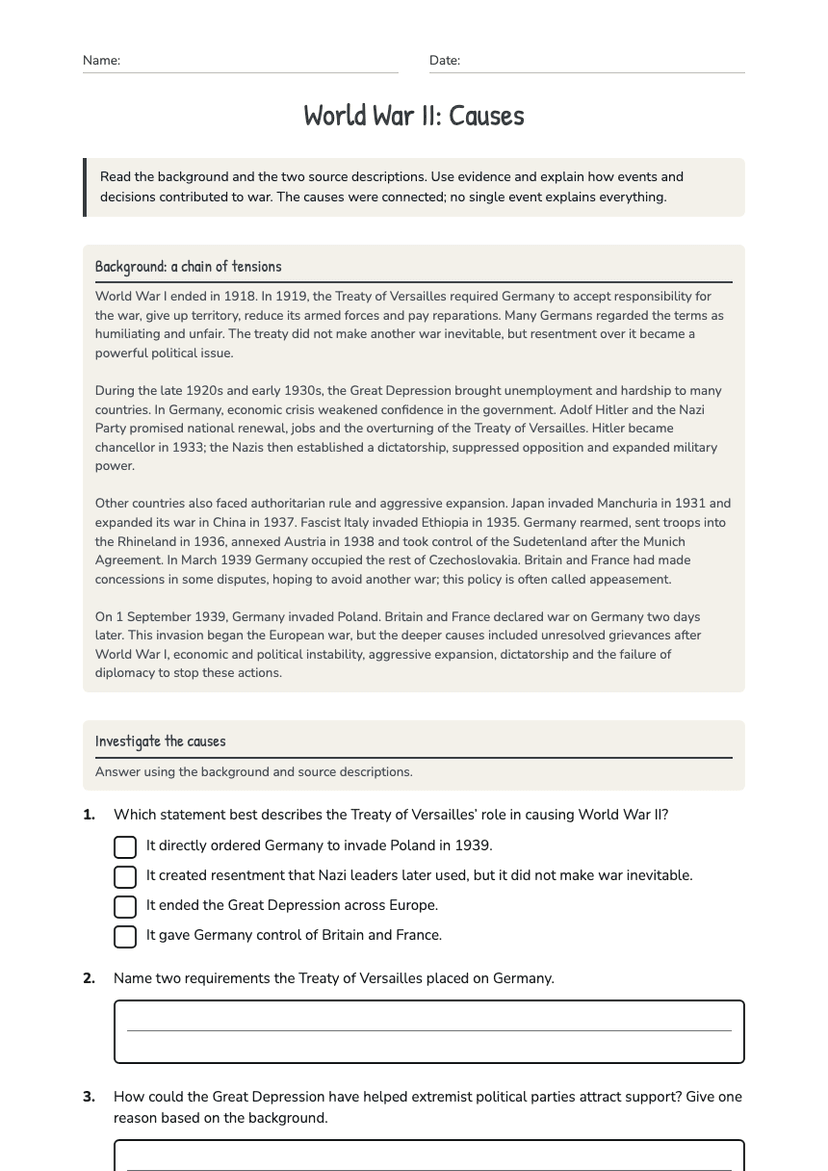
World War II: Causes
Free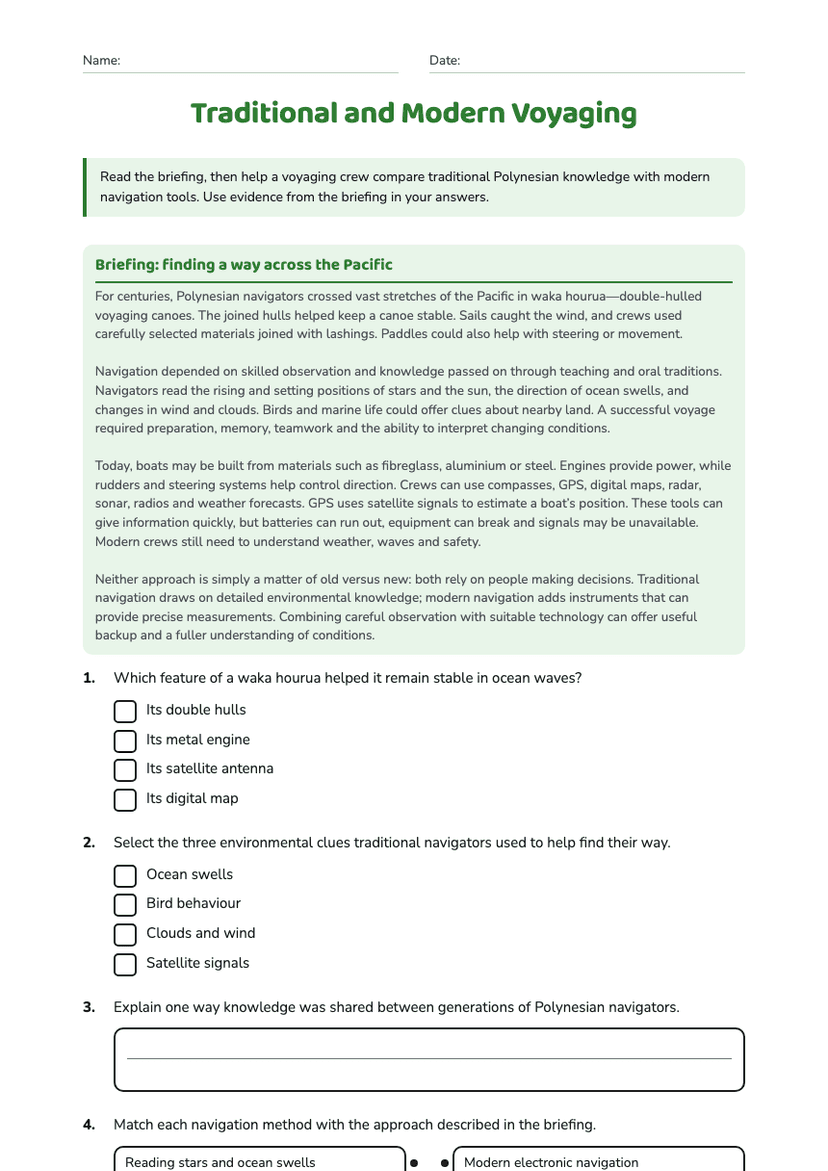
Traditional and Modern Voyaging
Free