Narrative Introduction Writing Checklist
A free english worksheet ready for your classroom. Open in Kuraplan to grab the print-ready PDF, customize it for your students, or generate a fresh version in seconds.
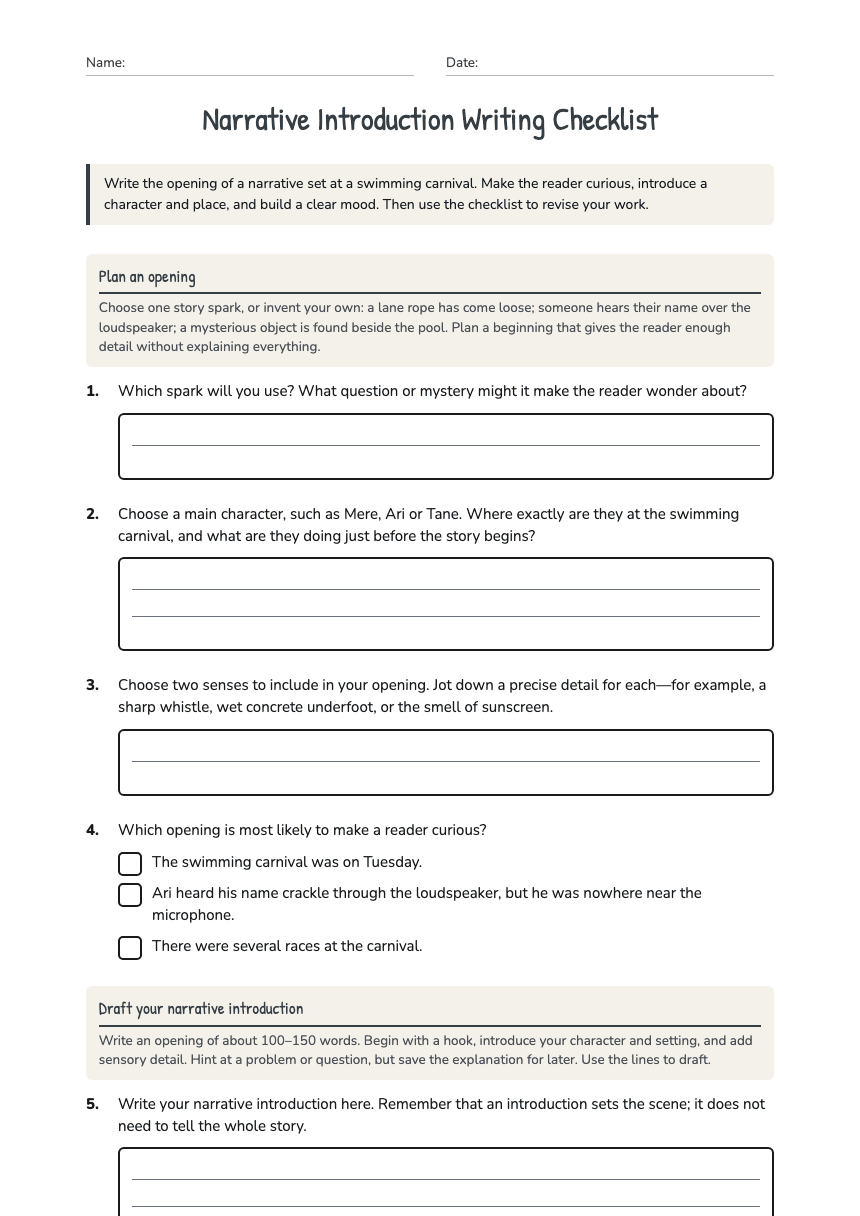
Narrative Introduction Writing Checklist
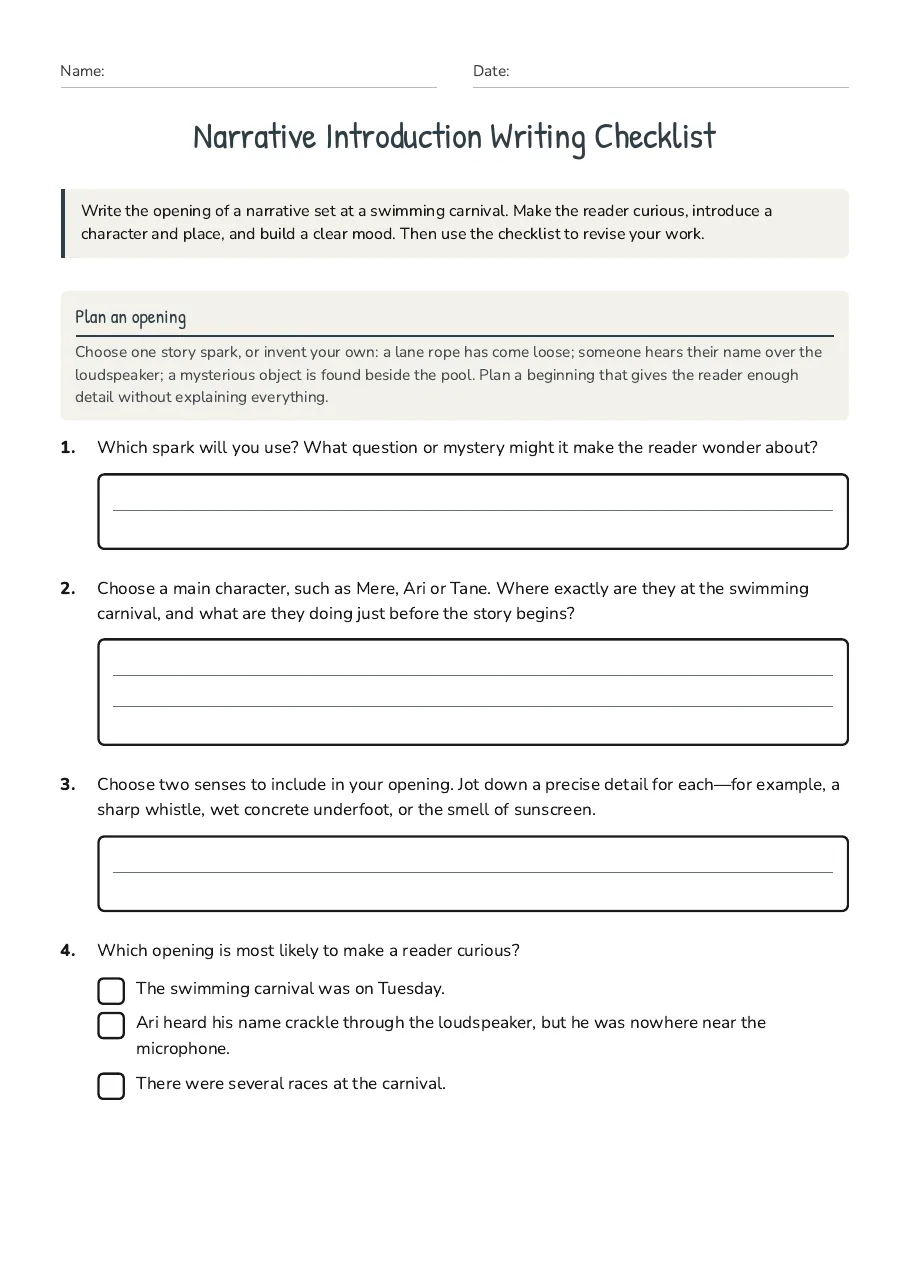
Plan an opening
Choose one story spark, or invent your own: a lane rope has come loose; someone hears their name over the loudspeaker; a mysterious object is found beside the pool. Plan a beginning that gives the reader enough detail without explaining everything.
- The swimming carnival was on Tuesday.
- Ari heard his name crackle through the loudspeaker, but he was nowhere near the microphone.
- There were several races at the carnival.
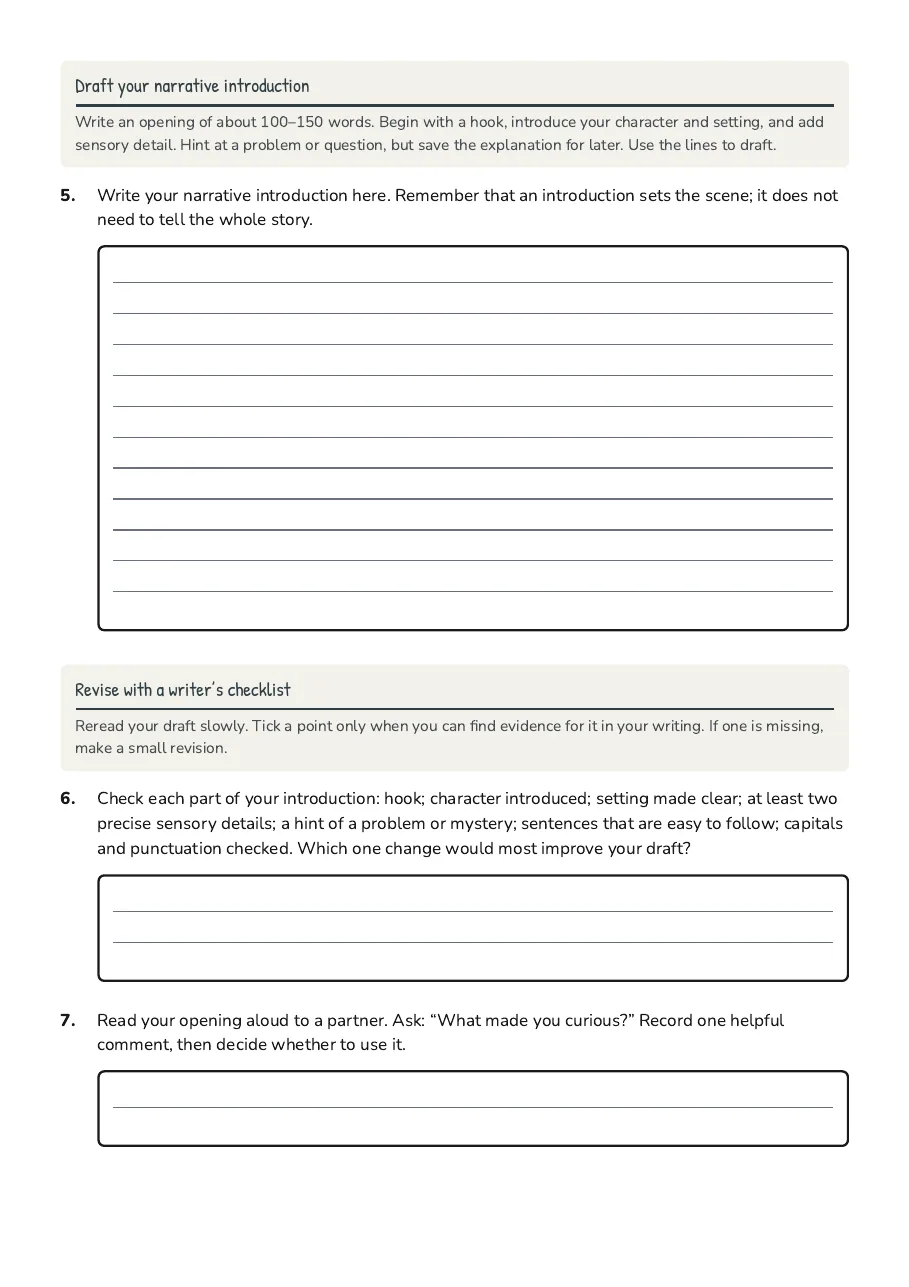
Draft your narrative introduction
Write an opening of about 100–150 words. Begin with a hook, introduce your character and setting, and add sensory detail. Hint at a problem or question, but save the explanation for later. Use the lines to draft.
Revise with a writer’s checklist
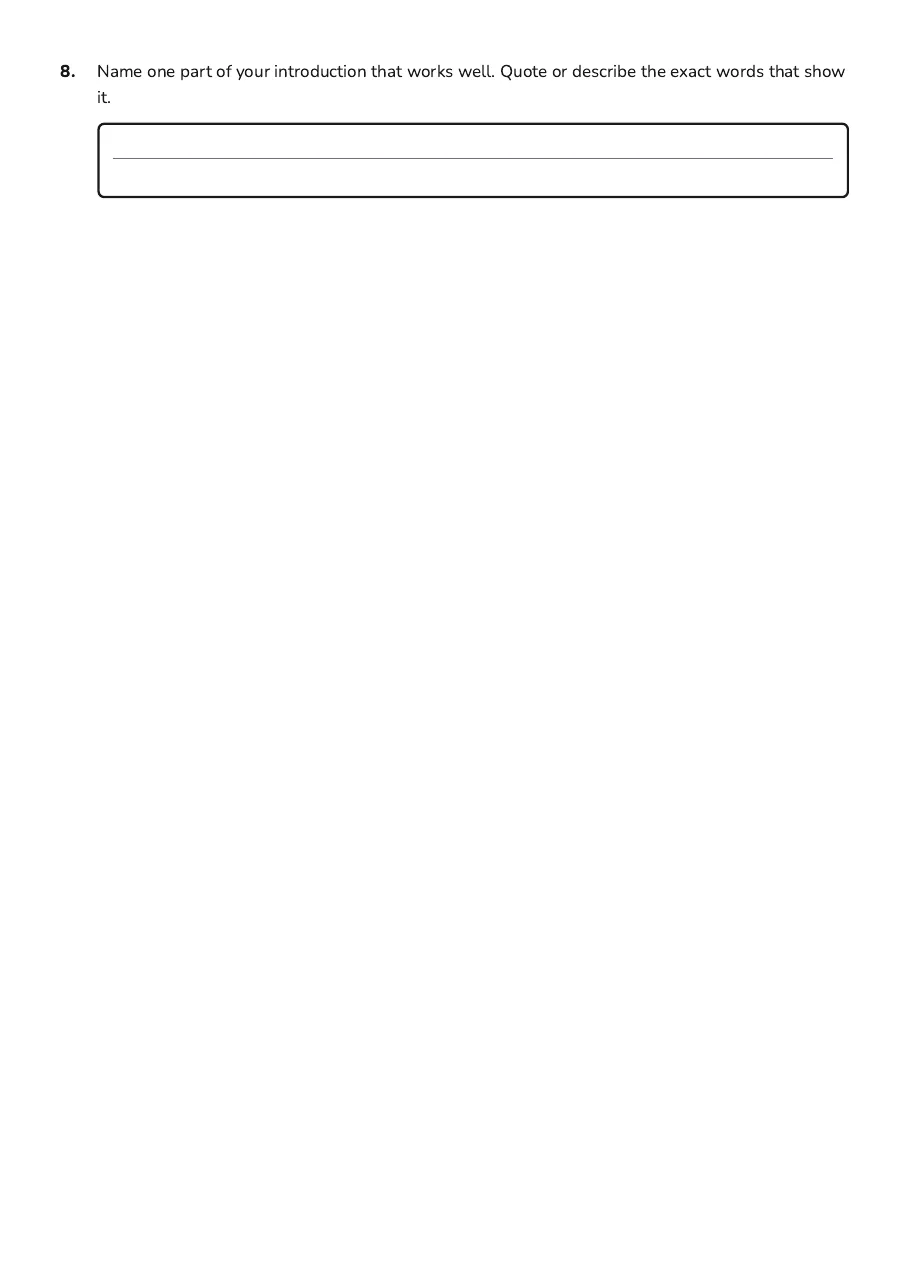
Reread your draft slowly. Tick a point only when you can find evidence for it in your writing. If one is missing, make a small revision.
3 printable pages
Page 1
Page 2
Page 3
About This Worksheet
Free in Kuraplan
Sign up free, grab the PDF, and customize it for your class.
Print-Ready
Formatted for standard paper. Clean layout, easy to read.
AI-Generated
Created with Kuraplan's AI, designed for real classroom use.
For Teachers & Parents
Use in classrooms, for homework, tutoring, or homeschool.
Need a custom version of this worksheet?
Kuraplan's AI generates custom worksheets in seconds — differentiated for every learner, aligned to your curriculum.
Generate Custom Worksheets — FreeMore English Worksheets
Paragraphing with Adverbial Starters
Free
SCAR Narrative Writing Guide
Free
Year 12 Writing Scaffolds
Free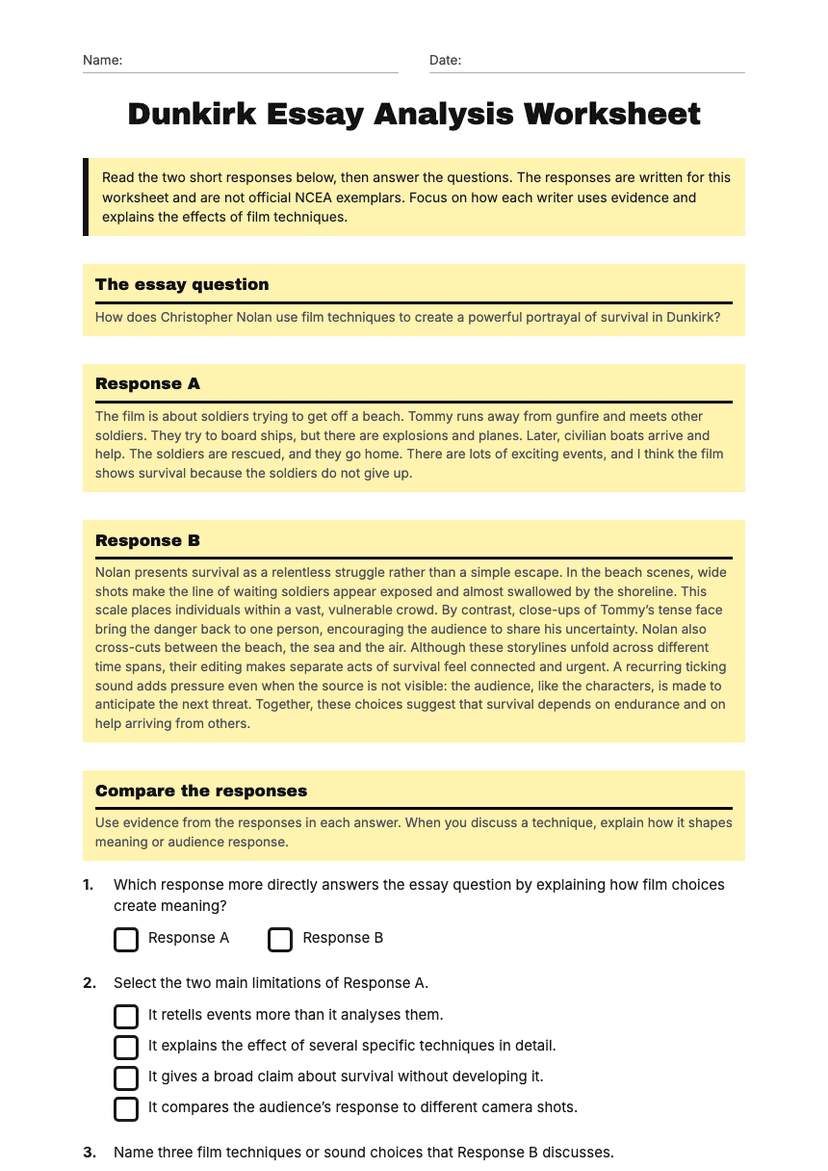
Dunkirk Essay Analysis Worksheet
Free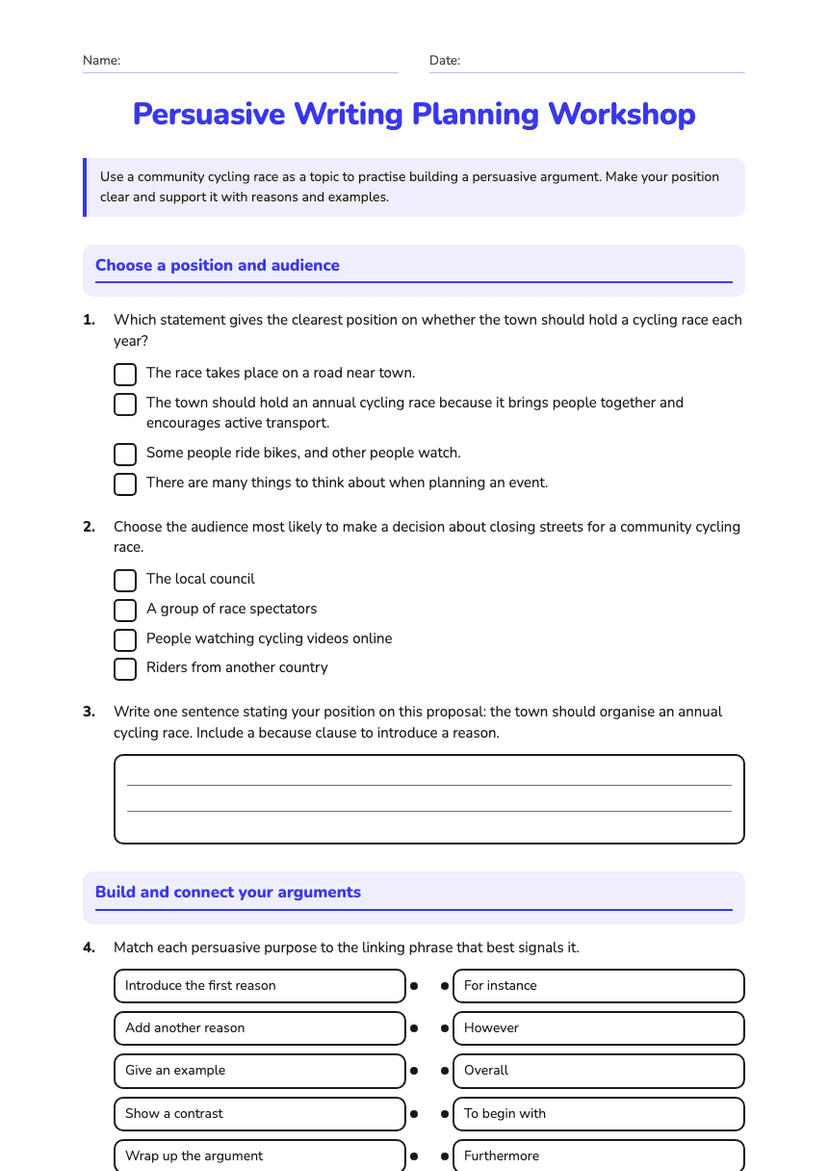
Persuasive Writing Planning Workshop
Free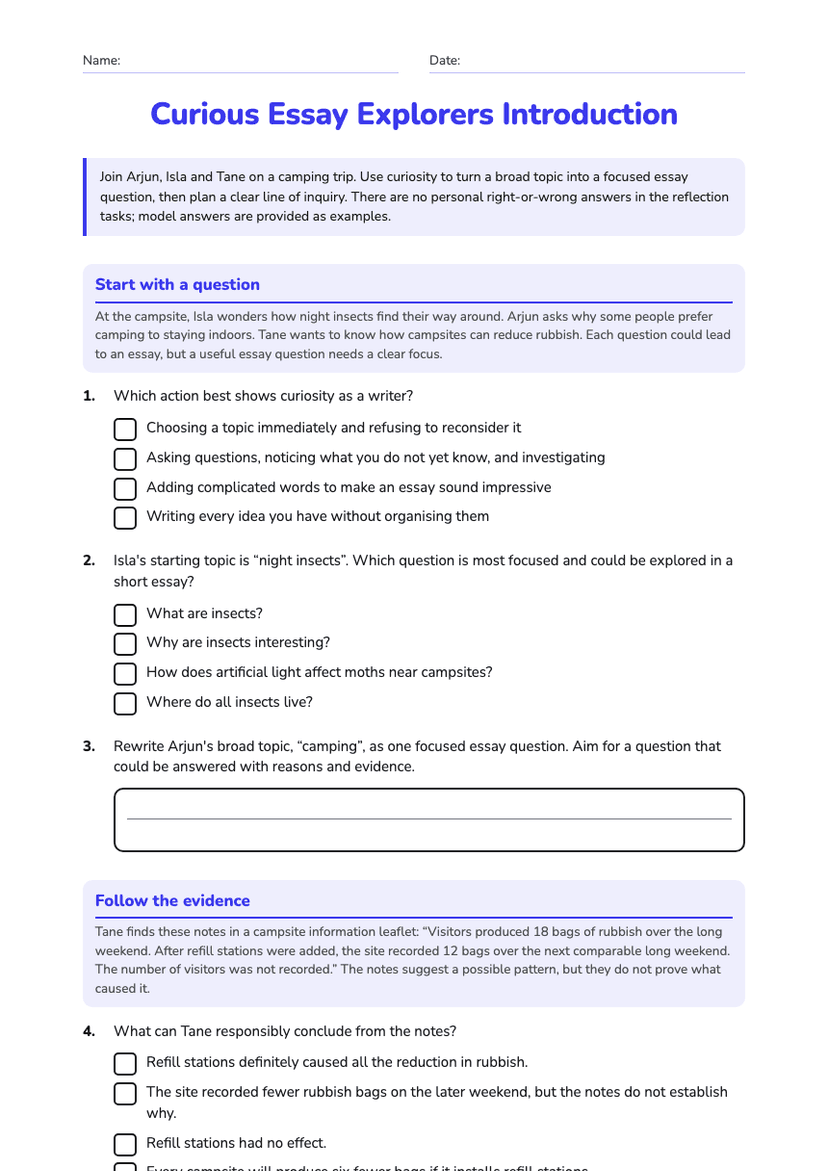
Curious Essay Explorers Introduction
Free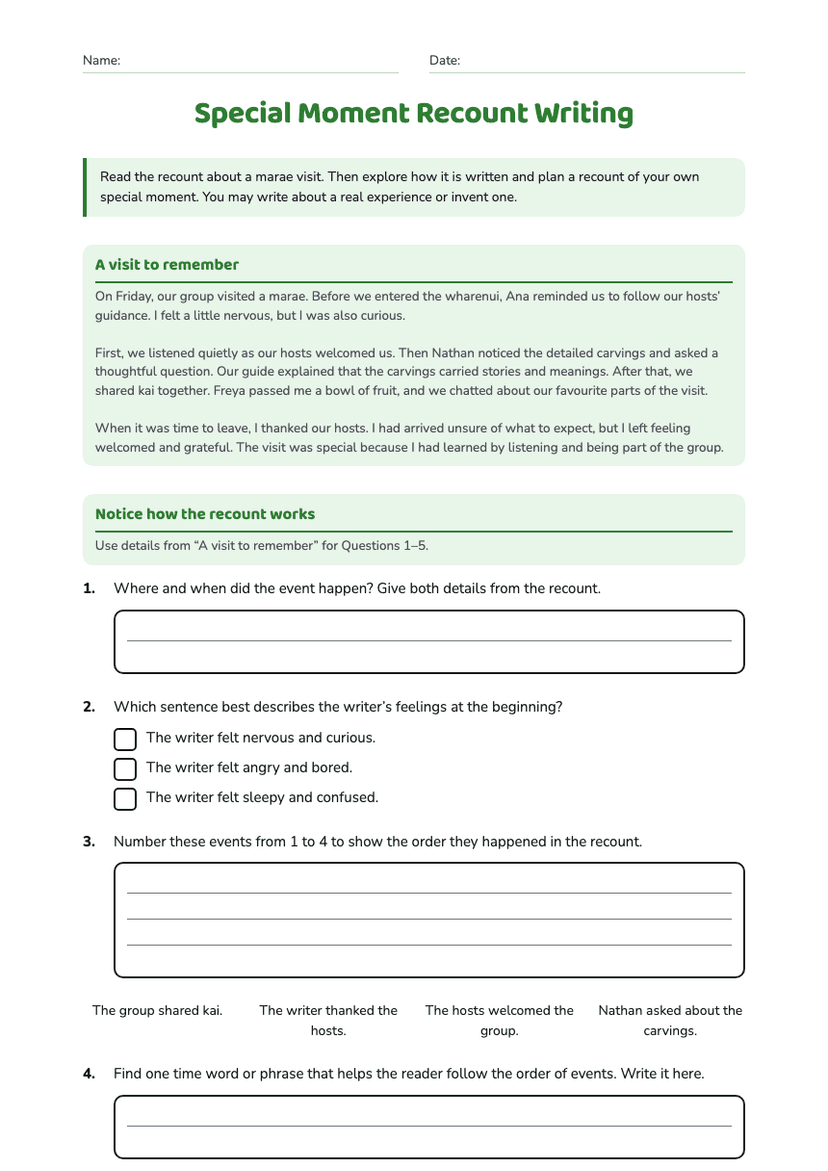
Special Moment Recount Writing
Free