ScienceFreePrintable
New Zealand Dairy Farming Quiz
A free science worksheet ready for your classroom. Open in Kuraplan to grab the print-ready PDF, customize it for your students, or generate a fresh version in seconds.
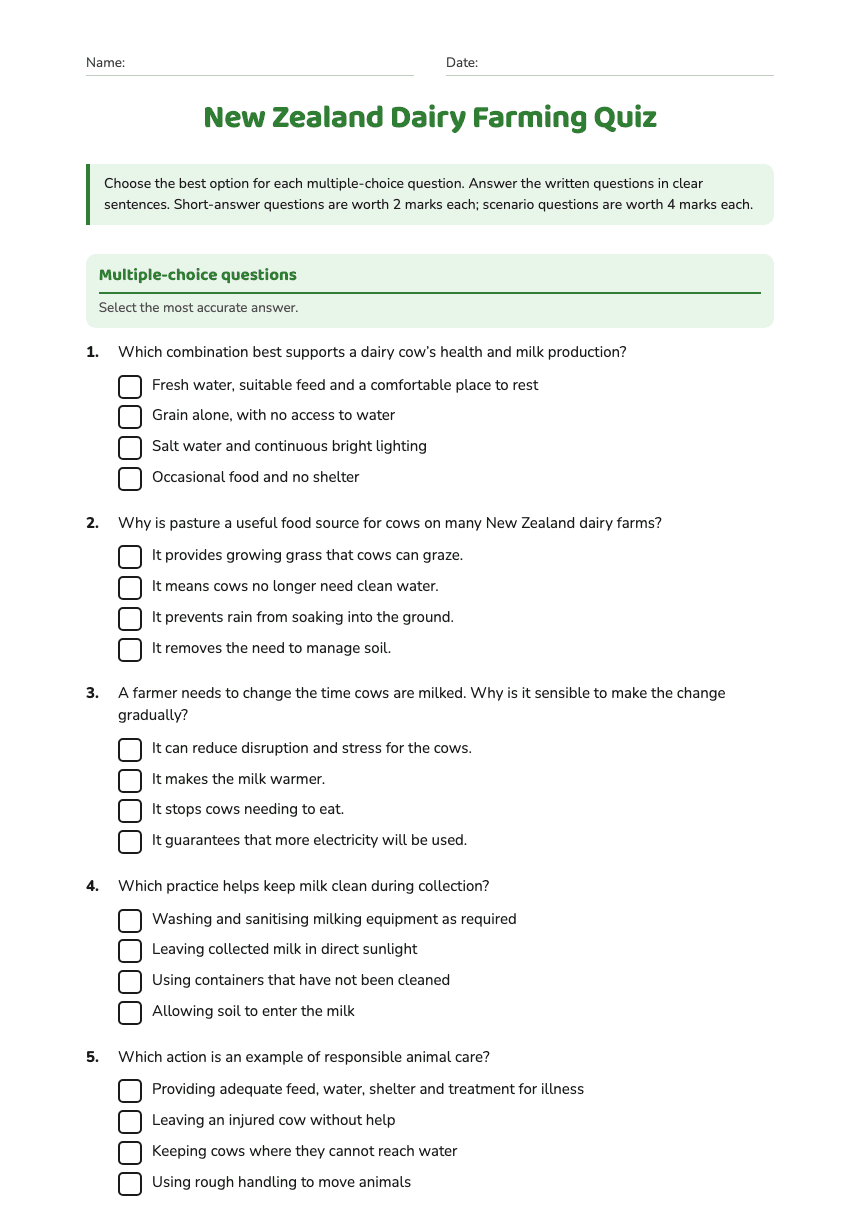
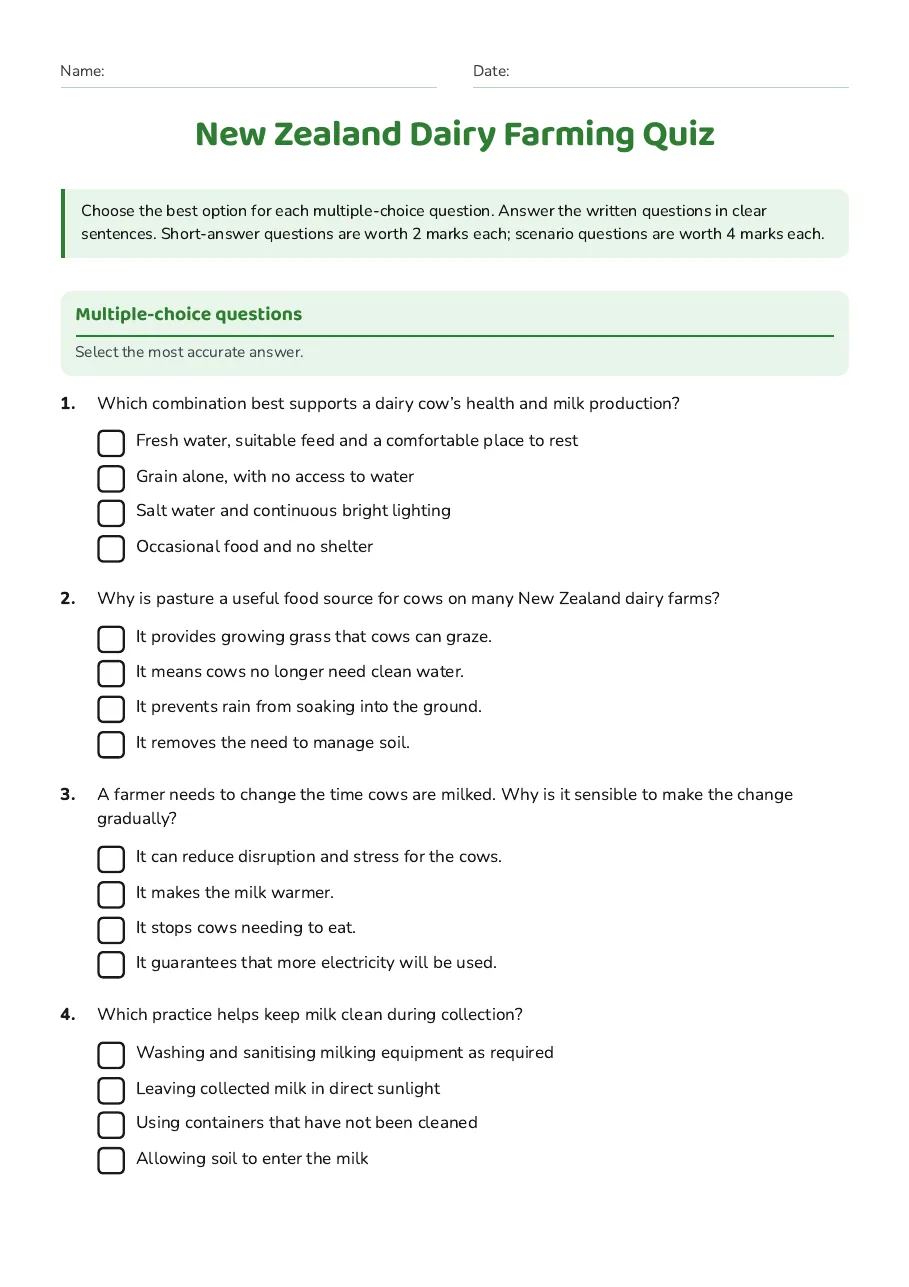
Name:Date:
New Zealand Dairy Farming Quiz
Choose the best option for each multiple-choice question. Answer the written questions in clear sentences. Short-answer questions are worth 2 marks each; scenario questions are worth 4 marks each.
Multiple-choice questions
Select the most accurate answer.
1.Which combination best supports a dairy cow’s health and milk production?
- Fresh water, suitable feed and a comfortable place to rest
- Grain alone, with no access to water
- Salt water and continuous bright lighting
- Occasional food and no shelter
2.Why is pasture a useful food source for cows on many New Zealand dairy farms?
- It provides growing grass that cows can graze.
- It means cows no longer need clean water.
- It prevents rain from soaking into the ground.
- It removes the need to manage soil.
3.A farmer needs to change the time cows are milked. Why is it sensible to make the change gradually?
- It can reduce disruption and stress for the cows.
- It makes the milk warmer.
- It stops cows needing to eat.
- It guarantees that more electricity will be used.
4.Which practice helps keep milk clean during collection?
- Washing and sanitising milking equipment as required
- Leaving collected milk in direct sunlight
- Using containers that have not been cleaned
- Allowing soil to enter the milk
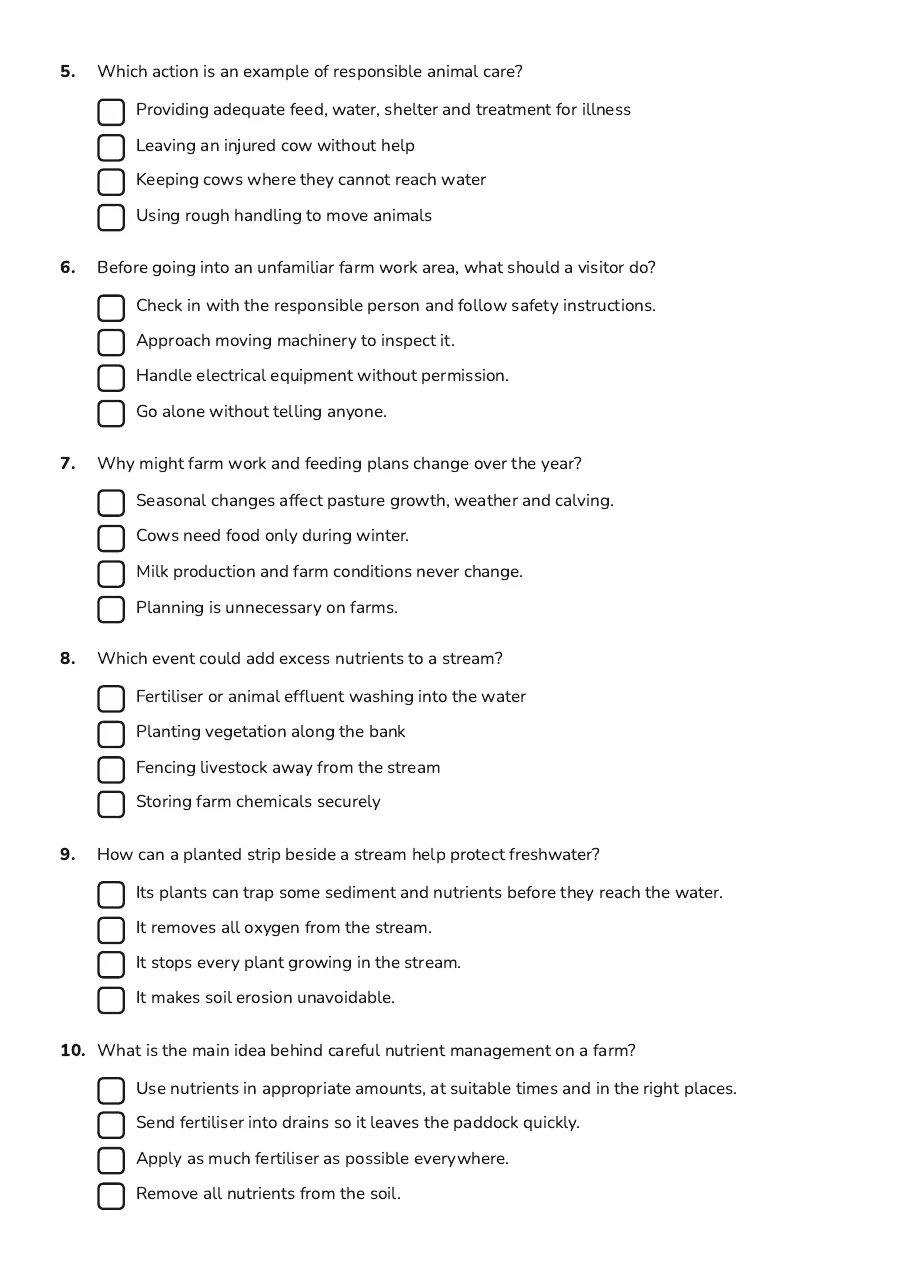
5.Which action is an example of responsible animal care?
- Providing adequate feed, water, shelter and treatment for illness
- Leaving an injured cow without help
- Keeping cows where they cannot reach water
- Using rough handling to move animals
6.Before going into an unfamiliar farm work area, what should a visitor do?
- Check in with the responsible person and follow safety instructions.
- Approach moving machinery to inspect it.
- Handle electrical equipment without permission.
- Go alone without telling anyone.
7.Why might farm work and feeding plans change over the year?
- Seasonal changes affect pasture growth, weather and calving.
- Cows need food only during winter.
- Milk production and farm conditions never change.
- Planning is unnecessary on farms.
8.Which event could add excess nutrients to a stream?
- Fertiliser or animal effluent washing into the water
- Planting vegetation along the bank
- Fencing livestock away from the stream
- Storing farm chemicals securely
9.How can a planted strip beside a stream help protect freshwater?
- Its plants can trap some sediment and nutrients before they reach the water.
- It removes all oxygen from the stream.
- It stops every plant growing in the stream.
- It makes soil erosion unavoidable.
10.What is the main idea behind careful nutrient management on a farm?
- Use nutrients in appropriate amounts, at suitable times and in the right places.
- Send fertiliser into drains so it leaves the paddock quickly.
- Apply as much fertiliser as possible everywhere.
- Remove all nutrients from the soil.
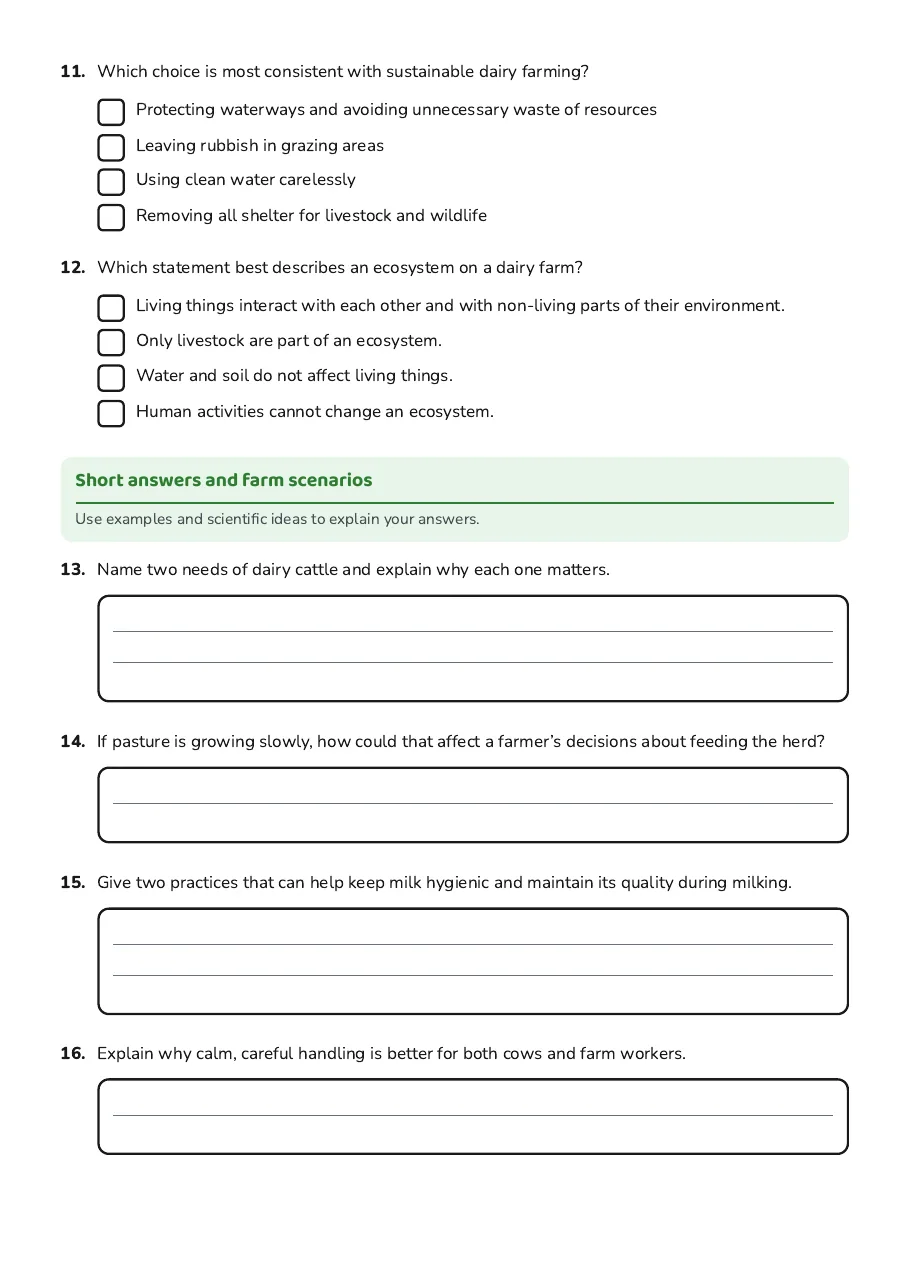
11.Which choice is most consistent with sustainable dairy farming?
- Protecting waterways and avoiding unnecessary waste of resources
- Leaving rubbish in grazing areas
- Using clean water carelessly
- Removing all shelter for livestock and wildlife
12.Which statement best describes an ecosystem on a dairy farm?
- Living things interact with each other and with non-living parts of their environment.
- Only livestock are part of an ecosystem.
- Water and soil do not affect living things.
- Human activities cannot change an ecosystem.
Short answers and farm scenarios
Use examples and scientific ideas to explain your answers.
13.Name two needs of dairy cattle and explain why each one matters.
14.If pasture is growing slowly, how could that affect a farmer’s decisions about feeding the herd?
15.Give two practices that can help keep milk hygienic and maintain its quality during milking.
16.Explain why calm, careful handling is better for both cows and farm workers.
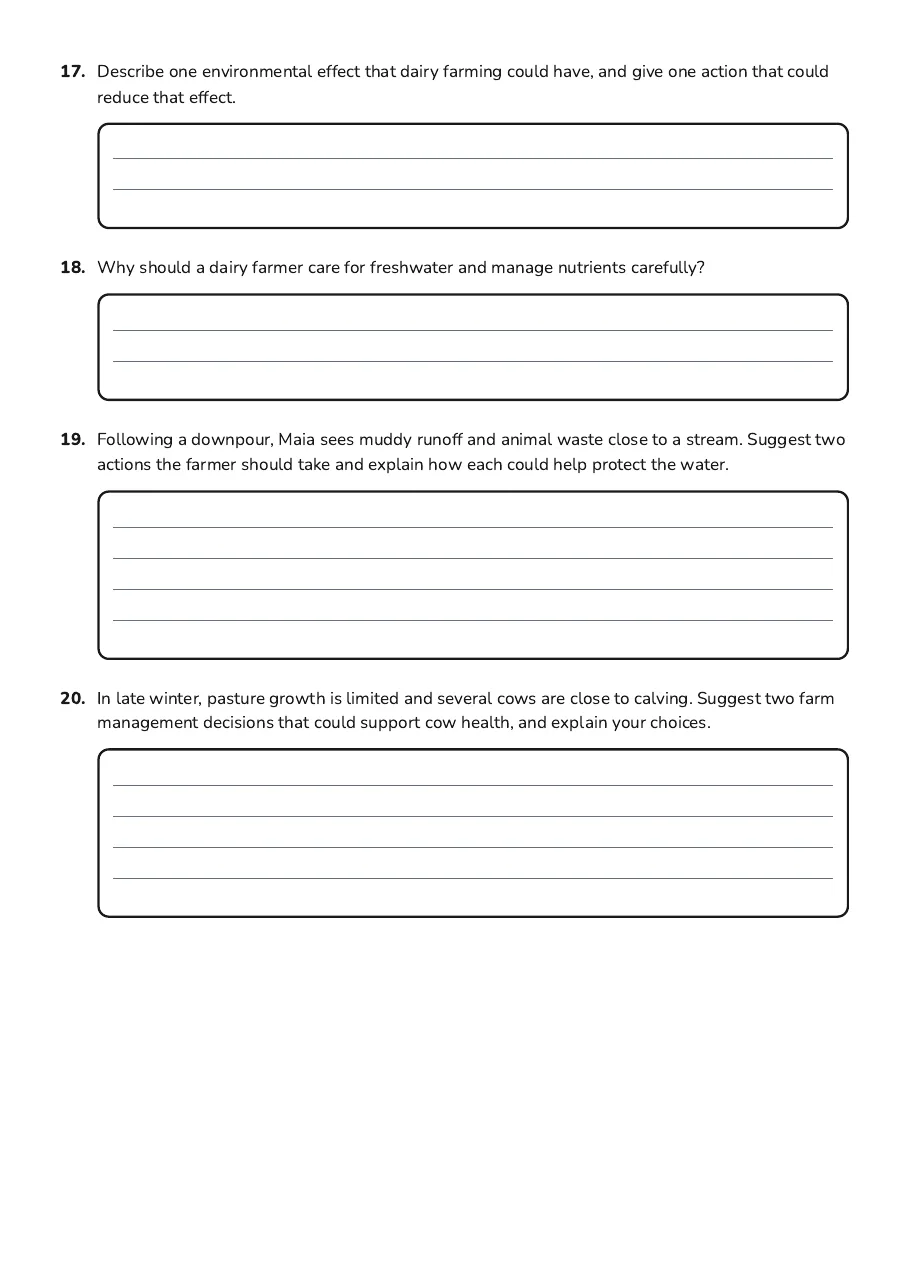
17.Describe one environmental effect that dairy farming could have, and give one action that could reduce that effect.
18.Why should a dairy farmer care for freshwater and manage nutrients carefully?
19.Following a downpour, Maia sees muddy runoff and animal waste close to a stream. Suggest two actions the farmer should take and explain how each could help protect the water.
20.In late winter, pasture growth is limited and several cows are close to calving. Suggest two farm management decisions that could support cow health, and explain your choices.
4 printable pages
Page 1
Page 2
Page 3
Page 4
About This Worksheet
Free in Kuraplan
Sign up free, grab the PDF, and customize it for your class.
Print-Ready
Formatted for standard paper. Clean layout, easy to read.
AI-Generated
Created with Kuraplan's AI, designed for real classroom use.
For Teachers & Parents
Use in classrooms, for homework, tutoring, or homeschool.
Need a custom version of this worksheet?
Kuraplan's AI generates custom worksheets in seconds — differentiated for every learner, aligned to your curriculum.
Generate Custom Worksheets — Free No credit card Curriculum-aligned Under 60 seconds
More Science Worksheets
Year 1–5
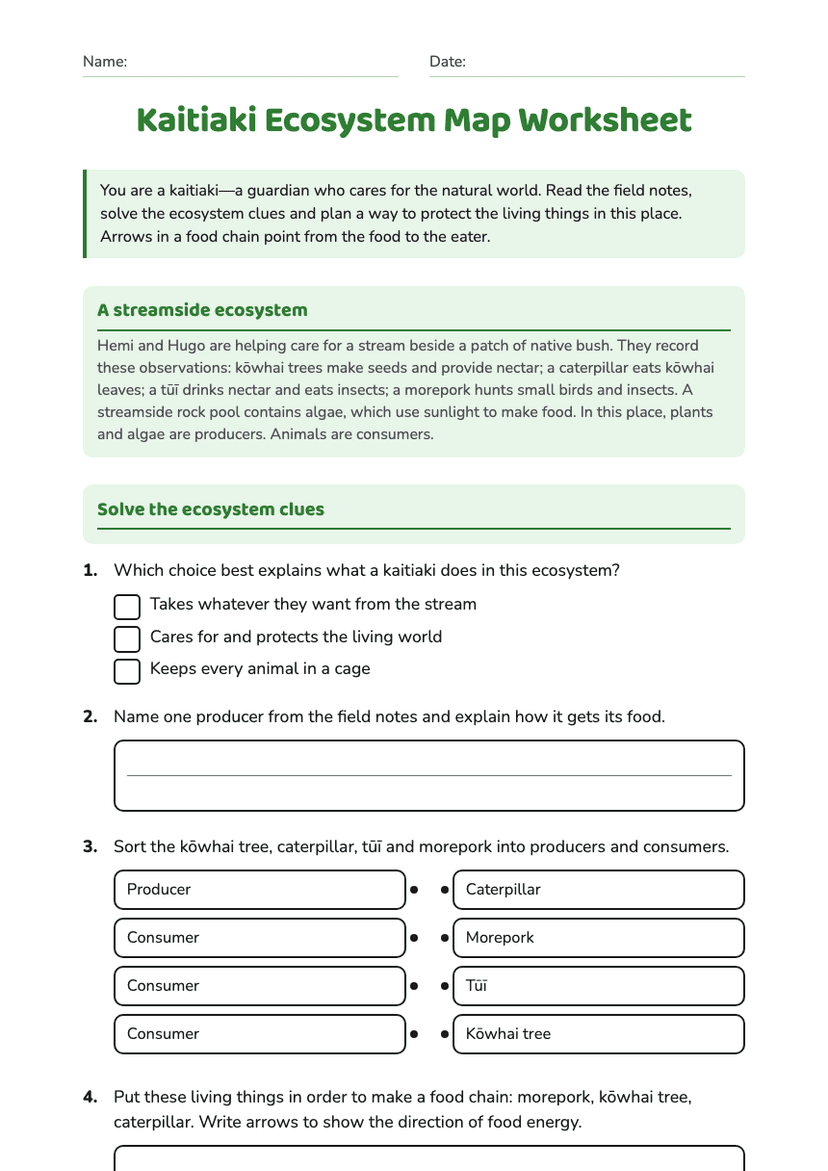
Kaitiaki Ecosystem Map Worksheet
Free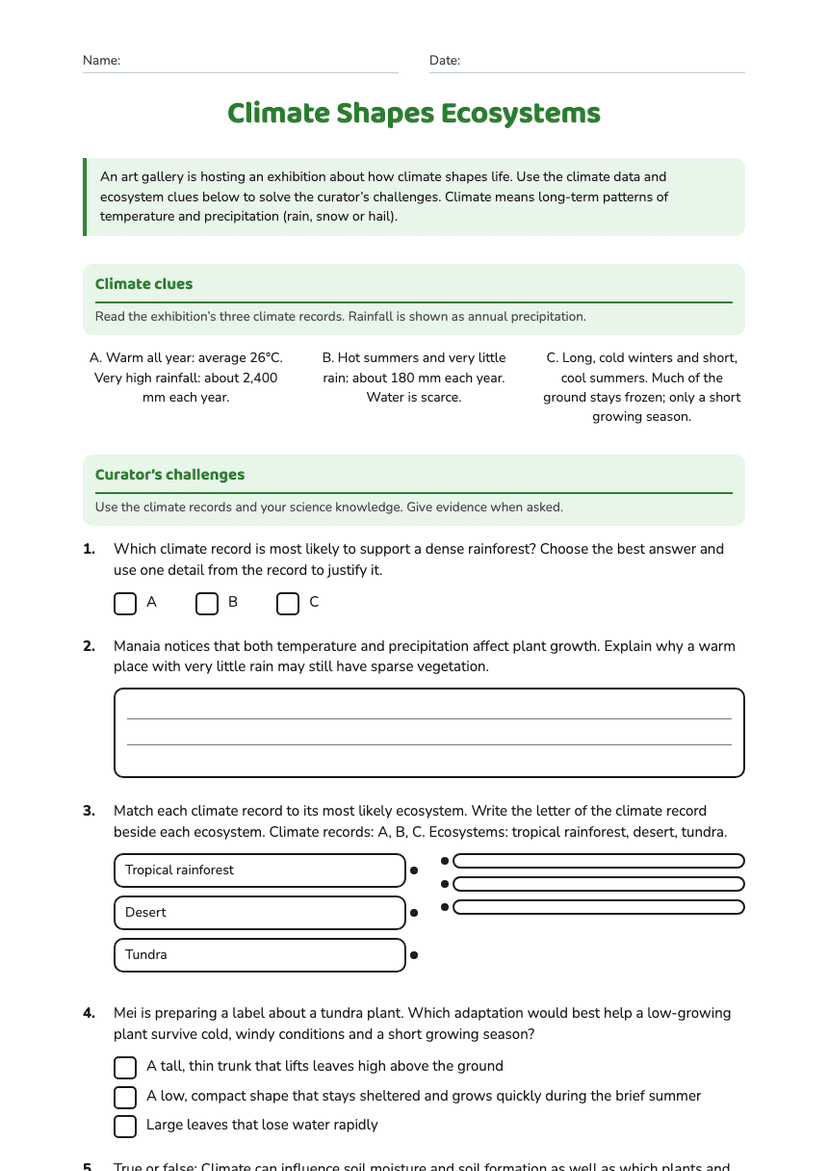
Year 7–8
Climate Shapes Ecosystems
Free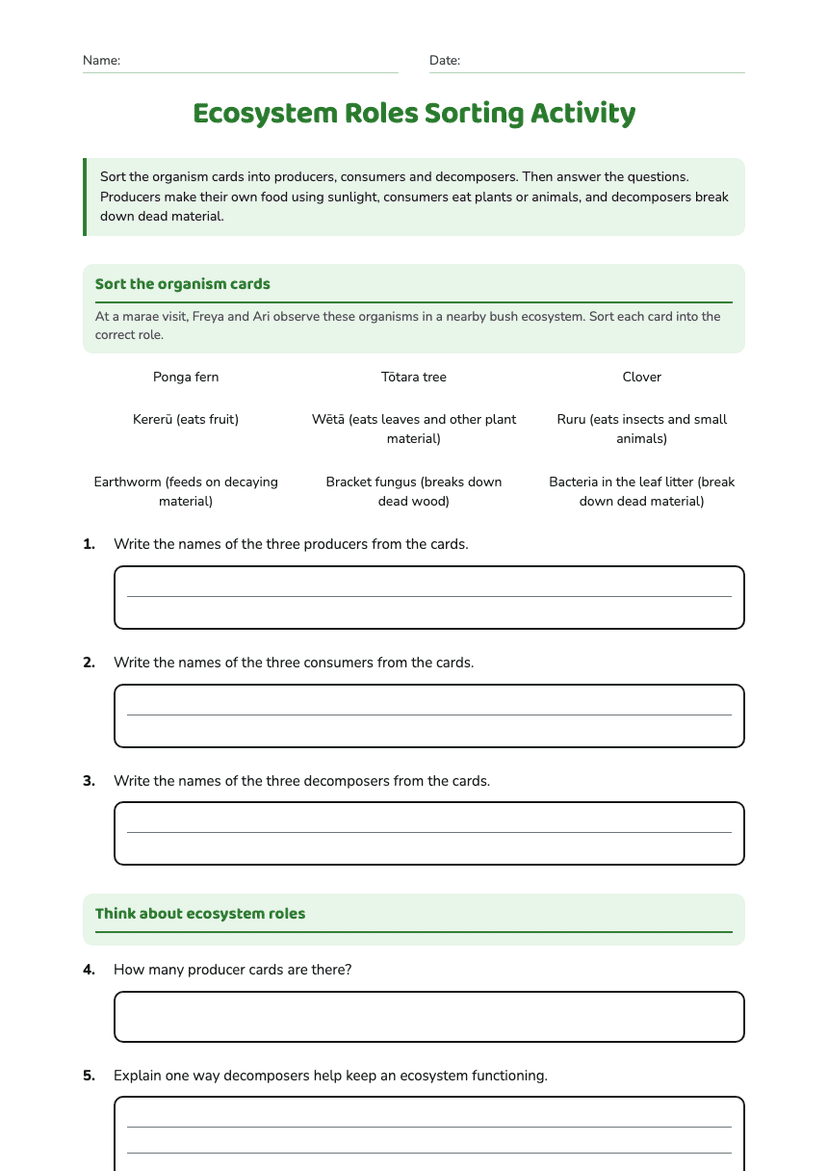
Year 6
Ecosystem Roles Sorting Activity
Free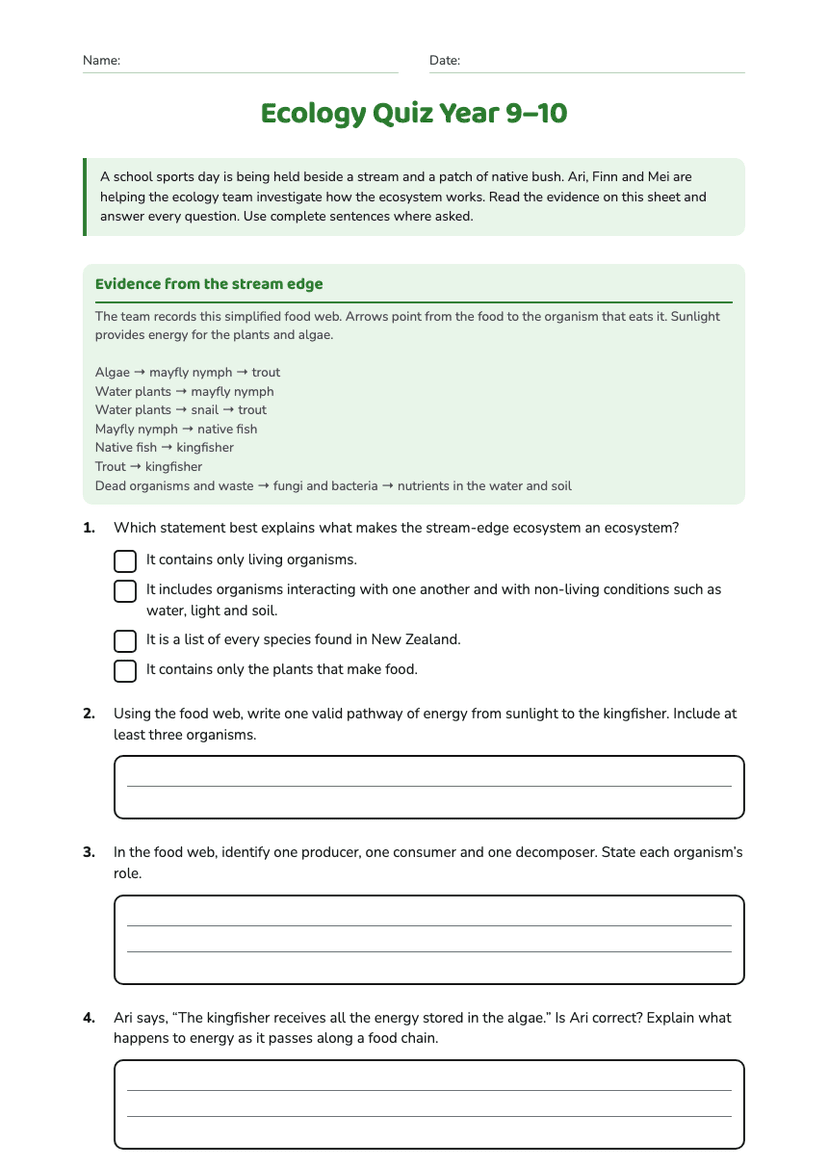
Ecology Quiz Year 9–10
Free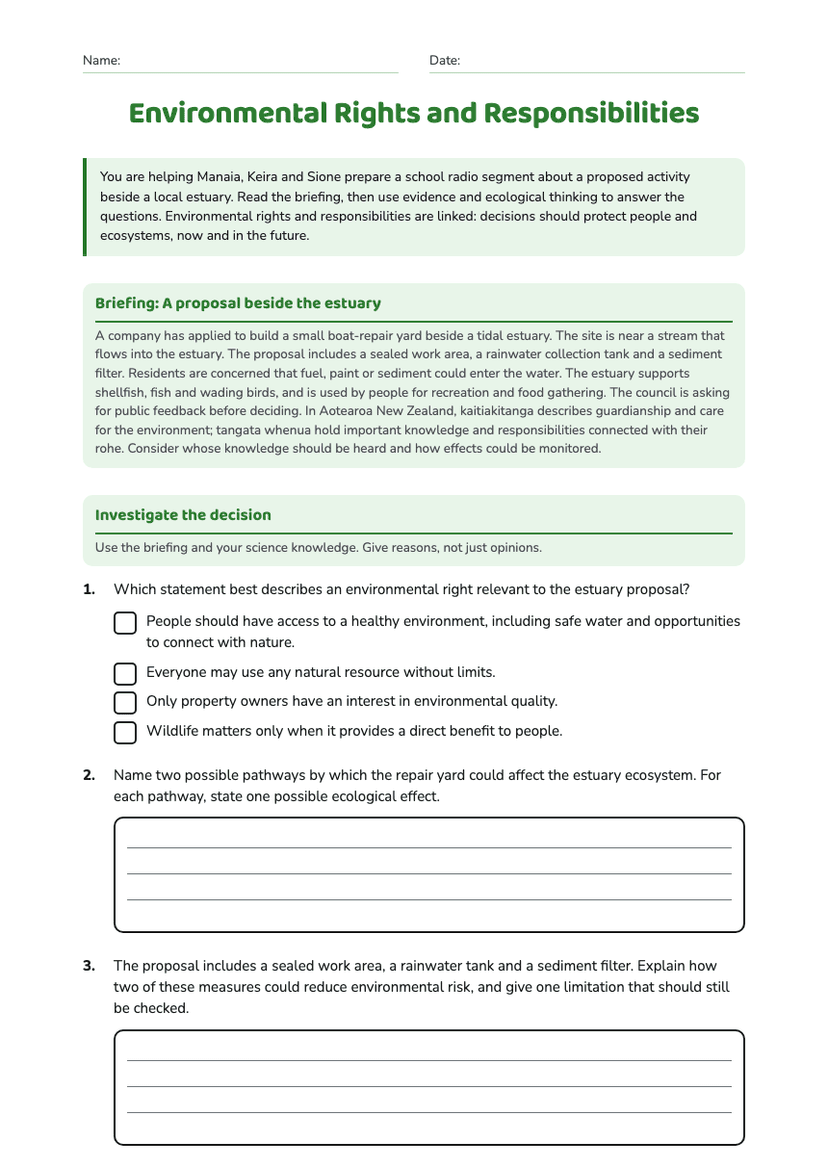
Year 10
Environmental Rights and Responsibilities
Free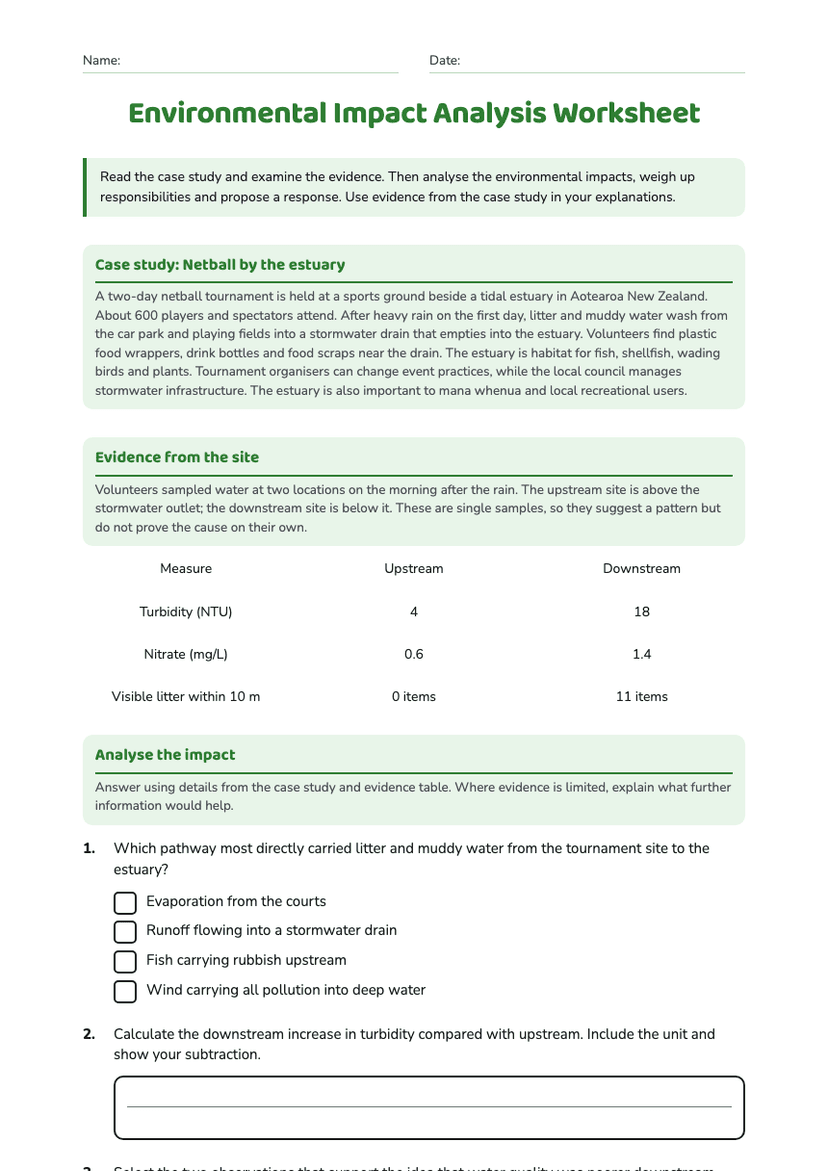
Year 10
Environmental Impact Analysis Worksheet
Free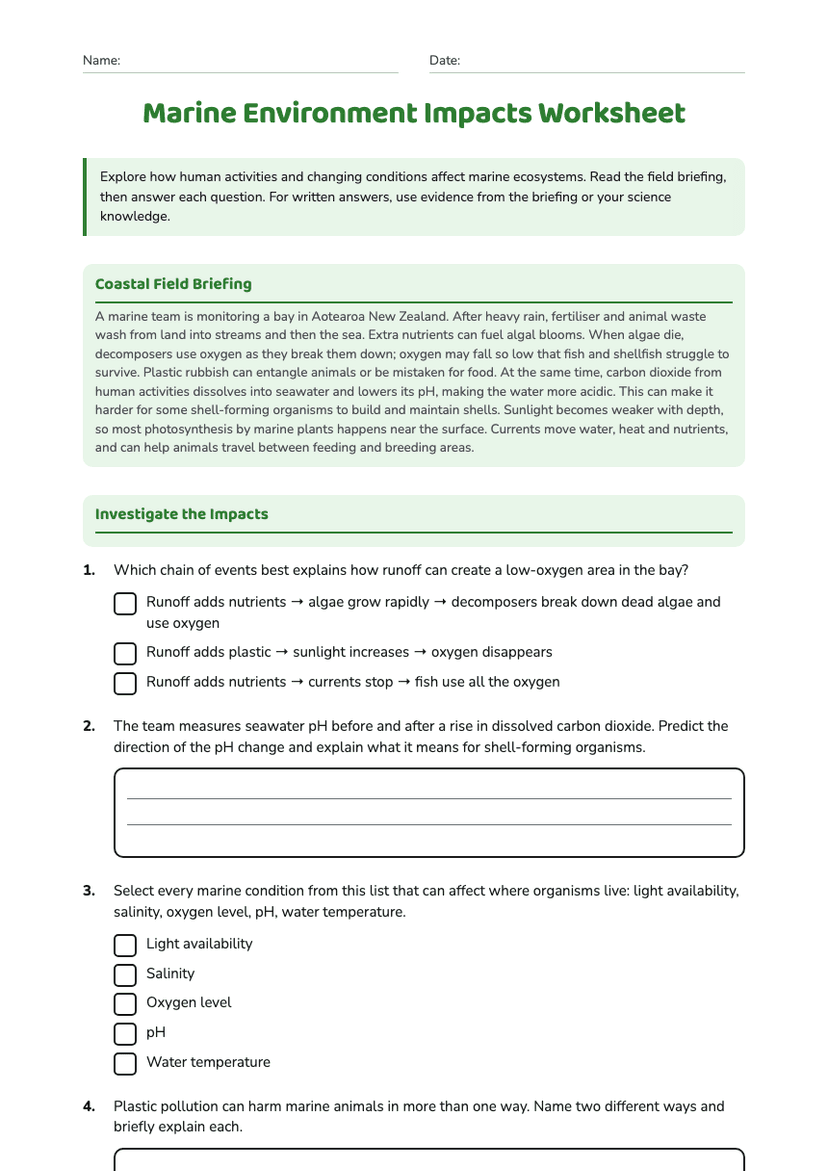
Marine Environment Impacts Worksheet
Free
Year 2