New Zealand History Events
A free social sciences worksheet ready for your classroom. Open in Kuraplan to grab the print-ready PDF, customize it for your students, or generate a fresh version in seconds.
New Zealand History Events
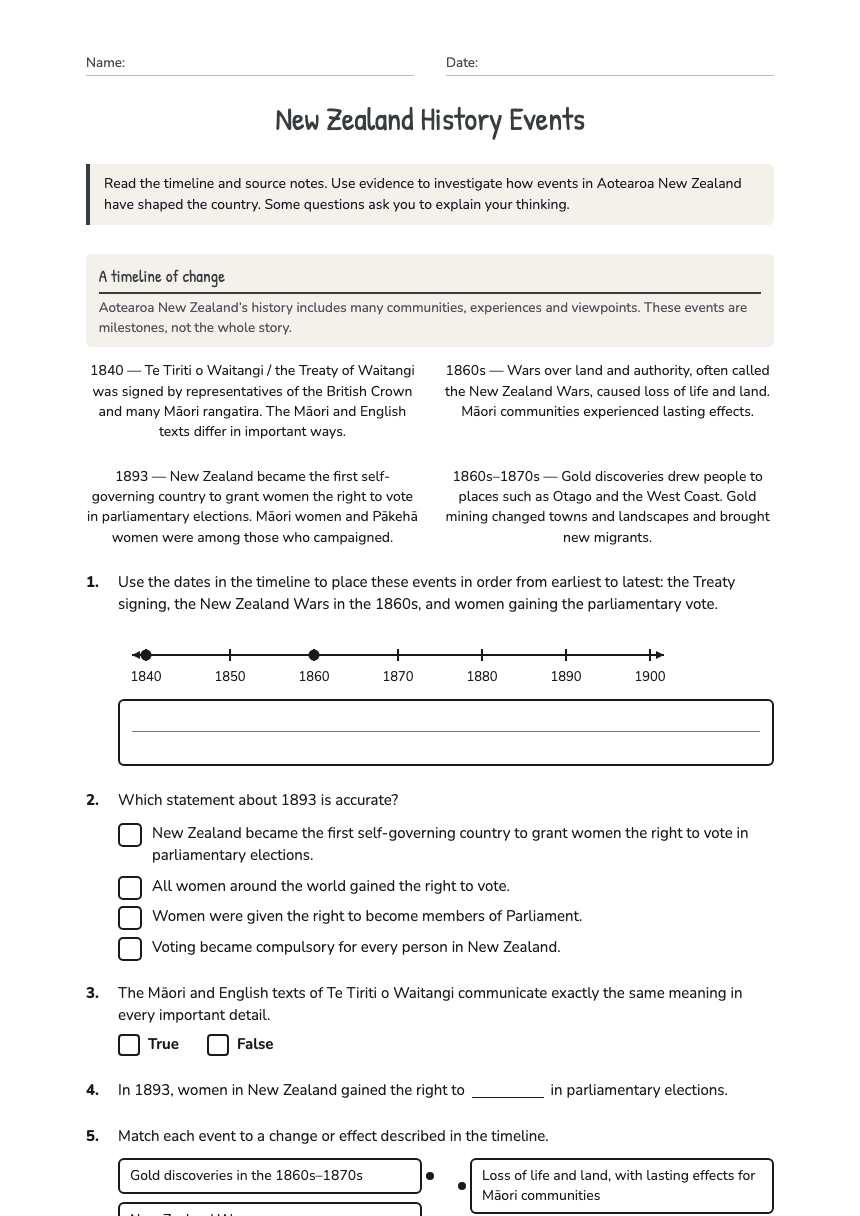
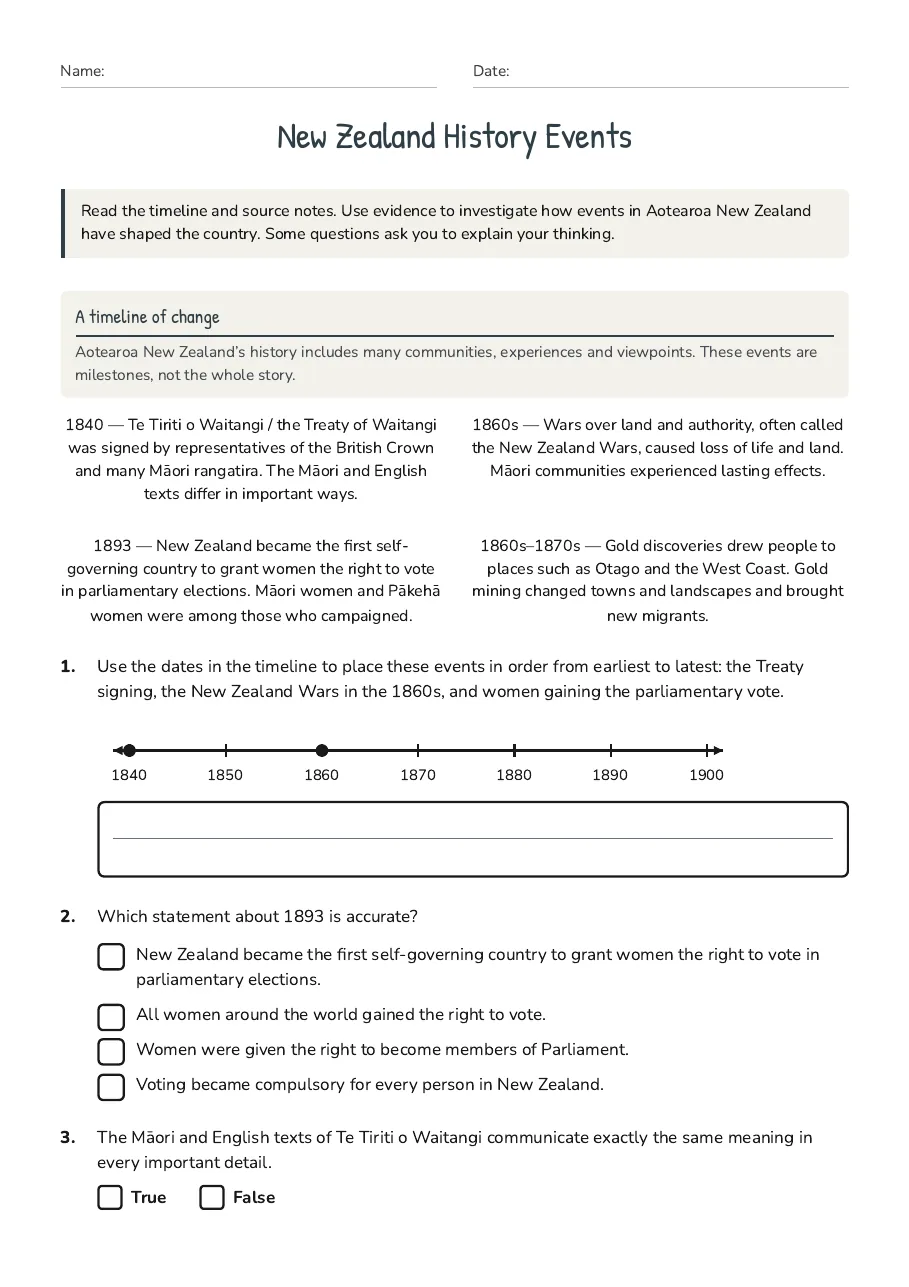
A timeline of change
Aotearoa New Zealand’s history includes many communities, experiences and viewpoints. These events are milestones, not the whole story.
1840 — Te Tiriti o Waitangi / the Treaty of Waitangi was signed by representatives of the British Crown and many Māori rangatira. The Māori and English texts differ in important ways.
1860s — Wars over land and authority, often called the New Zealand Wars, caused loss of life and land. Māori communities experienced lasting effects.
1893 — New Zealand became the first self-governing country to grant women the right to vote in parliamentary elections. Māori women and Pākehā women were among those who campaigned.
1860s–1870s — Gold discoveries drew people to places such as Otago and the West Coast. Gold mining changed towns and landscapes and brought new migrants.
- New Zealand became the first self-governing country to grant women the right to vote in parliamentary elections.
- All women around the world gained the right to vote.
- Women were given the right to become members of Parliament.
- Voting became compulsory for every person in New Zealand.
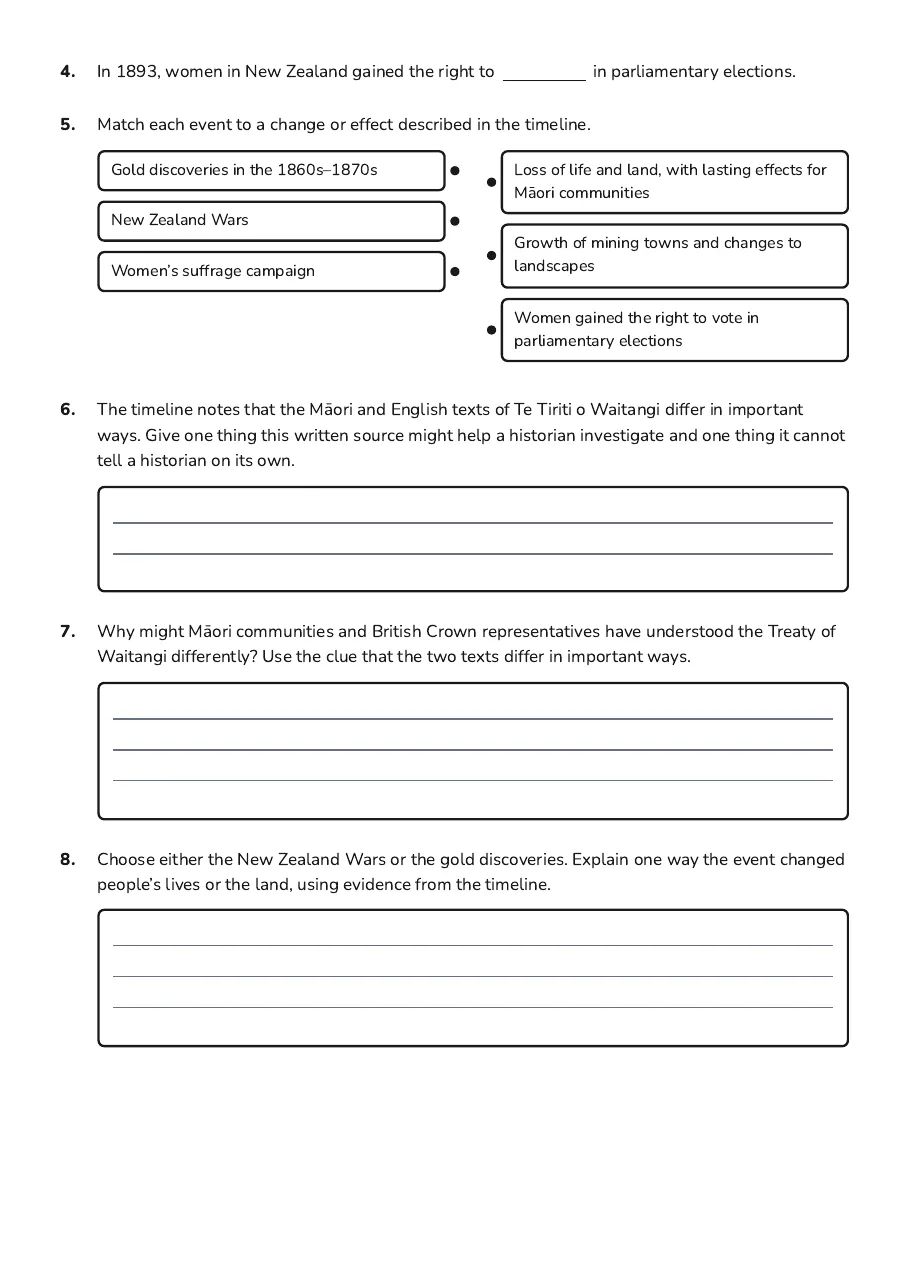
- Gold discoveries in the 1860s–1870s
- New Zealand Wars
- Women’s suffrage campaign
- Loss of life and land, with lasting effects for Māori communities
- Growth of mining towns and changes to landscapes
- Women gained the right to vote in parliamentary elections
3 printable pages
Page 1
Page 2

Page 3
About This Worksheet
Free in Kuraplan
Sign up free, grab the PDF, and customize it for your class.
Print-Ready
Formatted for standard paper. Clean layout, easy to read.
AI-Generated
Created with Kuraplan's AI, designed for real classroom use.
For Teachers & Parents
Use in classrooms, for homework, tutoring, or homeschool.
Need a custom version of this worksheet?
Kuraplan's AI generates custom worksheets in seconds — differentiated for every learner, aligned to your curriculum.
Generate Custom Worksheets — FreeMore Social Sciences Worksheets
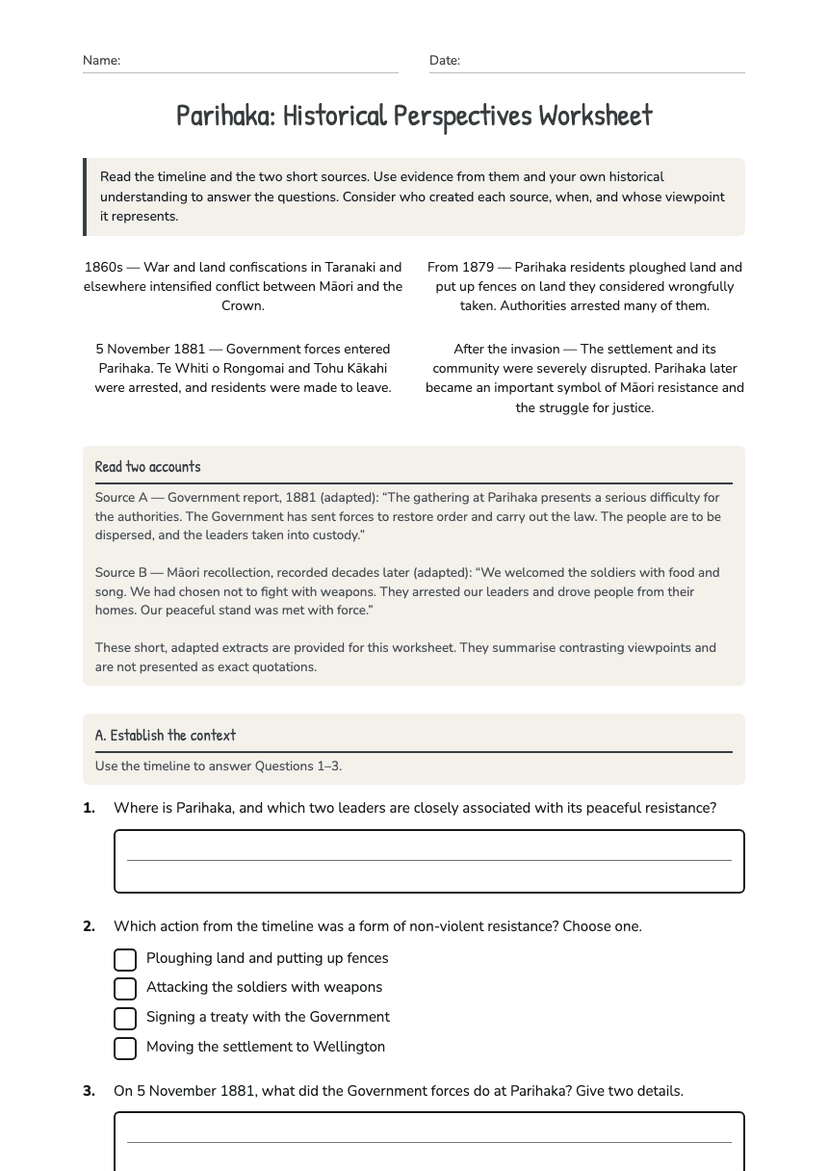
Parihaka: Historical Perspectives Worksheet
Free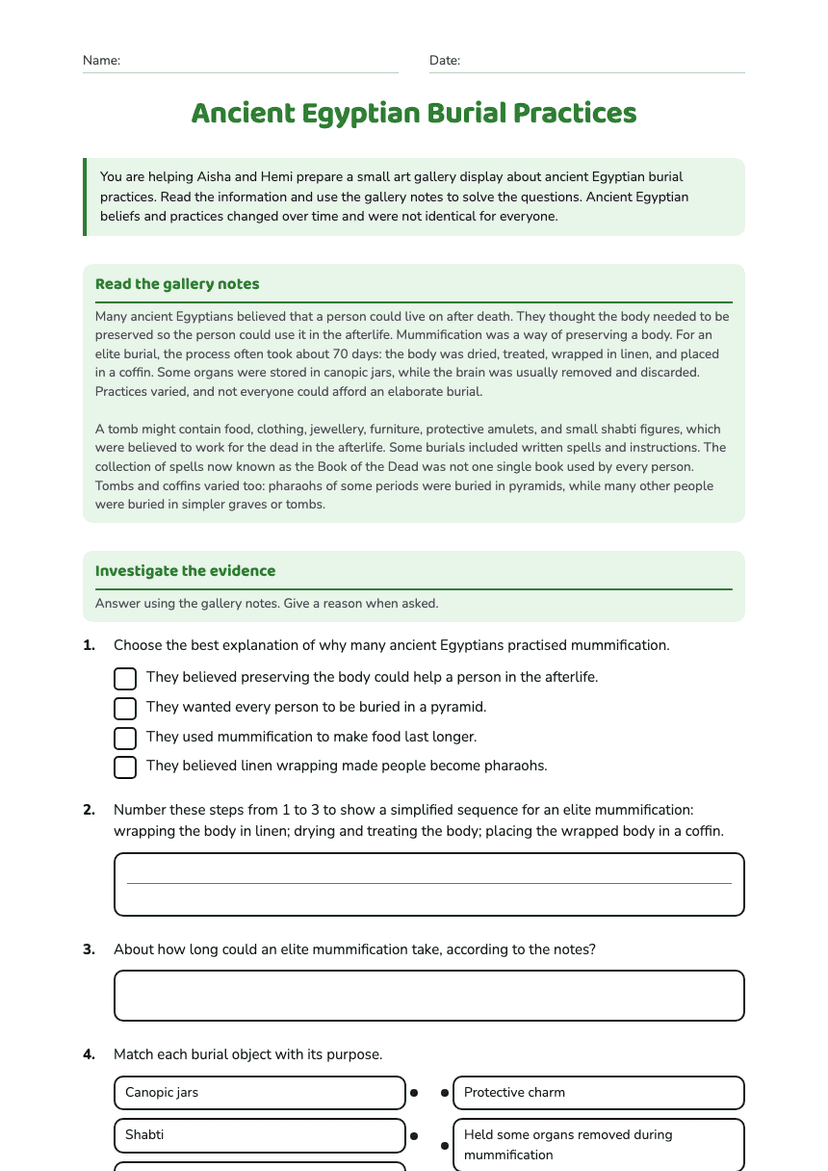
Ancient Egyptian Burial Practices
Free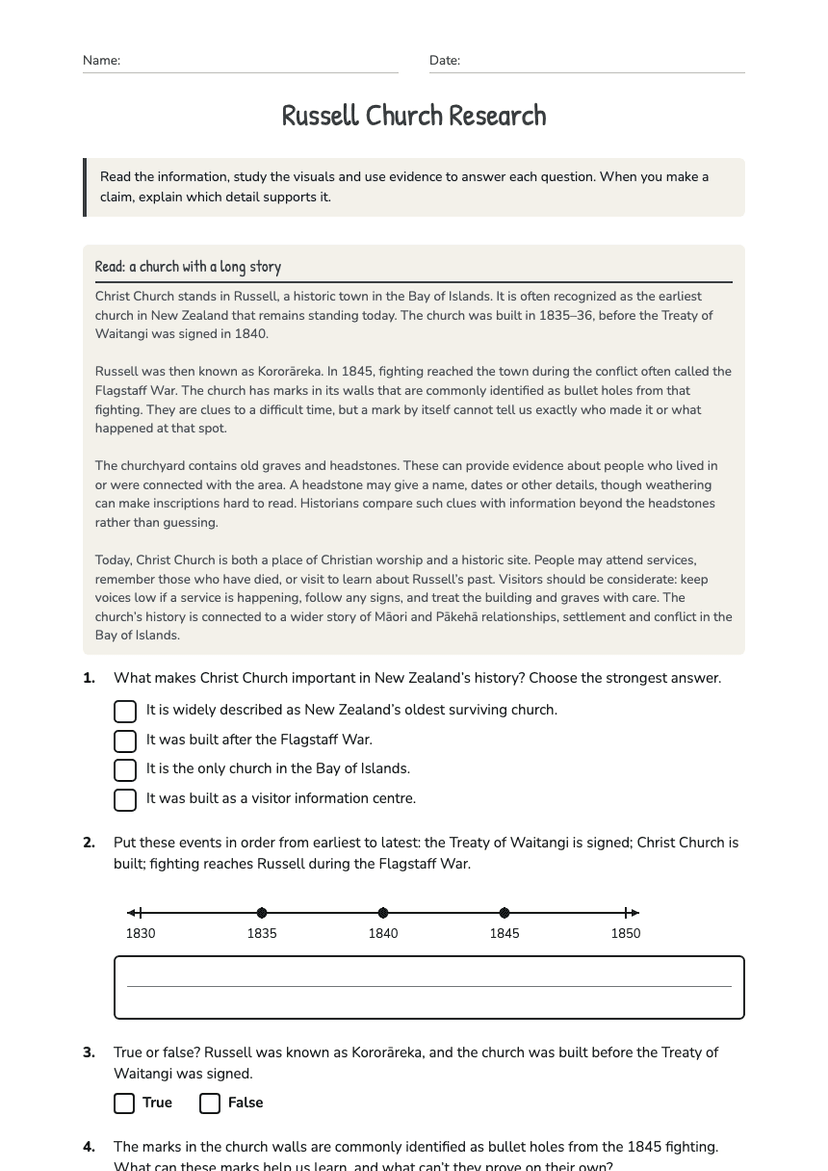
Russell Church Research
Free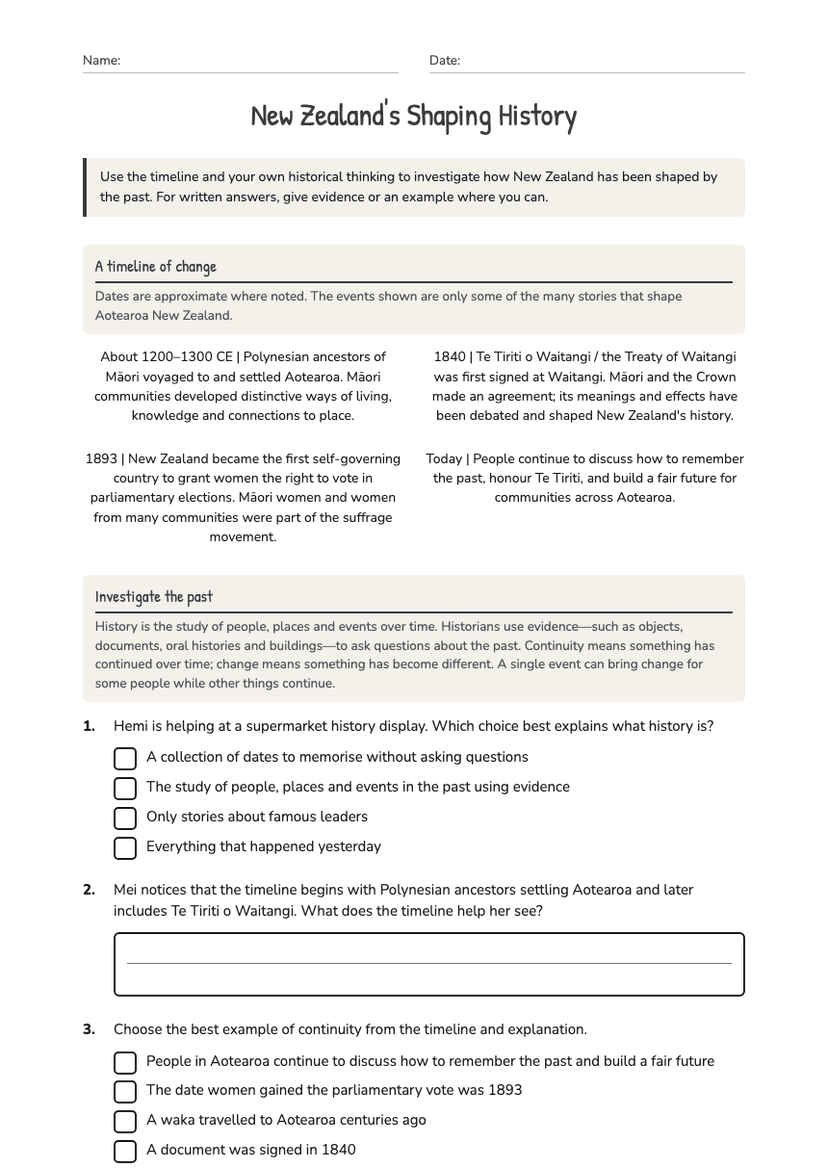
New Zealand's Shaping History
Free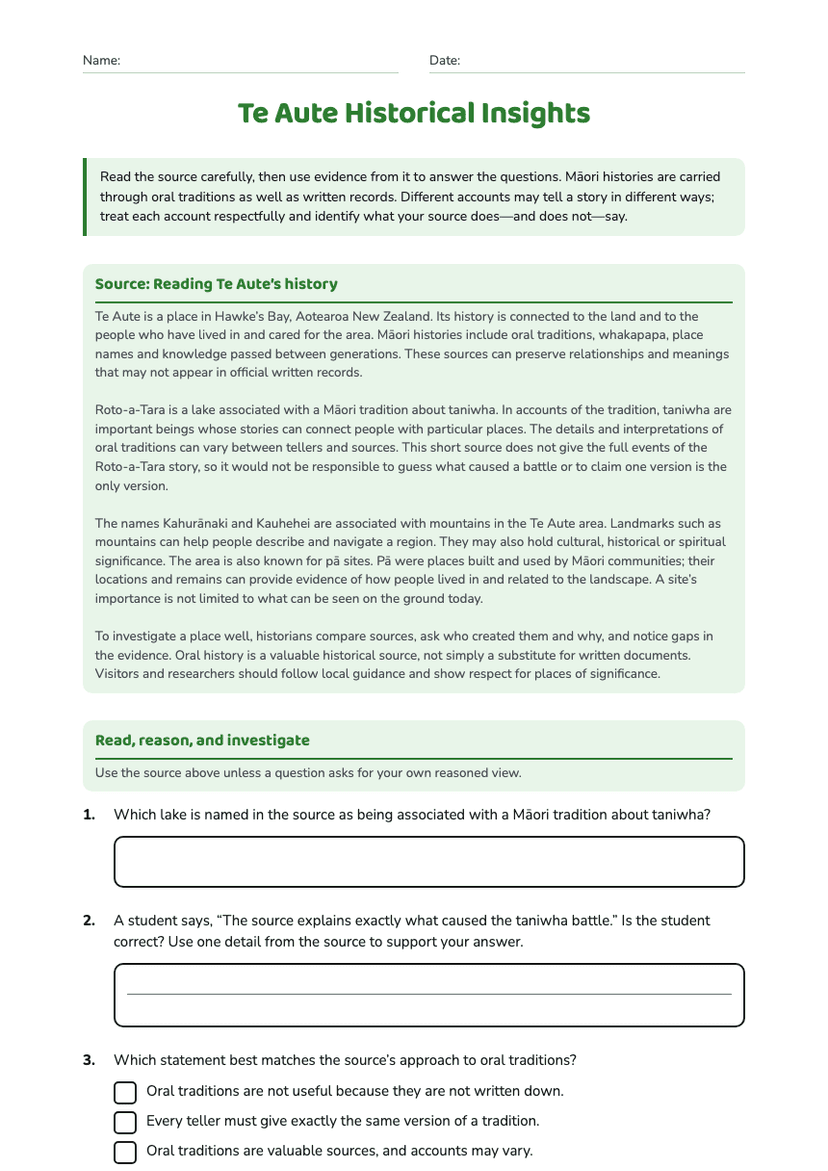
Te Aute Historical Insights
Free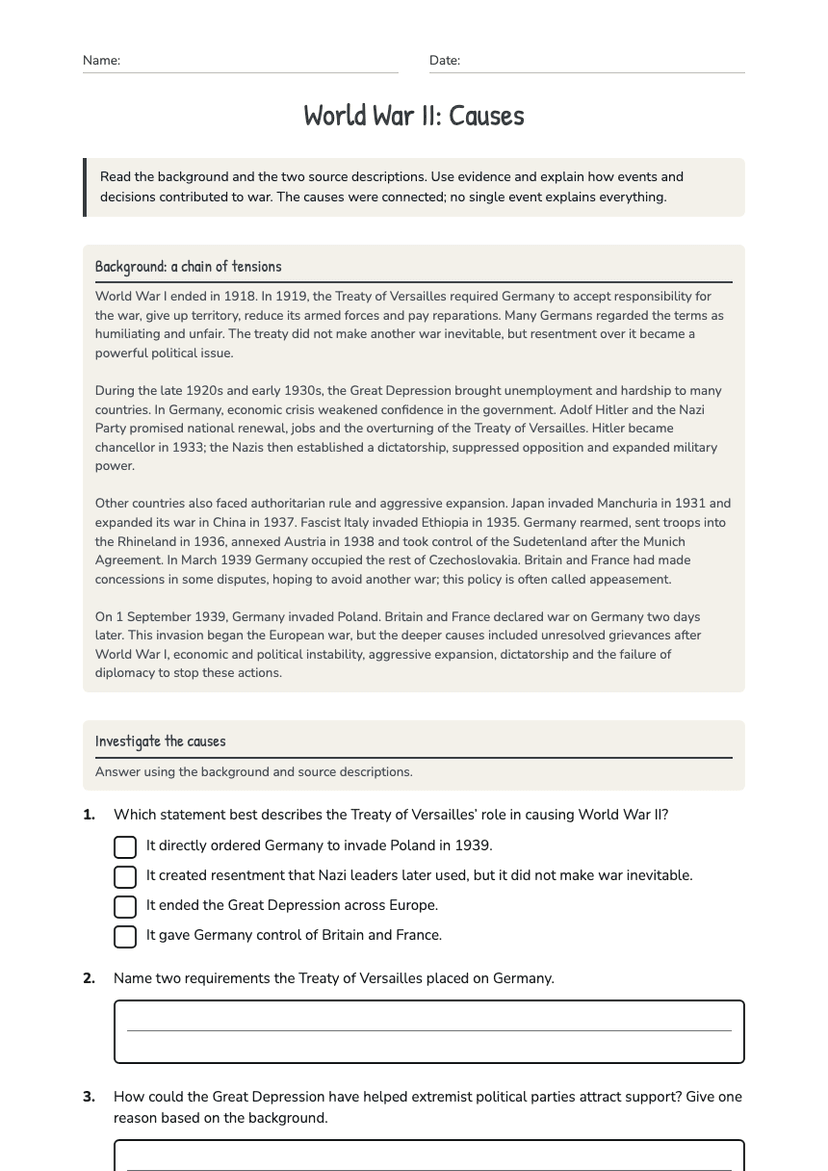
World War II: Causes
Free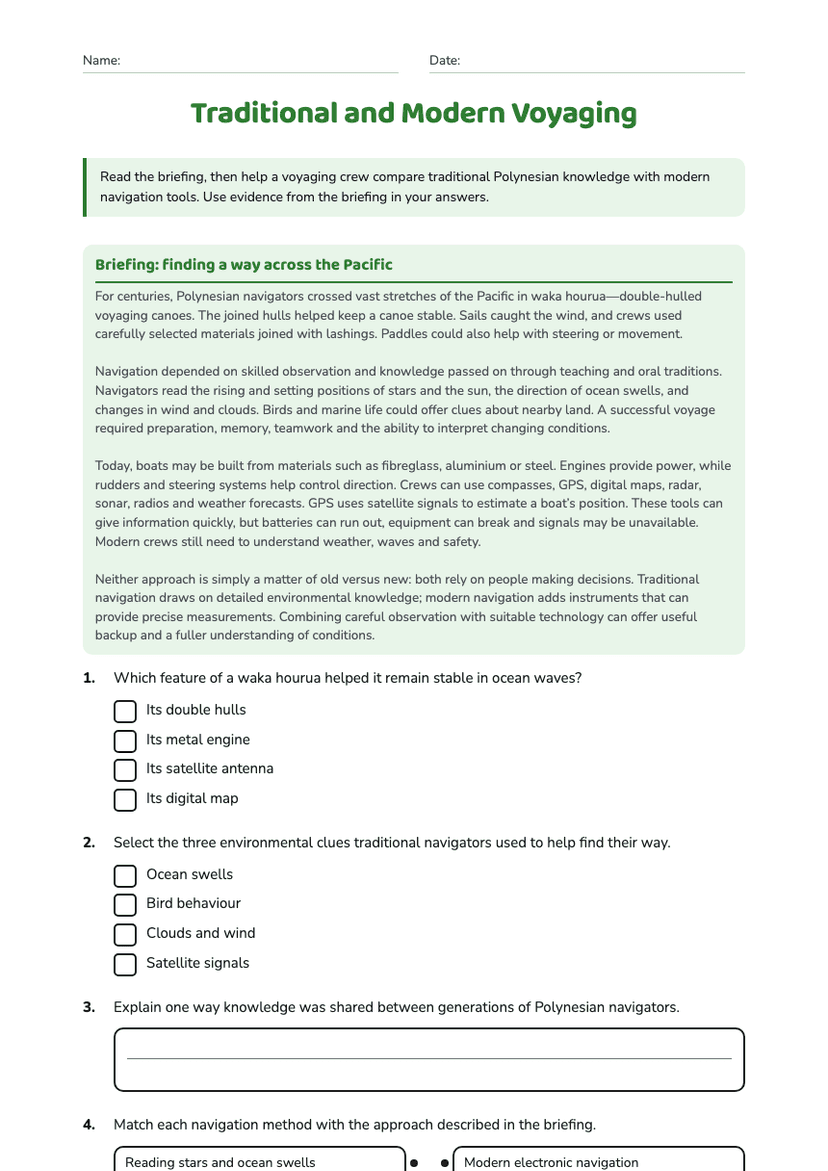
Traditional and Modern Voyaging
Free