New Zealand History Quiz
A free social sciences worksheet ready for your classroom. Open in Kuraplan to grab the print-ready PDF, customize it for your students, or generate a fresh version in seconds.
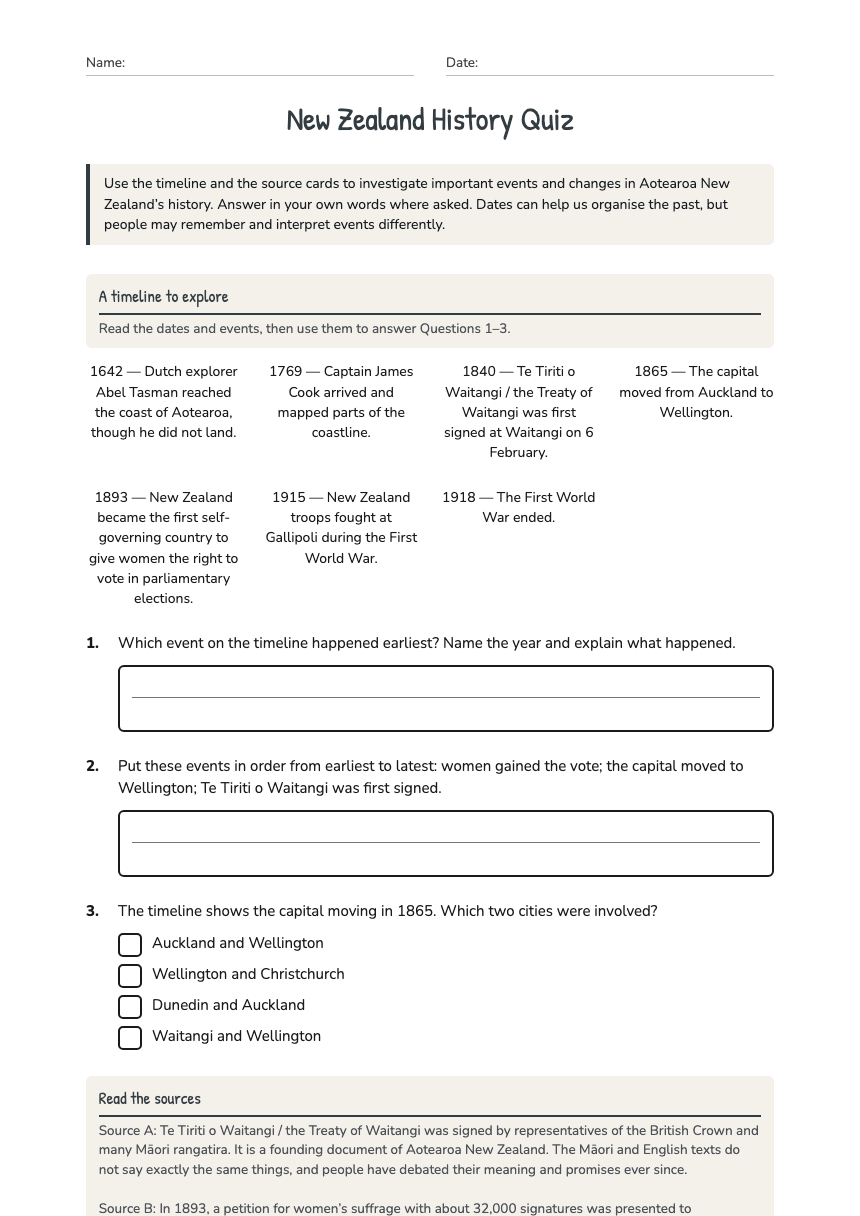
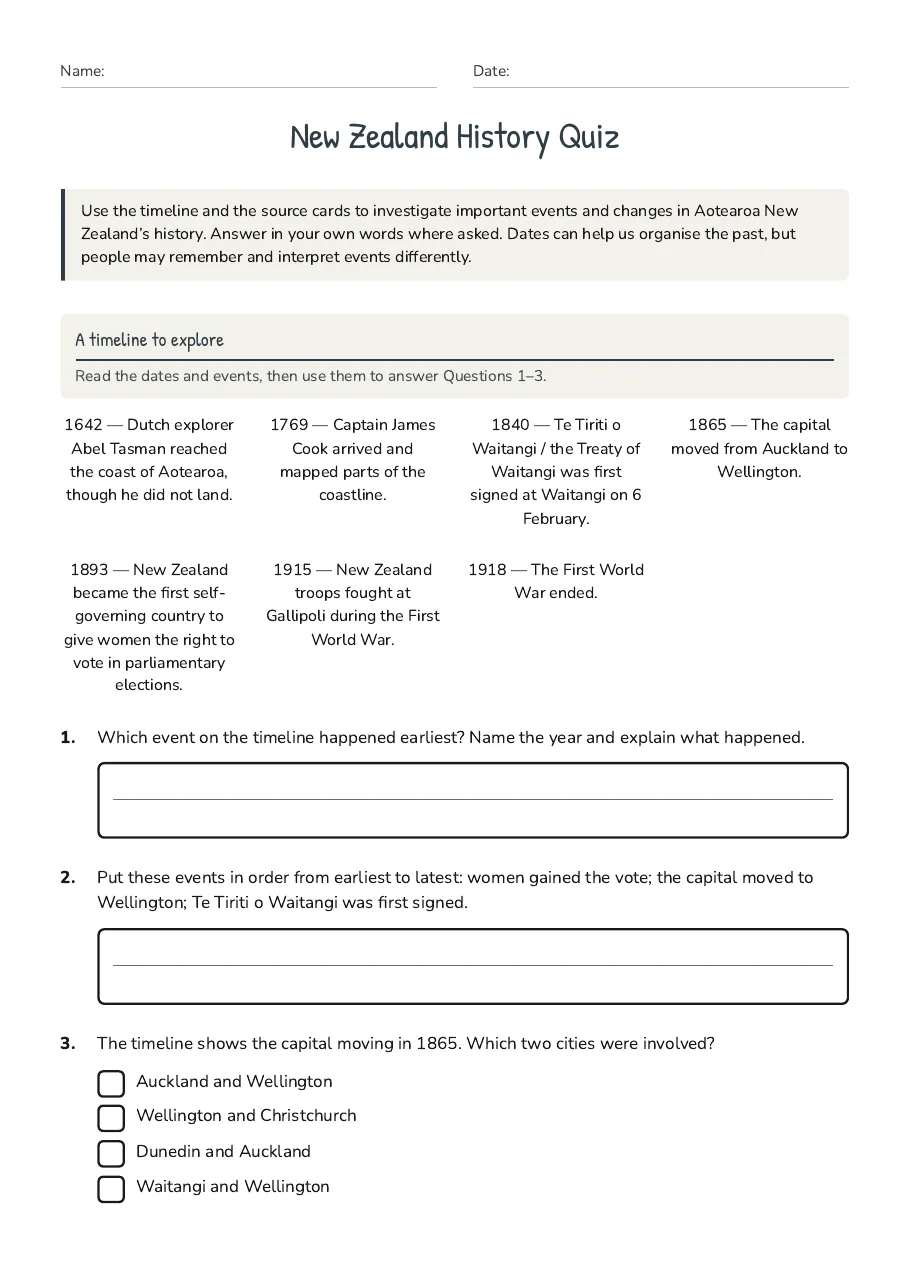
New Zealand History Quiz
A timeline to explore
Read the dates and events, then use them to answer Questions 1–3.
1642 — Dutch explorer Abel Tasman reached the coast of Aotearoa, though he did not land.
1769 — Captain James Cook arrived and mapped parts of the coastline.
1840 — Te Tiriti o Waitangi / the Treaty of Waitangi was first signed at Waitangi on 6 February.
1865 — The capital moved from Auckland to Wellington.
1893 — New Zealand became the first self-governing country to give women the right to vote in parliamentary elections.
1915 — New Zealand troops fought at Gallipoli during the First World War.
1918 — The First World War ended.
- Auckland and Wellington
- Wellington and Christchurch
- Dunedin and Auckland
- Waitangi and Wellington
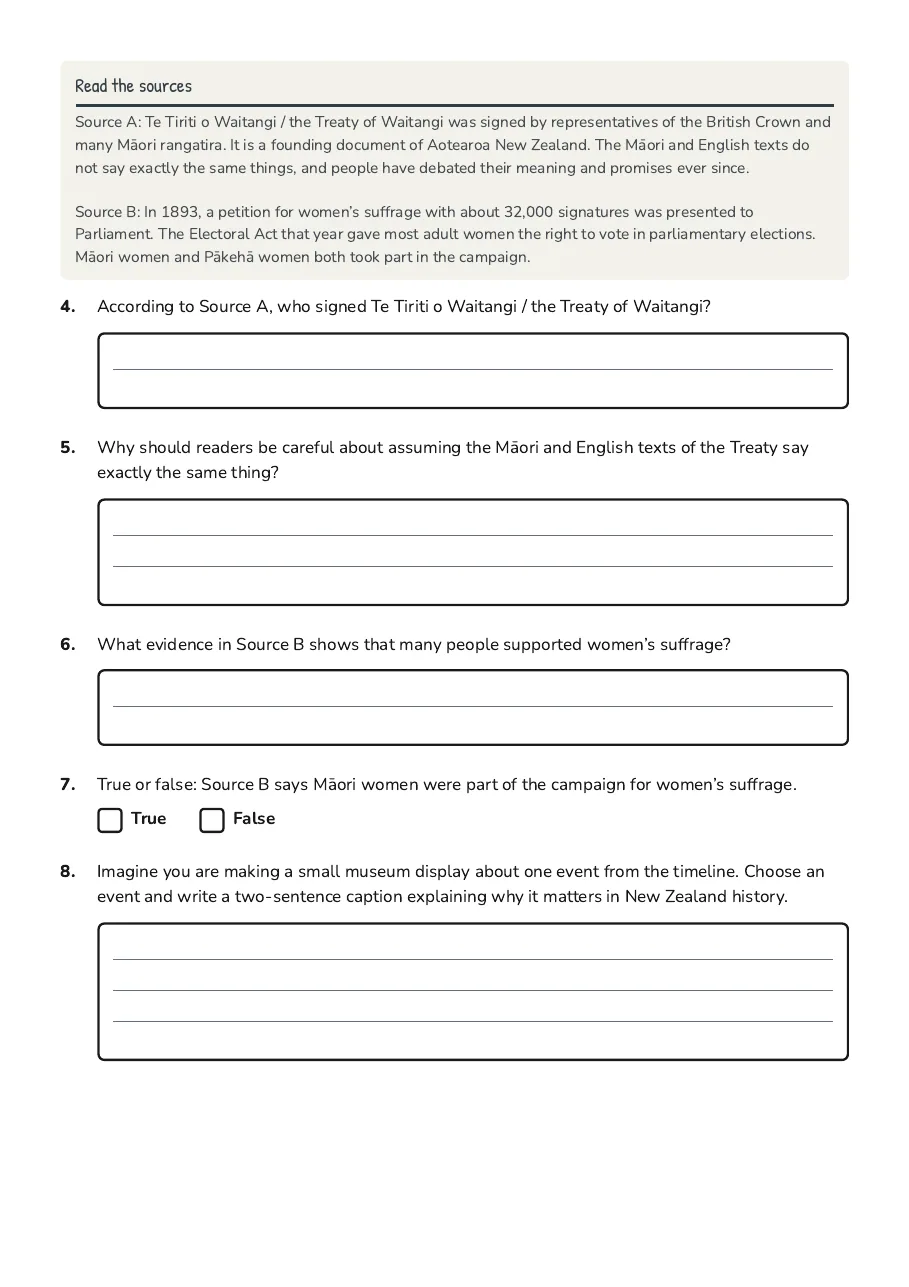
Read the sources
Source A: Te Tiriti o Waitangi / the Treaty of Waitangi was signed by representatives of the British Crown and many Māori rangatira. It is a founding document of Aotearoa New Zealand. The Māori and English texts do not say exactly the same things, and people have debated their meaning and promises ever since. Source B: In 1893, a petition for women’s suffrage with about 32,000 signatures was presented to Parliament. The Electoral Act that year gave most adult women the right to vote in parliamentary elections. Māori women and Pākehā women both took part in the campaign.
2 printable pages
Page 1
Page 2
About This Worksheet
Free in Kuraplan
Sign up free, grab the PDF, and customize it for your class.
Print-Ready
Formatted for standard paper. Clean layout, easy to read.
AI-Generated
Created with Kuraplan's AI, designed for real classroom use.
For Teachers & Parents
Use in classrooms, for homework, tutoring, or homeschool.
Need a custom version of this worksheet?
Kuraplan's AI generates custom worksheets in seconds — differentiated for every learner, aligned to your curriculum.
Generate Custom Worksheets — FreeMore Social Sciences Worksheets
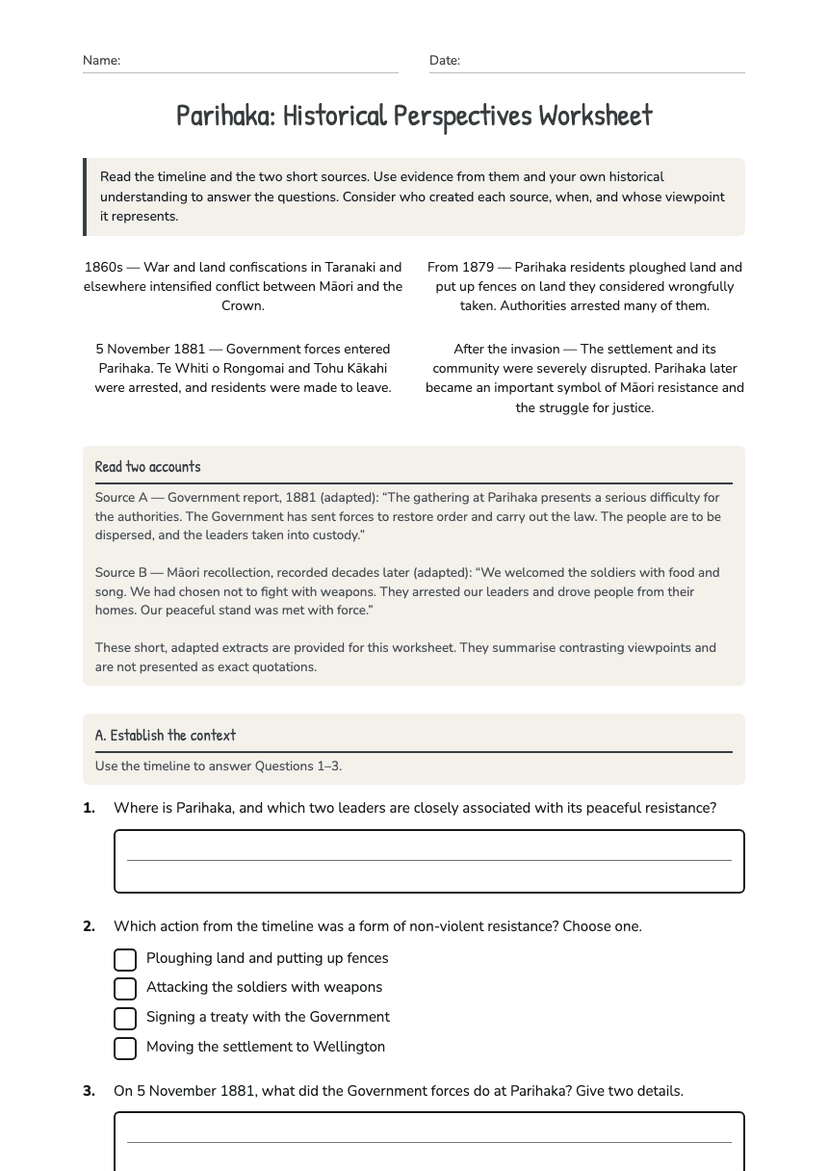
Parihaka: Historical Perspectives Worksheet
Free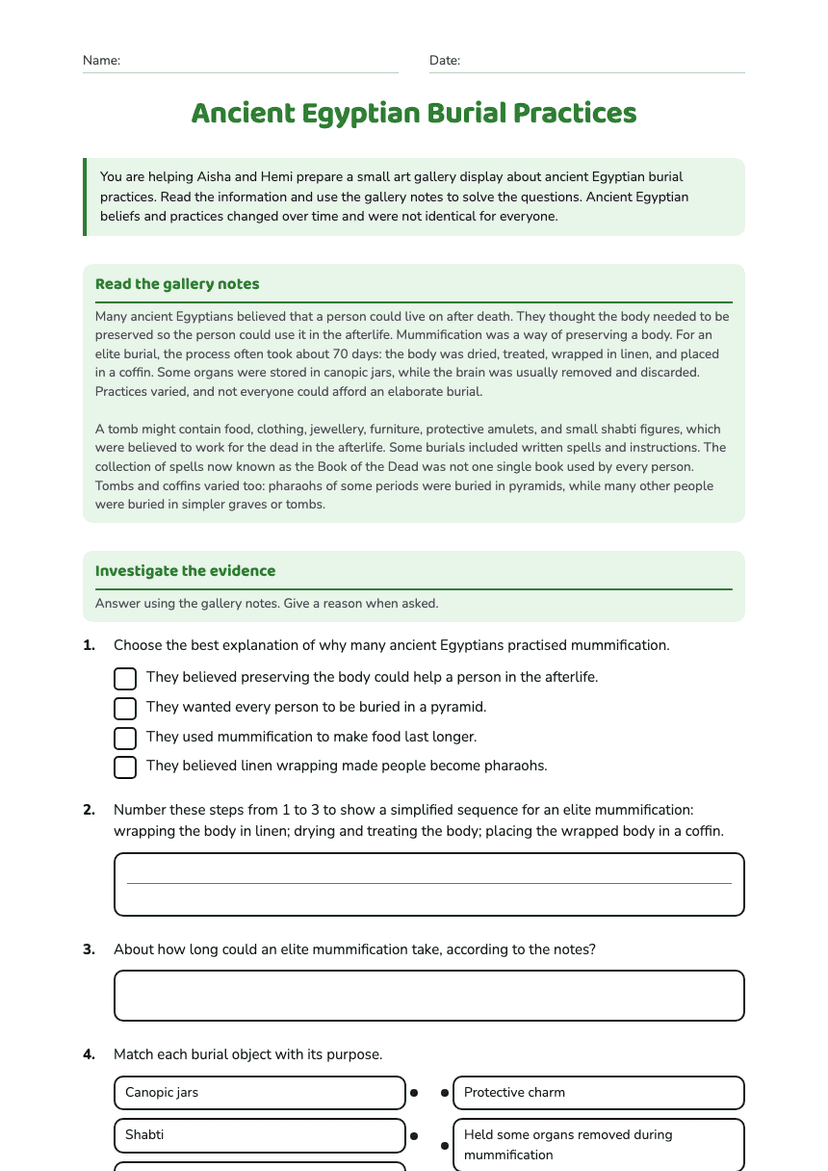
Ancient Egyptian Burial Practices
Free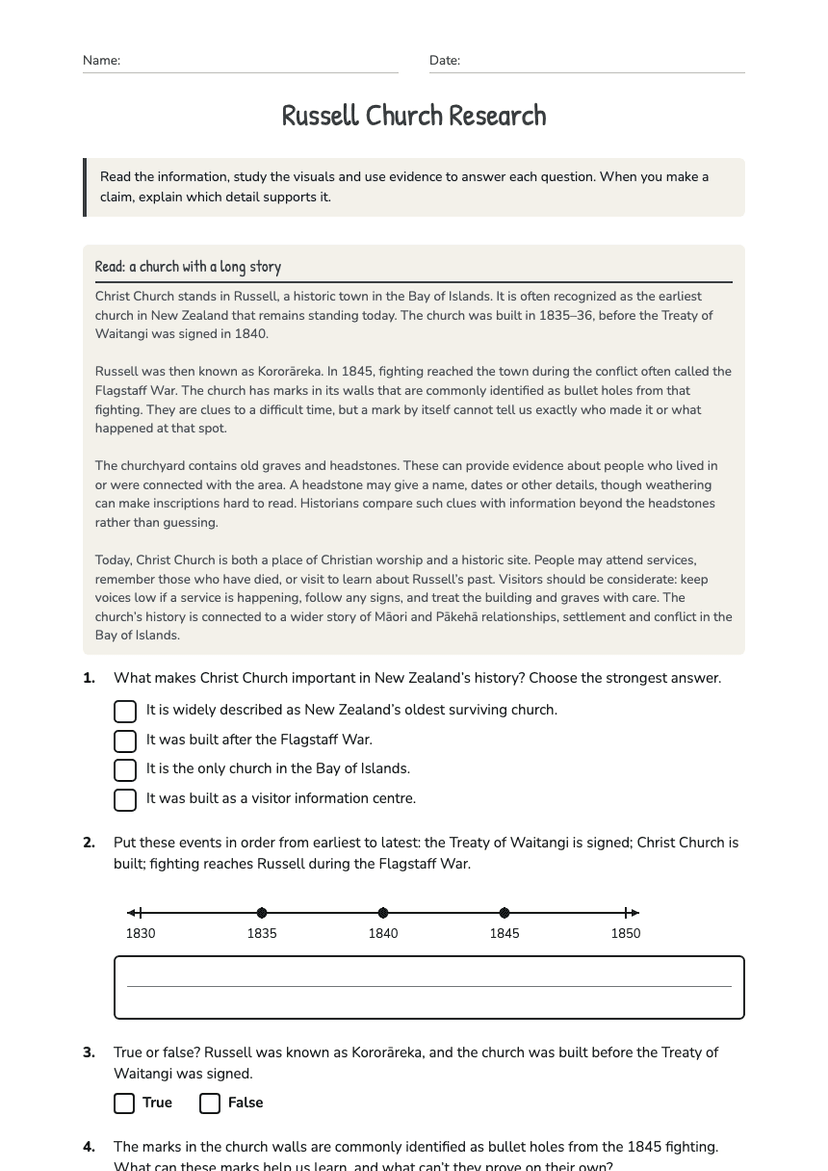
Russell Church Research
Free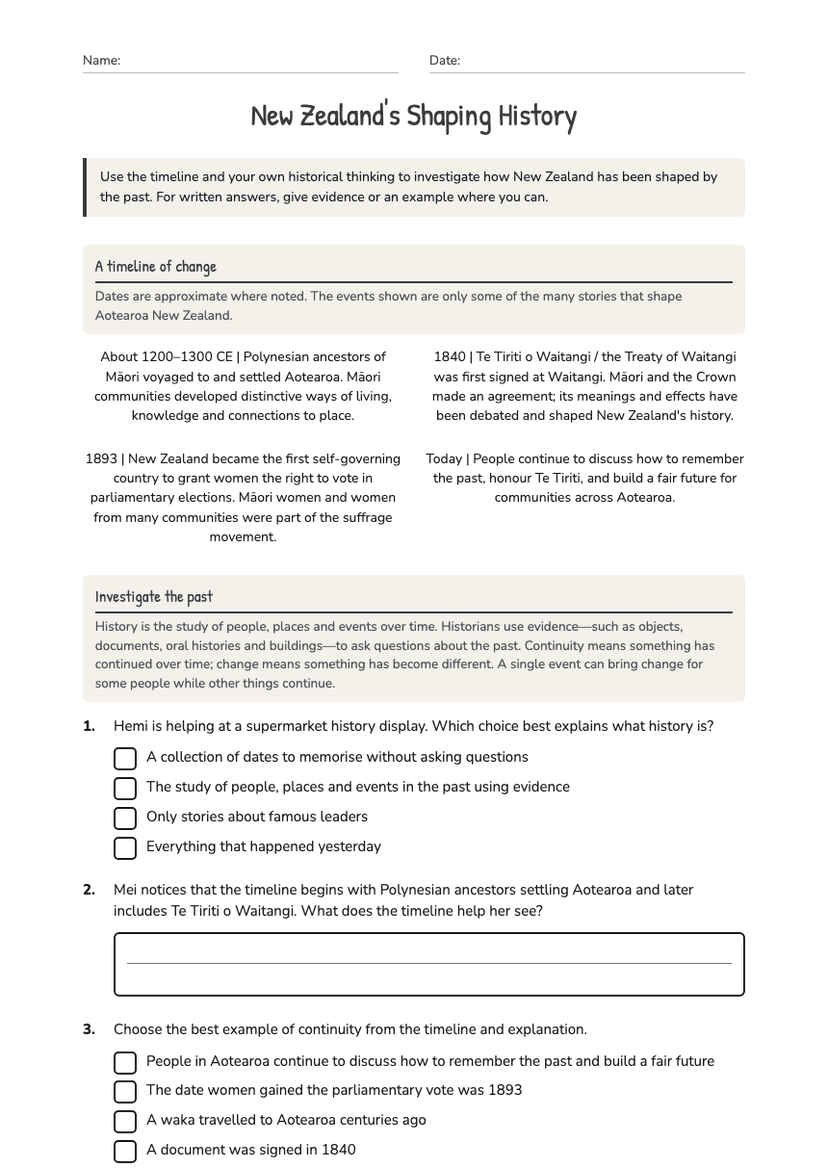
New Zealand's Shaping History
Free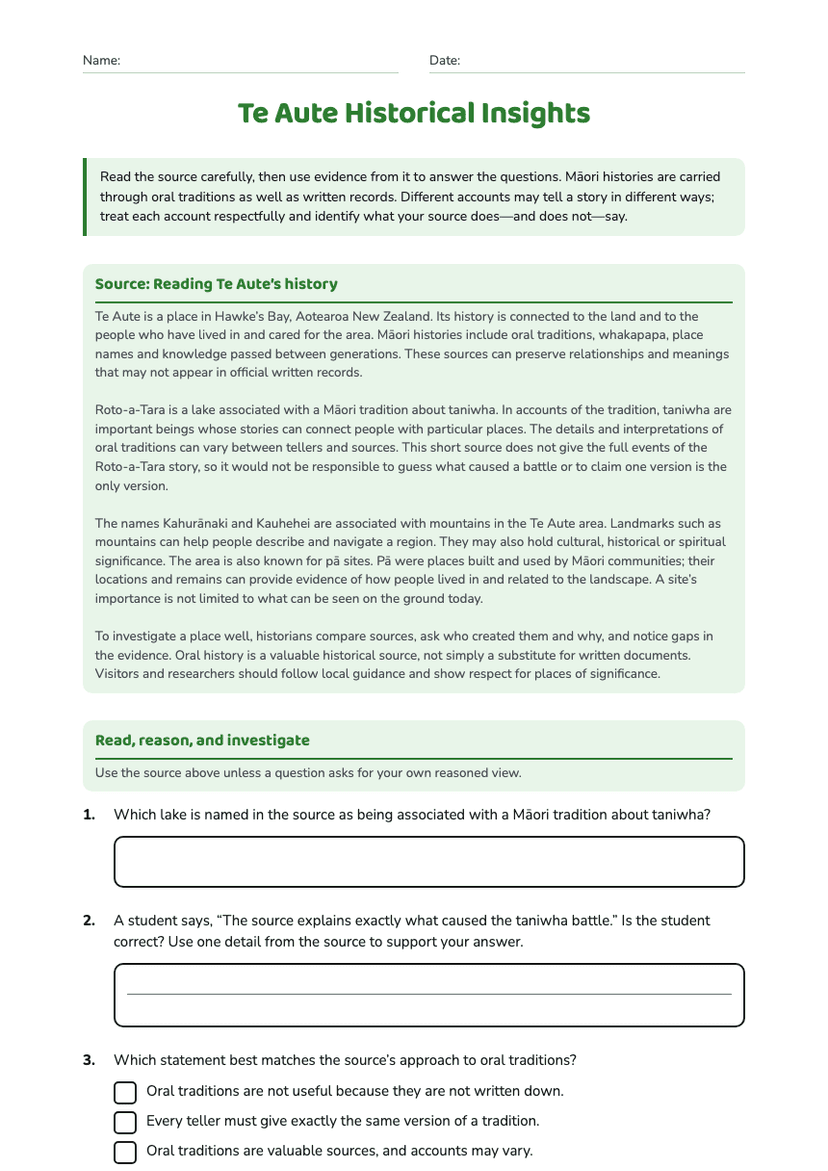
Te Aute Historical Insights
Free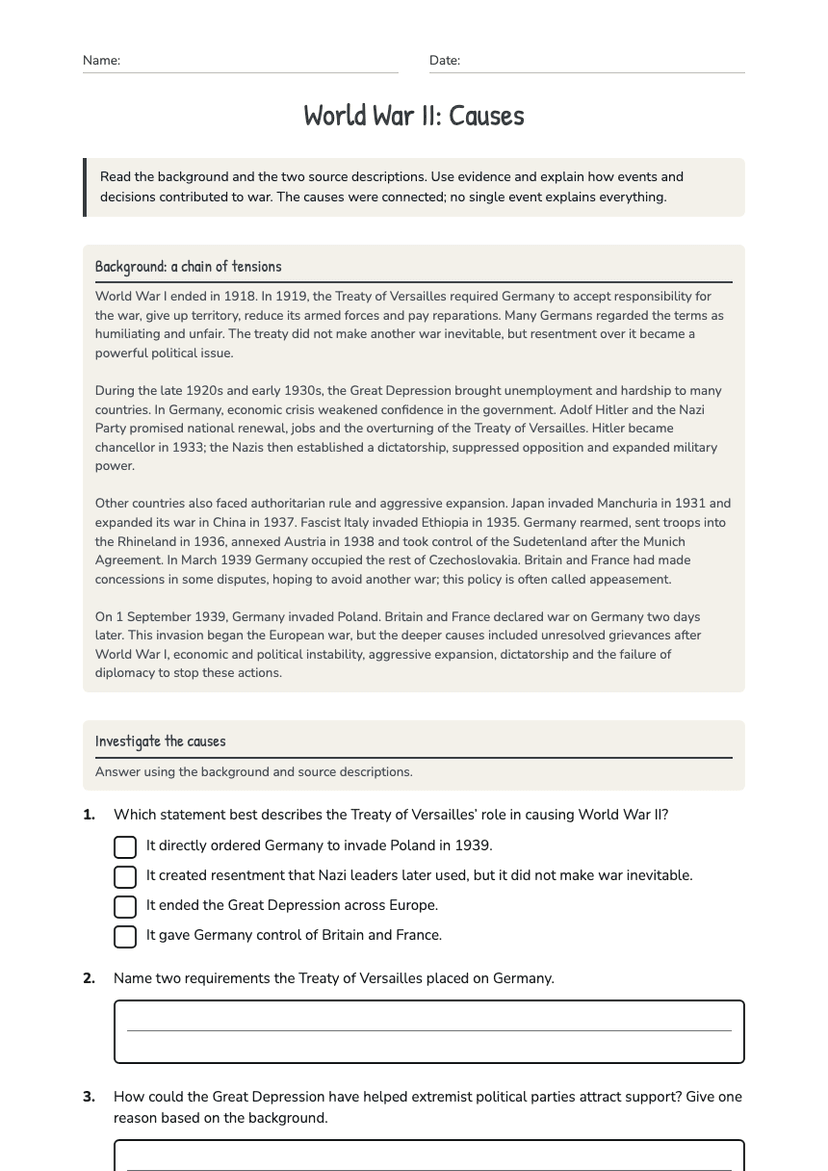
World War II: Causes
Free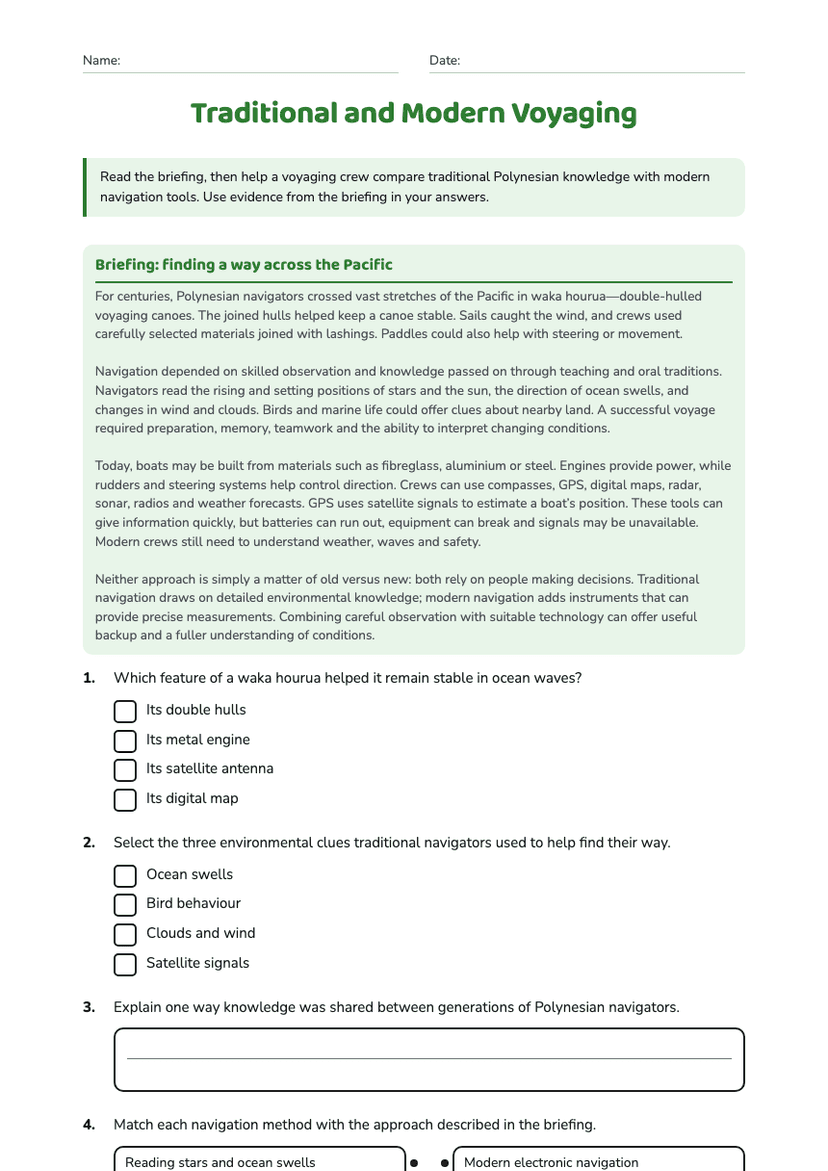
Traditional and Modern Voyaging
Free