New Zealand History Timelines
A free social sciences worksheet ready for your classroom. Open in Kuraplan to grab the print-ready PDF, customize it for your students, or generate a fresh version in seconds.
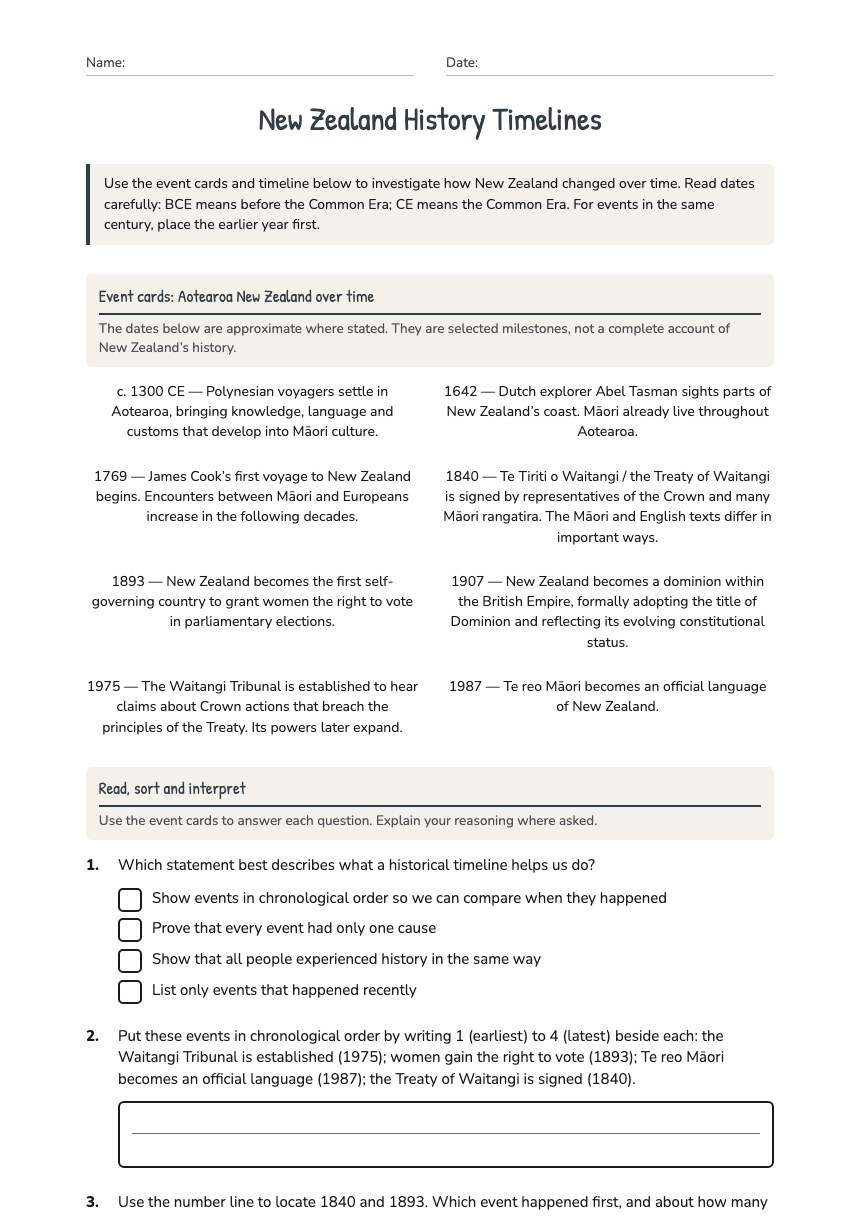
New Zealand History Timelines
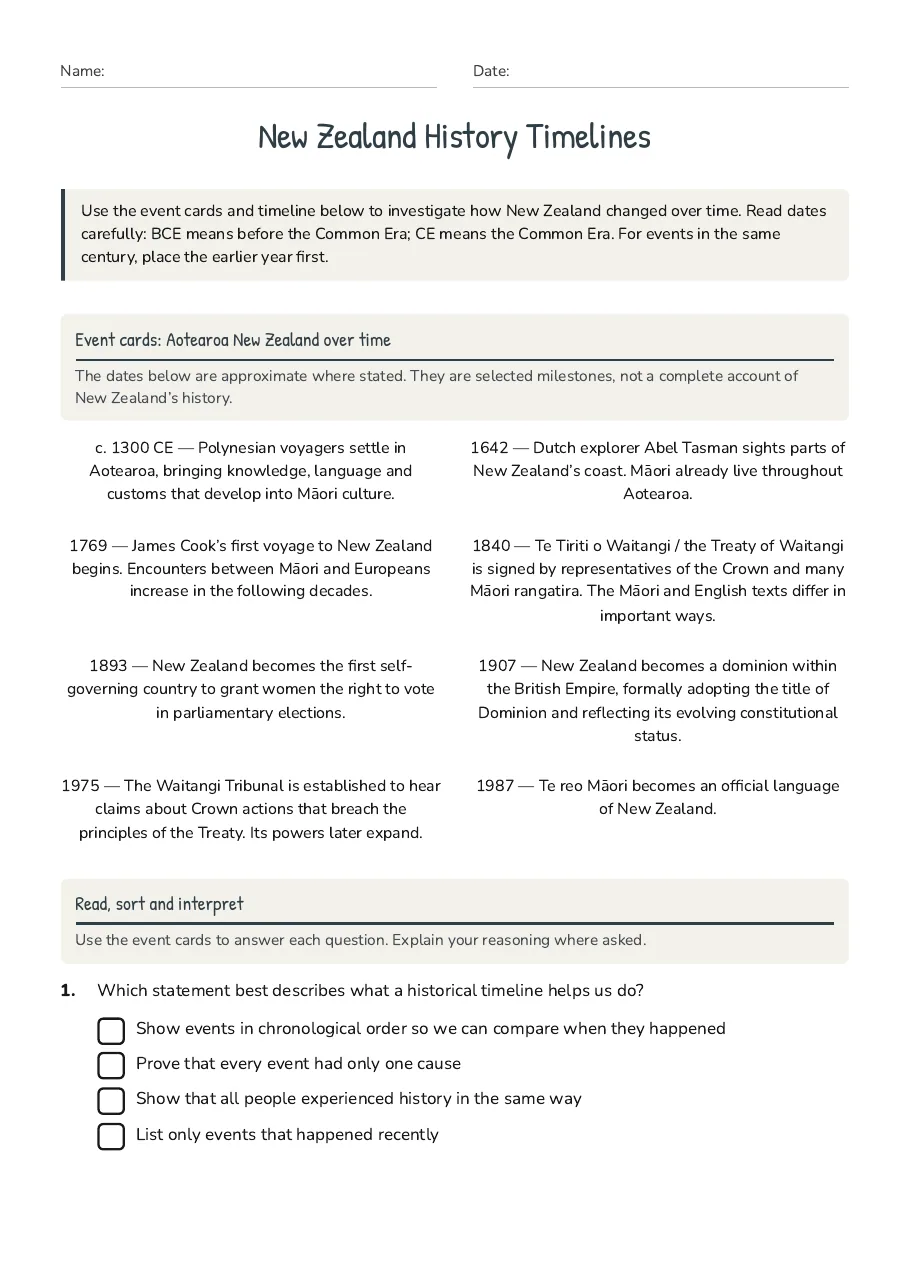
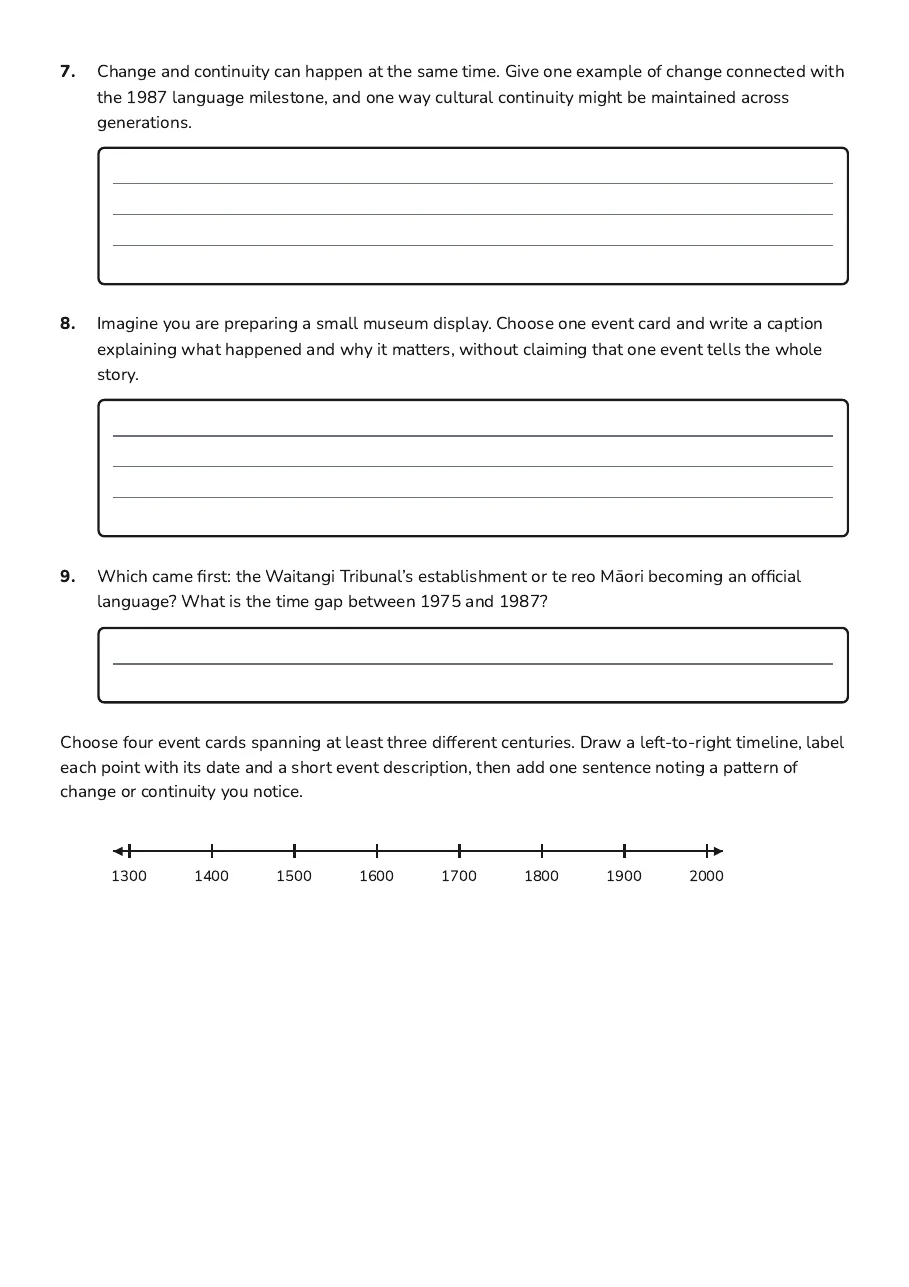
Event cards: Aotearoa New Zealand over time
The dates below are approximate where stated. They are selected milestones, not a complete account of New Zealand’s history.
c. 1300 CE — Polynesian voyagers settle in Aotearoa, bringing knowledge, language and customs that develop into Māori culture.
1642 — Dutch explorer Abel Tasman sights parts of New Zealand’s coast. Māori already live throughout Aotearoa.
1769 — James Cook’s first voyage to New Zealand begins. Encounters between Māori and Europeans increase in the following decades.
1840 — Te Tiriti o Waitangi / the Treaty of Waitangi is signed by representatives of the Crown and many Māori rangatira. The Māori and English texts differ in important ways.
1893 — New Zealand becomes the first self-governing country to grant women the right to vote in parliamentary elections.
1907 — New Zealand becomes a dominion within the British Empire, formally adopting the title of Dominion and reflecting its evolving constitutional status.
1975 — The Waitangi Tribunal is established to hear claims about Crown actions that breach the principles of the Treaty. Its powers later expand.
1987 — Te reo Māori becomes an official language of New Zealand.
Read, sort and interpret
Use the event cards to answer each question. Explain your reasoning where asked.
- Show events in chronological order so we can compare when they happened
- Prove that every event had only one cause
- Show that all people experienced history in the same way
- List only events that happened recently
3 printable pages
Page 1
Page 2
Page 3
About This Worksheet
Free in Kuraplan
Sign up free, grab the PDF, and customize it for your class.
Print-Ready
Formatted for standard paper. Clean layout, easy to read.
AI-Generated
Created with Kuraplan's AI, designed for real classroom use.
For Teachers & Parents
Use in classrooms, for homework, tutoring, or homeschool.
Need a custom version of this worksheet?
Kuraplan's AI generates custom worksheets in seconds — differentiated for every learner, aligned to your curriculum.
Generate Custom Worksheets — FreeMore Social Sciences Worksheets
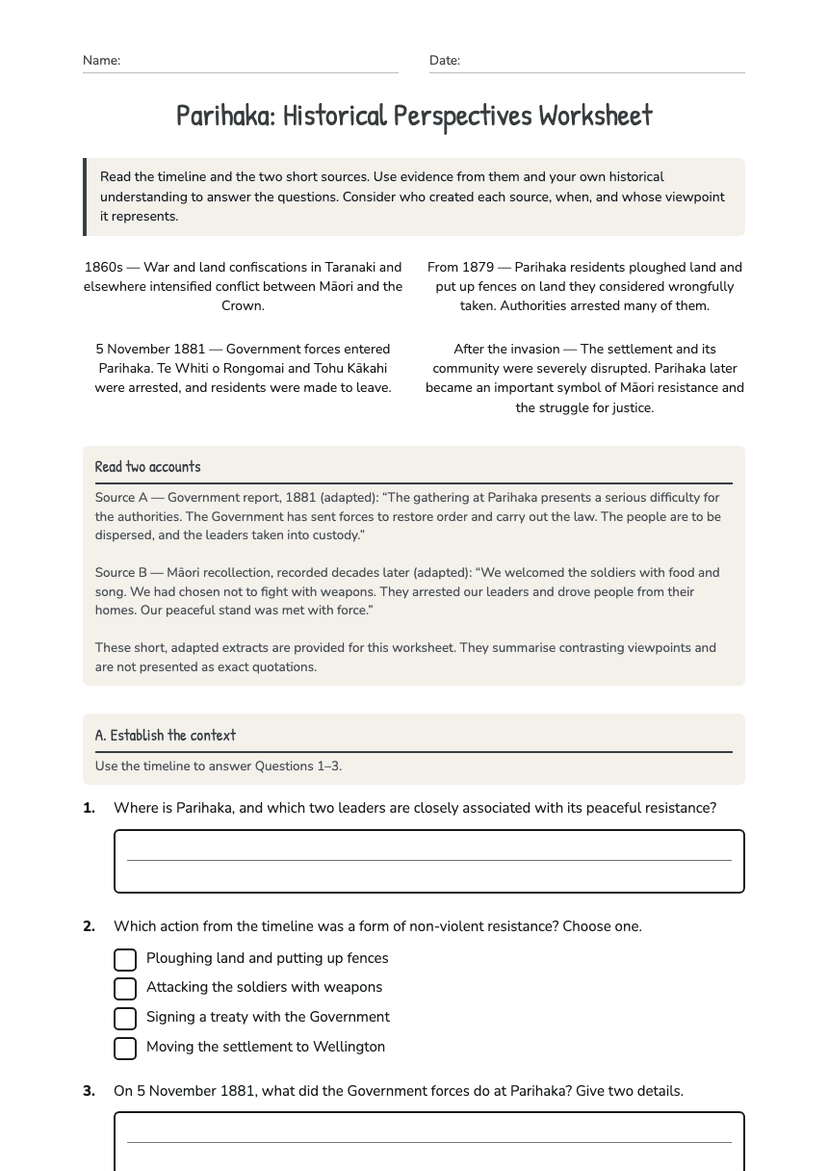
Parihaka: Historical Perspectives Worksheet
Free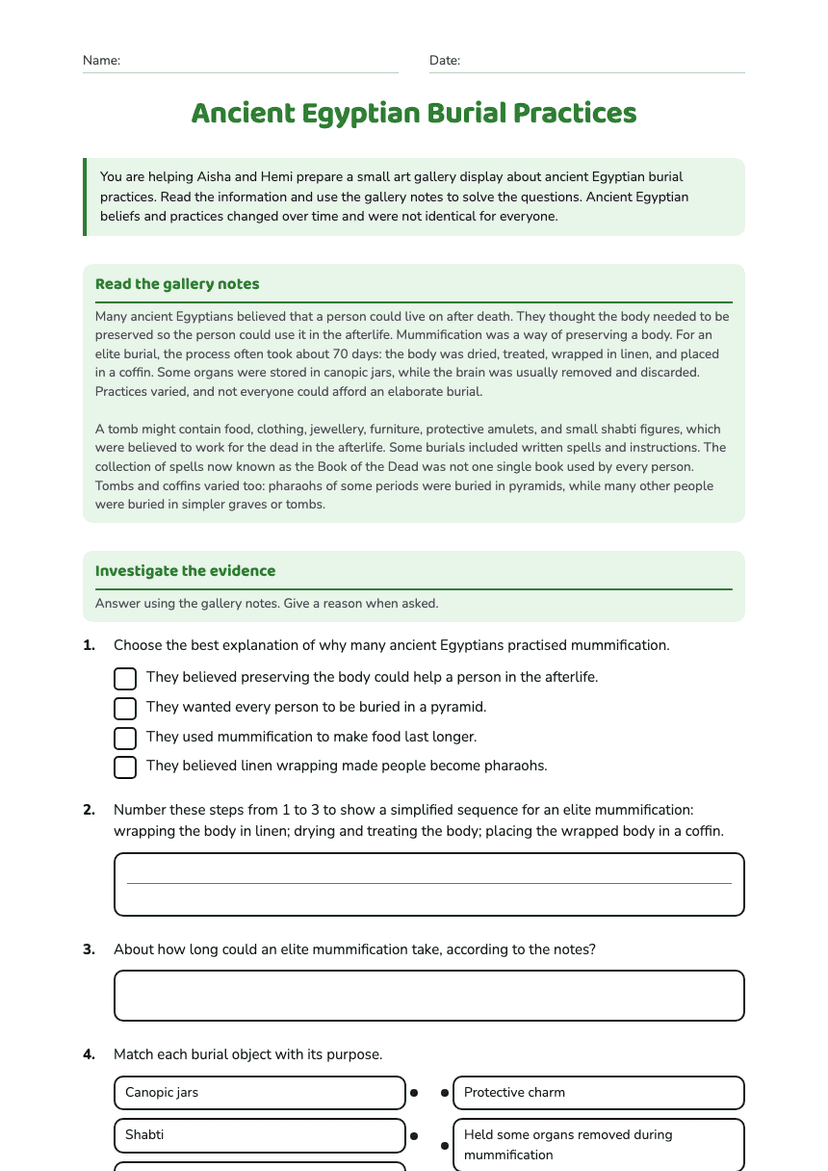
Ancient Egyptian Burial Practices
Free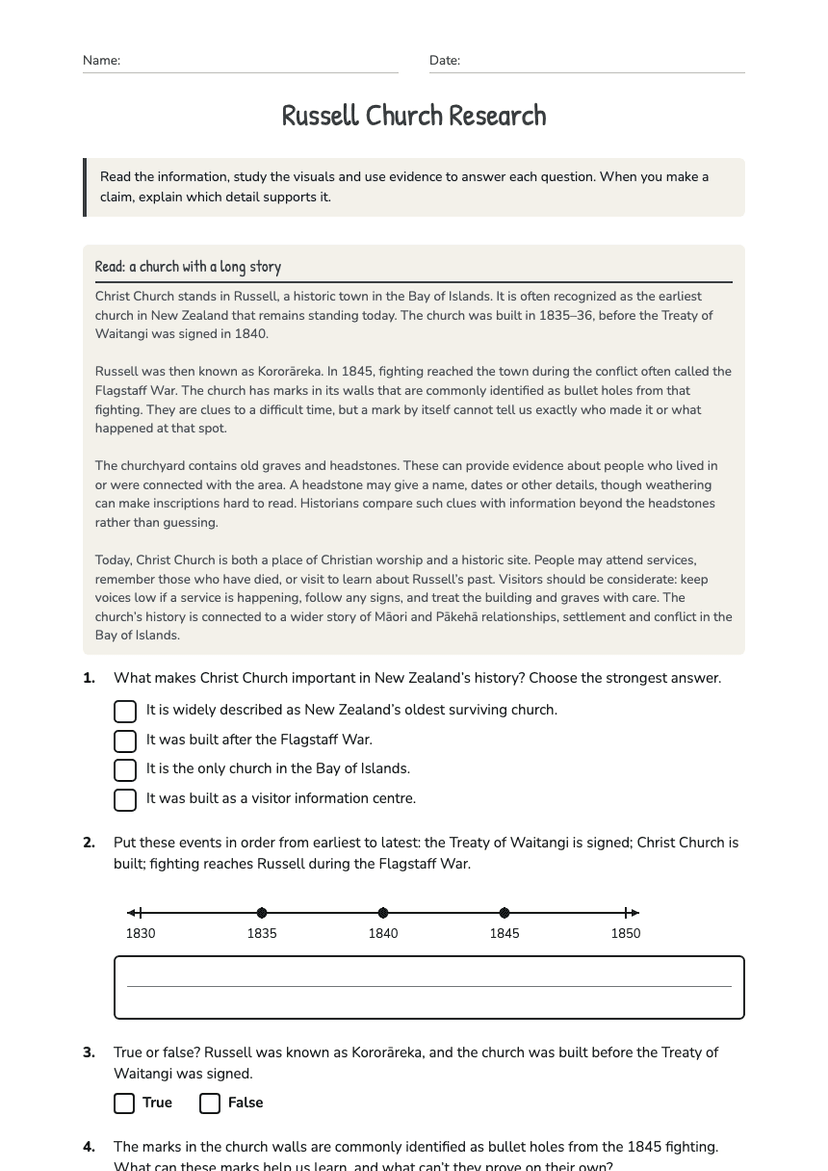
Russell Church Research
Free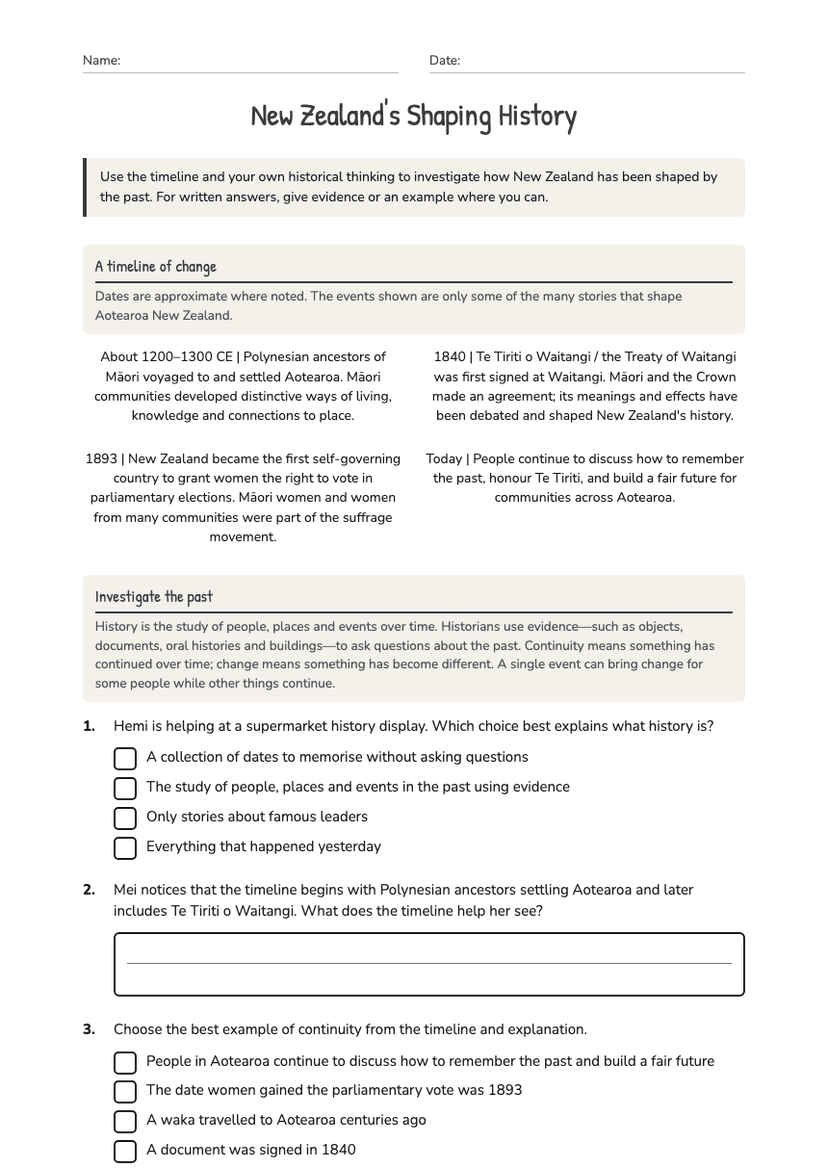
New Zealand's Shaping History
Free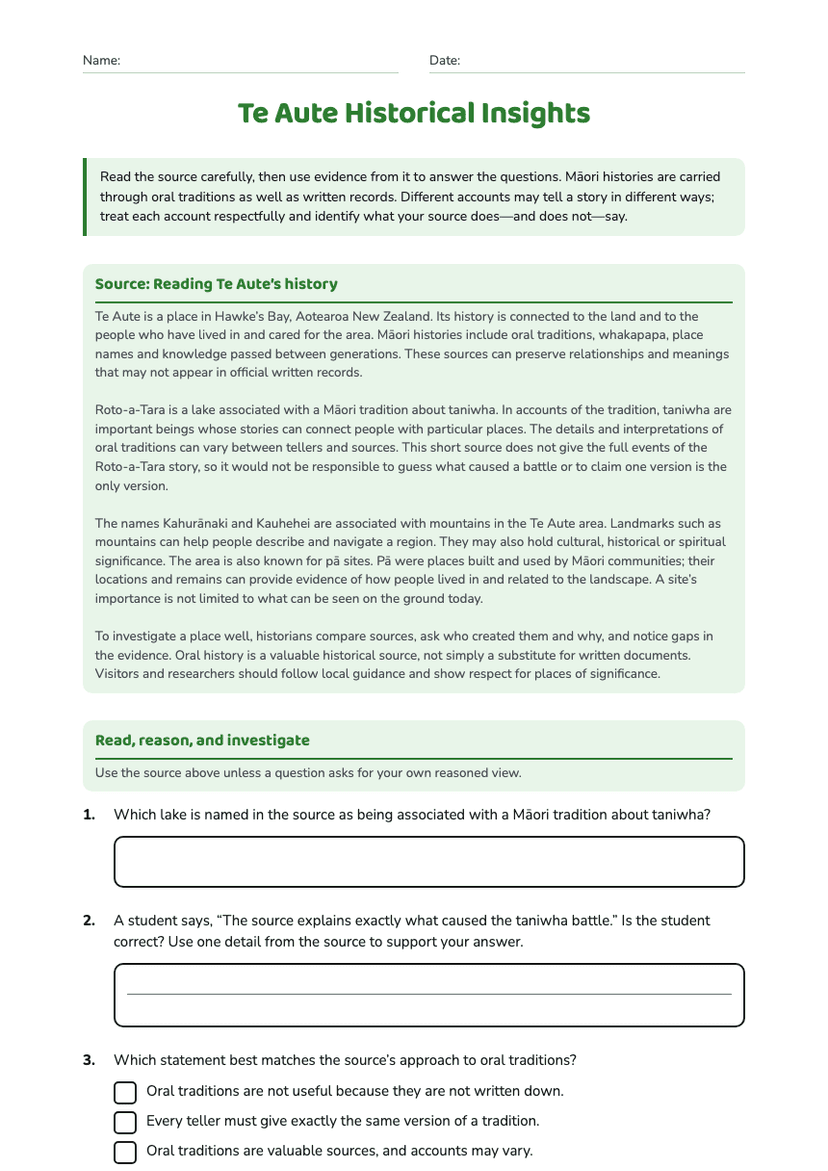
Te Aute Historical Insights
Free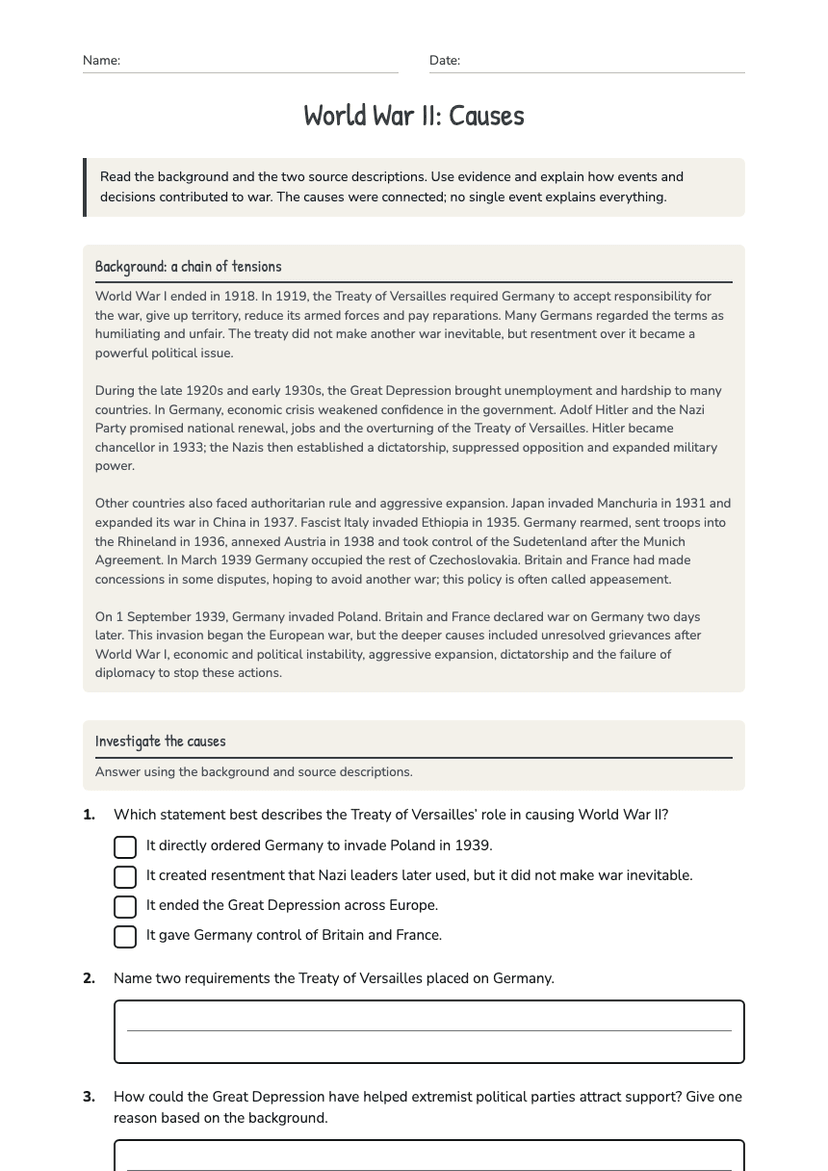
World War II: Causes
Free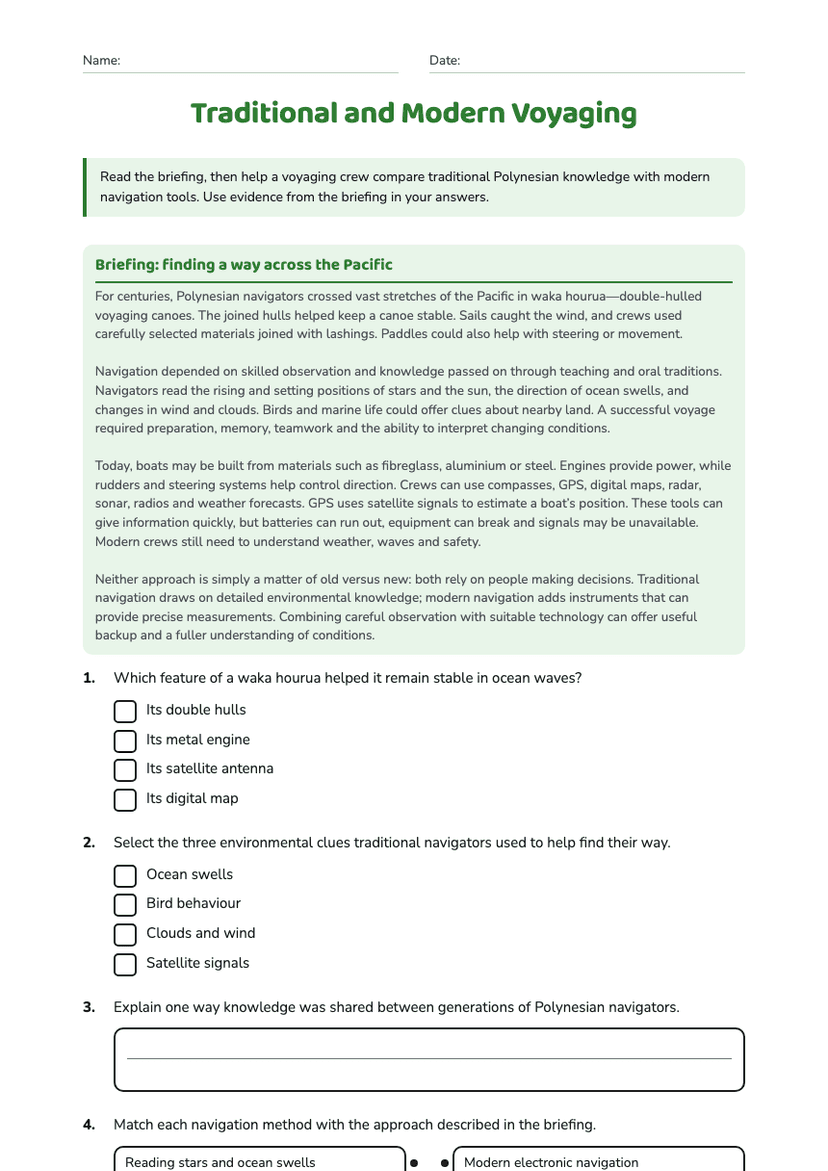
Traditional and Modern Voyaging
Free