New Zealand's Shaping History
A free social sciences worksheet ready for your classroom. Open in Kuraplan to grab the print-ready PDF, customize it for your students, or generate a fresh version in seconds.
New Zealand's Shaping History
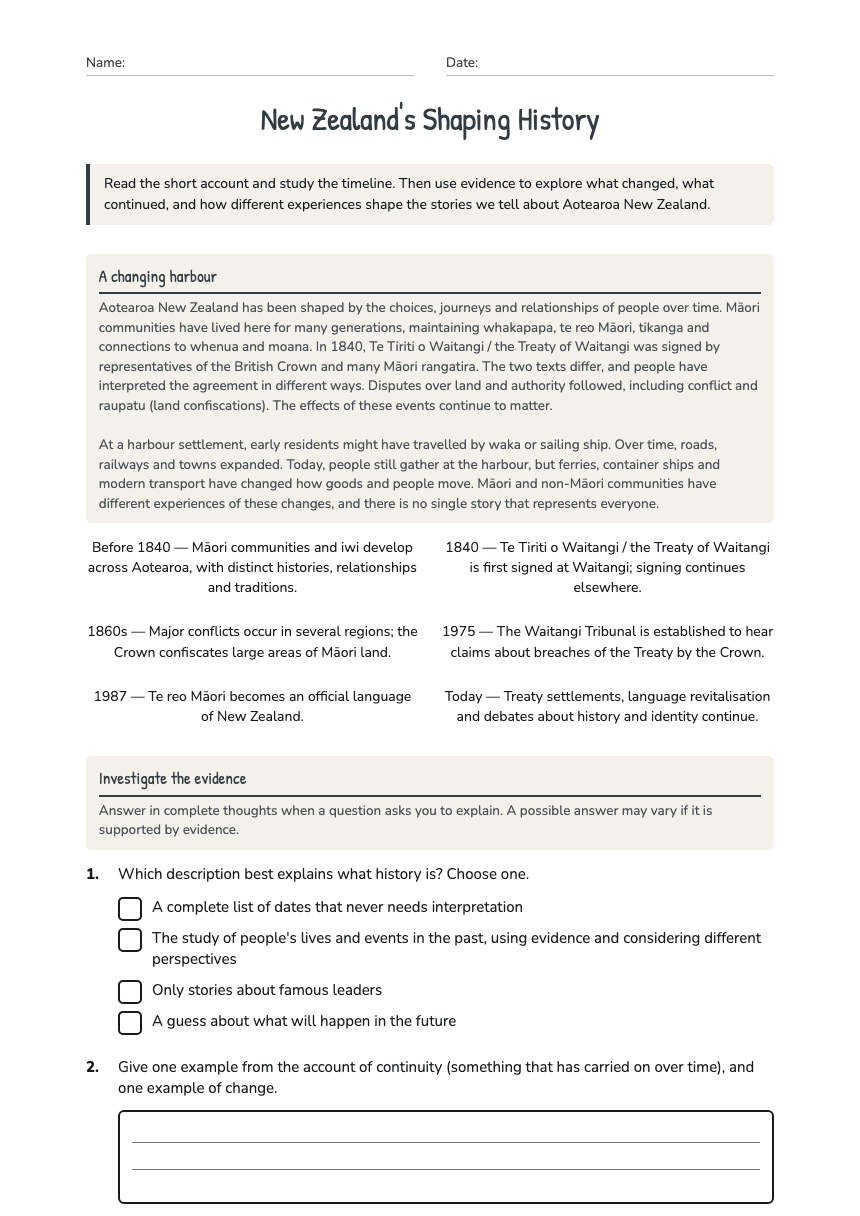
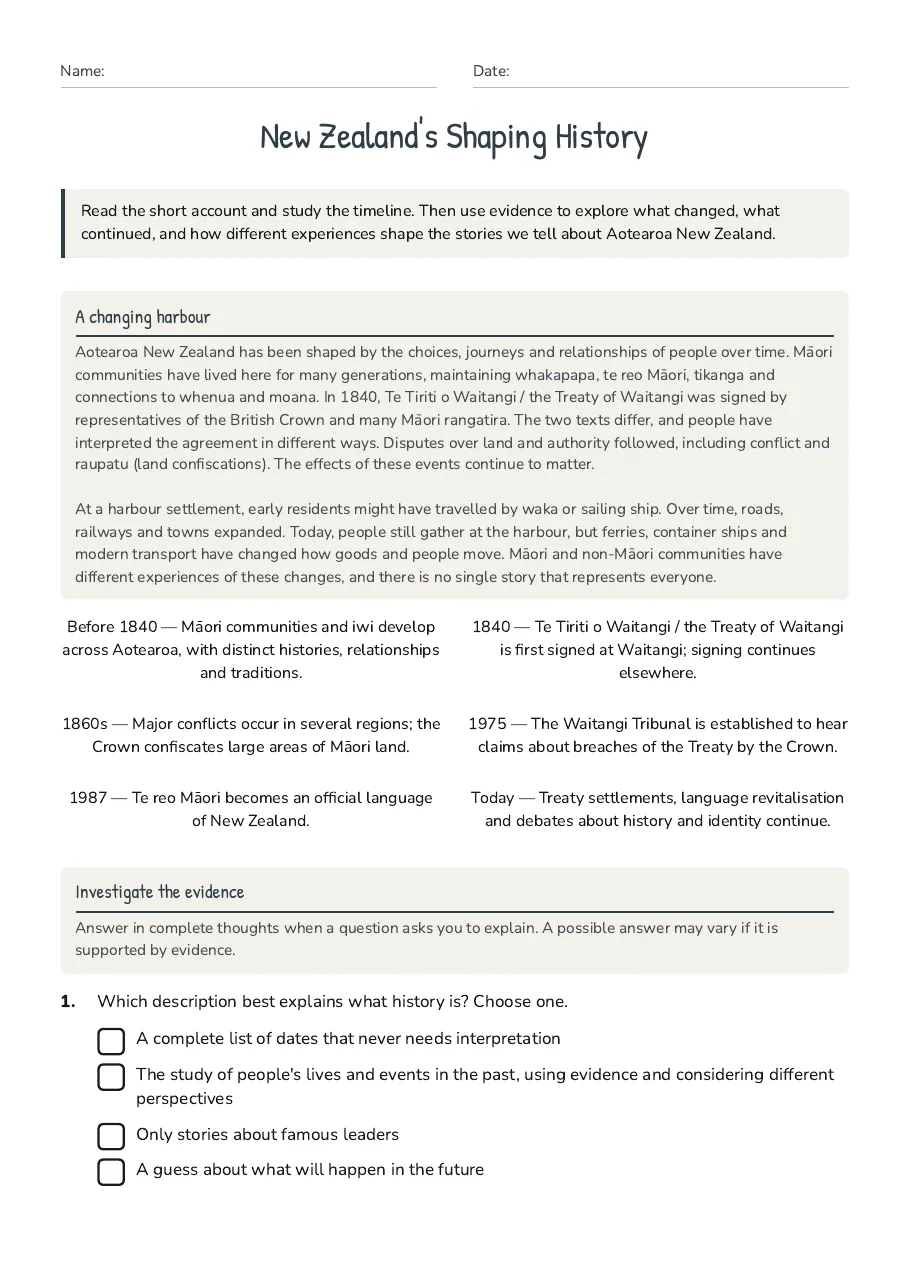
A changing harbour
Aotearoa New Zealand has been shaped by the choices, journeys and relationships of people over time. Māori communities have lived here for many generations, maintaining whakapapa, te reo Māori, tikanga and connections to whenua and moana. In 1840, Te Tiriti o Waitangi / the Treaty of Waitangi was signed by representatives of the British Crown and many Māori rangatira. The two texts differ, and people have interpreted the agreement in different ways. Disputes over land and authority followed, including conflict and raupatu (land confiscations). The effects of these events continue to matter. At a harbour settlement, early residents might have travelled by waka or sailing ship. Over time, roads, railways and towns expanded. Today, people still gather at the harbour, but ferries, container ships and modern transport have changed how goods and people move. Māori and non-Māori communities have different experiences of these changes, and there is no single story that represents everyone.
Before 1840 — Māori communities and iwi develop across Aotearoa, with distinct histories, relationships and traditions.
1840 — Te Tiriti o Waitangi / the Treaty of Waitangi is first signed at Waitangi; signing continues elsewhere.
1860s — Major conflicts occur in several regions; the Crown confiscates large areas of Māori land.
1975 — The Waitangi Tribunal is established to hear claims about breaches of the Treaty by the Crown.
1987 — Te reo Māori becomes an official language of New Zealand.
Today — Treaty settlements, language revitalisation and debates about history and identity continue.
Investigate the evidence
Answer in complete thoughts when a question asks you to explain. A possible answer may vary if it is supported by evidence.
- A complete list of dates that never needs interpretation
- The study of people's lives and events in the past, using evidence and considering different perspectives
- Only stories about famous leaders
- A guess about what will happen in the future
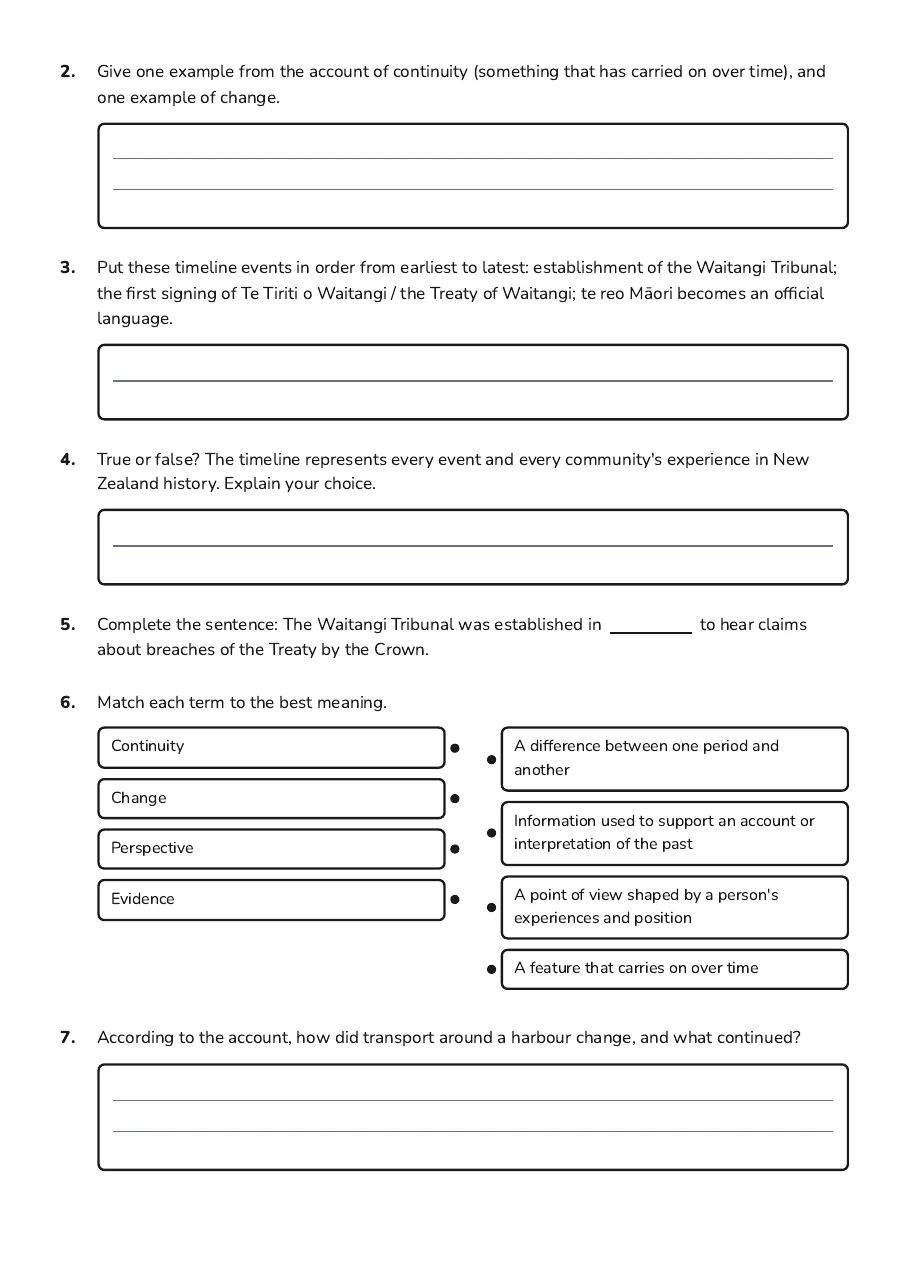
- Continuity
- Change
- Perspective
- Evidence
- A difference between one period and another
- Information used to support an account or interpretation of the past
- A point of view shaped by a person's experiences and position
- A feature that carries on over time
3 printable pages
Page 1
Page 2
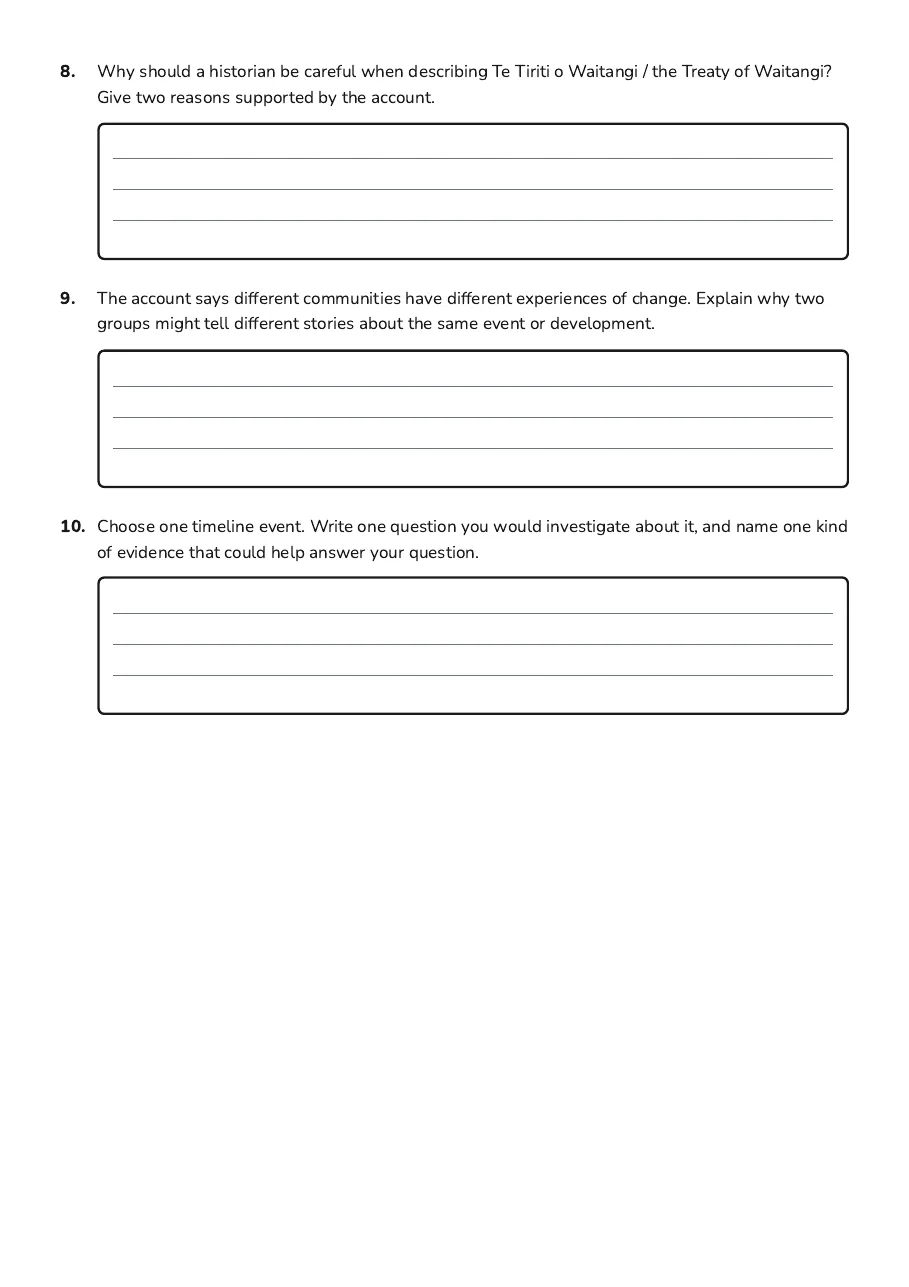
Page 3
About This Worksheet
Free in Kuraplan
Sign up free, grab the PDF, and customize it for your class.
Print-Ready
Formatted for standard paper. Clean layout, easy to read.
AI-Generated
Created with Kuraplan's AI, designed for real classroom use.
For Teachers & Parents
Use in classrooms, for homework, tutoring, or homeschool.
Need a custom version of this worksheet?
Kuraplan's AI generates custom worksheets in seconds — differentiated for every learner, aligned to your curriculum.
Generate Custom Worksheets — FreeMore Social Sciences Worksheets
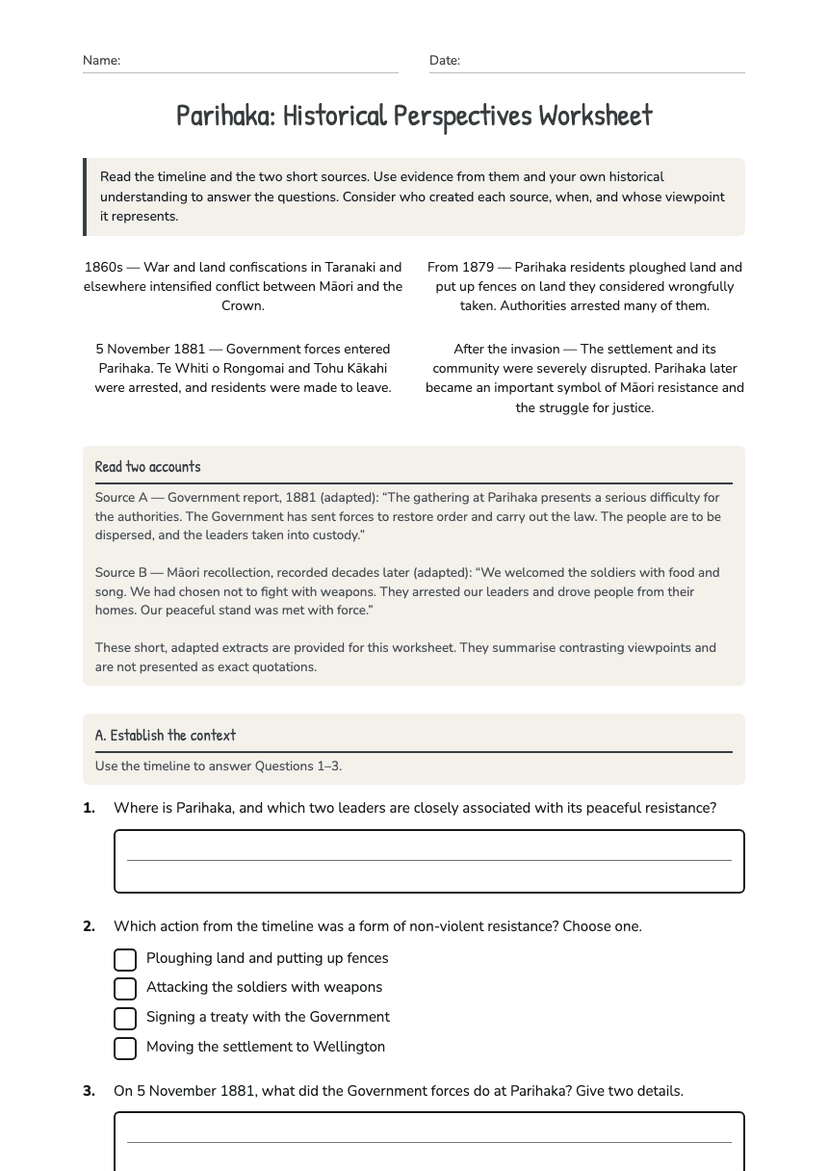
Parihaka: Historical Perspectives Worksheet
Free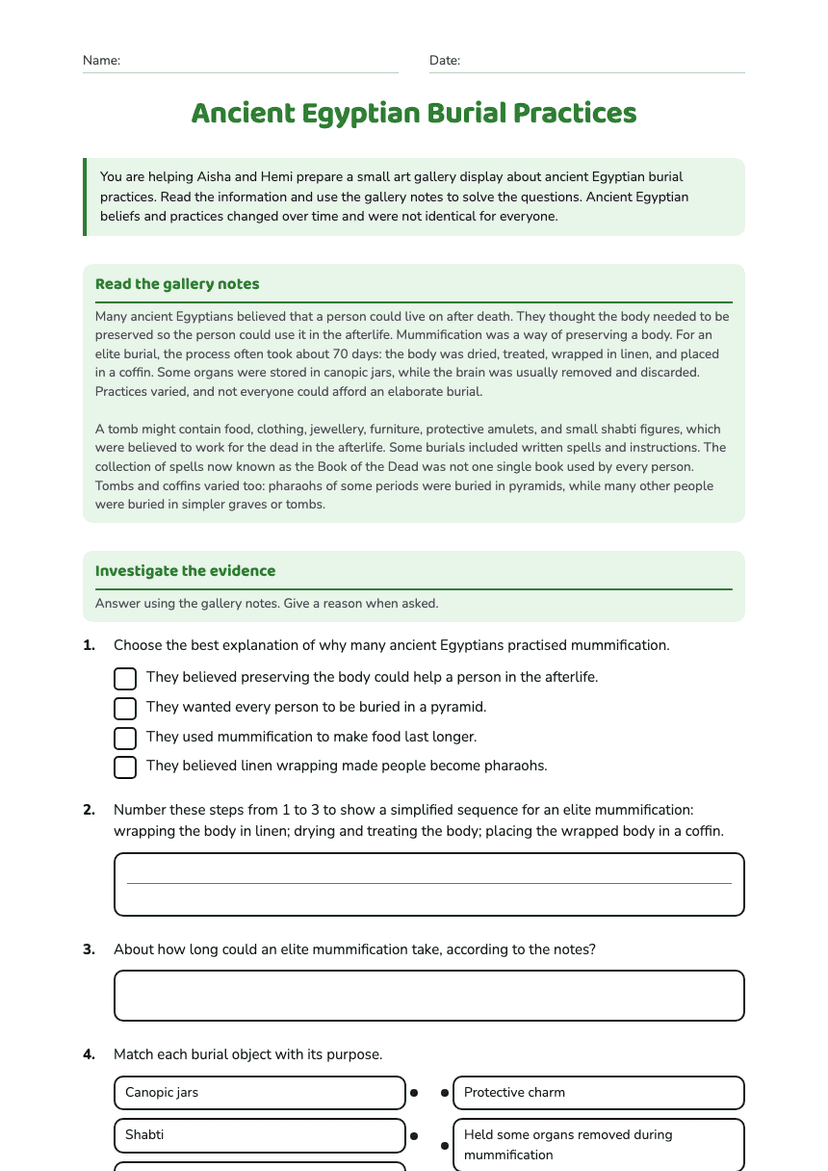
Ancient Egyptian Burial Practices
Free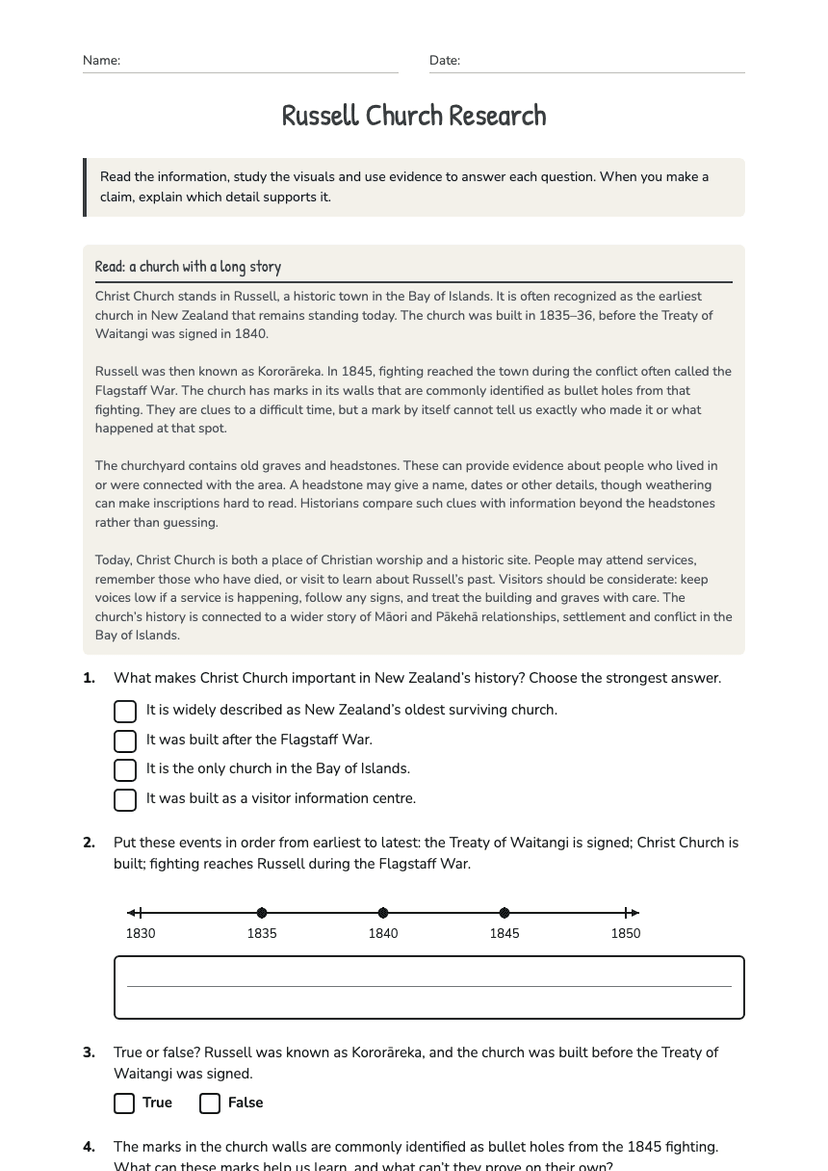
Russell Church Research
Free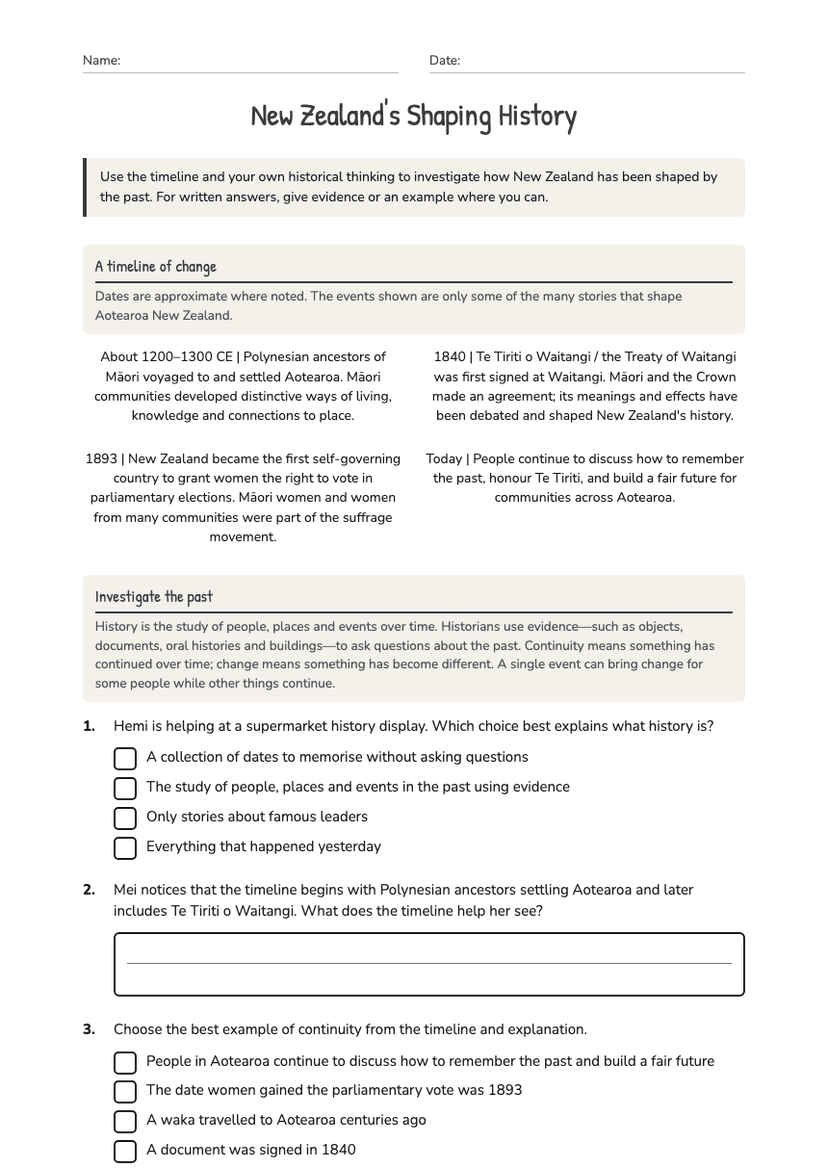
New Zealand's Shaping History
Free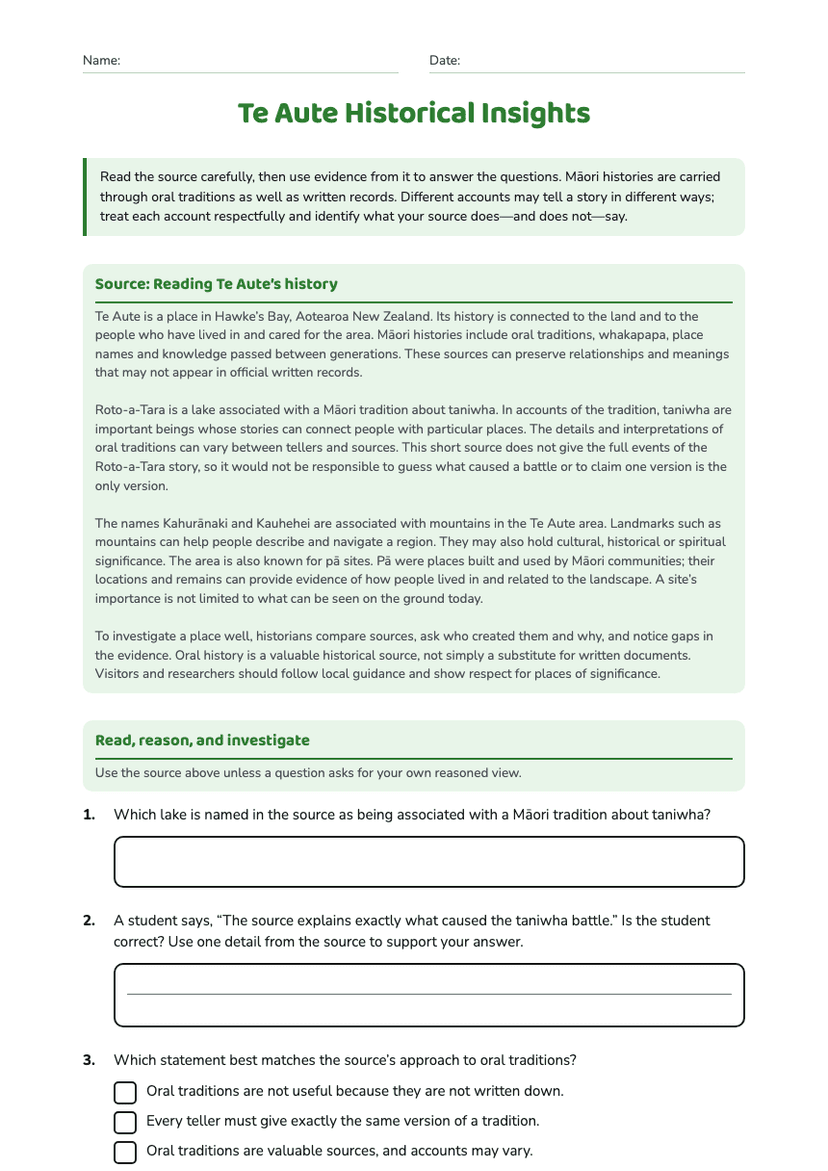
Te Aute Historical Insights
Free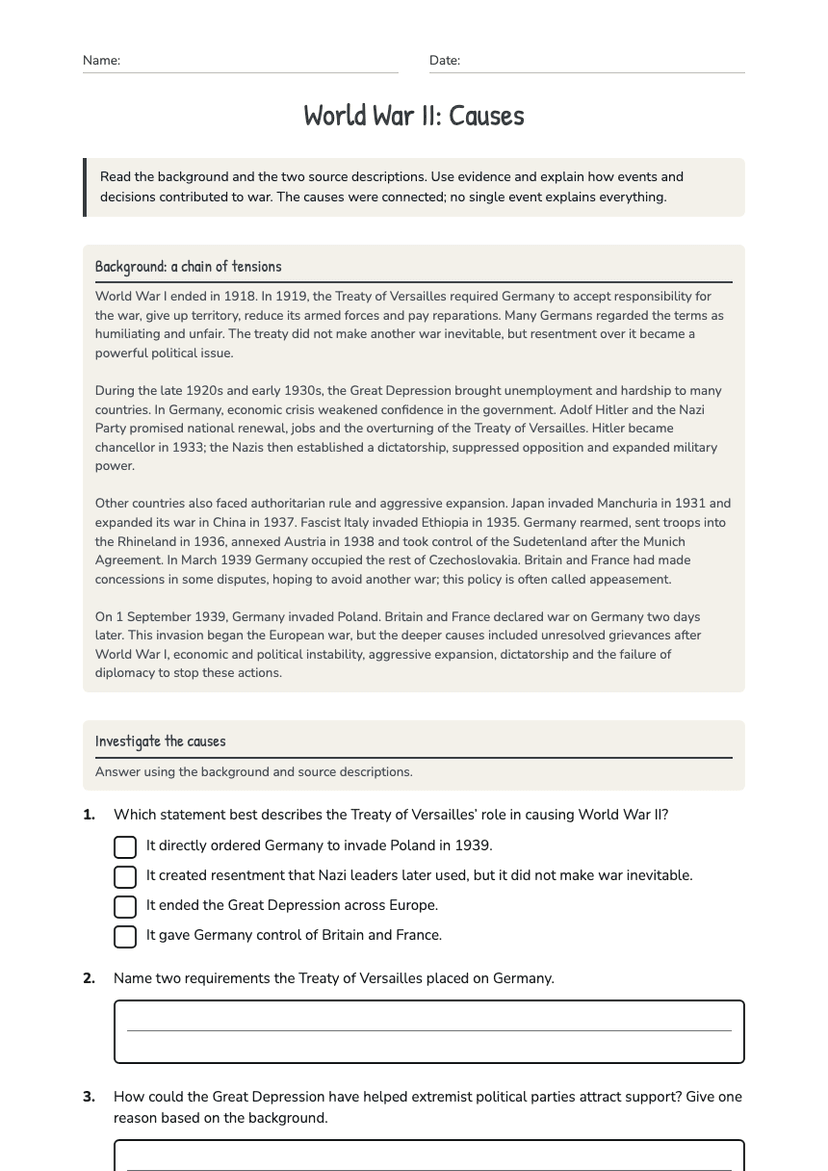
World War II: Causes
Free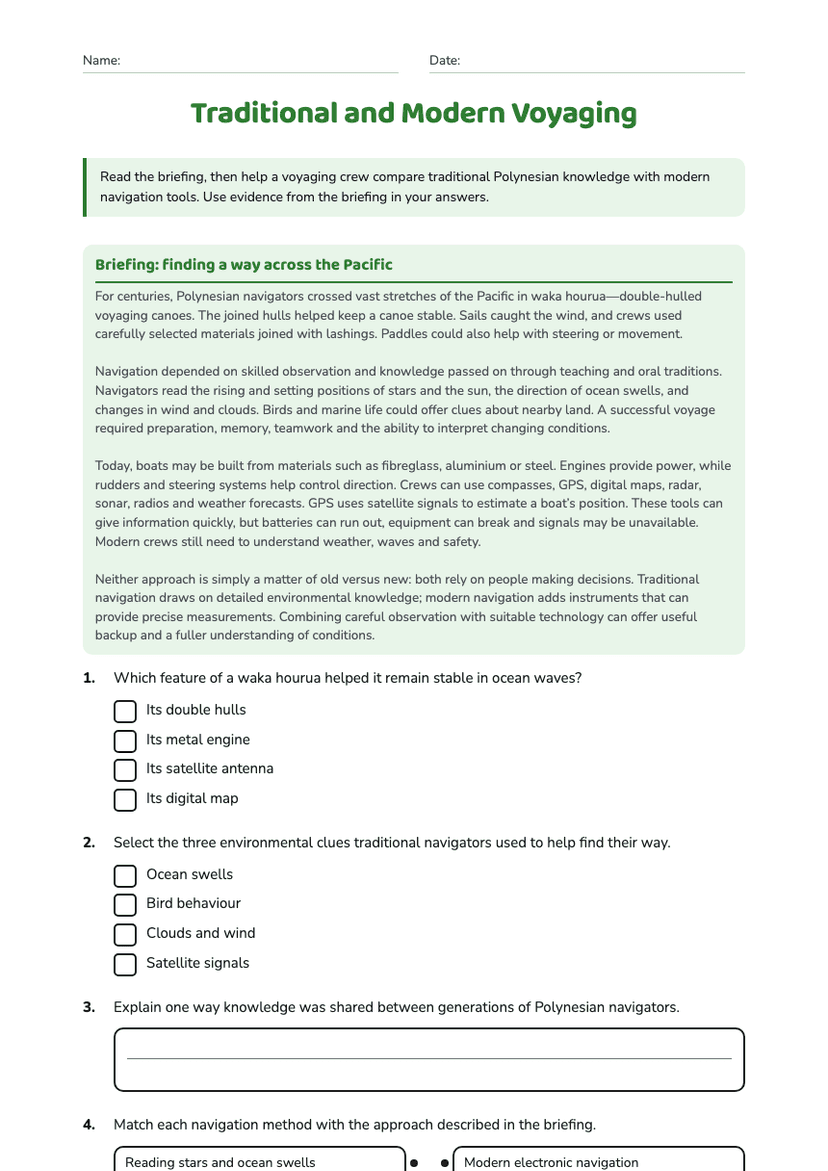
Traditional and Modern Voyaging
Free