Newcomer Narrative Writing
A free english worksheet ready for your classroom. Open in Kuraplan to grab the print-ready PDF, customize it for your students, or generate a fresh version in seconds.
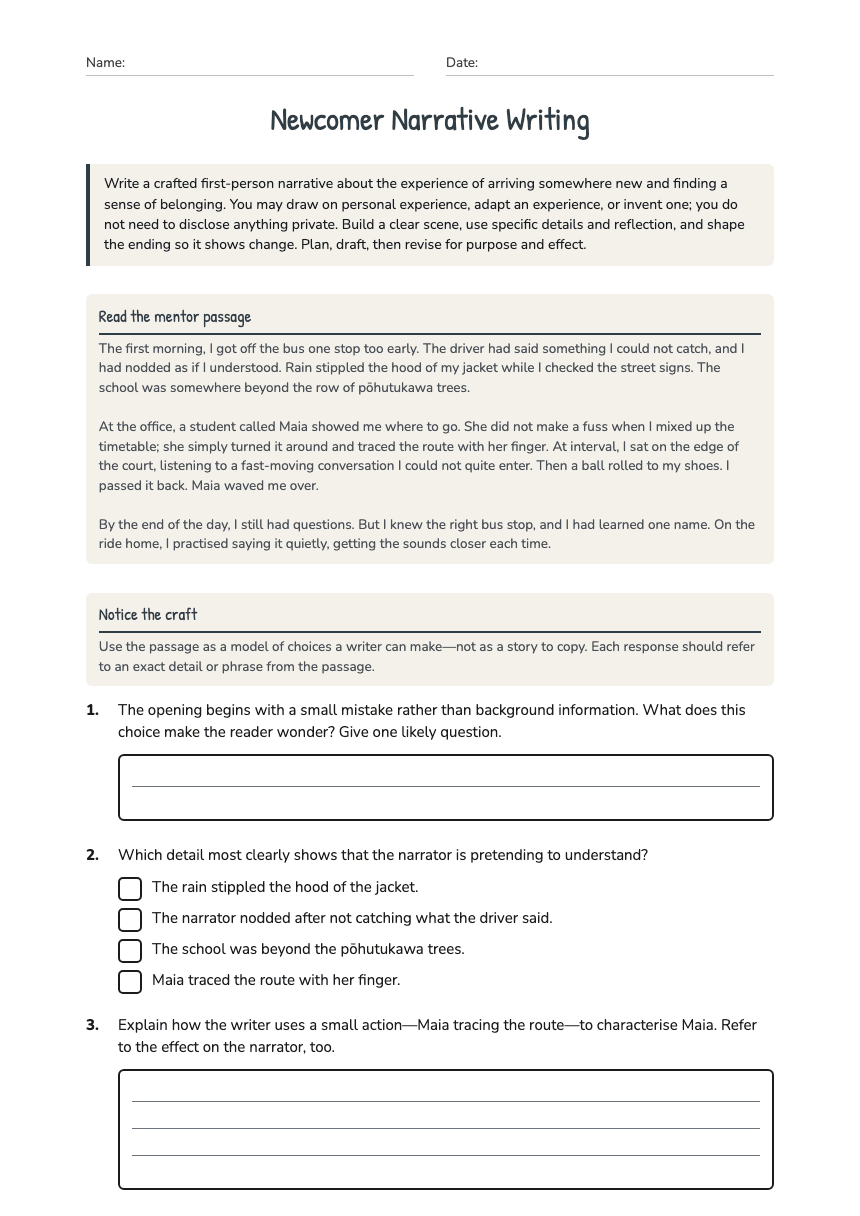
Newcomer Narrative Writing
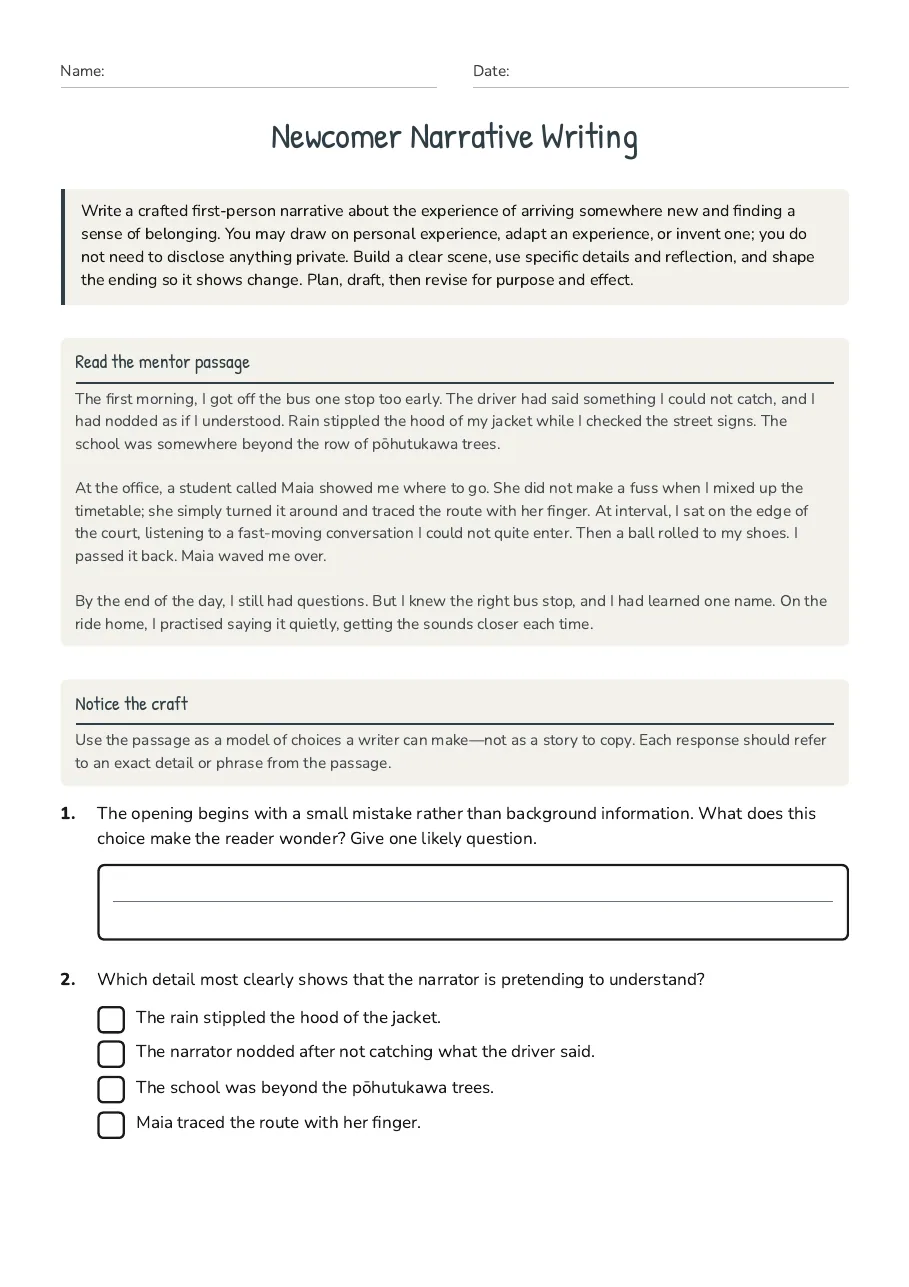
Read the mentor passage
The first morning, I got off the bus one stop too early. The driver had said something I could not catch, and I had nodded as if I understood. Rain stippled the hood of my jacket while I checked the street signs. The school was somewhere beyond the row of pōhutukawa trees. At the office, a student called Maia showed me where to go. She did not make a fuss when I mixed up the timetable; she simply turned it around and traced the route with her finger. At interval, I sat on the edge of the court, listening to a fast-moving conversation I could not quite enter. Then a ball rolled to my shoes. I passed it back. Maia waved me over. By the end of the day, I still had questions. But I knew the right bus stop, and I had learned one name. On the ride home, I practised saying it quietly, getting the sounds closer each time.
Notice the craft
Use the passage as a model of choices a writer can make—not as a story to copy. Each response should refer to an exact detail or phrase from the passage.
- The rain stippled the hood of the jacket.
- The narrator nodded after not catching what the driver said.
- The school was beyond the pōhutukawa trees.
- Maia traced the route with her finger.
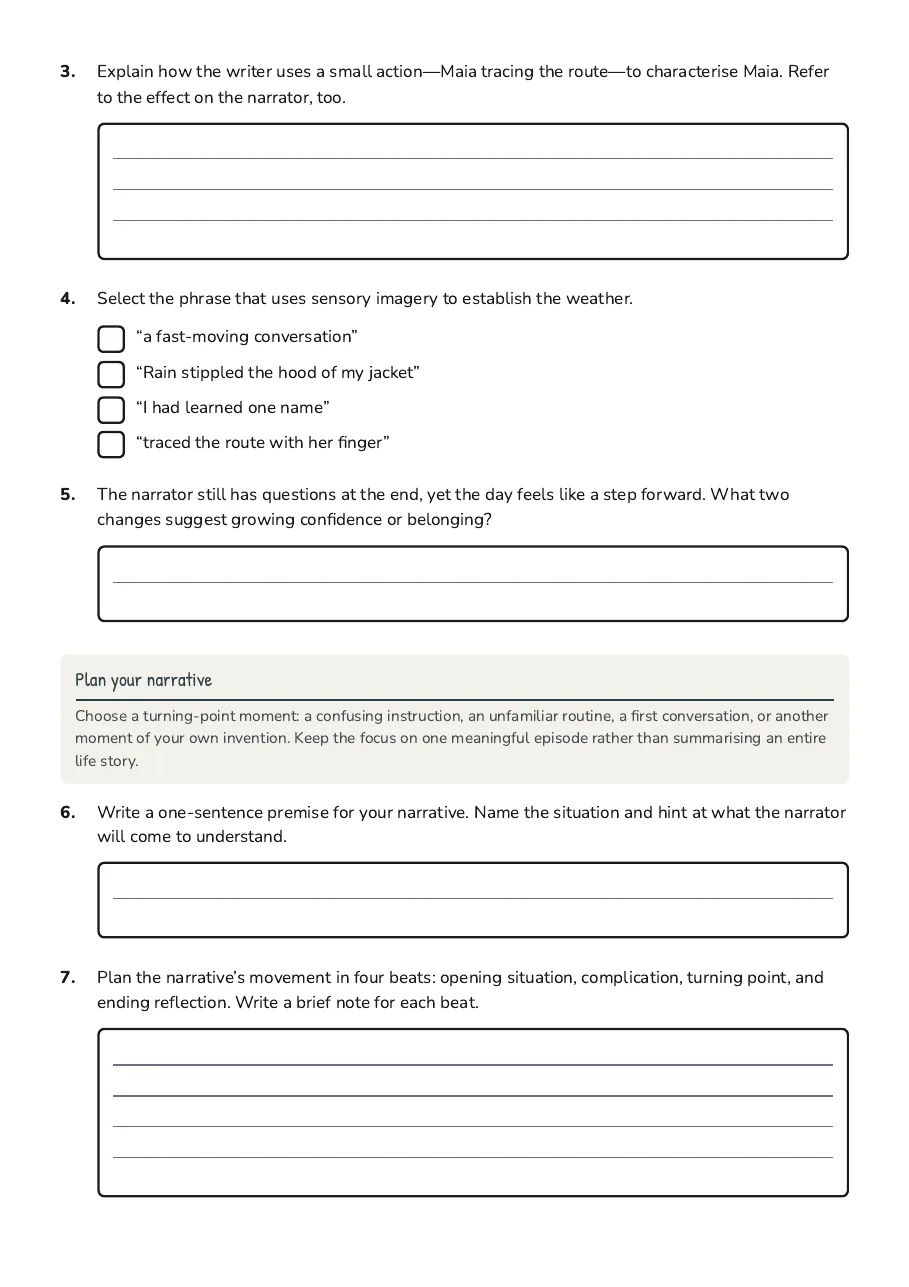
- “a fast-moving conversation”
- “Rain stippled the hood of my jacket”
- “I had learned one name”
- “traced the route with her finger”
Plan your narrative
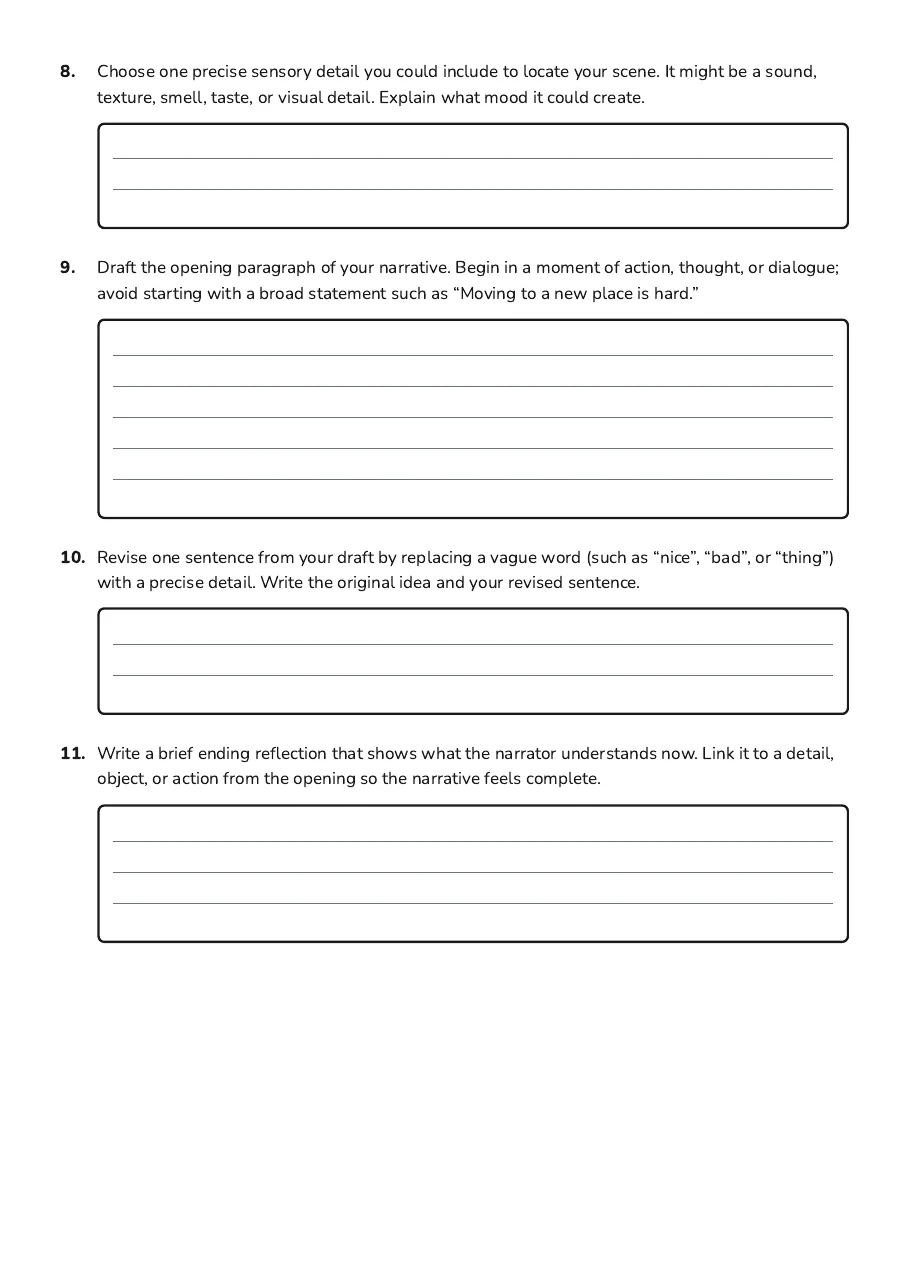
Choose a turning-point moment: a confusing instruction, an unfamiliar routine, a first conversation, or another moment of your own invention. Keep the focus on one meaningful episode rather than summarising an entire life story.
3 printable pages
Page 1
Page 2
Page 3
About This Worksheet
Free in Kuraplan
Sign up free, grab the PDF, and customize it for your class.
Print-Ready
Formatted for standard paper. Clean layout, easy to read.
AI-Generated
Created with Kuraplan's AI, designed for real classroom use.
For Teachers & Parents
Use in classrooms, for homework, tutoring, or homeschool.
Need a custom version of this worksheet?
Kuraplan's AI generates custom worksheets in seconds — differentiated for every learner, aligned to your curriculum.
Generate Custom Worksheets — FreeMore English Worksheets
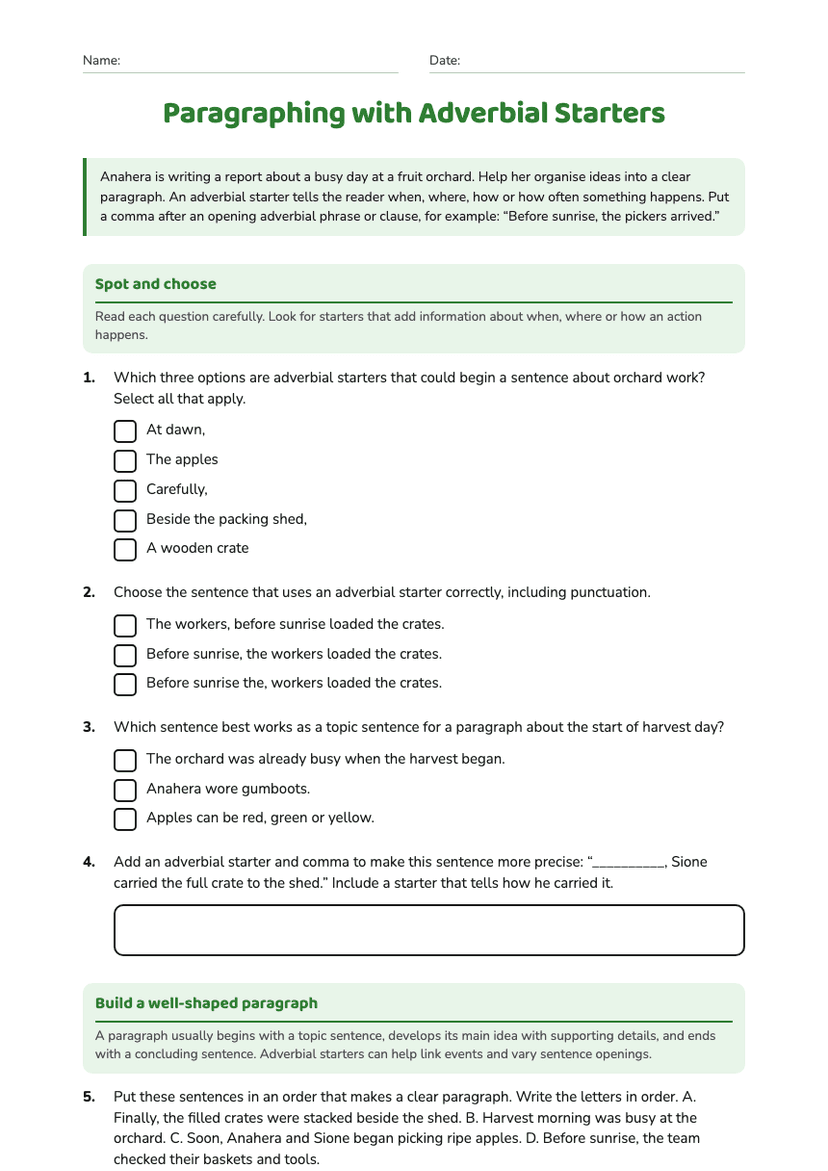
Paragraphing with Adverbial Starters
Free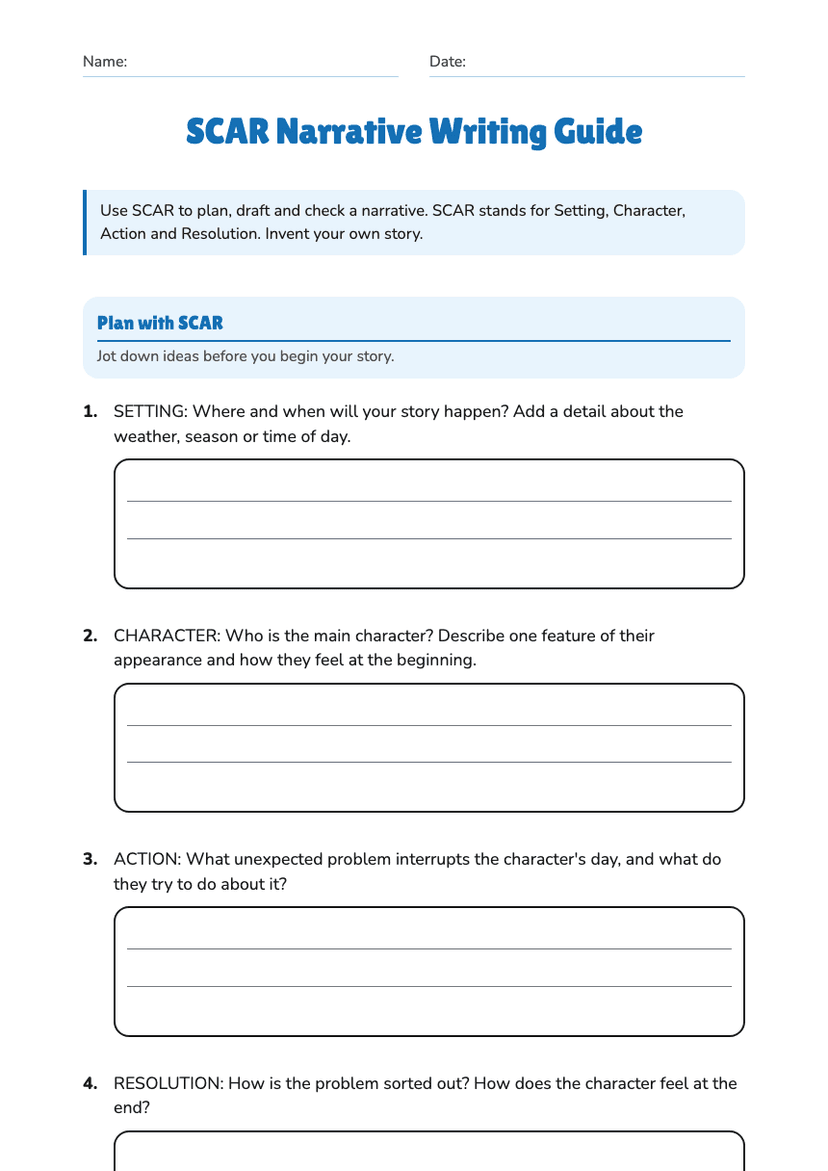
SCAR Narrative Writing Guide
Free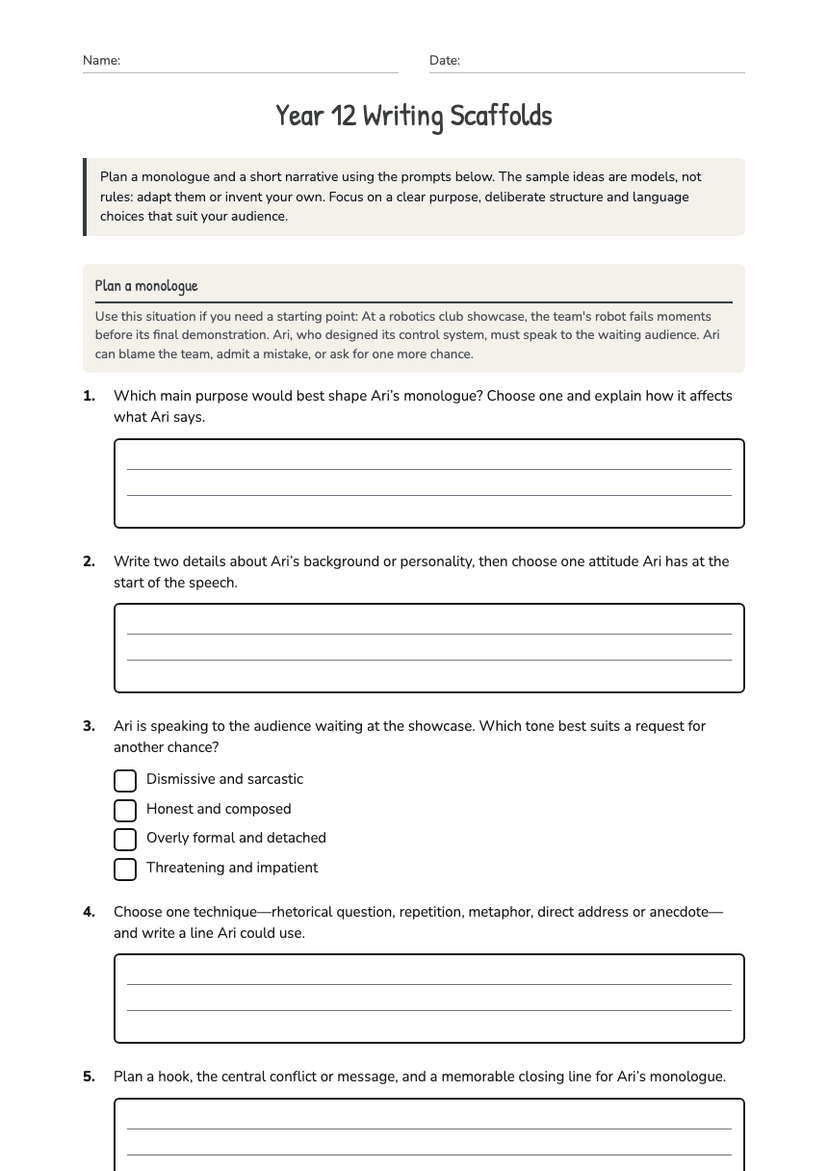
Year 12 Writing Scaffolds
Free
Dunkirk Essay Analysis Worksheet
Free
Persuasive Writing Planning Workshop
Free
Curious Essay Explorers Introduction
Free
Special Moment Recount Writing
Free