NZSL Vocabulary Quiz
A free languages worksheet ready for your classroom. Open in Kuraplan to grab the print-ready PDF, customize it for your students, or generate a fresh version in seconds.
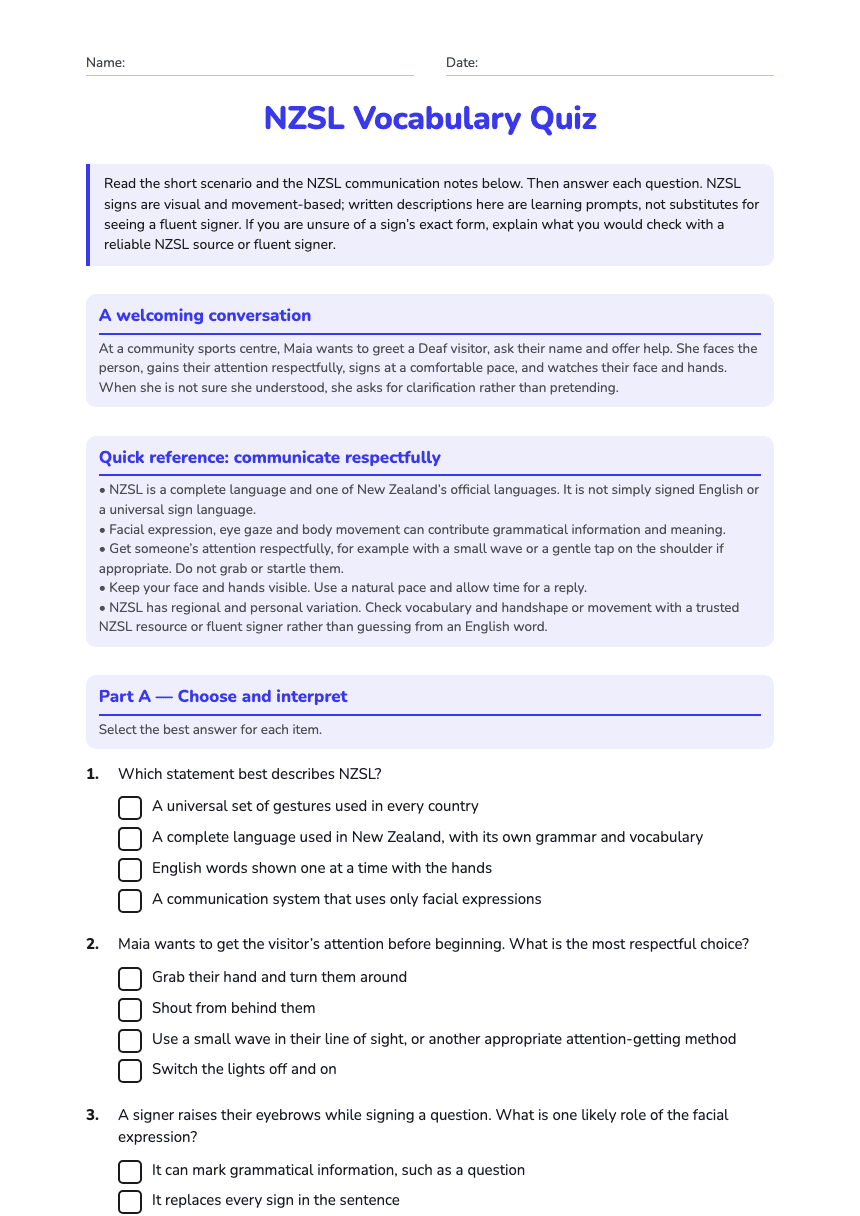
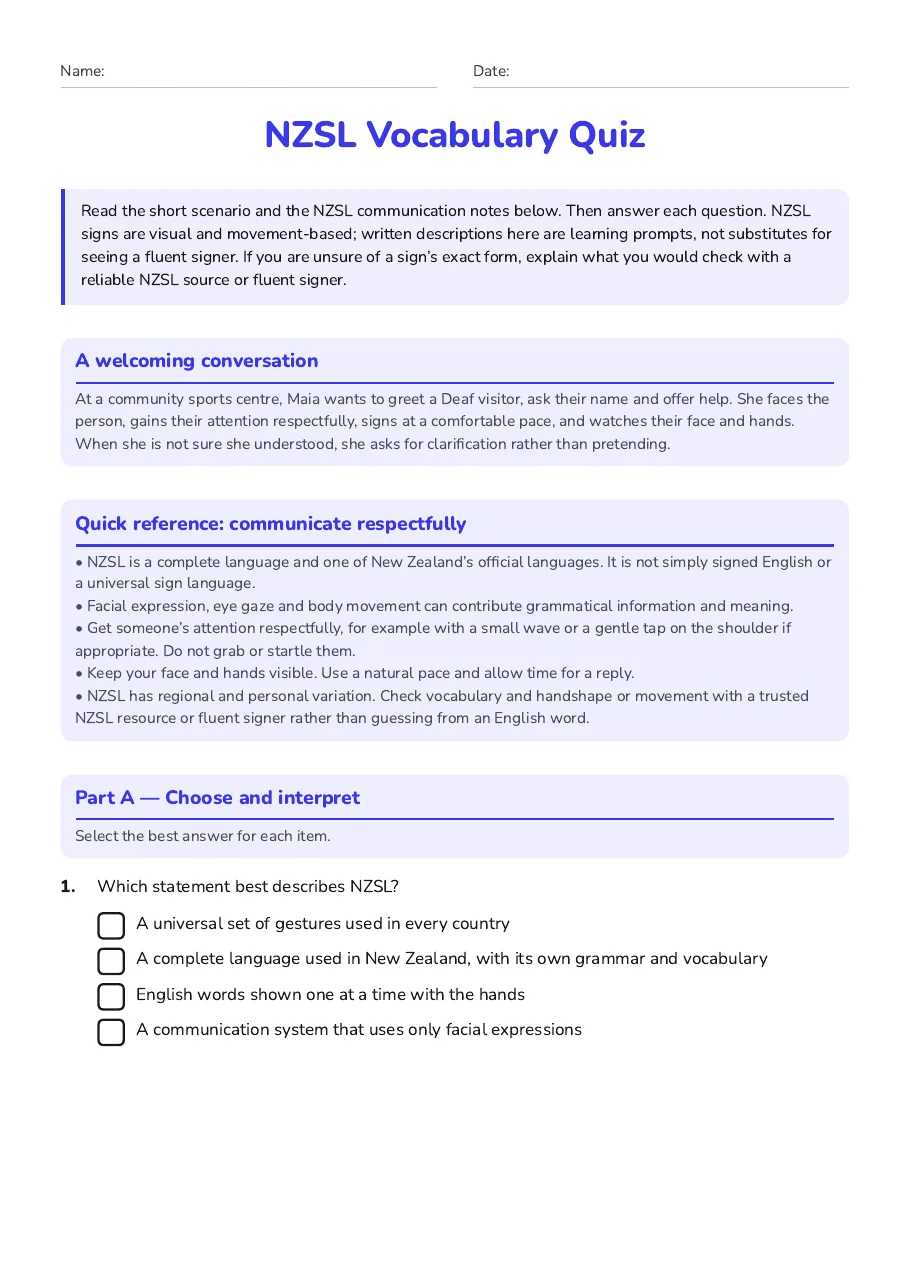
NZSL Vocabulary Quiz
A welcoming conversation
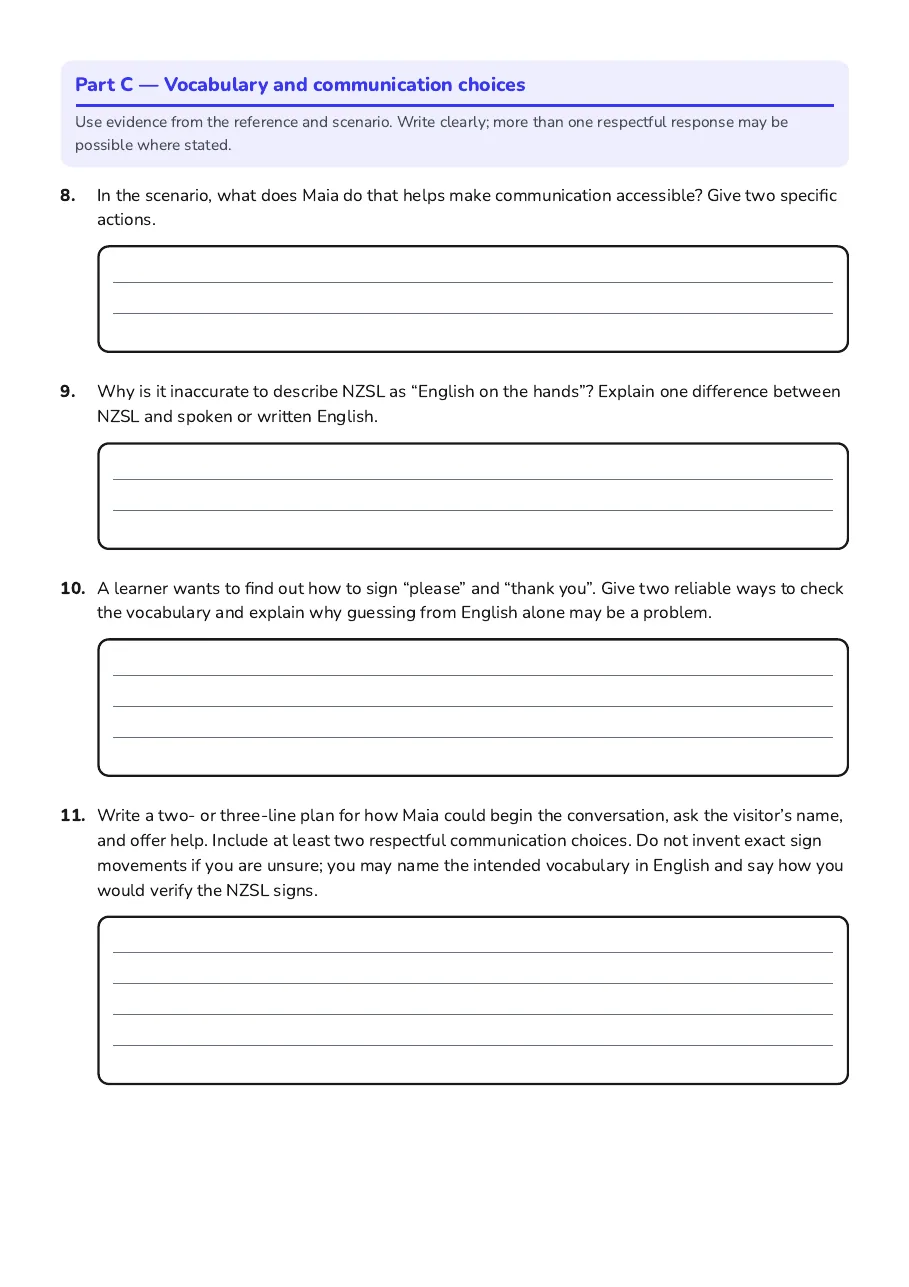
At a community sports centre, Maia wants to greet a Deaf visitor, ask their name and offer help. She faces the person, gains their attention respectfully, signs at a comfortable pace, and watches their face and hands. When she is not sure she understood, she asks for clarification rather than pretending.
Quick reference: communicate respectfully
• NZSL is a complete language and one of New Zealand’s official languages. It is not simply signed English or a universal sign language. • Facial expression, eye gaze and body movement can contribute grammatical information and meaning. • Get someone’s attention respectfully, for example with a small wave or a gentle tap on the shoulder if appropriate. Do not grab or startle them. • Keep your face and hands visible. Use a natural pace and allow time for a reply. • NZSL has regional and personal variation. Check vocabulary and handshape or movement with a trusted NZSL resource or fluent signer rather than guessing from an English word.
Part A — Choose and interpret
Select the best answer for each item.
- A universal set of gestures used in every country
- A complete language used in New Zealand, with its own grammar and vocabulary
- English words shown one at a time with the hands
- A communication system that uses only facial expressions
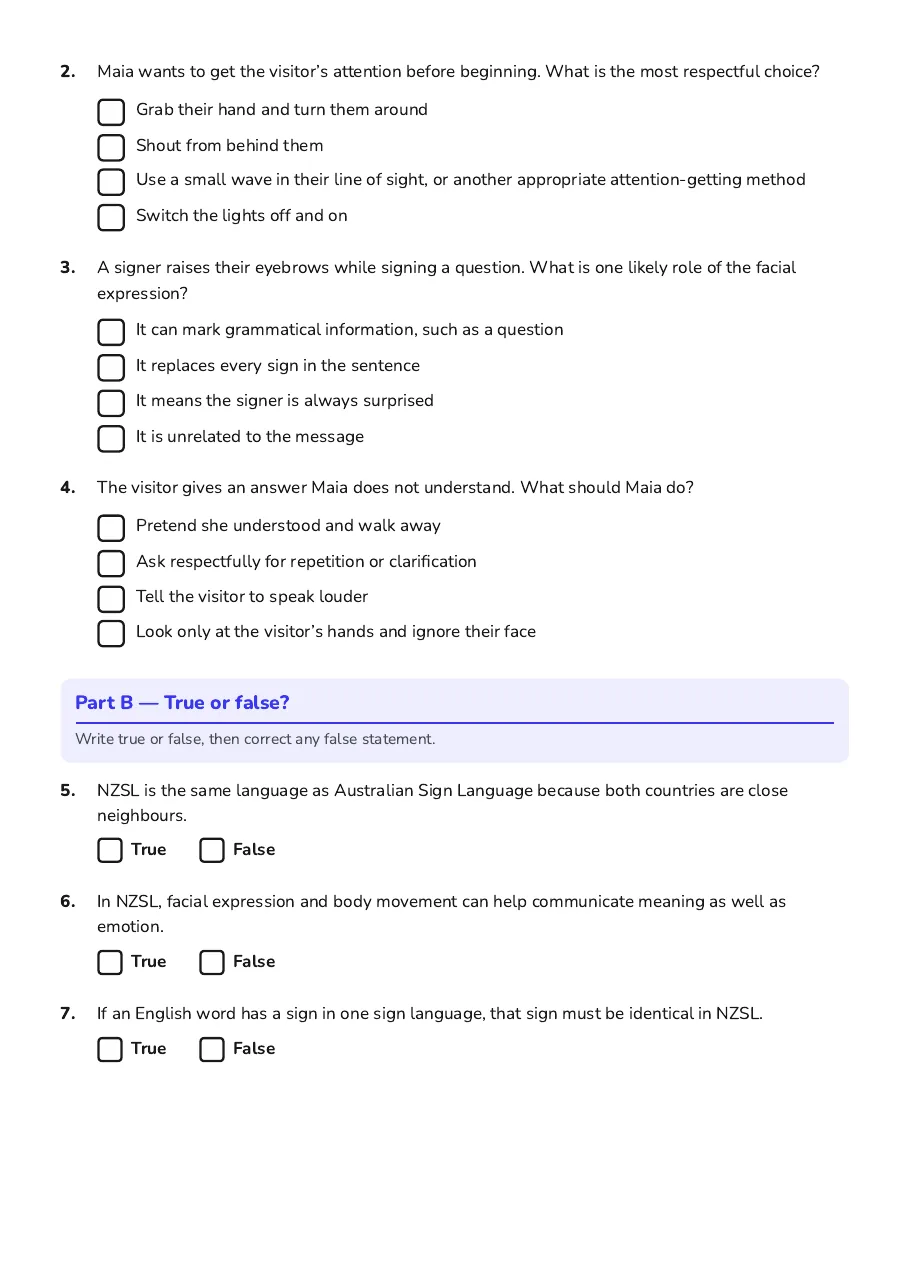
- Grab their hand and turn them around
- Shout from behind them
- Use a small wave in their line of sight, or another appropriate attention-getting method
- Switch the lights off and on
- It can mark grammatical information, such as a question
- It replaces every sign in the sentence
- It means the signer is always surprised
- It is unrelated to the message
- Pretend she understood and walk away
- Ask respectfully for repetition or clarification
- Tell the visitor to speak louder
- Look only at the visitor’s hands and ignore their face
Part B — True or false?
Write true or false, then correct any false statement.
Part C — Vocabulary and communication choices
Use evidence from the reference and scenario. Write clearly; more than one respectful response may be possible where stated.
3 printable pages
Page 1
Page 2
Page 3
About This Worksheet
Free in Kuraplan
Sign up free, grab the PDF, and customize it for your class.
Print-Ready
Formatted for standard paper. Clean layout, easy to read.
AI-Generated
Created with Kuraplan's AI, designed for real classroom use.
For Teachers & Parents
Use in classrooms, for homework, tutoring, or homeschool.
Need a custom version of this worksheet?
Kuraplan's AI generates custom worksheets in seconds — differentiated for every learner, aligned to your curriculum.
Generate Custom Worksheets — FreeMore Languages Worksheets
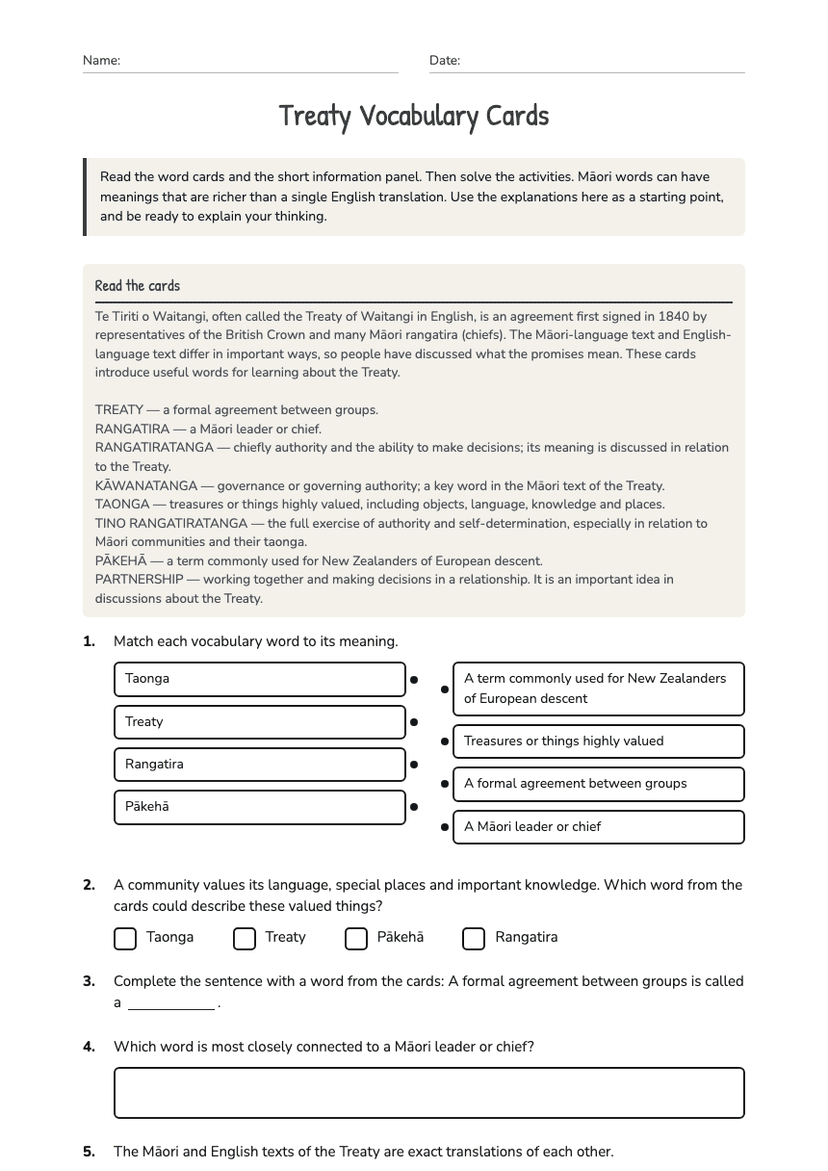
Treaty Vocabulary Cards
Free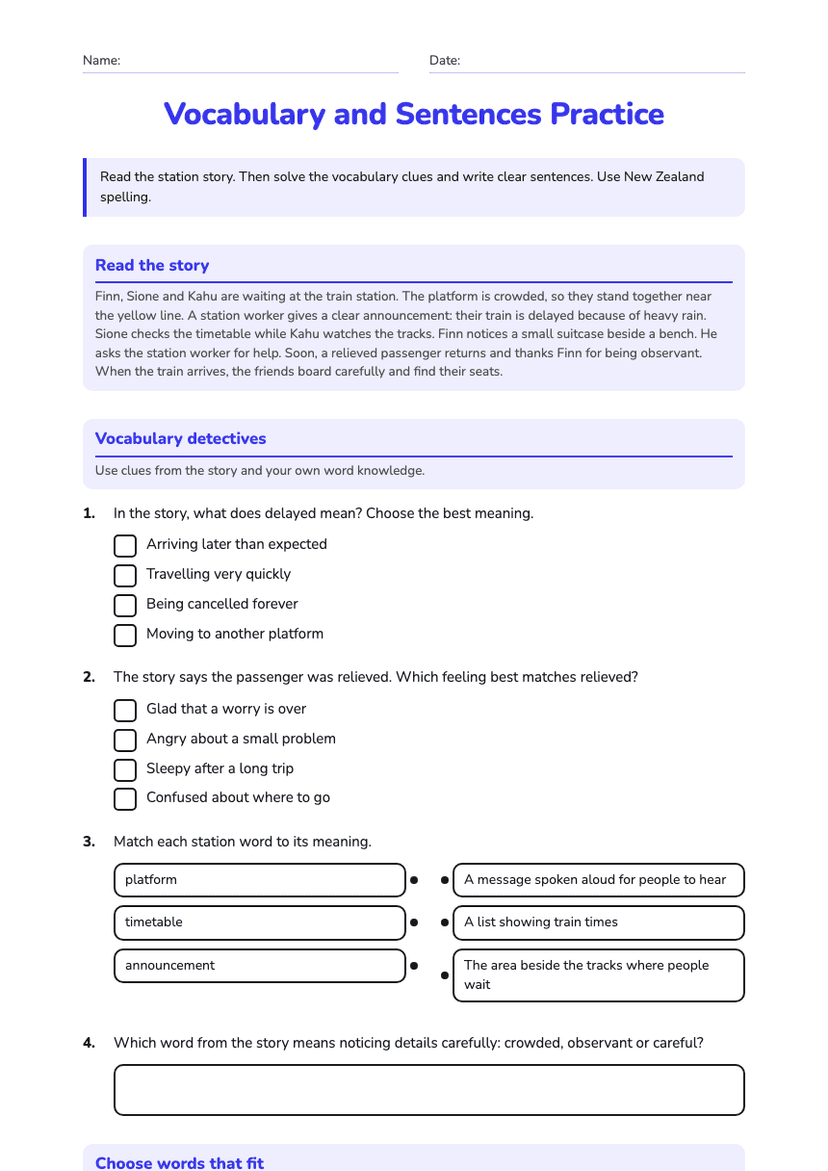
Vocabulary and Sentences Practice
Free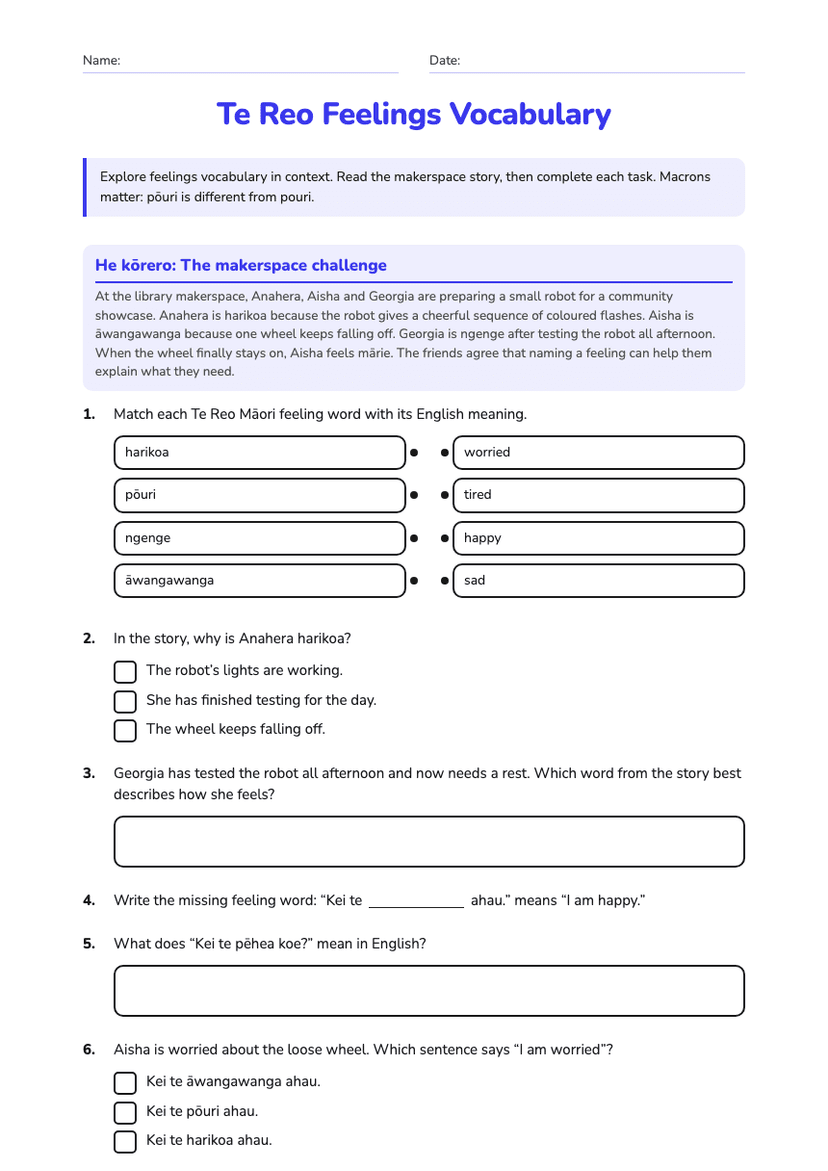
Te Reo Feelings Vocabulary
Free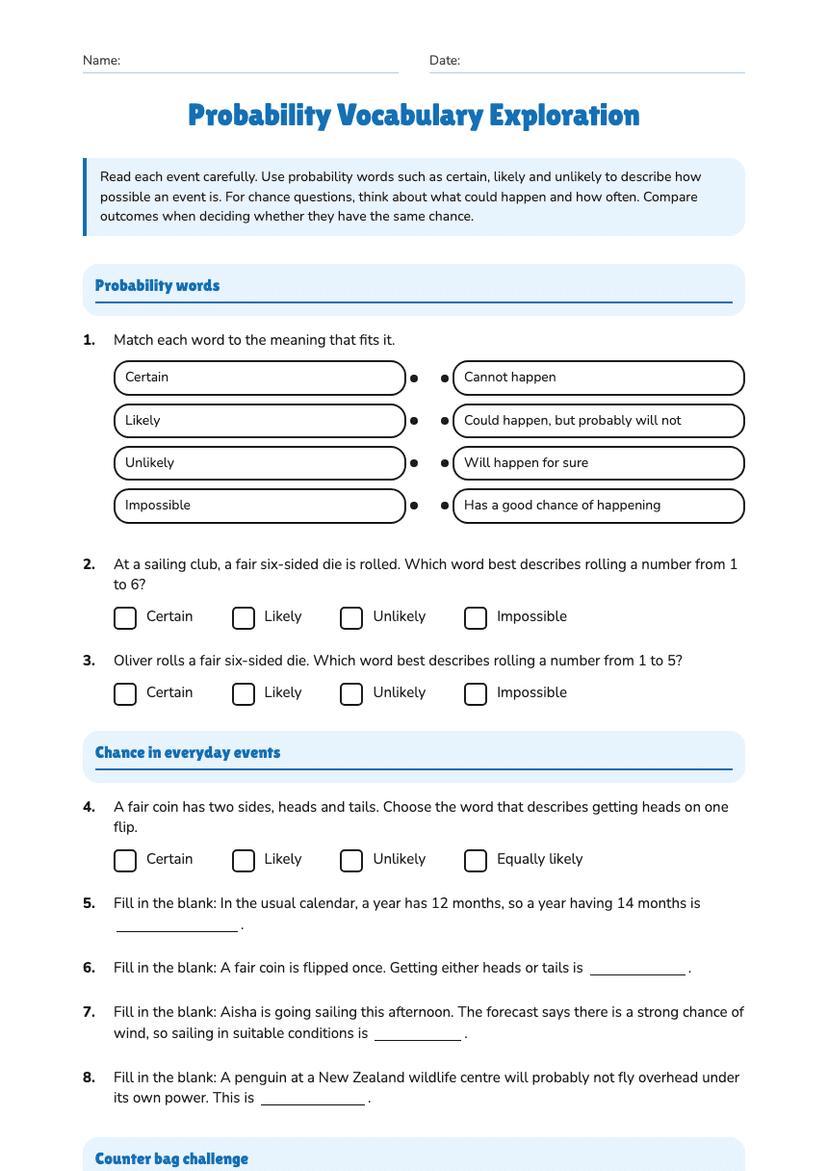
Probability Vocabulary Exploration
Free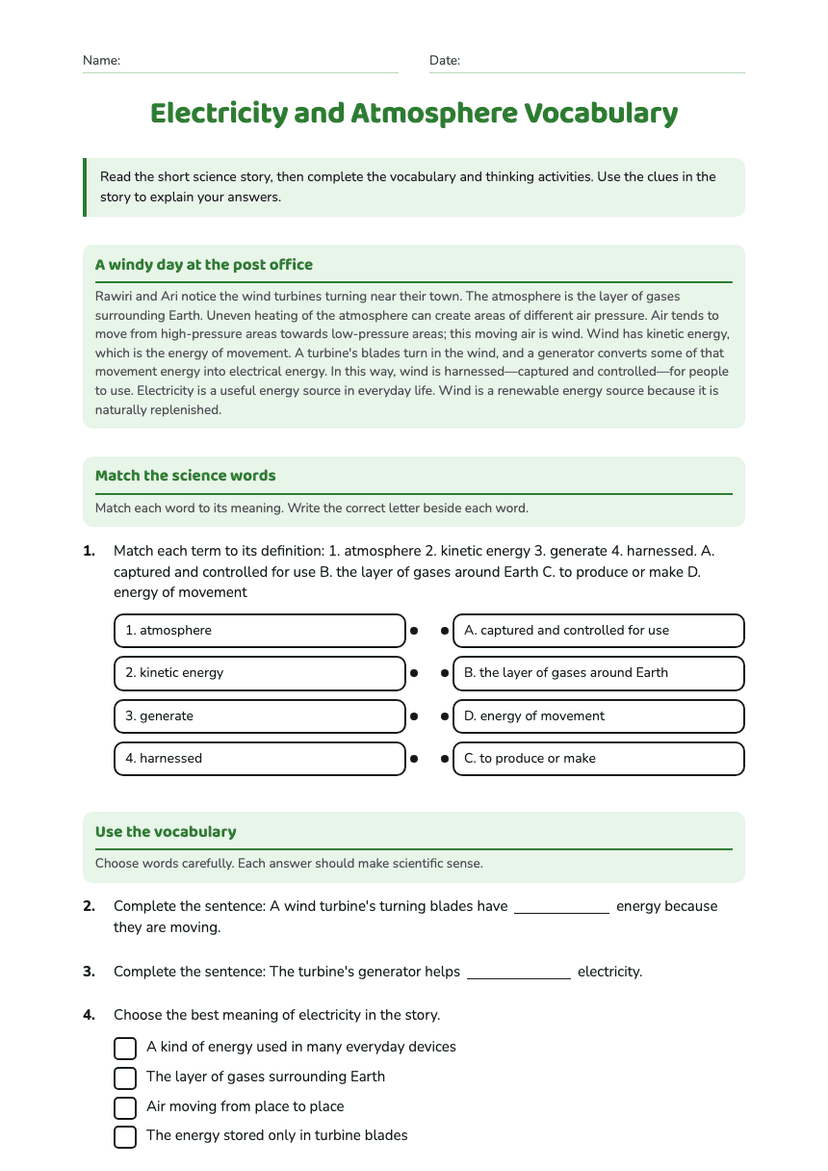
Electricity and Atmosphere Vocabulary
Free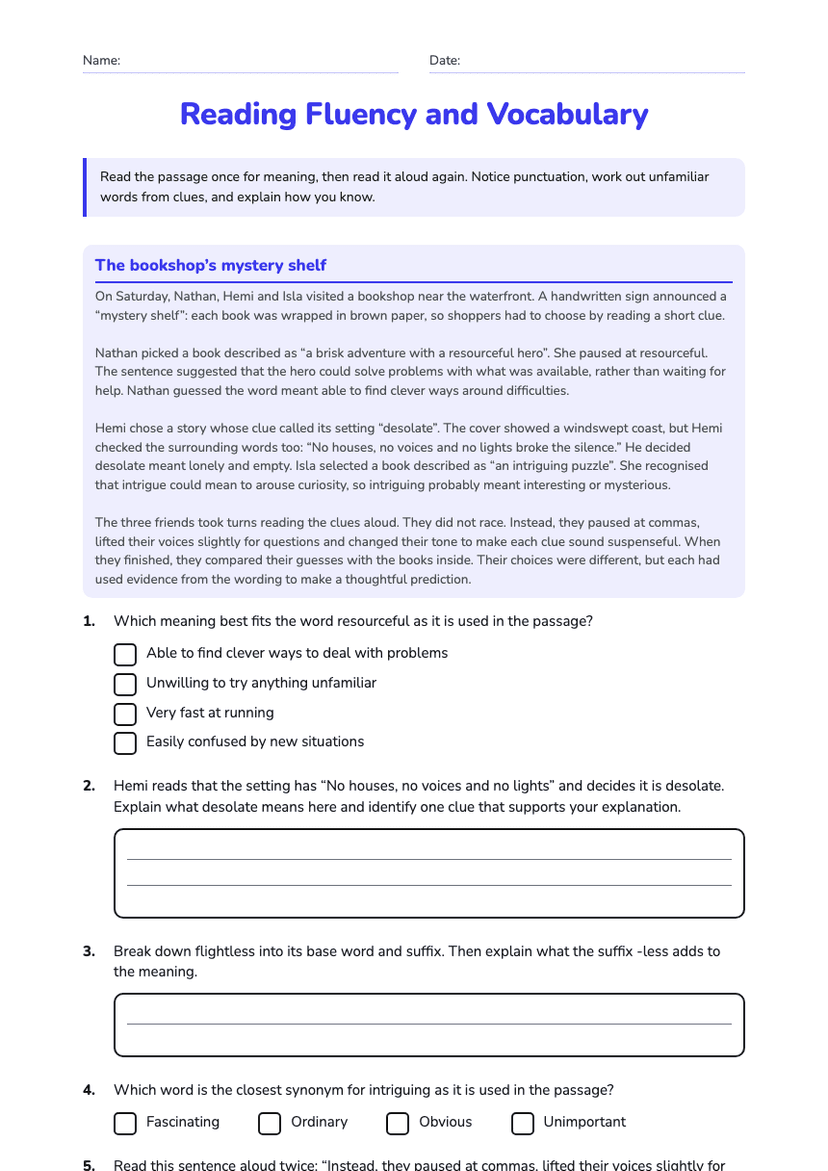
Reading Fluency and Vocabulary
Free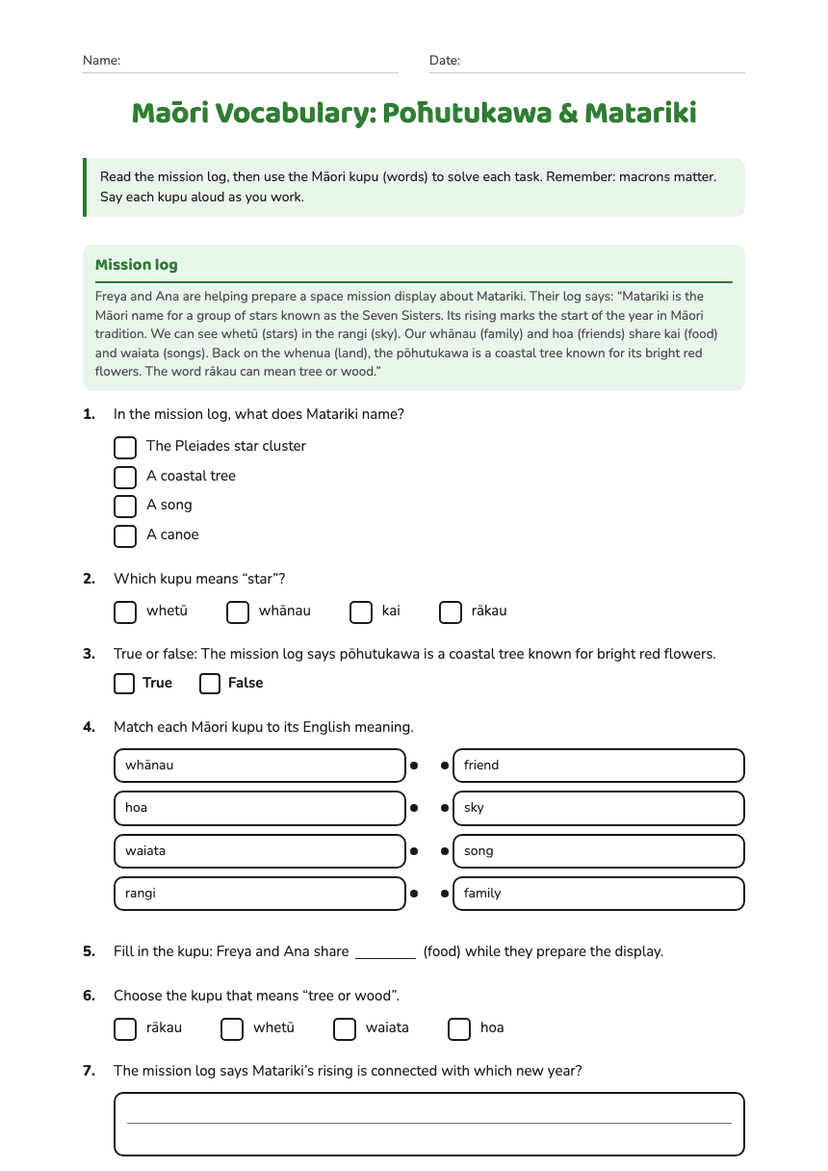
Māori Vocabulary: Pōhutukawa & Matariki
Free