Ava Ceremony Visual Project
A free languages worksheet ready for your classroom. Open in Kuraplan to grab the print-ready PDF, customize it for your students, or generate a fresh version in seconds.
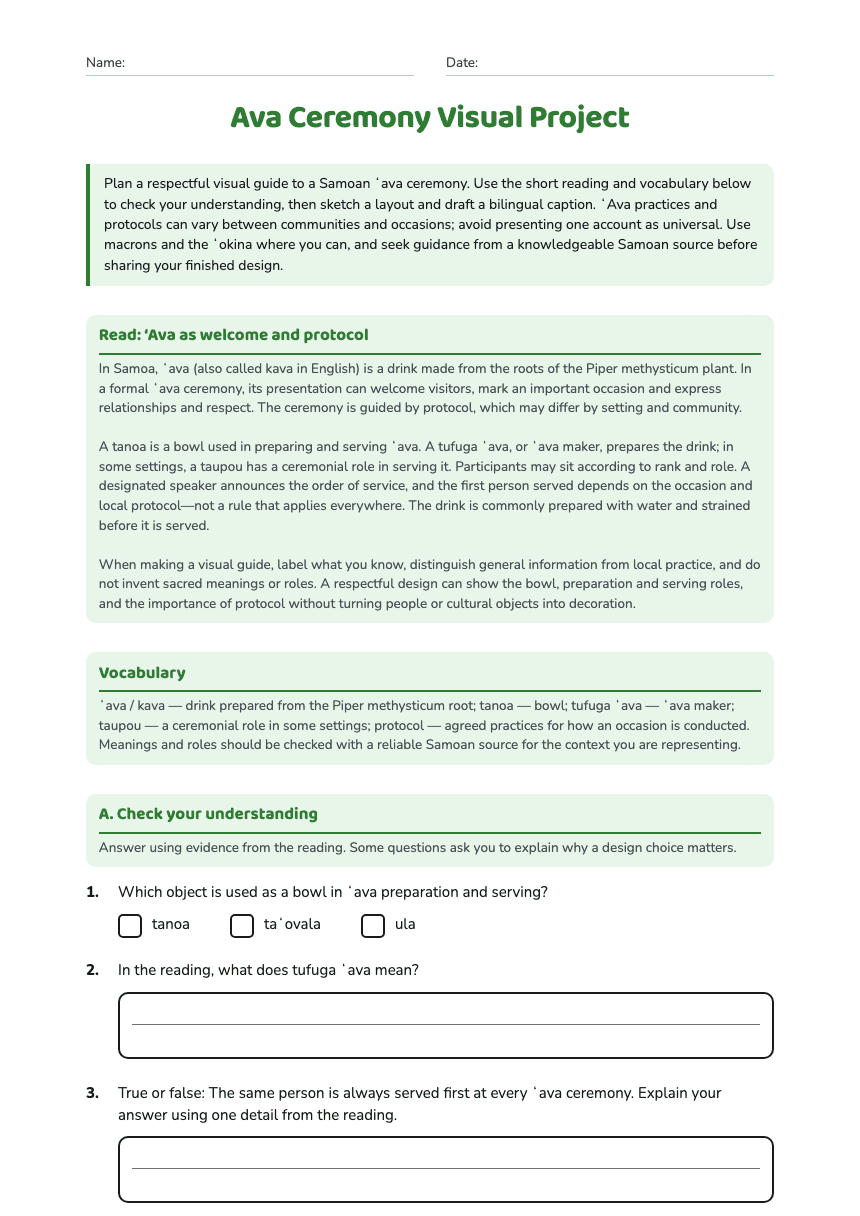
Ava Ceremony Visual Project
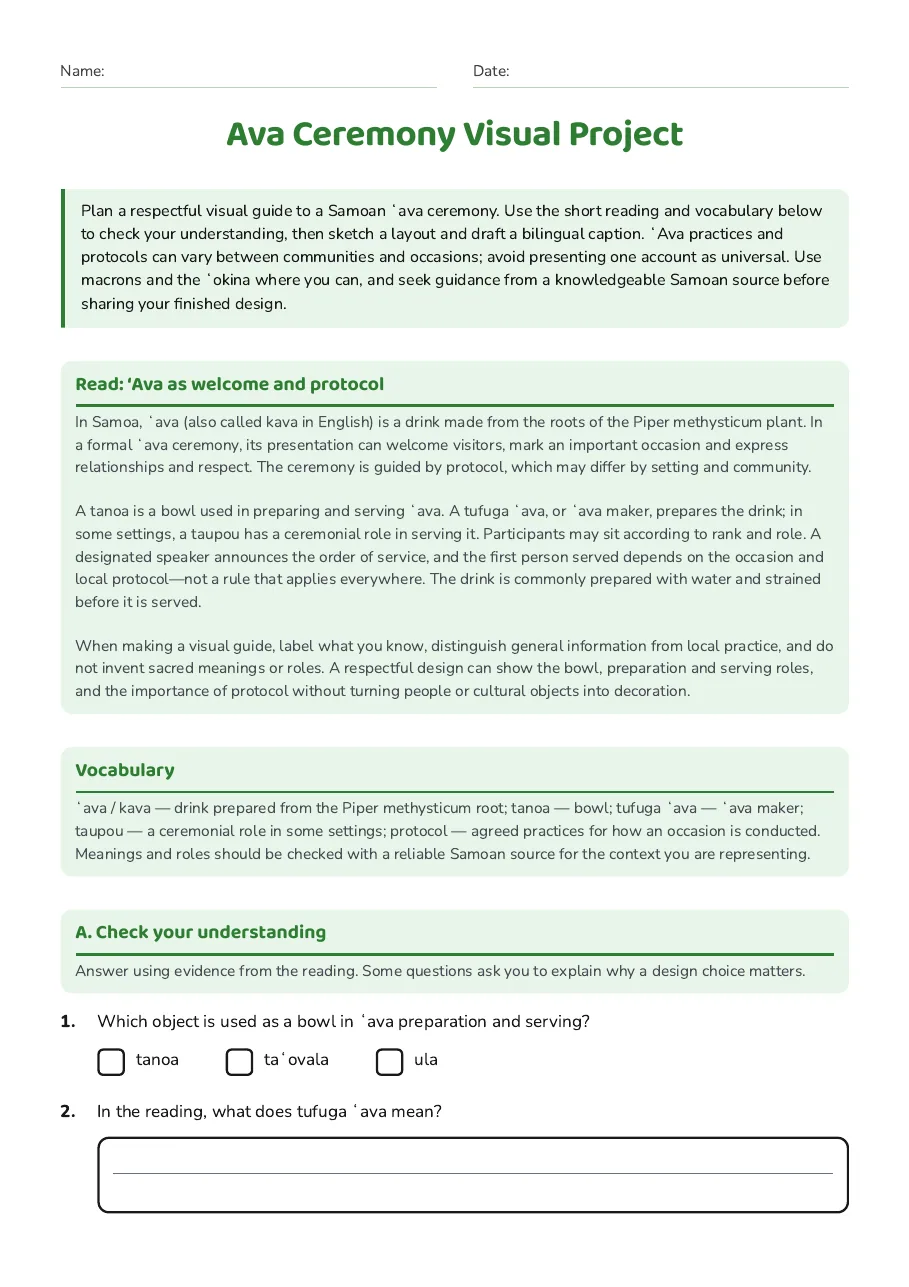
Read: ʻAva as welcome and protocol
In Samoa, ʻava (also called kava in English) is a drink made from the roots of the Piper methysticum plant. In a formal ʻava ceremony, its presentation can welcome visitors, mark an important occasion and express relationships and respect. The ceremony is guided by protocol, which may differ by setting and community. A tanoa is a bowl used in preparing and serving ʻava. A tufuga ʻava, or ʻava maker, prepares the drink; in some settings, a taupou has a ceremonial role in serving it. Participants may sit according to rank and role. A designated speaker announces the order of service, and the first person served depends on the occasion and local protocol—not a rule that applies everywhere. The drink is commonly prepared with water and strained before it is served. When making a visual guide, label what you know, distinguish general information from local practice, and do not invent sacred meanings or roles. A respectful design can show the bowl, preparation and serving roles, and the importance of protocol without turning people or cultural objects into decoration.
Vocabulary
ʻava / kava — drink prepared from the Piper methysticum root; tanoa — bowl; tufuga ʻava — ʻava maker; taupou — a ceremonial role in some settings; protocol — agreed practices for how an occasion is conducted. Meanings and roles should be checked with a reliable Samoan source for the context you are representing.
A. Check your understanding
Answer using evidence from the reading. Some questions ask you to explain why a design choice matters.
- tanoa
- taʻovala
- ula
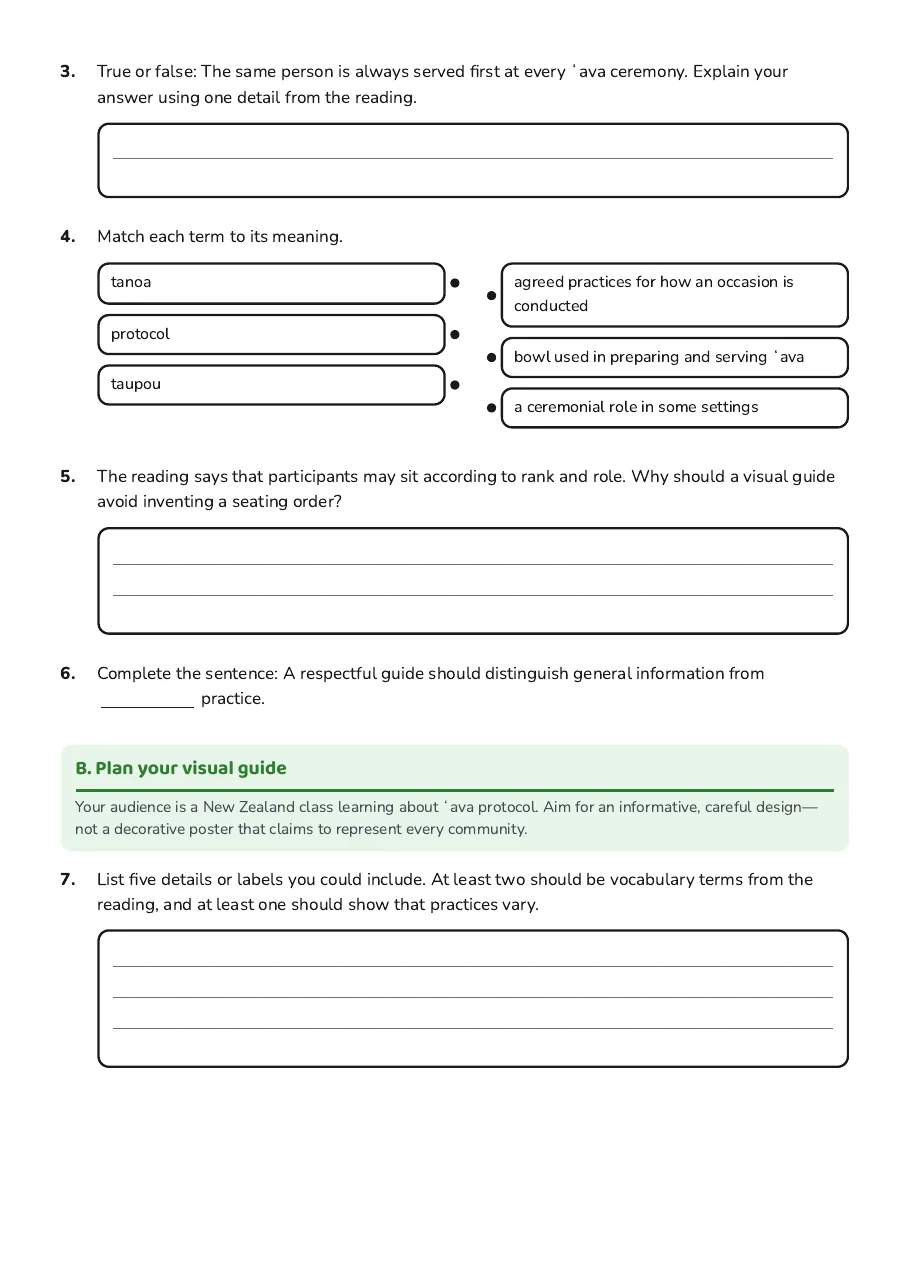
- tanoa
- protocol
- taupou
- agreed practices for how an occasion is conducted
- bowl used in preparing and serving ʻava
- a ceremonial role in some settings
B. Plan your visual guide
Your audience is a New Zealand class learning about ʻava protocol. Aim for an informative, careful design—not a decorative poster that claims to represent every community.
3 printable pages
Page 1
Page 2
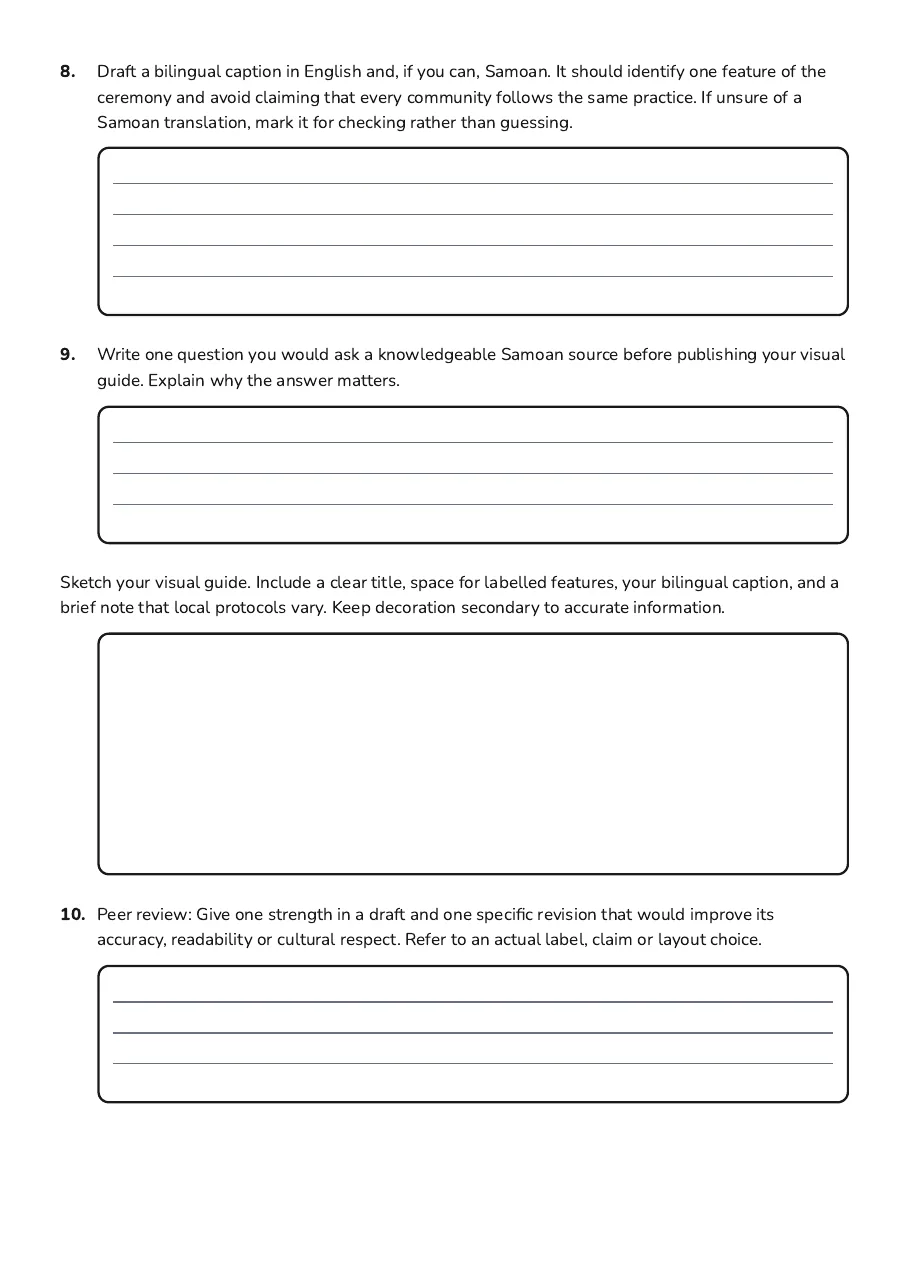
Page 3
About This Worksheet
Free in Kuraplan
Sign up free, grab the PDF, and customize it for your class.
Print-Ready
Formatted for standard paper. Clean layout, easy to read.
AI-Generated
Created with Kuraplan's AI, designed for real classroom use.
For Teachers & Parents
Use in classrooms, for homework, tutoring, or homeschool.
Need a custom version of this worksheet?
Kuraplan's AI generates custom worksheets in seconds — differentiated for every learner, aligned to your curriculum.
Generate Custom Worksheets — FreeMore Languages Worksheets
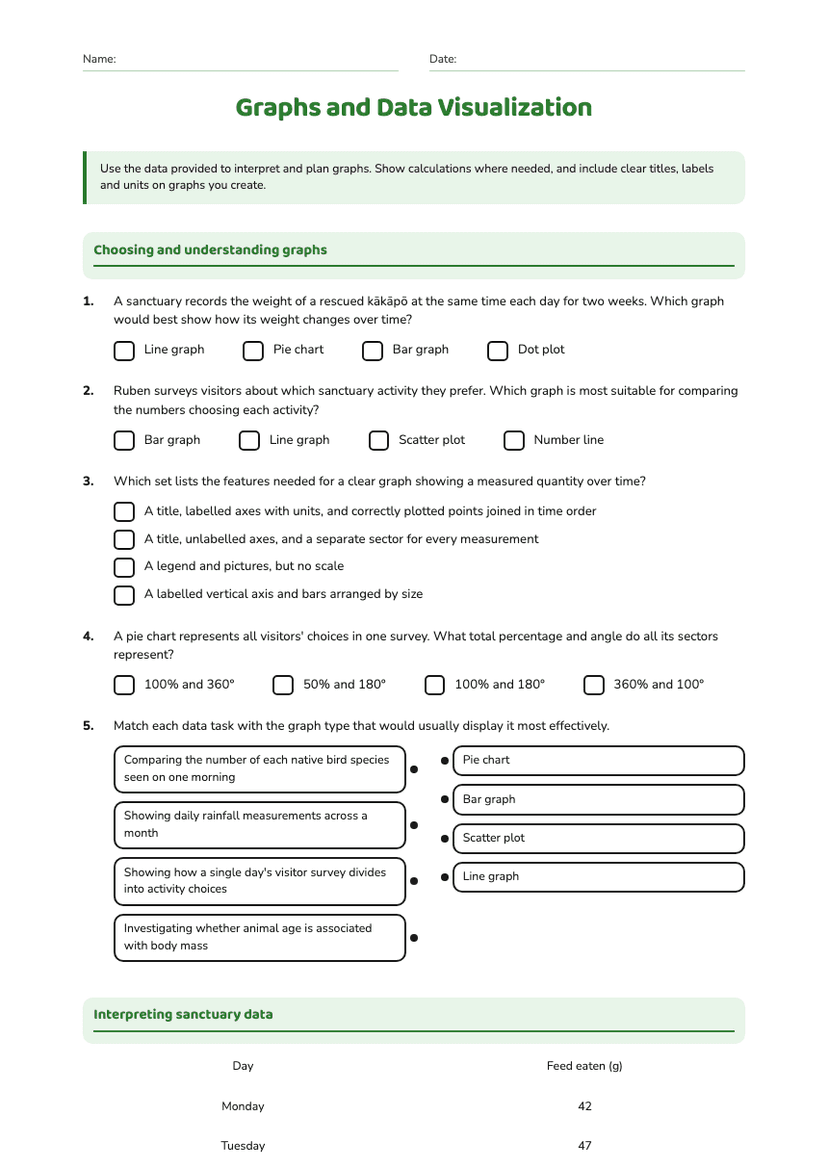
Graphs and Data Visualization
Free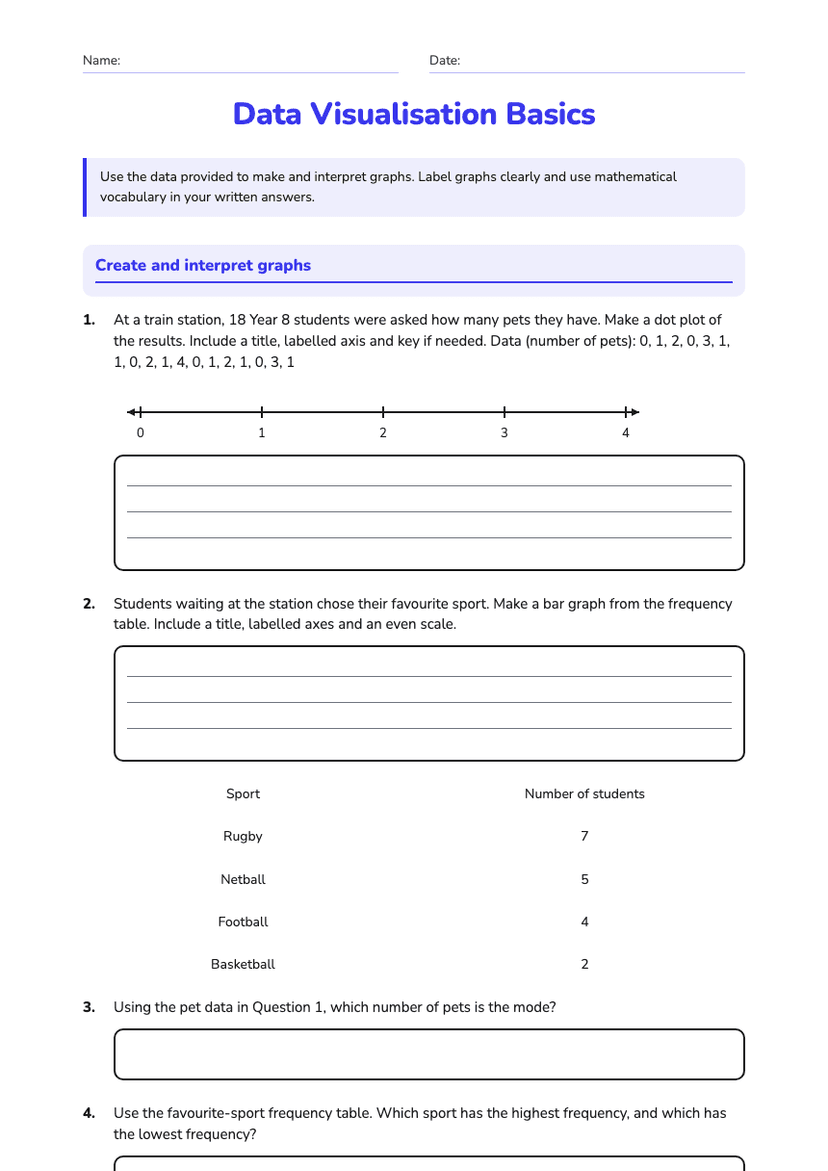
Data Visualisation Basics
Free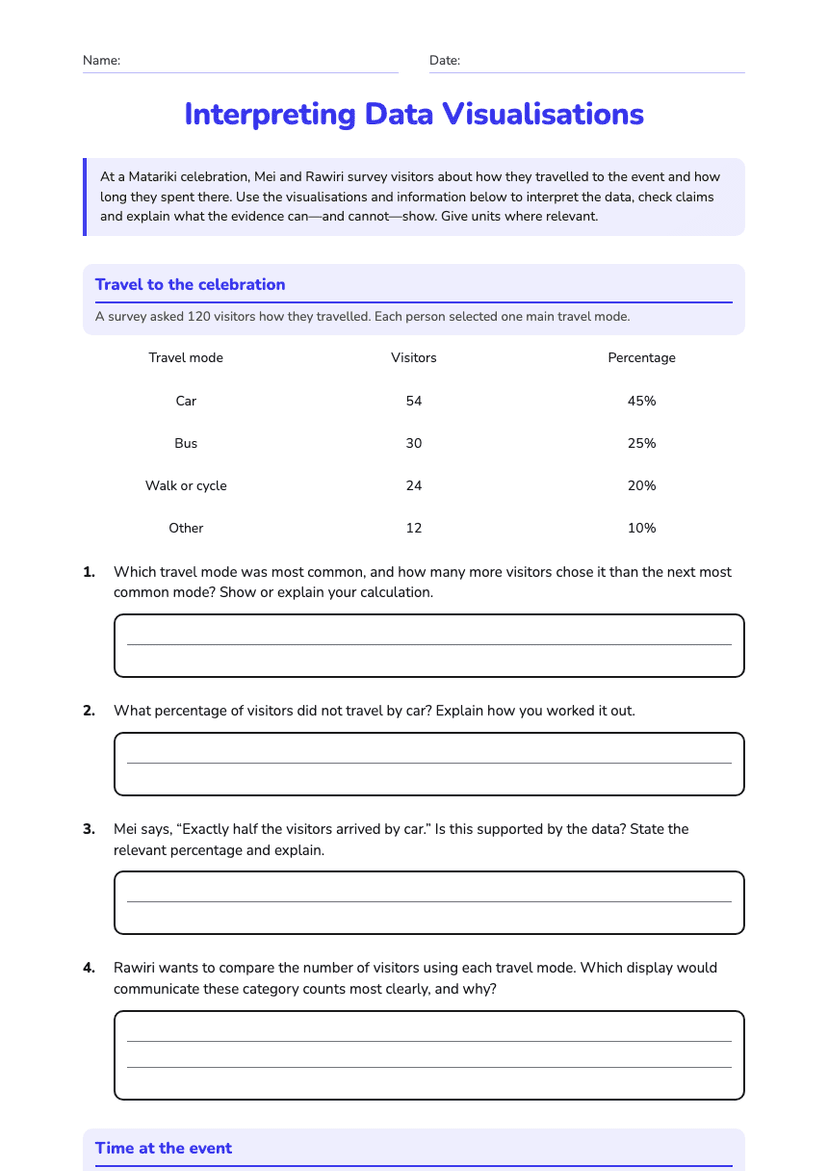
Interpreting Data Visualisations
Free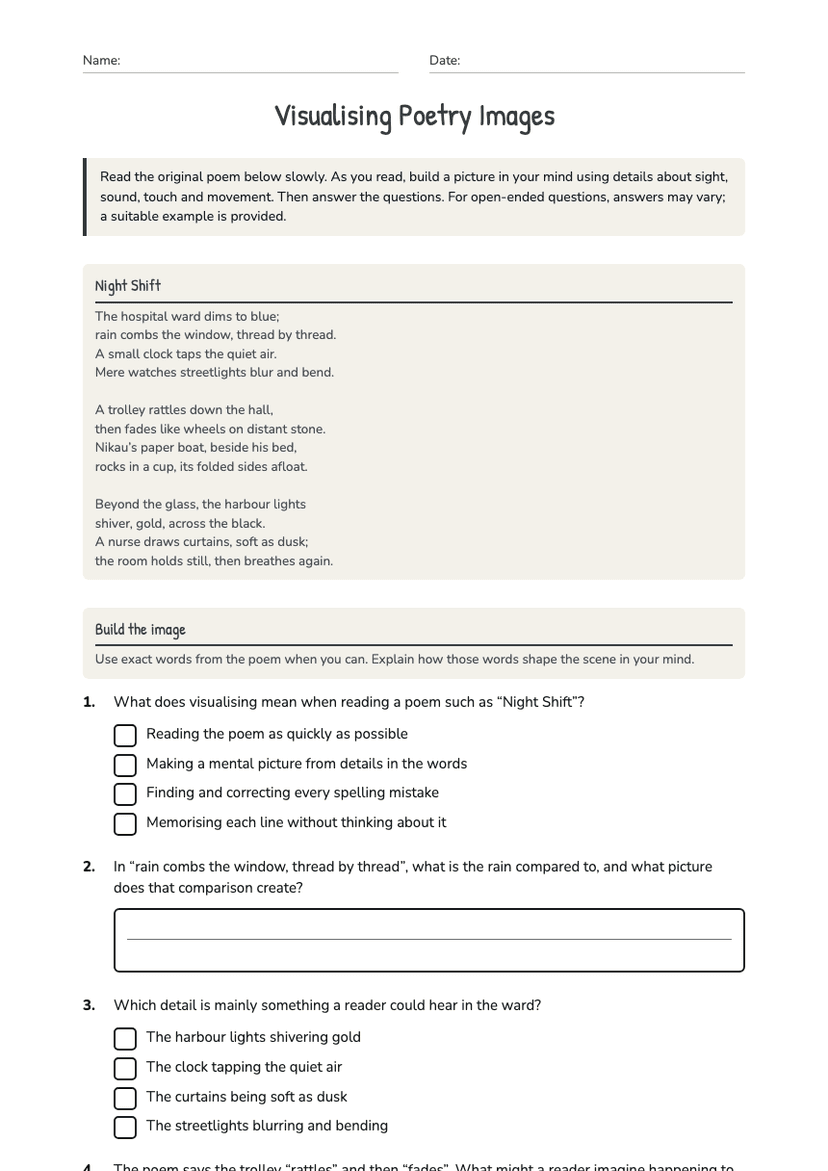
Visualising Poetry Images
Free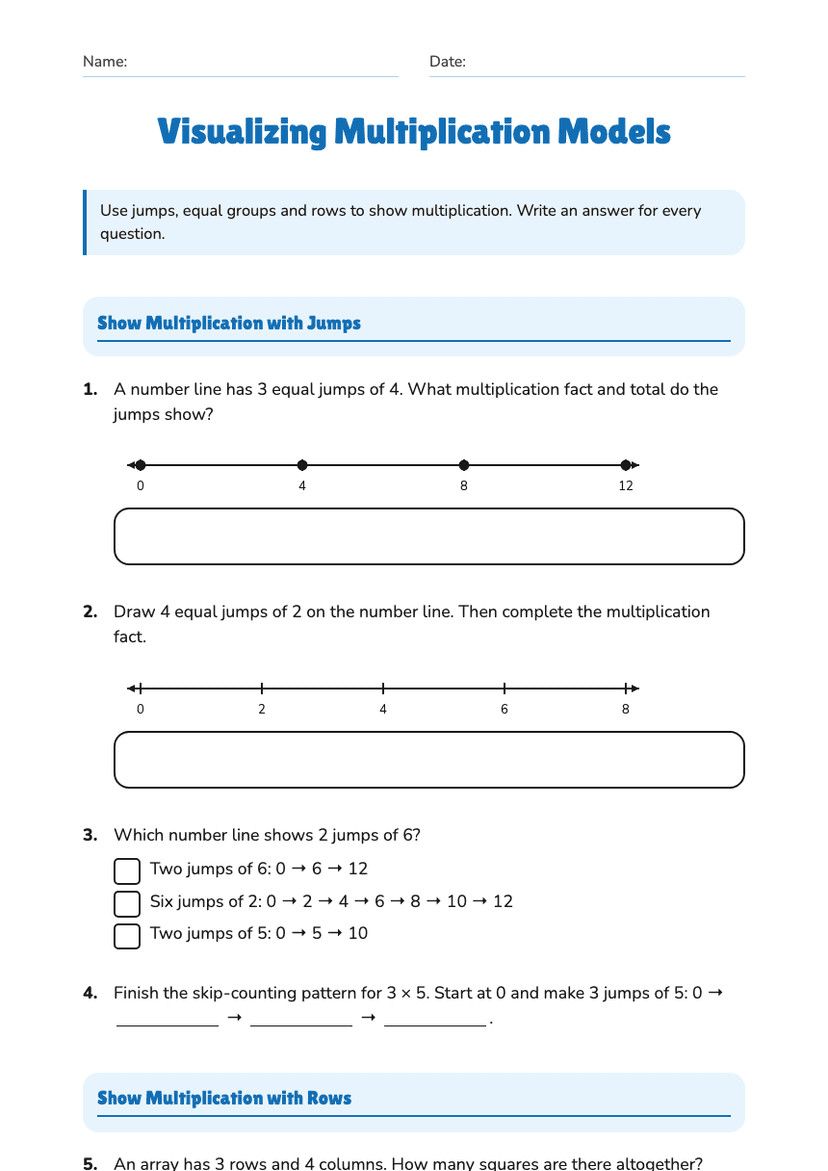
Visualizing Multiplication Models
Free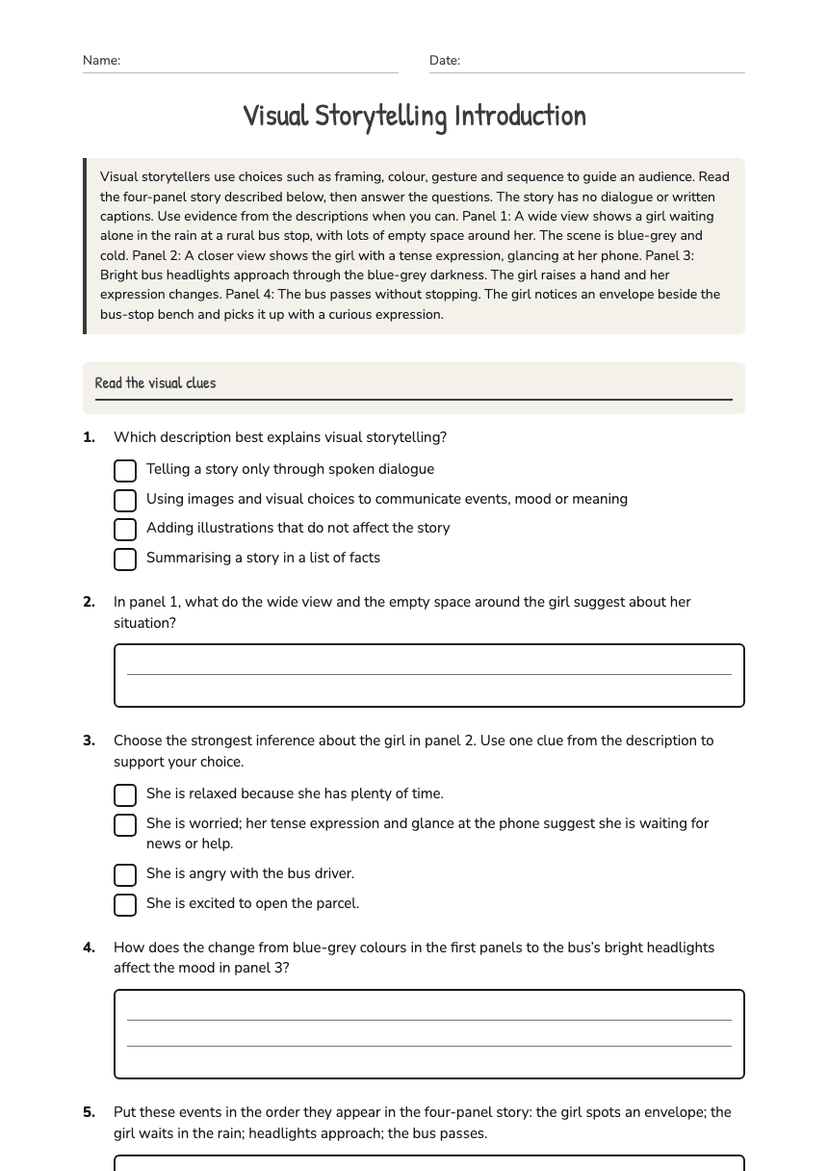
Visual Storytelling Introduction
Free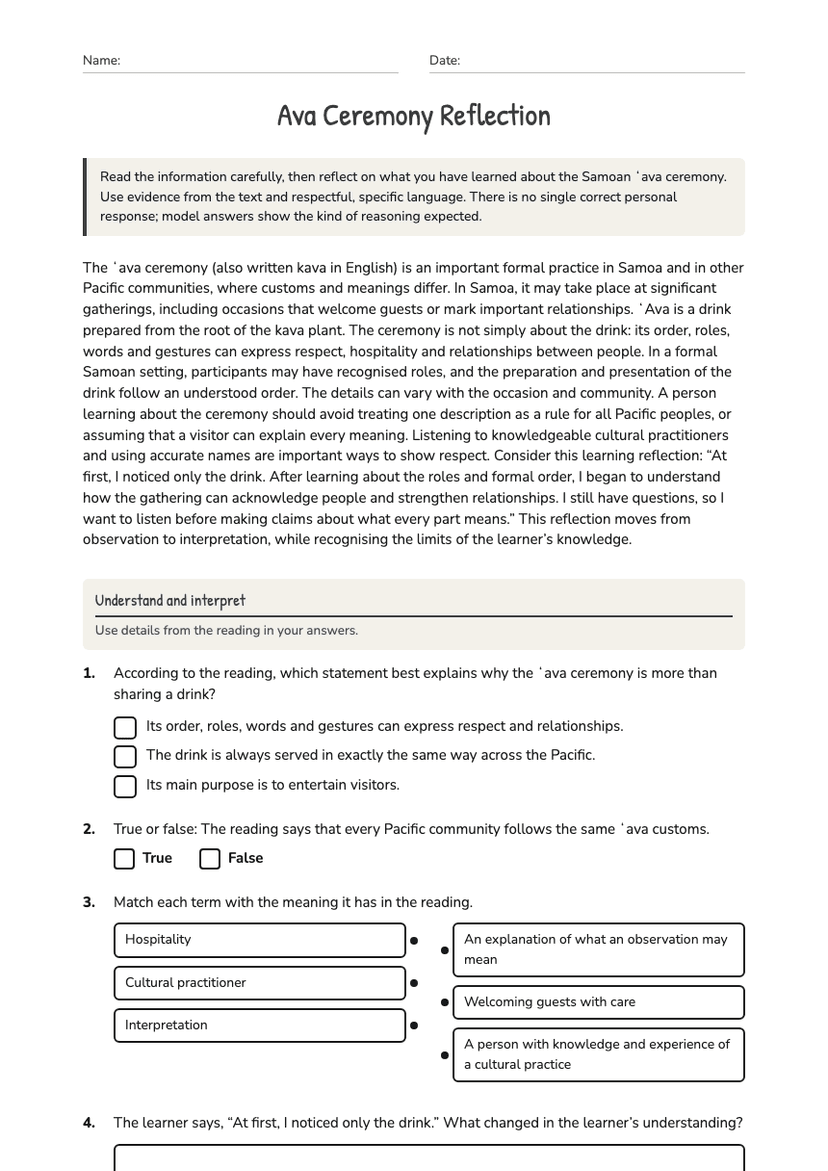
Ava Ceremony Reflection
Free