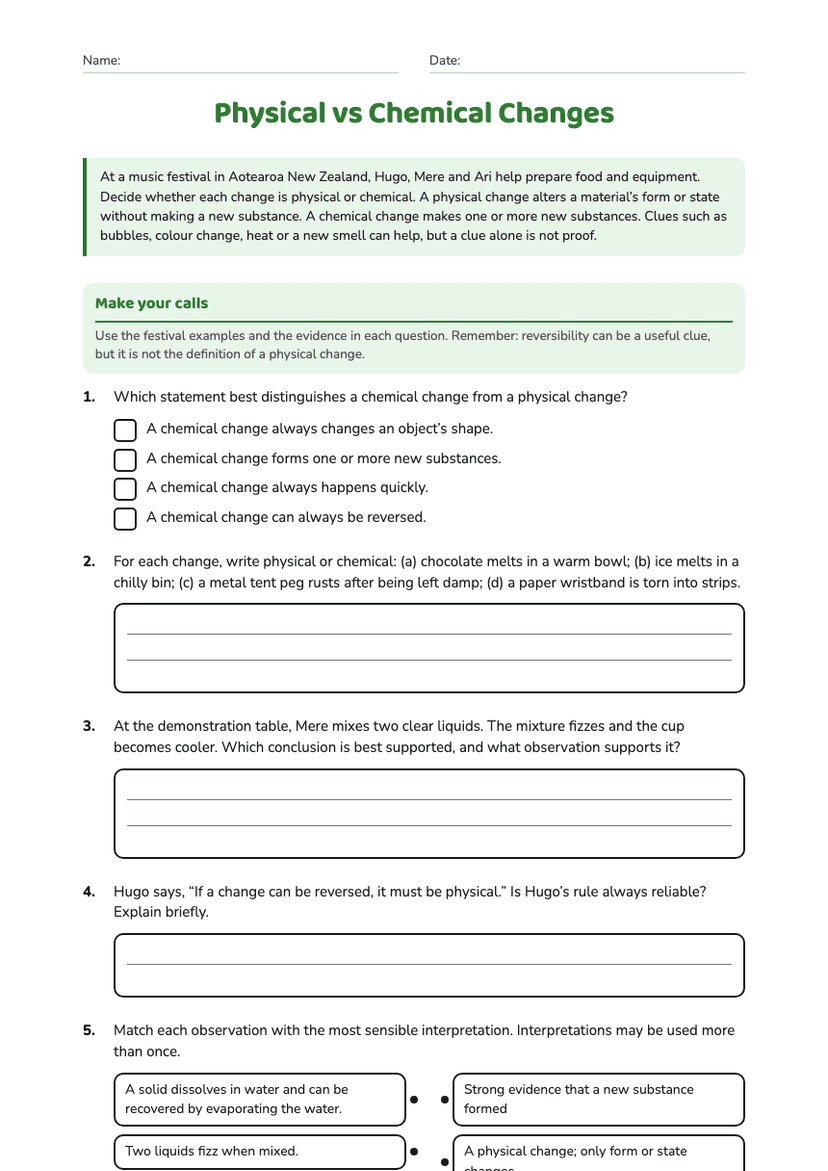
Physical vs. Chemical Changes
A free science worksheet ready for your classroom. Open in Kuraplan to grab the print-ready PDF, customize it for your students, or generate a fresh version in seconds.
Physical vs. Chemical Changes
📚 Part 1: Quick Check (Multiple Choice)
WALT: Identify examples of physical and chemical changes.
Success criteria: I can choose whether a change is physical or chemical and give one reason.
🔬 Part 2: Practical Activities & Short Answers
WALT: Carry out simple tests to decide if a change is physical or chemical.
Success criteria: I can describe observations and explain whether they show a physical or chemical change.
Procedure: Place an ice cube on a plate at room temperature (~20–25°C). Observe for 5 minutes.
Procedure: In a small cup, mix 1 tsp baking soda with 2 tbsp vinegar. Observe carefully (safety: do not inhale close).
📝 Teacher notes: Differentiation, Extension & Dyslexia-friendly options
Differentiation strategies: Give sentence starters for learners who need support (e.g. "I observed ..., so I think this is a ... change because ..."). Offer paired work or a labelled checklist for observations.
Extension activities: Ask advanced learners to research and report one everyday chemical change (e.g. baking, fermentation) and explain the new substances formed.
Dyslexia-friendly reading options: Provide printed sheets with larger font and increased line spacing, use a coloured overlay if preferred, read instructions aloud, and offer verbal or pictorial prompts for each step.
Safety reminder: Always wear goggles when doing experiments that fizz or heat. Clean up and wash hands after practicals.
About This Worksheet
Free in Kuraplan
Sign up free, grab the PDF, and customize it for your class.
Print-Ready
Formatted for standard paper. Clean layout, easy to read.
AI-Generated
Created with Kuraplan's AI, designed for real classroom use.
For Teachers & Parents
Use in classrooms, for homework, tutoring, or homeschool.
Need a custom version of this worksheet?
Kuraplan's AI generates custom worksheets in seconds — differentiated for every learner, aligned to your curriculum.
Generate Custom Worksheets — FreeMore Science Worksheets
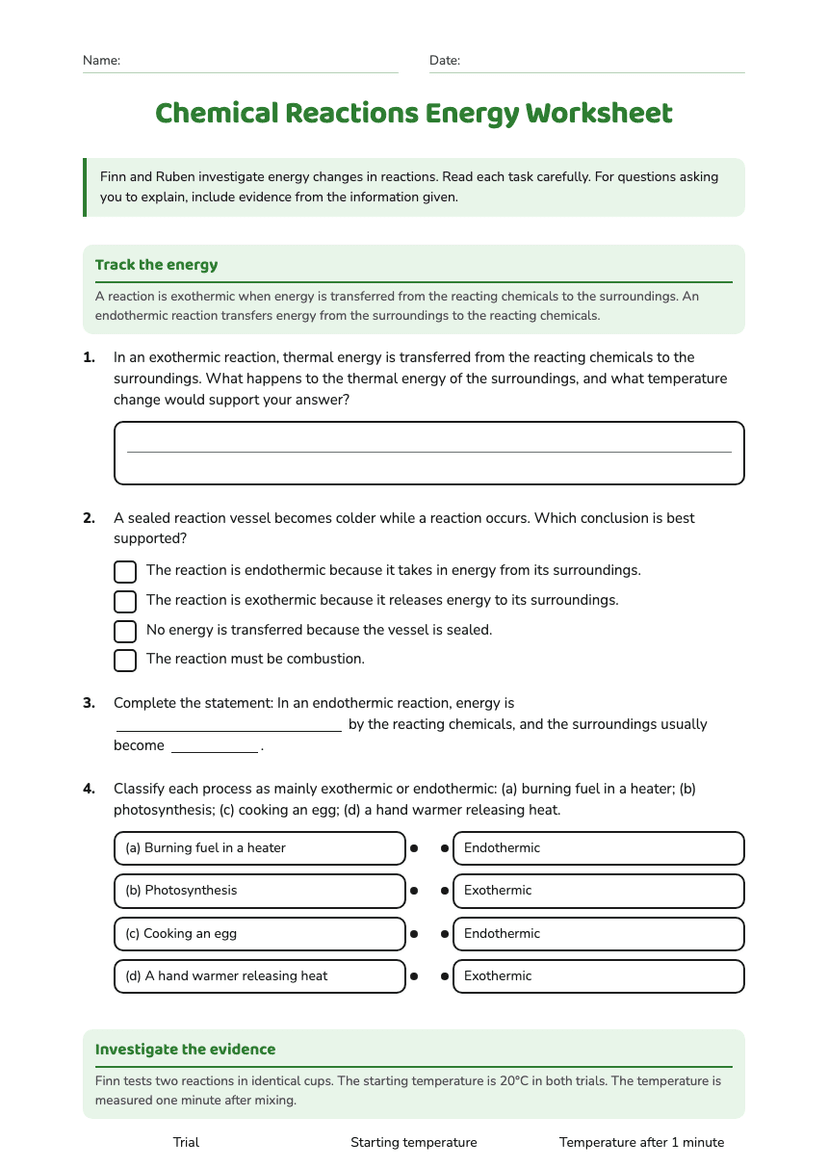
Chemical Reactions Energy Worksheet
Free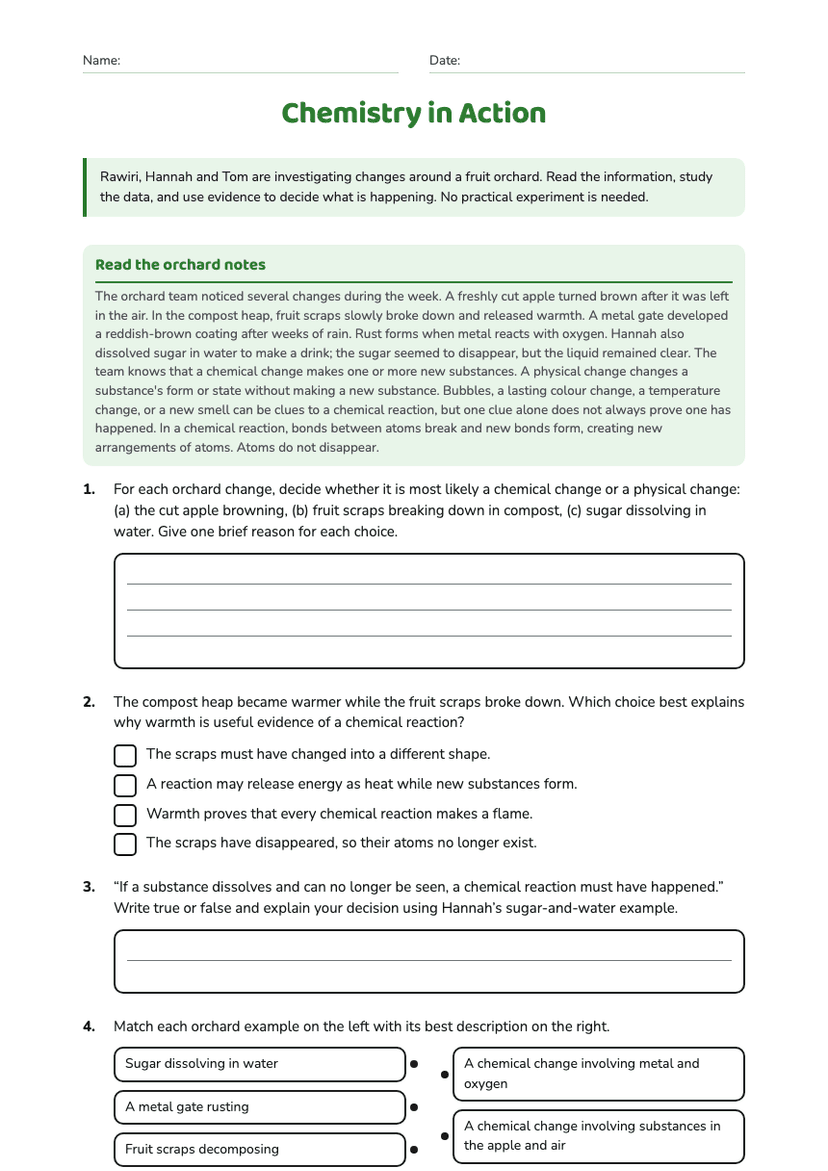
Chemistry in Action
Free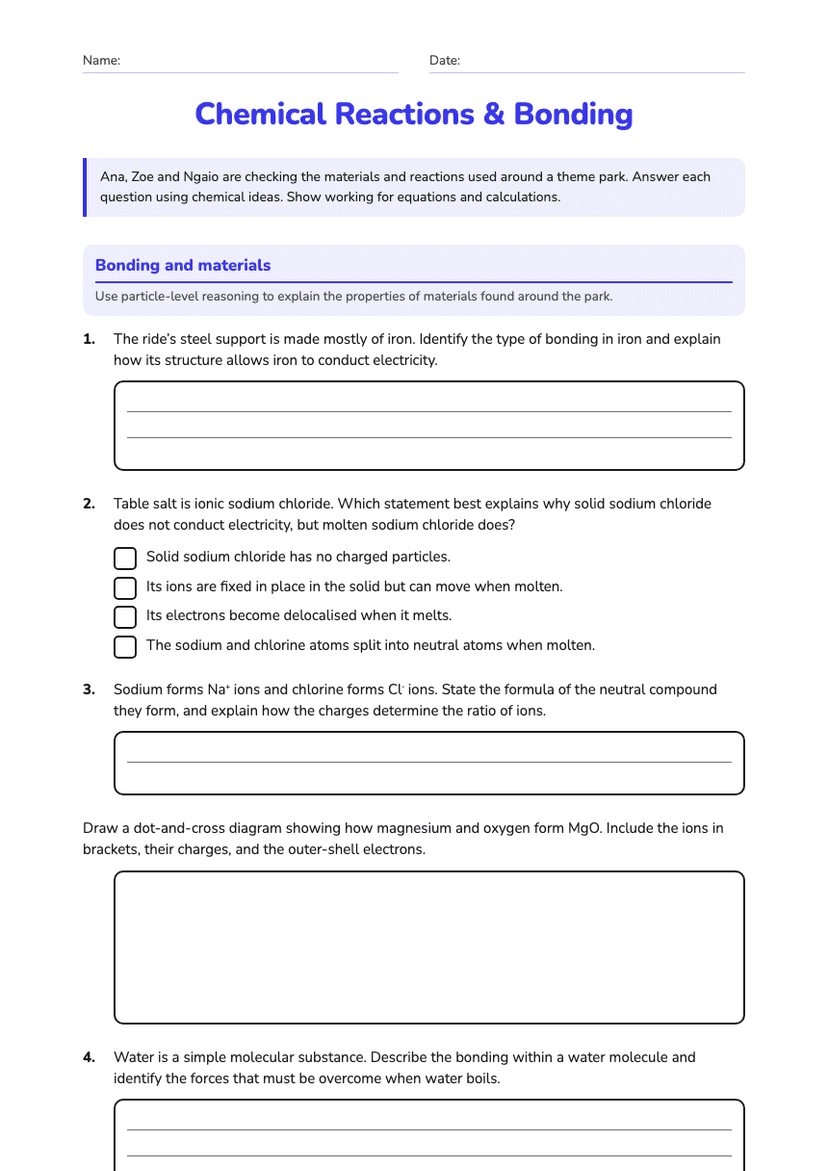
Chemical Reactions & Bonding
Free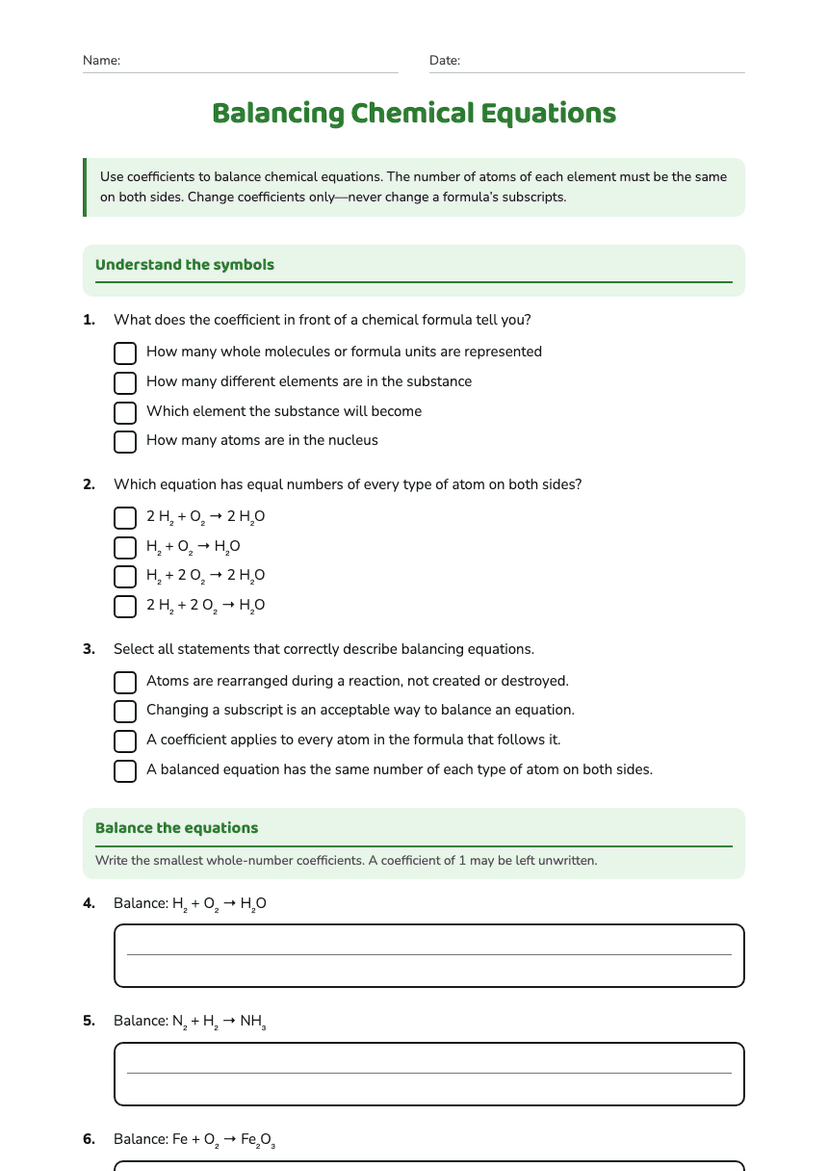
Balancing Chemical Equations
Free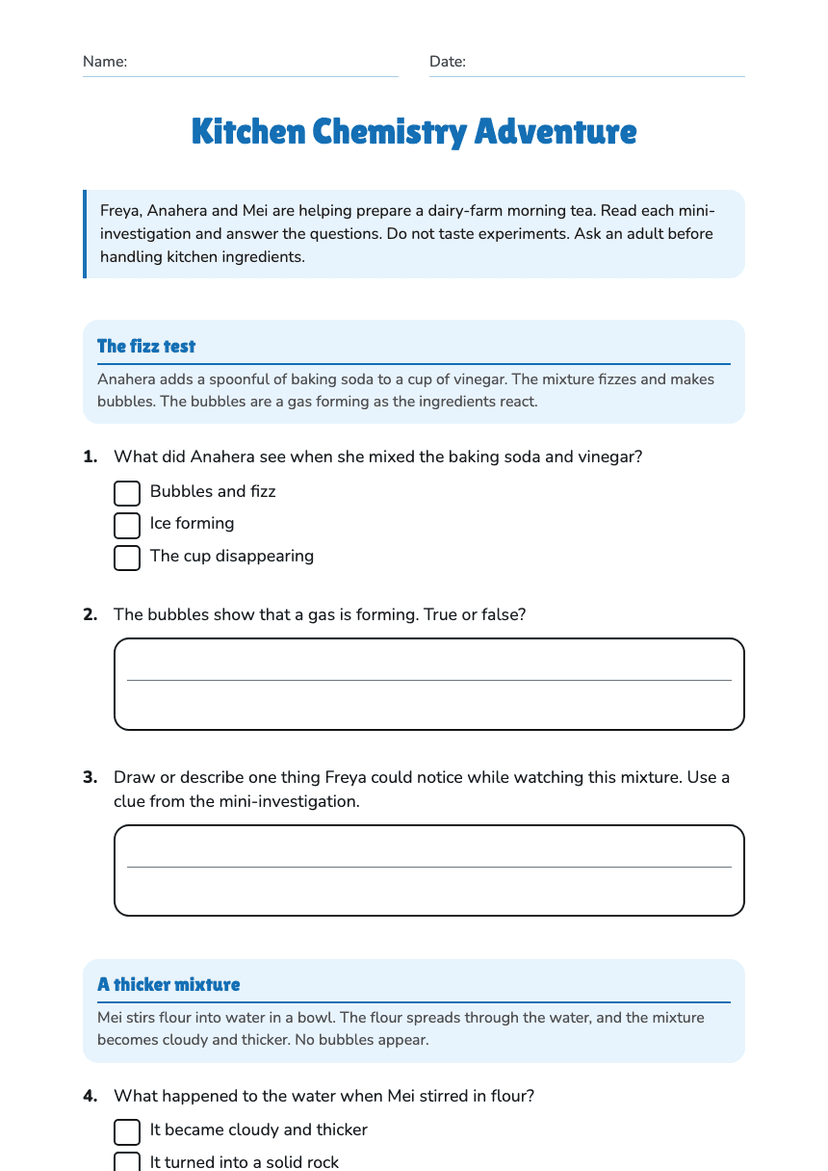
Kitchen Chemistry Adventure
Free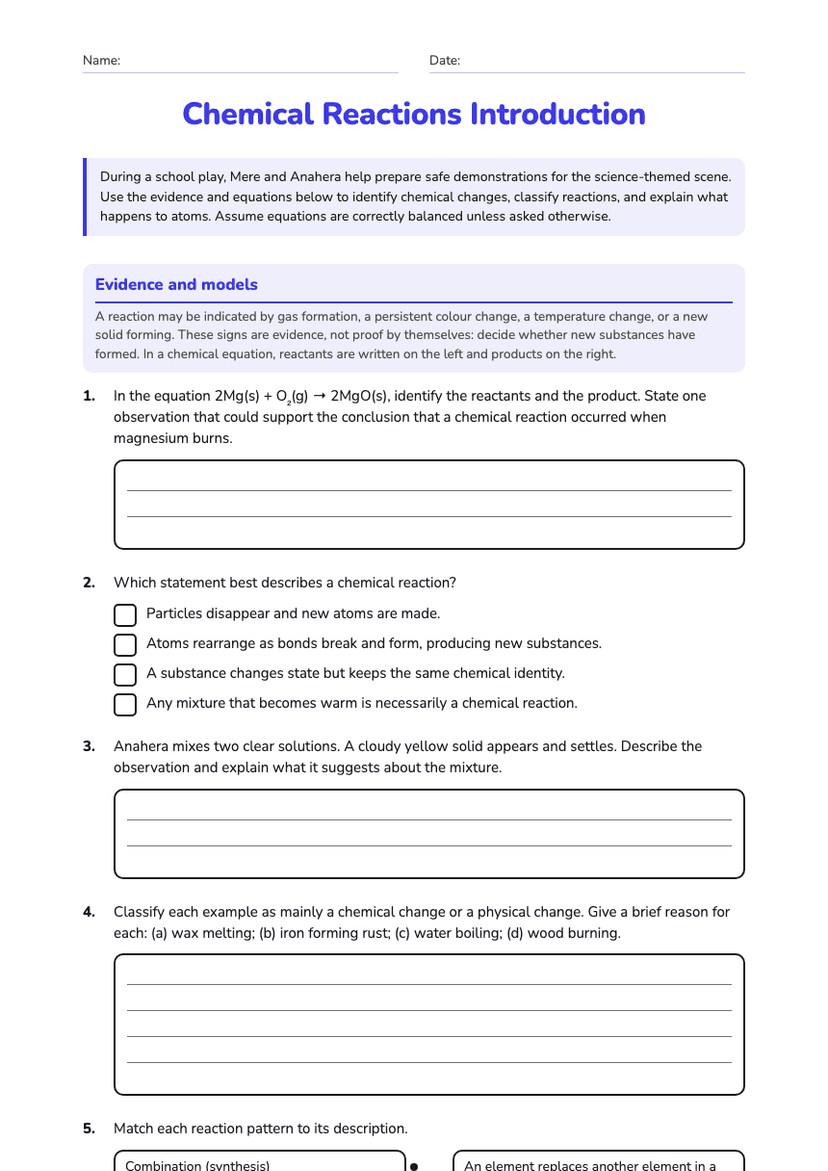
Chemical Reactions Introduction
Free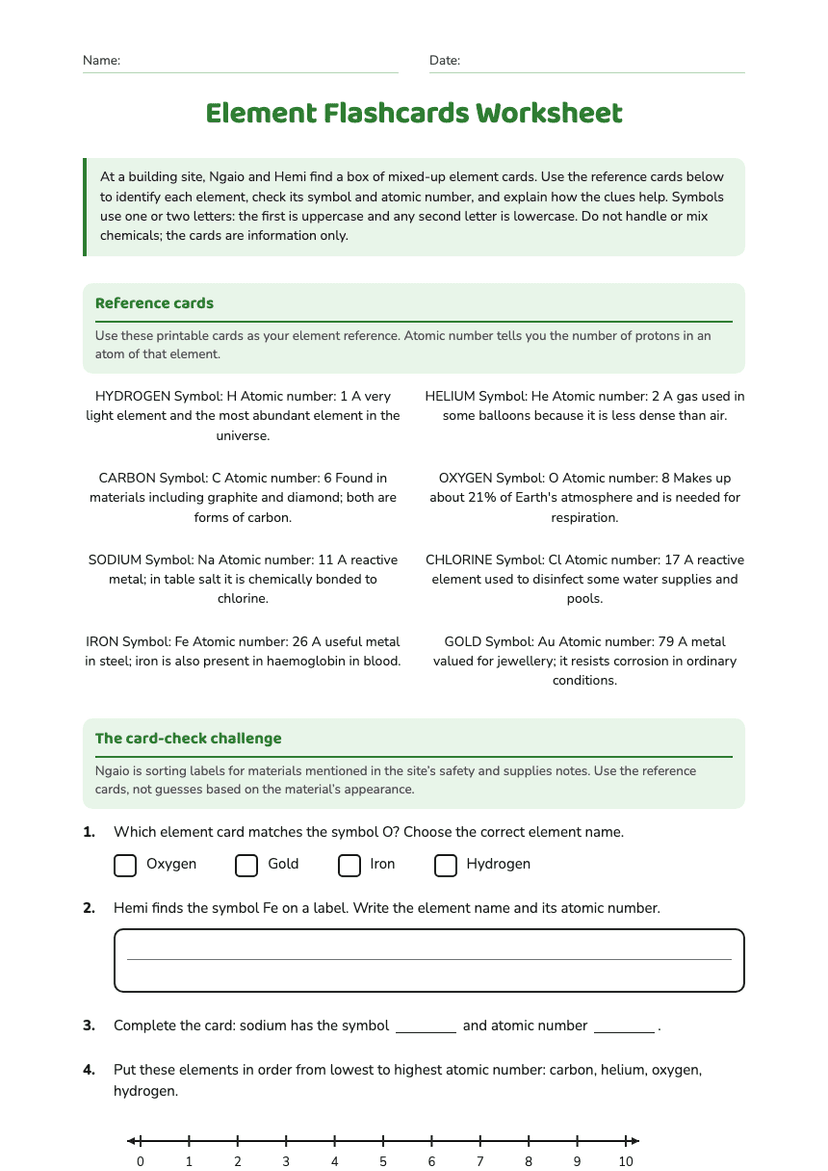
Element Flashcards Worksheet
Free