Pre-Treaty Historical Context
A free social sciences worksheet ready for your classroom. Open in Kuraplan to grab the print-ready PDF, customize it for your students, or generate a fresh version in seconds.
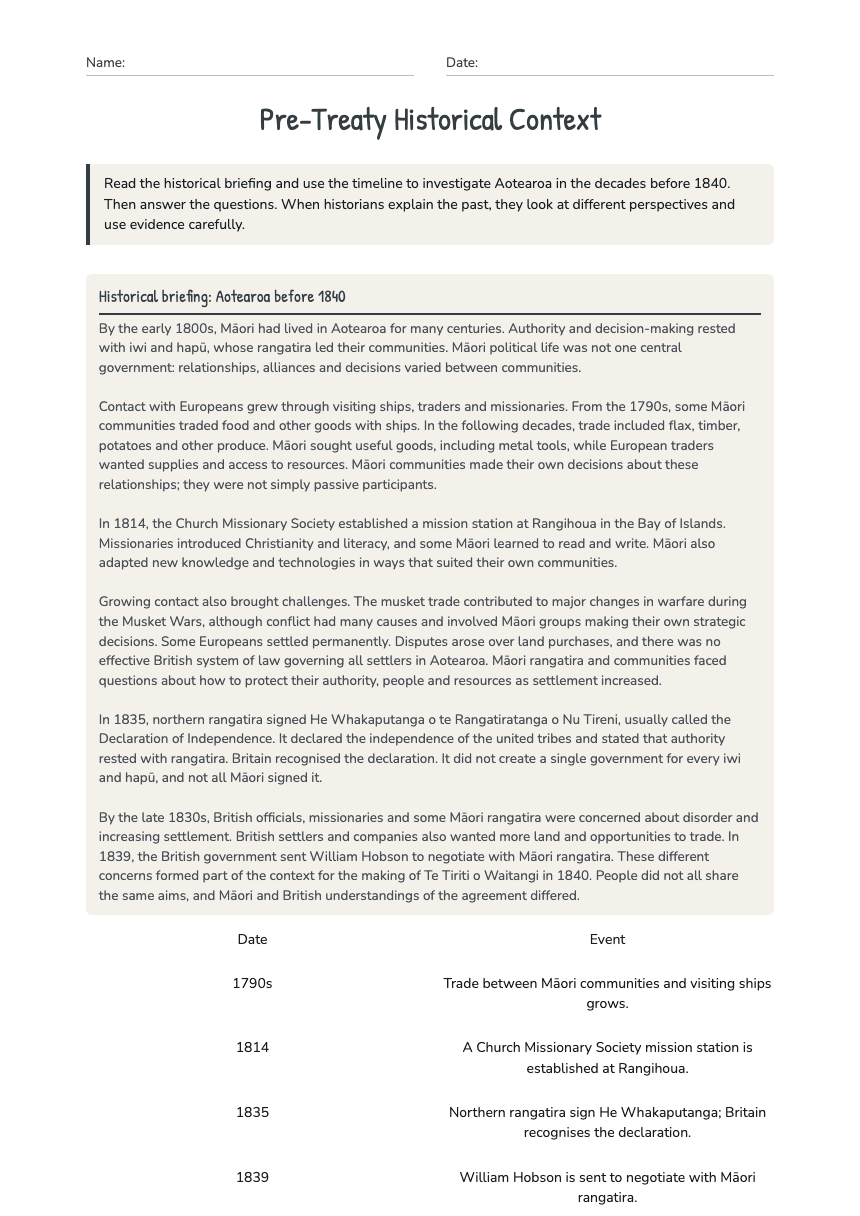
Pre-Treaty Historical Context
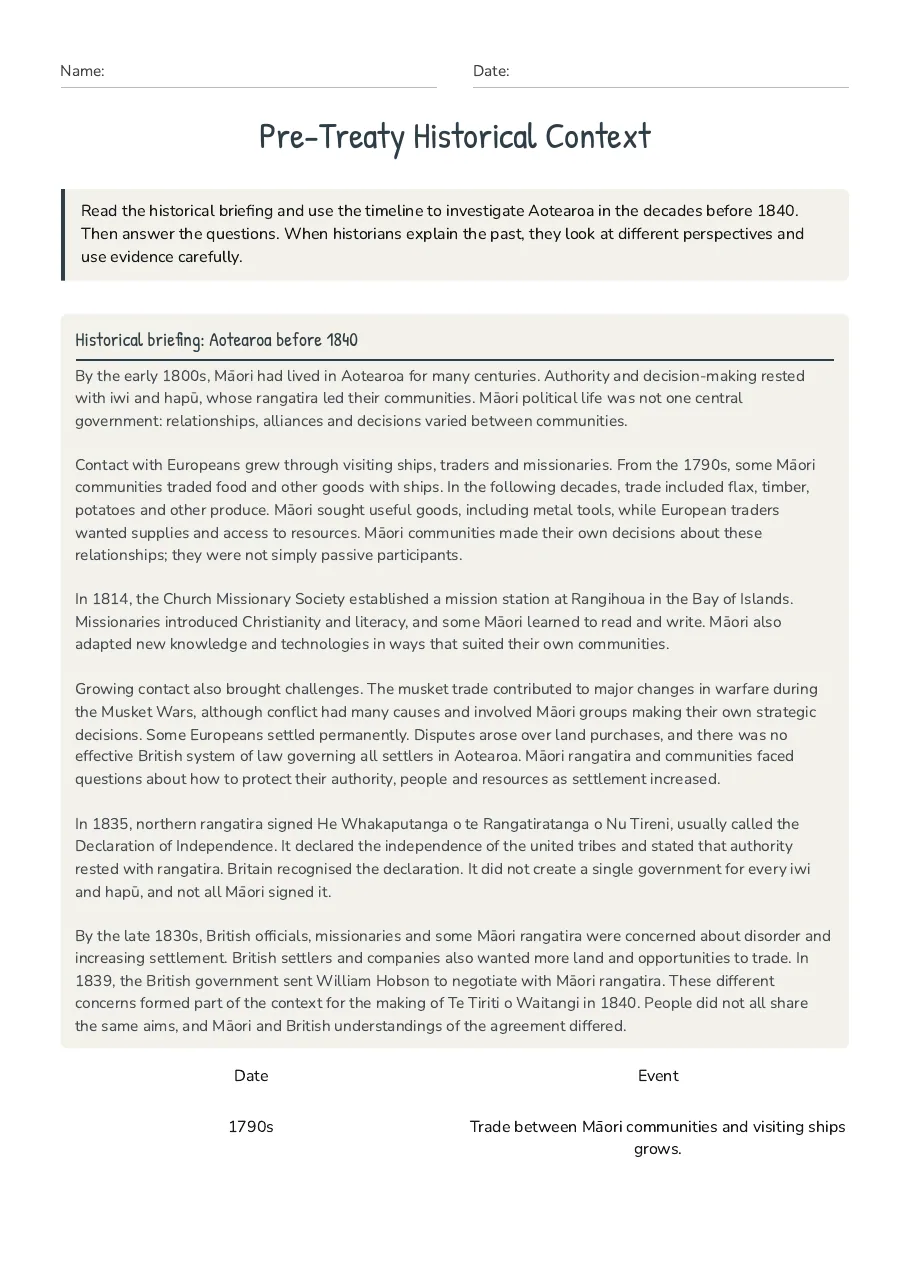
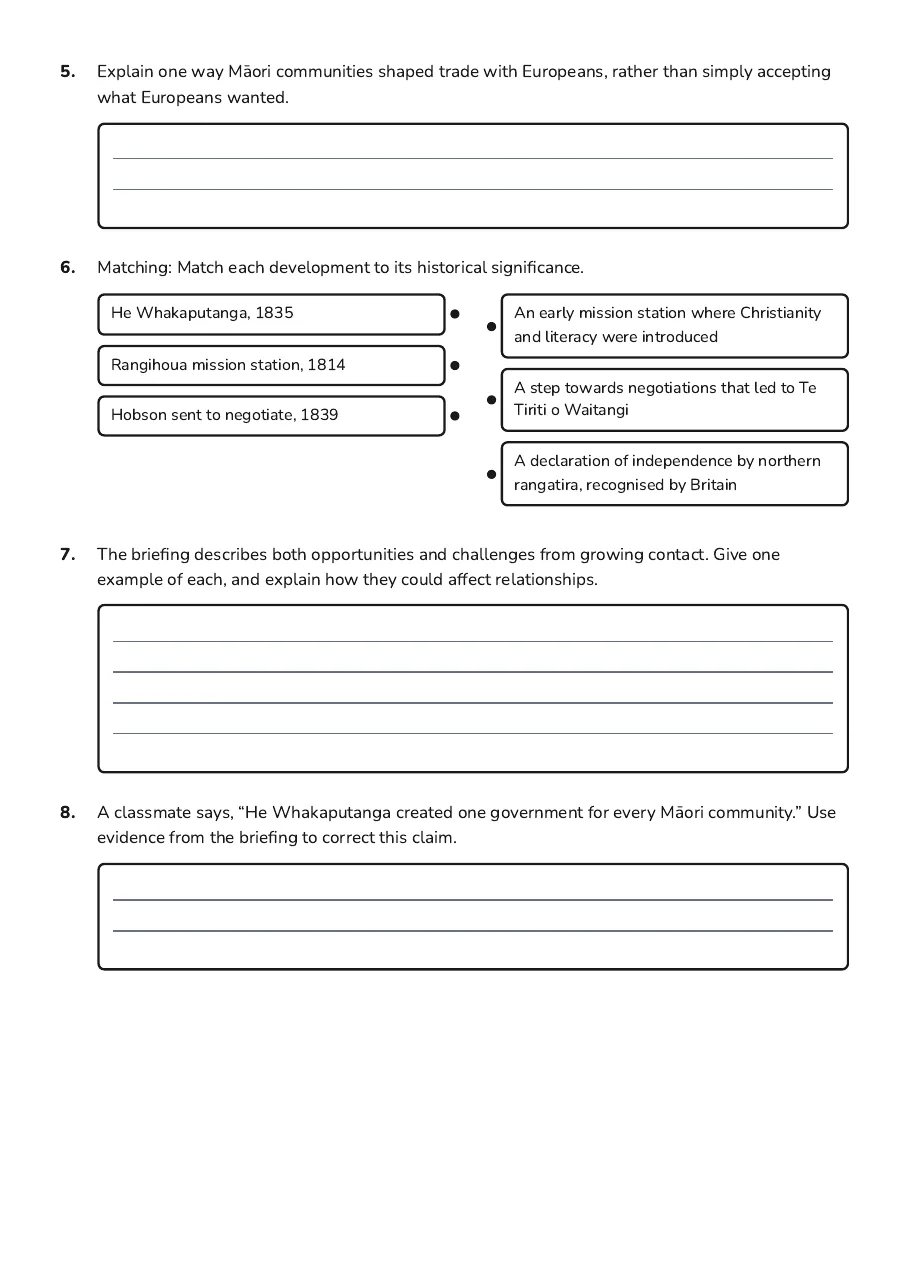
Historical briefing: Aotearoa before 1840
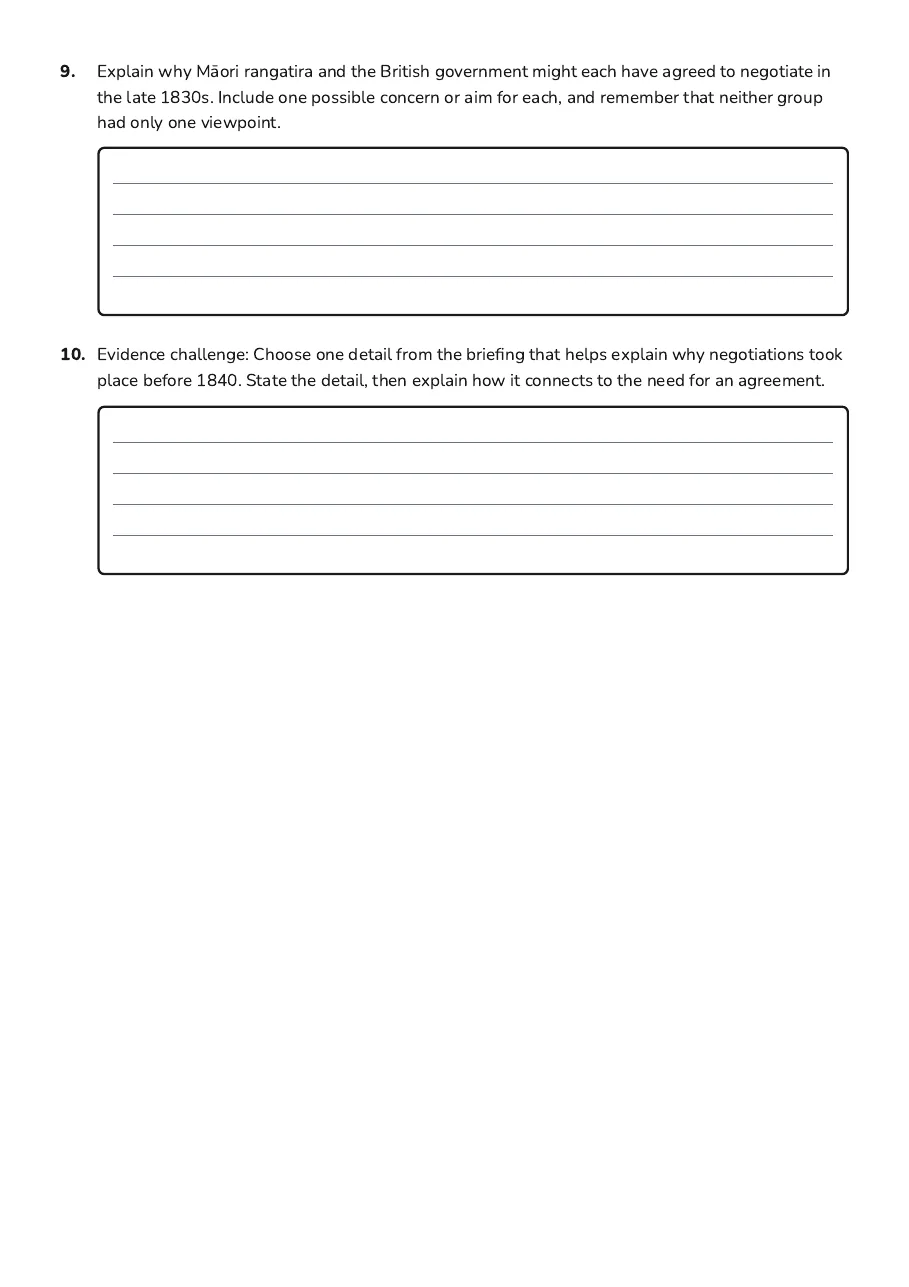
By the early 1800s, Māori had lived in Aotearoa for many centuries. Authority and decision-making rested with iwi and hapū, whose rangatira led their communities. Māori political life was not one central government: relationships, alliances and decisions varied between communities. Contact with Europeans grew through visiting ships, traders and missionaries. From the 1790s, some Māori communities traded food and other goods with ships. In the following decades, trade included flax, timber, potatoes and other produce. Māori sought useful goods, including metal tools, while European traders wanted supplies and access to resources. Māori communities made their own decisions about these relationships; they were not simply passive participants. In 1814, the Church Missionary Society established a mission station at Rangihoua in the Bay of Islands. Missionaries introduced Christianity and literacy, and some Māori learned to read and write. Māori also adapted new knowledge and technologies in ways that suited their own communities. Growing contact also brought challenges. The musket trade contributed to major changes in warfare during the Musket Wars, although conflict had many causes and involved Māori groups making their own strategic decisions. Some Europeans settled permanently. Disputes arose over land purchases, and there was no effective British system of law governing all settlers in Aotearoa. Māori rangatira and communities faced questions about how to protect their authority, people and resources as settlement increased. In 1835, northern rangatira signed He Whakaputanga o te Rangatiratanga o Nu Tireni, usually called the Declaration of Independence. It declared the independence of the united tribes and stated that authority rested with rangatira. Britain recognised the declaration. It did not create a single government for every iwi and hapū, and not all Māori signed it. By the late 1830s, British officials, missionaries and some Māori rangatira were concerned about disorder and increasing settlement. British settlers and companies also wanted more land and opportunities to trade. In 1839, the British government sent William Hobson to negotiate with Māori rangatira. These different concerns formed part of the context for the making of Te Tiriti o Waitangi in 1840. People did not all share the same aims, and Māori and British understandings of the agreement differed.
Date
Event
1790s
Trade between Māori communities and visiting ships grows.
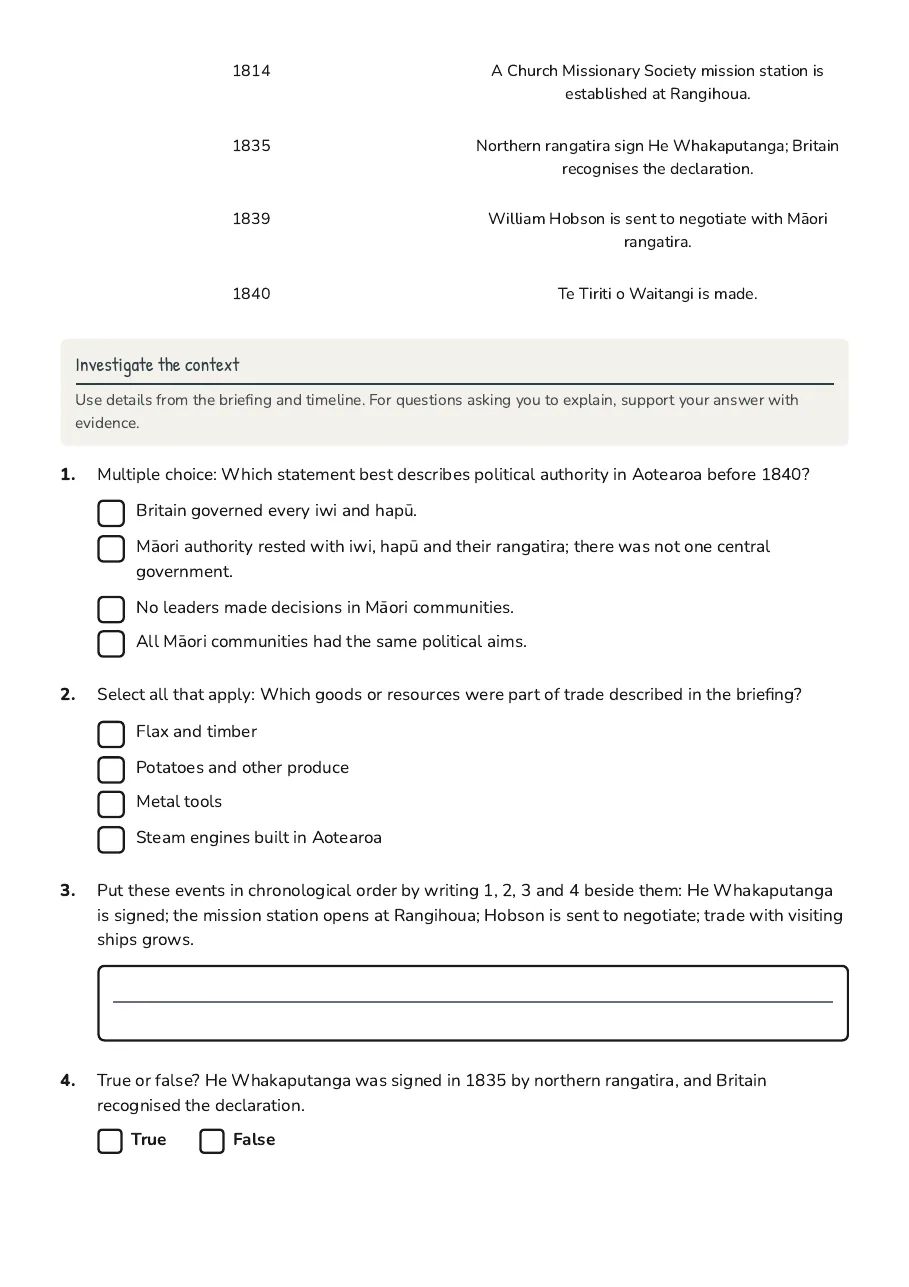
1814
A Church Missionary Society mission station is established at Rangihoua.
1835
Northern rangatira sign He Whakaputanga; Britain recognises the declaration.
1839
William Hobson is sent to negotiate with Māori rangatira.
1840
Te Tiriti o Waitangi is made.
Investigate the context
Use details from the briefing and timeline. For questions asking you to explain, support your answer with evidence.
- Britain governed every iwi and hapū.
- Māori authority rested with iwi, hapū and their rangatira; there was not one central government.
- No leaders made decisions in Māori communities.
- All Māori communities had the same political aims.
- Flax and timber
- Potatoes and other produce
- Metal tools
- Steam engines built in Aotearoa
- He Whakaputanga, 1835
- Rangihoua mission station, 1814
- Hobson sent to negotiate, 1839
- An early mission station where Christianity and literacy were introduced
- A step towards negotiations that led to Te Tiriti o Waitangi
- A declaration of independence by northern rangatira, recognised by Britain
4 printable pages
Page 1
Page 2
Page 3
Page 4
About This Worksheet
Free in Kuraplan
Sign up free, grab the PDF, and customize it for your class.
Print-Ready
Formatted for standard paper. Clean layout, easy to read.
AI-Generated
Created with Kuraplan's AI, designed for real classroom use.
For Teachers & Parents
Use in classrooms, for homework, tutoring, or homeschool.
Need a custom version of this worksheet?
Kuraplan's AI generates custom worksheets in seconds — differentiated for every learner, aligned to your curriculum.
Generate Custom Worksheets — FreeMore Social Sciences Worksheets
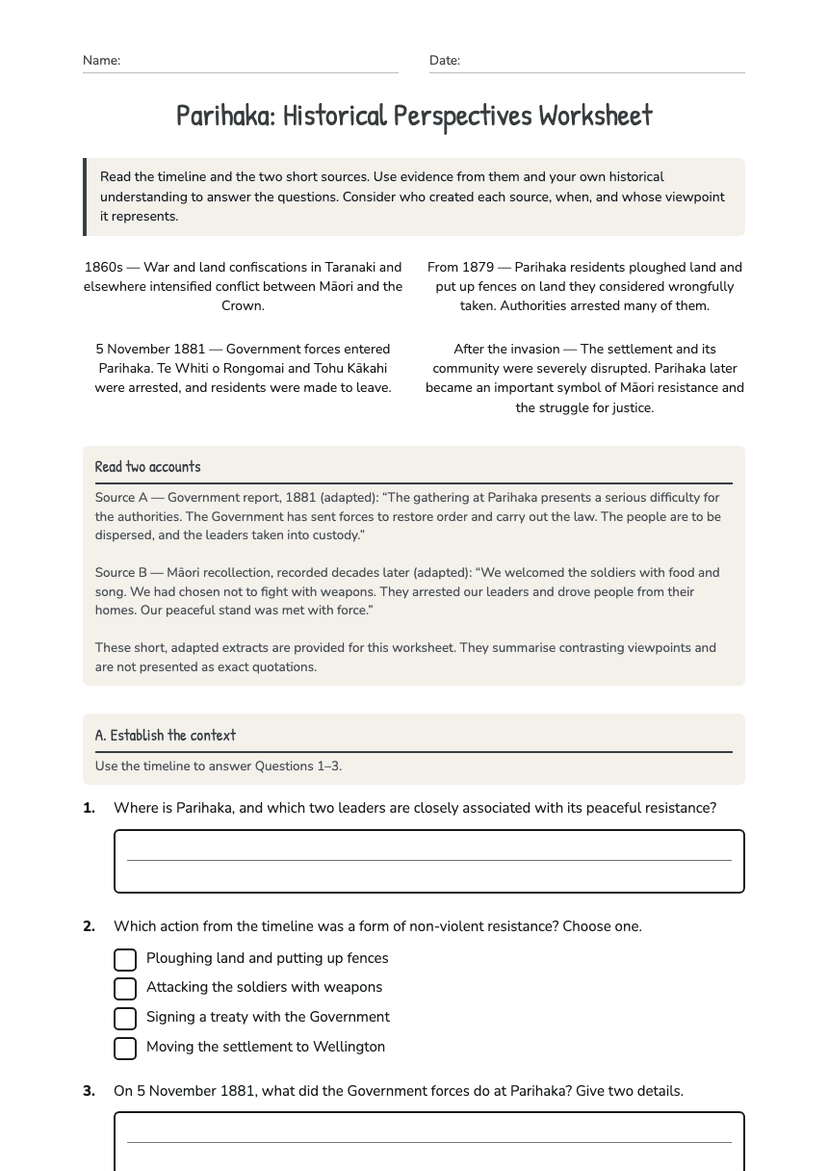
Parihaka: Historical Perspectives Worksheet
Free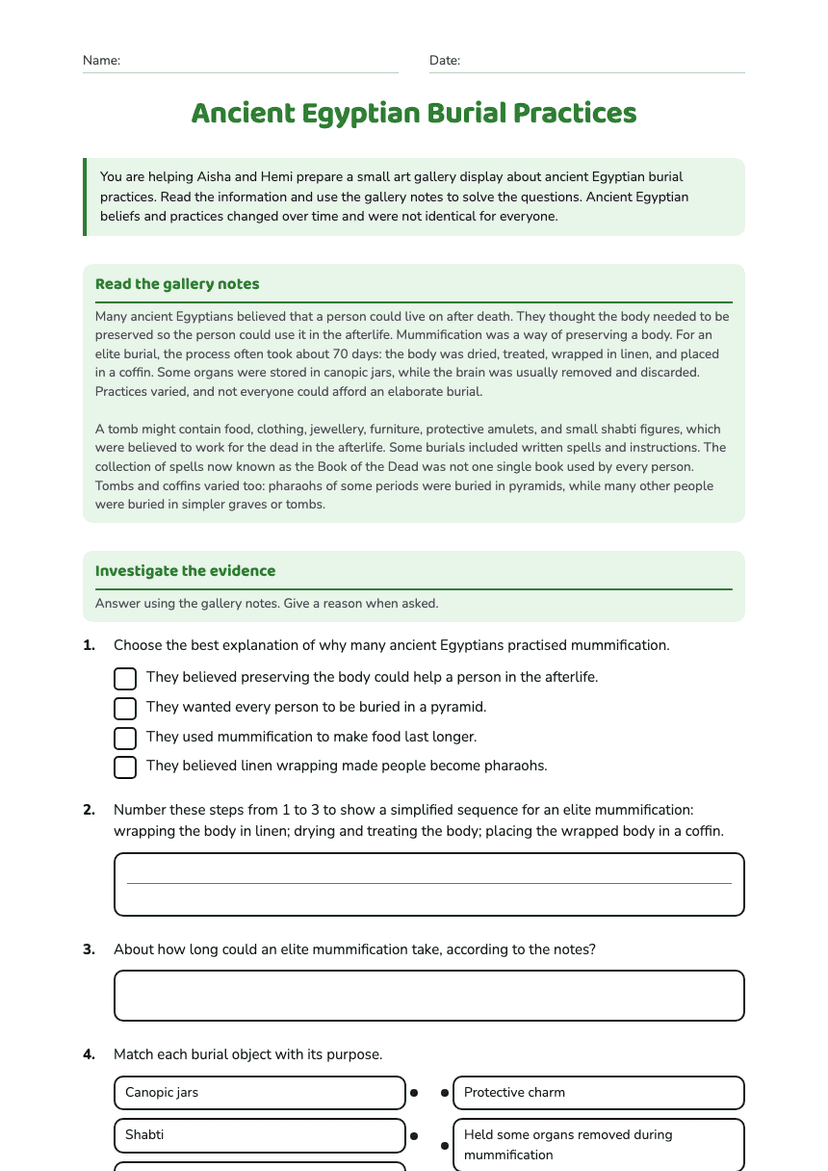
Ancient Egyptian Burial Practices
Free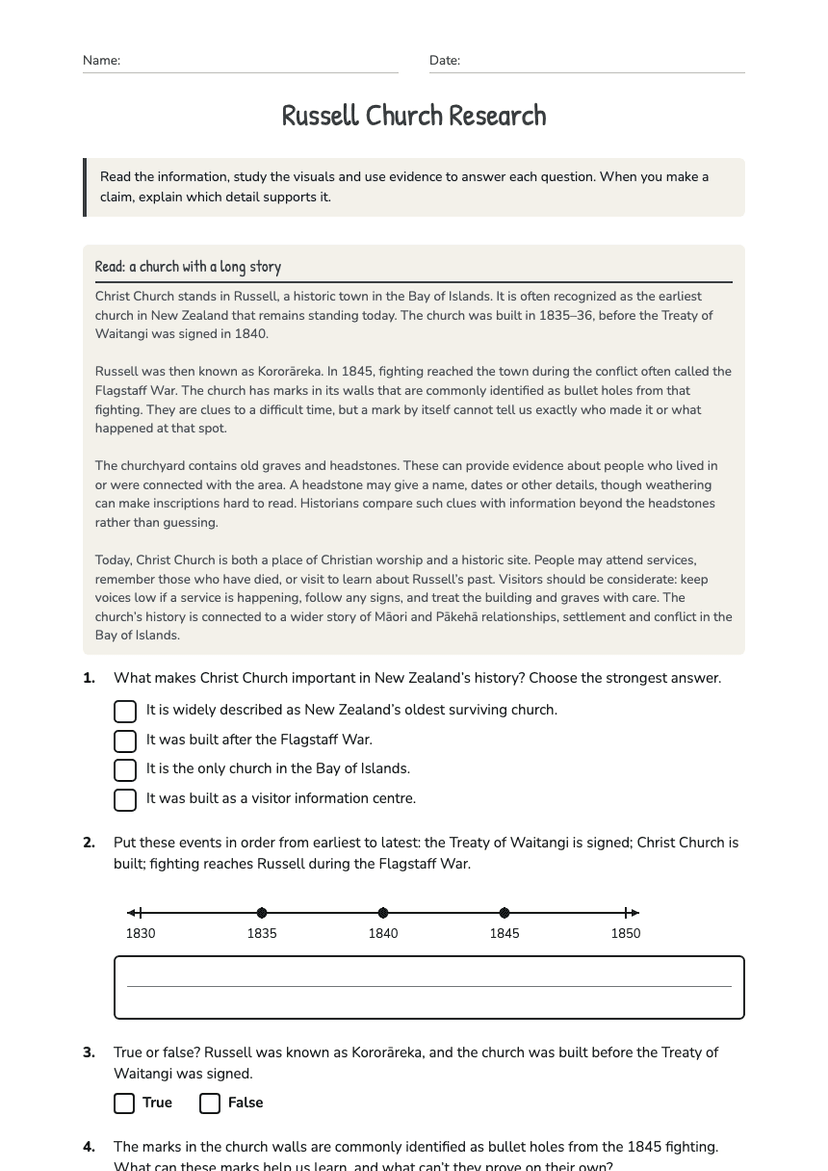
Russell Church Research
Free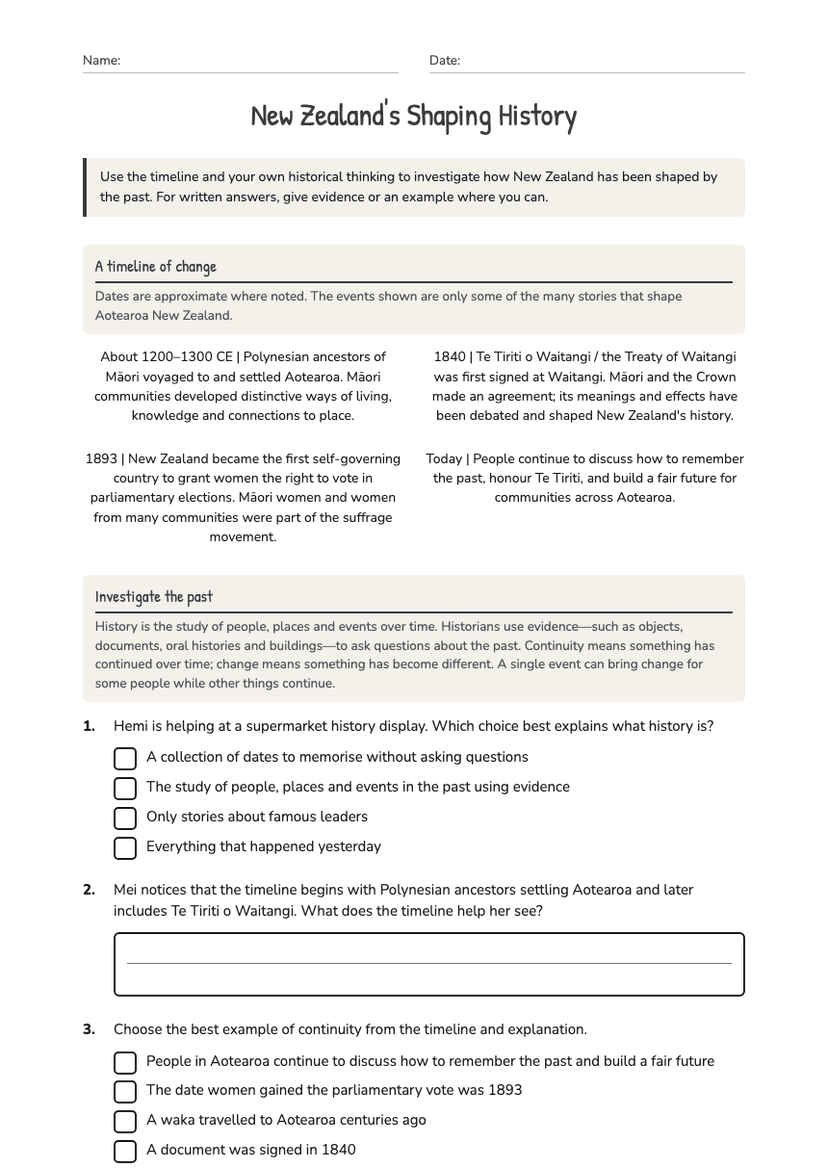
New Zealand's Shaping History
Free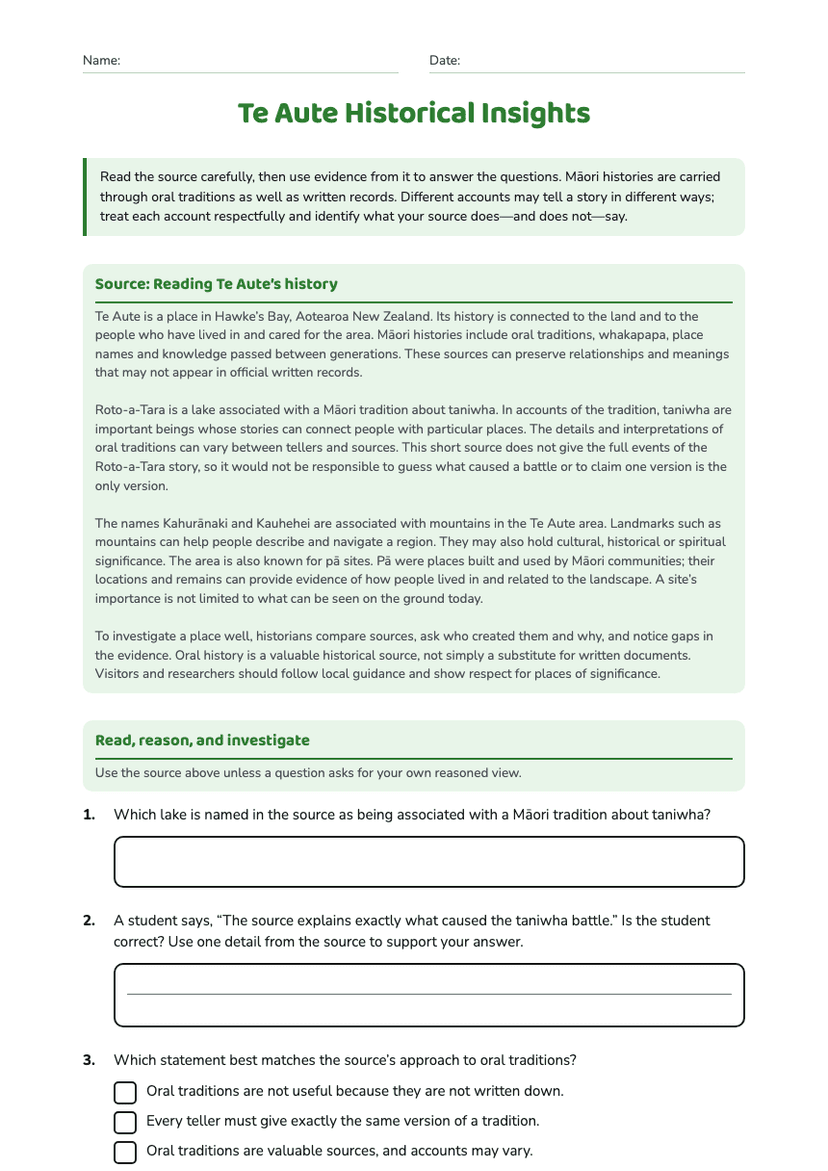
Te Aute Historical Insights
Free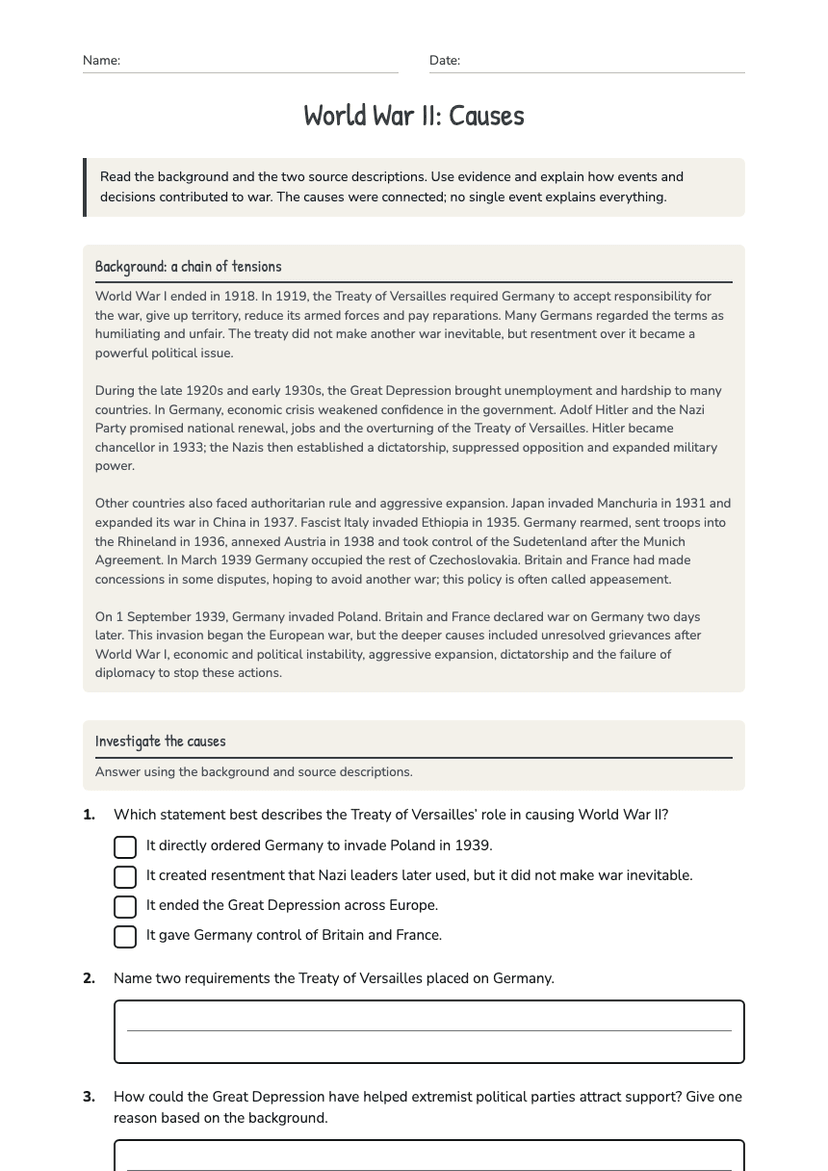
World War II: Causes
Free
Traditional and Modern Voyaging
Free