Pronunciation Practice Worksheet
A free languages worksheet ready for your classroom. Open in Kuraplan to grab the print-ready PDF, customize it for your students, or generate a fresh version in seconds.
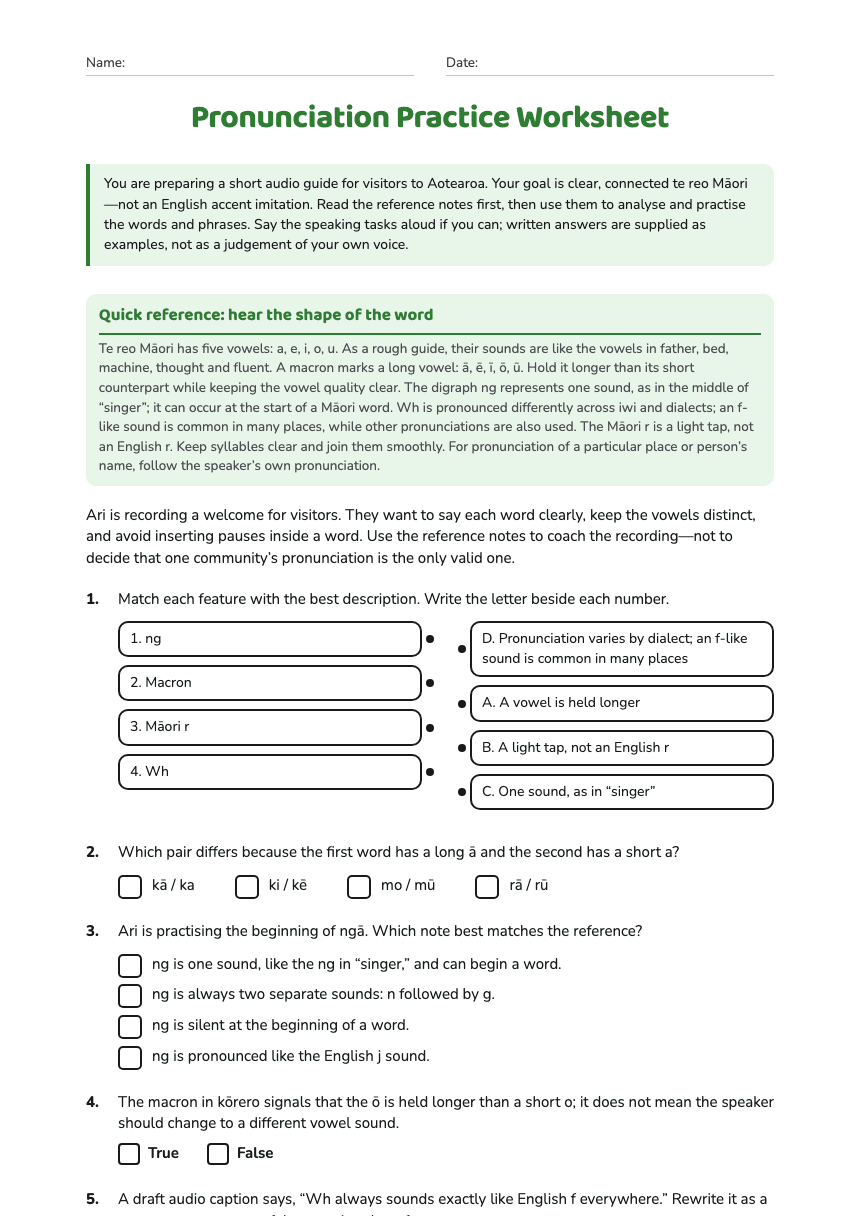
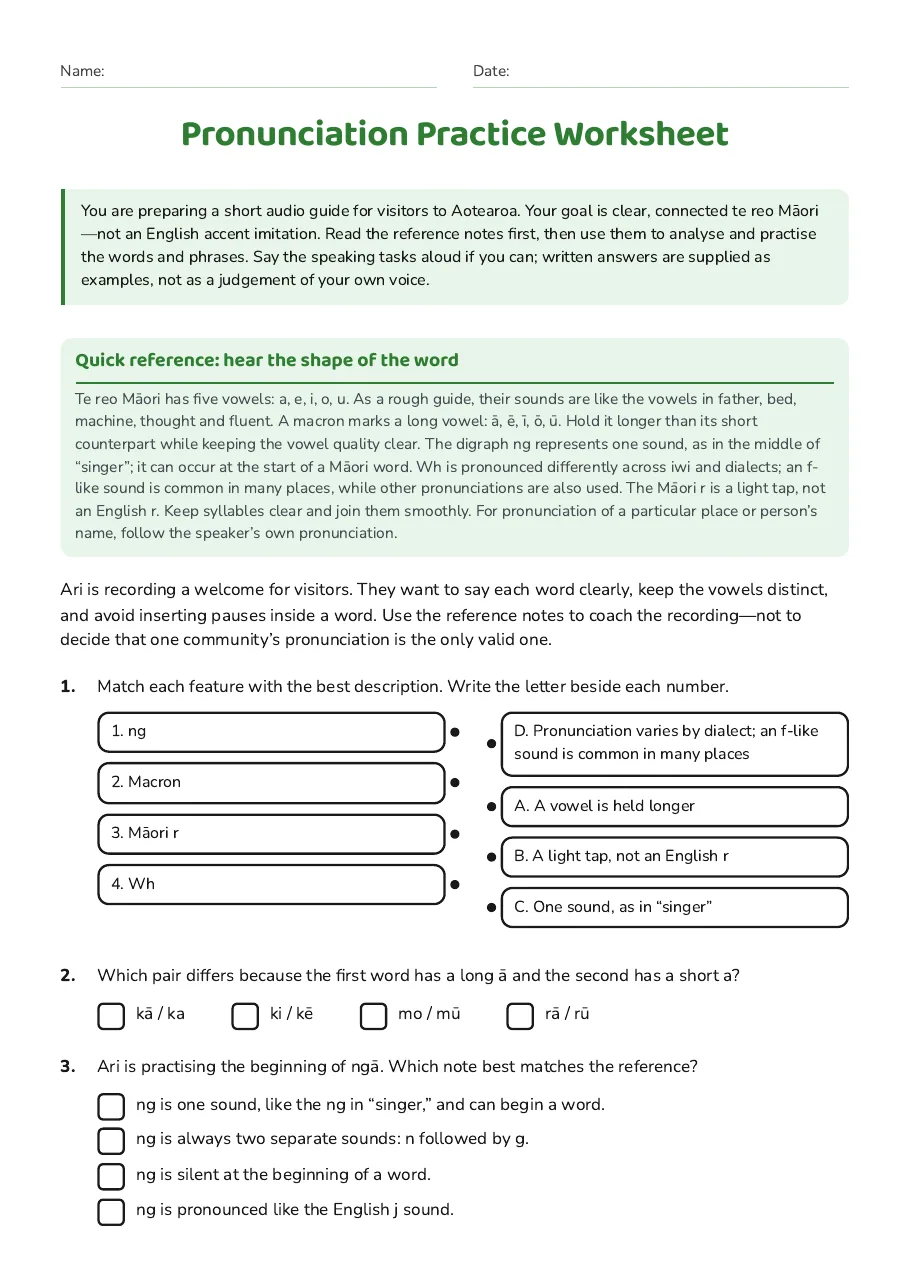
Pronunciation Practice Worksheet
Quick reference: hear the shape of the word
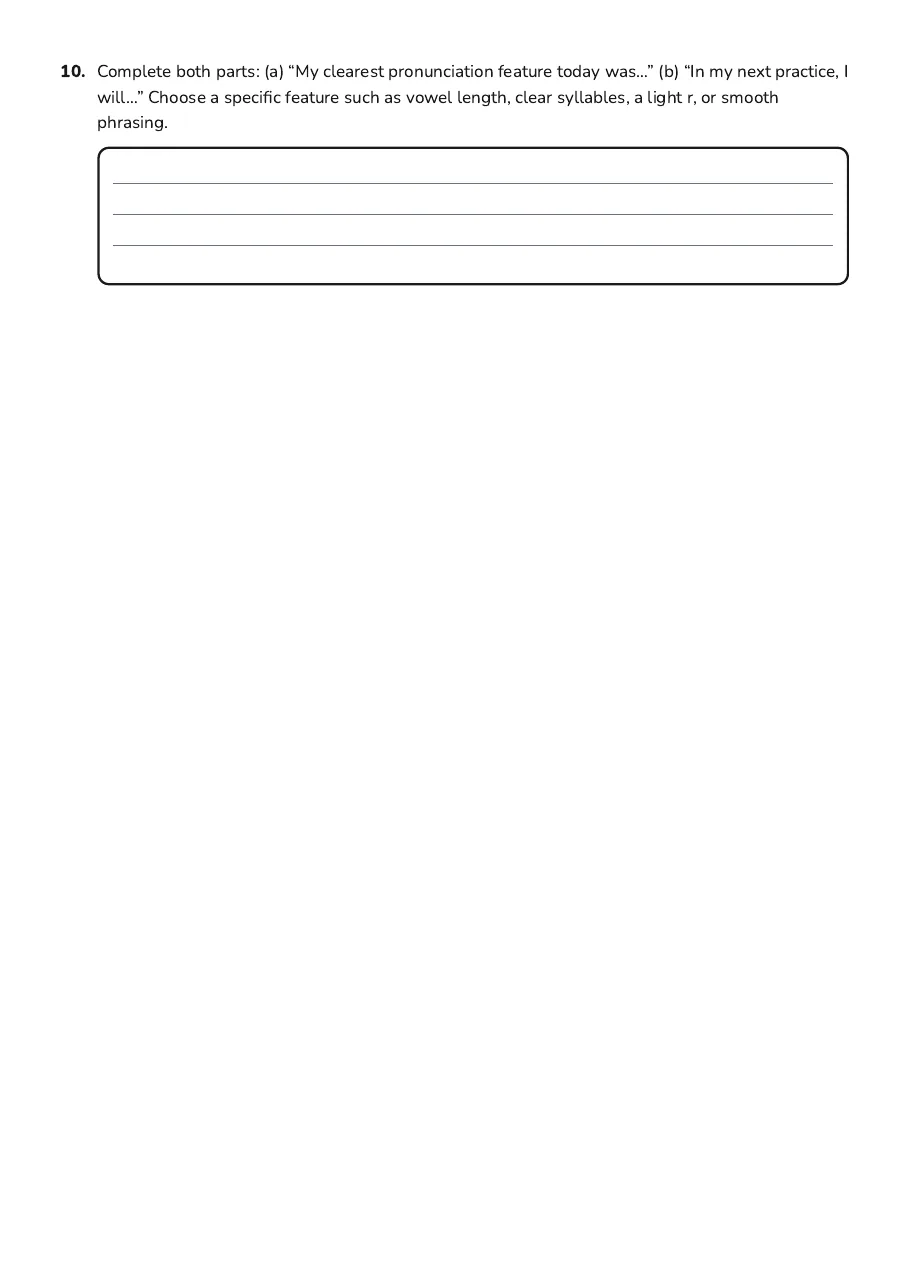
Te reo Māori has five vowels: a, e, i, o, u. As a rough guide, their sounds are like the vowels in father, bed, machine, thought and fluent. A macron marks a long vowel: ā, ē, ī, ō, ū. Hold it longer than its short counterpart while keeping the vowel quality clear. The digraph ng represents one sound, as in the middle of “singer”; it can occur at the start of a Māori word. Wh is pronounced differently across iwi and dialects; an f-like sound is common in many places, while other pronunciations are also used. The Māori r is a light tap, not an English r. Keep syllables clear and join them smoothly. For pronunciation of a particular place or person’s name, follow the speaker’s own pronunciation.
- 1. ng
- 2. Macron
- 3. Māori r
- 4. Wh
- D. Pronunciation varies by dialect; an f-like sound is common in many places
- A. A vowel is held longer
- B. A light tap, not an English r
- C. One sound, as in “singer”
- kā / ka
- ki / kē
- mo / mū
- rā / rū
- ng is one sound, like the ng in “singer,” and can begin a word.
- ng is always two separate sounds: n followed by g.
- ng is silent at the beginning of a word.
- ng is pronounced like the English j sound.
3 printable pages
Page 1
Page 2
Page 3
About This Worksheet
Free in Kuraplan
Sign up free, grab the PDF, and customize it for your class.
Print-Ready
Formatted for standard paper. Clean layout, easy to read.
AI-Generated
Created with Kuraplan's AI, designed for real classroom use.
For Teachers & Parents
Use in classrooms, for homework, tutoring, or homeschool.
Need a custom version of this worksheet?
Kuraplan's AI generates custom worksheets in seconds — differentiated for every learner, aligned to your curriculum.
Generate Custom Worksheets — Free