Samoan Ava Storytelling
A free languages worksheet ready for your classroom. Open in Kuraplan to grab the print-ready PDF, customize it for your students, or generate a fresh version in seconds.
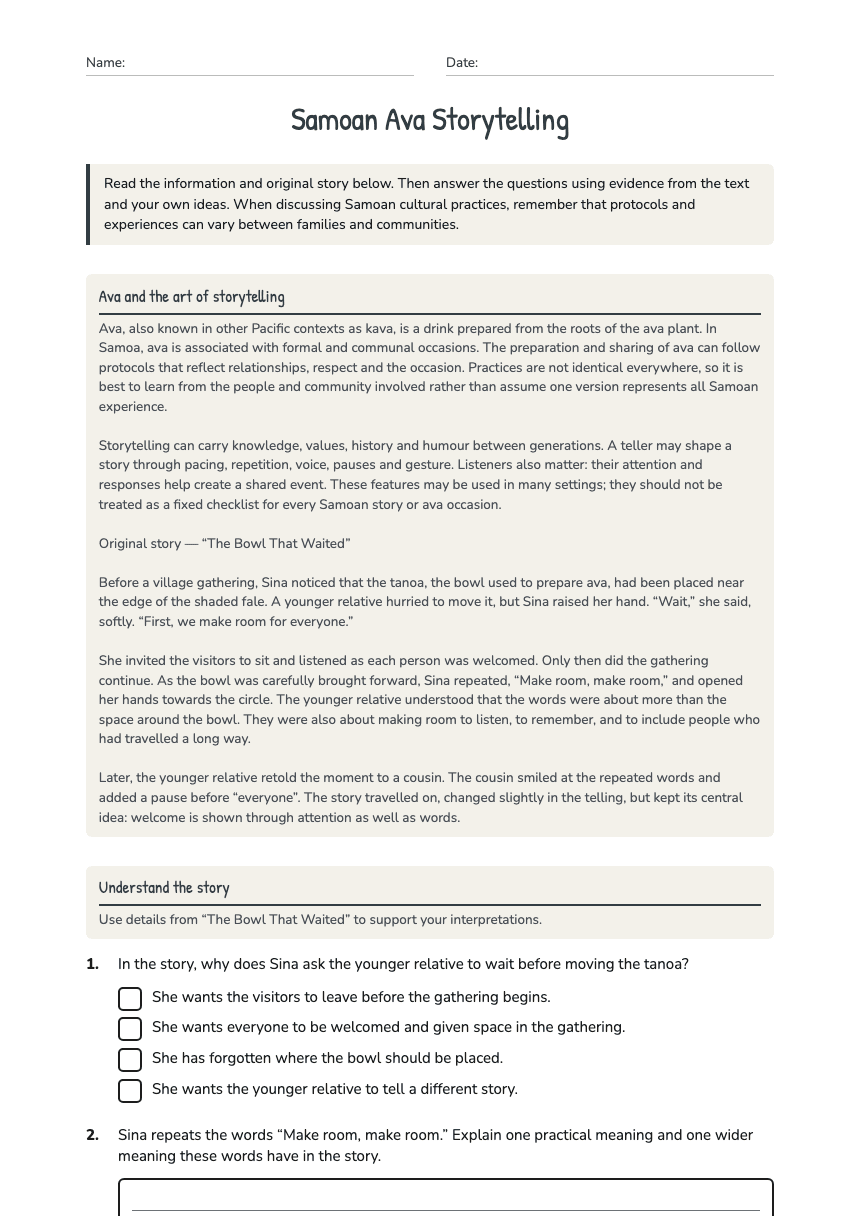
Samoan Ava Storytelling
Ava and the art of storytelling
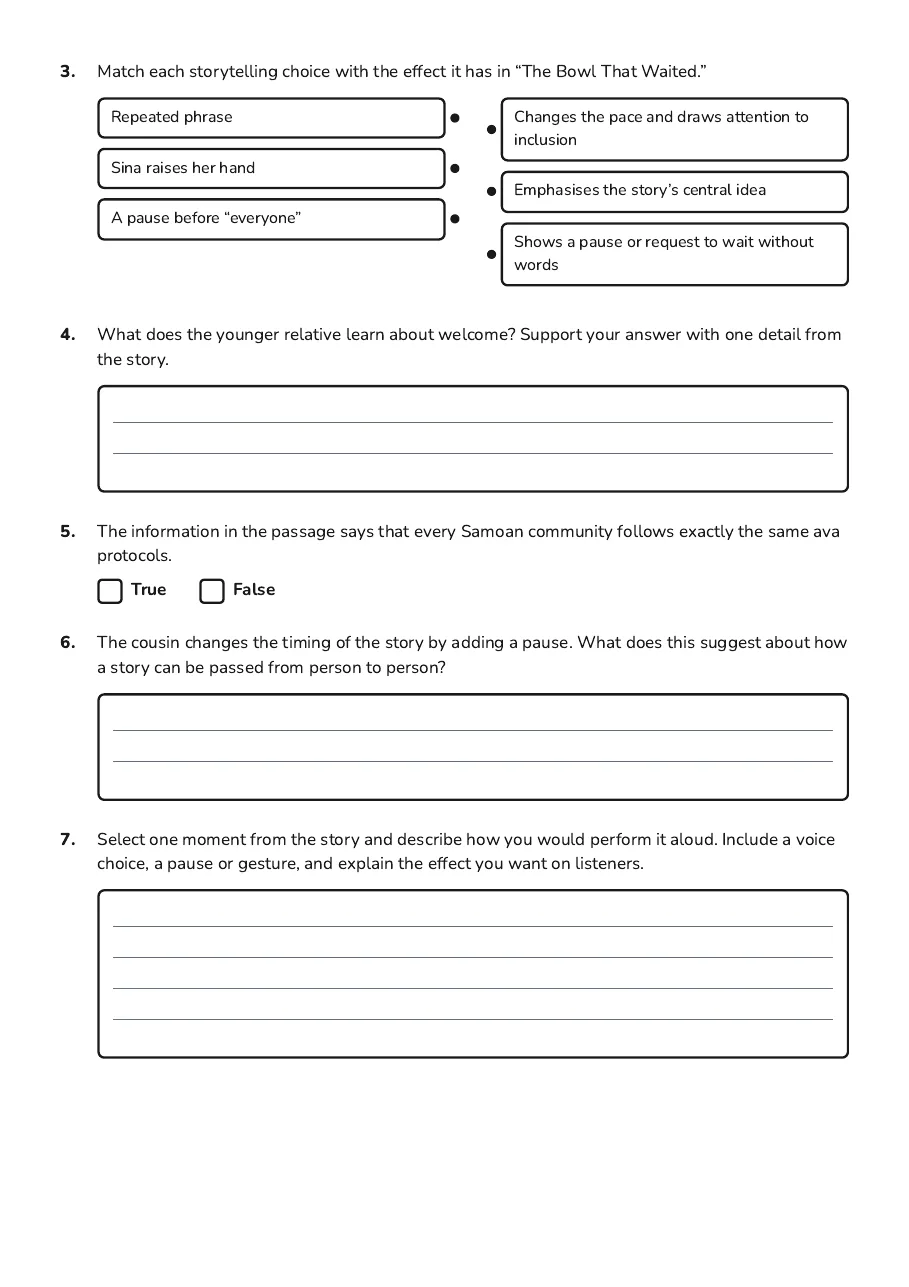
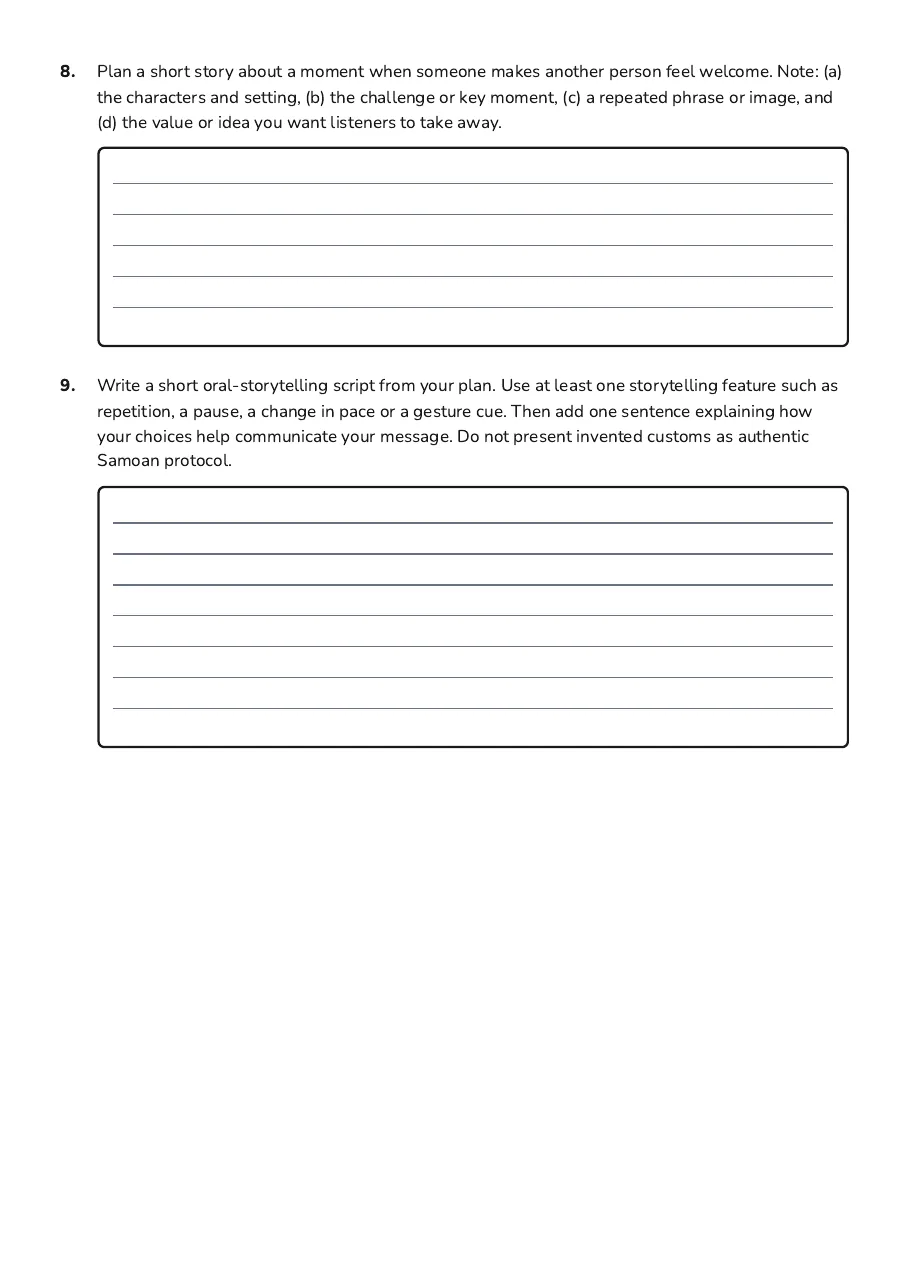
Ava, also known in other Pacific contexts as kava, is a drink prepared from the roots of the ava plant. In Samoa, ava is associated with formal and communal occasions. The preparation and sharing of ava can follow protocols that reflect relationships, respect and the occasion. Practices are not identical everywhere, so it is best to learn from the people and community involved rather than assume one version represents all Samoan experience. Storytelling can carry knowledge, values, history and humour between generations. A teller may shape a story through pacing, repetition, voice, pauses and gesture. Listeners also matter: their attention and responses help create a shared event. These features may be used in many settings; they should not be treated as a fixed checklist for every Samoan story or ava occasion. Original story — “The Bowl That Waited” Before a village gathering, Sina noticed that the tanoa, the bowl used to prepare ava, had been placed near the edge of the shaded fale. A younger relative hurried to move it, but Sina raised her hand. “Wait,” she said, softly. “First, we make room for everyone.” She invited the visitors to sit and listened as each person was welcomed. Only then did the gathering continue. As the bowl was carefully brought forward, Sina repeated, “Make room, make room,” and opened her hands towards the circle. The younger relative understood that the words were about more than the space around the bowl. They were also about making room to listen, to remember, and to include people who had travelled a long way. Later, the younger relative retold the moment to a cousin. The cousin smiled at the repeated words and added a pause before “everyone”. The story travelled on, changed slightly in the telling, but kept its central idea: welcome is shown through attention as well as words.
Understand the story
Use details from “The Bowl That Waited” to support your interpretations.
- She wants the visitors to leave before the gathering begins.
- She wants everyone to be welcomed and given space in the gathering.
- She has forgotten where the bowl should be placed.
- She wants the younger relative to tell a different story.
- Repeated phrase
- Sina raises her hand
- A pause before “everyone”
- Changes the pace and draws attention to inclusion
- Emphasises the story’s central idea
- Shows a pause or request to wait without words
4 printable pages
Page 1
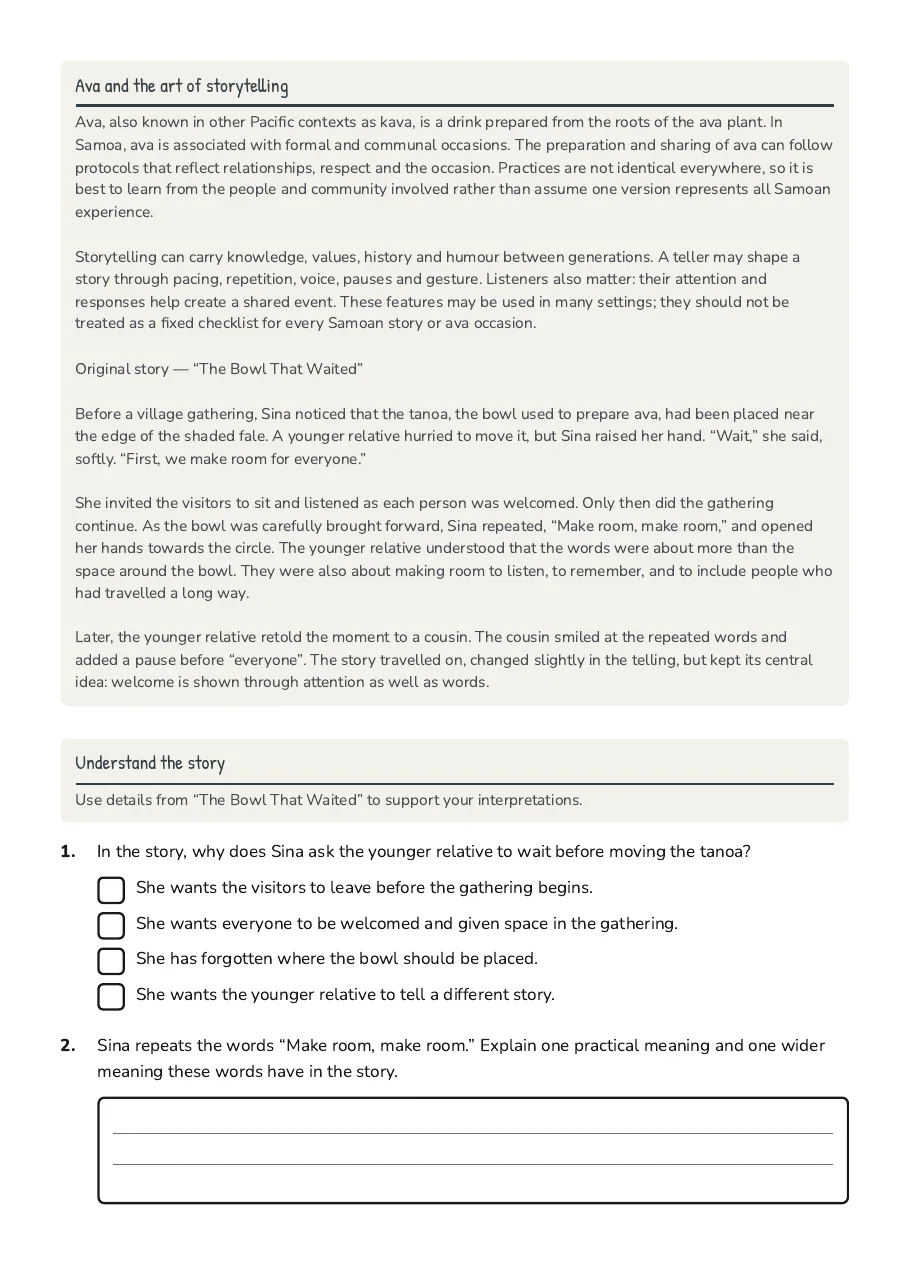
Page 2
Page 3
Page 4
About This Worksheet
Free in Kuraplan
Sign up free, grab the PDF, and customize it for your class.
Print-Ready
Formatted for standard paper. Clean layout, easy to read.
AI-Generated
Created with Kuraplan's AI, designed for real classroom use.
For Teachers & Parents
Use in classrooms, for homework, tutoring, or homeschool.
Need a custom version of this worksheet?
Kuraplan's AI generates custom worksheets in seconds — differentiated for every learner, aligned to your curriculum.
Generate Custom Worksheets — FreeMore Languages Worksheets
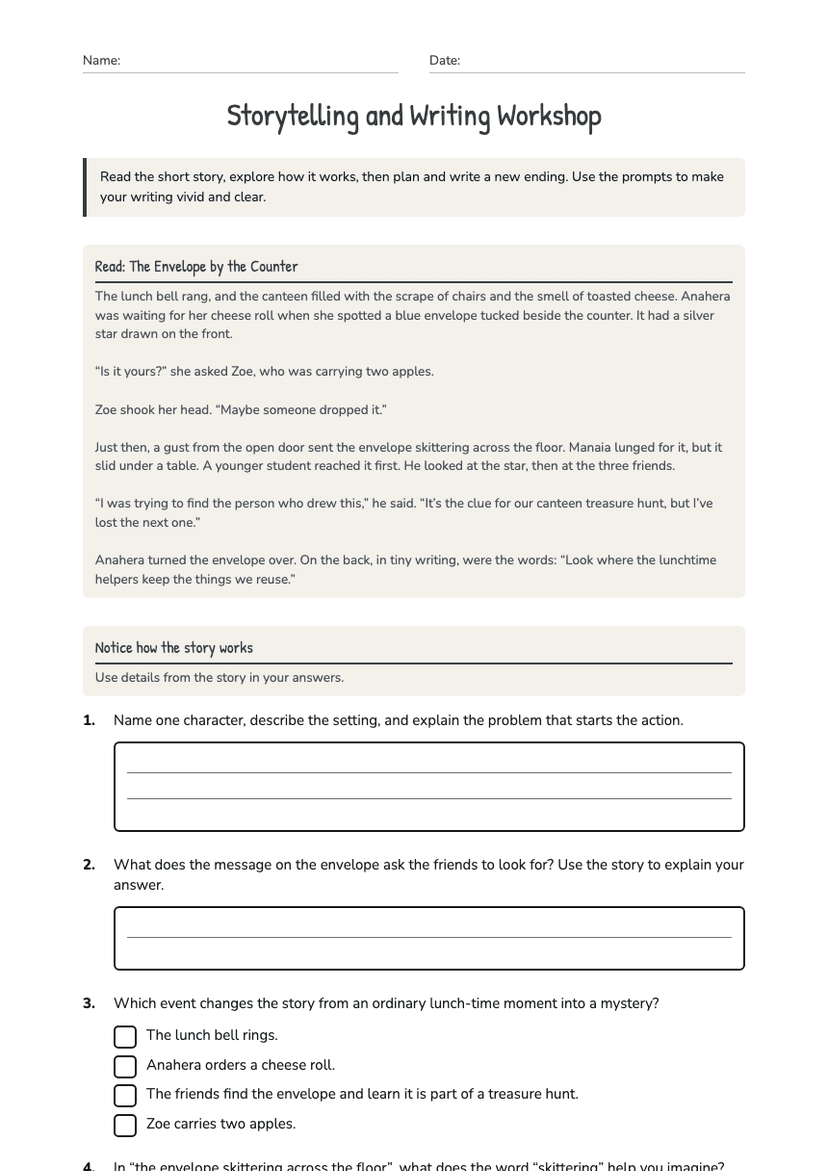
Storytelling and Writing Workshop
Free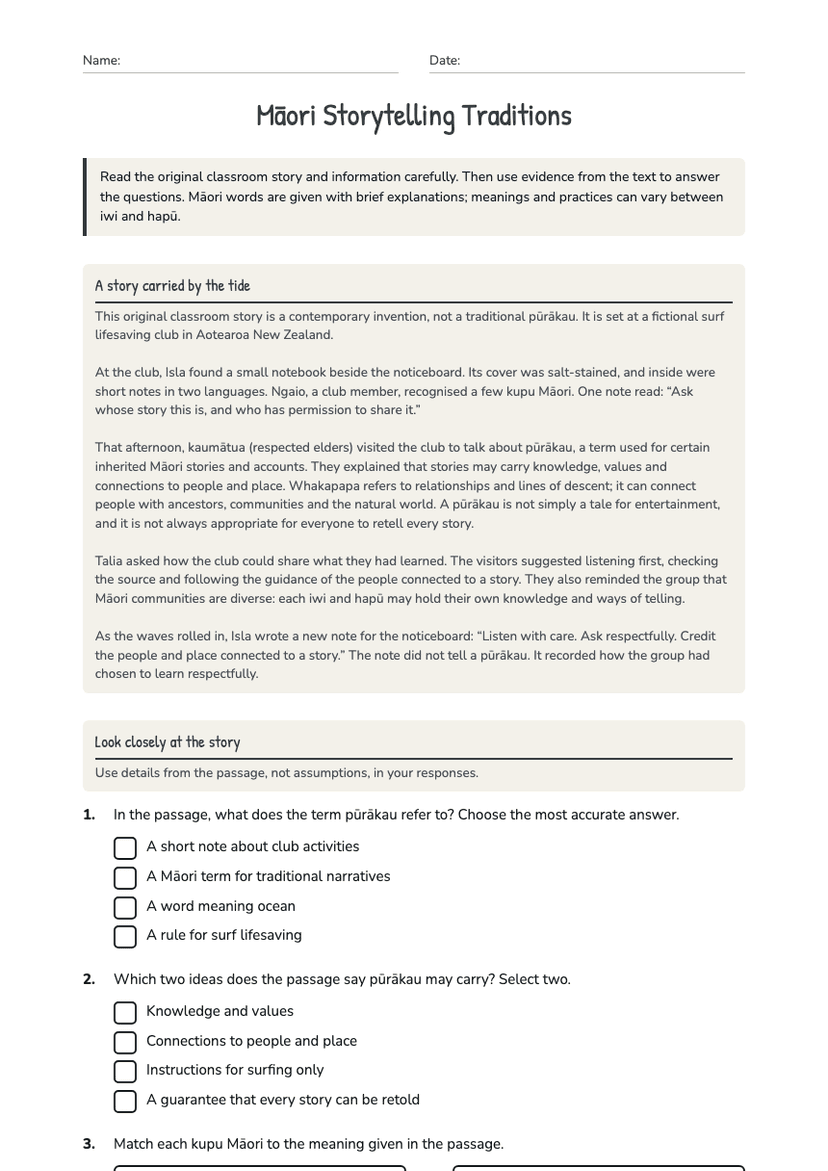
Māori Storytelling Traditions
Free
Samoan Greetings Worksheet
Free
Māori Storytelling and Treaty
Free
Artistic Storytelling Exploration
Free
Digital Storytelling Techniques
Free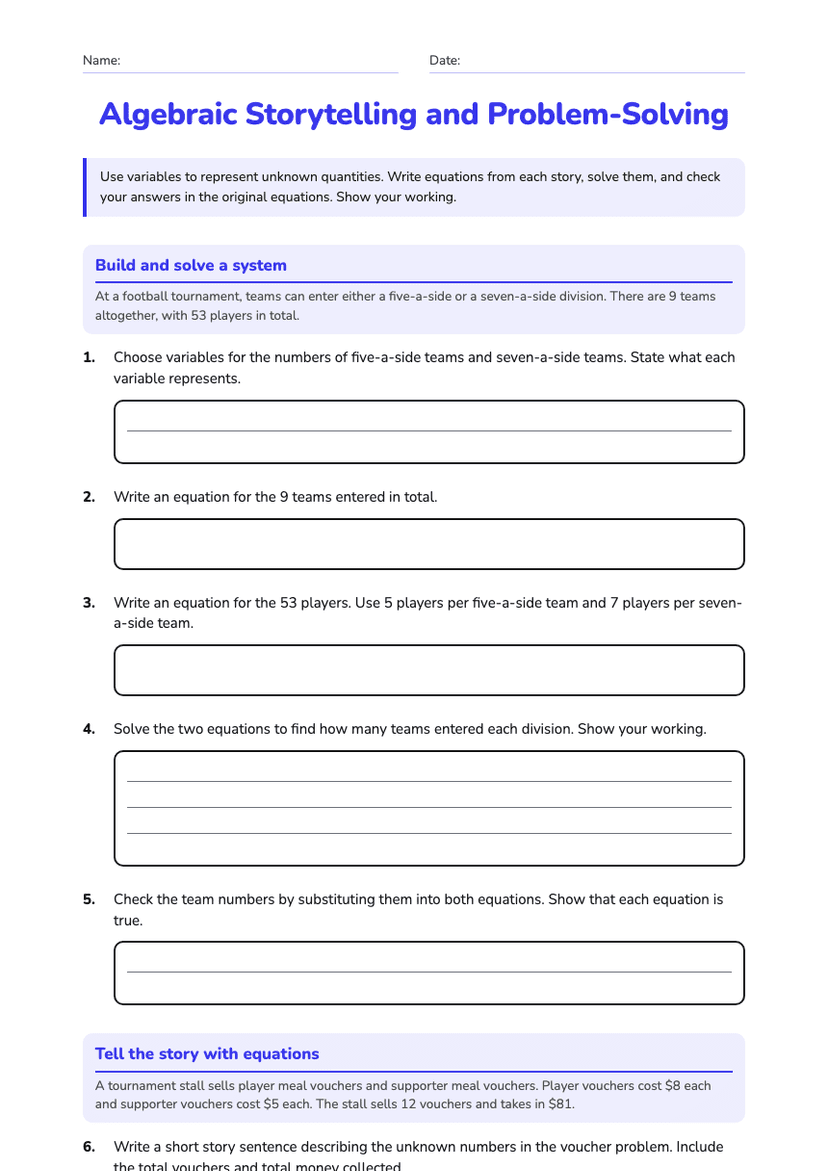
Algebraic Storytelling and Problem-Solving
Free